
Annie Dillard
Author of Pilgrim at Tinker Creek
About the Author
Annie Dillard was born Annie Doak in Pittsburgh, Pennsylvania on April 30, 1945. She received a B.A and an M.A. in English from Hollins College. She writes both fiction and nonfiction books including Tickets for a Prayer Wheel, Holy the Firm, Teaching a Stone to Talk, The Living, and Mornings Like show more This: Found Poems. She won the 1975 Pulitzer Prize for General Nonfiction for Pilgrim at Tinker Creek. She wrote an autobiography entitled An American Childhood. Her work also has appeared in such periodicals as The Atlantic, Harper's Magazine, The Christian Science Monitor, and Cosmopolitan. She taught for 21 years in the English department of Wesleyan University. (Bowker Author Biography) show less
Image credit: Photo by Phyllis Rose
Works by Annie Dillard
Three By Annie Dillard - Pilgrim at Tinker Creek - An American Childhood - The Writing Life (1990) 721 copies, 2 reviews
Schedules 2 copies
Annie Dillard 2 copies
Dillard, Annie Archive 1 copy
Annie Dillard, 3 novels by 1 copy
How We Spend Our Days 1 copy
Sagrada la Materia 1 copy
Walden Pond and Thoreau 1 copy
Associated Works
Watch for the Light: Readings for Advent and Christmas (2004) — Contributor — 908 copies, 10 reviews
You've Got to Read This: Contemporary American Writers Introduce Stories that Held Them in Awe (1994) — Introduction — 414 copies, 3 reviews
Cries of the Spirit: A Celebration of Women's Spirituality (2000) — Contributor — 404 copies, 2 reviews
Tales of Two Americas: Stories of Inequality in a Divided Nation (2017) — Contributor — 229 copies, 7 reviews
Teaching with Fire: Poetry That Sustains the Courage to Teach (2003) — Contributor — 226 copies, 1 review
Touchstone Anthology of Contemporary Creative Nonfiction: Work from 1970 to the Present (2007) — Contributor — 219 copies, 3 reviews
An American Album: One Hundred and Fifty Years of Harper's Magazine (2000) — Contributor — 145 copies, 1 review
Novel History: Historians and Novelists Confront America's Past and Each Other (2001) — Contributor — 139 copies, 1 review
Writing Women's Lives: An Anthology of Autobiographical Narratives by Twentieth-Century American Women Writers (1994) — Contributor — 127 copies, 3 reviews
The Glorious American Essay: One Hundred Essays from Colonial Times to the Present (2020) — Contributor — 119 copies
Jo's Girls: Tomboy Tales of High Adventure, True Grit, and Real Life (1997) — Contributor — 48 copies
Antaeus No. 61, Autumn 1988 - Journals, Notebooks & Diaries (1988) — Contributor — 39 copies, 2 reviews
Seeing Beyond: Movies, Visions, and Values (Studies in the Film Series) (2001) — Contributor — 5 copies
Tagged
Common Knowledge
- Canonical name
- Dillard, Annie
- Legal name
- Doak, Meta Ann (born)
- Birthdate
- 1945-04-30
- Gender
- female
- Education
- Hollins College (BA|1967|MA|1968)
The Ellis School - Occupations
- poet
professor
novelist
essayist
short story writer
literary critic (show all 7)
painter - Organizations
- Wesleyan University (professor)
International PEN
Poetry Society of America
Society of American Historians
NAACP
National Citizens for Public Libraries (show all 14)
Phi Beta Kappa
Harper's Magazine (editor)
Western Washington University (scholar-in-residence)
Wesleyan Writers' Conference (chair)
American Heritage Dictionary (usage panelistl)
Catholic Commission on Intellectual and Cultural Affairs
Partners in Health
The Virginia Woolfs - Awards and honors
- Pulitzer Prize (1975)
National Humanities Medal (2015)
Bollingen Prize (1984)
American Academy of Arts and Letters (1999)
Arts and Letters Award in Literature (1998)
Campion Award (1994) (show all 19)
Milton Prize (1994)
Connecticut Women's Hall of Fame (1997)
New York Press Club Award for Excellence (1975)
New York Public Library Literary Lion (1984)
Boston Public Library Literary Light (1990)
Middletown Commission on the Arts Award (1987)
Washington Governor's Award for Literature (1977)
PEN/Diamonstein-Spielvogel Award for the Art of the Essay (2000)
Connecticut Governor's Arts Award (1993)
History Maker Award (Historical Society of Western Pennsylvania ∙ 1993)
St. Botolph's Club Foundation Award (1989)
Appalachian Gold Medallion (1989)
Phi Beta Kappa (1966) - Agent
- Timothy Seldes (Russell and Volkening)
- Relationships
- Dillard, R. H. W. (husband|divorced)
Richardson, Robert D., Jr. (husband)
Smith, Lee (friend) - Nationality
- USA
- Birthplace
- Pittsburgh, Pennsylvania, USA
- Places of residence
- Middletown, Connecticut, USA
Roanoke, Virginia, USA
Pittsburgh, Pennsylvania, USA
Lummi Island, Bellingham, Washington, USA
Cape Cod, Massachusetts, USA - Map Location
- USA
Members
Discussions
Annie Dillard in Non-Fiction Readers (April 2016)
Group Read- Pilgrim at Tinker Creek, by Annie Dillard in 75 Books Challenge for 2014 (February 2014)
Reviews
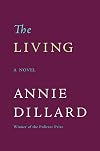
If you like those "historical village" tourist attractions where they recreate old-timey life in static 3D detail — the milkmaid's stool, the cans of cocoa powder, the underequipped schoolroom — then you might like this book. I found it lifeless, its characters smothered under a blanket of superfluous exposition, their thoughts chaperoned tiresomely by Dillard's control-freaky, omniscient 3rd person. What little dialogue there is seems to be more a showcase for the author's show more lovingly-gathered period vernacular than an engine of character or plot. No character is permitted to appear without a fulsome description of their looks and apparel; no article without an explanation of its provenance, manufacture, etc. We're treated to interminable descriptions of carpentry, dressmaking, agriculture, trees living and dead, and all the other minutiae of life in 19th century Puget Sound, but we never really feel at home there. It's the commonest pitfall of the historical novel — the research overpowering the story — and with "The Living", Dillard hitches up her bloomers, or whatever ladies wore back then (I suppose I should know this after ~500 pages) and leaps enthusiastically in. show less
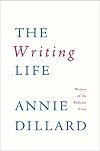
The most compelling part of the book was the last chapter, when Dillard writes about stunt pilot and professor David Rahm, who met his end during one of his performances for King Hussein in Jordan. Dillard's writing here is interesting, because she tries to understand what was behind the work/art Rahm produced, when so much of it would have necessarily been about not feeling, in order to stay alive: "If he had noticed how he felt, he could not have done the work. Robed in his airplane, he show more was as featureless as a priest. He was lost in his figural aspect like an actor or a king."
In a book about the writing life, that was the only part that moved me. I guess that says something about the writing life. show less
In a book about the writing life, that was the only part that moved me. I guess that says something about the writing life. show less
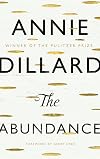
Anne Dillard is very different to most people. When they look at the world around them they only see a fraction of what is actually there, she relentlessly absorbs every detail of the place and experience. But her true skill lies in taking what she has seen and writing about it with tight, and sharp prose. In this new collection, Dillard writes about subjects as wide-ranging and diverse as solar eclipses, the family jokes, the bundle of energy that is the weasel, as well as essays on skin, show more tsunamis and about the Victorian expeditions to the North Pole.
Spend the afternoon. You can't take it with you.
Her sense of fascination and wonder at the things she sees permeates the book with all the subjects she talks about, making this a wonderful thing to read. My favourite essay was the one titled ‘For The Time Being’, about that material that most do not consider, sand. In her unique way, we find out how many grains of sand are created every moment, how it flows with water down to the sea before transforming back to rock over countless millennia. We learn that the sharpest items are not always metal and that they took hundreds of small blows to form these exquisite stone implements. This is the second book of Dillard’s that I have read now and I am finding that I am liking her writing more and more. Her penetrating gaze at the world around is brilliantly complemented by her precise prose. Whilst I realise that some of these have been published before, this is a fine introduction to her work who hasn’t read anything of her work before. show less
Spend the afternoon. You can't take it with you.
Her sense of fascination and wonder at the things she sees permeates the book with all the subjects she talks about, making this a wonderful thing to read. My favourite essay was the one titled ‘For The Time Being’, about that material that most do not consider, sand. In her unique way, we find out how many grains of sand are created every moment, how it flows with water down to the sea before transforming back to rock over countless millennia. We learn that the sharpest items are not always metal and that they took hundreds of small blows to form these exquisite stone implements. This is the second book of Dillard’s that I have read now and I am finding that I am liking her writing more and more. Her penetrating gaze at the world around is brilliantly complemented by her precise prose. Whilst I realise that some of these have been published before, this is a fine introduction to her work who hasn’t read anything of her work before. show less
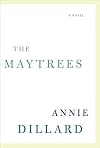
A book like The Maytrees confirms my resolve to award three stars to a good book. Only so do I leave myself room to signal a book that is beyond good, one that I would urge on anyone I knew, friend or enemy, saying, “You owe it to yourself to read this.” This is one of those.
The tale centers on three people, Maytree, Lou, and Daisy, ethical bohemians ideally suited to the improbable sandspit that is the fist of Cape Cod. They are unlike anyone I’ve ever encountered in a book, but they show more reminded me of some people I know—some of my favorite people. As for the plot, it’s about nothing much, other than love and mortality. In between, the unsolvable question, Does life have a point?
Heavy stuff, right? Dillard clothes it all in elliptical prose that made me read slowly, sometimes twice. She finds countless ways to express what she observes freshly. The book is spiced throughout with sage aphorisms, such as, “The tragedy of old age . . . is not that one is old but that one is young.”
Spoiler alert: all three main characters die. In fact, their deaths are described at length, almost clinically. But Dillard doesn’t do this morbidly. Instead, these scenes illustrate the theme of the book. Maytree, Lou, and Daisy question throughout whether they love—they seem hesitant to claim this word for their relation to each other. Their lives illustrate, though, that love isn’t something that is; love does.
This book often made me laugh out loud. At the same time, it is one of the saddest books I’ve read, as sad as life itself. Dillard gives it away on the second page: “Falling in love, like having a baby, rubs against the current of our lives: separation, loss, and death. That is the joy of them.” show less
The tale centers on three people, Maytree, Lou, and Daisy, ethical bohemians ideally suited to the improbable sandspit that is the fist of Cape Cod. They are unlike anyone I’ve ever encountered in a book, but they show more reminded me of some people I know—some of my favorite people. As for the plot, it’s about nothing much, other than love and mortality. In between, the unsolvable question, Does life have a point?
Heavy stuff, right? Dillard clothes it all in elliptical prose that made me read slowly, sometimes twice. She finds countless ways to express what she observes freshly. The book is spiced throughout with sage aphorisms, such as, “The tragedy of old age . . . is not that one is old but that one is young.”
Spoiler alert: all three main characters die. In fact, their deaths are described at length, almost clinically. But Dillard doesn’t do this morbidly. Instead, these scenes illustrate the theme of the book. Maytree, Lou, and Daisy question throughout whether they love—they seem hesitant to claim this word for their relation to each other. Their lives illustrate, though, that love isn’t something that is; love does.
This book often made me laugh out loud. At the same time, it is one of the saddest books I’ve read, as sad as life itself. Dillard gives it away on the second page: “Falling in love, like having a baby, rubs against the current of our lives: separation, loss, and death. That is the joy of them.” show less
Lists
Coming of Age (1)
Check Library (1)
Deathreads (1)
Craft Books (1)
Schwob Nederland (1)
The Writing Life (1)
Awards


You May Also Like


Associated Authors
Statistics
- Works
- 32
- Also by
- 37
- Members
- 22,171
- Popularity
- #963
- Rating
- 4.2
- Reviews
- 402
- ISBNs
- 246
- Languages
- 9
- Favorited
- 123