
Frederick Buechner (1927–2022)
Author of Telling The Truth: The Gospel as Tragedy, Comedy and Fairy Tale
About the Author
Frederick Buechner is the author of more than thirty books and has been an important source of inspiration and learning for many readers. A prolific writer, Buechner's books have been translated into twenty-seven languages. He has been called a "major talent" by the New York Times and "one of our show more most original story-tellers" by USA Today. A finalist for the Pulitzer Prize and the National Book Award, Buechner has been awarded honorary degrees from institutions including Yale University and Virginia Theological Saminary. show less
Image credit: Photo by Carl Van Vechten in 1950
Series
Works by Frederick Buechner
Speak What We Feel (Not What We Ought to Say): Reflections on Literature and Faith (2001) 252 copies, 3 reviews
From Death to Life: Forty Questions for Lent; Meditations From the Writings of Frederick Buechner (1991) 5 copies
The Bolivian Aymara 1 copy
The Bible as Literature 1 copy
Associated Works
The Love Wins Companion: A Study Guide for Those Who Want to Go Deeper (2011) — Contributor — 95 copies, 4 reviews
Tagged
Common Knowledge
- Canonical name
- Buechner, Frederick
- Legal name
- Buechner, Carl Frederick
- Birthdate
- 1927-07-11
- Date of death
- 2022-08-15
- Gender
- male
- Education
- Princeton University (A.B.|1948)
Union Theological Seminary (B.Div|1958) - Occupations
- minister
novelist
theologian - Organizations
- United States Army (WWII)
Presbyterian Church (ordained 1958)
Phillips Exeter Academy - Awards and honors
- American Academy of Arts and Letters Academy Award (Literature, 1982)
Rosenthal Award (1959)
Christianity and Literature Lifetime Achievement Award (2007) - Relationships
- Buechner, Judith (wife)
- Nationality
- USA
- Birthplace
- New York, New York, USA
- Places of residence
- New York, New York, USA
Bermuda
Pawlet, Vermont, USA
Cambridge, Massachusetts, USA
Rutland, Vermont, USA
Hobe Sound, Florida, USA (show all 7)
Rupert, Vermont, USA - Place of death
- Rupert, Vermont, USA
- Associated Place (for map)
- Vermont, USA
Members
Reviews

This slim volume is one of the best conversion narratives I've read, reminiscent in some way of Augustine's Confessions, yet also uniquely the voice of Buechner. It is not a complete narrative of the author's childhood and youth, but episodic in form. Even the incidents he includes are told elliptically. Its diffident, evocative style is clearly the result of careful craftsmanship, but also gives a feeling of what it would be like to sit and talk with the man. The triadic structure of show more childhood - once below a time -, youth - once upon a time -, and of the gifts received from beyond time is built not only, perhaps not even primarily, to recount the author's own life, but with the aim of sensitizing the reader to see his or her life, as well as the lives of all others, as a sacred journey. Highly recommended. show less
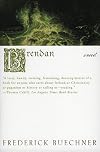
For me to deeply love a book of fiction these days, it has to impress me at the sentence level, and does this one triumph! Written in the first person by a companion of the sixth-century Irish Saint Brendan, it's as vivid and warm and lusty and funny and tragic as the soul of Ireland itself. It reads like a transcription of a spoken tale, alternately grave and deadpan whimsical. It astounds me that an American Presbyterian could capture this voice. I kept reading because I was drawn by the show more voice, not by the story, though it's a great story as well.
The legend of Brendan, who is called the Navigator and whom some believe to have reached the Americas, is a collection of tall tales, told here with little attempt to tone down their miraculousness. It's not important to believe that these things happened in real life; it is important that as with any fantastic tale, from Jonah to Star Wars, you cooperate with the story and not resist it or scoff. There are marvels, but the jewels of the book are its characters, the people in Brendan's orbit. I'm certain at least one of them will speak to you in a special way. For me it was Malo, a bitter and mean man who is at first impossible to like. When I found out what cruelty had made Malo so bitter, the harshness of it almost turned me against the book. But when he eventually came to something like peace, the insight that healed him put a catch in my throat. For you, no doubt, some other character or incident will have a similar force.
This is an earnest book but not a sentimental one. If you have trouble telling the two apart, beware. show less
The legend of Brendan, who is called the Navigator and whom some believe to have reached the Americas, is a collection of tall tales, told here with little attempt to tone down their miraculousness. It's not important to believe that these things happened in real life; it is important that as with any fantastic tale, from Jonah to Star Wars, you cooperate with the story and not resist it or scoff. There are marvels, but the jewels of the book are its characters, the people in Brendan's orbit. I'm certain at least one of them will speak to you in a special way. For me it was Malo, a bitter and mean man who is at first impossible to like. When I found out what cruelty had made Malo so bitter, the harshness of it almost turned me against the book. But when he eventually came to something like peace, the insight that healed him put a catch in my throat. For you, no doubt, some other character or incident will have a similar force.
This is an earnest book but not a sentimental one. If you have trouble telling the two apart, beware. show less
This one had me in tears a few times. I think Buechner is able to express his own specific memories so well that it inspires something similar in the reader. I remembered things I hadn't thought of in a long time as I read this, and while there was plenty of pain, being there in the memories didn't feel quite so hard with Buechner's encouragement.

Frederick Buechner's Godric "retells the life of Godric of Finchale, a twelfth-century English holy man whose projects late in life included that of purifying his moral ambition of pride...Sin, spiritual yearning, rebirth, fierce asceticism--these hagiographic staples aren't easy to revitalize but Frederick Buechner goes at the task with intelligent intensity and a fine readiness to invent what history doesn't supply. He contrives a style of speech for his narrator--Godric himself--that's show more brisk and tough-sinewed...He avoids metaphysical fiddle, embedding his narrative in domestic reality--familiar affection, responsibilities, disasters...All on his own, Mr. Buechner has managed to reinvent projects of self-purification and of faith as piquant matter for contemporary fiction [in a book] notable for literary finish...Frederick Buechner is a very good writer indeed." -- Benjamin DeMott, The New York Times Book Review show less
Lists
Awards


You May Also Like


Associated Authors
Statistics
- Works
- 54
- Also by
- 5
- Members
- 13,607
- Popularity
- #1,703
- Rating
- 4.1
- Reviews
- 125
- ISBNs
- 141
- Languages
- 4
- Favorited
- 35
