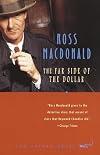
What happened to Ross Macdonald after The Galton Case? The Wicherly Woman took a long time to wake up, and the next three ending with The Far Side of the Dollar are written in an anhedonic fog. Gone are the glimpses of humor, playfulness, and wit that had me grinning at least once every few dozen pages. Fortunately, the intricate plots and surprising solutions remain, but I miss the Archer — and the Macdonald — who seemed to be enjoying at least some aspects of his life.
According to Wikipedia, "Archer is sometimes depressed, often world-weary. An almost Greek sense of tragedy pervades the novels as the sins of omission and crimes of sometimes-wealthy parents are frequently visited upon their children, young adults whom Archer tries desperately to save from disaster." Certainly, young people who are more decent than their parents feature prominently in this book and the last. This concern for the young, and the care with which Macdonald portrays young people when so many contemporaries could only think of them in terms of teen stereotypes, is genuinely touching. If only it weren't buried in a pervasive dark mood.
According to Wikipedia, "Archer is sometimes depressed, often world-weary. An almost Greek sense of tragedy pervades the novels as the sins of omission and crimes of sometimes-wealthy parents are frequently visited upon their children, young adults whom Archer tries desperately to save from disaster." Certainly, young people who are more decent than their parents feature prominently in this book and the last. This concern for the young, and the care with which Macdonald portrays young people when so many contemporaries could only think of them in terms of teen stereotypes, is genuinely touching. If only it weren't buried in a pervasive dark mood.
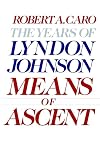
The first volume of Robert Caro's multivolume biography, The Path to Power, was an indispensable masterpiece, but it's tempting to say that this second volume is even better. It couldn't help but be: one of the problems, if you could call them that, in the first book was the challenge of covering all of LBJ's life and times from birth to his defeat in the 1942 Senate race. With such a broad mandate, the book was shaped as a collection of chronological essays, many of them stunning, combining to give the necessary depth of view. But relatively few things happened to Johnson in the six years between that defeat and the next Senate race. He was stuck for years in the House of Representatives largely without the power he craved. And then he ran the race of his life. How he won that race, unfairly won, is virtually the whole story of this book. It's an incredible story. And it takes just 448 pages to tell, compared with the 768 pages that made of the first book. It's easier to digest, and it packs a punch.
Caro's gifts as a storyteller are in the forefront. Johnson's opponent in the 1948 race, former Texas governor Coke Stevenson, was an extraordinary man. At the time of its release, this book got quite a reaction from liberals who felt that Caro downplayed Stevenson's failures of leadership as governor and overplayed his personal honesty and character. The afterword in which Caro responded to these criticisms, which was appended to the paperback edition and in later printings show more of the hardcover edition, is worth reading; I read it before I'd finished the book, and I read it again after. I won't try to summarize it here, except to say that Caro takes pains to say that had he been a Texan during Stevenson's day, he would have been in opposition, and that Caro goes into great detail (but not wearying detail) to show how the "common knowledge" of who Stevenson had been and of his personal ethics was simply incorrect. In Means of Ascent, Stevenson is presented as a deeply admirable, even likable hero, despite failures of policy that stemmed from small-minded convictions, particularly in the area of race. Those kinds of convictions are hard to stomach in today's times, and I can surely understand why more modern, progressive-minded people were upset at Caro seeming to give Stevenson a pass when it came to them. But as Caro points out in the afterward, those objectionable issues were not a factor in the contest between Stevenson and Johnson. In 1948, those issues barely came up, and when Johnson did address them, it was to assure the mnostly conservative electorate that he agreed with them. So, Caro argues, to give them prominence in discussing the 1948 Senate race would have been to distort our understanding of it. I tend to agree, particularly when until Caro's book, Stevenson's legacy (for all its warts) had been trashed by bald lies that had become widely believed.
While Caro's gift to the reader was a book that keeps one eagerly turning the pages, his gift to history was documenting, painstakingly and beyond the possibility of refutation, how exactly the 1948 Senate race was stolen, putting it in the context of its times, when huge blocs of minority votes were routinely controlled by party bosses. I won't spoil the book for new readers, but Johnson went far beyond merely taking advantage of a corrupt system as Texas politicians had before him. To me, this final part of the book was as fascinating as any political documentary or podcast. show less
Caro's gifts as a storyteller are in the forefront. Johnson's opponent in the 1948 race, former Texas governor Coke Stevenson, was an extraordinary man. At the time of its release, this book got quite a reaction from liberals who felt that Caro downplayed Stevenson's failures of leadership as governor and overplayed his personal honesty and character. The afterword in which Caro responded to these criticisms, which was appended to the paperback edition and in later printings show more of the hardcover edition, is worth reading; I read it before I'd finished the book, and I read it again after. I won't try to summarize it here, except to say that Caro takes pains to say that had he been a Texan during Stevenson's day, he would have been in opposition, and that Caro goes into great detail (but not wearying detail) to show how the "common knowledge" of who Stevenson had been and of his personal ethics was simply incorrect. In Means of Ascent, Stevenson is presented as a deeply admirable, even likable hero, despite failures of policy that stemmed from small-minded convictions, particularly in the area of race. Those kinds of convictions are hard to stomach in today's times, and I can surely understand why more modern, progressive-minded people were upset at Caro seeming to give Stevenson a pass when it came to them. But as Caro points out in the afterward, those objectionable issues were not a factor in the contest between Stevenson and Johnson. In 1948, those issues barely came up, and when Johnson did address them, it was to assure the mnostly conservative electorate that he agreed with them. So, Caro argues, to give them prominence in discussing the 1948 Senate race would have been to distort our understanding of it. I tend to agree, particularly when until Caro's book, Stevenson's legacy (for all its warts) had been trashed by bald lies that had become widely believed.
While Caro's gift to the reader was a book that keeps one eagerly turning the pages, his gift to history was documenting, painstakingly and beyond the possibility of refutation, how exactly the 1948 Senate race was stolen, putting it in the context of its times, when huge blocs of minority votes were routinely controlled by party bosses. I won't spoil the book for new readers, but Johnson went far beyond merely taking advantage of a corrupt system as Texas politicians had before him. To me, this final part of the book was as fascinating as any political documentary or podcast. show less
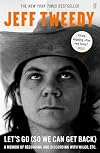
Jeff Tweedy, the leader of the band Wilco, is an engaging and hilarious writer with a surprising amount of emotional intelligence and a distinctive authorial voice. This is his memoir of growing up in the benighted town of Belleville, Illinois, meeting his Uncle Tupelo bandmate Jay Farrar, leaving Uncle Tupelo to start his own band, and various Wilco-related shenanigans up to 2017, including getting addicted to painkillers and coming out clean (with the help of what sounds like a particularly terrifying in-patient rehab clinic).
Lots of laughing aloud from my wife and me as we read (me first, then her). It's an easy, quick, mildly illuminating read that I recommend to anyone who enjoys non-sensationalistic rock memoirs.
Lots of laughing aloud from my wife and me as we read (me first, then her). It's an easy, quick, mildly illuminating read that I recommend to anyone who enjoys non-sensationalistic rock memoirs.
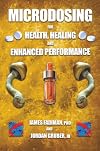
Although it's in no way deliberately related, this forms a kind of trilogy with Michael Pollan's How to Change Your Mind, an overview and history of psychedelic drugs in Western culture, and Ayelet Waldman's A Really Good Day, a memoir of microdosing. Fadiman's Microdosing for Health, Healing, and Enhanced Performance aims to be a sort of encyclopedia of conditions that have anecdotally been improved or ameliorated by microdosing, from anorexia to varicella-zoster virus (shingles). There's also a concise discussion of what microdosing is and what it might feel like.
Fadiman and Gruber spend entirely too much time explaining why traditional studies of the effects of microdosing have trouble identifying any differences from dosing with placebos. They acknowledge that "the closer microdosing experiments approach experimental perfection (randomized, double-blind, placebo-controlled, etc.) the less they show anticipated microdosing effects." Far from being troubled by this, they regard it as bolstering the case for the efficacy of microdosing—the opposite of how a scientist would interpret the findings. "There could be no more conclusive way of demonstrating that the wrong tool, methodology, or mode of analysis is often used to study microdosing." (Authors' emphasis.) But in the same way that "absence of evidence is not evidence of absence" (Sagan), unfavorable results do not necessarily prove faulty methodology. They would do better to identify the defects of the show more methodology than to appropriate the unwanted results as proof of their case. (I personally do believe in the efficacy of microdosing as it pertains to mental health. I simply hate sloppy thinking, particularly in educated people who allow their standards to slip in order to confirm their biases.)
The bulk of this volume is, in fact, anecdotes: stories from people whose previously intractable conditions improved after regularly taking doses of psychedelic drugs much smaller than the amount needed to produce noticeable mental effects. There are dozens of these, claiming relief from everything from PMS to epilepsy to stuttering. You could be forgiven from coming away thinking that there isn't a negative human condition microdosing can't make better. The cheerleading is wearying even to those who want to be convinced.
So the introductory chapters, which carefully define microdosing and distinguish therapeutic microdosing from broader uses of the term, are the most helpful. If you're thinking about microdosing or concerned about someone you love who intends to microdose, there's no reason to avoid this book, and it may help you by dispelling some myths. But the special pleading is disappointing and goes far to spoil what could be a much better book. show less
Fadiman and Gruber spend entirely too much time explaining why traditional studies of the effects of microdosing have trouble identifying any differences from dosing with placebos. They acknowledge that "the closer microdosing experiments approach experimental perfection (randomized, double-blind, placebo-controlled, etc.) the less they show anticipated microdosing effects." Far from being troubled by this, they regard it as bolstering the case for the efficacy of microdosing—the opposite of how a scientist would interpret the findings. "There could be no more conclusive way of demonstrating that the wrong tool, methodology, or mode of analysis is often used to study microdosing." (Authors' emphasis.) But in the same way that "absence of evidence is not evidence of absence" (Sagan), unfavorable results do not necessarily prove faulty methodology. They would do better to identify the defects of the show more methodology than to appropriate the unwanted results as proof of their case. (I personally do believe in the efficacy of microdosing as it pertains to mental health. I simply hate sloppy thinking, particularly in educated people who allow their standards to slip in order to confirm their biases.)
The bulk of this volume is, in fact, anecdotes: stories from people whose previously intractable conditions improved after regularly taking doses of psychedelic drugs much smaller than the amount needed to produce noticeable mental effects. There are dozens of these, claiming relief from everything from PMS to epilepsy to stuttering. You could be forgiven from coming away thinking that there isn't a negative human condition microdosing can't make better. The cheerleading is wearying even to those who want to be convinced.
So the introductory chapters, which carefully define microdosing and distinguish therapeutic microdosing from broader uses of the term, are the most helpful. If you're thinking about microdosing or concerned about someone you love who intends to microdose, there's no reason to avoid this book, and it may help you by dispelling some myths. But the special pleading is disappointing and goes far to spoil what could be a much better book. show less
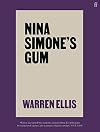
This is a special book, and I hope it finds its way into the hands of all the people who can appreciate it. While it presents as a quirkly little memoir of one musician's adorable reverence for what might be the most quotidian holy relic ever, it's actually a thoughtful and achingly candid essay on the relationship between creativity and hero worship, among many other things. As another reviewer said: it's sweet, engaging, and endearing.
Although Ellis scoffs at memoirs, in communicating his love for the many songs, people, and yes, objects that he's loved and that helped make him who he is, he's written a good one here. It's also a great collection of expertly chosen snapshots and archival photographs - in my hardback edition, the whole thing is printed on heavy matte paper that shows them off well and gives the book unusual solidity as a physical object. You'll learn about artists and other people such as the Greek singer Arleta and the Australian journalist Mick Geyer; you'll want to learn more, and you'll be rewarded if you go digging.
Ellis seems to be one of those naturally enthusiastic people with a talent for noticing and for loving. When he writes about his loves animate and inanimate, his enthusiasm makes him a great writer. One of the little delights of the book is the way that he attracts allies and helpers who instantly understand his devotion to his piece of Simone's gum, who take it seriously and help him honor Dr. Simone and his own love by honoring the gum. show more It sounds weird, and he knows it's weird, but as you read, if you have any susceptability to stories about the weird vulnerability of being human, you won't find it weird at all. This is a life-affirming book. show less
Although Ellis scoffs at memoirs, in communicating his love for the many songs, people, and yes, objects that he's loved and that helped make him who he is, he's written a good one here. It's also a great collection of expertly chosen snapshots and archival photographs - in my hardback edition, the whole thing is printed on heavy matte paper that shows them off well and gives the book unusual solidity as a physical object. You'll learn about artists and other people such as the Greek singer Arleta and the Australian journalist Mick Geyer; you'll want to learn more, and you'll be rewarded if you go digging.
Ellis seems to be one of those naturally enthusiastic people with a talent for noticing and for loving. When he writes about his loves animate and inanimate, his enthusiasm makes him a great writer. One of the little delights of the book is the way that he attracts allies and helpers who instantly understand his devotion to his piece of Simone's gum, who take it seriously and help him honor Dr. Simone and his own love by honoring the gum. show more It sounds weird, and he knows it's weird, but as you read, if you have any susceptability to stories about the weird vulnerability of being human, you won't find it weird at all. This is a life-affirming book. show less
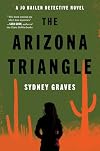
More wordy than the usual private-investigator thriller, with excellent descriptions of people and places and an unusual focus on the complexities of female relationships. Our hero, Jo Bailen, is a 40-year-old ex-cop, native to the southern Arizona country where she works, who's drawn into a missing-persons case that happens to center around her childhood best friend, long since estranged. The small-town policeman on the case happens to be the boyfriend at the center of the two friends' falling out, back when they were all in their early teens. Mix in a large cast of families and friends, all of whom seem to have known each other for many years and few of whom feel neutrally about anyone else in their circle, and you've got a particularly thorny case to unravel.
There's a whole of exposition going on, and I had to struggle to absorb it all in the first 50 pages while wondering when something was actually going to happen. Things happened in a hurry after that. It's interesting to have a detective who is herself not far from the center of the mystery she's trying to solve. Unfortunately for her, she's not great at interacting with people, preferring to fire questions at them like a kind of human survey app. Nor does anyone in this book have a perceptible sense of humor. Granted, the subject matter is grim, but a few wry comments or quirky characters would have added a lot of flavor.
I liked the portrayal of Jo as a woman whose stress relievers are sex (with women and with show more men) and food (mostly fast). She uses both in moderation and doesn't dwell about it later. I can easily believe that many people are like this, and it struck me as a realistic touch. Less realistic is the solution to the mystery. While the grotesque and depressing trigger events described do happen, the likelihood of their leading to the complex, Moriarty-like evil plan that's discovered during the book's climax is vanishingly small. I hope that in subsequent books, the author avoids burdening her readers with such a huge cast of characters and lightens the emotional tone. show less
There's a whole of exposition going on, and I had to struggle to absorb it all in the first 50 pages while wondering when something was actually going to happen. Things happened in a hurry after that. It's interesting to have a detective who is herself not far from the center of the mystery she's trying to solve. Unfortunately for her, she's not great at interacting with people, preferring to fire questions at them like a kind of human survey app. Nor does anyone in this book have a perceptible sense of humor. Granted, the subject matter is grim, but a few wry comments or quirky characters would have added a lot of flavor.
I liked the portrayal of Jo as a woman whose stress relievers are sex (with women and with show more men) and food (mostly fast). She uses both in moderation and doesn't dwell about it later. I can easily believe that many people are like this, and it struck me as a realistic touch. Less realistic is the solution to the mystery. While the grotesque and depressing trigger events described do happen, the likelihood of their leading to the complex, Moriarty-like evil plan that's discovered during the book's climax is vanishingly small. I hope that in subsequent books, the author avoids burdening her readers with such a huge cast of characters and lightens the emotional tone. show less
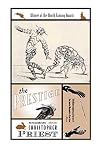
Christopher Nolan's 2006 movie adaptation of this book, on which Christopher Priest is given a coauthor credit, is one of my favorite films. Having recently rewatched it, I thought it time to give the book on which it was based a go. I found a book that, like the movie, respects its readers' intelligence while providing a lot of fuel for speculative thought. And like the movie, it's a pleasure all the way through.
Knowing each illusionist's secret didn't detract from my enjoyment. Instead, I got to observe the skillfulness of Priest's misdirections. The book is better than the movie at conjuring late Victorian England. It provides a modern-day framing device, missing from the film, that's intriguing and creepy; in fact the heightened gothic atmosphere and willingness to flirt with the supernatural is a major point of difference between the book and the movie, which reflects Nolan's more cerebral methods. For all their similarities, the novel leans toward fantasy while the film leans toward sci-fi. In both, the twists are astounding and the audience, readers and viewers, realize that they've been manipulated by expert hands. (Interestingly, Christopher Priest was for most of his life a prominent member of the science fiction community.)
For all its trickiness, this is no cold intellectural exercise. Emotions run high, and there are countless tiny touches that assure us we're in the hands of a master storyteller. For me, one was the way that the same events are recounted show more slightly differently in the journals of the two protagonists. There's rarely a dramatic reason for this: it only reflects the normal way that two people might remember the same important event. That Priest took the trouble to be realistic in this way when he didn't have to increases my respect for him as an author.
A warning: at least two of the other reviews on this site reveal the most important secrets of the book, secrets the author intends the reader to discover only after long periods of wonderment. Do read the book before reading these reviews! show less
Knowing each illusionist's secret didn't detract from my enjoyment. Instead, I got to observe the skillfulness of Priest's misdirections. The book is better than the movie at conjuring late Victorian England. It provides a modern-day framing device, missing from the film, that's intriguing and creepy; in fact the heightened gothic atmosphere and willingness to flirt with the supernatural is a major point of difference between the book and the movie, which reflects Nolan's more cerebral methods. For all their similarities, the novel leans toward fantasy while the film leans toward sci-fi. In both, the twists are astounding and the audience, readers and viewers, realize that they've been manipulated by expert hands. (Interestingly, Christopher Priest was for most of his life a prominent member of the science fiction community.)
For all its trickiness, this is no cold intellectural exercise. Emotions run high, and there are countless tiny touches that assure us we're in the hands of a master storyteller. For me, one was the way that the same events are recounted show more slightly differently in the journals of the two protagonists. There's rarely a dramatic reason for this: it only reflects the normal way that two people might remember the same important event. That Priest took the trouble to be realistic in this way when he didn't have to increases my respect for him as an author.
A warning: at least two of the other reviews on this site reveal the most important secrets of the book, secrets the author intends the reader to discover only after long periods of wonderment. Do read the book before reading these reviews! show less

A charming, humble, and wry collection of tiny stories about the life of a middle-aged rock musician, successful but not famous, serious about his craft but not about himself. Probably the next best thing to hanging out with Narducy himself — which he no doubt would be glad to do with you, should circumstances bring it about.
The photos throughout are great and the design of the book, with text of various fonts laid over and around the various design elements, is attractive and smart. (My 63-year-old bepectacled eyes didn't have trouble reading any of it.) Worth picking up from Jason's site, or from the merch table at one of his shows.
The photos throughout are great and the design of the book, with text of various fonts laid over and around the various design elements, is attractive and smart. (My 63-year-old bepectacled eyes didn't have trouble reading any of it.) Worth picking up from Jason's site, or from the merch table at one of his shows.

Olle Lundberg was a visionary who designed residences and workplaces with respect to the material best suited to the site: wood, stone, metal, or glass. This beautifully produced book is a great introduction to his work that’s second only to visiting the sites themselves. Naturally, it also makes a great showpiece on your living room bookshelf or coffee table. Although Lundberg was based in Northern California, his work would have shone in any location with a similarly stunning natural environment, from Scandinavia to Patagonia.
Much of the book focuses on five representative projects that are described and photographed in detail from conception to execution. The text by Lundberg is casual and informative, and the photographs are often stunning. This makes for an excellent work whether you have picked it up to learn or merely to enjoy.
Much of the book focuses on five representative projects that are described and photographed in detail from conception to execution. The text by Lundberg is casual and informative, and the photographs are often stunning. This makes for an excellent work whether you have picked it up to learn or merely to enjoy.
Rebel Girl: the explosive new memoir from Bikini Kill’s Kathleen Hanna is an instant Sunday Times bestseller by Kathleen Hanna
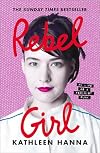
When you review a memoir as open and frank as this, you're at risk of reviewing the person, which I don't want to do. There is a great deal to admire about Hanna that I hope even non-fans can appreciate. There's also a lot that troubles and saddens me: in particular, the incomplete progress she's made overcoming the terrible abuse she suffered as a child. In my view, she repeatedly set herself up to be retraumatized, especially as a young woman, and it's not clear that in her late 50s she's come to understand that dynamic. What's clear is that she's always done, and is doing, the best she can. No doubt having a supportive life partner has done wonders.
As an Evergreen graduate and resident of Olympia in the late '80s - about three to five years before Hanna's heyday there - I can testify that her portrait of the Olympia scene is a hundred percent accurate. What may not come across is how small a town Olympia is. It's not a university city like Seattle or Ann Arbor. Everybody bumps into everybody else. I wouldn't be the least bit surprised if I knew some of the people who appear under disguised names in Hanna's book.
Needless to say, fans of Bikini Kill, Julie Ruin, or Le Tigre are going to love this book, and it's a must-read for them.
As an Evergreen graduate and resident of Olympia in the late '80s - about three to five years before Hanna's heyday there - I can testify that her portrait of the Olympia scene is a hundred percent accurate. What may not come across is how small a town Olympia is. It's not a university city like Seattle or Ann Arbor. Everybody bumps into everybody else. I wouldn't be the least bit surprised if I knew some of the people who appear under disguised names in Hanna's book.
Needless to say, fans of Bikini Kill, Julie Ruin, or Le Tigre are going to love this book, and it's a must-read for them.
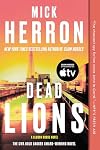
However good the first book of a series, you always hope that the second will be an improvement. But where I watched the first season of the Apple TV series and read the book hoping it would be better (and it was), I read the second book in the series and thought that the TV version was probably better. Instead of broadening his authorial toolset, in Dead Lions Herron just doubles down on the technique that worked for him in its predecessor, writing in two-page chunks ending in cliffhangers that are, for the most part, deliberately misleading. (An agent is grabbed from behind, a hand over her mouth — ten pages later, it turns out to have been a coworker.) Even when the cliffhangers don't turn out to be this kind of bait and switch, they become wearying. I really don't need a complete change of point of view every few paragraphs to keep my attention. It tries the patience.
There's an shallowness, too, that gets under my skin. I know that cynical detachment is the default mode for mystery thrillers, but the best ones have a little more heart than this. I think the evidence shows that Herron has the needed empathy, but there are so many irons in the fire of his plot that most of the characters are treated glancingly, like bees in an intricate hive.
No doubt many readers appreciate the same traits in this book that I dislike. Certainly Herron's got wit enough for any other five writers of spy thrillers, save John le Carré, and his jaundiced but still idealistic view of show more modern spycraft is unique and interesting. Maybe, given his obvious gifts, I just want more art and less craft from him. show less
There's an shallowness, too, that gets under my skin. I know that cynical detachment is the default mode for mystery thrillers, but the best ones have a little more heart than this. I think the evidence shows that Herron has the needed empathy, but there are so many irons in the fire of his plot that most of the characters are treated glancingly, like bees in an intricate hive.
No doubt many readers appreciate the same traits in this book that I dislike. Certainly Herron's got wit enough for any other five writers of spy thrillers, save John le Carré, and his jaundiced but still idealistic view of show more modern spycraft is unique and interesting. Maybe, given his obvious gifts, I just want more art and less craft from him. show less
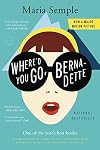
I love novels that are mostly written in letters and transcripts, and it's never been done better than it's done here. The characters are brilliant, the plot is propulsive, and there's an honest laugh on just about every page. Bernadette, a 50 year old Seattle mom with a Microsoft star husband and a precocious kid at a crunchy private middle school, comes off as overprivileged, aggressive, and underchallenged, but it gradually becomes clear that there is far more to her, and that she's a mystery not just to the reader but to her loving family as well. When she disappears and is presumed dead, her young daughter's heroic efforts to uncover the mysteries of Bernadette's life cast light not just on Bernadette, but on the unignorable demands of creative talent and the importance of looking beyond what's most obvious about a person.
You can read this as social satire — Seattle has never been so expertly and lovingly skewered — or as a screwball romp, but it's really a novel in the full sense of the word. Very highly recommended.
You can read this as social satire — Seattle has never been so expertly and lovingly skewered — or as a screwball romp, but it's really a novel in the full sense of the word. Very highly recommended.
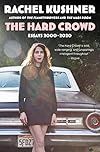
I was led to Rachel Kushner's essays not by her fiction, which I haven't read, but by excerpts of memoir in magazines. It's not just that was I struck by similarities in our early lives (she and I were both in Oakland Coliseum on the same night seeing The Who and The Clash), although that would be enough. It was more her tone with which she describes an alternative youth that I haven't read a lot of writers talk about. It's matter-of-fact, yet extremely evocative, especially if you feel yourself to have been in much the same place. Not that I'm claiming to be anywhere as tough or as brave as Kushner, who rode a borrowed motorcycle from California to the tip of Baja California in the space of 24 hours and almost died. (I took a Green Tortoise bus along the same route.) But the characters, the drugs, and most of all the feeling of being entirely on one's own track, with all its potentialities and dangers, during the 1980s are all eerily familiar. I very much appreciate the way she tells the way it was for her without overexplaining and without apology.
This collection gathers not just memoir but a wide variety of non-fiction from mainstream magazines, art journals, and other sources, so there is a wide variety of tone to the pieces. The more personal the pieces, the better; an article on Palestine for the New York Times Magazine, although no doubt as firmly rooted in experience as the others, reads as if it could have been written by any number of talented writers. At the show more other pole, the last essay, the title essay, could only have been written by her, and it's the one that most speaks to me. So many of the names she mentions are names I wouldn't expect many people to recognize — Raymond Pettibon, Pearl Harbour — but I recognize them. I hope the people who don't know them still get the feeling she's conveying. show less
This collection gathers not just memoir but a wide variety of non-fiction from mainstream magazines, art journals, and other sources, so there is a wide variety of tone to the pieces. The more personal the pieces, the better; an article on Palestine for the New York Times Magazine, although no doubt as firmly rooted in experience as the others, reads as if it could have been written by any number of talented writers. At the show more other pole, the last essay, the title essay, could only have been written by her, and it's the one that most speaks to me. So many of the names she mentions are names I wouldn't expect many people to recognize — Raymond Pettibon, Pearl Harbour — but I recognize them. I hope the people who don't know them still get the feeling she's conveying. show less
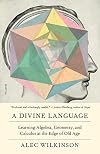
The dust cover blurb for Alec Wilkinson, a longtime writer for The New Yorker, says that he was once a "rock and roll musician," and he looks the part, bearing more than a little resemblance to Paul Weller. But he writes with the carefully controlled precision I associate with mid-century British scientists and men of letters, writers who believed that emotions could be labeled and described, and even, under duress, admitted to, but never directly expressed. And so the style of this interesting memoir of trying to learn calculus (should I say "the" calculus?) at an age when one's mathematical faculties have largely calcified undercuts its fascination. Wilkinson describes his interior journey very well, with many an interesting philosophical discussion along the way. But in his somehow British-seeming modesty, he makes his niece Amie Wilkinson, a professor of mathematics at the University of Chicago, seem far more interesting than he does himself, despite her having only a small supporting part in the book. Devoting oneself, intensely, for over a year, to learning a difficult subject that you bombed out of terribly when you were at the best age to learn it seems a little crazy. And Wilkinson doesn't let loose enough for us to identify with and cheer on that crazy man. So this book, although often interesting, is never compelling.
If you like your humor dry, as I often do, you will find yourself laughing out loud at a few points. Unfortunately, the detatched tone of this first-person fictional memoir never varies, and I plowed through all the chapters only to find an ending on a very sour note. We start the novel cheering for the wryness with which the young (14?) narrator approaches his Edvard Munch home life, but end it (perhaps three years later in the narrative) having observed no healing or emotional growth. When there is no redemption, laughter turns bitter.
I agree with reviewer CarltonC, who put it this way: "the author seemed determined to intentionally undermine the emotional impact whenever created by his narrative."
I agree with reviewer CarltonC, who put it this way: "the author seemed determined to intentionally undermine the emotional impact whenever created by his narrative."
Warren Zanes is one of the very best music writers of the last half century. His book on Tom Petty is one of my favorite rock biographies, and I'm not even a particular fan of Petty (although that book raised my opinion of him by quite a few notches). Zanes understands musicians, having been one himself, and the more famous musicians he writes about seem to trust him in turn. And Zanes brings, beyond the empathy that comes from having tread many of the same boards, a shrewd intelligence about human character and about art. He knows what to ask, and he understands the questions that their answers pose. Nobody else could have written this book.
My personal theory concerning Nebraska is that its fans tend to be those who have been to the depths. If you've been there, you can hear it in these bleak songs of despair, suicide and murder. Arguably, Springsteen didn't know he was headed for a breakdown at the time, but he was, he had it, and he's open about it now. So you can read it to see how one man turned his demons into art, and, if you're not of one of the afflicted, you can read it just for the stories and for the insight into the collaborative project of putting out a record. It's a quick read, and a good one, and more than worthwhile for anyone who's ever loved a song.
My personal theory concerning Nebraska is that its fans tend to be those who have been to the depths. If you've been there, you can hear it in these bleak songs of despair, suicide and murder. Arguably, Springsteen didn't know he was headed for a breakdown at the time, but he was, he had it, and he's open about it now. So you can read it to see how one man turned his demons into art, and, if you're not of one of the afflicted, you can read it just for the stories and for the insight into the collaborative project of putting out a record. It's a quick read, and a good one, and more than worthwhile for anyone who's ever loved a song.
This gloomy whodunnit shows Macdonald's skill with plot and builds on the character of Archer, who has become more and more thoughtful in the years since the first book. Unfortunately, it's largely devoid of humor and the overall impression is one of more or less shabby people in a world falling apart. The core is a sordid family drama that takes a whole book to unravel - even Archer is clueless to solve it until the last few pages. I have to say that the solution is so intricate that I'm almost tempted to read the book over just to apply what I now know to scenes that were mysterious the first time. But my urge to wash my hands of all those sad, broken people is stronger.
A few years ago I posted my five-star review (https://www.librarything.com/work/16901245/book/210180341) of Richard Nickel: Dangerous Years. Nickel was the premier (and unpaid) photographer of disappearing Chicago architecture in the 1950s and '60s. He died while photographing a condemned building. This book, The Complete Architecture of Adler and Sullivan, was intended to be his masterwork, and was completed after his death.
I wrote then that the Complete Architecture "was finally published in 2010, but it's out of print and costs hundreds of dollars if you can find a copy. Richard Nickel: Dangerous Years is your next best bet—and maybe even the better one." I finally got to look at the Complete Architecture via interlibrary loan, and while it's a beautiful and important work that I'd love to own, my instincts were right the first time: for almost everyone, Dangerous Years will be enough.
Complete Architecture does justice to its content, which includes not only Nickel's photographs but others, in nearly 500 pages of heavy stock in twelve by twelve inch format, the size of an LP record cover. Introductory essays cover the stages of Adler's and Sullivan's careers, alone and together, but most of the book is photographs (Nickel's in black and white, others in either gray or color). The last 160 pages are a "catalogue raisonné" of the works discussed, with photos, plans, and renderings in a smaller scale, and additional details about each building and when demolished. Each show more entry includes interesting details such as contemporary criticism and reactions, selections from the architects' own writings, and historical and neighborhood context.
All in all, it's a fantastic book well worthy of ownership and study, although its size means it has to be read at a desk. I wouldn't hesitate to pay $150 for it, but since the University of Chicago has declined to keep it in print, the least expensive available copies (as of this writing) are over four times that much. Fortunately, you can experience most of the same wonder and learn almost as much from Richard Nickel: Dangerous Years at a fraction of the price. show less
I wrote then that the Complete Architecture "was finally published in 2010, but it's out of print and costs hundreds of dollars if you can find a copy. Richard Nickel: Dangerous Years is your next best bet—and maybe even the better one." I finally got to look at the Complete Architecture via interlibrary loan, and while it's a beautiful and important work that I'd love to own, my instincts were right the first time: for almost everyone, Dangerous Years will be enough.
Complete Architecture does justice to its content, which includes not only Nickel's photographs but others, in nearly 500 pages of heavy stock in twelve by twelve inch format, the size of an LP record cover. Introductory essays cover the stages of Adler's and Sullivan's careers, alone and together, but most of the book is photographs (Nickel's in black and white, others in either gray or color). The last 160 pages are a "catalogue raisonné" of the works discussed, with photos, plans, and renderings in a smaller scale, and additional details about each building and when demolished. Each show more entry includes interesting details such as contemporary criticism and reactions, selections from the architects' own writings, and historical and neighborhood context.
All in all, it's a fantastic book well worthy of ownership and study, although its size means it has to be read at a desk. I wouldn't hesitate to pay $150 for it, but since the University of Chicago has declined to keep it in print, the least expensive available copies (as of this writing) are over four times that much. Fortunately, you can experience most of the same wonder and learn almost as much from Richard Nickel: Dangerous Years at a fraction of the price. show less
Jess Walters' portrayal of his characters rivals Franzen for depth, but where Franzen can be pitiless, Walters forgives everyone who has a conscience. I read this book in three sittings, pulled along as much by the characters as by the plot, and for Walters' way with description, always incisive and illuminating, but never showy. There is also a moral dimension here that I appreciate. I imagine many people know they should be more understanding and give people the benefit of the doubt more often, and Walters' approach to his characters illustrates how you might go about that. Kirkus Reviews, who so often seem to miss the point, are spot on here when they say that the author is "a beacon of wit, decency, and style."
There is a story here, and it's a good one, but it's the characters who will live in your memory.
There is a story here, and it's a good one, but it's the characters who will live in your memory.
I'm a 63-year-old childless man, but somewhere I read a review of this gleefully silly book that excerpted an example of its marvelous pastiche of Anglo-Saxon recitative poetry, and I searched it out. Here, a society of treehouse-dwelling toddlers battles the monstrous Mr. Grindle with foam swords and water balloons.
"Get your gear," she said. "We go to give battle.
Board games, sprinkles, bubblemix, six months' supply.
Arm yourself—foam sword and slingshot, balloon of sweet water.
We sail to Roger's palace, plying the paper boat's path!"
The story hews fairly close to the first part of Beowulf, with plenty of twists, clever reworkings of tropes, and unexpected jokes. Sometimes they were too silly for my taste, and other times they were just off-kilter and subtle enough for me to appreciate.
It's great fun, and the illustrations are as good as the text. Kids of all ages shall dig it, even if they cannot ken the kennings.
"Get your gear," she said. "We go to give battle.
Board games, sprinkles, bubblemix, six months' supply.
Arm yourself—foam sword and slingshot, balloon of sweet water.
We sail to Roger's palace, plying the paper boat's path!"
The story hews fairly close to the first part of Beowulf, with plenty of twists, clever reworkings of tropes, and unexpected jokes. Sometimes they were too silly for my taste, and other times they were just off-kilter and subtle enough for me to appreciate.
It's great fun, and the illustrations are as good as the text. Kids of all ages shall dig it, even if they cannot ken the kennings.
Nick Lowe, the brilliant songwriter, the influential producer, and the musician, richly deserves a biography, and his admirers should have one that includes not only a history of his life and work but an exhaustive list of his recordings. This is that book. Written by Lowe's longtime acquaintance and fan Will Birch, once of the band The Records, everything's covered from ancestry to the present, with plenty of anecdotes gleaned from dozens of interviews with the unknown and the famous.
That said, this would have been a far better book if it had been written by a peer or a disinterested (that is, impartial) observer instead of by an admirer so fervent that he seems to think it his mission to leave every reader in as much awe of Nick Lowe as Birch is himself. I'm a big fan too, but I want a biography to be evenhanded and judicious, not a love letter. (Parts of the last chapter read like a fanzine.) Like all of us, Lowe is a human being. He is brilliant, not a paragon. I have the distinct impression that all the people Birch talked to knew they were talking to someone who really didn't want to hear anything negative, and that if they did have anything less than positive to say, it didn't make it to publication. And that's a dereliction of duty for a biographer.
Given all the fawning inside, it seems the title was chosen simply because it was the title of Lowe's biggest selling hit. Birch would be the last to admit that Nick could at times be, well, kind of cruel - as an show more incident or two reveal, apparently without Birch's realizing it. I recommend reading with an alertness to such slips. show less
That said, this would have been a far better book if it had been written by a peer or a disinterested (that is, impartial) observer instead of by an admirer so fervent that he seems to think it his mission to leave every reader in as much awe of Nick Lowe as Birch is himself. I'm a big fan too, but I want a biography to be evenhanded and judicious, not a love letter. (Parts of the last chapter read like a fanzine.) Like all of us, Lowe is a human being. He is brilliant, not a paragon. I have the distinct impression that all the people Birch talked to knew they were talking to someone who really didn't want to hear anything negative, and that if they did have anything less than positive to say, it didn't make it to publication. And that's a dereliction of duty for a biographer.
Given all the fawning inside, it seems the title was chosen simply because it was the title of Lowe's biggest selling hit. Birch would be the last to admit that Nick could at times be, well, kind of cruel - as an show more incident or two reveal, apparently without Birch's realizing it. I recommend reading with an alertness to such slips. show less
Having come across a free copy, I gave this one a try a year or two after finding the first season of the Apple TV series somewhat baffling. Mystery-thrillers are my genre of choice when it comes to escapist reading, and the praise heaped upon Mick Herron's Slough House series had me intrigued. I found a book that I experienced in two halves. The first half was a slog for me, since it's all setup and characterization, and that was done for me by the series. The second half, though, was terrific, as I was able for the first time to follow all the threads of web the author wove, and a doozy of a web it is.
Part of my trouble with the first half was due to the fact that the TV series, judging from its first season, is one of the most faithful book adaptations I've seen. The sets, the dialog, the cast, they all hew as closely to the original text as you could ask a visual medium to do. Herron's writing, which is heavy on description and light on inner thoughts, surely helped. The prose is marvelous. The descriptions and the dialog say everything they need to say without saying it directly, while being incisive and very often quite funny at the same time.
Herron sets up a number of mysteries on the periphery of the mystery that drives the plot. All of them are resolved and pay off. Herron is a particular master of misdirection. His most common way of keeping you turning the pages is to end a scene without going into full details about what has happened, so you're forced to guess show more about it until the scene picks up again — at which point the rug may be pulled out from under you again as your guess seems at first to be confirmed, only to prove incorrect. Another impressive technique is his way of alternating several threads of narrative and subtly spending less time with each as the book barrels to the end, so that in the last few dozen pages each thread lasts less than a page. It would be annoying if it wasn't so exciting; there are so many cliffhangers your head spins.
Having read one book, creating Slough House and its tarnished, petty god, Jackson Lamb, seems like a double stroke of genius. Most mystery writers, I'm sure, can only dream of hitting upon such a rich, reliable and intriguing grounding for a series. I remain less than perfectly confident he can continue to pull it off, though, and I also worry about a certain glibness that I hope he'll correct as the series builds. Herron shows enough empathetic imagination to build believble characters, but he doesn't seem to care much about what happens to them, an attitude that also infects the reader. Certainly an author should be ruthless, but he needs to be capable of mourning, or the stakes are never very high. show less
Part of my trouble with the first half was due to the fact that the TV series, judging from its first season, is one of the most faithful book adaptations I've seen. The sets, the dialog, the cast, they all hew as closely to the original text as you could ask a visual medium to do. Herron's writing, which is heavy on description and light on inner thoughts, surely helped. The prose is marvelous. The descriptions and the dialog say everything they need to say without saying it directly, while being incisive and very often quite funny at the same time.
Herron sets up a number of mysteries on the periphery of the mystery that drives the plot. All of them are resolved and pay off. Herron is a particular master of misdirection. His most common way of keeping you turning the pages is to end a scene without going into full details about what has happened, so you're forced to guess show more about it until the scene picks up again — at which point the rug may be pulled out from under you again as your guess seems at first to be confirmed, only to prove incorrect. Another impressive technique is his way of alternating several threads of narrative and subtly spending less time with each as the book barrels to the end, so that in the last few dozen pages each thread lasts less than a page. It would be annoying if it wasn't so exciting; there are so many cliffhangers your head spins.
Having read one book, creating Slough House and its tarnished, petty god, Jackson Lamb, seems like a double stroke of genius. Most mystery writers, I'm sure, can only dream of hitting upon such a rich, reliable and intriguing grounding for a series. I remain less than perfectly confident he can continue to pull it off, though, and I also worry about a certain glibness that I hope he'll correct as the series builds. Herron shows enough empathetic imagination to build believble characters, but he doesn't seem to care much about what happens to them, an attitude that also infects the reader. Certainly an author should be ruthless, but he needs to be capable of mourning, or the stakes are never very high. show less
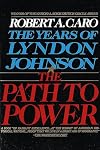
Caro is considered the gold standard of political biography for good reason. He's judicious, dedicated, and a truly great writer who knows how to wring a good story out of the driest of facts. It's well known, or should be, that Caro, a young native New Yorker and a Jew, moved with his new wife to the Texas hill country to get to know Johnson's country (to which the term "inhospitable" is more often than not attached). He knew that his only hope of getting those tight-lipped people to talk about Lyndon was to prove to them that he wasn't just another outsider trying to "get the story," but a human being trying to understand, who was willing to put himself on the line and live as they lived. He was able to approach them with a generous heart and without condescenscion, and it shows in the book. His chapter "The Sad Irons," about the lives of Hill Country women performing home labor without running water or electricity, is one of the most stunning pieces of non-fiction I've ever read. And his portrait of the little towns southwest of Austin, where the young Lyndon made his way from Johnson City to the teacher's college at San Marcos, illuminated my understanding of my own father, who made much the same journey (his from New Braunfels) just twenty years later. When Caro moved on to describing Johnson's style of politics, it helped me understand why Johnson, although arguably the nation's most powerful senator at the time, took a few minutes to draft a letter of show more recommendation for my father, whom he never met and from whom he needed nothing.
Like all good biography, "The Path to Power" is as much a portrait of its subject's times as of its subject. Readers who want to know how 20th century politics worked (so differently than today) would do well to start here. show less
Like all good biography, "The Path to Power" is as much a portrait of its subject's times as of its subject. Readers who want to know how 20th century politics worked (so differently than today) would do well to start here. show less
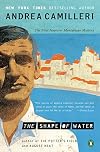
Given the many rapturous reviews from English-speaking readers, I must be one in a tiny minority, but I could never relax into this story and follow its details because I was continually irritated by its seemingly English-as-a-second-language translation. Yes, it's grammatically correct English, but the tone is all wrong, a little off, whether its the narration or the dialog. It just doesn't sound like the language I grew up with, whether it's a beat cop talking to his boss about "a certain De Francesco" or a person of interest sitting "with his buttocks on the edge of the chair" or a character using a formal "I'm sorry" when a muttered "Sorry" would be the only expected response. The translator, Stephen Sartarelli, is indeed an American, so I have to conclude that this is his choice. Perhaps he's trying to preserve the particular flavor and rhythms of the Italian language, but I think it's a mistake to do so consistently and regardless of context. I would think any translator would know that the most literal translation is not always the best one. For one thing, I believe that a character who's speaking colloquially should have his speech rendered colloquially, and that working-class characters shouldn't sound (on the page) just like upper-class characters, and vice versa. I'm sorry that I can't address the major elements of story such as plot and characterization in my review, because for me they were buried under this haze of distraction.
Adding to my irritation, notes show more for foreign readers that help a lot in explaining particularly topical and Italian references are hidden at the end of the book, without any asterisks or footnote markers letting you know they're there. For this I blame Penguin, not the translator, who compiled the notes. For decades, publishers have been convinced that any kind of explanatory note spoils the reader's experience, and that such notes should be made as inaccessible as possible. show less
Adding to my irritation, notes show more for foreign readers that help a lot in explaining particularly topical and Italian references are hidden at the end of the book, without any asterisks or footnote markers letting you know they're there. For this I blame Penguin, not the translator, who compiled the notes. For decades, publishers have been convinced that any kind of explanatory note spoils the reader's experience, and that such notes should be made as inaccessible as possible. show less
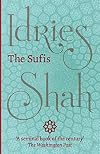
This is a difficult book to review. The author, an acknowledged Sufi master, has accepted the task of writing a comprehensive book about Sufism, the first in the West by a Sufi. But one of the themes of the book is that Sufism cannot be grasped by the intellect or communicated through words. The author is therefore forced to dance around his subject for several hundred pages. He doesn't wish to obscure it with European-style analysis. Neither does he want to trivialize or dumb down a tradition that is thousands of years old. The result is at times a history, at others a mystical tract. A bit like the Bible, if the Bible had been commissioned by a publisher of textbooks.
So there is much to frustrate a reader like me, theoretically open to the mystical, but steeped in the Western intellectual tradition. What I think of as essential questions go unanswered, such as the question of how a movement can pass down its traditions with no centers of worship, no hierarchy, and an entirely unofficial (and anonymous) priesthood. At the same time, there is much material of which I'm skeptical, such as the many, many pages devoted to numerology and to finding the hidden meaning of words by converting them to numbers. (I wish I had room here to reproduce one of these three-page analyses.) Then there is the chapter asserting that Francis of Assisi learned much of what he taught from Sufi masters. The circumstantial evidence is interesting; but it isn't, and can never be, conclusive. (I show more wonder why it matters.)
You can't help feeling that the author, were he being candid, would have begun with a preface urging the reader not to waste his time, because truth can't be found in the book. Nevertheless, there are thousands of interesting anecdotes and stories, most mysterious, which I would be glad to see excerpted for contemplation, away from the numerology, the historical speculation, and the repeated insistance that Sufism is the true mystical path underlying all the world's religions. show less
So there is much to frustrate a reader like me, theoretically open to the mystical, but steeped in the Western intellectual tradition. What I think of as essential questions go unanswered, such as the question of how a movement can pass down its traditions with no centers of worship, no hierarchy, and an entirely unofficial (and anonymous) priesthood. At the same time, there is much material of which I'm skeptical, such as the many, many pages devoted to numerology and to finding the hidden meaning of words by converting them to numbers. (I wish I had room here to reproduce one of these three-page analyses.) Then there is the chapter asserting that Francis of Assisi learned much of what he taught from Sufi masters. The circumstantial evidence is interesting; but it isn't, and can never be, conclusive. (I show more wonder why it matters.)
You can't help feeling that the author, were he being candid, would have begun with a preface urging the reader not to waste his time, because truth can't be found in the book. Nevertheless, there are thousands of interesting anecdotes and stories, most mysterious, which I would be glad to see excerpted for contemplation, away from the numerology, the historical speculation, and the repeated insistance that Sufism is the true mystical path underlying all the world's religions. show less
Talkin' Greenwich Village: The Heady Rise and Slow Fall of America’s Bohemian Music Capital by David Browne
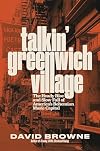
This is an enjoyable book all the way through, constructed in well-flowing narrative, overflowing with characterization and anecdote. Browne (a veteran writer for Rolling Stone covers the scene from 1957 all the way to it last gasp in the late eighties, from Dave Van Ronk and Bob Dylan to the Roches and Suzanne Vega. Although I'm unfamiliar with most of the pre-eighties musicians except for Dylan and Phil Ochs, my interest never flagged. There are lots of surprises here, from Bob Dylan turning up at a Patti Smith show in the seventies to Richie Havens co-authoring a song with Lou Gossett, Jr.
My one complaint would be that Browne doesn't seem to have much feeling for the music itself. Throughout most of the book, descriptions of the sound of these artists tends to be cursory and unenlightening. My suspicion that Browne isn't a fan was confirmed, I think, when we reach the Roches near the end, and suddenly we get a track-by-track analysis of each album's content together with full description. One can guess that this is where Browne's musical life started to intersect. Nevertheless, the life of the Village and its characters is very vivid and the book doesn't suffer too badly.
My one complaint would be that Browne doesn't seem to have much feeling for the music itself. Throughout most of the book, descriptions of the sound of these artists tends to be cursory and unenlightening. My suspicion that Browne isn't a fan was confirmed, I think, when we reach the Roches near the end, and suddenly we get a track-by-track analysis of each album's content together with full description. One can guess that this is where Browne's musical life started to intersect. Nevertheless, the life of the Village and its characters is very vivid and the book doesn't suffer too badly.
Defending the Middle Ages: Little Known Truths About the Crusades, Inquisitions, Medieval Women, and More by Jeb Smith

As one who has himself come to the conclusion that what I grew up calling "the Dark Ages" were in many ways no darker than our own, I was eager to read an intelligent analysis that might further enhance my understanding of the era. And I don't think anyone can accuse Jeb Smith of not doing his research. Very few self-published books, and increasingly few books from major publishing houses, come with an extensive list of references these days. Unfortunately, Smith's reading of history is not balanced. In his eagerness to correct the record, he credulously accepts the medieval accounts that support his own views, which are heavily grounded in a particular religious and moral framework, and discounts the testimony that contradict them. This framework includes the acceptance of the institutional Christianity of this period as being the best and only expression of the Christian ideal at that time, and the author's apparent opinion that the excesses and cruelties perpetrated by institutional Christianity were justified by the threats posed by its opponents.
Let's look at torture. To his credit, Smith confronts the issue head on. Smith tells us that "torture was only used when a guilty verdict seemed inevitable, but the guilty refused to confess." (The torturers of Abu Ghraib would likely have said the same.) He tells us in italics, so that we cannot skip over his message, that Inquisitors "were the heretics' friend, not their enemy as commonly believed." If defendants were found show more guilty, "the inquisitors would try to show the heretic why they are wrong and why their soul is in danger and try to bring them back...the Inquisitors were not like the typical portrayal of angry, bloodthirsty lunatics enjoying torture. In fact, they were often educated and morally upright men who were seeking the truth....alhough the image of dark dungeons and secret trials, torture and murders is commonly shared, everything was actually written down and recorded." What is as concerning as what seems to be a tacit endorsement of torture is the author's seeming belief that these statements could change anyone's mind about its evil. If a man has me bound and is pulling at my flesh with red-hot pincers, it does not matter to me whether he is educated, whether he is sincere in his belief that I am wrong, whether he enjoys or hates using the pincers, and certainly not whether he thinks of himself as my friend. Smith's portrayal of inquisitional methods as understandable, even kind, does nothing to correct the record, much less the incompatibility of torture with Christian love, however conceived.
This is only one example subject among many subjects, such as the nature of Islam and the position of women, which are covered in the book. Smith's views on these subjects go beyond correcting the accepted historical record of the Middle Ages, as he sometimes leaves his subject for outbursts whose subject is the modern world. "Do you want people to hear your voice [as a woman]? Start with your children, raising them to hear and obey you. The loving voice of a mother is better received than holding a sign screaming at strangers in the street. Do you want to be counter-cultural? Stay married for life, be an example of unconditional love to your kids and husband, and most of all, homeschool your kids, it's the most counter-cultural decision you can make, and the results will show it." He continues in a section titled "Modern Feminism: The Hatred of All Things Feminine," so close to his heart that he uses it to end his book.
Smith can't defend the Middle Ages, it seems, without attacking the modern age. But his attacks obscure, not reinforce, the defense, and in most readers' minds at least, seem likely to invalidate it. show less
Let's look at torture. To his credit, Smith confronts the issue head on. Smith tells us that "torture was only used when a guilty verdict seemed inevitable, but the guilty refused to confess." (The torturers of Abu Ghraib would likely have said the same.) He tells us in italics, so that we cannot skip over his message, that Inquisitors "were the heretics' friend, not their enemy as commonly believed." If defendants were found show more guilty, "the inquisitors would try to show the heretic why they are wrong and why their soul is in danger and try to bring them back...the Inquisitors were not like the typical portrayal of angry, bloodthirsty lunatics enjoying torture. In fact, they were often educated and morally upright men who were seeking the truth....alhough the image of dark dungeons and secret trials, torture and murders is commonly shared, everything was actually written down and recorded." What is as concerning as what seems to be a tacit endorsement of torture is the author's seeming belief that these statements could change anyone's mind about its evil. If a man has me bound and is pulling at my flesh with red-hot pincers, it does not matter to me whether he is educated, whether he is sincere in his belief that I am wrong, whether he enjoys or hates using the pincers, and certainly not whether he thinks of himself as my friend. Smith's portrayal of inquisitional methods as understandable, even kind, does nothing to correct the record, much less the incompatibility of torture with Christian love, however conceived.
This is only one example subject among many subjects, such as the nature of Islam and the position of women, which are covered in the book. Smith's views on these subjects go beyond correcting the accepted historical record of the Middle Ages, as he sometimes leaves his subject for outbursts whose subject is the modern world. "Do you want people to hear your voice [as a woman]? Start with your children, raising them to hear and obey you. The loving voice of a mother is better received than holding a sign screaming at strangers in the street. Do you want to be counter-cultural? Stay married for life, be an example of unconditional love to your kids and husband, and most of all, homeschool your kids, it's the most counter-cultural decision you can make, and the results will show it." He continues in a section titled "Modern Feminism: The Hatred of All Things Feminine," so close to his heart that he uses it to end his book.
Smith can't defend the Middle Ages, it seems, without attacking the modern age. But his attacks obscure, not reinforce, the defense, and in most readers' minds at least, seem likely to invalidate it. show less
 This review was written for LibraryThing Early Reviewers.
I wouldn't call this book an absolute disaster, but it's a first book, and it reads like it. To be more precise, it reads like the manuscript of a novel that was, probably rightfully, never published, an author's awkward first steps. I always tend to blame the publishing company when a novel shows signs of talent but generally lands with a thud. There used to be editors who would save the author from her failings, correcting errors of vocabulary, of grammar, of historical plausibility, of pacing and of characterization. There appears to have been none of that saving action here. I know that the author is successful in several fields, and went on to write more books; I hope they're better.
An 800-page novel that should have been a 400-page novel. More than 200 pages pass before the plot begins to rouse itself, and the first-person narration is so discursive, verbose and prissy that it presents a serious test of patience.
Talcott Garland's father Oliver Garland, a kind of Clarence Thomas figure but without the imputation of sexual misbehavior, has just died, leaving poor Talcott (as we find out on page 256) a puzzle that he must solve to find the mysterious "arrangements" that were left for him. Meanwhile, multiple teams of shady operatives of various levels of fearsomeness are after the same arrangements. Although these operatives are clearly capable of violence, Oliver's powerful underworld buddy Jack Ziegler has pledged to keep Talcott and his family safe, so there's rarely any real sense of physical danger. The plot consists mostly of Talcott evading and/or interacting with the operatives, trying to solve the puzzle, and (not least) trying to hold his marriage to his narcissistic, unfaithful wife Kimmer together while navigating the treacherous waters of academic politics.
If the lead character in a first-person book is a straight arrow (Talcott doesn't drink, curse or fight), there needs to be a more unpredictable friend, ally, or enemy — think of Easy Rawlins' friend Mouse in Walter Mosley's "Devil in a Blue Dress." Unfortunately, for most of the book Talcott has no one to depend on except his pastor/counselor Dr. Morris Young, a specialist in smug, show more fatuous relationship advice that's accepted by the narrator (and, I think, by the author) as sage counsel. Jack Ziegler is a snakily vivid character, but can't transcend the weight of his author's moral judgment. Kimmer is clearly toxic, but (being inside Talcott's head) the reader has to put up with countless paragraphs of mooning over her. Talcott and Kimmer's toddler son Bentley is a bundle of baby-speak cuteness without personality. One of the operatives, Maxine, springs suddently to life and gives the reader some hope that Talcott might actually find a path to a verve all his own, but she disappears. Almost all of Talcott's colleagues are far more interested in status games than in being rounded individuals, capable of kindness as well as spite. Talcott doesn't trust any of them, and they don't trust him, no doubt because he's never cracked a joke in his life.
The cover of my 2007 Vintage paperback edition includes several misleading blurbs, including one from the NYTBR calling it "high-spirited and fleet of foot," although it is low-spirited and plodding, and one from John Grisham calling it a "legal thriller," which it is not: there isn't a single courtroom scene in the book. show less
Talcott Garland's father Oliver Garland, a kind of Clarence Thomas figure but without the imputation of sexual misbehavior, has just died, leaving poor Talcott (as we find out on page 256) a puzzle that he must solve to find the mysterious "arrangements" that were left for him. Meanwhile, multiple teams of shady operatives of various levels of fearsomeness are after the same arrangements. Although these operatives are clearly capable of violence, Oliver's powerful underworld buddy Jack Ziegler has pledged to keep Talcott and his family safe, so there's rarely any real sense of physical danger. The plot consists mostly of Talcott evading and/or interacting with the operatives, trying to solve the puzzle, and (not least) trying to hold his marriage to his narcissistic, unfaithful wife Kimmer together while navigating the treacherous waters of academic politics.
If the lead character in a first-person book is a straight arrow (Talcott doesn't drink, curse or fight), there needs to be a more unpredictable friend, ally, or enemy — think of Easy Rawlins' friend Mouse in Walter Mosley's "Devil in a Blue Dress." Unfortunately, for most of the book Talcott has no one to depend on except his pastor/counselor Dr. Morris Young, a specialist in smug, show more fatuous relationship advice that's accepted by the narrator (and, I think, by the author) as sage counsel. Jack Ziegler is a snakily vivid character, but can't transcend the weight of his author's moral judgment. Kimmer is clearly toxic, but (being inside Talcott's head) the reader has to put up with countless paragraphs of mooning over her. Talcott and Kimmer's toddler son Bentley is a bundle of baby-speak cuteness without personality. One of the operatives, Maxine, springs suddently to life and gives the reader some hope that Talcott might actually find a path to a verve all his own, but she disappears. Almost all of Talcott's colleagues are far more interested in status games than in being rounded individuals, capable of kindness as well as spite. Talcott doesn't trust any of them, and they don't trust him, no doubt because he's never cracked a joke in his life.
The cover of my 2007 Vintage paperback edition includes several misleading blurbs, including one from the NYTBR calling it "high-spirited and fleet of foot," although it is low-spirited and plodding, and one from John Grisham calling it a "legal thriller," which it is not: there isn't a single courtroom scene in the book. show less
The Freaks Came Out to Write: The Definitive History of the Village Voice, the Radical Paper That Changed American Culture by Tricia Romano
Despite the excellence of some oral histories, which in their sense of immediate witness bring a vividness to the times described, a frequent drawback of the form is an absence of context and of narrative. Too often, an oral history is an assemblage where a story is needed, and that's the case here. You have to be either a lifelong New Yorker or to have been involved somehow with the people and events described, or you'll be too often lost in the sea of names and events. To be sure, many of the names here had impact beyond the Voice, including Lester Bangs, Amiri Baraka, Robert Christgau, Alexander Cockburn, Norman Mailer, Ellen Willis, and James Wolcott, which is how I came to the book. I loved the chapter on the CBGB's scene and the rest of the late '70s music explosion, and I wish I could read more excerpts from the music journalism of that period. (A sample: "Talking Heads is organized around a remote and skinny guy named David Byrne, who sings in a high somber voice, somewhat like a seagull talking to its shrink...If Jonathan Richman plays the kid who ate his snot, David plays the kid who held his farts in" - Richard Goldstein)
The trouble is, though, that I wasn't there, and I don't know most of the people, so that reading this book is a lot like wandering into a conversation of strangers. It's often fascinating, but an outsider is full of questions; in an actual conversation, you don't dare interrupt to ask, and in an oral history, you can't. The Village Voice show more deserves a narrative history, not a pastiche of remembrances. I wish this were it. show less
The trouble is, though, that I wasn't there, and I don't know most of the people, so that reading this book is a lot like wandering into a conversation of strangers. It's often fascinating, but an outsider is full of questions; in an actual conversation, you don't dare interrupt to ask, and in an oral history, you can't. The Village Voice show more deserves a narrative history, not a pastiche of remembrances. I wish this were it. show less