
Madeleine L'Engle (1918–2007)
Author of A Wrinkle in Time
About the Author
Author Madeleine L'Engle was born in New York City on November 29, 1918. She graduated from Smith College. She is best known for A Wrinkle in Time (1962), which won the 1963 Newbery Medal for best American children's book. While many of her novels blend science fiction and fantasy, she has also show more written a series of autobiographical books, including Two Part Invention: The Story of a Marriage, which deals with the illness and death of her husband, soap opera actor Hugh Franklin. In 2004, she received a National Humanities Medal from President George W. Bush. She died on September 6, 2007 of natural causes. Since 1976, Wheaton College in Illinois has maintained a special collection of L'Engle's papers, and a variety of other materials, dating back to 1919. (Bowker Author Biography) show less
Series
Works by Madeleine L'Engle
The Glorious Impossible [Illustrated with Frescoes from the Scrovegni Chapel by Giotto] (1990) 590 copies, 8 reviews
A Wind in the Door, A Swiftly Tilting Planet, Many Waters & An Acceptable Time 583 copies, 2 reviews
Ladder of Angels: Stories from the Bible Illustrated by Children of the World (1979) 300 copies, 1 review
Penguins and Golden Calves: Icons and Idols in Antarctica and Other Unexpected Places (Wheaton Literary Series) (1997) 265 copies, 5 reviews
The Genesis Trilogy: And It Was Good, A Stone for a Pillow, Sold Into Egypt (1997) 171 copies, 1 review
The Polly O'Keefe Quartet: The Arm of the Starfish / Dragons in the Waters / A House Like a Lotus / An Acceptable Time (2018) 128 copies, 1 review
The Crosswicks Journals: A Circle of Quiet, The Summer of the Great-Grandmother, The Irrational Season, and Two-Part Invention (2017) 81 copies
Intergalactic P.S. 3: A Wrinkle in Time Story (A Wrinkle in Time Quintet) (2018) 45 copies, 1 review
Madeleine L'Engle: The Kairos Novels: The Wrinkle in Time and Polly O'Keefe Quartets: A Library of America Boxed Set (2018) 43 copies
The Crosswicks Journal : The Irrational Season, The Summer of the Great-Grandmother, and A Circle of Quiet (1988) 26 copies
The Novels of Madeleine L'Engle Volume One: The Other Side of the Sun, A Live Coal in the Sea, and A Winter's Love (2018) 24 copies
Dare to be creative!: A lecture presented at the Library of Congress, November 16, 1983 (1984) 12 copies
Poor Little Saturday 3 copies
Passion & Honor 2 copies
Rare Madeleine L'Engle A RING OF ENDLESS LIGHT 1980 1stEd HC/DJ Farrar Straus Giroux (1995) 2 copies
CHRISTMAS STORIES PACK SET: Twenty-Four Days Before Christmas and Ten Tales of Christmas (1986) 1 copy
Camila 1 copy
A Wrinkle in Time - 06 1 copy
The Arm of the Starfish / Dragons in the Waters / Meet the Austins / The Young Unicorns / Camilla 1 copy
A Winter's Love: A Novel 1 copy
Associated Works
She Said Yes: The Unlikely Martyrdom of Cassie Bernall (1999) — Foreword, some editions — 1,596 copies, 31 reviews
Watch for the Light: Readings for Advent and Christmas (2004) — Contributor — 902 copies, 10 reviews
The Wand in the Word: Conversations with Writers of Fantasy (2006) — Contributor — 255 copies, 9 reviews
Wise Women: Over Two Thousand Years of Spiritual Writing by Women (1996) — Contributor — 231 copies, 1 review
Isaac Asimov's Magical Worlds of Fantasy, Volume 2: Witches (1984) — Contributor — 155 copies, 1 review
Pilgrim Souls: A Collection of Spiritual Autobiography (1999) — Introduction, some editions — 142 copies
The Life of Meaning: Reflections on Faith, Doubt, and Repairing the World (2007) — Contributor — 132 copies, 5 reviews
Writing Women's Lives: An Anthology of Autobiographical Narratives by Twentieth-Century American Women Writers (1994) — Contributor — 128 copies, 3 reviews
The Graphic Canon of Children's Literature: The World's Greatest Kids' Lit as Comics and Visuals (2014) — Contributor — 101 copies, 1 review
Great American Ghost Stories Volume 1 (Anthology 16-in-1) (1992) — Contributor — 25 copies, 2 reviews
Rediscovery, Volume 2: Science Fiction by Women, 1953-1957 (2022) — Contributor — 15 copies, 1 review
Parabola: Myth, Tradition, and the Search for Meaning, Vol. 22, No. 2: The Shadow (1997) — Author — 11 copies
A Ring of Endless Light [2002 TV movie] — Original novel — 6 copies
Tagged
Common Knowledge
- Canonical name
- L'Engle, Madeleine
- Legal name
- Franklin, Madeleine L'Engle (married)
Camp, Madeleine (born) - Birthdate
- 1918-11-29
- Date of death
- 2007-09-06
- Gender
- female
- Education
- Smith College (BA|1941)
Berkeley Divinity School (1984) - Occupations
- novelist
actor
poet
librarian
teacher - Organizations
- Cathedral Church of St. John the Divine
- Awards and honors
- Order of St John of Jerusalem (1972)
USM Medallion (1978)
Smith College Award (1981)
Sophia Award (1984)
Regina Medal (1985)
ALAN Award (1986) (show all 14)
Kerlan Award (1990)
Guest Speaker at the Library of Congress (1985)
Authors Guild president (1985-86)
Honorary Doctorate (Haverford College)
National Humanities Medal (2004)
Margaret A. Edwards Award (1998)
New York Writers Hall of Fame (2011)
SF Hall Of Fame (2017) - Agent
- Robert Lescher
Theron Raines - Relationships
- Roy, Léna (granddaughter)
Camp, Charles Wadsworth (father)
Voiklis, Charlotte Jones (granddaughter)
Rooney, Maria (daughter)
Moore, Cornelia Duryée (goddaughter) - Short biography
- Madeleine L'Engle Camp began writing stories, poems and journals at a young age. When she was 12, she moved with her parents to the French Alps and went to an English boarding school. She attended high school back in the USA at Ashley Hall in Charleston, South Carolina, vacationing with her mother in an old cottage on Florida Beach.
She majored in English at Smith College and graduated with honors in 1941. She moved into an apartment in Greenwich Village in New York, worked in the theater, and published her first two novels, A Small Rain (1945) and Ilsa (1946). In 1946, she married Hugh Franklin, an actor, whom she met while an understudy in Anton Chekov’s The Cherry Orchard. The couple moved to Connecticut to raise their family on a small dairy farm village with more cows than people; they later returned to New York City with three children. Madeleine began an association with the Cathedral Church of St. John the Divine, where she was the librarian and maintained an office for more than 30 years. She produced more than 60 books during her career. - Cause of death
- natural causes
- Nationality
- USA
- Birthplace
- New York, New York, USA
- Places of residence
- New York, New York, USA
Litchfield, Connecticut, USA
Montreux, Vaud, Switzerland
Charleston, South Carolina, USA
France - Place of death
- Litchfield, Connecticut, USA
- Burial location
- Silver Lane Cemetery, East Hartford, Connecticut, USA
- Associated Place (for map)
- USA
Members
Discussions
Madeleine L'Engle in Legacy Libraries (April 2021)
Juvenile SciFi Book Group Visits Multiple Worlds in Name that Book (December 2018)
A Wrinkle in Time in Tattered but still lovely (March 2018)
Young adultish age book fantasy book in Name that Book (August 2012)
Book Discussion: A Wrinkle in Time ~CAUTION~ Contains Spoilers in The Green Dragon (May 2010)
Madeleine L'Engle (RIP) in Feminist SF (September 2007)
Madeleine L'Engle, 1918-2007 in Authors In Memoriam (September 2007)
Reviews
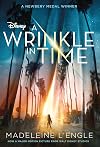
On the occasion of a major motion picture adaptation of Madeleine L'Engle's A Wrinkle In Time 56 years after its publication, I decided to tesser through the fifth dimension back to 1962 to learn about the novel's apparent durability among middle-grade literati. What I discovered is a mid-generational artifact wedged right between the 60's feminist movement and McCarthy era preoccupations.
Meg is a twelve-year-old science nerd and bullied weirdo at school. However, at home she is the fulcrum show more of her weirdo science nerd family, including her unusual five-year-old brother, Charles Wallace, who hides his amazing intellectual gifts from other children. After Meg's father, a physicist, mysteriously vanishes during a top secret experiment, a trio of intergalactic ferry-like women - Mrs. Who, Mrs. Which, and Mrs. Whatsit - arrive offering to help find him. They lead Meg, Charles Wallace, and a teenage friend, Calvin, on a dangerous mission to rescue the father, and introduce the children to the Tesseract, a method of space travel that involves folding (or wrinkling) time. From a luminous spot in the cosmos, the children are shown Camazotz, a dark planet shrouded by a malevolent cloud called The Black Thing and inhabited by people whose minds are controlled by IT. The authoritarian IT, is a disfleshed, mechanical brain, imposing total social conformity among Camazotz population. IT also holds Meg's father prisoner. Meg and the other children are the only beings capable of traveling through The Black Thing to Camazotz, and risk being indoctrinated into ITs ethos of homogeneity. Through Meg's journey two major themes emerge, the indicated one, appointing a young girl as progressive protagonist and hero of individualism, the other a subtextual bulwark of anti-communist zealotry and prevailing conservative values.
Meg begins the story as a hesitater and social outcast among her peers. Because she does not fit it, she is considered stupid, (a missummation also applied to Charles Wallace). Although, the three missuses celebrate Meg's differentness and individual gifts, ultimately saving her family and the world from galactic evil is something she accomplishes alone. They provide the vehicle of the Tesseract, the mission, and the encouragement, but Meg's strongest tool is her inner ability to overcome self-doubt. That is the novel's timely, broad-minded wrinkle.
Within the same pages a second, less forward-looking theme lurks. The nebulous Black Thing is slowly encompassing planet Earth, as it has to completion the less resistant planet Camazotz, a name which happens to rhyme obliquely with communist. Citizens of Camazotz live in identical suburban houses, where all children play games in unison and parents fearfully obey an average routine. The Black Thing suppresses individuality itself, replacing its importance with the false bliss of social equality. Camazotzians are not starved, or deprived of civil rights. Sameness, civic efficiency and the provision of equal economic resources are depicted as worse deprivations. "[Meg] held on to her moment of revelation. Like and equal are two entirely different things." Children of Camazotz are bereft because they have been absorbed philosophically by IT. The literal brain IT takes over independent thought making a person not just part of IT but turning them into an IT, and IT takes over Charles Wallace's mind. Depriving Charles Wallace of self-determination is described as an act hate, so Meg resolves to give Charles Wallace what ITs vacuous equality cannot - love. That is, nonsectarian Christian love, which is moderately referenced throughout novel.
Besides Economic Liberalism and Christianity, there are other quaint ideological convictions touted. Intellectualism is a bogeyman as demonstrated when Charles Wallace, the most erudite of the children, falls into ITs mind control most easily because he has the arrogance to think he can defeat IT with logic alone. Meg's father admits to irresponsible scientific exploration of the Tesseract - "we're children playing with dynamite" - a reference to nuclear weapons. Also, L'Engle's composition has a formal, fairy tale cadence that was perhaps the culture of children's books in 1962 - a lot of dears and darlings and Faaathers.
On the whole, A Wrinkle In Time is a novel from which young people will still draw relevant positivity. It is a story about a girl possessing the ability to solve problems with interior powers even the immortal, interstellar traveling women do not have. Maybe its 1962 first-world triumphalism does not hold up, but the message of children, particularly female children, learning to respect themselves is enduring. show less
Meg is a twelve-year-old science nerd and bullied weirdo at school. However, at home she is the fulcrum show more of her weirdo science nerd family, including her unusual five-year-old brother, Charles Wallace, who hides his amazing intellectual gifts from other children. After Meg's father, a physicist, mysteriously vanishes during a top secret experiment, a trio of intergalactic ferry-like women - Mrs. Who, Mrs. Which, and Mrs. Whatsit - arrive offering to help find him. They lead Meg, Charles Wallace, and a teenage friend, Calvin, on a dangerous mission to rescue the father, and introduce the children to the Tesseract, a method of space travel that involves folding (or wrinkling) time. From a luminous spot in the cosmos, the children are shown Camazotz, a dark planet shrouded by a malevolent cloud called The Black Thing and inhabited by people whose minds are controlled by IT. The authoritarian IT, is a disfleshed, mechanical brain, imposing total social conformity among Camazotz population. IT also holds Meg's father prisoner. Meg and the other children are the only beings capable of traveling through The Black Thing to Camazotz, and risk being indoctrinated into ITs ethos of homogeneity. Through Meg's journey two major themes emerge, the indicated one, appointing a young girl as progressive protagonist and hero of individualism, the other a subtextual bulwark of anti-communist zealotry and prevailing conservative values.
Meg begins the story as a hesitater and social outcast among her peers. Because she does not fit it, she is considered stupid, (a missummation also applied to Charles Wallace). Although, the three missuses celebrate Meg's differentness and individual gifts, ultimately saving her family and the world from galactic evil is something she accomplishes alone. They provide the vehicle of the Tesseract, the mission, and the encouragement, but Meg's strongest tool is her inner ability to overcome self-doubt. That is the novel's timely, broad-minded wrinkle.
Within the same pages a second, less forward-looking theme lurks. The nebulous Black Thing is slowly encompassing planet Earth, as it has to completion the less resistant planet Camazotz, a name which happens to rhyme obliquely with communist. Citizens of Camazotz live in identical suburban houses, where all children play games in unison and parents fearfully obey an average routine. The Black Thing suppresses individuality itself, replacing its importance with the false bliss of social equality. Camazotzians are not starved, or deprived of civil rights. Sameness, civic efficiency and the provision of equal economic resources are depicted as worse deprivations. "[Meg] held on to her moment of revelation. Like and equal are two entirely different things." Children of Camazotz are bereft because they have been absorbed philosophically by IT. The literal brain IT takes over independent thought making a person not just part of IT but turning them into an IT, and IT takes over Charles Wallace's mind. Depriving Charles Wallace of self-determination is described as an act hate, so Meg resolves to give Charles Wallace what ITs vacuous equality cannot - love. That is, nonsectarian Christian love, which is moderately referenced throughout novel.
Besides Economic Liberalism and Christianity, there are other quaint ideological convictions touted. Intellectualism is a bogeyman as demonstrated when Charles Wallace, the most erudite of the children, falls into ITs mind control most easily because he has the arrogance to think he can defeat IT with logic alone. Meg's father admits to irresponsible scientific exploration of the Tesseract - "we're children playing with dynamite" - a reference to nuclear weapons. Also, L'Engle's composition has a formal, fairy tale cadence that was perhaps the culture of children's books in 1962 - a lot of dears and darlings and Faaathers.
On the whole, A Wrinkle In Time is a novel from which young people will still draw relevant positivity. It is a story about a girl possessing the ability to solve problems with interior powers even the immortal, interstellar traveling women do not have. Maybe its 1962 first-world triumphalism does not hold up, but the message of children, particularly female children, learning to respect themselves is enduring. show less

What a phenomenal book that still holds up, even decades later. This was the first Madeline L'Engle book I read and it is still my favorite. Written in the mid-70's with a teenage woman as the protagonist, and a scientist as a mother, and the family doctor as a woman, it was as revolutionary in its characters as it was in its concepts. Cellular biology was getting a boost, and along comes the idea that the powerhouses of our cells, mitochondria, have something that powers THEM, called show more farandolae.
And then there's the kything with a cherubim! What a cool concept and something that fit right in with the ventures into the paranormal that were also so prevalent in the 1970s. A lot of the thinking got transformed into the New Age movement, but the idea of mind-speaking at a level beyond mental telepathy was fascinating to my 11 year old brain. And I loved Progo as much as Meg does and liked how the two of them have to work to find their connection to one another. Me, I just thought he was cool.
There were a surprising amount of adult-level conversations that Meg has to have with the adults around her: Mr. Jenkins, Progo, and Blajeny. I probably skimmed over them when I was younger, but now I am suitably impressed that no one talks down to Meg or to her brother, Charles Wallace, or even to the twins.
Glad I re-read this classic after all this time. show less
And then there's the kything with a cherubim! What a cool concept and something that fit right in with the ventures into the paranormal that were also so prevalent in the 1970s. A lot of the thinking got transformed into the New Age movement, but the idea of mind-speaking at a level beyond mental telepathy was fascinating to my 11 year old brain. And I loved Progo as much as Meg does and liked how the two of them have to work to find their connection to one another. Me, I just thought he was cool.
There were a surprising amount of adult-level conversations that Meg has to have with the adults around her: Mr. Jenkins, Progo, and Blajeny. I probably skimmed over them when I was younger, but now I am suitably impressed that no one talks down to Meg or to her brother, Charles Wallace, or even to the twins.
Glad I re-read this classic after all this time. show less

Summary: The third in a four book collection titled The Crosswicks Journals consisting of reflections shaped around the church year, and memories of different season's in the author's life.
Madeleine L'Engle's work is receiving renewed attention with the release of the film version of A Wrinkle in Time. I first discovered this story, and those that followed in college. Later, these were among our favorites in "read aloud" times as a family. Eventually I discovered that this was only a small show more part of this author's work, which included children's stories, fiction and science fiction, poetry, journals, a trilogy commenting on Genesis, and various collections of essays. Running through all of this is the author's hard-won Christian faith
This work, the third in The Crosswicks Journals series of autobiographical memoirs, is a collection of reflections organized around the church year, from Advent to Advent. The work begins and ends with what she describes as her struggle between atheism and faith, her struggle to believe in something as incredible as the Incarnation. Her reflections take us through the church year--her struggle with the Slaughter of the Innocents that Christ both escaped, and embraced in the cross, reflections on the outworking of the Beatitudes during Lent, a beautiful icon of Mother and Child and the Cross hung on her property deliberately destroyed by a gunshot at close range, and the resurrection of hope at Easter, her thoughts on the Holy Spirit, who she describes as the person of the Trinity she most understands (unlike most of us), reflections on the Trinity, and the grace of community she experienced in a rural congregation, and musings on the Transfiguration as her setter chases a swallow in a meadow.
The journal is full of rich, beautiful, and earthy wisdom. She writes extensively about marriage and sexuality in her chapter on Epiphany:
"It takes a lifetime to learn another person. After all these years I still do not understand Hugh; and he certainly does not understand me. We're still in the risky process of offering ourselves to each other, and there continue to be times when this is not easy, when the timing isn't right, when we hurt each other. It takes a lifetime to learn all the varied ways of love, including intercourse. Love-making is like a Bach fugue; you can't go to the piano and play a fugue the first time you hold your hands out over the keys."
In several chapters she writes on the "Noes" of God, and how in our own lives the cross must precede the resurrection, and the "no" of God often precede God's "yes." She shares this reminiscence of the time when she was seeking a publisher for A Wrinkle in Time:
"Experience is painfully teaching me that what seems NO to a man from man's point of view, is often the essential prelude to a far greater YES. The Noes which have been said to me may be as small and inconsequential as the opportunities given me for peacemaking, but they are mine. During the two years when A Wrinkle in Time was consistently being rejected by publisher after publisher, I often went out alone at night and walked down the dirt road on which Crosswicks faces, and shouted at God; 'Why don't you let it get accepted? Why are you letting me have all these rejection slips? You know it is a good book! I wrote it for you! So why doesn't anyone see it?'
But when Wrinkle was finally published, it was exactly the right moment for it, and if it had been published two years earlier it might well have dropped into a black pit of oblivion."
I, for one, am glad that it didn't and that this particular "No" of God let to this wonderful "Yes."
L'Engle has faced criticism for her universalism, about which she writes in this work. She affirms, "No matter how many eons it takes, he [God] will not rest until all of creation, including Satan, is reconciled to him until there is no creature who cannot return his look of love with a joyful response of love." I do not agree with L'Engle, but I do not think this is reason not to read, her works. A few pages earlier, she vigorously defends the bodily Resurrection of Jesus and its centrality to Christian faith. Throughout, one finds wisdom tested by the vicissitudes of life--pain, failure, suffering and loss--as well as the embrace of all that is good in life from private moments with one's love, to glorious dinners, to childbirth, to a last, precious visit with a dying saint. In our most honest moments, we find ourselves with Madeleine, vacillating between atheism and a vibrant faith. Her reflections remind that we are not the only ones to face this, and that if we are in the darkness of a "No" from God, that it is not the last word, but the prelude to his "Yes." show less
Madeleine L'Engle's work is receiving renewed attention with the release of the film version of A Wrinkle in Time. I first discovered this story, and those that followed in college. Later, these were among our favorites in "read aloud" times as a family. Eventually I discovered that this was only a small show more part of this author's work, which included children's stories, fiction and science fiction, poetry, journals, a trilogy commenting on Genesis, and various collections of essays. Running through all of this is the author's hard-won Christian faith
This work, the third in The Crosswicks Journals series of autobiographical memoirs, is a collection of reflections organized around the church year, from Advent to Advent. The work begins and ends with what she describes as her struggle between atheism and faith, her struggle to believe in something as incredible as the Incarnation. Her reflections take us through the church year--her struggle with the Slaughter of the Innocents that Christ both escaped, and embraced in the cross, reflections on the outworking of the Beatitudes during Lent, a beautiful icon of Mother and Child and the Cross hung on her property deliberately destroyed by a gunshot at close range, and the resurrection of hope at Easter, her thoughts on the Holy Spirit, who she describes as the person of the Trinity she most understands (unlike most of us), reflections on the Trinity, and the grace of community she experienced in a rural congregation, and musings on the Transfiguration as her setter chases a swallow in a meadow.
The journal is full of rich, beautiful, and earthy wisdom. She writes extensively about marriage and sexuality in her chapter on Epiphany:
"It takes a lifetime to learn another person. After all these years I still do not understand Hugh; and he certainly does not understand me. We're still in the risky process of offering ourselves to each other, and there continue to be times when this is not easy, when the timing isn't right, when we hurt each other. It takes a lifetime to learn all the varied ways of love, including intercourse. Love-making is like a Bach fugue; you can't go to the piano and play a fugue the first time you hold your hands out over the keys."
In several chapters she writes on the "Noes" of God, and how in our own lives the cross must precede the resurrection, and the "no" of God often precede God's "yes." She shares this reminiscence of the time when she was seeking a publisher for A Wrinkle in Time:
"Experience is painfully teaching me that what seems NO to a man from man's point of view, is often the essential prelude to a far greater YES. The Noes which have been said to me may be as small and inconsequential as the opportunities given me for peacemaking, but they are mine. During the two years when A Wrinkle in Time was consistently being rejected by publisher after publisher, I often went out alone at night and walked down the dirt road on which Crosswicks faces, and shouted at God; 'Why don't you let it get accepted? Why are you letting me have all these rejection slips? You know it is a good book! I wrote it for you! So why doesn't anyone see it?'
But when Wrinkle was finally published, it was exactly the right moment for it, and if it had been published two years earlier it might well have dropped into a black pit of oblivion."
I, for one, am glad that it didn't and that this particular "No" of God let to this wonderful "Yes."
L'Engle has faced criticism for her universalism, about which she writes in this work. She affirms, "No matter how many eons it takes, he [God] will not rest until all of creation, including Satan, is reconciled to him until there is no creature who cannot return his look of love with a joyful response of love." I do not agree with L'Engle, but I do not think this is reason not to read, her works. A few pages earlier, she vigorously defends the bodily Resurrection of Jesus and its centrality to Christian faith. Throughout, one finds wisdom tested by the vicissitudes of life--pain, failure, suffering and loss--as well as the embrace of all that is good in life from private moments with one's love, to glorious dinners, to childbirth, to a last, precious visit with a dying saint. In our most honest moments, we find ourselves with Madeleine, vacillating between atheism and a vibrant faith. Her reflections remind that we are not the only ones to face this, and that if we are in the darkness of a "No" from God, that it is not the last word, but the prelude to his "Yes." show less
Reread review: June 16, 2020
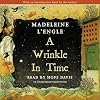
Oh god this beautiful wonderful book. Holds up yet again, and this (audiobook) edition came with an interesting appreciation by Ava DuVernay, a brief intro by the author, and an afterword by the author's granddaughter which functioned as a kind of biographical sketch and review and was really interesting.
But OH this book. I do not recommend doing as I did, which was listen while I was working, because I did cry like multiple times. (Calvin falling to his knees show more when Mrs. Whatsit transforms....... something about that image just HIT ME so hard this time around, despite having read it like so many times.) And boy what a book to read in a pandemic; I noticed the casual, loving touches so much more, and the level of deep affection these characters have for one another is expressed through touch in a way that I'd never noticed before.
It's just... such a beautiful book about love and loving one another, even though L'Engle herself apparently resisted that reading. I guess to modify it: love as an action, love in motion, love that has the power to drive us to act and know one another. It's just such a good, important book, probably my favorite of all time, and I'm glad I reread it again. show less
Oh god this beautiful wonderful book. Holds up yet again, and this (audiobook) edition came with an interesting appreciation by Ava DuVernay, a brief intro by the author, and an afterword by the author's granddaughter which functioned as a kind of biographical sketch and review and was really interesting.
But OH this book. I do not recommend doing as I did, which was listen while I was working, because I did cry like multiple times. (Calvin falling to his knees show more when Mrs. Whatsit transforms....... something about that image just HIT ME so hard this time around, despite having read it like so many times.) And boy what a book to read in a pandemic; I noticed the casual, loving touches so much more, and the level of deep affection these characters have for one another is expressed through touch in a way that I'd never noticed before.
It's just... such a beautiful book about love and loving one another, even though L'Engle herself apparently resisted that reading. I guess to modify it: love as an action, love in motion, love that has the power to drive us to act and know one another. It's just such a good, important book, probably my favorite of all time, and I'm glad I reread it again. show less
Lists
el (1)
Books with Twins (1)
Autumn books (1)
Witch Hunts (1)
BitLife (1)
. (1)
Comfort Reads (1)
Elevenses (1)
1960s (1)
1980s (1)
A Novel Cure (1)
Five star books (1)
Fave Books (1)
Best Young Adult (1)
Witchy Fiction (1)
Favourite Books (1)
Sonlight Books (2)
4th Grade Books (2)
Overdue Podcast (1)
Unread books (5)
Newbery Adjacent (4)
Female Author (4)
1970s (3)
. (1)
6th Grade (1)
al.vick-series (1)
um actually (1)
Awards


You May Also Like


Associated Authors
Statistics
- Works
- 122
- Also by
- 46
- Members
- 128,819
- Popularity
- #56
- Rating
- 4.0
- Reviews
- 1,936
- ISBNs
- 882
- Languages
- 20
- Favorited
- 455
