
Henri J. M. Nouwen (1932–1996)
Author of The Return of the Prodigal Son: A Story of Homecoming
About the Author
He was born in the Netherlands in 1932. An ordained priest and gifted teacher, he taught at several universities including Notre Dame, Harvard and Yale. He was a missionary in Peru. He died of a heart attack in 1996. (Publisher Provided) Henri J. M. Nouwen was born in Nijkerk, The Netherlands on show more January 24, 1932. He was ordained a priest in 1957. He taught theology at Yale University Divinity School from 1971 to 1981 and at Harvard Divinity School from 1983 to 1985. He was the pastor at Daybreak, the L'Arche community for the mentally handicapped in Toronto, Canada from 1986 to 1996. He wrote over 30 books on spirituality, healing, and ministry including Reaching Out, The Genesee Diary, The Wounded Healer, The Road to Daybreak, The Return of the Prodigal Son, and Can You Drink the Cup? He died of a heart attack on September 21, 1996 at the age of 64. (Bowker Author Biography) show less
Series
Works by Henri J. M. Nouwen
Clowning in Rome: Reflections on Solitude, Celibacy, Prayer, and Contemplation (1979) 553 copies, 1 review
Henri Nouwen (Modern Spiritual Masters): Writings Selected With an Introduction by Robert A. Jonas (1988) 258 copies, 1 review
Lent and Easter Wisdom from Henri J. M. Nouwen: Daily Scripture and Prayers Together with Nouwen's Own Words (Lent & Easter Wisdom) (2005) 143 copies
A Sorrow Shared: A Combined Edition of the Nouwen Classics "In Memoriam" and "A Letter of Consolation" (1987) 48 copies, 1 review
The Return of the Prodigal Son Anniversary Edition: A Special Two-in-One Volume, including Home Tonight (2016) 42 copies, 1 review
Hope for Caregivers: A 42-Day Devotional in Company with Henri J. M. Nouwen (2017) 18 copies, 1 review
O Curador Ferido - Ministerio na sociedade contemporanea (Em Portugues do Brasil) (2019) 5 copies, 1 review
Espaço Para Deus 4 copies
The seven Laws of the harvest 4 copies
El Lenguaje del corazon/ The Only Necessary Thing: Un Camino Hacia Tu Interior (Senderos/ Paths) (Spanish Edition) (2013) 3 copies
Den sårede hjelper : hvordan vi med vår sårbarhet kan bli en kilde til liv for andre (2004) 3 copies
Letter of consolatiion 2 copies
A Conversation with Henri Nouwen 2 copies
Inner Voice of Love 2 copies
Way of the Heart 2 copies
بأيد مفتوحة 2 copies
Simpler Living, Compassionate Life 2 copies
Maria de betrouwbare gids 2 copies
The Inner voice of Love 1 copy
Creativy Ministry 1 copy
With open hands 1 copy
Diario desde el monasterio 1 copy
A Way of the Heart 1 copy
El sanador herido 1 copy
En el nombre de Jesús 1 copy
Un grido per la pace 1 copy
Adan, el amado de Dios 1 copy
La voz interior del amor 1 copy
Creative Ministry 1 copy
Pastoraat en spiritualiteit, Het verzamelde werk, Nabij zijn, Delen, Helen, In de naam van Jezus (2010) 1 copy
EL CORAZÓN HABLA AL CORAZÓN 1 copy
Cry for Mercy 1 copy
Revenir à la maison ce soir : Nouvelles réflexions sur la parabole de l'enfant prodigue (2009) 1 copy
Meister Eckhart 1 copy
De vlieger en de vanger 1 copy
Way of the cross meditations 1 copy
Returning to God 1 copy
Het uur van de dageraad 1 copy
Loslassen und fliegen: Henri Nouwens ungewöhnliche Freundschaft mit Zirkus-Artisten (2023) 1 copy, 1 review
Kalež našega života 1 copy
Care and the elderly 1 copy
Solitude 1 copy
Merton's Palace of Nowhere 1 copy
Escritos esenciales de Henri Nouwen: Introducción y edición de Robert A. Jonas (Pozo de Siquem) (Spanish Edition) (1999) 1 copy
De gewonde heler 1 copy
Latin American Journal 1 copy
The Communion of Love 1 copy
Spirituality of Fundraising 1 copy
The Wounded Healer c.2 1 copy
The Genese Diary 1 copy
God’s Abiding Love 1 copy
A Voz íntima do amor 1 copy
Stillheten som skaper 1 copy
O Amado De Deus 1 copy
CARTAS A MARC SOBRE JESUS 1 copy
O Caminho da Esperança 1 copy
A Cry for Mercy c.2 1 copy
Uma Espiritualidade do Viver 1 copy
A volta do filho prodigo 1 copy
Foreign to Familiar 1 copy
Associated Works
Watch for the Light: Readings for Advent and Christmas (2004) — Contributor — 907 copies, 10 reviews
Leading from Within: Poetry That Sustains the Courage to Lead (2007) — Contributor — 116 copies, 3 reviews
A Dry Roof and a Cow: Dreams and Portraits of Our Neighbours (1994) — Introduction, some editions — 42 copies
Möge Gott dich halten, wenn der Boden schwankt. Segensworte für jeden Tag (2005) — Contributor — 1 copy
Tagged
Common Knowledge
- Legal name
- Nouwen, Henri Jozef Machiel
- Other names
- ç§é²
ç´æ
Nouwen, Henri J. M. - Birthdate
- 1932-01-24
- Date of death
- 1996-09-21
- Gender
- male
- Education
- University of Nijmegen (Ph.D., psychology, 1964)
University of Nijmegen (Ph.D., theology, 1971) - Occupations
- Catholic priest
- Organizations
- Roman Catholic Church
Menninger Clinic
University of Notre Dame
University of Utrecht
Catholic Theological Institute
Yale University (show all 8)
Harvard Divinity School
L'Arche Daybreak Community - Short biography
- Henri J. M. Nouwen was born in 1932,and ordained into the priesthood in 1957. He pursued an academic career,specializing in psychology from 1964 to 1982,with positions at the Menninger Clinic,Notre Dame,the University of Nijmegen,Harvard,and Yale. Nouwen next spent time as a missionary to the poor in war and poverty-torn areas of Latin America,including Bolivia,Peru,Mexico,Nicaragua,and Honduras. In his last years of life,he was a pastor at L'Arche Daybreak,a community for handicapped adults in Canada. Henri Nouwen was the author of over 30 books,including The Wounded Healer; Our Greatest Gift; Life of the Beloved; and others.
http://store.soundstrue.com/nouwenh.h... - Nationality
- Netherlands
- Birthplace
- Nijkerk, Netherlands
- Places of residence
- Nijkerk, Netherlands (birth)
- Place of death
- Hilversum, Noord-Holland, Niederlande
- Burial location
- Sacred Heart Cemetery, King City, Ontario, Canada
- Associated Place (for map)
- Nijkerk, Netherlands
Members
Reviews

Before writing about the book, a couple of disclaimers as my reasons for reading it have less to do with matters of Christian faith and more to do with curiousity albeit both secular and spiritual. I grew up about a mile as a crow flies from this monastery and many times, especially during the 1970's, attended the midnight mass at Christmas in the company of a Catholic friend. (I also grew up eating Monk's bread--the raisin-cinnamon was the best) so I could well have been at the midnight show more mass Nouwen writes of on his last night at the monastery in 1974. I put the book on my wishlist long ago, the "Genesee" having caught my eye. A friend here gave it to me. The river was less than a quarter mile from our farmhouse. The idea of my own large, messy, noisy and complicated family being so close by to a place of such quietude and contemplation bemused me.
So the book. Henri Nouwen, Dutch, and a devout Catholic, Jesuit-trained but also a restless man (and troubled) with an interest in the places where spirituality and psychology meet, asks to stay at the monastery and is granted the unique gift of a seven-month long residency. Henri, a teacher, writer, speaker, arrives in a burnt-out state, feeling that he is losing sight of his relationship to the core matter of his life, his relationship to God. Every week he spends an hour with the Abbot, John Eudes, a remarkable person in which they discuss his "progress".
Two compulsions form his efforts of the first few months, dealing with restlessness and anger, finding the source of each and ways to move beyond both. In the former it is, he realizes, his competitiveness, a constant measuring of himself versus others that causes him, when he is with people, to exhaust himself. Conversely being alone makes him feel crazily bored and even more so if it involves spending half a day hauling rocks out of a creek for the walls of the new chapel or washing raisins or bread pans. When he is alone he craves people, when with people, he craves being alone. He is not comfortable in himself in the moment. Eudes says "Without solitude there can be no real people. The more you discover what a person is, and experience what a human relationship requires in order to remain profound, fruitful, and a source of growth and development, the more you discover that you are alone--..." Nouwen also experiences flashes of anger (and longer bouts of resentment) when, say, he realizes that one monk is simply "nice" to everyone, not just him. Nouwen grapples with his need to be special, to stand out, to garner praise and not to resent it when others receive more praise than he. These first concerns gradually ease during the months of his stay and he has genuine insights into the underlying causes too which helps a shift and ebbing of turmoil as, gradually, the emotions subside. After six months he finds he can spend the day messing with the rocks or mucking about in the bakery if not quite happily, then contentedly and it feels wonderful. He knows he does not have a vocation to be a monk, so now Henri's hopes begin to turn toward taking what he has learned here with him when he returns to his regular life in the secular world. While in his epilogue he says he didn't do so well with it, I doubt that. I can say unequivocally that there is much here for the secular seeker and that my curiousity was satisfied. I'm happy to think of these good people being nearby, especially during my tumultuous adolescence. I have spent several hours all told in the "new" chapel, built in that year, and it is a lovely tranquil place. I love knowing that Henri Nouwen had a hand in it. ****1/2 show less
So the book. Henri Nouwen, Dutch, and a devout Catholic, Jesuit-trained but also a restless man (and troubled) with an interest in the places where spirituality and psychology meet, asks to stay at the monastery and is granted the unique gift of a seven-month long residency. Henri, a teacher, writer, speaker, arrives in a burnt-out state, feeling that he is losing sight of his relationship to the core matter of his life, his relationship to God. Every week he spends an hour with the Abbot, John Eudes, a remarkable person in which they discuss his "progress".
Two compulsions form his efforts of the first few months, dealing with restlessness and anger, finding the source of each and ways to move beyond both. In the former it is, he realizes, his competitiveness, a constant measuring of himself versus others that causes him, when he is with people, to exhaust himself. Conversely being alone makes him feel crazily bored and even more so if it involves spending half a day hauling rocks out of a creek for the walls of the new chapel or washing raisins or bread pans. When he is alone he craves people, when with people, he craves being alone. He is not comfortable in himself in the moment. Eudes says "Without solitude there can be no real people. The more you discover what a person is, and experience what a human relationship requires in order to remain profound, fruitful, and a source of growth and development, the more you discover that you are alone--..." Nouwen also experiences flashes of anger (and longer bouts of resentment) when, say, he realizes that one monk is simply "nice" to everyone, not just him. Nouwen grapples with his need to be special, to stand out, to garner praise and not to resent it when others receive more praise than he. These first concerns gradually ease during the months of his stay and he has genuine insights into the underlying causes too which helps a shift and ebbing of turmoil as, gradually, the emotions subside. After six months he finds he can spend the day messing with the rocks or mucking about in the bakery if not quite happily, then contentedly and it feels wonderful. He knows he does not have a vocation to be a monk, so now Henri's hopes begin to turn toward taking what he has learned here with him when he returns to his regular life in the secular world. While in his epilogue he says he didn't do so well with it, I doubt that. I can say unequivocally that there is much here for the secular seeker and that my curiousity was satisfied. I'm happy to think of these good people being nearby, especially during my tumultuous adolescence. I have spent several hours all told in the "new" chapel, built in that year, and it is a lovely tranquil place. I love knowing that Henri Nouwen had a hand in it. ****1/2 show less

Do yourself a favour and order this book—then come back to finish reading my review. This book is that good.
Here and Now is a collection of Henri Nouwen's reflections on life. Each reflection is about two pages long and they're grouped together under larger categories like "Joy," "Prayer," and "Suffering".
Any book of reflections is only as insightful as the life of the author. This is why Here and Now is so profound. Nouwen, a priest, became a professor who taught at Notre Dame, Yale, and show more Harvard. He devoted much of his life to the poor and lived the remainder of his life serving people with mental handicaps in L'Arche Daybreak in Richmond Hill, Ontario.
With Nouwen, there's no pretense. What you read is the fruit of honest reflection on life. He lived what he wrote in "Who We Are" (136):
"We, therefore, need discipline to keep living truthfully and not succumb to the endless seductions of our society."
Nouwen lived a disciplined truthful life apart from the seductions of society—and it shows. Here and Now will help you to see your own life-with-God in a new light. show less
Here and Now is a collection of Henri Nouwen's reflections on life. Each reflection is about two pages long and they're grouped together under larger categories like "Joy," "Prayer," and "Suffering".
Any book of reflections is only as insightful as the life of the author. This is why Here and Now is so profound. Nouwen, a priest, became a professor who taught at Notre Dame, Yale, and show more Harvard. He devoted much of his life to the poor and lived the remainder of his life serving people with mental handicaps in L'Arche Daybreak in Richmond Hill, Ontario.
With Nouwen, there's no pretense. What you read is the fruit of honest reflection on life. He lived what he wrote in "Who We Are" (136):
"We, therefore, need discipline to keep living truthfully and not succumb to the endless seductions of our society."
Nouwen lived a disciplined truthful life apart from the seductions of society—and it shows. Here and Now will help you to see your own life-with-God in a new light. show less

With his customary simple and passionate prose, Nouwen writes here about Christian Leadership. Nouwen takes the leadership attributes encouraged by the World and uproots them, turning them around, and showing how the Servant-Leadership of Christ Jesus is different. He illustrates this by examples from his own failures and struggles as a leader – going from the hallowed halls of Harvard to a community for mentally and physical disabled people where all his leadership skills suddenly became show more pointless and useless. It is from that place of humility he speaks to the Christian Leader, encourage and admonishing.
Although this book is simple and short, it is powerful. I would strongly encourage any Christian to read it – but in particular Christians who find themselves in a position of leaders, church or secular. Although written over 20 years ago, the message is still true and still needing to be heard. If leaders wish to be strong in the Kingdom of God they cannot lead the way the World does. They must lead the way Christ did. Nouwen’s book encourages this and is vital for any Christian. show less
Although this book is simple and short, it is powerful. I would strongly encourage any Christian to read it – but in particular Christians who find themselves in a position of leaders, church or secular. Although written over 20 years ago, the message is still true and still needing to be heard. If leaders wish to be strong in the Kingdom of God they cannot lead the way the World does. They must lead the way Christ did. Nouwen’s book encourages this and is vital for any Christian. show less
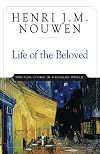
"Where is the gospel?" or so I found myself asking all throughout. In what is ostensibly an apologetic, Nouwen seems to shy away from any mention of what makes the Christian life at all distinctive and worthwhile: the redemptive power of Christ on the cross. One is taken and adopted as a child of God, through Christ's work. One is blessed and broken, as Christ was blessed and broken. One is given for others, because Christ first gave himself. Here the Eucharist is used as a framing device show more yet entirely emptied of its meaning and power. For one is beloved in the Beloved. It's no surprise, then, to find that his friends found the book uncompelling; how could it, without the gospel? What might have been a tender testament to the salvation that comes only from above becomes only impotent word-wrangling and hollow mysticism. show less
Lists
Awards


You May Also Like


Associated Authors
Statistics
- Works
- 319
- Also by
- 6
- Members
- 44,273
- Popularity
- #375
- Rating
- 4.0
- Reviews
- 313
- ISBNs
- 847
- Languages
- 20
- Favorited
- 61
