
Richard J. Foster (1) (1942–)
Author of Celebration of Discipline: The Path to Spiritual Growth
For other authors named Richard J. Foster, see the disambiguation page.
About the Author
Richard J. Foster is the author of several bestselling books, including Celebration of Discipline, Streams of Living Water, and Prayer, which in 1993 was Christianity Today's book of the year and the winner of the Gold Medallion Award from the Evangelical Christian Publishers Association. He is the show more founder of Renovar, an intrachurch movement committed to the renewal of the Church in all her multifaceted expressions, and the editor of The Life with God Bible. show less
Series
Works by Richard J. Foster
Streams of Living Water: Celebrating the Great Traditions of Christian Faith (1998) 1,486 copies, 9 reviews
The Challenge of the Disciplined Life: Christian Reflections on Money, Sex, and Power (1985) 1,074 copies, 6 reviews
Spiritual Classics: Selected Readings on the Twelve Spiritual Disciplines (2000) — Editor — 889 copies
A spiritual formation workbook : small group resources for nurturing Christian growth (1993) 750 copies, 1 review
Celebrating the Disciplines: A Journal Workbook to Accompany ``Celebration of Discipline'' (1992) 411 copies
Richard Foster Omnibus: " Celebration of Discipline " , " Money, Sex and Power " , " Prayers from the Heart " (1996) 33 copies, 1 review
Psalms and Canticles of the Breviary 7 copies
Toward a Quaker Renaissance: Study Guide (Friends, Faith and Life Curriculum: An Adult Elective Course) (1987) 5 copies
The Discipline of Solitude 4 copies
The Making of an Ordinary Saint: My Journey from Frustration to Joy with the Spiritual Disciplines 2 copies
基督徒看錢 = Money 2 copies
基督徒看性 = Sex 2 copies
基督徒看權勢 = Power 2 copies
Gebed 1 copy
Celebração da simplicidade 1 copy
靈命更新導引 1 copy
Sermon on the Mount 1 copy
Associated Works
Embracing the Love of God: The Path and Promise of Christian Life (1995) — Foreword, some editions — 219 copies
Tagged
Common Knowledge
- Canonical name
- Foster, Richard J.
- Legal name
- Foster, Richard James
- Other names
- 傅士德
- Birthdate
- 1942-05-03
- Gender
- male
- Education
- George Fox College (BA∙1964)
Fuller Theological Seminary (DThP|1970) - Occupations
- writer
pastor
professor - Organizations
- Renovare
- Awards and honors
- Writer of the Year, Warner Pacific College (1978)
Christy Award (1982)
Gold Medallion Award (1982)
Logos Bookstores Religious Book Award for Inspirational Book (1982)
Most Significant Author of the Year (Logos Bookstores, 1982); - Relationships
- Kerr, Alice Carolynn (spouse|1967)
- Nationality
- USA
- Birthplace
- Albuquerque, New Mexico, USA
- Places of residence
- Denver, Colorado, USA
- Associated Place (for map)
- USA
Members
Reviews
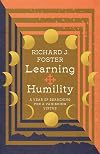
"Learning Humility: A Year of Searching for a Vanishing Virtue" by Richard Foster was a bit disappointing but still provided some insightful points. An example of a one such point was this: "I think I am detecting a difference between acts of service that are done with mixed motives as opposed [to] service with more pure motives. Perhaps we could say, the purer the service the deeper the humility."
The author had decided to focus on the virtue of humility, and did so over a period of a year, show more recording various thoughts and observations in a journal, which became the basis of this book. Furthermore, the author divides his book into chapters based on months of the Lakota calendar.
In addition to the notes from his journal, Foster includes references to thoughts about humility that have been made by theologians and writers over the centuries. Had he limited himself to that much, I think the book would have been better. But he also included various other things, such as a narrative about the massacre at Wounded Knee. Such references seemed to me to be only remotely linked to humility, and even though they might be extremely interesting, I found them distracting. Additionally, he included references throughout the book to a dozen Lakota virtues, humility among them, but eleven of them seemed to divert from the central theme of humility. (Perhaps the author would consider a book that focuses on those 12 virtues, with an emphasis on views and examples from the Lakota people.)
Disclosure: The reviewer received a free copy of the book via LibraryThing, but this was not contingent on writing a review nor did receiving a free copy influence the review. show less
The author had decided to focus on the virtue of humility, and did so over a period of a year, show more recording various thoughts and observations in a journal, which became the basis of this book. Furthermore, the author divides his book into chapters based on months of the Lakota calendar.
In addition to the notes from his journal, Foster includes references to thoughts about humility that have been made by theologians and writers over the centuries. Had he limited himself to that much, I think the book would have been better. But he also included various other things, such as a narrative about the massacre at Wounded Knee. Such references seemed to me to be only remotely linked to humility, and even though they might be extremely interesting, I found them distracting. Additionally, he included references throughout the book to a dozen Lakota virtues, humility among them, but eleven of them seemed to divert from the central theme of humility. (Perhaps the author would consider a book that focuses on those 12 virtues, with an emphasis on views and examples from the Lakota people.)
Disclosure: The reviewer received a free copy of the book via LibraryThing, but this was not contingent on writing a review nor did receiving a free copy influence the review. show less
 This review was written for LibraryThing Early Reviewers.
I was pleasantly surprised by this book. In a personal journal style, Foster walks us through the Lakota virtues following the Lakota calendar. The stories, though sometimes stream of consciousness, are sobering and thought provoking. Foster combines the broad Christian contemplative tradition on humility with stories from native and indigenous people. The U.S. treatment of the Lakota stirs one to sadness and anger. Foster’s work prompts one to act justly and long for humility.
Those who show more have read Foster’s other books, especially Celebration of Discipline, will find this one more personal, self-revealing, and introspective, yet still firmly grounded in scripture. If this is a first for you, I think you will want to read others by him that instruct and inspire us in the spiritual practices of prayer, meditation, service, and study.
The title alone suggests Foster openly professes a degree of ignorance about the virtue of humility as he seeks to learn more about it over the course of a year, and put it into practice. His insightful, candid account is enhanced by descriptions of the Lakota Indians’ calendrical observances, with the addition of helpful anecdotes and illuminating quotes.
Because the book is based on intermittent journal jottings, each entry is relatively short and can be a bit choppy to read. Though it might be off putting for some, I think it works well here because such a method reflects the fits and starts of life itself as it unfolds, and the learning process Foster is engaging with as well.
Foster willingly admits his attempts to learn about humility and its practical application might be flawed yet he discovers numerous ways in which they are beneficial to his soul. The key takeaway from this brave attempt to walk in deeper humility is that it’s enhanced by the journey itself and what it reveals about ourselves, our lives, and our discipleship in Christ. 4.5* show less
Because the book is based on intermittent journal jottings, each entry is relatively short and can be a bit choppy to read. Though it might be off putting for some, I think it works well here because such a method reflects the fits and starts of life itself as it unfolds, and the learning process Foster is engaging with as well.
Foster willingly admits his attempts to learn about humility and its practical application might be flawed yet he discovers numerous ways in which they are beneficial to his soul. The key takeaway from this brave attempt to walk in deeper humility is that it’s enhanced by the journey itself and what it reveals about ourselves, our lives, and our discipleship in Christ. 4.5* show less
This review was written for LibraryThing Early Reviewers.Wow. That was...a lot of words for saying absolutely nothing at all. It's hard to tell whether this book is just the ramblings of an older man who does a lot of thinking without a lot of insight or whether he meant it to be a history of the Lakota people. He bounces back and forth quite a bit, and I would guess that by weight of words that actually make sense or mean anything, it's more a history of the Lakota people. Which is fine, but it's not what was advertised.
On humility, the only show more thing Foster seems to have to say is, "I think I should probably think about that," but for me, he doesn't provide enough information about the things he claims to be thinking about to make any meaning at all. What is most disturbing is that, in a year of seeking humility (or claiming to), there is just no way of judging from this book whether he has found anything at all. There's just not enough context to make any sense of anything.
This book was a major flop for me. Absolute emptiness. Nothing for the common reader. I suspect that those who enjoy this book have probably read other Foster works and have a feel for his voice, perhaps, but to be happy with this, you'd HAVE to be a fan of his. Otherwise, it's just a lot of noise. show less
On humility, the only show more thing Foster seems to have to say is, "I think I should probably think about that," but for me, he doesn't provide enough information about the things he claims to be thinking about to make any meaning at all. What is most disturbing is that, in a year of seeking humility (or claiming to), there is just no way of judging from this book whether he has found anything at all. There's just not enough context to make any sense of anything.
This book was a major flop for me. Absolute emptiness. Nothing for the common reader. I suspect that those who enjoy this book have probably read other Foster works and have a feel for his voice, perhaps, but to be happy with this, you'd HAVE to be a fan of his. Otherwise, it's just a lot of noise. show less
This review was written for LibraryThing Early Reviewers.Learning Humility – A Year of Searching for a Vanishing Virtue (Renovare Resources Set) by Richard J. Foster

I enjoyed this unusual approach to the subject of humility. Some reviewers seem to have been put off by the nature of the work -- a journal of the author's personal musings on, and exploration, of various facets of humility, rather than a "how-to" manual -- but I think it makes for a nice format, offering bite-sized pieces to chew on and mull over alongside Foster himself. I also liked the close connection to nature and natural beauty, and the Lakota calendar and virtues that provide show more structure to the journal were new to me; I welcomed the additional insights into humility, while I was glad that the main approach remained Christian. (I did find the longer digressions into Lakotan and Native American history, mostly towards the end of the book, to be a distraction.)
No, Foster doesn't wrap up his year of meditation with any grand conclusions or epiphanies, but that's just fine. Humility strikes me as a subject that lends itself very well to this type of quiet contemplation and consideration. show less
No, Foster doesn't wrap up his year of meditation with any grand conclusions or epiphanies, but that's just fine. Humility strikes me as a subject that lends itself very well to this type of quiet contemplation and consideration. show less
This review was written for LibraryThing Early Reviewers.Lists
Spiritual Growth (1)
Awards


You May Also Like


Associated Authors
Statistics
- Works
- 77
- Also by
- 6
- Members
- 21,868
- Popularity
- #983
- Rating
- 4.1
- Reviews
- 152
- ISBNs
- 242
- Languages
- 14
- Favorited
- 27
