
N. T. Wright
Author of Surprised by Hope: Rethinking Heaven, the Resurrection, and the Mission of the Church
About the Author
N. T. Wright serves as Senior Research Fellow at Wycliffe Hall, Oxford University, as well professor emeritus of New Testament and Early Christianity at the School of Divinity at the University of St. Andrews. He is the award-winning author of many books, including Broken Signposts, Paul: A show more Biography, Surprised by Hope, and many more. show less
Series
Works by N. T. Wright
Surprised by Hope: Rethinking Heaven, the Resurrection, and the Mission of the Church (2007) 2,939 copies, 26 reviews
What Saint Paul Really Said: Was Paul of Tarsus the Real Founder of Christianity? (1997) 1,434 copies, 9 reviews
The Epistles of Paul to the Colossians and to Philemon: An Introduction and Commentary (1986) 1,039 copies, 6 reviews
Simply Jesus: A New Vision of Who He Was, What He Did, and Why He Matters (2011) 1,006 copies, 10 reviews
Paul for Everyone: The Prison Letters : Ephesians, Philippians, Colossians, Philemon (For Everyone) (2002) 935 copies, 3 reviews
The New Testament in Its World: An Introduction to the History, Literature, and Theology of the First Christians (2019) — Author — 615 copies, 2 reviews
The Day the Revolution Began: Reconsidering the Meaning of Jesus's Crucifixion (2016) 612 copies, 9 reviews
Paul for Everyone: Romans, Part 2, Chapters 9-16 (The New Testament for Everyone) (2004) 597 copies, 1 review
Judas and the Gospel of Jesus: Have We Missed the Truth about Christianity? (2006) 478 copies, 5 reviews
The Resurrection of Jesus: John Dominic Crossan And N.T. Wright in Dialogue (2006) — Contributor — 275 copies, 2 reviews
God and the Pandemic: A Christian Reflection on the Coronavirus and Its Aftermath (2020) 263 copies, 11 reviews
The Crown and the Fire: Meditations on the Cross and the Life of the Spirit (1992) 220 copies, 1 review
Jesus and the Powers: Christian Political Witness in an Age of Totalitarian Terror and Dysfunctional Democracies (2024) 195 copies, 2 reviews
Surprised by Hope Participant's Guide: Rethinking Heaven, the Resurrection, and the Mission of the Church, Six Sessions (2010) 193 copies
Christians at the Cross: Finding Hope in the Passion, Death, and Resurrection of Jesus (2008) 151 copies, 2 reviews
Romans and the People of God: Essays in Honor of Gordon D. Fee on the Occasion of His 65th Birthday (1999) — Editor — 108 copies, 1 review
The New Testament in Its World Workbook: An Introduction to the History, Literature, and Theology of the First Christians (2019) 85 copies, 1 review
God's Big Picture Bible Storybook: 140 Connecting Bible Stories of God's Faithful Promises (God’s Big Picture Bible Stories) (2024) 75 copies
Twelve Months of Sundays Year B - Reflections on Bible Readings (Relections on Bible Readings) (2002) 65 copies
Interpreting Paul: Essays on the Apostle and His Letters (Collected Essays of N. T. Wright) (2020) 62 copies
Interpreting Scripture: Essays on the Bible and Hermeneutics (Collected Essays of N. T. Wright) (2020) 56 copies
Twelve Months of Sundays Year A - Reflections on Bible Readings (Relections on Bible Readings) (2001) 55 copies
The New Testament You Never Knew Study Guide: Exploring the Context, Purpose, and Meaning of the Story of God (2019) 55 copies
Matthew for everyone 54 copies
Galatians and Christian Theology: Justification, the Gospel, and Ethics in Paul's Letter (2014) — Editor — 50 copies
The New Testament in Its World Video Lectures: An Introduction to the History, Literature, and Theology of the First Christians (2019) 29 copies
Surprised by Hope Video Course: Rethinking Heaven, the Resurrection, and the Mission of the Church, Six Sessions (2010) 28 copies
The First Christmas: The Bible’s Nativity Story (God’s Big Picture Bible Stories) (2025) 25 copies, 2 reviews
The Storied World of the Bible 13 copies
The New Testament You Never Knew Video Study: Exploring the Context, Purpose, and Meaning of the Story of God (2019) 13 copies
Romans for Everyone, Part 2: 20th Anniversary Edition with Study Guide, Chapters 9-16 (The New Testament for Everyone) (2023) 12 copies
Romans for Everyone, Part 1: 20th Anniversary Edition with Study Guide, Chapters 1-8 (The New Testament for Everyone) (2023) 10 copies
The New Testament You Never Knew Study Guide with DVD: Exploring the Context, Purpose, and Meaning of the Story of God (2019) 10 copies
James, Peter, John and Judah for Everyone: 20th Anniversary Edition with Study Guide (The New Testament for Everyone) (2023) 9 copies
The New Testament in Its World: Audio Lectures, Part 1 of 2: An Introduction to the History, Literature, and Theology of the First Christians (2019) 8 copies
Galatians and Thessalonians for Everyone: 20th Anniversary Edition with Study Guide (The New Testament for Everyone) (2023) 6 copies
My Big Story Bible: A Fresh Retelling of the Old and New Testament for Children: 140 Faithful Stories, from Genesis to Revelation (2024) 6 copies
Ephesians, Philippians, Colossians and Philemon for Everyone: 20th Anniversary Edition with Study Guide (The New Testament for Everyone) (2023) 6 copies
The New Testament in Its World: Audio Lectures, Part 2 of 2: An Introduction to the History, Literature, and Theology of the First Christians (2019) 5 copies
Jesus: ontem, hoje e sempre 4 copies
The Return of the King 4 copies
Überrascht von der Bibel 3 copies
Changing Face of God: Lincoln Lectures in Theology, 1996 (Lincoln Studies in Theology) (1997) 3 copies
Romans and the theology of Paul. 2 copies
Romans For Everyone 2 copies
Philippians: A Critical and Exegetical Commentary (International Critical Commentary) (2014) 2 copies
Goede Vrijdag 2 copies
Sacraments and New Creation 2 copies
John Spong: The Bishop and the Birth 2 copies
How can the Bible Be Authoritative 2 copies
Mark for Everyone, Enlarged Print: 20th Anniversary Edition with Study Guide (The New Testament for Everyone) (2023) 2 copies
Ma Bible raconte une grande histoire : 140 histoires pour enfants de la Genèse à l’Apocalypse (2024) 1 copy
From the Dust [Blu-ray] 1 copy
Gesù di Nazareth 1 copy
Paul In Perspective 1 copy
Box Paulo Para Todos 1 copy
The Book of Daniel 1 copy
The Book of Daniel (Videos) 1 copy
Paul, Jesus, and the people of Israel (video dvd 1986) / N. T. Wright. Regent College Audio, 1986. 1 copy
Messiahship in Galatians? 1 copy
Mark 1 copy
The Gospel According To Acts 1 copy
São Paulo - a biografia 1 copy
Mesia 1 copy
Gospel of Thomas 1 copy
Paul, a biography 1 copy
God's Homecoming 1 copy
Wednesday Letters, The 1 copy
Plädoyer für die Psalmen 1 copy
Gálatas 1 copy
Associated Works
The Lost World of Adam and Eve: Genesis 2-3 and the Human Origins Debate (2015) — Contributor — 463 copies, 6 reviews
Theological Interpretation of the New Testament: A Book-by-Book Survey (2008) — Editor; Contributor — 268 copies, 1 review
Jesus and the Restoration of Israel: A Critical Assessment of N.T. Wright's Jesus and the Victory of God (1999) — Contributor — 217 copies
Jesus, Paul and the People of God: A Theological Dialogue with N. T. Wright (2011) — Contributor — 184 copies, 1 review
A Royal Priesthood? The Use of the Bible Ethically and Politically: A Dialogue with Oliver O'Donovan (Scripture and Hermeneutics Series, V. 3) (2002) — Contributor — 145 copies
The Love Wins Companion: A Study Guide for Those Who Want to Go Deeper (2011) — Contributor — 95 copies, 4 reviews
The Surprising Rebirth of Belief in God: Why New Atheism Grew Old and Secular Thinkers Are Considering Christianity Again (2023) — Foreword — 92 copies, 3 reviews
Scripture's Doctrine and Theology's Bible: How the New Testament Shapes Christian Dogmatics (2008) — Editor — 91 copies
The Apostle Paul and the Christian Life: Ethical and Missional Implications of the New Perspective (2016) — Contributor — 71 copies
Rethinking the Atonement: New Perspectives on Jesus's Death, Resurrection, and Ascension (2022) — Foreword — 67 copies
Conformed to the Image of His Son: Reconsidering Paul's Theology of Glory in Romans (2018) — Foreword — 63 copies, 1 review
The Incarnation: An Interdisciplinary Symposium on the Incarnation of the Son of God (2002) — Contributor — 61 copies
Jesus, Skepticism, and the Problem of History: Criteria and Context in the Study of Christian Origins (2019) — Foreword — 57 copies
Not Just Good, but Beautiful: The Complementary Relationship between Man and Woman (2015) — Contributor — 51 copies
The Redemption: An Interdisciplinary Symposium on Christ as Redeemer (2004) — Contributor — 39 copies
Joy and Human Flourishing: Essays on Theology, Culture and the Good Life (2015) — Contributor — 27 copies
The King James Version at 400: Assessing Its Genius as Bible Translation and Its Literary Influence (2013) — Contributor — 11 copies
Christology, Controversy, and Community: New Testament Essays in Honour of David R. Catchpole (Supplements to Novum Testamentum) (Formation and Interpretation of Old Testament… (2000) — Contributor — 9 copies
History And Exegesis: New Testament Essays in Honor of Dr. E. Earle Ellis on His 80th Birthday (2006) — Contributor — 5 copies
Tagged
Common Knowledge
- Canonical name
- Wright, N. T.
- Legal name
- Wright, Nicholas Thomas
- Other names
- Wright, Tom
- Birthdate
- 1948-12-01
- Gender
- male
- Education
- Sedbergh School, Yorkshire, England, UK
Exeter College, Oxford (BA|1971)
Wycliffe Hall, Oxford (BA|1973|MA|1975)
Merton Hall, Oxford (D.Phil|1981|D.D.|2000) - Occupations
- professor
author
theologian
Anglican priest
Anglican Bishop (Durham, 2003-10) - Organizations
- Church of England (ordained 1976)
University of St Andrews
Wycliffe Hall, Oxford
McGill University
Tyndale Fellowship for Biblical Research
Anglican Association of Biblical Scholars (show all 9)
Society of Biblical Literature
Society for New Testament Studies
Institute for Biblical Research - Awards and honors
- Royal Society of Edinburgh (Fellow, 2015)
Burkitt Medal (2014)
Honorary Doctor of Divinity, London University (2010)
Honorary Doctor of Divinity, Northumbria University (2010)
Honorary Doctor of Divinity, University of St Andrews (2009)
Honorary Doctor of Divinity, John Leland Center for Theological Studies, Washington DC (2008) (show all 15)
Honorary Doctor of Divinity, Durham University (2007)
Honorary Doctor of Divinity, Wycliffe College, Toronto (2006)
Honorary Doctor of Divinity, Nashotah House, Wisconsin (2006)
Honorary Fellow, Merton College, Oxford (2004)
Honorary Doctor of Humane Letters, Gordon College, Massachusetts (2003)
Honorary Fellow, Downing College, Cambridge (2003)
Honorary Fellow, Downing College, Cambridge (2001)
Honorary Doctor of Divinity, St Mary's Seminary and University, Baltimore (2012)
Mark O. Hatfield Leadership Award (2012) - Short biography
- Nicholas Thomas ("Tom") Wright (born 1 December 1948) is a leading New Testament scholar and retired Anglican bishop. In academia, he is published as N. T. Wright, but otherwise tends to be known as Tom Wright. Between 2003 and his retirement in 2010, he was the Bishop of Durham (Church of England).
- Nationality
- UK
- Birthplace
- Morpeth, Northumberland, England, UK
- Places of residence
- Durham, England, UK
Montréal, Québec, Canada
Oxford, Oxfordshire, England, UK - Associated Place (for map)
- England, UK
Members
Discussions
What book would you give to an atheist? in Christianity (December 2022)
N T Wright's Christian Origin Series in 2014 Category Challenge (December 2014)
N.T. Wright; Paul and the Faithfulness of God in Christianity (December 2013)
Reviews

Summary: Reflects both upon our quest to know “why the pandemic?” and how we should then live.
Many of us have tried to make sense of “why the pandemic?” For some, we’ve resorted to conspiracy thinking, pointing to this country and that, this political leader and that. For some believing people, the response has been to see this as a retributive plague, God paying us, or others, back for their sins. This idea of retribution has a long history, expressed most tellingly in the friends show more of Job who contended that Job’s losses and sufferings had to arise from some sin in Job’s life from which he needed to repent.
N. T. Wright argues quite differently in this short book, easily read in an evening. Considering Job, and other situations, notably the condition of Israel enslaved in Egypt, the appropriate response was not “repent” but “lament.” Lament is the cry of dependence that doesn’t understand the why, but looks to God for both strength to bear up and for deliverance. It is the cry of “how long?”
Wright turns to Jesus and the telling scene at Lazarus’ tomb. He doesn’t engage in theodicy. He weeps, entering into the deep grief of the world. And then, foreshadowing his own work of the cross and the empty tomb, he bids Lazarus to come forth. In his ministry, the “sovereignty” of God, the coming of the kingdom is evident in the works of healing, the restoration of what was broken. This work culminates in his own crucifixion, death, and resurrection.
In the apostolic preaching, it is not natural catastrophes, famine, and plague around which the call to repent comes. It is around the person of Jesus, the one who preached, “repent for the kingdom of God is near.” The kingdom was near because Jesus was near. Then Wright turns to Paul and Romans 8 which he considers most significant for our response as Christ-followers. Noting our love of the beginning and ending of this chapter, he invites us to consider some of the less cheery verses of Romans 8:22-27
22 We know that the whole creation has been groaning as in the pains of childbirth right up to the present time. 23 Not only so, but we ourselves, who have the firstfruits of the Spirit, groan inwardly as we wait eagerly for our adoption to sonship, the redemption of our bodies. 24 For in this hope we were saved. But hope that is seen is no hope at all. Who hopes for what they already have? 25 But if we hope for what we do not yet have, we wait for it patiently.
26 In the same way, the Spirit helps us in our weakness. We do not know what we ought to pray for, but the Spirit himself intercedes for us through wordless groans. 27 And he who searches our hearts knows the mind of the Spirit, because the Spirit intercedes for God’s people in accordance with the will of God. (New International Version)
Wright comments on what this means in practice:
“It means that when the world is going through great convulsions, the followers of Jesus are called to be people of prayer at the place where the world is in pain. Paul puts it like this, in a three stage movement: first, the groaning of the world; second the groaning of the Church; third the groaning of the Spirit–within the Church within the world. This is the ultimate answer to those who want to say that the present Coronavirus crisis is a clear message from God which we can at once decode, either as a sign of the End, a call to repent, or simply as an opportunity for a standard kind of evangelism.”
He then turns to Romans 8:28 which he would contend may be best translated, “God works all thing towards ultimate good with and through those who love him.” Instead of speculation around sovereignty, Paul invites us to follow Jesus in the good work God would do in, with, and through us during this time. Practically then, Wright bids us to both pray where lament is prominent, and act in the manner of Jesus to care as appropriate to our station. He reminds us through a poem of Malcolm Guite written on Easter of 2020 and reflecting on the applause given health workers in the UK each Thursday that Christ is not locked down in locked down churches. A short excerpt:
On Thursday we applauded, for he came
And served us in a thousand names and faces
Mopping our sickroom floors and catching traces
Of that corona which was death to him:
Good Friday happened in a thousand places
Where Jesus held the helpless, died with them
That they might share his Easter in their need,
Now they are risen with him, risen indeed.
MALCOLM GUITE, EASTER 2020, AS CITED BY N.T. WRIGHT
N.T. Wright wrote this book in spring of 2020. I’m curious what he would say today, after waves of infections, contentious debates in many countries about the measures to be taken, and the rancorous discussions on the internet. What is striking to me is his call to prayer and self-giving service is not one I’ve heard among Christians. We’ve deferred the latter to healthcare workers (many who are people of faith) who have the proper gear. There has been precious little prayer, perhaps only at the point when we learn of a sick friend. We are now in a season where the hope is that the virus will recede with the advent of vaccines and there is this unquenchable thirst to return to normal. I wonder if Wright’s book might be a good source of self-examination for us, helping us ask what kind of people we have been during the pandemic, and what kind of people will we be coming out. Will we be the contentious and the conspiratorial? Or will we be the prayerful servants of Christ, his hands and feet in the world? show less
Many of us have tried to make sense of “why the pandemic?” For some, we’ve resorted to conspiracy thinking, pointing to this country and that, this political leader and that. For some believing people, the response has been to see this as a retributive plague, God paying us, or others, back for their sins. This idea of retribution has a long history, expressed most tellingly in the friends show more of Job who contended that Job’s losses and sufferings had to arise from some sin in Job’s life from which he needed to repent.
N. T. Wright argues quite differently in this short book, easily read in an evening. Considering Job, and other situations, notably the condition of Israel enslaved in Egypt, the appropriate response was not “repent” but “lament.” Lament is the cry of dependence that doesn’t understand the why, but looks to God for both strength to bear up and for deliverance. It is the cry of “how long?”
Wright turns to Jesus and the telling scene at Lazarus’ tomb. He doesn’t engage in theodicy. He weeps, entering into the deep grief of the world. And then, foreshadowing his own work of the cross and the empty tomb, he bids Lazarus to come forth. In his ministry, the “sovereignty” of God, the coming of the kingdom is evident in the works of healing, the restoration of what was broken. This work culminates in his own crucifixion, death, and resurrection.
In the apostolic preaching, it is not natural catastrophes, famine, and plague around which the call to repent comes. It is around the person of Jesus, the one who preached, “repent for the kingdom of God is near.” The kingdom was near because Jesus was near. Then Wright turns to Paul and Romans 8 which he considers most significant for our response as Christ-followers. Noting our love of the beginning and ending of this chapter, he invites us to consider some of the less cheery verses of Romans 8:22-27
22 We know that the whole creation has been groaning as in the pains of childbirth right up to the present time. 23 Not only so, but we ourselves, who have the firstfruits of the Spirit, groan inwardly as we wait eagerly for our adoption to sonship, the redemption of our bodies. 24 For in this hope we were saved. But hope that is seen is no hope at all. Who hopes for what they already have? 25 But if we hope for what we do not yet have, we wait for it patiently.
26 In the same way, the Spirit helps us in our weakness. We do not know what we ought to pray for, but the Spirit himself intercedes for us through wordless groans. 27 And he who searches our hearts knows the mind of the Spirit, because the Spirit intercedes for God’s people in accordance with the will of God. (New International Version)
Wright comments on what this means in practice:
“It means that when the world is going through great convulsions, the followers of Jesus are called to be people of prayer at the place where the world is in pain. Paul puts it like this, in a three stage movement: first, the groaning of the world; second the groaning of the Church; third the groaning of the Spirit–within the Church within the world. This is the ultimate answer to those who want to say that the present Coronavirus crisis is a clear message from God which we can at once decode, either as a sign of the End, a call to repent, or simply as an opportunity for a standard kind of evangelism.”
He then turns to Romans 8:28 which he would contend may be best translated, “God works all thing towards ultimate good with and through those who love him.” Instead of speculation around sovereignty, Paul invites us to follow Jesus in the good work God would do in, with, and through us during this time. Practically then, Wright bids us to both pray where lament is prominent, and act in the manner of Jesus to care as appropriate to our station. He reminds us through a poem of Malcolm Guite written on Easter of 2020 and reflecting on the applause given health workers in the UK each Thursday that Christ is not locked down in locked down churches. A short excerpt:
On Thursday we applauded, for he came
And served us in a thousand names and faces
Mopping our sickroom floors and catching traces
Of that corona which was death to him:
Good Friday happened in a thousand places
Where Jesus held the helpless, died with them
That they might share his Easter in their need,
Now they are risen with him, risen indeed.
MALCOLM GUITE, EASTER 2020, AS CITED BY N.T. WRIGHT
N.T. Wright wrote this book in spring of 2020. I’m curious what he would say today, after waves of infections, contentious debates in many countries about the measures to be taken, and the rancorous discussions on the internet. What is striking to me is his call to prayer and self-giving service is not one I’ve heard among Christians. We’ve deferred the latter to healthcare workers (many who are people of faith) who have the proper gear. There has been precious little prayer, perhaps only at the point when we learn of a sick friend. We are now in a season where the hope is that the virus will recede with the advent of vaccines and there is this unquenchable thirst to return to normal. I wonder if Wright’s book might be a good source of self-examination for us, helping us ask what kind of people we have been during the pandemic, and what kind of people will we be coming out. Will we be the contentious and the conspiratorial? Or will we be the prayerful servants of Christ, his hands and feet in the world? show less
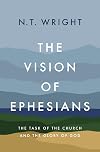
Summary: Ephesians as a vision of the church between creation and consummation as God’s small working model of new creation.
In recent years, N.T. Wright has been revisiting books of scripture on which he has written previously. He has written new, and briefer texts on Acts and a portion of Romans. Here, Wright turns to Ephesians, and as he has returned to it, has been struck with its visionary character. It reaches back to creation and before, and forward to the consummation of all things show more in Christ. And in the midst of all this are both the glory of Christ and of his body on earth, the church.
In particular, he centers on the vocation of the church. In chapters 1-3 of Ephesians he sees God’s purpose as displaying his glory through the church’s life. And then, chapters 4-6 focus on the mission of the church, accomplished through its unity and holiness. Rather than focus on specific problems, Paul offers an expansive vision both of Christ and the church. This may reflect the letter’s likely circular nature.
Wright covers the book in nine chapters. His approach is not verse by verse but by sections and paragraphs. Often, Wright will set the passage under discussion in the context of biblical history, the cultural backgrounds of second temple Judaism, and Greco-Roman culture. This background will often take up nearly half a chapter.
Wright offers some interesting insights. For example, discussing Ephesians 2 under the theme of the new temple, he observes how the new temple theme is what unites the “old” perspective of justification of verses 1-10 and the “new” perspective of covenant inclusion in one new man. He eloquently captures the wonder of the doxology of 3:20-21 that speaks of glory in the church and Christ Jesus, where we are “being thrust on stage to link arms with Jesus and take a bow before the whole redeemed creation.”
His treatment of unity portrays well a spirit-enabled unity amidst diversity. He gets more challenging as he moves into the realm of sexual ethics. While not explicitly mentioning LGBTQ+ persons, he writes of “a desire to be a different kind of human from the one you were born as. That is a form of Gnosticism, rejecting the goodness of creation itself. It is (as we all know) widespread in the Western world today, as distorted desires twist themselves into ever more bizarre shapes” (p. 105). No matter one’s stance on sexual ethics, many would regard this characterization as both pastorally insensitive and as a polemical caricature. In a brief commentary, dealing with a biblical text that does not address explicitly LGBTQ+ sexuality, it might be asked why this was included.
This contrasts with a much more thoughtful discussion of mutual submission in the household code material, recognizing how Paul, while not overtly challenging role distinctions, subverts them with the ethic of the one new people. Finally, in discussing the spiritual battle in 6:10-20, Wright helpfully observes that sharing Christ’s royal status in the heavenly places does not exempt us from battle. Also, how we fight is important, not with flesh and blood or earthly weapons.
There is much of value in anything Wright writes. Yet, I wish he would have gone into greater depth at many points in unpacking the text. Still, I believe Wright succeeds in casting an elevated vision of the church in the grand purposes of God. Many churches seem to think they can only be significant if linked to a political agenda. Wright reminds us of the glory we share with Christ. He points to our incredible privilege to demonstrate the grace of God and the new creation. What could be better than this? show less
In recent years, N.T. Wright has been revisiting books of scripture on which he has written previously. He has written new, and briefer texts on Acts and a portion of Romans. Here, Wright turns to Ephesians, and as he has returned to it, has been struck with its visionary character. It reaches back to creation and before, and forward to the consummation of all things show more in Christ. And in the midst of all this are both the glory of Christ and of his body on earth, the church.
In particular, he centers on the vocation of the church. In chapters 1-3 of Ephesians he sees God’s purpose as displaying his glory through the church’s life. And then, chapters 4-6 focus on the mission of the church, accomplished through its unity and holiness. Rather than focus on specific problems, Paul offers an expansive vision both of Christ and the church. This may reflect the letter’s likely circular nature.
Wright covers the book in nine chapters. His approach is not verse by verse but by sections and paragraphs. Often, Wright will set the passage under discussion in the context of biblical history, the cultural backgrounds of second temple Judaism, and Greco-Roman culture. This background will often take up nearly half a chapter.
Wright offers some interesting insights. For example, discussing Ephesians 2 under the theme of the new temple, he observes how the new temple theme is what unites the “old” perspective of justification of verses 1-10 and the “new” perspective of covenant inclusion in one new man. He eloquently captures the wonder of the doxology of 3:20-21 that speaks of glory in the church and Christ Jesus, where we are “being thrust on stage to link arms with Jesus and take a bow before the whole redeemed creation.”
His treatment of unity portrays well a spirit-enabled unity amidst diversity. He gets more challenging as he moves into the realm of sexual ethics. While not explicitly mentioning LGBTQ+ persons, he writes of “a desire to be a different kind of human from the one you were born as. That is a form of Gnosticism, rejecting the goodness of creation itself. It is (as we all know) widespread in the Western world today, as distorted desires twist themselves into ever more bizarre shapes” (p. 105). No matter one’s stance on sexual ethics, many would regard this characterization as both pastorally insensitive and as a polemical caricature. In a brief commentary, dealing with a biblical text that does not address explicitly LGBTQ+ sexuality, it might be asked why this was included.
This contrasts with a much more thoughtful discussion of mutual submission in the household code material, recognizing how Paul, while not overtly challenging role distinctions, subverts them with the ethic of the one new people. Finally, in discussing the spiritual battle in 6:10-20, Wright helpfully observes that sharing Christ’s royal status in the heavenly places does not exempt us from battle. Also, how we fight is important, not with flesh and blood or earthly weapons.
There is much of value in anything Wright writes. Yet, I wish he would have gone into greater depth at many points in unpacking the text. Still, I believe Wright succeeds in casting an elevated vision of the church in the grand purposes of God. Many churches seem to think they can only be significant if linked to a political agenda. Wright reminds us of the glory we share with Christ. He points to our incredible privilege to demonstrate the grace of God and the new creation. What could be better than this? show less
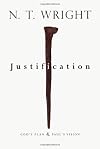
Reading N.T. Wright is sort of like reading E.B. White if E.B. White wrote theology. And who else could include 7 different punctuation marks in one sentence and still have the sentence make sense? Beyond the love that I have for Wright's writing ability, he does a wonderful job of laying out his argument for his view of justification in both Galatians and Romans, with a side jaunt through a few other books. While some may not agree with everything he says, one would be hard pressed to show more disagree with his desire to see biblical cohesion and the exaltation of Christ.
Beyond that, Wright gives much food for thought including a demand that believers re-read Piper and others to make sure they have adequately described his teaching. Wright does not pull any punches on how he feels he has been unfairly maligned by Piper and others, including Carson's oft quoted blurb on the jacket of Piper's book.
While Wright may not go far enough in attributing imputation to the concept of justification, he does not deny the sufficiency of Christ's death and resurrection for justification of the believer. show less
Beyond that, Wright gives much food for thought including a demand that believers re-read Piper and others to make sure they have adequately described his teaching. Wright does not pull any punches on how he feels he has been unfairly maligned by Piper and others, including Carson's oft quoted blurb on the jacket of Piper's book.
While Wright may not go far enough in attributing imputation to the concept of justification, he does not deny the sufficiency of Christ's death and resurrection for justification of the believer. show less
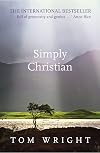
The first thing that might stand out to a curious reader is that Simply Christian has a cover-quote from Anne Rice, whom the back cover clarifies to be the same Anne Rice that is the "international bestselling author of The Vampire Chronicles." That is the first hint that this book will not be a dry theological work. Yes, Anne Rice has in recent years become a Christian, but the choice to feature her on the cover seems to be a statement of sorts: this book is not just for your typical show more Christian reader.
This is supported with the opening four chapters - which I feel are the strongest part of the book. In these, Wright looks at universal concepts that he feels point towards the idea of God: justice, spirituality, relationship and beauty. Each of these chapters digs a little below the surface and challenges the reader to think about the way the world is, using anecdotes and extended metaphors. It's the sort of book that could be given to a non-Christian to help them question the assumptions they make about life.
The second section moves into an unpacking of some basic Christian ideas in response to these concepts: God in general, the place of Israel, the work of Jesus... each of these builds off the opening chapters, painting a picture of how Wright sees Christianity in action.
And the book carries on from there to introduce Wright's slightly more controversial take on the future of the Church and the world: Wright believes God will redeem and renew this world rather than replace it. This does fit within the broader scope of Christian theology, but it will raise some eyebrows, particularly of those that Wright suggests are more wedded to a "escape to heaven" type mentality.
Wright also argues for a Jesus that gradually grows into his awareness that he is the Son of God, rather than always knowing it. Again, this is likely to be controversial.
Whether you agree with these conclusions or not, Wright does present a very readable and persuasive argument for why Christianity is important, why the work of Jesus is vital, and how the Church can be effective in the wider world.
It definitely earns its place as an influential thought-provoker. show less
This is supported with the opening four chapters - which I feel are the strongest part of the book. In these, Wright looks at universal concepts that he feels point towards the idea of God: justice, spirituality, relationship and beauty. Each of these chapters digs a little below the surface and challenges the reader to think about the way the world is, using anecdotes and extended metaphors. It's the sort of book that could be given to a non-Christian to help them question the assumptions they make about life.
The second section moves into an unpacking of some basic Christian ideas in response to these concepts: God in general, the place of Israel, the work of Jesus... each of these builds off the opening chapters, painting a picture of how Wright sees Christianity in action.
And the book carries on from there to introduce Wright's slightly more controversial take on the future of the Church and the world: Wright believes God will redeem and renew this world rather than replace it. This does fit within the broader scope of Christian theology, but it will raise some eyebrows, particularly of those that Wright suggests are more wedded to a "escape to heaven" type mentality.
Wright also argues for a Jesus that gradually grows into his awareness that he is the Son of God, rather than always knowing it. Again, this is likely to be controversial.
Whether you agree with these conclusions or not, Wright does present a very readable and persuasive argument for why Christianity is important, why the work of Jesus is vital, and how the Church can be effective in the wider world.
It definitely earns its place as an influential thought-provoker. show less
Lists
At the Library (4)
Awards


You May Also Like


Associated Authors
Statistics
- Works
- 289
- Also by
- 35
- Members
- 56,355
- Popularity
- #260
- Rating
- 4.1
- Reviews
- 399
- ISBNs
- 843
- Languages
- 17
- Favorited
- 80

