
Charles Simic (1938–2023)
Author of The World Doesn't End
About the Author
Charles Simic was born in Belgrade, Yugoslavia, immigrated with his family to Chicago in 1954, and was educated at New York University. Although his native language was Serbian, he began writing in English. Some of his work reflects the years he served in the U.S. Army (1961--63). He has been show more awarded a MacArthur Foundation fellowship, a Guggenheim Foundation grant, and a National Endowment for the Arts award. "My poetry always had surrealistic tendencies, which were discouraged a great deal in the '50's," the poet said, but such tendencies were applauded in the 1970s and his reputation consequently flourished. His poems are about obsessive fears and often depict a world that resembles the animism of primitive thought. His work has affinities with that of Mark Strand and has in its turn produced several imitators. Simic was appointed the fifteenth Poet Laureate Consultant in Poetry to the Library of Congress in 2007 (Bowker Author Biography) show less
Image credit: Library of Congress
Works by Charles Simic
Il titolo 2 copies
"In Praise of Invective" 1 copy
Mil novecientos treinta y ocho: antología poética (Colección Valparaíso de Poesía) (Spanish and English Edition) (2014) 1 copy
On The Music of the Spheres 1 copy
Ludak 1 copy
Blues utan slut 1 copy
Una Boda en el Infierno 1 copy
Mestre dos Disfarces 1 copy
Associated Works
The Making of a Poem: A Norton Anthology of Poetic Forms (2000) — Contributor — 1,469 copies, 9 reviews
Literature: An Introduction to Fiction, Poetry, and Drama (1995) — Contributor, some editions — 1,018 copies, 7 reviews
A Book of Luminous Things: An International Anthology of Poetry (1996) — Contributor — 941 copies, 12 reviews
Against Forgetting: Twentieth-Century Poetry of Witness (1993) — Contributor — 376 copies, 2 reviews
From Totems to Hip-Hop: A Multicultural Anthology of Poetry Across the Americas 1900-2002 (2002) — Contributor — 182 copies
Light the Dark: Writers on Creativity, Inspiration, and the Artistic Process (2017) — Contributor — 163 copies, 5 reviews
Leading from Within: Poetry That Sustains the Courage to Lead (2007) — Contributor — 115 copies, 3 reviews
Buzz Words: Poems About Insects (Everyman's Library Pocket Poets Series) (2021) — Contributor — 56 copies
Orpheus and Company: Contemporary Poems on Greek Mythology (1999) — Contributor — 52 copies, 1 review
Antaeus No. 61, Autumn 1988 - Journals, Notebooks & Diaries (1988) — Contributor — 37 copies, 2 reviews
Oranges and Snow: Selected Poems of Milan Djordjevic (Facing Pages) (2010) — Translator, some editions — 20 copies
The Prince of Fire: An Anthology of Contemporary Serbian Short Stories (1998) — Foreword — 10 copies
Antaeus No. 73/74, Spring 1994 - Who’s Writing This: Notations on the Authorial I {magazine} (1994) — Contributor — 6 copies
Antaeus No. 23, Autumn 1976 — Contributor — 1 copy
Fire Exit, April, foldout issue, cover by Philip Guston — Contributor — 1 copy
Ironwood 28 Dickinson/Spicer: A Special Issue — Contributor — 1 copy
Tagged
Common Knowledge
- Legal name
- Симић, Душан
- Other names
- Simić, Dušan
- Birthdate
- 1938-05-09
- Date of death
- 2023-01-09
- Gender
- male
- Education
- New York University (BA|1966)
- Occupations
- writer-in-residence (Baruch College, Sidney Harman Writer-in-Residence, Spring 2008)
poet
translator
editor
professor - Organizations
- University of New Hampshire
Paris Review
United States Army - Awards and honors
- MacArthur Fellowship (1984-1989)
Wallace Stevens Award (2007)
Poet Laureate Consultant in Poetry to the Library of Congress (2007)
Fellowship of the Academy of American Poets (1998)
American Academy of Arts and Letters Academy Award (1976)
Frost Medal (2011) (show all 9)
Zbigniew Herbert Literary Award (2014)
American Academy of Arts and Letters (Literature, 1995)
Pulitzer Prize for Poetry (1990) - Cause of death
- complications of dementia
- Nationality
- Yugoslavia (birth)
USA (naturalized 1971) - Birthplace
- Belgrade, Serbia, Yugoslavia
- Places of residence
- Belgrade, Yugoslavia
Chicago, Illinois, USA
Strafford, New Hampshire, USA - Place of death
- Dover, New Hampshire, USA
- Map Location
- Serbia
Members
Reviews
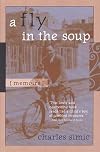
Told in a decidedly non-chronological order, Charles Simic's A FLY IN THE SOUP [memoirs] (2000) is an episodic look at his early childhood in war-torn Belgrade (a city bombed by both the Germans and the Allies), with glimpses of an attempted winter escape through the mountains across the border with his mother and baby brother, only to be "repatriated" by the British army back to Yugoslavia where they spent some time in prisons. Later they emigrated to Paris, where they lived as "displaced show more persons" for several years before finally being approved to sail to the United States where they joined Simic's father in New York. There are detailed anecdotes of the hunger and poverty Simic faced in these years: playing with his friends in the ruins of Belgrade, stealing to survive, trying to adapt to school in Paris, not knowing the language, frequent truancy to go to movies all day. And, upon his arrival, how he learned English with his brother by watching TV all day. And reading, always reading (with a dictionary). The family moved from New York to Chicago, following his father's job. There Simic finished high school (in Oak Park) and moved out on his own, taking various jobs in Chicago and NYC until he was drafted into the Army where he served as an MP (military policeman) in Germany, and then France (because he spoke French). After the army he put himself into through college at NYU by working nights. (Me too, at CMU.)
I don't think I've read any of Simic's work, but I just looked him up and learned he died a couple years ago at 84. He published nearly forty books of poetry and numerous other books of essays, criticism and translations. He won the Pulitzer Prize for poetry and numerous other awards, and was also the U.S. Poet Laureate. Wow! I will readily confess I don't read a lot of poetry, but I do like a good memoir, and this one pushed a lot of buttons. His stories of being a reluctant draftee and his adventures as an MP in a small village in France were fascinating, bringing back some of my own experiences as a young GI in Germany and Turkey. And I also remembered my native Russian instructors at the Defense Language Institute telling us how they too learned English by watching endless hours of television when they first arrived in America.
Simic, an encyclopedic reader, has much to say about philosophy and poetry, saying, about the latter -
"What we love in it is its democracy of values, its recklessness, it's individualism, and its freedom. There's nothing more American and more hopeful than its poetry."
And he had this to say about "bad words," which seems especially relevant in our contentious, divided times -
"There are moments in life when true invective is called for, when there comes an absolute necessity, out of a deep sense of justice, to denounce, mock, vituperate, lash out, rail at, in the strongest possible language ... If anything I want to enlarge and perfect my stock of maledictions."
You get the idea, I'm sure. I am in awe of all that this "immigrant" accomplished, and using what was essentially his third language. Well done, Mr Simic. This is a fascinating book. Very highly recommended.
- Tim Bazzett, author of the memoir, BOOKLOVER show less
I don't think I've read any of Simic's work, but I just looked him up and learned he died a couple years ago at 84. He published nearly forty books of poetry and numerous other books of essays, criticism and translations. He won the Pulitzer Prize for poetry and numerous other awards, and was also the U.S. Poet Laureate. Wow! I will readily confess I don't read a lot of poetry, but I do like a good memoir, and this one pushed a lot of buttons. His stories of being a reluctant draftee and his adventures as an MP in a small village in France were fascinating, bringing back some of my own experiences as a young GI in Germany and Turkey. And I also remembered my native Russian instructors at the Defense Language Institute telling us how they too learned English by watching endless hours of television when they first arrived in America.
Simic, an encyclopedic reader, has much to say about philosophy and poetry, saying, about the latter -
"What we love in it is its democracy of values, its recklessness, it's individualism, and its freedom. There's nothing more American and more hopeful than its poetry."
And he had this to say about "bad words," which seems especially relevant in our contentious, divided times -
"There are moments in life when true invective is called for, when there comes an absolute necessity, out of a deep sense of justice, to denounce, mock, vituperate, lash out, rail at, in the strongest possible language ... If anything I want to enlarge and perfect my stock of maledictions."
You get the idea, I'm sure. I am in awe of all that this "immigrant" accomplished, and using what was essentially his third language. Well done, Mr Simic. This is a fascinating book. Very highly recommended.
- Tim Bazzett, author of the memoir, BOOKLOVER show less
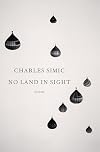
The poems in No Land in Sight include those whose vivid imagery imprinted on my brain.
Tango
Slinky black dress
On a wire hanger
In an empty closet
its door slid open
To catch the draft
From an open window
And make it dance
As in a deep trance
The empty hangers
Clicking in unison
Like knitting needles
Or disapproving tongues.
from No Land in Sight by Charles Simic
And poems of insight into the common experience.
In the Lockdown
I might have gone stir-crazy,
If not for my memories,
Those lifelong show more companions
Cooped up with me for months
And eager to console me
With stories of men and women
Who withdraw from the world,
And endured years of solitude
And dark nights of the soul
Thriving in some hole-in-the-wall
Where they found lasting peace
Obeying a voice in their heads
Telling them to just sit quietly,
So that the quiet can teach them
Everything they ought to know.
from No Land in Sight by Charles Simi
There are personal memories of a life unlike my own.
Where Do My Gallows Stand?
Outside the window
I looked out as a child
In an occupied city
Quiet as a graveyard.
from No Land in Sight by Charles Simic
Many of the poems are reductions that pack a punch bigger than their size would indicate. Charles Simic writes of quietly falling snow, dogs barking in the night, the hopefulness of an old woman going to the mailbox. Commonplace visions reveal depths of emotion, a few overheard words paint a portrait.
The opening poem is Fate, consisting of one line: “everyone’s blind date.” We ruefully chuckle.
At first I was puzzled by these poems, seemingly so direct and transparent. As I read on, I realized their beauty and truth. I will seek out his earlier work.
I received a free book from A A Knopf. My review is fair and unbiased. show less
Tango
Slinky black dress
On a wire hanger
In an empty closet
its door slid open
To catch the draft
From an open window
And make it dance
As in a deep trance
The empty hangers
Clicking in unison
Like knitting needles
Or disapproving tongues.
from No Land in Sight by Charles Simic
And poems of insight into the common experience.
In the Lockdown
I might have gone stir-crazy,
If not for my memories,
Those lifelong show more companions
Cooped up with me for months
And eager to console me
With stories of men and women
Who withdraw from the world,
And endured years of solitude
And dark nights of the soul
Thriving in some hole-in-the-wall
Where they found lasting peace
Obeying a voice in their heads
Telling them to just sit quietly,
So that the quiet can teach them
Everything they ought to know.
from No Land in Sight by Charles Simi
There are personal memories of a life unlike my own.
Where Do My Gallows Stand?
Outside the window
I looked out as a child
In an occupied city
Quiet as a graveyard.
from No Land in Sight by Charles Simic
Many of the poems are reductions that pack a punch bigger than their size would indicate. Charles Simic writes of quietly falling snow, dogs barking in the night, the hopefulness of an old woman going to the mailbox. Commonplace visions reveal depths of emotion, a few overheard words paint a portrait.
The opening poem is Fate, consisting of one line: “everyone’s blind date.” We ruefully chuckle.
At first I was puzzled by these poems, seemingly so direct and transparent. As I read on, I realized their beauty and truth. I will seek out his earlier work.
I received a free book from A A Knopf. My review is fair and unbiased. show less
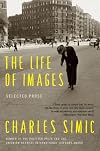
This book by one of my favorite poets is an eclectic assemblage of all kinds of essays, an odd basket-full containing biographies of obscure writers and lesser-known artists, memoirs of a childhood and youth spent living in the kinds of historical times that are now denied, and whimsical ruminations on things, habits, and music. I think you would have to be several different people to enjoy every piece in the volume.
Yet I repeatedly considered purchasing it to re-read and annotate (I had show more taken it out of the library). Simic knows more than most the viciousness, cold-hearted evil, and deliberate violence that lives under the mask of civilization, but he also knows that sausage and popular music can make up for a lot of the carnage, and that surrealism is best served up with humor, earthiness, erudition, and sometimes, childishness. There are many, many sentences and paragraphs here that deserve to be nailed up on telephone poles to be ignored by those who believe in nationalism, Utopia, or human perfectibility.
In other words, he still has a great deal of Yugoslavia in his soul even if he has lived in the US since he was a teenager.
One year, when I was an English teacher and he was the Poet Laureate of the United States, I went to an English teacher's convention and heard him read his poems in a small room. Gentle-voiced, with a slight accent and a deadpan face, he wore tinted glasses and read his wonderful, absurd poems to a small, bewildered audience who perhaps were there because other talks were full and because they needed to rest their feet.
I recommend the book highly but only if you want to have a funny, cynical view of the human race beaten into your head by accident with a saucepan by someone who is quoting obscure Polish or Argentinian writers in the process. show less
Yet I repeatedly considered purchasing it to re-read and annotate (I had show more taken it out of the library). Simic knows more than most the viciousness, cold-hearted evil, and deliberate violence that lives under the mask of civilization, but he also knows that sausage and popular music can make up for a lot of the carnage, and that surrealism is best served up with humor, earthiness, erudition, and sometimes, childishness. There are many, many sentences and paragraphs here that deserve to be nailed up on telephone poles to be ignored by those who believe in nationalism, Utopia, or human perfectibility.
In other words, he still has a great deal of Yugoslavia in his soul even if he has lived in the US since he was a teenager.
One year, when I was an English teacher and he was the Poet Laureate of the United States, I went to an English teacher's convention and heard him read his poems in a small room. Gentle-voiced, with a slight accent and a deadpan face, he wore tinted glasses and read his wonderful, absurd poems to a small, bewildered audience who perhaps were there because other talks were full and because they needed to rest their feet.
I recommend the book highly but only if you want to have a funny, cynical view of the human race beaten into your head by accident with a saucepan by someone who is quoting obscure Polish or Argentinian writers in the process. show less
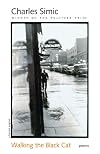
From the first words, I felt on familiar ground—a place synthesized from my love of noir films, Paul Auster novels and driving at night with nowhere to be. Tight visual language and deceptively simple scenes create images that impact and linger. Curious to read more to see if this is the street Simic lives on or if he was just visiting. I love this as if I had lived my life to read it. (Maybe a bit overblown—but have I got your attention?)
Lists
Awards


You May Also Like


Associated Authors
Statistics
- Works
- 111
- Also by
- 73
- Members
- 4,008
- Popularity
- #6,300
- Rating
- 3.9
- Reviews
- 43
- ISBNs
- 180
- Languages
- 13
- Favorited
- 9