
John Ashbery (1927–2017)
Author of Self-Portrait in a Convex Mirror
About the Author
John Ashbery was born on July 28, 1927 in Rochester, New York. He received a bachelor's degree from Harvard University and a master's degree in English from Columbia University. After graduating, he wrote advertising copy for Oxford University Press and McGraw-Hill. In 1955, he won the Yale Younger show more Poets prize for his first collection, Some Trees. While on a Fulbright scholarship to Paris, he began writing art criticism and editing small journals. After about a decade in France, he returned to New York, where he became executive editor of ARTnews and continued to work as an arts journalist. After ARTnews was sold in 1972, he taught and wrote art criticism. He wrote several collections of poetry including Houseboat Days, Flow Chart, And the Stars Were Shining, and Turandot and Other Poems. He received a Pulitzer Prize, a National Book Award, and a National Book Critics Circle Award in 1976 for Self-Portrait in a Convex Mirror. He also received the Antonio Feltrinelli International Prize for Poetry in 1992, the Ambassador Book Lifetime Achievement Award in 2008, and the National Book Foundation Medal for Distinguished Contribution to American Letters in 2011. In 1993, the French government made him a Chevalier de L'Ordre des Arts et des Lettres. He also translated the poems of Pierre Martory. He died on September 3, 2017 at the age of 90. (Bowker Author Biography) show less
Image credit: Portrait by Juno Gemes.
Series
Works by John Ashbery
John Ashbery: Collected Poems 1991-2000 (LOA #301) (Library of America John Ashbery Edition) (2017) 99 copies, 1 review
Art News Annual XXXIII: The Academy Five Centuries of Grandeur and Misery, from Caracci to Mao Tse-tung (1967) — Editor — 18 copies
Sunrise in suburbia 4 copies
Three Madrigals 4 copies
Art and literature 4 copies
Rivers 2 copies
This Room 2 copies
Fiumi di ali 2 copies
Haibun 2 copies
Apparitions 1 copy
Poetry International 1 copy
International Poetry Forum 1 copy
Mottled Tuesday 1 copy
Poetry 1 copy
Solitary Travelers 1 copy
The American 1 copy
Just For Starters 1 copy
Man in Lurex 1 copy
The Vermont notebook 1 copy
DOCUMENTARY BIOGRAPHY - The Poet's View: A Documentary Series (John Ashbery/Louise Gluck/Anthony Hecht/W.S. Merwin) (2005) 1 copy
Huitieme LIASSE 1 copy
GUADALAJARA NO. 41 1 copy
Coventry 1 copy
Still Life With Stranger 1 copy
Not A First 1 copy
The Poems 1 copy
Three Novels of Henry Green 1 copy
And the Stars Were Shining by John (Formerly Charles Eliot No Ashbery (21-Apr-1994) Hardcover 1 copy
The new spirit 1 copy
Otras Palabras. 37 Poemas 1 copy
Poetas y pintores 1 copy
Associated Works
The Making of a Poem: A Norton Anthology of Poetic Forms (2000) — Contributor — 1,475 copies, 9 reviews
Literature: An Introduction to Fiction, Poetry, and Drama (1995) — Contributor, some editions — 1,024 copies, 7 reviews
Adrienne Rich's Poetry and Prose [Norton Critical Edition] (1993) — Contributor — 342 copies, 2 reviews
Hebdomeros with Monseiur Dudron's Adventure and Other Metaphysical Writings (1929) — Preface, some editions — 321 copies, 3 reviews
The Norton Anthology of American Literature, Volume 2: 1865 to Present (1979) — Contributor, some editions — 136 copies
The Best American Poetry 2014 (The Best American Poetry series) (2014) — Contributor — 89 copies, 1 review
A Controversy of Poets: An Anthology of Contemporary American Poetry, (1965) — Contributor — 83 copies
The Poem Is You: 60 Contemporary American Poems and How to Read Them (2016) — Contributor — 78 copies
The Heath Anthology of American Literature, Concise Edition (2003) — Contributor — 73 copies, 1 review
Orpheus and Company: Contemporary Poems on Greek Mythology (1999) — Contributor — 52 copies, 1 review
The Serpent and the Fire: Poetries of the Americas from Origins to Present (2024) — Contributor — 18 copies
Possibilities of Poetry: An Anthology of American Contemporaries (1970) — Contributor — 17 copies, 1 review
Firsts: 100 Years of Yale Younger Poets (Yale Series of Younger Poets) (2019) — Contributor — 15 copies
Sunlight on the River: Poems About Paintings, Paintings About Poems (2015) — Contributor — 11 copies, 2 reviews
New World Writing: Third Mentor Selection - Poetry, Fiction, Drama, Criticism (1953) — Contributor — 8 copies
Works in Progress Number 4: Selections from the Best in Books to be Published in Coming Months (1971) — Contributor — 7 copies
Locus Solus I — Contributor — 5 copies
Locus Solus V — Contributor — 1 copy
Sulfur 9 — Contributor — 1 copy
Fiction, Volume 1, Number 1 — Contributor — 1 copy
Tagged
Common Knowledge
- Canonical name
- Ashbery, John
- Legal name
- Ashbery, John Lawrence
- Birthdate
- 1927-07-28
- Date of death
- 2017-09-03
- Gender
- male
- Education
- Harvard University (BA|1949)
Columbia University (MA|1951)
New York University
Deerfield Academy - Occupations
- professor
poet
art critic
translator - Organizations
- Bard College
Brooklyn College
Partisan Review
Newsweek
New York
ARTnews (show all 8)
Art International
New York Herald Tribune - Awards and honors
- MacArthur Fellow (1985)
American Academy of Arts & Sciences (1983)
American Academy of Arts and Letters (Literature ∙ 1980)
Légion d'Honneur (Officier, 2002)
National Humanities Medal (2011)
Wallace Stevens Award (2001) (show all 22)
Robert Frost Medal (1995)
Ruth Lilly Poetry Prize (1992)
Bollingen Prize (1984)
Lenore Marshall Poetry Prize (1984)
Academy of American Poets (Fellow, 1982)
Shelley Memorial Award (1972/1973)
American Academy of Arts and Letters Academy Award (Literature, 1969)
National Institute of Arts and Letters Award (1969)
Robert Creeley Award (2008)
America Award for a lifetime contribution to international writing (2008)
The Raymond Roussel Society Medal (2017)
New York Writers Hall of Fame (2011)
National Book Foundation Medal for Distinguished Contribution to American Letters (2011)
Golden Plate Award of the American Academy of Achievement (1987)
Yale Younger Poets Prize (1956)
Guggenheim Fellowship (1967, 1973) - Relationships
- Kermani, David K. (husband)
- Nationality
- USA
- Birthplace
- Rochester, New York, USA
- Places of residence
- Sodus, New York, USA
New York, New York, USA
Paris, France
Rochester, New York, USA (birth)
Massachusetts, USA - Place of death
- Hudson, New York, USA
- Associated Place (for map)
- New York, USA
Members
Reviews
Ashbery is an almost canonized poet and leader of the influential so-called New York School of poets. He won the American Triple Crown for poetry in 1976 for his collection "Self Portrait in a Convex Mirror" (The Pulitzer, The National Book Award and the National Book Critics Circle Award).
He is still prolific where others have become soporific and he was in his eighties already when he published this, at first sight, generous collection of 99 poems organised for the reader in alphabetical show more order by title (a listomaniac like me cannot fail to notice such detail).
That said, and having read and enjoyed individual poems of his before, this collection is very much Ashbery spinning the wheels and retreading familiar poetic landscapes with most often imperfect results. There were gems here and he still has the ability to nail a line or two but there was a feeling of him trying to hang a complete poem on the odd decent phrase. We had a couple of killer lines and phrases surrounded by a smegma of the banal, the discordant and the distinctly un-poetic. Some of the work here is frankly close to gibberish and some of his list poems are self-indulgent as well as crass.
I sometimes feel that a collection of thirty or so pages from a poet I like is too little to justify a whole book but the opposite applied here. An editor with a more attuned or less tired ear would surely have condensed and re-worked some of these ideas into about half the content to achieve a sharp and fulfilling anthology. This felt like stodge where the odd morsel of protein was buried under a diabetic load of free verse carbohydrate.
Not the place, I would hazard, to start the bibliography of John Ashbery. show less
He is still prolific where others have become soporific and he was in his eighties already when he published this, at first sight, generous collection of 99 poems organised for the reader in alphabetical show more order by title (a listomaniac like me cannot fail to notice such detail).
That said, and having read and enjoyed individual poems of his before, this collection is very much Ashbery spinning the wheels and retreading familiar poetic landscapes with most often imperfect results. There were gems here and he still has the ability to nail a line or two but there was a feeling of him trying to hang a complete poem on the odd decent phrase. We had a couple of killer lines and phrases surrounded by a smegma of the banal, the discordant and the distinctly un-poetic. Some of the work here is frankly close to gibberish and some of his list poems are self-indulgent as well as crass.
I sometimes feel that a collection of thirty or so pages from a poet I like is too little to justify a whole book but the opposite applied here. An editor with a more attuned or less tired ear would surely have condensed and re-worked some of these ideas into about half the content to achieve a sharp and fulfilling anthology. This felt like stodge where the odd morsel of protein was buried under a diabetic load of free verse carbohydrate.
Not the place, I would hazard, to start the bibliography of John Ashbery. show less

HOTEL LAUTREAMONT | read 2021-02
Poems collected in "HL" are absurdist, dream-infused. Most are inscrutable: I wonder why the title. I pick up no particular theme or even tone, and primarily read to appreciate specific phrases or images, and the wordplay. There are many puns, though not the variety which prompt laughter, rather bemusement or a question as to why it was used. (And curious if they made the copyediting slower, with readers mistakenly thinking any were errors. I wonder, too, if show more Ashbery would find that amusing.)
Part of my attraction for Ashbery's verse (despite not achieving a strong sense of understanding it) is the many points of intersection in interests: film (Guy Maddine, specifically); the sense that literature was missing the potential of collage (a la WSB); his efforts in producing stageplays alongside Edward Gorey. (Cover design for the 1992 Knopf edition of Lautreamont was a piece by Joseph Cornell.) Strong pointers suggesting that if we both value those things, I should pay attention to other things he's interested in, even if not immediately apparent why.
Reading the verse collected here + random selections from "Uncollected Poems" (such as "Hoboken") + chronology, I found the LOA description quite apt to my experience: colloquial yet dream-like and specific, not easy to grasp yet scans easily.
Ashbery’s poetry challenges its readers to discard all presumptions about the aims, themes, and stylistic scaffolding of verse in favor of a literature that reflects upon the limits of language and the volatility of consciousness. - Poetry Foundation biographical blurb, and I saw that in what I read.
to read:
FLOW CHART
AND THE STARS WERE SHINING
CAN YOU HEAR, BIRD
WAKEFULNESS
GIRLS ON THE RUN
YOUR NAME HERE
UNCOLLECTED POEMS show less
Poems collected in "HL" are absurdist, dream-infused. Most are inscrutable: I wonder why the title. I pick up no particular theme or even tone, and primarily read to appreciate specific phrases or images, and the wordplay. There are many puns, though not the variety which prompt laughter, rather bemusement or a question as to why it was used. (And curious if they made the copyediting slower, with readers mistakenly thinking any were errors. I wonder, too, if show more Ashbery would find that amusing.)
Part of my attraction for Ashbery's verse (despite not achieving a strong sense of understanding it) is the many points of intersection in interests: film (Guy Maddine, specifically); the sense that literature was missing the potential of collage (a la WSB); his efforts in producing stageplays alongside Edward Gorey. (Cover design for the 1992 Knopf edition of Lautreamont was a piece by Joseph Cornell.) Strong pointers suggesting that if we both value those things, I should pay attention to other things he's interested in, even if not immediately apparent why.
Reading the verse collected here + random selections from "Uncollected Poems" (such as "Hoboken") + chronology, I found the LOA description quite apt to my experience: colloquial yet dream-like and specific, not easy to grasp yet scans easily.
Ashbery’s poetry challenges its readers to discard all presumptions about the aims, themes, and stylistic scaffolding of verse in favor of a literature that reflects upon the limits of language and the volatility of consciousness. - Poetry Foundation biographical blurb, and I saw that in what I read.
to read:
FLOW CHART
AND THE STARS WERE SHINING
CAN YOU HEAR, BIRD
WAKEFULNESS
GIRLS ON THE RUN
YOUR NAME HERE
UNCOLLECTED POEMS show less
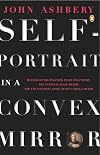
Self-Portrait in a Convex Mirror
By John Ashbery
1990, Penguin Books
Paperback, 96pp
"I know that I braid too much my own / Snapped-off perceptions of things as they come to me. / They are private and always will be."
Reading John Ashbery's poetry is like taking a highly subjective tour of someone's interior thoughts without guide or compass. Blobs of thought break off and float before our eyes. Metaphors interrupt chains of ideas. Declarations overlap one another. And everywhere language blooms, show more smears of color across sinuous vistas. Aside from the titular poem, which has garnered no shortage of critical acclaim, "Fear of Death" and "No Way of Knowing" stand out as enigmatic containers of consciousness, cloaked in meticulous language. Harold Bloom, a notoriously harsh critic, put Ashbery in the line that extends from Whitman through Hart Crane, and the poems in this Pulitzer Prize-winning collection affirm that pronouncement. show less
By John Ashbery
1990, Penguin Books
Paperback, 96pp
"I know that I braid too much my own / Snapped-off perceptions of things as they come to me. / They are private and always will be."
Reading John Ashbery's poetry is like taking a highly subjective tour of someone's interior thoughts without guide or compass. Blobs of thought break off and float before our eyes. Metaphors interrupt chains of ideas. Declarations overlap one another. And everywhere language blooms, show more smears of color across sinuous vistas. Aside from the titular poem, which has garnered no shortage of critical acclaim, "Fear of Death" and "No Way of Knowing" stand out as enigmatic containers of consciousness, cloaked in meticulous language. Harold Bloom, a notoriously harsh critic, put Ashbery in the line that extends from Whitman through Hart Crane, and the poems in this Pulitzer Prize-winning collection affirm that pronouncement. show less
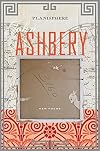
I’m intrigued by Ashbery’s obsession with forgetfulness and lost time in Planisphere. So many of the poems in Planisphere suggest speakers who see their lives as if from outside themselves, as debris, or fragments, sources of which they forget. In “The Later Me” the speaker “shrinks” from the earlier version of himself—a version of himself that has been repressed and even wished to be dead. In “B____’s Mysterious Greeting,” the speaker nostalgically dreams of the famous show more French salon Les Deux Magots being located in New England— the first American wilderness—and the intellectual wellspring of Transcendentalism. But Americans writers fled America for Les Deux Magots. I wondered if this was a subtle critique of the kind of American intellectualism (ie Emerson) Ashbery has never cared about in his career—like a Situationist misprision of a Paris map used to navigate the streets of London. Ashbery has always cared more about Surrealism, European poetry, Stevens-style High Modernism, and the urbane. The landscape is a stage (Paris or New England)—“The drawn curtain of a snow shower.” I note the whiteness of such a landscape—and the seeming heteronormative values of the middle class mall shoppers having sex that Ashbery depicts in that landscape. The speaker giggles at his apparent foolishness in expecting difference to happen in this landscape. This is a landscape where the self is erased or hides invisibly in whiteness, among “those self-forgetting trees.” (It might be pushing it, but I picture the Hudson Valley where Ashbery lives). Another image of snow is also linked to the disappearance of someone who desires to make a connection: “Who dials the phone and is further gone into snow/ than the mass of individuals could be?” (“Idea of Steve”). Forgetfulness seems to be linked to self-diminishment and lost time. In “For Fuck’s Sake,” there is the image of people among stalks forgotten by the tide, and in “The Logistics” a visit to the past is seen as “time lost.” One of the perplexing questions I have about all of this is whether or not Ashbery sees forgetfulness and self-erasure as a problem or as an opportunity, and how this ties into his poetics. Meghan O’Rourke, in a piece for Slate advising us how to read Ashbery, finds that "He is the first poet to achieve something utterly new by completely doubting the possibility—and the value—of capturing what the lyric poem has traditionally tried to capture: a crystallization of a moment in time, an epiphanic realization—what Wordsworth called “spots of time.” Ashbery has updated the lyric poem by rejecting this project, finding it fundamentally inauthentic." I think she is right, but I think we are seeing something a little different here. To settle on “a spot of time” is to memorialize and thus to point toward death. Indeed, for some poets, this loss of time, the passage of time, the approach of death, the loss of youth and the experiences of the past, would lead to deeply metaphysical and perhaps somber “August” or “late” poems trying to accept the eventual end-- mutability the most prevalent poetic subject of all time. In “Giraffe Headquarters” he mocks the “tragic, unquestioning, amusing love of youth” and reduces life to pulling on pants over underpants. There is the hint of death in the line “In five months my service expires” but note how it comes through the pastiche filter of consumer culture-- the language of someone discussing a warranty plan or a cable tv package. Given that pastiche, I find it difficult to take seriously the sentimental line that follows it : “Then we shall be together always.” I did an interesting experiment that rewards this reading; I read all of the last lines of the book. Try it. There’s hardly a whiff of deathly pathos. For Ashbery, perhaps all of this loss is a boon? Could it be that what was once a rejection of lyric epiphanic closure (finality) for him (on an aesthetic basis) has been actualized into rejection of closure as death? Planisphere is a book that enacts continuous life affirmation? I think the question is important for me because it helps deepen my understanding of Ashbery’s counter-intuitive model of lyric. show less
Lists
Awards


You May Also Like


Associated Authors
Statistics
- Works
- 178
- Also by
- 85
- Members
- 6,551
- Popularity
- #3,745
- Rating
- 3.9
- Reviews
- 42
- ISBNs
- 276
- Languages
- 13
- Favorited
- 34
