
Billy Collins
Author of Sailing Alone Around the Room: New and Selected Poems
About the Author
Billy Collins has published six collections of poetry, including Questions About Angels and The Art of Drowning, Picnic, Lightning, his latest, sold more than 25,000 copies in its first year. He teaches at Lehman College of the City University of New York and at Sarah Lawrence College. He was named show more U.S. Poet Laureate in June 2000. (Bowker Author Biography) Billy Collins was born in New York City in 1941. He earned a BA from the College of the Holy Cross, and both an MA and PhD from the University of California-Riverside. Collins conducted summer poetry workshops at University College Galway and is the Poet in Residence at Burren College of Art in Ireland. He is also a professor of English at Lehman College (CUNY). In 1992, Collins was chosen to be the Literary Lion of the New York Public Library. He was named U.S. Poet Laureate in 2001 and held the title until 2003. Collins then served as Poet Laureate for the State of New York from 2004 until 2006. His poetry has appeared in anthologies, textbooks and periodicals including Poetry, The American Poetry Review, The American scholar, Harper's, The Paris Review and The New Yorker. He is the author of six books of poetry including "The Art of Drowning." His poems have also been selected to appear in The Best American Poetry of 1992, 1993 and 1997. His works have won various awards including the Bess Hokin Prize, the Frederick Bock Prize, the Oscar Blumenthal Prize and the Levinson Prize, all awarded by Poetry. He has received fellowships from the New York Foundation for the Arts, the National Endowment for the Arts and the Guggenheim Foundation. His collection of poems entitled Aimless Love made numerous best-seller lists in 2013. (Bowker Author Biography) show less
Image credit: Johns Hopkins Center for Talented Youth/Charles Beckman
Works by Billy Collins
Associated Works
Poetry Speaks to Children, Read & Hear [book & CD] (2005) — Guest, some editions — 677 copies, 16 reviews
The Book That Changed My Life: 71 Remarkable Writers Celebrate the Books That Matter Most to Them (2006) — Contributor — 411 copies, 18 reviews
The Spoken Word Revolution: Slam, Hip Hop, and the Poetry of a New Generation (2003) — Introduction, some editions — 249 copies
Teaching with Fire: Poetry That Sustains the Courage to Teach (2003) — Contributor — 225 copies, 1 review
The Poetry Pharmacy: Tried-and-True Prescriptions for the Heart, Mind, and Soul (2017) 198 copies, 5 reviews
From Totems to Hip-Hop: A Multicultural Anthology of Poetry Across the Americas 1900-2002 (2002) — Contributor — 181 copies
Eat, Memory: Great Writers at the Table: A Collection of Essays from the New York Times (2008) — Contributor — 179 copies, 6 reviews
The Year's Best Fantasy and Horror 2008: 21st Annual Collection (2008) — Contributor — 176 copies, 5 reviews
Light the Dark: Writers on Creativity, Inspiration, and the Artistic Process (2017) — Contributor — 166 copies, 5 reviews
Poetry Speaks Expanded: Hear Poets Read Their Own Work from Tennyson to Plath (2007) — Contributor — 158 copies, 2 reviews
Answering Back: Living Poets Reply to the Poetry of the Past (2007) — Contributor — 119 copies, 1 review
Leading from Within: Poetry That Sustains the Courage to Lead (2007) — Contributor — 115 copies, 3 reviews
Bullets Into Bells: Poets and Citizens Respond to Gun Violence (2017) — Contributor — 68 copies, 3 reviews
Best of The Oxford American: Ten Years from the Southern Magazine of Good Writing {anthology} (2002) — Contributor — 45 copies
Tagged
Common Knowledge
- Legal name
- Collins, William James
- Birthdate
- 1941-03-22
- Gender
- male
- Education
- College of the Holy Cross (BA, 1963)
University of California, Riverside (PhD) - Occupations
- professor (English)
visiting writer
poet - Organizations
- Lehman College
Sarah Lawrence College - Awards and honors
- US Poet Laureate (2001-2003)
New York State Poet (2004)
New York Public Library Literary Lion (1992)
Aiken Taylor Award (2011)
Frederick Bock Award (1992) - Nationality
- USA
- Birthplace
- New York, New York, USA
- Map Location
- New York, USA
Members
Reviews

40 poems in 90 pages, organized in 4 sections. My plan was to read a section per day - and then I realized I was reading the last poem - I could not stop. It was a part of one of the first poems in this collection, called "Pulp Fiction", that seems to hold at least some of the keys to the whole collection (or even the author):
"It's been said that the truth will set you free,
but whenever I speak the truth no one believes it,
and whenever I hear the truth it makes me feel like a prisoner
on show more death row.
So, I tell stories to keep the truth alive without telling it.
So I create truth to keep me from becoming history:"
And that the whole collection is all about - a (semi-)autobiographic parts and invented pasts and futures merge with bizarre landscapes and images (nothing scarier than what Barbie may be thinking while sitting in her dollhouse). And all of them require just words - Padua doesn't play with the form of the poems or their position on the page - you don't need to see it (as many modern poets seem to require you to these days) and you don't need to try to decipher the line breaks and weird stops.
But then, he is a veteran of the New York's spoken-word literary scene (as the very short biography at the end of the book will tell you) and that explains a lot. These are not exercises of poetic form and invention - these are poems to tell people, stories in a poetic form. It is also nice to have a collection which is rooted in society and the present but without retelling you the news or containing all the rage towards the present (although there is some rage in the poems but there is also a lot of hope).
Billy Collins, the editor of the collection and the judge for the prize it won, has a very nice introduction both about the contest and about this collection. But don't read it before you read the collection -- I am so used to not trusting introduction that I skipped it and came back (and then reread the collection again after that). show less
"It's been said that the truth will set you free,
but whenever I speak the truth no one believes it,
and whenever I hear the truth it makes me feel like a prisoner
on show more death row.
So, I tell stories to keep the truth alive without telling it.
So I create truth to keep me from becoming history:"
And that the whole collection is all about - a (semi-)autobiographic parts and invented pasts and futures merge with bizarre landscapes and images (nothing scarier than what Barbie may be thinking while sitting in her dollhouse). And all of them require just words - Padua doesn't play with the form of the poems or their position on the page - you don't need to see it (as many modern poets seem to require you to these days) and you don't need to try to decipher the line breaks and weird stops.
But then, he is a veteran of the New York's spoken-word literary scene (as the very short biography at the end of the book will tell you) and that explains a lot. These are not exercises of poetic form and invention - these are poems to tell people, stories in a poetic form. It is also nice to have a collection which is rooted in society and the present but without retelling you the news or containing all the rage towards the present (although there is some rage in the poems but there is also a lot of hope).
Billy Collins, the editor of the collection and the judge for the prize it won, has a very nice introduction both about the contest and about this collection. But don't read it before you read the collection -- I am so used to not trusting introduction that I skipped it and came back (and then reread the collection again after that). show less
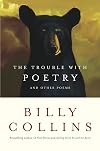
Billy Collins is one of my favorite poets for playfully constructing evocative but easy-to-understand imagery in his poetry. He writes about everyday experiences, putting a fresh spin on them, and doesn't take himself too seriously. He is in fine form in this collection, which may be my favorite of those I've read so far.
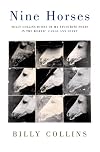
In Nine Horses, renown poet Billy Collins explores the little things we all experience in life, using an effective blend of conversational clarity and surprising turn-of-phrase to examine the everyday world—traveling, reading, domestic occurrences, memory—with a gentle sense of humor and wonder. The poems focus on ordinary experiences (a train ride, a day at the beach, a birthday gift, a walk in the woods), but often move into reflections on larger issues, such as time, mortality, and show more identity. The author invites the reader to see how small things carry hidden meanings, how language both reveals and conceals, and how we live our lives almost unknowingly.
Throughout the volume, you get the definite sense of the poet as an observer—and sometimes as both narrator and participant—moving through snapshots of life with wit, elegiac sentiments, and a deft twist of metaphor. There is also a recurring tension between what is present and what is absent: the tangible world we touch and the mystery behind it that we do not see. In that regard, the entire book feels less like a linear march from beginning to end and more like a collection of meditations on staying still long enough to notice and remember all the little moments that end up being so important.
I really should confess that I do not ordinarily read a lot of poetry and that this is the first collection of Collins’ work that I have encountered. (Thanks, by the way, to my book club for suggesting this as a departure from our usual literary fare.) So, I was probably more surprised than I should have been at the cadence and style the author chose to capture his thoughts in each of these poems. Also, I was not expecting how funny many of them were. While each of the more than four dozen entries in the volume merits attention, I did have my favorites, including “Royal Aristocrat”, “Love”, “Creatures”, “Study in Orange and White”, “Litany”, “To My Patron”, and “Balsa”. Nine Horses certainly will not be my last foray into Collins’ comforting and engaging world. show less
Throughout the volume, you get the definite sense of the poet as an observer—and sometimes as both narrator and participant—moving through snapshots of life with wit, elegiac sentiments, and a deft twist of metaphor. There is also a recurring tension between what is present and what is absent: the tangible world we touch and the mystery behind it that we do not see. In that regard, the entire book feels less like a linear march from beginning to end and more like a collection of meditations on staying still long enough to notice and remember all the little moments that end up being so important.
I really should confess that I do not ordinarily read a lot of poetry and that this is the first collection of Collins’ work that I have encountered. (Thanks, by the way, to my book club for suggesting this as a departure from our usual literary fare.) So, I was probably more surprised than I should have been at the cadence and style the author chose to capture his thoughts in each of these poems. Also, I was not expecting how funny many of them were. While each of the more than four dozen entries in the volume merits attention, I did have my favorites, including “Royal Aristocrat”, “Love”, “Creatures”, “Study in Orange and White”, “Litany”, “To My Patron”, and “Balsa”. Nine Horses certainly will not be my last foray into Collins’ comforting and engaging world. show less
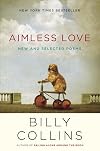
Billy Collins is far and away my favorite poet. His simple language, profound insights, and humorous poems are my ideal, My goal is to write a poem which causes a reader to think, “that reminds me of Billy Collins.” Whenever Collins comes out with a new volume of poetry, I buy and devour a it as quickly as I can. Published this month, Aimless Love: New and Selected Poems is his tenth collection.
In this case, I immediately flipped to the last section containing the new poems. Fifty show more nuggets awaited my attention. My favorite is “Foundling.” “How unusual to be living a life of continual self-expression, / jotting down little things, / noticing a leaf being carried down a stream, / then wondering what will become of me, // and finally to work alone under a lamp / as if everything depended on this, / groping blindly down a page, like someone lost in a forest. // And to think it all began one night / on the steps of a nunnery / where I lay gazing up from a sewing basket, / which was doubling for a proper baby carrier, // staring into the turbulent winter sky, too young to wonder about anything / including my recent abandonment-- / but it was there that I committed // my first act of self-expression, / sticking out my infant tongue / and receiving in return (I can see it now) / a large, pristine snowflake much like any other” (175).
His nature poems also affect me deeply. In “Osprey,” Collins sketches a scene I have lived through myself many times. He writes, “Oh, large brown, thickly-feathered creature / with a distinctive white head, / you, perched on the top branch / of a tree near the lake shore, // as soon as I guide this boat back to the dock / and walk up the grassy path to the house, / before I unzip my windbreaker / and lift the binoculars from around my neck, // before I wash the gasoline from my hands, / before I tell anyone I am back, / and before I hang the ignition key on its nail, / or pour myself a drink-- // I’m thinking a vodka soda with lemon-- / I will look you up in my / illustrated guide to North American birds / and I promise I will learn what you are called” (208).
Collins has written a number of poems about writing and poetry, and this volume contains one about reading. The title is “Reader,” and he wrote: “Looker, gazer, skimmer, skipper, / thumb-licking page turner, peruser, / you getting your print-fix for the day, pencil chewer, not taker, marginalianist / with your checks and X’s / firs-timer or revisiter, / browser, speedster, English Major, / flight-ready girl, melancholy boy, / invisible companion, thief, blind date, perfect stranger-- // that is me rushing to the window / to see if it’s you passing under the shade trees / with a baby carriage or a dog on a leash, / me picking up the phone / to imagine your unimaginable number, me standing by a map of the world / wondering where you are-- / alone on a bench in a train station / or falling asleep, the book sliding to the floor?” (xix).
Aimless Love by Billy Collins is a wonderful way to introduce yourself to his work. I bet you will soon find a collection of all his volumes of poetry, silently standing guard amid the Cs on a bookshelf, patiently awaiting your call. 5 stars [NOTE: All quotes checked against published edition]
--Jim, 10/13/13 show less
In this case, I immediately flipped to the last section containing the new poems. Fifty show more nuggets awaited my attention. My favorite is “Foundling.” “How unusual to be living a life of continual self-expression, / jotting down little things, / noticing a leaf being carried down a stream, / then wondering what will become of me, // and finally to work alone under a lamp / as if everything depended on this, / groping blindly down a page, like someone lost in a forest. // And to think it all began one night / on the steps of a nunnery / where I lay gazing up from a sewing basket, / which was doubling for a proper baby carrier, // staring into the turbulent winter sky, too young to wonder about anything / including my recent abandonment-- / but it was there that I committed // my first act of self-expression, / sticking out my infant tongue / and receiving in return (I can see it now) / a large, pristine snowflake much like any other” (175).
His nature poems also affect me deeply. In “Osprey,” Collins sketches a scene I have lived through myself many times. He writes, “Oh, large brown, thickly-feathered creature / with a distinctive white head, / you, perched on the top branch / of a tree near the lake shore, // as soon as I guide this boat back to the dock / and walk up the grassy path to the house, / before I unzip my windbreaker / and lift the binoculars from around my neck, // before I wash the gasoline from my hands, / before I tell anyone I am back, / and before I hang the ignition key on its nail, / or pour myself a drink-- // I’m thinking a vodka soda with lemon-- / I will look you up in my / illustrated guide to North American birds / and I promise I will learn what you are called” (208).
Collins has written a number of poems about writing and poetry, and this volume contains one about reading. The title is “Reader,” and he wrote: “Looker, gazer, skimmer, skipper, / thumb-licking page turner, peruser, / you getting your print-fix for the day, pencil chewer, not taker, marginalianist / with your checks and X’s / firs-timer or revisiter, / browser, speedster, English Major, / flight-ready girl, melancholy boy, / invisible companion, thief, blind date, perfect stranger-- // that is me rushing to the window / to see if it’s you passing under the shade trees / with a baby carriage or a dog on a leash, / me picking up the phone / to imagine your unimaginable number, me standing by a map of the world / wondering where you are-- / alone on a bench in a train station / or falling asleep, the book sliding to the floor?” (xix).
Aimless Love by Billy Collins is a wonderful way to introduce yourself to his work. I bet you will soon find a collection of all his volumes of poetry, silently standing guard amid the Cs on a bookshelf, patiently awaiting your call. 5 stars [NOTE: All quotes checked against published edition]
--Jim, 10/13/13 show less
 This review was written for LibraryThing Early Reviewers.
Lists
Awards


You May Also Like


Associated Authors
Statistics
- Works
- 42
- Also by
- 53
- Members
- 12,851
- Popularity
- #1,822
- Rating
- 4.0
- Reviews
- 262
- ISBNs
- 123
- Languages
- 4
- Favorited
- 73

