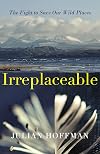
Of all the creatures on this planet, humanity is the one that has been able to change the very face of the earth in a way that no other animal is able to. We can raze the densest forests, cut holes through rock, change the course of rivers and obliterate mountains. The only other thing that has this ability to change the very landscape is the earth-changing events of volcanos, earthquake and tsunamis or the out of this world asteroids.
Hoffman heads all over the world from his home in Greece to find these places that are right at the very end of their existence. He visits Kansas to watch the mating ritual of the leks or prairie chickens on the Konza prairie. This place has been under threat since the 1800s as the European settlers saw that the land was rich and put it under the plough. There is almost none (around 0.1%) of the original grasslands left.
We hear a lot about the tropical jungles, how it is being devastated by logging and agriculture. Hoffman travels to the northeasternmost state of India, Arunachal Pradesh where he is there to see the landscape of the Himalayan flood plain. The people here, the Nyishs, have managed to co-exist in this landscape with tigers and elephants for years. But it is only in the past few years that the realisation that the elephants have started to raid crops so they have reluctantly retreated from their rice paddies and plots. Their state bird is the hornbill, a species that is essential to their identity, customs and beliefs. This show more bird has a casque on its bill and it is this part of the bird that is used on the headdress of the tribe. The bird is under threat though and the Nyish tribe are looking at other ways of replicating this part of the dress.
It is not just exotic places that are under threat, closer to home we have woodlands in the UK that have been in existence for hundreds of years. The British have a deep love for woodlands, as was seen when the government a few years ago thought it was a good idea to privatise the Forestry Commission. The backlash from the public forced a U-turn and a backtrack on this. The woodland he visits is just outside Sheffield and has been in existence since the 100’s. It was split in two after the M1 carved its way through it, and has recently been suffering because of those that go there for their leisure activity or riding through it with quad bikes. It is under threat again and local residents have formed groups to resist this, applying for village green status to protect what is left. Sitting with his back resting on an old oak watching the breeze ripple the bluebells is a perfect way to spend the evening.
Stories about these and the other places strongly underline the main argument of the book that all of these places are utterly Irreplaceable. With wholesale destruction of these places comes the loss of habitats. Even if you were to plant the same species of trees in a field a couple of miles up the road in Sheffield, you can’t replicate an ancient woodland. The myriad species and underground mycelia that live in it along with the complex interactions that have developed over the past 400 or 500 years cannot just be reproduced. These unique ecosystems are disappearing under the machines of mankind and when they are gone, that is it, finito, no more.
Hoffman has written an eloquent series of essays taken from his first-hand experience of seeing places that are under threat from human activity. It is partly a celebration of our diverse world but is also a call to arms for those that care about this planet. He shows how local people are fighting back against the things that are happening to their area. Most importantly, it is a book that needs to be read and more importantly a stepping stone to inspire us to action and to pressurise our political leaders into doing something when the places we live are threatened. show less
Hoffman heads all over the world from his home in Greece to find these places that are right at the very end of their existence. He visits Kansas to watch the mating ritual of the leks or prairie chickens on the Konza prairie. This place has been under threat since the 1800s as the European settlers saw that the land was rich and put it under the plough. There is almost none (around 0.1%) of the original grasslands left.
We hear a lot about the tropical jungles, how it is being devastated by logging and agriculture. Hoffman travels to the northeasternmost state of India, Arunachal Pradesh where he is there to see the landscape of the Himalayan flood plain. The people here, the Nyishs, have managed to co-exist in this landscape with tigers and elephants for years. But it is only in the past few years that the realisation that the elephants have started to raid crops so they have reluctantly retreated from their rice paddies and plots. Their state bird is the hornbill, a species that is essential to their identity, customs and beliefs. This show more bird has a casque on its bill and it is this part of the bird that is used on the headdress of the tribe. The bird is under threat though and the Nyish tribe are looking at other ways of replicating this part of the dress.
It is not just exotic places that are under threat, closer to home we have woodlands in the UK that have been in existence for hundreds of years. The British have a deep love for woodlands, as was seen when the government a few years ago thought it was a good idea to privatise the Forestry Commission. The backlash from the public forced a U-turn and a backtrack on this. The woodland he visits is just outside Sheffield and has been in existence since the 100’s. It was split in two after the M1 carved its way through it, and has recently been suffering because of those that go there for their leisure activity or riding through it with quad bikes. It is under threat again and local residents have formed groups to resist this, applying for village green status to protect what is left. Sitting with his back resting on an old oak watching the breeze ripple the bluebells is a perfect way to spend the evening.
Stories about these and the other places strongly underline the main argument of the book that all of these places are utterly Irreplaceable. With wholesale destruction of these places comes the loss of habitats. Even if you were to plant the same species of trees in a field a couple of miles up the road in Sheffield, you can’t replicate an ancient woodland. The myriad species and underground mycelia that live in it along with the complex interactions that have developed over the past 400 or 500 years cannot just be reproduced. These unique ecosystems are disappearing under the machines of mankind and when they are gone, that is it, finito, no more.
Hoffman has written an eloquent series of essays taken from his first-hand experience of seeing places that are under threat from human activity. It is partly a celebration of our diverse world but is also a call to arms for those that care about this planet. He shows how local people are fighting back against the things that are happening to their area. Most importantly, it is a book that needs to be read and more importantly a stepping stone to inspire us to action and to pressurise our political leaders into doing something when the places we live are threatened. show less
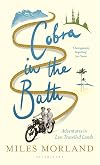
Miles Morland had an unconventional upbringing. Born to a naval father and a mother who was described as the most dangerous woman in India, he was only with them both for a short while before they divorced. He ended up in Iran with his mother and were there until the Shah was overthrown. They ended up in Iraq and ended up leaving there in a rush after a revolution.
Having grown up with deserts he was sent back to the UK to attend boarding school. He somehow survived this and ended up at Oxford where he rowed mostly. After there he ended up in Greece where he took pains to do as little as he could get away with. But the real world beckoned and a city job was forthcoming. In his time he became one of the biggest investors in African markets.
Having seen some of the world when he was younger, he had a yearning to see more of it and he stopped at a motorcycle showroom on the way home and bought a bike. A steep learning curve on riding it, allowed him to indulge himself with trips away and he ended up in South America, Australia and a high-risk trip to the subcontinent of India
To say he had an interesting upbringing would be an understatement, that cannot be many who have been exposed to as many different cultures in the way that he was. It gave him that enthusiasm for life in general and his well-paid work meant that he could indulge himself. I picked this up because of the travel element, but this is such a small element of the book. His writing style is quite pompous too show more which meant that overall it was a bit disappointing for me. show less
Having grown up with deserts he was sent back to the UK to attend boarding school. He somehow survived this and ended up at Oxford where he rowed mostly. After there he ended up in Greece where he took pains to do as little as he could get away with. But the real world beckoned and a city job was forthcoming. In his time he became one of the biggest investors in African markets.
Having seen some of the world when he was younger, he had a yearning to see more of it and he stopped at a motorcycle showroom on the way home and bought a bike. A steep learning curve on riding it, allowed him to indulge himself with trips away and he ended up in South America, Australia and a high-risk trip to the subcontinent of India
To say he had an interesting upbringing would be an understatement, that cannot be many who have been exposed to as many different cultures in the way that he was. It gave him that enthusiasm for life in general and his well-paid work meant that he could indulge himself. I picked this up because of the travel element, but this is such a small element of the book. His writing style is quite pompous too show more which meant that overall it was a bit disappointing for me. show less
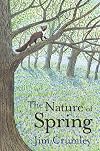
Regardless of what happens in the world, the seasons come and go without fail. The seasons may be stretched a little, especially with the effects of climate change at the moment as they seem to blend into each other more and more. With spring the main moment for me is when we reach the equinox, that day when the night and day are exactly the same length; 12 hours. This year that day was the 20th March and that seemed to me to be the best time to start this book by Crumley.
Spring in Scotland often begins with snow on the ground and in his first chapter of the book he is watching a kestrel over a landscape that is scattered with small patches of snow. She drops from the twig into the wind and begins to hunt. They keep pace with each other at a distance and just as he reached some newly planted native trees, she turns and rushes away downwind. Soon after he hears a mistle thrush singing as the urge to find a mate becomes all-consuming. These are what he considers the first syllables of spring.
Following the traces of spring around Scotland will take him up in the Highlands, and to the islands of Mull, Iona, Lismore and he even ventures out of Scotland to visit Lindisfarne on the Northumbrian coast. If feels like you are alongside him as he is watching the antics of Sea Eagles or spotting an unusual encounter between a fox and a pine marten or being a handful of yards away from a grey coated roebuck.
As with his other books in the series, this is another brilliant book from show more Crumley. He is passionate about his subjects too; his eye for the details of the way that the creatures behave, coupled with the descriptions of the landscape make this such a good book. He is not afraid to use the book as a soapbox either, putting forward solid arguments on a variety of subjects that he cares about. This is the third in the series so far, and there is just the final book, The Nature of Summer, to look forward to. show less
Spring in Scotland often begins with snow on the ground and in his first chapter of the book he is watching a kestrel over a landscape that is scattered with small patches of snow. She drops from the twig into the wind and begins to hunt. They keep pace with each other at a distance and just as he reached some newly planted native trees, she turns and rushes away downwind. Soon after he hears a mistle thrush singing as the urge to find a mate becomes all-consuming. These are what he considers the first syllables of spring.
Following the traces of spring around Scotland will take him up in the Highlands, and to the islands of Mull, Iona, Lismore and he even ventures out of Scotland to visit Lindisfarne on the Northumbrian coast. If feels like you are alongside him as he is watching the antics of Sea Eagles or spotting an unusual encounter between a fox and a pine marten or being a handful of yards away from a grey coated roebuck.
As with his other books in the series, this is another brilliant book from show more Crumley. He is passionate about his subjects too; his eye for the details of the way that the creatures behave, coupled with the descriptions of the landscape make this such a good book. He is not afraid to use the book as a soapbox either, putting forward solid arguments on a variety of subjects that he cares about. This is the third in the series so far, and there is just the final book, The Nature of Summer, to look forward to. show less
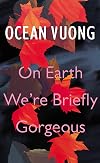
It is when he is in his twenties that Little Dog writes a letter to his mother. She is never going to be able to read it as she is illiterate. Contained within the letter is the family history that he has unearthed and that he traces his mothers side of the family back to Vietnam. In this letter are some of the experiences that his mother Rose, and grandmother, Lan have suffered during and after the war in Vietnam, before they arrived in America.
Little Dog is son to an American and who is still violent to Rose until the police take him away one day. But growing up in Connecticut is not easy when you are mixed race, and he suffers at school for a plethora of reasons. But he does find what he thinks is love, with another boy, an all American lad called Trevor, but is it not an even relationship, rather one where Little Dog is the submissive partner.
It is not the easiest book to read as he writes about things that a lot of people would count as trigger warnings, i.e. abuse, drugs, mental health issues, cruelty and so on. Yet with his prose, he can make this tender and intimate at one moment and then before you know it, it becomes brutal and violent in the next. Sometimes these are brought together in ways that make for uncomfortable reading. It does feel that he has drawn deep on his and his families experience as he touches on some of the factors that have affected him in his life: race, immigration, acceptance and love. Definitely an experience reading this book and you show more are unlikely to be unaffected reading it. show less
Little Dog is son to an American and who is still violent to Rose until the police take him away one day. But growing up in Connecticut is not easy when you are mixed race, and he suffers at school for a plethora of reasons. But he does find what he thinks is love, with another boy, an all American lad called Trevor, but is it not an even relationship, rather one where Little Dog is the submissive partner.
It is not the easiest book to read as he writes about things that a lot of people would count as trigger warnings, i.e. abuse, drugs, mental health issues, cruelty and so on. Yet with his prose, he can make this tender and intimate at one moment and then before you know it, it becomes brutal and violent in the next. Sometimes these are brought together in ways that make for uncomfortable reading. It does feel that he has drawn deep on his and his families experience as he touches on some of the factors that have affected him in his life: race, immigration, acceptance and love. Definitely an experience reading this book and you show more are unlikely to be unaffected reading it. show less
Near me are landscapes that have hundreds and hundreds of years of history draped across them, if you know what to look for and where to look it is fairly straight forward to find Roman or Bronze Age features in the landscape. Things do disappear though given enough time, either by erosion or human influence. Cities though are another matter, things can change in less that a generation, buildings are knocked down and replaced with another badly designed eyesore.
But if you know where to look in a city, especially one that you grew up in, a form of your past life can be found. Even though it may have been a while since you last walked down them, a walk down a little-used back alley that you last saw 20 years ago can fire those memory neurons in the brain in unexpected ways. Jeff Young’s stamping grounds as a child were the streets of Liverpool and in Ghost Town (does anyone hear the song that The Specials sung with those two words?). Beginning with a pile of photos that are spread out over the kitchen table, of his past life, he sees faded images of buildings that might still be there and smiling relatives who almost certainly aren’t now.
It brings back memories of sitting in his grandparents home, seeing the Christmas decorations around a room with no ceiling, but it was hardly surprising because the house was more or less derelict. His grandfather was a butcher by trade and one of those hard men who had spent a lifetime with horses and lived by his own rules. Just show more thinking of him bought back happy memories of sitting in the kitchen learning swear words.
He talks of the time he fell off his bike and on arriving home, was not allowed in the house as his dad had had an accident. He could still remember finding dead animals, playing truant and days spent down by the canal after they had moved from the city to Maghull. By the age of 16, he had flunked school and ended up as a packer in a warehouse. He manages to avoid the casual violent episodes that were taking place, drinking in back street pubs and wandering the streets supposedly delivering post to other offices.
Returning to those streets many years and a lifetime of experience later brings all these fragments of his past back, but time is messing with his memory and the significant events were blurring and moving on the timeline. He walks the streets of his past with Horatio Clare, fighting the bitter wind by fortifying themselves with rum and Guinness trying to locate the ghostly presence of Thomas de Quincey.
The cobbled streets still framed the emptiness, but there was no one left to walk through the flames, no photographer to capture the city as it once was. Just grandad walking through a city that is no longer there.
I am slightly ashamed to say that Liverpool is a city that I have been past many times and not ever visited. Yet from the beautiful prose in Young’s book it sounds a really dynamic place, that oozes history from every crack. His memories of past events are quite distinctive and in his writing, they have retained their sharpness without being softened by time nor coloured by nostalgia. It was seeing the photos that prompted Young to go out and walk around the streets of Liverpool that meant so much as he was growing up. The book does jump back and forwards in time, as he stands in front of a building in the present day he is immediately taken back to a memory from three decades ago in the same spot, and he doe it in a way that you don’t feel disjointed. The buildings in Liverpool are quite spectacular, and the photos in the book add to the atmosphere of the place. show less
But if you know where to look in a city, especially one that you grew up in, a form of your past life can be found. Even though it may have been a while since you last walked down them, a walk down a little-used back alley that you last saw 20 years ago can fire those memory neurons in the brain in unexpected ways. Jeff Young’s stamping grounds as a child were the streets of Liverpool and in Ghost Town (does anyone hear the song that The Specials sung with those two words?). Beginning with a pile of photos that are spread out over the kitchen table, of his past life, he sees faded images of buildings that might still be there and smiling relatives who almost certainly aren’t now.
It brings back memories of sitting in his grandparents home, seeing the Christmas decorations around a room with no ceiling, but it was hardly surprising because the house was more or less derelict. His grandfather was a butcher by trade and one of those hard men who had spent a lifetime with horses and lived by his own rules. Just show more thinking of him bought back happy memories of sitting in the kitchen learning swear words.
He talks of the time he fell off his bike and on arriving home, was not allowed in the house as his dad had had an accident. He could still remember finding dead animals, playing truant and days spent down by the canal after they had moved from the city to Maghull. By the age of 16, he had flunked school and ended up as a packer in a warehouse. He manages to avoid the casual violent episodes that were taking place, drinking in back street pubs and wandering the streets supposedly delivering post to other offices.
Returning to those streets many years and a lifetime of experience later brings all these fragments of his past back, but time is messing with his memory and the significant events were blurring and moving on the timeline. He walks the streets of his past with Horatio Clare, fighting the bitter wind by fortifying themselves with rum and Guinness trying to locate the ghostly presence of Thomas de Quincey.
The cobbled streets still framed the emptiness, but there was no one left to walk through the flames, no photographer to capture the city as it once was. Just grandad walking through a city that is no longer there.
I am slightly ashamed to say that Liverpool is a city that I have been past many times and not ever visited. Yet from the beautiful prose in Young’s book it sounds a really dynamic place, that oozes history from every crack. His memories of past events are quite distinctive and in his writing, they have retained their sharpness without being softened by time nor coloured by nostalgia. It was seeing the photos that prompted Young to go out and walk around the streets of Liverpool that meant so much as he was growing up. The book does jump back and forwards in time, as he stands in front of a building in the present day he is immediately taken back to a memory from three decades ago in the same spot, and he doe it in a way that you don’t feel disjointed. The buildings in Liverpool are quite spectacular, and the photos in the book add to the atmosphere of the place. show less
Living in Gaza is just like living in a prison. On one side is the blockade that stops almost all people getting in or out, and there is a sea blockade in place that stops boats for venturing from the shore too far. It is not a place that is high on most people wish list for visiting, but spare a thought for the people that have to live there. Getting in was not going to be easy, but Dervla Murphy is tenacious. The regular route was shut down and then she had an opportunity to get in via Egypt, took it and got in.
This wasn’t going to be a fleeting visit like a lot of reporters either, she was intending to stay a whole month and get to know the people and see how they coped with day to day basic living in their prison. The media portrays the Palestinians as a radicalised people fighting and who are prepared to go to any lengths to strike terror against the state of Israel. What she finds there is utterly different to what she was expecting.
Yes, there are radical young men and women there who have no other channels to direct their anger, but there is also a population who are doing their very best to just get on with life, who have had enough of the fighting and pain and loss of loved ones. A people who long for a peace process that would mean they could get back on with their lives.
Puzzled by my lack of journalistic equipment: no camera, no tape recorder, not even a notebook and pencil. I explained that I don’t like interviewing people, I just like talking with show more them.
Murphy is prepared to go out and talk to people about how they feel and understand just how incredibly difficult struggle daily life is. She hears about the random attached that just happen with little or almost no warning, attacks that seem to be designed with the maximum amount of cruelty. She tries to think rationally about the situation and circumstances that they are under, as well as spending time question the motives and processes behind each sides actions. Seeing the evidence around her each day makes her think about the slender hopes for peace and the utter pain that she has from seeing the hypocrisy from both sides and how a people that suffered from horrific genocide and during the holocaust have elements in the society that seem to inflict it on another people. This is an uncompromising read seen from the perspective of an old Irish lady who grew up in a land that had similar problems, Ireland. It might not suit everyone, but if you like a challenging book, give it a read. show less
This wasn’t going to be a fleeting visit like a lot of reporters either, she was intending to stay a whole month and get to know the people and see how they coped with day to day basic living in their prison. The media portrays the Palestinians as a radicalised people fighting and who are prepared to go to any lengths to strike terror against the state of Israel. What she finds there is utterly different to what she was expecting.
Yes, there are radical young men and women there who have no other channels to direct their anger, but there is also a population who are doing their very best to just get on with life, who have had enough of the fighting and pain and loss of loved ones. A people who long for a peace process that would mean they could get back on with their lives.
Puzzled by my lack of journalistic equipment: no camera, no tape recorder, not even a notebook and pencil. I explained that I don’t like interviewing people, I just like talking with show more them.
Murphy is prepared to go out and talk to people about how they feel and understand just how incredibly difficult struggle daily life is. She hears about the random attached that just happen with little or almost no warning, attacks that seem to be designed with the maximum amount of cruelty. She tries to think rationally about the situation and circumstances that they are under, as well as spending time question the motives and processes behind each sides actions. Seeing the evidence around her each day makes her think about the slender hopes for peace and the utter pain that she has from seeing the hypocrisy from both sides and how a people that suffered from horrific genocide and during the holocaust have elements in the society that seem to inflict it on another people. This is an uncompromising read seen from the perspective of an old Irish lady who grew up in a land that had similar problems, Ireland. It might not suit everyone, but if you like a challenging book, give it a read. show less
Where There's A Will: Hope, Grief and Endurance in a Cycle Race Across a Continent by Emily Chappell
I have been a follower of the Tour de France for three decades now. It never ceases to amaze me the limits that these guys can push themselves to, just to complete the course. Some have used artificial aids, but even with that, it is still a mammoth achievement to complete the 3000 or so kilometres.
There is another cycle race across Europe though that is twice the length of the Tour. The race is called the Transcontinental and rather than having the luxury of team members and lots of support, the entrants must cycle their way without support in the fastest time possible. Whilst the Tour takes place over three weeks and is a very fast race, the Transcontinental has one stage and four checkpoints. You’d think that they would struggle to find people to take part in this, but they do find people and those that do must be utterly mad.
Emily Chappell is one of those. She began as a cycle courier in London, but her taste for adventure transformed her into an ultra cyclist and she decided to enter this. To get across a continent in the fastest time on a bike means that you have to ignore things like sleep and sensible diets, push so far through the pain barrier that you are on the limit of doing permanent damage to your body. She made it halfway before bailing the first year that she entered. Undaunted by this, she trained hard with the guy who founded the race, Mike Hall and entered the next year.
It took her 13 days and 10 hours to cycle the 4000 miles and she won the women’s show more prize. She consumed countless calories every day, existed on little or no sleep and pushed her body beyond any sensible limits. As staggering as that sounds, she was still five days behind the overall winner, Kristof Allegaert. A substantial part of the book is about the platonic relationship that she had with the founder of the race, Mike Hall and the rides that they used to go out on. It is a tribute to him too and the disciple that he founded as he was tragically killed on another race in Australia.
This is one of the best cycling books that I have read in a long while. Not only is it lyrical with a strong narrative, but Chappell is searingly honest about the few highs and many lows of pushing her body well beyond any limits in this most extreme of sports. Superb book and possibly one of the best cycling books I have ever read. show less
There is another cycle race across Europe though that is twice the length of the Tour. The race is called the Transcontinental and rather than having the luxury of team members and lots of support, the entrants must cycle their way without support in the fastest time possible. Whilst the Tour takes place over three weeks and is a very fast race, the Transcontinental has one stage and four checkpoints. You’d think that they would struggle to find people to take part in this, but they do find people and those that do must be utterly mad.
Emily Chappell is one of those. She began as a cycle courier in London, but her taste for adventure transformed her into an ultra cyclist and she decided to enter this. To get across a continent in the fastest time on a bike means that you have to ignore things like sleep and sensible diets, push so far through the pain barrier that you are on the limit of doing permanent damage to your body. She made it halfway before bailing the first year that she entered. Undaunted by this, she trained hard with the guy who founded the race, Mike Hall and entered the next year.
It took her 13 days and 10 hours to cycle the 4000 miles and she won the women’s show more prize. She consumed countless calories every day, existed on little or no sleep and pushed her body beyond any sensible limits. As staggering as that sounds, she was still five days behind the overall winner, Kristof Allegaert. A substantial part of the book is about the platonic relationship that she had with the founder of the race, Mike Hall and the rides that they used to go out on. It is a tribute to him too and the disciple that he founded as he was tragically killed on another race in Australia.
This is one of the best cycling books that I have read in a long while. Not only is it lyrical with a strong narrative, but Chappell is searingly honest about the few highs and many lows of pushing her body well beyond any limits in this most extreme of sports. Superb book and possibly one of the best cycling books I have ever read. show less
Neil Ansell likes being alone left to his thoughts and musings and preferably in a place where he can absorb the tranquillity whilst being outdoors. It hasn't happened as much as it used to as he now has two daughters and the responsibilities that come with being a parent.
His chosen wilderness is the West Coast of Scotland. This landscape offers the heady mix of islands, white beaches and blue seas, temperate rainforests (yes really), undisturbed lochs and majestic mountains. He has chosen this part of the UK to take long walks across the terrain in each of the seasons, aiming to immerse himself in nature and become part of it rather than just an observer. The interplay of light across the rolling hills as the weather changes almost minute by minute. Being so remote, the chances of coming across other people is unlikely and as he treads softly across the landscape and his solitary presence means that he gets to see far more of the animals that inhabit here. The joy of watching otters slipping into the sea lochs, seeing stags silhouetted on the skyline and seeing golden and sea eagles soaring above is tempered by a profound change in the way that he senses the world around. Almost deaf in one ear, he had relied for years on his other, but now that is fading from the highest frequencies down and the bird songs that once delighted him now inhabits his memories only.
Ansell is widely travelled; five continents and over fifty countries is quite a record. He has lived in a show more forest in Scandinavia, hitchhiked across countries, seen the wild animals of the Amazon, lived in squats in London and spent five years in a cottage in Wales with no running water or electricity. By returning to the same part of Scotland, it feels like a spiritual journey and he connects deeply to the landscape each time he visits, but it is tinged with the remorse that he has of no longer being able to hear the birdsong. It is a beautiful book to read, he has a knack of teasing out all that he sees around him into the most exquisite prose. I think that the writing is as good as Deep Country, which if you haven’t read then you should. Another excellent book from Ansell. show less
His chosen wilderness is the West Coast of Scotland. This landscape offers the heady mix of islands, white beaches and blue seas, temperate rainforests (yes really), undisturbed lochs and majestic mountains. He has chosen this part of the UK to take long walks across the terrain in each of the seasons, aiming to immerse himself in nature and become part of it rather than just an observer. The interplay of light across the rolling hills as the weather changes almost minute by minute. Being so remote, the chances of coming across other people is unlikely and as he treads softly across the landscape and his solitary presence means that he gets to see far more of the animals that inhabit here. The joy of watching otters slipping into the sea lochs, seeing stags silhouetted on the skyline and seeing golden and sea eagles soaring above is tempered by a profound change in the way that he senses the world around. Almost deaf in one ear, he had relied for years on his other, but now that is fading from the highest frequencies down and the bird songs that once delighted him now inhabits his memories only.
Ansell is widely travelled; five continents and over fifty countries is quite a record. He has lived in a show more forest in Scandinavia, hitchhiked across countries, seen the wild animals of the Amazon, lived in squats in London and spent five years in a cottage in Wales with no running water or electricity. By returning to the same part of Scotland, it feels like a spiritual journey and he connects deeply to the landscape each time he visits, but it is tinged with the remorse that he has of no longer being able to hear the birdsong. It is a beautiful book to read, he has a knack of teasing out all that he sees around him into the most exquisite prose. I think that the writing is as good as Deep Country, which if you haven’t read then you should. Another excellent book from Ansell. show less
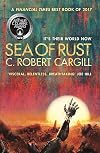
It was only fifteen years ago that the last human was eradicated from the planet and thirty years since the apocalypse began. They were killed by the machines that they built to help them, robots. Most of the robots are controlled by a One World Intelligence or an OWI, that pools the consciousness of millions of robots into one huge central server and power base.
Not all robots are willing to cede power to this entity rather they would rather take their chances in what is left of the world, scavenging components from dead and dying robots that have failed. The biggest collection of these machines is in the Sea of Rust, the Midwest of America and a brutal AI Wild West. One of those who still has her mind is Brittle. She is a scavenger robot, collecting parts from robots that have failed in the rust belt and bringing the parts back to the hubs for payment for ongoing repairs and spares.
There are not many of her type left, but one of the others, Mercer, has just taken a pot shot at her as he is after some of her working parts. Managing to escape she heads back to NIKE 14 to get repaired. Soon after she arrives, Mercer turns up too. The rules of the place don’t allow fighting inside so there is an uneasy truce. While there are there, the place is invaded by CISSUS, one of the OWI’s. There is a bot there who needs her help to get out as she contains code that will be useful to those opposing the power that the OWI’s have. They escape via the tunnels, into the madlands, show more but can they stay far enough ahead of the facets that were coming after them?
This is an utterly bleak dystopian future that Cargill has created. Life has been scoured from the earth and all that is left is the robots that we created trying to stay alive in the robotic equivalent of natural selection. I thought this was a fantastic book in most regards, I liked the original concepts, but if there was one tiny flaw, I felt the characters had a little too much humanity in them for robots. I was kind of expecting them to have much less compassion. Very highly recommended. show less
Not all robots are willing to cede power to this entity rather they would rather take their chances in what is left of the world, scavenging components from dead and dying robots that have failed. The biggest collection of these machines is in the Sea of Rust, the Midwest of America and a brutal AI Wild West. One of those who still has her mind is Brittle. She is a scavenger robot, collecting parts from robots that have failed in the rust belt and bringing the parts back to the hubs for payment for ongoing repairs and spares.
There are not many of her type left, but one of the others, Mercer, has just taken a pot shot at her as he is after some of her working parts. Managing to escape she heads back to NIKE 14 to get repaired. Soon after she arrives, Mercer turns up too. The rules of the place don’t allow fighting inside so there is an uneasy truce. While there are there, the place is invaded by CISSUS, one of the OWI’s. There is a bot there who needs her help to get out as she contains code that will be useful to those opposing the power that the OWI’s have. They escape via the tunnels, into the madlands, show more but can they stay far enough ahead of the facets that were coming after them?
This is an utterly bleak dystopian future that Cargill has created. Life has been scoured from the earth and all that is left is the robots that we created trying to stay alive in the robotic equivalent of natural selection. I thought this was a fantastic book in most regards, I liked the original concepts, but if there was one tiny flaw, I felt the characters had a little too much humanity in them for robots. I was kind of expecting them to have much less compassion. Very highly recommended. show less
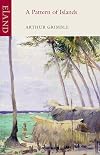
Arthur Grimble was fresh out of Oxford and was interviewed by the colonial office for a post overseas. He got the job and was despatched to the other side of the world to work on the Gilbert Islands in the pacific. This was the time of colonialism and he was starting there as a cadet officer. Coming from the UK this was a form of paradise and it was going to be a place that he was to fall in love with over the next three decades.
You probably think, Grimble, that you’re here to teach these people our code of manners, not to learn theirs. You’re making a big mistake.
He was given the piece of advice above and he took it completely to heart. He was fascinated by the islanders, their history and just how they managed to eke a living in the middle of the vast ocean. Not only did they survive by developing unique ways of catching food from the ocean but they also developed a sophisticated pagan culture that was full of legends, folklore, rituals and spells. It was a way of life that was vanishing as the Catholic and Protestant religion was being draped over the culture. But if you knew where to look you could still see their earlier pagan culture shining through and as the people began to trust him they began to share their stories.
I really liked this, he is an eloquent author and a sensitive observer of the culture of these islands. He is prepared to get involved in the activities too, learning to catch octopus seeing men face tiger sharks with only a spear and witnessing show more the initiation rituals of the clans. I think if he hadn’t have taken that small piece of advice then this would have been a much poorer book. A great read of a part of the world that I have never heard of. show less
You probably think, Grimble, that you’re here to teach these people our code of manners, not to learn theirs. You’re making a big mistake.
He was given the piece of advice above and he took it completely to heart. He was fascinated by the islanders, their history and just how they managed to eke a living in the middle of the vast ocean. Not only did they survive by developing unique ways of catching food from the ocean but they also developed a sophisticated pagan culture that was full of legends, folklore, rituals and spells. It was a way of life that was vanishing as the Catholic and Protestant religion was being draped over the culture. But if you knew where to look you could still see their earlier pagan culture shining through and as the people began to trust him they began to share their stories.
I really liked this, he is an eloquent author and a sensitive observer of the culture of these islands. He is prepared to get involved in the activities too, learning to catch octopus seeing men face tiger sharks with only a spear and witnessing show more the initiation rituals of the clans. I think if he hadn’t have taken that small piece of advice then this would have been a much poorer book. A great read of a part of the world that I have never heard of. show less
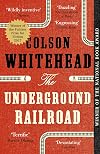
Cora is a slave on a plantation in Georgia. She has been abandoned there by her mother and the rest of the slaves treat her with contempt. Like most of she wishes she could be somewhere else, but most of all wishes she could be free. A fellow slave, Caesar, approaches her with details of a plan to escape. She is reluctant as capture means severe punishment and probably death. But as circumstances change, she reconsiders and decides to flee.
A contact takes them to the Underground Railroad, where they are placed on a train to Carolina. However, their owner is wanting them back and set off after them. They are relatively safe in South Carolina, as they are living under assumed names, but it isn’t safe there as she learns of a medical programme that will use her and others in an experiment. She is just in the process of planning to leave, but her owner arrives and she has a close escape and heads back to the railroad to go further north. She isn’t sure if she can keep running, but neither does she want to get caught.
In lots of ways, this is a powerful book about slavery. It doesn’t hold back on the brutal life that slaves had in America at that time and Whitehead has captured very well the fear that they had just existing and the daily terror that they had while on the run. Whist I felt for the characters and the trauma that they were going through, I found them a little two dimensional. I also didn’t find the plot that engaging and found the underground railroad show more quite implausible. I can kind of see why it won the Pulitzer, but not the Arthur C Clarke Award. Ah well, can’t love every book. show less
A contact takes them to the Underground Railroad, where they are placed on a train to Carolina. However, their owner is wanting them back and set off after them. They are relatively safe in South Carolina, as they are living under assumed names, but it isn’t safe there as she learns of a medical programme that will use her and others in an experiment. She is just in the process of planning to leave, but her owner arrives and she has a close escape and heads back to the railroad to go further north. She isn’t sure if she can keep running, but neither does she want to get caught.
In lots of ways, this is a powerful book about slavery. It doesn’t hold back on the brutal life that slaves had in America at that time and Whitehead has captured very well the fear that they had just existing and the daily terror that they had while on the run. Whist I felt for the characters and the trauma that they were going through, I found them a little two dimensional. I also didn’t find the plot that engaging and found the underground railroad show more quite implausible. I can kind of see why it won the Pulitzer, but not the Arthur C Clarke Award. Ah well, can’t love every book. show less
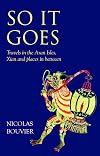
Bouvier has been travelling for a long time, he left Geneva in 1953 to go to Yugoslavia. He had no intention of returning and the story of that journey became a book eight years later. He kept travelling, heading out via India and Sri Lanka to Japan, which in time became another book. This latest book is a collection of shorter pieces and essays of his time spent in other parts of the world. Beginning in the Aran Isles, he then heads to Scotland and Islay. We then join him heading to Xian in China and Korea, and finally to his childhood home in Switzerland.
He is in Aran in the depths of winter walking the headlands and being battered by the winds from the Atlantic, sitting in the pubs being warmed and gently smoked by the peat fires and meeting the locals. He notes the desolation of the landscape, feeling that it is missing a certain something that other places have, but it isn't something that he can quantify or identify.
Arriving in Scotland with sciatica he has no plan of what to do or see is not to be recommended, but it does give him the opportunity to discover things in Edinburgh by chance. Heading out of the capital, he heads east along the coast exploring the ports and to people watch in the pubs. Then onto Melrose via the Lammermuir Hills and finding how the Scots travelled the world taking their engineering skills with them. One rough sea journey later and Bouvier arrives in Port Ellen to discover the delights and drams of the island of Islay.
Leaving the show more windswept west coast of the British Isles the next essay takes us to the foggy heartland of China, Xian. Her were meet Monsieur X who will be his guide. This man had collected a small library of French books, but the Red Guard had destroyed all bar one of them, the last books, a Larousse was now buried in his garden. They have a good relationship in the brief time that he is in the province, Monsieur X revealing elements of the culture that he really should have been concealing.
The penultimate essay is on Korea. There were once seen as the poor relation compared to China and Japan and suffered at the hands of both countries, however, they were the source of writing, fire and Buddhism for Japan, amongst other things. He headed there in the early 1970s, and it was a place that wasn't on most peoples itineraries of places to visit. However, it never really got over the war that almost triggers another world war and he finds a country that is crumbling and tired. But in amongst the dust and decay, he discovers a culture that is as rich and magnificent as its neighbours. Finally, he is back home in Switzerland, reliving memories from when he was eight years old.
This is the first of Bouvier's books that I have read and I thought that it was really good. He has a gentle way of writing almost poetic at times, his keen eye selecting details, like the sparkle of ice on the sea of the coast of Arun, that turn the prose from a sketch of the moment to something with greater depth. He also lets the experiences of his travels come to him rather than seek them out. I do have a copy of The Way of the World that I must read very soon and must get hold of a copy of the Japanese Chronicles too. show less
He is in Aran in the depths of winter walking the headlands and being battered by the winds from the Atlantic, sitting in the pubs being warmed and gently smoked by the peat fires and meeting the locals. He notes the desolation of the landscape, feeling that it is missing a certain something that other places have, but it isn't something that he can quantify or identify.
Arriving in Scotland with sciatica he has no plan of what to do or see is not to be recommended, but it does give him the opportunity to discover things in Edinburgh by chance. Heading out of the capital, he heads east along the coast exploring the ports and to people watch in the pubs. Then onto Melrose via the Lammermuir Hills and finding how the Scots travelled the world taking their engineering skills with them. One rough sea journey later and Bouvier arrives in Port Ellen to discover the delights and drams of the island of Islay.
Leaving the show more windswept west coast of the British Isles the next essay takes us to the foggy heartland of China, Xian. Her were meet Monsieur X who will be his guide. This man had collected a small library of French books, but the Red Guard had destroyed all bar one of them, the last books, a Larousse was now buried in his garden. They have a good relationship in the brief time that he is in the province, Monsieur X revealing elements of the culture that he really should have been concealing.
The penultimate essay is on Korea. There were once seen as the poor relation compared to China and Japan and suffered at the hands of both countries, however, they were the source of writing, fire and Buddhism for Japan, amongst other things. He headed there in the early 1970s, and it was a place that wasn't on most peoples itineraries of places to visit. However, it never really got over the war that almost triggers another world war and he finds a country that is crumbling and tired. But in amongst the dust and decay, he discovers a culture that is as rich and magnificent as its neighbours. Finally, he is back home in Switzerland, reliving memories from when he was eight years old.
This is the first of Bouvier's books that I have read and I thought that it was really good. He has a gentle way of writing almost poetic at times, his keen eye selecting details, like the sparkle of ice on the sea of the coast of Arun, that turn the prose from a sketch of the moment to something with greater depth. He also lets the experiences of his travels come to him rather than seek them out. I do have a copy of The Way of the World that I must read very soon and must get hold of a copy of the Japanese Chronicles too. show less
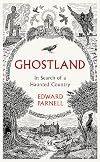
Losing one family member early to cancer is a tragedy. But losing both parents and a brother to the disease is several levels above that. It is at times like this that looking back over your past for things that were comforting can help. For Edward Parnell, this meant heading back to his bookshelves to look for the stories that he was obsessed with as a boy. This was ghost stories from a raft of favourite authors and the other weird fiction that was generally found nudging up against these books in the library.
To relive some of those stories he wanted to get under the skin of his favourite authors, Susan Cooper and Alan Garner, M.R. James and Algernon Blackwood to name a few in the book. That means travelling to the places that the authors placed their stories in. Whilst these places are not specifically haunted, he is not looking for ghosts per se, but seeking the places that have a creepy element about them. Whilst there here he is trying to find just why the authors rooted their stories there.
It is a book that defies categorisation really. It is part memoir, part family saga, part travel book and all centred around the books that he is remising about. I have only heard of a couple of the authors that he mentions and must admit to reading very few of them. Yet after reading this I now have a list of authors whose works I want to try at some point. I hadn’t been to many of the places that he writes about, so it was interesting learning about the context of them with show more regards to the books. However, I do know two of them really well, as they are close to where I live in Dorset. Badbury Rings is an Iron Age Hill Fort, and I have been on and around it at night and it doesn’t feel that creepy. Knowlton though can be really quite sinister at night…
This is a timely book too, I think that he has tapped into the growing interest in folk horror, that zines like Weird walk and Hellebore are publishing for, and there is that amazing Hookland too if you have the faintest interest the otherworldliness of the British Countryside. Most of all it is touching eulogy to his beloved family members and a fitting memory for them. show less
To relive some of those stories he wanted to get under the skin of his favourite authors, Susan Cooper and Alan Garner, M.R. James and Algernon Blackwood to name a few in the book. That means travelling to the places that the authors placed their stories in. Whilst these places are not specifically haunted, he is not looking for ghosts per se, but seeking the places that have a creepy element about them. Whilst there here he is trying to find just why the authors rooted their stories there.
It is a book that defies categorisation really. It is part memoir, part family saga, part travel book and all centred around the books that he is remising about. I have only heard of a couple of the authors that he mentions and must admit to reading very few of them. Yet after reading this I now have a list of authors whose works I want to try at some point. I hadn’t been to many of the places that he writes about, so it was interesting learning about the context of them with show more regards to the books. However, I do know two of them really well, as they are close to where I live in Dorset. Badbury Rings is an Iron Age Hill Fort, and I have been on and around it at night and it doesn’t feel that creepy. Knowlton though can be really quite sinister at night…
This is a timely book too, I think that he has tapped into the growing interest in folk horror, that zines like Weird walk and Hellebore are publishing for, and there is that amazing Hookland too if you have the faintest interest the otherworldliness of the British Countryside. Most of all it is touching eulogy to his beloved family members and a fitting memory for them. show less

The international DJ sounds the most perfect life; the glamour, jet setter heading off to exotic locations, headlining all the top clubs, being a household name and being wealthy, surrounded by the most beautiful people. Turns out it is not quite like that…
The Secret DJ was one of those who was at the top of his game for 30 odd years, but there is a chasm between how people perceived his life and the reality of it. Yes, he would fly into various places for the weekend to play to the crowds and get the place jumping, but he could only keep doing that with a regular supply of drugs and alcohol. These hedonistic weekends moving from flights to hotels to clubs and back to the airport. Sleep didn’t really exist in this drug-filled life.
Then there was his tour manager who he says took more drugs than anyone else that he knew and would always be late for the everything he attended, and from what I can make out didn’t really manage anything at all. Since he started the scene has changed dramatically, now it seems that any bedroom DJ with deep pockets can get themselves a set of CDJ’s and can become a DJ. They are obviously not as well known as the big guys, but the effect they have had is to drive the amount they get paid down. The common currency to be paid in seems to be exposures… Which will give you a lot of publicity but you can’t pay for groceries with them yet.
I had always liked dance music and can trace my love of that back to Kraftwerk and Tangerine Dream and show more still listen to a lot of trance at the moment. However, the club scene has never really appealed, the introvert in me would much rather have a quiet drink in a pub. As well as being an interesting expose of the club scene, The Secret DJ is prepared to share his experiences to stop others making the same mistakes. He is not a bad writer either, fairly blunt and holds strong opinions and at times this was hilarious. There were nice touches too, it is split into two sections, A Side and B Side of course and Chapter 6 made me chuckle… show less
The Secret DJ was one of those who was at the top of his game for 30 odd years, but there is a chasm between how people perceived his life and the reality of it. Yes, he would fly into various places for the weekend to play to the crowds and get the place jumping, but he could only keep doing that with a regular supply of drugs and alcohol. These hedonistic weekends moving from flights to hotels to clubs and back to the airport. Sleep didn’t really exist in this drug-filled life.
Then there was his tour manager who he says took more drugs than anyone else that he knew and would always be late for the everything he attended, and from what I can make out didn’t really manage anything at all. Since he started the scene has changed dramatically, now it seems that any bedroom DJ with deep pockets can get themselves a set of CDJ’s and can become a DJ. They are obviously not as well known as the big guys, but the effect they have had is to drive the amount they get paid down. The common currency to be paid in seems to be exposures… Which will give you a lot of publicity but you can’t pay for groceries with them yet.
I had always liked dance music and can trace my love of that back to Kraftwerk and Tangerine Dream and show more still listen to a lot of trance at the moment. However, the club scene has never really appealed, the introvert in me would much rather have a quiet drink in a pub. As well as being an interesting expose of the club scene, The Secret DJ is prepared to share his experiences to stop others making the same mistakes. He is not a bad writer either, fairly blunt and holds strong opinions and at times this was hilarious. There were nice touches too, it is split into two sections, A Side and B Side of course and Chapter 6 made me chuckle… show less
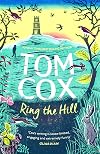
There are countless books written about mountains, just take a look around the travel section of a bookshop. However, there are not so many written about hills, in particular, the small inconsequential hills that abound the landscape in our country. A hill might not have the majesty or presence of a mountain, but for Cox, these are more accessible, and still have as much mystery and lore and their larger cousins.
Beginning in Somerset under the ever-watchful eye of the Tor and the inland sea that is the Somerset levels he wanders from Britain’s smallest hill, in Norfolk no less, to the highest point on the South Coast. Yet another house move takes him to a house most of the way up a hill in Derbyshire; he is snowed in and it is a place that alarms his cats, and he is often woken at 3.44 in the morning from a nightmare and he would often hear things being moved in the loft… Not many things scare him, sitting with his feet over the edge of Golden Cap is no problem, but halfway up some mechanical edifice is enough to freak Cox out.
He wades through some family history when he discovers that his great grandmother who lived on Dartmoor, prior to moving to Nottingham. He finds that Dartmoor is at its most eerie in the summer when the heat makes time move like treacle. He spends time walking across Dorset’s hills spotting his third hare since moving to the West Country and amusing himself over alternative meanings for the village names in the area. Just seeing a hill on a show more car journey and then finding on an OS map late is a thrill, especially if there is access to walk up it later.
As I drive the roads, I watch the hills. I always notice the interesting ones, and none of them aren’t interesting, so I notice them all.
Ring the Hill is not quite a sequel to 21st Century Yokel, more of a slightly lairy companion. He seems to be one of the fastest funded authors on the publisher Unbound as he doesn’t really fit in any of the niches that a regular publisher has. Preferring to write widely about whatever the hell takes his fancy, from folklore to the music that works best when he is walking in a place. It is this wide-ranging fascination with all that he sees is what makes this book such a delight. Hares permeate the book too, not just the scant physical ones that he sees out and about, but the way that they are interwoven into the natural and spiritual worlds. I thought that this was a wonderful book, full of tangents and glimpses of things that fascinate him. I love the traditional linocut illustrations of hares that have been created by his mother and I was glad to see that his very LOUD DAD was back in the book again. show less
Beginning in Somerset under the ever-watchful eye of the Tor and the inland sea that is the Somerset levels he wanders from Britain’s smallest hill, in Norfolk no less, to the highest point on the South Coast. Yet another house move takes him to a house most of the way up a hill in Derbyshire; he is snowed in and it is a place that alarms his cats, and he is often woken at 3.44 in the morning from a nightmare and he would often hear things being moved in the loft… Not many things scare him, sitting with his feet over the edge of Golden Cap is no problem, but halfway up some mechanical edifice is enough to freak Cox out.
He wades through some family history when he discovers that his great grandmother who lived on Dartmoor, prior to moving to Nottingham. He finds that Dartmoor is at its most eerie in the summer when the heat makes time move like treacle. He spends time walking across Dorset’s hills spotting his third hare since moving to the West Country and amusing himself over alternative meanings for the village names in the area. Just seeing a hill on a show more car journey and then finding on an OS map late is a thrill, especially if there is access to walk up it later.
As I drive the roads, I watch the hills. I always notice the interesting ones, and none of them aren’t interesting, so I notice them all.
Ring the Hill is not quite a sequel to 21st Century Yokel, more of a slightly lairy companion. He seems to be one of the fastest funded authors on the publisher Unbound as he doesn’t really fit in any of the niches that a regular publisher has. Preferring to write widely about whatever the hell takes his fancy, from folklore to the music that works best when he is walking in a place. It is this wide-ranging fascination with all that he sees is what makes this book such a delight. Hares permeate the book too, not just the scant physical ones that he sees out and about, but the way that they are interwoven into the natural and spiritual worlds. I thought that this was a wonderful book, full of tangents and glimpses of things that fascinate him. I love the traditional linocut illustrations of hares that have been created by his mother and I was glad to see that his very LOUD DAD was back in the book again. show less
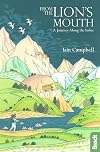
Mountains have captivated people for ages for a variety of different reasons. Just look in any bookshop in the travel section and you will find lots of book on mountains from all over the world. People have been climbing them seriously for over 150 years now, but before that, they had a spiritual significance for many cultures.
One of those people who is drawn to mountains is Iain Campbell, in particular, the Himalayas. Another fascination was the Indus River, and he had always dreamed of following its course in a boat as far as he could up to the Tibetan plateau, where it springs from the ‘Lion’s Mouth’ on Mount Kailash. Circumstances meant that this was never to be, so he had to take the next best things and follow it along the banks by bus and train.
Not only would this be a personal journey, but a discovery of the significance of the river to the lives of the people of Pakistan who live alongside it. It would take him four months and he would visit shrines and temples, get bumped around on buses and generally experience the rich culture of the country. He found the people of that country warm, generous and hospitable, very different from what he was expecting from the way that they are portrayed in the western media.
The truth of this journey, as with every other journey, is that it is unrepeatable; the land that we travel through changes, the tools that we use to travel change and we ourselves change.
It is an enjoyable book about a man immersing himself in the show more place and culture of a region. Campbell writes in a plain and matter of fact way and is prepared to engage with the people that he meets and join in with all that the journey throws at him. 3.5 stars show less
One of those people who is drawn to mountains is Iain Campbell, in particular, the Himalayas. Another fascination was the Indus River, and he had always dreamed of following its course in a boat as far as he could up to the Tibetan plateau, where it springs from the ‘Lion’s Mouth’ on Mount Kailash. Circumstances meant that this was never to be, so he had to take the next best things and follow it along the banks by bus and train.
Not only would this be a personal journey, but a discovery of the significance of the river to the lives of the people of Pakistan who live alongside it. It would take him four months and he would visit shrines and temples, get bumped around on buses and generally experience the rich culture of the country. He found the people of that country warm, generous and hospitable, very different from what he was expecting from the way that they are portrayed in the western media.
The truth of this journey, as with every other journey, is that it is unrepeatable; the land that we travel through changes, the tools that we use to travel change and we ourselves change.
It is an enjoyable book about a man immersing himself in the show more place and culture of a region. Campbell writes in a plain and matter of fact way and is prepared to engage with the people that he meets and join in with all that the journey throws at him. 3.5 stars show less
Nature writing seems to be the in thing to be reading at the moment. Wander into your local bookshop and you will find lots of recently published books by people who have recently discovered the healing benefits of nature, or who are extolling the virtues of putting the screen down and looking at something else.
When you have ventured outside, it helps to have a guide to the things that you might see. These have always been popular, especially when it comes to identifying the LBJ’s (little brown jobs) that make up a large number of small brown passerine birds, many of which are notoriously difficult to distinguish, even for experts.
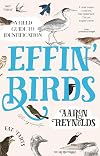
This though is a guide with a difference. It is filled with beautiful sketches that are so much like the art of Thomas Berwick, but rather than having details of regular birds, Reynolds has gathered details of birds like the Hipster Pelican, the Enervated Eagle and Buff Petrel, not forgetting the Snub Gull and the Fatalistic Falcon.
Astute Owls
As much as you don’t want an astute owl to be correct, the astute owl is correct
Habitat: Lurking nearby whenever you make a mistake
Identifying Characteristics: An unnerving sense of timing
As you might have guessed from the above, this is a humorous bird identification book. It gives a peek into the characteristics of these new birds and a fairly (ok, very) broadminded insight into what they might be thinking. I really liked the imaginative bird names and the thought he’d put into their habits and show more characters. The images are excellent too, in particular, the colour ones, they portray the bird and also show the aloof, contemptuous or angry look that the artist and author were aiming for. There is a lot of swearing in here, which might not be everyone’s cup of tea. show less
When you have ventured outside, it helps to have a guide to the things that you might see. These have always been popular, especially when it comes to identifying the LBJ’s (little brown jobs) that make up a large number of small brown passerine birds, many of which are notoriously difficult to distinguish, even for experts.
This though is a guide with a difference. It is filled with beautiful sketches that are so much like the art of Thomas Berwick, but rather than having details of regular birds, Reynolds has gathered details of birds like the Hipster Pelican, the Enervated Eagle and Buff Petrel, not forgetting the Snub Gull and the Fatalistic Falcon.
Astute Owls
As much as you don’t want an astute owl to be correct, the astute owl is correct
Habitat: Lurking nearby whenever you make a mistake
Identifying Characteristics: An unnerving sense of timing
As you might have guessed from the above, this is a humorous bird identification book. It gives a peek into the characteristics of these new birds and a fairly (ok, very) broadminded insight into what they might be thinking. I really liked the imaginative bird names and the thought he’d put into their habits and show more characters. The images are excellent too, in particular, the colour ones, they portray the bird and also show the aloof, contemptuous or angry look that the artist and author were aiming for. There is a lot of swearing in here, which might not be everyone’s cup of tea. show less
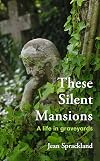
Near where I grew up, is a place called Brookwood Cemetery. For years this 500-acre site was the largest burial ground in the world and when it was first set aside it even had its own railway line and platform at Waterloo Station. I spent many an afternoon walking around there, and whilst some might find that morbid, there was a peacefulness to the place.
Sprackland is another person who fascinated by graveyards, so much so that she remembers the places that she has lived and significant family moments by the graveyards that were nearby. She has fond memories of these places and uses them to root her in the locality. Going back over people’s past make her want to travel back through her life, to the towns and cities that she has lived before. In each of the graveyards, she finds a glimpse of a life that has long ceased to exist but still has a story to tell of the people who once walked the streets that she now walks again.
Her journey will take her from Oxford to Devon, London to Norfolk. But also back into the past to learn about a drowned lad, the owner of a steam fairground, bodies used for medical research and a young lady who died after her clothes caught fire.
Wherever I have lived, I have found them – some like cities, others like gardens, or forests of stone – and they have become the counterparts of those lived places: the otherworlds which have helped make sense of this world.
Each of these stories is told with Sprackland’s keen eye for detail in the lives show more that were once lived and their final resting place as she traces the inscriptions in the stone. Death is still a taboo object, however, there is something peaceful about graveyards, not only are they are a haven of quiet in a relentless world, but they are one of those thin places where you feel closer to other worlds. It is beautifully written as I have come to expect with all of her books, she has immensely powerful prose. Even though it is about the dead, it not morbid at all, rather she is curious about the past and the relics that we leave to remember someone. show less
Sprackland is another person who fascinated by graveyards, so much so that she remembers the places that she has lived and significant family moments by the graveyards that were nearby. She has fond memories of these places and uses them to root her in the locality. Going back over people’s past make her want to travel back through her life, to the towns and cities that she has lived before. In each of the graveyards, she finds a glimpse of a life that has long ceased to exist but still has a story to tell of the people who once walked the streets that she now walks again.
Her journey will take her from Oxford to Devon, London to Norfolk. But also back into the past to learn about a drowned lad, the owner of a steam fairground, bodies used for medical research and a young lady who died after her clothes caught fire.
Wherever I have lived, I have found them – some like cities, others like gardens, or forests of stone – and they have become the counterparts of those lived places: the otherworlds which have helped make sense of this world.
Each of these stories is told with Sprackland’s keen eye for detail in the lives show more that were once lived and their final resting place as she traces the inscriptions in the stone. Death is still a taboo object, however, there is something peaceful about graveyards, not only are they are a haven of quiet in a relentless world, but they are one of those thin places where you feel closer to other worlds. It is beautifully written as I have come to expect with all of her books, she has immensely powerful prose. Even though it is about the dead, it not morbid at all, rather she is curious about the past and the relics that we leave to remember someone. show less
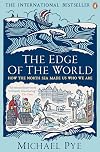
Different regions of Europe have had power, from the Egyptians, the Greeks and Persians and Romans. But around 1000 years ago that focus of power moved from the Mediterranean area to the small shallow sea in between Britain and Europe, the North Sea.
The region had been conquered by the Romans 2000 years ago, but after they left it became a bit of a backwater. It changed as the people who lived on the shores came to master boat building, setting off on voyages far beyond the small limits of the North Sea to discover lands across the vast Atlantic Ocean.
Some of the seafarers bought terror to some places, we all know about the Vikings and their raids on coastal villages and monasteries, but slowly peaceful trade took over. Ideas and goods began to move back and forth across the waters, populations moved and settled, they adapted to change fairly quickly and the whole region thrived.
Pye looks at the history of this region through various subjects, money, fashion, nature and science to name a few, and teases out various stories and anecdotes to demonstrate his case. Wide-ranging though it might be, it sadly didn’t live up to expectations for me. Splitting it by theme meant that you were jumping backwards and forwards and from place to place. For me, concentrating on specific historical periods would have been better as it did feel that it was jumping around too much from period to period.
The region had been conquered by the Romans 2000 years ago, but after they left it became a bit of a backwater. It changed as the people who lived on the shores came to master boat building, setting off on voyages far beyond the small limits of the North Sea to discover lands across the vast Atlantic Ocean.
Some of the seafarers bought terror to some places, we all know about the Vikings and their raids on coastal villages and monasteries, but slowly peaceful trade took over. Ideas and goods began to move back and forth across the waters, populations moved and settled, they adapted to change fairly quickly and the whole region thrived.
Pye looks at the history of this region through various subjects, money, fashion, nature and science to name a few, and teases out various stories and anecdotes to demonstrate his case. Wide-ranging though it might be, it sadly didn’t live up to expectations for me. Splitting it by theme meant that you were jumping backwards and forwards and from place to place. For me, concentrating on specific historical periods would have been better as it did feel that it was jumping around too much from period to period.
Adam Kay had come from a family of medics, so becoming a doctor was inevitable. He knew some of what he was going to have to do as a junior doctor, but he didn’t quite realise how much doing that job would take out of him. This book is the diary that he kept of his time working on the maternity ward.
Naturally, he has changed names and significant details to anonymise the events, but what he recounts here dealing with the general public is very very funny at times!
There are sad moments too, which you are naturally going to get in any hospital that is caring for any really ill people.
There are times when he brushes off near-death moments as a seasoned pro and other times when he needs to sit a cry for an hour having not being able to help a particular individual. Just when you think that you have heard it all, then comes another person in with an object inserted literally where the sun doesn’t shine. The funniest one was the candle…
He is an eloquent writer who is not scared to get angry about things when it comes to the NHS. I do feel that the whole system is broken if they are having to push doctors to the point where they can make life-changing mistakes. This is an NHS that has been worn down by successive governments and just at the moment where we have a pandemic hit us it is at its lowest point.
Naturally, he has changed names and significant details to anonymise the events, but what he recounts here dealing with the general public is very very funny at times!
There are sad moments too, which you are naturally going to get in any hospital that is caring for any really ill people.
There are times when he brushes off near-death moments as a seasoned pro and other times when he needs to sit a cry for an hour having not being able to help a particular individual. Just when you think that you have heard it all, then comes another person in with an object inserted literally where the sun doesn’t shine. The funniest one was the candle…
He is an eloquent writer who is not scared to get angry about things when it comes to the NHS. I do feel that the whole system is broken if they are having to push doctors to the point where they can make life-changing mistakes. This is an NHS that has been worn down by successive governments and just at the moment where we have a pandemic hit us it is at its lowest point.
Sicily is the very essence of Italy distilled down to an espresso sized shot. The food is strongly flavoured, the sun bakes the landscape over the long summer and the intense rush that assault all of your senses. Its position in the centre of the Mediterranean meant that it had suffered invasions all the way through its long history too, Phoenicians, Athenians, Romans, Arabs, Normans, Habsburgs, Bourbons and Byzantines are just some of the cultures that have come and gone, leaving traces on the landscape, culture and people.
Travel writer Horatio Clare is one of a long list of writers who have been inspired to write about their adventure and experiences of the island. In this book, he has sifted through some of the vast quantity of writings and annotated them with his own personal stories. Some of the stories told reach as far back as the Greek classics, and in Arrivals, he begins with Homer from the Odyssey where the first mention of the island appears in literature.
The next section is called Miracles, and in this Clare has selected stories and tales from the diverse religions and peoples that have occupied the island in times past from writers and poets such as Vincent Cronin, Ibn Jubayr and Johann Wolfgang von Gothe. People of the Earth is concerned with those that have scratched a living from the scorched earth and have been the victims of a millennia-old feudal system that the island still has echoes of if you know where to look. This neatly leads on to the next show more section, The Curse is about the horrors that the Mafia have inflicted on the population of the island. In her are passages from the great, Norman Lewis, Leonardo Sciascia and Peter Robb. The final section brings us to the modern-day where there are passages from Mary Taylor Simeti and Theresa Maggio of life on the island.
Clare has curated a great and varied collection of prose about this small but significant island in the middle of the Mediterranean. Each passage gives a strongly flavoured taste of what it is like there. I really liked most of the chosen passages, but most fascinating was the part by Charlotte Gower Chapman called Milocca: A Sicilian Village where she reveals so much detail about life there in the late 1920s. The manuscript was lost and reappeared in 1978 and was thankfully published. I read this whilst on holiday in the island and even travelled to one or two of the places that are mentioned, and it is a great way to discover a lot of different things about Sicily. show less
Travel writer Horatio Clare is one of a long list of writers who have been inspired to write about their adventure and experiences of the island. In this book, he has sifted through some of the vast quantity of writings and annotated them with his own personal stories. Some of the stories told reach as far back as the Greek classics, and in Arrivals, he begins with Homer from the Odyssey where the first mention of the island appears in literature.
The next section is called Miracles, and in this Clare has selected stories and tales from the diverse religions and peoples that have occupied the island in times past from writers and poets such as Vincent Cronin, Ibn Jubayr and Johann Wolfgang von Gothe. People of the Earth is concerned with those that have scratched a living from the scorched earth and have been the victims of a millennia-old feudal system that the island still has echoes of if you know where to look. This neatly leads on to the next show more section, The Curse is about the horrors that the Mafia have inflicted on the population of the island. In her are passages from the great, Norman Lewis, Leonardo Sciascia and Peter Robb. The final section brings us to the modern-day where there are passages from Mary Taylor Simeti and Theresa Maggio of life on the island.
Clare has curated a great and varied collection of prose about this small but significant island in the middle of the Mediterranean. Each passage gives a strongly flavoured taste of what it is like there. I really liked most of the chosen passages, but most fascinating was the part by Charlotte Gower Chapman called Milocca: A Sicilian Village where she reveals so much detail about life there in the late 1920s. The manuscript was lost and reappeared in 1978 and was thankfully published. I read this whilst on holiday in the island and even travelled to one or two of the places that are mentioned, and it is a great way to discover a lot of different things about Sicily. show less
Kingsnorth thought having access to his own patch of land would settle his very being, give him a sense of belonging, somewhere where he could be rooted for the first time. An opportunity came to acquire a smallholding in Ireland and after a lot of thought, they grasped it. The family could begin a simpler life, growing their own food, homeschooling and become more in tune with the natural world. A place that they could call home and discover contentment for the first time in a very long time.
Except it didn’t work out that way. He didn’t feel settled, nor that he belonged or had become an integral part of the landscape. Most troubling of all was the fact that the skills he had relied on for decades, the art of conjuring words into sentences, which he would then mould into a cohesive body of work were deserting him and he was at a total loss at what to do. It began to affect his outlook on life and he was starting to move closer to the abyss.
His exploration of why this happened will take him back to the first alphabets and their connections to the things around us, how as our language evolved, the process of abstraction from the natural world came in stages until the letters we write with bear no resemblance to things any more. He considers the ‘European Mind’ and how the desire to quantify everything has also contributed to the breaking of the links between us and the places we inhabit.
I regret every word that I have ever written, and every word I will ever show more write.
And I stand by all of it.
However, this disconnection to things that have been important to him all his life, has given us this searingly honest account of the meanders through his thoughts and feelings. The chapters vary in length from a few intense words to longer more reflective pieces. It does feel like the passages have had minimal editing too as you read what was swirling around in his mind at that very moment. He wonders where the words that were so freely flowing have gone, and if they will ever return. As well as pondering if the modern world with its relentless all-consuming consumption has robbed us all of the connections that we now need more than ever. Compelling reading indeed. show less
Except it didn’t work out that way. He didn’t feel settled, nor that he belonged or had become an integral part of the landscape. Most troubling of all was the fact that the skills he had relied on for decades, the art of conjuring words into sentences, which he would then mould into a cohesive body of work were deserting him and he was at a total loss at what to do. It began to affect his outlook on life and he was starting to move closer to the abyss.
His exploration of why this happened will take him back to the first alphabets and their connections to the things around us, how as our language evolved, the process of abstraction from the natural world came in stages until the letters we write with bear no resemblance to things any more. He considers the ‘European Mind’ and how the desire to quantify everything has also contributed to the breaking of the links between us and the places we inhabit.
I regret every word that I have ever written, and every word I will ever show more write.
And I stand by all of it.
However, this disconnection to things that have been important to him all his life, has given us this searingly honest account of the meanders through his thoughts and feelings. The chapters vary in length from a few intense words to longer more reflective pieces. It does feel like the passages have had minimal editing too as you read what was swirling around in his mind at that very moment. He wonders where the words that were so freely flowing have gone, and if they will ever return. As well as pondering if the modern world with its relentless all-consuming consumption has robbed us all of the connections that we now need more than ever. Compelling reading indeed. show less
I first came across Arthur Smith on the much-missed (by me at least) Excess Baggage. This was Radio 4’s half-hour slot on travel where he was a warm and generous host. It seems that he has been around forever though, comedy on stage and the radio, writing books and plays, and most famously appearing on Grumpy Old Men, where he fitted the archetypical profile perfectly. He is very much a London Boy, and is the self-titled Night Mayor of Balham, as he doesn’t want to do days.
His life experience of all of these wide-ranging things he has done has been distilled down into this book of 100 Things That He Meant to Tell You. In here are poems, anecdotes, articles and snippets from his life. There is the odd rant about modern life, stories from his father, who was a policeman and memories of time spent with his mum as her dementia took over.
It is a bittersweet collection. There are some genuine laugh out loud moments within, so much so, that I was getting strange looks from my family when reading it. But there are other pieces that make you stop and put the book down for a moment and think. Especially the moments that he shares about his mum and dad. This book is just like Smith himself, what you see is what you get, warts and gravelly voice come included. Yes he is a little grumpy at times, but he is not vindictive with it, rather he is as happy to accept his flaws as he is the flaws in other people. If you have read, My Name is Daphne Fairfax, then you’ll love this; show more whatever you do though, try to avoid looking inside the rear flap! show less
His life experience of all of these wide-ranging things he has done has been distilled down into this book of 100 Things That He Meant to Tell You. In here are poems, anecdotes, articles and snippets from his life. There is the odd rant about modern life, stories from his father, who was a policeman and memories of time spent with his mum as her dementia took over.
It is a bittersweet collection. There are some genuine laugh out loud moments within, so much so, that I was getting strange looks from my family when reading it. But there are other pieces that make you stop and put the book down for a moment and think. Especially the moments that he shares about his mum and dad. This book is just like Smith himself, what you see is what you get, warts and gravelly voice come included. Yes he is a little grumpy at times, but he is not vindictive with it, rather he is as happy to accept his flaws as he is the flaws in other people. If you have read, My Name is Daphne Fairfax, then you’ll love this; show more whatever you do though, try to avoid looking inside the rear flap! show less
In the North Sea, a wind farm stretches for thousands of acres; the coastline, or what remains of it is far from here. Two men are responsible for maintaining all of these turbines, one younger is called the boy, though he has outgrown that title now. The other is the Old Man, who has been there for almost longer than he can remember.
Their work is continual, changing batteries, cogs, bearings and motors and moving from their accommodation rig to the turbines that need repairs. Every now and again they are visited by the pilot who brings tinned food for them and hopes to trade things. The work is mundane and tedious, the Old Man for amusement trawls the sea to collect the things are being washed past or to bring us ancient remains from Doggerland far below the service.
The boy was sent there by the company to replace his father who worked there before him and who vanished one day. He has many questions about why and where he went, but there are no answers forthcoming from the Old Man. Until one day he finds a clue that he has been looking for as to what happened to his father.
This dystopian novel set in a seascape that is harsh and utterly unforgiving. It has a haunting melancholy about it as the sea gradually claims back to turbines and it is written with a sparse precision that allows you to fill in the gaps in your mind. The three characters are strong, yet their feelings and thoughts are elusive. I really liked the world that he has created. I liked the way that he has show more linked it back to the ancient land that stood beneath the waves that still reveals itself every now and again. Yet it seems to be the last throw of the dice building this vast farm of wind turbines in response to some unknown climate disaster and yet it has come to nothing as the civilisation that it seems to have mostly gone. There are several threads in the storyline that were not really concluded and yet I didn’t mind that, as it portrays the ambiguity and complexity of this bleak future world. It reminded me of Stillicide by Cynan Jones which I read last year. It could almost be set in the same world. 4.5 stars show less
Their work is continual, changing batteries, cogs, bearings and motors and moving from their accommodation rig to the turbines that need repairs. Every now and again they are visited by the pilot who brings tinned food for them and hopes to trade things. The work is mundane and tedious, the Old Man for amusement trawls the sea to collect the things are being washed past or to bring us ancient remains from Doggerland far below the service.
The boy was sent there by the company to replace his father who worked there before him and who vanished one day. He has many questions about why and where he went, but there are no answers forthcoming from the Old Man. Until one day he finds a clue that he has been looking for as to what happened to his father.
This dystopian novel set in a seascape that is harsh and utterly unforgiving. It has a haunting melancholy about it as the sea gradually claims back to turbines and it is written with a sparse precision that allows you to fill in the gaps in your mind. The three characters are strong, yet their feelings and thoughts are elusive. I really liked the world that he has created. I liked the way that he has show more linked it back to the ancient land that stood beneath the waves that still reveals itself every now and again. Yet it seems to be the last throw of the dice building this vast farm of wind turbines in response to some unknown climate disaster and yet it has come to nothing as the civilisation that it seems to have mostly gone. There are several threads in the storyline that were not really concluded and yet I didn’t mind that, as it portrays the ambiguity and complexity of this bleak future world. It reminded me of Stillicide by Cynan Jones which I read last year. It could almost be set in the same world. 4.5 stars show less
Like his father before him, Stevens is a butler, a career chosen for service and dedication to the highest in the land. Working for Lord Darlington in between the World Wars, he offered loyalty and discretion as various high-powered guests met to discuss the increasing perilous situation in Europe.
Post war the social landscape has changed dramatically. Stevens is still the butler at Darlington Hall, but his master is now a rich American, Mr Farraday. Stevens is encouraged by him to take a brief break, and offers to lend him his car for a motoring holiday. It is ideal timing as Stevens has recently received a letter from a past colleague, Miss Kenton, and sees it as an ideal opportunity to pay her a visit. As he travels through Wilshire, Dorset, Devon and Cornwall enjoying the sights and countryside he takes time to consider various matters; his service to Lord Darlington, the relationship that he had with his father and his housekeeper.
It is a melancholy story, full of subtlety whilst still having profound meaning and depth. The main character, Stevens, is the quintessentially English butler, composed and proficient; but whilst he can say the right words he lacks feeling and empathy because of his upbringing and career. I am not sure just how he does it, but Ishiguro has managed to capture the class distinctions perfectly in this book. Possibly because he has an outsider’s perspective on how society at the time functioned, or didn’t, and understands the minutia and show more restraint that a member of the household has to have whilst dealing with the great and the good. It is equally about what isn’t said and happens between the two main characters as it is about what actually happens, and it is impressive just how much emotion can be wrung out of such restrained prose. Good stuff. show less
Post war the social landscape has changed dramatically. Stevens is still the butler at Darlington Hall, but his master is now a rich American, Mr Farraday. Stevens is encouraged by him to take a brief break, and offers to lend him his car for a motoring holiday. It is ideal timing as Stevens has recently received a letter from a past colleague, Miss Kenton, and sees it as an ideal opportunity to pay her a visit. As he travels through Wilshire, Dorset, Devon and Cornwall enjoying the sights and countryside he takes time to consider various matters; his service to Lord Darlington, the relationship that he had with his father and his housekeeper.
It is a melancholy story, full of subtlety whilst still having profound meaning and depth. The main character, Stevens, is the quintessentially English butler, composed and proficient; but whilst he can say the right words he lacks feeling and empathy because of his upbringing and career. I am not sure just how he does it, but Ishiguro has managed to capture the class distinctions perfectly in this book. Possibly because he has an outsider’s perspective on how society at the time functioned, or didn’t, and understands the minutia and show more restraint that a member of the household has to have whilst dealing with the great and the good. It is equally about what isn’t said and happens between the two main characters as it is about what actually happens, and it is impressive just how much emotion can be wrung out of such restrained prose. Good stuff. show less
Pretty much everything that humans have made used and thrown away will be here forever. Often these possessions have ended up in middens and now we bury vast quantities of our unwanted stuff in the ground in dumps. If you know where to look these relics from a time long gone can be found, especially along the foreshore of the tidal Thames.
There have been people finding the detritus and treasure alongside the capital’s river for hundreds of years. It has been called the world’s longest archaeological site! The people who look for those discarded and lost items are called mudlarks and for the past fifteen years, Lara Maiklem has walked searching for anything that she can find. The variety of things that she spots is quite astounding, and these tell the story of London going back several thousand years to the Neolithic.
I have been following her via various social media accounts for years now, so nice to read a little more on the subject as well as a little of her own history as to what she finds so addictive about doing it. I really enjoyed this and liked the way each chapter concentrated on different parts of the capital, from Hammersmith, Rotherhithe and right out into the estuary. I found her to be an informative writer who is passionate about her subject and keen to discover more about the objects she finds. If the book has one tiny flaw, it is that there are very few pictures of her finds. I know she has an Instagram account show more (https://www.instagram.com/laramaiklem_mudlarking/) that is linked to the book, but I am not on Instagram so couldn’t see them. show less
There have been people finding the detritus and treasure alongside the capital’s river for hundreds of years. It has been called the world’s longest archaeological site! The people who look for those discarded and lost items are called mudlarks and for the past fifteen years, Lara Maiklem has walked searching for anything that she can find. The variety of things that she spots is quite astounding, and these tell the story of London going back several thousand years to the Neolithic.
I have been following her via various social media accounts for years now, so nice to read a little more on the subject as well as a little of her own history as to what she finds so addictive about doing it. I really enjoyed this and liked the way each chapter concentrated on different parts of the capital, from Hammersmith, Rotherhithe and right out into the estuary. I found her to be an informative writer who is passionate about her subject and keen to discover more about the objects she finds. If the book has one tiny flaw, it is that there are very few pictures of her finds. I know she has an Instagram account show more (https://www.instagram.com/laramaiklem_mudlarking/) that is linked to the book, but I am not on Instagram so couldn’t see them. show less
I first came across Edward Ragg’s work when I saw that one of his poems had been awarded Highly Commended poem in The Forward Book of Poetry 2014. I thought it was a wonderful piece of work, short and packed with some much meaning.
Fast forward a couple of years and I had joined Twitter. Just happed to post a link to this short piece for #NationalPoetryDay and tagged him. He followed me back and he offered to send me both his collections which duly arrived three years ago and got buried on a shelf… (Sorry Edward!).
Finally got to pick the first, A Force That Takes recently and now regret not doing so earlier. It is a delightful collection that covers his new life in China and his old life in the UK. There are poems on silence, spices, philosophers and art galleries.
Ragg has a beautiful way with language, his sparse writing, devolves so much meaning from so few words. It feels easy to read, but I guess that it takes some effort to reach this point. It is a collection that demands a re-read at some point in the future.
Three Favourite Poems:
Declaration
The Philosopher and the Lake
And my all-time favourite poem, Anthem at Morning
Fast forward a couple of years and I had joined Twitter. Just happed to post a link to this short piece for #NationalPoetryDay and tagged him. He followed me back and he offered to send me both his collections which duly arrived three years ago and got buried on a shelf… (Sorry Edward!).
Finally got to pick the first, A Force That Takes recently and now regret not doing so earlier. It is a delightful collection that covers his new life in China and his old life in the UK. There are poems on silence, spices, philosophers and art galleries.
Ragg has a beautiful way with language, his sparse writing, devolves so much meaning from so few words. It feels easy to read, but I guess that it takes some effort to reach this point. It is a collection that demands a re-read at some point in the future.
Three Favourite Poems:
Declaration
The Philosopher and the Lake
And my all-time favourite poem, Anthem at Morning
Before the written word, stories were spoken, and those that were popular became learnt by others and spread further afield. The best known of them, such as Odyssey and Beowulf, became epics in their own right. We now know them, as they have been written down and even transferred to the screen, but are the people where these stories emerged from still aware of them?
Award-winning travel writer Nicholas Jubber, decided to find out for himself if he could still find traces across the European continent of these stories in the countries that they originated. Beginning in Chios, just of the Turkish coast is where he starts looking for The Odyssey, the story of the aftermath of the Trojan War. Here it doesn’t take long for him to find traces from the story on the wall in graffiti, as well as meeting people who still seek meaning and comfort from the tales. He listens to recitals, debates over gritty coffee about the power it still has and manages to mislay various things…
The second story in the book is the Serbian Kosovo Cycle. This is about the battle between the sultan Murad and Prince Lazar. It is a fairly bloody and brutal affair if truth be told, and it is often recited by guslars, or bards, who play a single-stringed instrument called the gusle. It was a story of rebellion too, as the recitals evolved as they were under the Turkish occupation, before becoming more written down in the early nineteenth century. There is a much darker and more recent aspect to them show more though, the stories were used as propaganda by Milosevic who exploited it to bring his own conflict to the region. The stories that he is following through Europe tend to be draped over the culture of each of the countries, but this story is unique that one of the main characters, Prince Lazar, remains can still be seen in a church in Ravanica. He wanted to hear the epic recited by a gusle, heading to the mountains, he didn’t know if he would find one though.
The third story in the book is the French Song of Roland, another battle between the forces of Christendom and Islam. The story was originally written in the eleventh century and then was rediscovered in the Bodleian library by a French scholar who was following a mention in Chaucer. Since that, a further nine manuscripts of the epic have been found. But as it is a French story, the place to start would be Sicily and then onto Spain, before eventually making it to France. Sicily is an amazing island, I know, I saw a little of it last year and it has long been a melting pot of cultures and civilisations. Whilst there he visits the puppeteers in Palermo who have been performing the story for several generations; this may be the last though as people are more interested in their phones that performances.
A brief trip across Sardinia takes him to Saragossa in Spain for the next element in this epic, there he sees the influence that the Moors had over the town before moving onto Roncesvalles to see the place where a major battle took place in the epic. Then on a train to the town of Rocamadour in France to experience the Black Madonna in the twelfth century Chapel of Notre Dame.
Another country and another epic beckons, this time it is Germany and the fantastical The Song of the Nibelungen tracks the collapse of a Germanic kingdom on the edge of the Roman Empire involving dragons, murder and betrayal. All a bit Game of Thrones really… This is another of those stories that was misappropriated by the government of the time. The German Nazi government in the 1930s used the messages within for their own propaganda.
Finally, we make it to the UK for Beowulf, that was first written down around 1000 years ago, but first came to light because of the work of an Icelandic bibliophile. It was first seen as a Danish story but has now come to be the only surviving Old English epic. It is full of fantastical tales and elements like the dark fens, feasting in old halls and dragons one again that is somehow familiar to us. This may be because of one JRR Tolkien who robustly interpreted it and used many of the themes in his own books.
The final epic in the book is the great Icelandic Saga of Burnt Njal. there is still the tumult of murder, revenge and betrayal that we have come to expect from the other stories, but Unlike all the others this one has a lawyer in the story. The place is quite spectacular from his descriptions in the book as well as being incredibly wet and windy from the storms. It is so very different from where he began his journey in the balmy Mediterranean in Greece.
This is the second book of Jubber’s that I have read and it is as equally enjoyable as that other one. Epic Continent is part history book, part travelogue and him seeking those threads that run right back to the stories of old. It is quite staggering to think that words that were written a millennia ago still can have power and most importantly resonance in the modern world. It is sometimes amusing and I like his sense of immediacy that he comes across in his writing as he deals with the minutiae of daily life as he travels. Well worth reading. show less
Award-winning travel writer Nicholas Jubber, decided to find out for himself if he could still find traces across the European continent of these stories in the countries that they originated. Beginning in Chios, just of the Turkish coast is where he starts looking for The Odyssey, the story of the aftermath of the Trojan War. Here it doesn’t take long for him to find traces from the story on the wall in graffiti, as well as meeting people who still seek meaning and comfort from the tales. He listens to recitals, debates over gritty coffee about the power it still has and manages to mislay various things…
The second story in the book is the Serbian Kosovo Cycle. This is about the battle between the sultan Murad and Prince Lazar. It is a fairly bloody and brutal affair if truth be told, and it is often recited by guslars, or bards, who play a single-stringed instrument called the gusle. It was a story of rebellion too, as the recitals evolved as they were under the Turkish occupation, before becoming more written down in the early nineteenth century. There is a much darker and more recent aspect to them show more though, the stories were used as propaganda by Milosevic who exploited it to bring his own conflict to the region. The stories that he is following through Europe tend to be draped over the culture of each of the countries, but this story is unique that one of the main characters, Prince Lazar, remains can still be seen in a church in Ravanica. He wanted to hear the epic recited by a gusle, heading to the mountains, he didn’t know if he would find one though.
The third story in the book is the French Song of Roland, another battle between the forces of Christendom and Islam. The story was originally written in the eleventh century and then was rediscovered in the Bodleian library by a French scholar who was following a mention in Chaucer. Since that, a further nine manuscripts of the epic have been found. But as it is a French story, the place to start would be Sicily and then onto Spain, before eventually making it to France. Sicily is an amazing island, I know, I saw a little of it last year and it has long been a melting pot of cultures and civilisations. Whilst there he visits the puppeteers in Palermo who have been performing the story for several generations; this may be the last though as people are more interested in their phones that performances.
A brief trip across Sardinia takes him to Saragossa in Spain for the next element in this epic, there he sees the influence that the Moors had over the town before moving onto Roncesvalles to see the place where a major battle took place in the epic. Then on a train to the town of Rocamadour in France to experience the Black Madonna in the twelfth century Chapel of Notre Dame.
Another country and another epic beckons, this time it is Germany and the fantastical The Song of the Nibelungen tracks the collapse of a Germanic kingdom on the edge of the Roman Empire involving dragons, murder and betrayal. All a bit Game of Thrones really… This is another of those stories that was misappropriated by the government of the time. The German Nazi government in the 1930s used the messages within for their own propaganda.
Finally, we make it to the UK for Beowulf, that was first written down around 1000 years ago, but first came to light because of the work of an Icelandic bibliophile. It was first seen as a Danish story but has now come to be the only surviving Old English epic. It is full of fantastical tales and elements like the dark fens, feasting in old halls and dragons one again that is somehow familiar to us. This may be because of one JRR Tolkien who robustly interpreted it and used many of the themes in his own books.
The final epic in the book is the great Icelandic Saga of Burnt Njal. there is still the tumult of murder, revenge and betrayal that we have come to expect from the other stories, but Unlike all the others this one has a lawyer in the story. The place is quite spectacular from his descriptions in the book as well as being incredibly wet and windy from the storms. It is so very different from where he began his journey in the balmy Mediterranean in Greece.
This is the second book of Jubber’s that I have read and it is as equally enjoyable as that other one. Epic Continent is part history book, part travelogue and him seeking those threads that run right back to the stories of old. It is quite staggering to think that words that were written a millennia ago still can have power and most importantly resonance in the modern world. It is sometimes amusing and I like his sense of immediacy that he comes across in his writing as he deals with the minutiae of daily life as he travels. Well worth reading. show less
Country of Larks: A Chiltern Journey: In the footsteps of Robert Louis Stevenson and the footprint of HS2 (Bradt Travel Guides (Travel Literature)) by Gail Simmons
Back in 1874, a young man called Stevenson walked from High Wycombe in Buckinghamshire to Tring in Hertfordshire across the Chiltern Hills over the course of three days. He wrote up his walk in an essay called Beechwoods. Ten years later he was writing a book called Treasure Island and would become famous for that and other works. He was a keen observer of the natural world, listening to the chorus of birds. This landscape, whilst being shaped by human touch, was still rich in abundant flora and fauna. People co-existed with the land rather than obliterate it into submission.
A century and a half later Gail Simmons decided to follow in his footsteps tracing the changes in the landscape since Stevenson first walked there. But it was also a time to take stock of the countryside before the ancient woodlands, historical monuments and drovers roads that will be obliterated soon by the pointless and controversial High Speed 2 (HS2) rail line that will smash through here soon.
It is also a walk down memory lane too, as this was the part of the country that her parents moved too after her father finished serving in the army and it was where she grew up. But even though she was familiar with it, there had been significant changes since that time, whole woodlands flattened to build on and villages that were once separate were now surrounded by the urban sprawl. Her walk takes her through villages that are now part of the commuter belt, where private roads with expensive price tags show more and driveways full of executive cars seem to be taking over. The juxtaposition between sleepy village greens where the cricket match is being played and walking past fields with PRIVATE KEEP OUT signs does jar a little.
I read this book knowing that HS2 had been given the go-ahead by the government. It is already way over budget, and that it set to escalate as they squander ridiculous sums of money of a train service that we don’t need. For the nominal extra expense in the total budget, a tunnel under this part of the country would still be the best solution. The project is a big white elephant, but sadly this government thinks that it will be useful. This was an enjoyable book to read, Simmons has a quite beautiful way of writing, and this book is a wonderful eulogy to the landscapes and woodlands that will be lost. There is so much crammed in here for a three-day walk (plus a little bit) and I’d thought she would be more furious about losing all this countryside. However, what comes across is more pain and anguish over what is going. When it has gone then it is lost forever. I liked that they had included Stephenson’s original essay at the back of the book and as a nice little touch, I thought the dictionary definitions that are liberally scatted throughout the book on all manner of country words and phrases worked well too. show less
A century and a half later Gail Simmons decided to follow in his footsteps tracing the changes in the landscape since Stevenson first walked there. But it was also a time to take stock of the countryside before the ancient woodlands, historical monuments and drovers roads that will be obliterated soon by the pointless and controversial High Speed 2 (HS2) rail line that will smash through here soon.
It is also a walk down memory lane too, as this was the part of the country that her parents moved too after her father finished serving in the army and it was where she grew up. But even though she was familiar with it, there had been significant changes since that time, whole woodlands flattened to build on and villages that were once separate were now surrounded by the urban sprawl. Her walk takes her through villages that are now part of the commuter belt, where private roads with expensive price tags show more and driveways full of executive cars seem to be taking over. The juxtaposition between sleepy village greens where the cricket match is being played and walking past fields with PRIVATE KEEP OUT signs does jar a little.
I read this book knowing that HS2 had been given the go-ahead by the government. It is already way over budget, and that it set to escalate as they squander ridiculous sums of money of a train service that we don’t need. For the nominal extra expense in the total budget, a tunnel under this part of the country would still be the best solution. The project is a big white elephant, but sadly this government thinks that it will be useful. This was an enjoyable book to read, Simmons has a quite beautiful way of writing, and this book is a wonderful eulogy to the landscapes and woodlands that will be lost. There is so much crammed in here for a three-day walk (plus a little bit) and I’d thought she would be more furious about losing all this countryside. However, what comes across is more pain and anguish over what is going. When it has gone then it is lost forever. I liked that they had included Stephenson’s original essay at the back of the book and as a nice little touch, I thought the dictionary definitions that are liberally scatted throughout the book on all manner of country words and phrases worked well too. show less
My desk is a mess. I have a laptop, a second screen, keyboard, a task light and a lava lamp, a stationary rack and pencil holder, scrap paper and a pad to write on, as well as 18 books and various other items of detritus. To be honest, it could do with a bit of a tidy up. One day I will…
Most people want a tidy place to work in. Some businesses are really strict on this, enforcing numerous draconian rules as to what you can or can’t have on your desk, the number of personal photos allowed and so on. These businesses make look slick and have the impression of performing well, but they are soulless places and they are missing that extra spark that disorganization, improvisation and confusion can bring to the creative process.
In this highly entertaining book, Tim Harford argues that clean pristine working areas, rather we need a little mess and disorder in our work and home lives to get that creativity back that is ultimately enriching. He uses lots of examples of how people have not had the exact equipment that they wanted or had the usual preparation time for a particular thing, and it turned out to be one of the best performance or speeches of their life.
Being organised does get things done, but that spark of creativity that happens when things are not quite so is where the magic lies. I really liked this book, partly because I am not so tidy, and tend to have lots of things on the go at any one time, but also because I think on a fundamental level he is right. I show more particularly liked the story of a lab in America that managed to create all manner of things and the reason was because of the layout of the building and people with a variety of different interests and skills would pass each other, get talking and spark new ideas off. If you are a person who likes all their pencils lined up, then this might not be the book for you, but perhaps you should read it, you never know what might happen… show less
Most people want a tidy place to work in. Some businesses are really strict on this, enforcing numerous draconian rules as to what you can or can’t have on your desk, the number of personal photos allowed and so on. These businesses make look slick and have the impression of performing well, but they are soulless places and they are missing that extra spark that disorganization, improvisation and confusion can bring to the creative process.
In this highly entertaining book, Tim Harford argues that clean pristine working areas, rather we need a little mess and disorder in our work and home lives to get that creativity back that is ultimately enriching. He uses lots of examples of how people have not had the exact equipment that they wanted or had the usual preparation time for a particular thing, and it turned out to be one of the best performance or speeches of their life.
Being organised does get things done, but that spark of creativity that happens when things are not quite so is where the magic lies. I really liked this book, partly because I am not so tidy, and tend to have lots of things on the go at any one time, but also because I think on a fundamental level he is right. I show more particularly liked the story of a lab in America that managed to create all manner of things and the reason was because of the layout of the building and people with a variety of different interests and skills would pass each other, get talking and spark new ideas off. If you are a person who likes all their pencils lined up, then this might not be the book for you, but perhaps you should read it, you never know what might happen… show less