
Steven Millhauser
Author of Martin Dressler: The Tale of an American Dreamer
About the Author
Works by Steven Millhauser
Edwin Mullhouse: The Life and Death of an American Writer 1943-1954 by Jeffrey Cartwright (1972) 476 copies, 17 reviews
Flying Carpets 1 copy
Edwin Mulhouse 1 copy
Coming Soon 1 copy
August Eschenburg 1 copy
Piccoli regni 1 copy
Clair De Lune 1 copy
A Visit 1 copy
Alice Falling 1 copy
Associated Works
The Art of the Story: An International Anthology of Contemporary Short Stories (1999) — Contributor — 396 copies, 5 reviews
The Year's Best Fantasy and Horror: Eighth Annual Collection (1995) — Contributor — 331 copies, 6 reviews
American Fantastic Tales : Terror and the Uncanny from the 1940's to Now (2009) — Contributor — 299 copies, 5 reviews
Object Lessons: The Paris Review Presents the Art of the Short Story (2012) — Contributor — 255 copies, 9 reviews
The Year's Best Fantasy and Horror: Third Annual Collection (1988) — Contributor — 195 copies, 2 reviews
The Ecco Anthology of Contemporary American Short Fiction (2008) — Contributor — 142 copies, 2 reviews
Literary Traveller: An Anthology of Contemporary Short Fiction (1994) — Contributor — 55 copies, 1 review
The Literary Lover: Great Stories of Passion and Romance (1993) — Contributor — 55 copies, 2 reviews
Lapham's Quarterly - Lines of Work: Volume IV, Number 2, Spring 2011 (2011) — Contributor — 32 copies, 2 reviews
Antaeus No. 64/65, Spring/Autumn 1990 - Twentieth Anniversary Issue (1990) — Contributor — 14 copies
Tin House 17 (Fall 2003): Give — Contributor — 8 copies
Antaeus No. 73/74, Spring 1994 - Who’s Writing This: Notations on the Authorial I {magazine} (1994) — Contributor — 6 copies
Tagged
Common Knowledge
- Birthdate
- 1943-08-03
- Gender
- male
- Education
- Columbia University (BA | 1965)
Brown University - Occupations
- novelist
short story writer - Organizations
- Skidmore College
- Awards and honors
- Lannan Literary Award (1994)
American Academy of Arts and Letters Academy Award (1987)
Pulitzer Prize for Fiction (1997)
The Story Prize (2012) - Nationality
- USA
- Birthplace
- New York, New York, USA
- Places of residence
- New York, New York, USA
Connecticut, USA
Saratoga Springs, New York, USA - Associated Place (for map)
- New York, USA
Members
Reviews
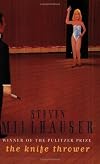
An amazing collection of surreal short stories that tread the border between normal and supernatural, generally on the topic of what's real and our desires. Only one or two have explicitly supernatural elements but they all have something that feels close to it - you're never sure if it's something that could actually happen or if it's fantasy. I shelved it as "horror" even though it's not really because it comes close a lot - it reminds me a bit of someone like Ligotti, with far fewer show more horror elements but with similar topics, questioning our hold on reality and how solid our attachment society really is. His writing style reminds me of Kafka a bit with the way the sentences are structured.
Lots of good stories. His descriptions of things are great and highly imaginative so even the stories which are mostly description and don't really have a climax - Paradise Park and The Dream of the Consortium - are fascinating and make you think a lot on the idea behind them (a huge sophisticated amusement park and a giant department store, respectively). Maybe the highlight is "Kaspar Hauser Speaks", a short speech from the historical figure (although from a time after he'd died in real life) which contains a section which I felt perfectly encapsulated the feeling of being different in a way that forcefully separates you from others.
Other people have mentioned that he recycles themes a bit and I wouldn't disagree - some of the stories are similar to the others. But he brings a lot of new imagery and ideas to each one and personally they're themes that fascinate me so I didn't mind at all, although it'd maybe pall over multiple books.
A great collection if you're at all interested in surreal short fiction. show less
Lots of good stories. His descriptions of things are great and highly imaginative so even the stories which are mostly description and don't really have a climax - Paradise Park and The Dream of the Consortium - are fascinating and make you think a lot on the idea behind them (a huge sophisticated amusement park and a giant department store, respectively). Maybe the highlight is "Kaspar Hauser Speaks", a short speech from the historical figure (although from a time after he'd died in real life) which contains a section which I felt perfectly encapsulated the feeling of being different in a way that forcefully separates you from others.
Other people have mentioned that he recycles themes a bit and I wouldn't disagree - some of the stories are similar to the others. But he brings a lot of new imagery and ideas to each one and personally they're themes that fascinate me so I didn't mind at all, although it'd maybe pall over multiple books.
A great collection if you're at all interested in surreal short fiction. show less
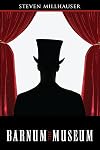
The stories of Steven Millhauser all have about them a suggestion of the supernatural. Or perhaps it would be better to call it magic realism. Whatever the appropriate descriptor, they are all fantastic in one or another sense of fantasy. Some of them are fantastically good as well.
I think Millhauser would qualify for distinction as a writer's writer because many of his stories operate on more than one level — one often being a running commentary on the creative process itself. This is one show more of the aspects of his work that appeals to me most: He causes one to think about his methods as a storyteller — not unusual, I suppose, in the realms of metafiction.
All ten of the stories in this collection are both interesting and enjoyable — admittedly, some more enjoyable than others. Here is a brief rundown:
"The Game of Clue" — A family game of Clue proceeds, intertwined with imaginary byplay of the game's characters, which suggests more than it reveals.
"Behind the Blue Curtain" — A boy is allowed to go to the Saturday matinee alone for the first time. Afterwards, curiosity takes him behind the stage curtain where his imagination carries him inside a bigger-than-life world.
"The Barnum Museum" — A "realm of enchantments," a world apart from the world, "constructed so as to help us lose our way." In the 19th century Barnum museums actually existed in Bridgeport, Connecticut and New York City. The Bridgeport museum burned down at some point, and this story attempts to recreate — dare I say embellish? — the sense of its wonder: "In the gift shops of the Barnum Museum we may buy old sepia postcards of mermaids and sea dragons, little flip-books that show flying carpets rising into the air, peep-show pens with miniature colored scenes from the halls of the Barnum Museum, mysterious rubber balls from Arabia that bounce once and remain suspended in the air, jars of dark blue liquid from which you can blow bubbles shaped like tigers, elephants, lions, polar bears, and giraffes, Chinese kaleidoscopes showing ceaselessly changing forms of dragons, enchanting pleniscopes and phantatropes, boxes of animate paint for drawing pictures that move" — etc., etc.
"The Sepia Postcard" — An impressionist story — again, suggestive more than revealing or conclusive: A man trying to get away from it all checks into a seaside inn, but the weather! — it won't stop raining, and he leaves abruptly. All this interweaved with impressions of a scene in a sepia postcard, which seems to depict more every time the man looks at it.
"The Eighth Voyage of Sinbad" — The narrative alternates among three different points of view: (1) Sinbad reminisces, unable to recall the order in which his adventures occur; (2) a historical narrative: "The first European translation . . ." etc.; and (3) a first-person account by Sinbad. Readers who have actually read The Arabian Nights will be able to say whether this is a new adventure or a pastiche of references to past voyages.
"Klassic Komix #1" — Unless one knows the opening line of T.S. Eliot's "The Lovesong of J. Alfred Prufrock" — "Let us go then, you and I" — one will be of the mistaken belief that this is merely a panel-by-panel prose retelling of a rather surreal comic book. In fact, it recasts the images and impressions from Eliot's poem as a comic book. The genius of the poem — and this story — is that almost every reading conjures slightly different interpretations.
"Rain" — A violent rain storm in which everything goes wrong for a man caught out wearing a new pair of shoes.
"Alice, Falling" — Once again, Millhauser takes as his point of departure a familiar text which he reimagines — in this case, the opening chapter of Alice's Adventures in Wonderland. He embellishes Alice's fall through the rabbit hole while commenting upon it at the same time.
"The Invention of Robert Herendeen" — "I decided to invent a human being by means of the full and rigorous application of my powers of imagination. Instead of resorting to words, which merely obscured and distorted the crystalline clarity of my inner vision, I would employ the stuff of imagination itself. That is to say, I would mentally mold a being whose existence would be sustained by the detail and energy of my relentless dreaming. My ambition was to create not an actual human being or a mere work of art but rather a being who existed in a realm parallel to the other two—a third realm, obedient to the laws of physical bodies but utterly discarnate." The story then goes on to explore the limitations of creating an imaginary friend.
"Eisenheim the Illusionist" — Acknowledged as the source of the 2006 movie The Illusionist starring Edward Norton, this story in truth only provides the film's bare outlines, but it is a quintessential Millhauser fantasy about a 19th century magician and illusionist who is famous for materializing and dematerializing phantom spirits and then as his last act performs the ultimate dematerialization.
While reading these stories, more than once it crossed my mind that in some respects they qualify as a type of prose poetry in the sense that they sometimes suggest more than they actually describe. Millhauser's word pictures seem to amplify in the mind and cause one to see more than is actually there. This, to me, is writing that not only conveys stories and impressions, but it stimulates the imagination as well.
If you like this kind of thing and you haven't yet tried Millhauser, this would be a good place to begin. show less
I think Millhauser would qualify for distinction as a writer's writer because many of his stories operate on more than one level — one often being a running commentary on the creative process itself. This is one show more of the aspects of his work that appeals to me most: He causes one to think about his methods as a storyteller — not unusual, I suppose, in the realms of metafiction.
All ten of the stories in this collection are both interesting and enjoyable — admittedly, some more enjoyable than others. Here is a brief rundown:
"The Game of Clue" — A family game of Clue proceeds, intertwined with imaginary byplay of the game's characters, which suggests more than it reveals.
"Behind the Blue Curtain" — A boy is allowed to go to the Saturday matinee alone for the first time. Afterwards, curiosity takes him behind the stage curtain where his imagination carries him inside a bigger-than-life world.
"The Barnum Museum" — A "realm of enchantments," a world apart from the world, "constructed so as to help us lose our way." In the 19th century Barnum museums actually existed in Bridgeport, Connecticut and New York City. The Bridgeport museum burned down at some point, and this story attempts to recreate — dare I say embellish? — the sense of its wonder: "In the gift shops of the Barnum Museum we may buy old sepia postcards of mermaids and sea dragons, little flip-books that show flying carpets rising into the air, peep-show pens with miniature colored scenes from the halls of the Barnum Museum, mysterious rubber balls from Arabia that bounce once and remain suspended in the air, jars of dark blue liquid from which you can blow bubbles shaped like tigers, elephants, lions, polar bears, and giraffes, Chinese kaleidoscopes showing ceaselessly changing forms of dragons, enchanting pleniscopes and phantatropes, boxes of animate paint for drawing pictures that move" — etc., etc.
"The Sepia Postcard" — An impressionist story — again, suggestive more than revealing or conclusive: A man trying to get away from it all checks into a seaside inn, but the weather! — it won't stop raining, and he leaves abruptly. All this interweaved with impressions of a scene in a sepia postcard, which seems to depict more every time the man looks at it.
"The Eighth Voyage of Sinbad" — The narrative alternates among three different points of view: (1) Sinbad reminisces, unable to recall the order in which his adventures occur; (2) a historical narrative: "The first European translation . . ." etc.; and (3) a first-person account by Sinbad. Readers who have actually read The Arabian Nights will be able to say whether this is a new adventure or a pastiche of references to past voyages.
"Klassic Komix #1" — Unless one knows the opening line of T.S. Eliot's "The Lovesong of J. Alfred Prufrock" — "Let us go then, you and I" — one will be of the mistaken belief that this is merely a panel-by-panel prose retelling of a rather surreal comic book. In fact, it recasts the images and impressions from Eliot's poem as a comic book. The genius of the poem — and this story — is that almost every reading conjures slightly different interpretations.
"Rain" — A violent rain storm in which everything goes wrong for a man caught out wearing a new pair of shoes.
"Alice, Falling" — Once again, Millhauser takes as his point of departure a familiar text which he reimagines — in this case, the opening chapter of Alice's Adventures in Wonderland. He embellishes Alice's fall through the rabbit hole while commenting upon it at the same time.
"The Invention of Robert Herendeen" — "I decided to invent a human being by means of the full and rigorous application of my powers of imagination. Instead of resorting to words, which merely obscured and distorted the crystalline clarity of my inner vision, I would employ the stuff of imagination itself. That is to say, I would mentally mold a being whose existence would be sustained by the detail and energy of my relentless dreaming. My ambition was to create not an actual human being or a mere work of art but rather a being who existed in a realm parallel to the other two—a third realm, obedient to the laws of physical bodies but utterly discarnate." The story then goes on to explore the limitations of creating an imaginary friend.
"Eisenheim the Illusionist" — Acknowledged as the source of the 2006 movie The Illusionist starring Edward Norton, this story in truth only provides the film's bare outlines, but it is a quintessential Millhauser fantasy about a 19th century magician and illusionist who is famous for materializing and dematerializing phantom spirits and then as his last act performs the ultimate dematerialization.
While reading these stories, more than once it crossed my mind that in some respects they qualify as a type of prose poetry in the sense that they sometimes suggest more than they actually describe. Millhauser's word pictures seem to amplify in the mind and cause one to see more than is actually there. This, to me, is writing that not only conveys stories and impressions, but it stimulates the imagination as well.
If you like this kind of thing and you haven't yet tried Millhauser, this would be a good place to begin. show less
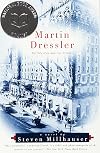
“...Was there then something wrong with him, that he couldn't just rest content? Must he always be dreaming up improvements? And it seemed to Martin that if only he could imagine something else, something great, something greater, something as great as the whole world, then he might rest awhile.”
The setting is New York City, in the late 19th century. Martin Dressler is a teenager with big ideas and even bigger dreams, as he toils industriously at his father’s cigar shop. In his show more mid-teens he finds work at a famous hotel landmark and quickly begins to move up in the world.
By his early 20s, he owns a string of restaurants. During this rise, he has befriended a pair of sisters- one he marries and one becomes a business partner.
This novel is an odd mix of the mundane and the fantastical, as Martin’s dreams become mystically grotesque, growing so unwieldy and unlikely that he is destined for a downfall. I was reminded of the over-indulgences of Citizen Kane. The first two- thirds of the book is fairly conventional and well-written. For me, in the final third, as the American Dream begins to implode, the narrative falters. That might have been the author’s intention but it was a failing in the story for me. Guardedly recommended. show less
The setting is New York City, in the late 19th century. Martin Dressler is a teenager with big ideas and even bigger dreams, as he toils industriously at his father’s cigar shop. In his show more mid-teens he finds work at a famous hotel landmark and quickly begins to move up in the world.
By his early 20s, he owns a string of restaurants. During this rise, he has befriended a pair of sisters- one he marries and one becomes a business partner.
This novel is an odd mix of the mundane and the fantastical, as Martin’s dreams become mystically grotesque, growing so unwieldy and unlikely that he is destined for a downfall. I was reminded of the over-indulgences of Citizen Kane. The first two- thirds of the book is fairly conventional and well-written. For me, in the final third, as the American Dream begins to implode, the narrative falters. That might have been the author’s intention but it was a failing in the story for me. Guardedly recommended. show less
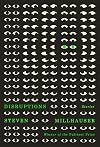
I grew up watching The Twilight Zone and reading Edgar Allan Poe. I suppose you could say I have always had a bent toward the fantastic that lies just below the surface of the mundane. Consequently, Steven Millhauser’s new collection of stories, Disruptions, delighted me. I relished these strange tales portraying quaint small towns with their sudden obsessions and young people encountering things that disrupt their lives.
There are stories of transformation. The first story, “One Summer show more Night,” haunted me for days. “In the summer of my sixteenth birthday I fell in love with the night,” it begins. A few minutes in company with an older woman who delights in “the only night that ever was” alters his perception, knowing that everything had changed. Boys dare to sleep in a haunted house only to emerge unable to articulate the transforming experience. A girl walking home in the dark flees a pursuer, finding safety in an alteration.
There are stories of communities that engage in a shared obsession for a fad–a shadow puppet theater inspiring a black and white world, the removal of lawns for hardscapes or the competition for higher reaching ladders. One town’s lethargy overcomes them for weeks. A community of acceptance becomes one of prejudice. A guillotine is raised in the public square, a historical tour reenacts a tragedy, a society assumes that punishment for all is expected, and earned.
Because these characters and places are so familiar, these stories are disconcerting, revealing too much, recognizable yet bizarre.
Thanks to A. A. Knopf for a free book. show less
There are stories of transformation. The first story, “One Summer show more Night,” haunted me for days. “In the summer of my sixteenth birthday I fell in love with the night,” it begins. A few minutes in company with an older woman who delights in “the only night that ever was” alters his perception, knowing that everything had changed. Boys dare to sleep in a haunted house only to emerge unable to articulate the transforming experience. A girl walking home in the dark flees a pursuer, finding safety in an alteration.
There are stories of communities that engage in a shared obsession for a fad–a shadow puppet theater inspiring a black and white world, the removal of lawns for hardscapes or the competition for higher reaching ladders. One town’s lethargy overcomes them for weeks. A community of acceptance becomes one of prejudice. A guillotine is raised in the public square, a historical tour reenacts a tragedy, a society assumes that punishment for all is expected, and earned.
Because these characters and places are so familiar, these stories are disconcerting, revealing too much, recognizable yet bizarre.
Thanks to A. A. Knopf for a free book. show less
Lists
Awards


You May Also Like


Associated Authors
Statistics
- Works
- 45
- Also by
- 48
- Members
- 5,693
- Popularity
- #4,338
- Rating
- 3.8
- Reviews
- 166
- ISBNs
- 133
- Languages
- 8
- Favorited
- 37

