

John Hawkes (1) (1925–1998)
Author of The Lime Twig
For other authors named John Hawkes, see the disambiguation page.
About the Author
Author John Hawkes was born in Stamford, Connecticut on August 17, 1925. During World War II, he joined the American Field Service and was an ambulance driver in Italy and Germany from the summer of 1944 to the summer of 1945. He taught at Brown University for thirty years. He wrote eighteen show more novels, four plays, and a volume of poetry during his lifetime. His first novel, The Cannibal, was published in 1949. His other works include The Lime Twig, The Beetle Leg, and Virginie: Her Two Lives. His novel Adventures in the Alaskan Skin Trade won France's Prix Medicis Étranger in 1986. He died on May 15, 1998. (Bowker Author Biography) show less
Image credit: via New Direction Books
Works by John Hawkes
The Universal Fears 6 copies
Charivari 1 copy
Associated Works
For the Love of Books: 115 Celebrated Writers on the Books They Love Most (1999) — Contributor — 479 copies, 4 reviews
You've Got to Read This: Contemporary American Writers Introduce Stories that Held Them in Awe (1994) — Introduction — 413 copies, 3 reviews
The New Gothic: A Collection of Contemporary Gothic Fiction (1991) — Contributor — 273 copies, 2 reviews
Antaeus No. 73/74, Spring 1994 - Who’s Writing This: Notations on the Authorial I {magazine} (1994) — Contributor — 5 copies
Tagged
Common Knowledge
- Legal name
- Hawkes, John Clendennin Burne, Jr.
- Birthdate
- 1925-08-17
- Date of death
- 1998-05-15
- Gender
- male
- Education
- Harvard University (BA|1949)
- Occupations
- novelist
teacher
playwright
short story writer - Organizations
- Brown University
Harvard University
American Field Service (WWII) - Awards and honors
- Lannan Literary Award (Fiction, 1990)
American Academy of Arts and Letters Academy Award (Literature, 1962)
American Academy of Arts and Letters (Literature ∙ 1980)
Le Prix Medicis Etranger (1986) - Nationality
- USA
- Birthplace
- Stamford, Connecticut, USA
- Places of residence
- Stamford, Connecticut, USA (birth)
Providence, Rhode Island, USA - Place of death
- Providence, Rhode Island, USA
- Map Location
- Connecticut, USA
Members
Reviews
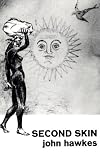
Skipper, hapless and seasick Navy man, bumbles around plagued by closeness of death since childhood, while infantilizing his daughter Cassandra (compare to Greek namesake), whose faith in him hovers at a lukewarm tolerance, until it becomes something sharper. Skipper yearns to always do the right thing, but always falls flat. Suicides abound in his life but he still keeps pasting a smile on his face. The action is primarily juxtaposed on two islands: one a cold gothic rock of impending doom show more peopled by human predators, where Skipper experiences his final crushing loss (yet that also frees him); the other a bizarre benevolent white father warm-water paradise situation where Skipper finds solace as a giver of the 'seeds of life', thus eclipsing his previous role as perpetual witness to the 'seeds of death'. Story is refracted through a kaleidoscopic lens of time, in shortish segments, keeping the pace moving along at a good clip. Hawkes' prose is earthy and visceral but never overbearing, scraping dread up in the reader's mind, where knowledge of final outcomes appears up front and the telling of the how stretches its lean muscular limbs out to the end.
I was an old child of the moon and lay sprawled on the night, musing and half-exposed in the suspended and public posture of all those night travelers who are without beds, those who sleep on public benches or curl into the corners of out-of-date railway coaches, all those who dream their uncovered dreams and try to sleep on their hands. show less
I was an old child of the moon and lay sprawled on the night, musing and half-exposed in the suspended and public posture of all those night travelers who are without beds, those who sleep on public benches or curl into the corners of out-of-date railway coaches, all those who dream their uncovered dreams and try to sleep on their hands. show less
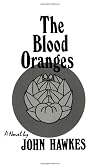
I finished this book over a week ago, mostly in an effort to write a review that would give it the justice it deserves, but I feel that time might have been spent it in vain. This is a strange, lyrical book – an idyll, really - that takes place on a Mediterranean island named “Illyria.” The name is obviously meant to evoke Shakespeare’s “Twelfth Night” and its paradisiacal setting, but Hawkes plants something haunting and evil here that never lets the reader get too comfortable.
show more
The plot is as unencumbered with passé concerns like pacing or character development as its characters are fascinated by their own sexual lives. Fiona is married to Cyril, and Catherine is married to Hugh. The novel traces the whole range of their interactions, from mundane conversations, but mostly is concerned with their complicated sexual entanglements. Everything is told through flashbacks, and opens with Cyril trying to console Catherine for some reason the reader has yet to ascertain. Hawkes bounces back and forth in time, telling how the two couples met (Fiona and Cyril look on as Catherine and Hugh are rescued from a bus that has fallen into a nearby waterway) to the whittling away of endless hours on the beach with Hugh and Catherine’s children in the background.
Most of the action, such as it is, revolves around the eventual untangling of the formerly monogamous relationships of the two couples. Catherine initially stammers and hedges in her attraction toward Cyril, but Fiona is more open-minded and adventurous with Hugh. Hugh, on the other hand, tends to be slightly more cautious, and on several occasions voices his reservations to Cyril, only to be reassured that Fiona is perfectly okay with the arrangement. This is pretty much how things proceed, playing footsy in the sand, the sly unbuckling of a bikini strap in the white Greek sands. But Hugh eventually finds it to be too much, realizes that he’s gone too far, and proceeds to take matters into his own hands.
Aside from the children that Hugh and Catherine have, none of the characters are bothered by anything approaching responsibility or are interrupted by growth or self-afflatus. It seemed like a big exercise is omphaloskepsis. But for those interested in something truly off the beaten narrative path, this is worth looking at. While the singular obsession of the characters seemed unrealistic, there is at least a rhythmic lyricism to the prose that makes it a unique reading experience. show less
show more
The plot is as unencumbered with passé concerns like pacing or character development as its characters are fascinated by their own sexual lives. Fiona is married to Cyril, and Catherine is married to Hugh. The novel traces the whole range of their interactions, from mundane conversations, but mostly is concerned with their complicated sexual entanglements. Everything is told through flashbacks, and opens with Cyril trying to console Catherine for some reason the reader has yet to ascertain. Hawkes bounces back and forth in time, telling how the two couples met (Fiona and Cyril look on as Catherine and Hugh are rescued from a bus that has fallen into a nearby waterway) to the whittling away of endless hours on the beach with Hugh and Catherine’s children in the background.
Most of the action, such as it is, revolves around the eventual untangling of the formerly monogamous relationships of the two couples. Catherine initially stammers and hedges in her attraction toward Cyril, but Fiona is more open-minded and adventurous with Hugh. Hugh, on the other hand, tends to be slightly more cautious, and on several occasions voices his reservations to Cyril, only to be reassured that Fiona is perfectly okay with the arrangement. This is pretty much how things proceed, playing footsy in the sand, the sly unbuckling of a bikini strap in the white Greek sands. But Hugh eventually finds it to be too much, realizes that he’s gone too far, and proceeds to take matters into his own hands.
Aside from the children that Hugh and Catherine have, none of the characters are bothered by anything approaching responsibility or are interrupted by growth or self-afflatus. It seemed like a big exercise is omphaloskepsis. But for those interested in something truly off the beaten narrative path, this is worth looking at. While the singular obsession of the characters seemed unrealistic, there is at least a rhythmic lyricism to the prose that makes it a unique reading experience. show less
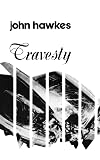
This is a… strange little book. And I mean that in the best possible way.
The set-up seems simple enough – we’re inside a car for the whole duration of this short novel, together with its driver, his daughter Chantal and his friend, the poet Henri – who incidentally is the lover of not only the car driver’s daughter but also of his wife. Said driver is also the narrator of Travesty and he is one of the most deeply unlikeable characters to ever fill that function. And that is not show more just because he plans to kill himself as well as his passengers by driving the car against a barn but also because he is a mean-spirited, monstrously egotistical philistine with (so far as I could tell) no redeeming features whatsoever. Unlike comparable narrator-villains (Humbert Humbert comes to mind most strongly) the narrator of Travesty does not require to seduce his audience (seeing as it is already quite literally captive) nor does he feel the need to justify himself to anyone, as he is quite convinced of being absolutely in the right. It comes as no surprise then that the narrator tells us mostly about himself and what a great guy he is, with the other characters mere supporting cast hovering barely visible on the edge of the stage.
It is never quite made explicit what the “Travesty” of the novel’s title refers to – while the narrator does mention an event in his past, that is not really helpful (at least not with some interpretative effort), and it seems likely that this is left intentionally ambiguous for the reader to figure out. My own take on this is that it refers to the narrator’s recurring attempts to make his planned murder-cum-suicide as a work of art – in fact, one rather suspects that the purpose of this premeditated car crash is so that the narrator can present as a better artist than his friend the poet, and lacking any real talent now engages in a grotesque and bloody act of one-upmanship. Not that this would mean criticism of the narrator by way of implicit auctorial comment, and this brings us to the point where I think this small novel is really remarkable – because the author (and it does not really matter whether you consider that to be the John Hawkes whose name appears on the cover of the novel or another fictional character implied in its narrative) manages to turn this travesty into a work of art, in spite of the narrator and behind his back, so to speak. While the novel’s set-up is entirely possible and realistic, the narrator’s voice is decidedly not – nobody would actually talk like this while driving a car, much less one that is going at high speed on a nocturnal country road. The narrative voice is not realistic at all but highly artifical, it is controlled by the author rather than the narrator, and it is the author rather than the narrator who time and again introduces a trenchant observation or a scinillating bit of prose, slipping them in under the narrator’s radar, so to speak. Which makes for a weird, unsettling reading experience, the text apparently slipping out of focus repeatedly, only to snap into brilliant clarity at the most unexpected moments. show less
The set-up seems simple enough – we’re inside a car for the whole duration of this short novel, together with its driver, his daughter Chantal and his friend, the poet Henri – who incidentally is the lover of not only the car driver’s daughter but also of his wife. Said driver is also the narrator of Travesty and he is one of the most deeply unlikeable characters to ever fill that function. And that is not show more just because he plans to kill himself as well as his passengers by driving the car against a barn but also because he is a mean-spirited, monstrously egotistical philistine with (so far as I could tell) no redeeming features whatsoever. Unlike comparable narrator-villains (Humbert Humbert comes to mind most strongly) the narrator of Travesty does not require to seduce his audience (seeing as it is already quite literally captive) nor does he feel the need to justify himself to anyone, as he is quite convinced of being absolutely in the right. It comes as no surprise then that the narrator tells us mostly about himself and what a great guy he is, with the other characters mere supporting cast hovering barely visible on the edge of the stage.
It is never quite made explicit what the “Travesty” of the novel’s title refers to – while the narrator does mention an event in his past, that is not really helpful (at least not with some interpretative effort), and it seems likely that this is left intentionally ambiguous for the reader to figure out. My own take on this is that it refers to the narrator’s recurring attempts to make his planned murder-cum-suicide as a work of art – in fact, one rather suspects that the purpose of this premeditated car crash is so that the narrator can present as a better artist than his friend the poet, and lacking any real talent now engages in a grotesque and bloody act of one-upmanship. Not that this would mean criticism of the narrator by way of implicit auctorial comment, and this brings us to the point where I think this small novel is really remarkable – because the author (and it does not really matter whether you consider that to be the John Hawkes whose name appears on the cover of the novel or another fictional character implied in its narrative) manages to turn this travesty into a work of art, in spite of the narrator and behind his back, so to speak. While the novel’s set-up is entirely possible and realistic, the narrator’s voice is decidedly not – nobody would actually talk like this while driving a car, much less one that is going at high speed on a nocturnal country road. The narrative voice is not realistic at all but highly artifical, it is controlled by the author rather than the narrator, and it is the author rather than the narrator who time and again introduces a trenchant observation or a scinillating bit of prose, slipping them in under the narrator’s radar, so to speak. Which makes for a weird, unsettling reading experience, the text apparently slipping out of focus repeatedly, only to snap into brilliant clarity at the most unexpected moments. show less
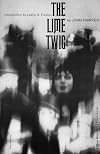
A dream pop novel of lucid imagery all amounting to an impression of story yet closer to the way we experience events: filtered through the desires and fantasies we bring to them. What is inscrutable behavior for the reader is merely behavior motivated by a collection of liminal differences not so different from our own probably inscrutable behavior, so that all transactions of experience are relative, even the physical ones. In fact, the relationship between physical manifestations of show more internal imagination and how the seemingly incontrovertible truth of violence is as messy and puzzling as the shadow worlds of psychology they are borne from becomes a larger project within a straightforward crime story about a heist gone wrong. This novel is everything I strive for in my own work and the most intriguing way to "make it new" in matters of genre. I loved every part of it.
I've found a new favorite author. show less
I've found a new favorite author. show less
Lists
Awards


You May Also Like


Associated Authors
Statistics
- Works
- 29
- Also by
- 9
- Members
- 3,070
- Popularity
- #8,315
- Rating
- 3.5
- Reviews
- 49
- ISBNs
- 123
- Languages
- 9
- Favorited
- 12
