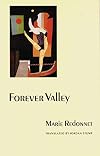
Feels like another world, only slightly different. What it's like to live with very little context for what is happening to you, around you. Musicality and repetition of prose akin to Thomas Bernhard, but with emphasis on brevity in sentence structure. Beckettian persistence in continuance of futile activities, paralysis, inertia, dry humor in the face of it all. A beautiful and hypnotic novel in miniature.

This book contains the first published English-language translations of Vienna Group member Konrad Bayer's writing, courtesy of Atlas Press in 1986, with extensive notes and an introduction from main translator Malcolm Green. The Vienna Group, composed of writers, musicians, and a lone architect, owed some or most of its heritage to earlier 20th century avant-garde groups like the Dadaists, the Surrealists, and OBERIU. Active from 1952-1959, they were reacting in part to post-WWII cultural and political conditions in Austria, and more generally to artistic and literary traditionalism. Among other 'goals', they strove to liberate language from its imposed restrictions, while acknowledging that it will always be limited in its true communicative power. They developed and utilized unconventional techniques for writing poetry, including montage and mathematical methods. The Group performed this poetry and their dramatic pieces during notorious literary cabarets they organized around Vienna. Many of the group's theater pieces were presented collectively, without specific member attribution.
Bayer is the Vienna Group member who drew the widest literary attention, though not until after the group had disbanded and Bayer himself had committed suicide at age 32, just prior to which he'd signed a major publishing contract. Fellow member Gerhard Rühm accomplished much of the editorial work in bringing Bayer's writing to light after his death. This Atlas collection includes various show more prose pieces, short dramas, poetry using the techniques described above, the philosopher's stone (a collection of texts Bayer described as having been written for 'the reader who is ready to exert himself', and which was the only work Bayer published in book form prior to his death), and excerpts from the unfinished novel the sixth sense. The only other major work of Bayer's that is not excerpted here is the head of vitus bering, his only complete novel, also published in English translation by Atlas.
Bayer's fantastic imagination and mastery of language are evident throughout the collection, though some pieces are more memorable than others. One highlight in terms of sheer originality and other-wordly lyrical power is 'the bird sings', a stunning poem created using a poetry 'machine' known as the 'time trumpet', based on a complicated mathematical system described by Bayer in the notes section. Another strong piece is 'twenty-six names', a collection of short prose portraits of 26 individuals, whose names each begin with a different letter of the alphabet. Many of the prose pieces and dramas (e.g., 'ferdinandlein' and 'adventures in outer space') exhibit humor similar to that of surrealist and absurdist texts, using animals, odd juxtapositions of people and objects, and unusual use of language, including non sequiturs, neologisms, and wordplay. Bayer also displays a penchant for casual use of violence in some of his texts. The overwhelming sense one gets from the collection is that for Bayer anything was fair game concerning language use and literary technique, which results in a vast spectrum of readability ranging from the riveting to the nearly impossible to parse, at least on the first read (and sometimes after many reads). show less
Bayer is the Vienna Group member who drew the widest literary attention, though not until after the group had disbanded and Bayer himself had committed suicide at age 32, just prior to which he'd signed a major publishing contract. Fellow member Gerhard Rühm accomplished much of the editorial work in bringing Bayer's writing to light after his death. This Atlas collection includes various show more prose pieces, short dramas, poetry using the techniques described above, the philosopher's stone (a collection of texts Bayer described as having been written for 'the reader who is ready to exert himself', and which was the only work Bayer published in book form prior to his death), and excerpts from the unfinished novel the sixth sense. The only other major work of Bayer's that is not excerpted here is the head of vitus bering, his only complete novel, also published in English translation by Atlas.
Bayer's fantastic imagination and mastery of language are evident throughout the collection, though some pieces are more memorable than others. One highlight in terms of sheer originality and other-wordly lyrical power is 'the bird sings', a stunning poem created using a poetry 'machine' known as the 'time trumpet', based on a complicated mathematical system described by Bayer in the notes section. Another strong piece is 'twenty-six names', a collection of short prose portraits of 26 individuals, whose names each begin with a different letter of the alphabet. Many of the prose pieces and dramas (e.g., 'ferdinandlein' and 'adventures in outer space') exhibit humor similar to that of surrealist and absurdist texts, using animals, odd juxtapositions of people and objects, and unusual use of language, including non sequiturs, neologisms, and wordplay. Bayer also displays a penchant for casual use of violence in some of his texts. The overwhelming sense one gets from the collection is that for Bayer anything was fair game concerning language use and literary technique, which results in a vast spectrum of readability ranging from the riveting to the nearly impossible to parse, at least on the first read (and sometimes after many reads). show less
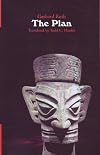
In this mystery novel by Austrian writer Roth, asthmatic librarian and obsessive reader Feldt travels to Japan in an attempt to complete the sale of a stolen Mozart signature which has been initiated by his supervisor at the National Library in Vienna, who later committed suicide after being accused of the theft. Similarities exist between this book and Roth’s earlier novel The Lake. The main character Feldt in The Plan is even friends with Paul Eck, who is the main character in The Lake and receives passing mention in this book. In both novels, a single male character is ensnared in a vague mystery which he passively attempts to unravel. As with The Lake’s Paul Eck, Feldt is a detached loner prone to indulging in daydreams and fantasy. Both of these characters float along in their respective narratives, reluctant to take decisive action, presuming that all will eventually be revealed to them. In Feldt's case, his passivity is further exacerbated by being in a foreign country where everything is unfamiliar. This premise has the potential to make for good reading, and in The Lake, Roth manages it with aplomb. There are problems with The Plan, though. First, Feldt is not a particularly compelling character. Second, the text reads a little flat, with an excess of distracting figurative language. It’s possible that some of this could be attributed to the translation, which was done by a different translator than the one who did The Lake. Both books feature descriptions show more of drug or alcohol-induced hallucinatory states imbued with cryptic meaning, but their effect is weaker here. Still, the book improves as the narrative progresses, despite it not ever achieving the level of The Lake. show less
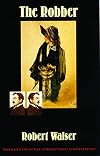
With his slim novel The Robber, Robert Walser reached the pinnacle of his experiments in portraying a certain type of character in his fiction. To assign this type a single defining term, such as flâneur, dreamer, drifter, or perhaps lost soul, reduces the scale of Walser’s literary accomplishments. For this character, fine-tuned over the course of four novels (those extant of the author’s self-reported nine completed) and countless of his “little prose pieces,” is far too complex and ever-changing to fit within the narrow limits of a label.
Walser utilizes all of his prodigious writerly talents in telling the Robber’s tale, which he accomplishes more by writing around the story than through it. As translator Susan Bernofsky notes in her introduction, the book “is in some sense a story about the impossibility of its own telling.” It doesn’t help that the narrator has a penchant for straying off track, frequently commenting on the text itself, as he does here:
“These detours I’m making serve the end of filling time, for I really must pull off a book of considerable length, otherwise I’ll be even more deeply despised than I am now. Things can’t possibly go on like this. Local men of the world call me a simpleton because novels don’t tumble out of my pockets.”
In fact, The Robber, while written in 1925, was not published until 1972, well after Walser’s death. He had not even produced a clean copy of the manuscript for submission to a publisher. show more While he’d written prolifically during the 1920s, he’d found it increasingly difficult to get published. He’d also focused more on writing his short prose pieces, though at a time when the novel was still very much the measure of success by which a writer’s reputation was established (not that this has changed much even today). Soon after he wrote The Robber he would abandon publication altogether, though still continue with his writing, presumably for personal pleasure alone. Still, it’s hard not to think that Walser felt some bitterness over the trouble he encountered with publication, especially when The Robber includes passages such as this:
“Literary authors were serving here and there as mountaineering guides or crimping curls as hairdressers’ assistants, making the best they could of the necessity of expanding their spheres of employment.”
The basic premise of the book concerns the separation of the Robber from his beloved Edith. Though never explained in plain terms, it seems that at one point in the past Edith requested a sum of 100 francs from the Robber and he refused, after which she left him and took up with another man, referred to by both the narrator and the Robber only as “the mediocrity.” The tale of these two ill-fated lovers is told in serpentine prose, while also incorporating much of the Robber’s personal history (including other women in his life, namely Wanda and his landlady Fräulein Selma), by a shifty narrator who may or may not in fact be the Robber himself (they are both writers and, based on hints in the text, the Robber is presumably so named because he has “robbed” Edith of her story in order to write the book). Throughout the text, Edith is portrayed by both the narrator and the Robber in less-than-flattering terms as a shallow, vacuous woman concerned only with material things and preserving her own image. Late in the novel, when she is encouraged to kiss the Robber as he lies in the hospital, she does so, but followed by the complaint, “And he never bought me that fur, either. He’s the wickedest man on the whole planet.” The seeming contradiction between this negative portrayal of Edith and the Robber’s devotion to her drives the novel in bizarre directions and contributes to the complex characterization of the Robber.
The book is organized in a series of two- to three-page sections. Through quotes from the Robber and observations of the narrator, a portrait of this elusive individual emerges. He feels he is often misjudged: “I’m full of equanimity, which is often confused with apathy, lack of interest.” He considers that “one should never look wistful, hungry for life, in any way desirous” for “it makes a bad impression” and that “when people appear to lack something, others involuntarily deprive them further and have no wish to assist them.” However, later on, his own face is described by the narrator as displaying “a careworn quality such as one finds in the countenance of persons who long for inner peace, which they appear to lack, and for the attainment of which they secretly struggle at all day—and nighttime hours.” This dissatisfaction with his nature, the feeling one way about how one should be in contrast to the actual being of the opposite way, follows the Robber throughout the book. He senses a contradiction in himself, which likely contributes to what he perceives as misinterpretations of his character. At one point he seeks the advice of a medical doctor, confessing that he has wondered before if he is a girl because, in his words, “I’ve noticed an utter absence of aggressions and acquisitive greed smoldering, seething, or detonating within my person” while, at the same time, “I like to polish shoes and find household tasks amusing.” However, he concedes to the doctor his understanding that he is not actually a girl, but instead has a childish side, one which “wants desperately not to be slighted, but now and then it longs all the same for a little schoolmasterish treatment.” In fact, there are multiple references in the text to the Robber taking an enjoyment in being someone’s servant, to being subservient to another. The doctor, upon hearing all of this, instead of pronouncing a daunting diagnosis, advises the Robber, “Let yourself remain as you are, go on living the way you live. You seem to know yourself, and to have come to terms with yourself, exceedingly well.”
With this reaction from the doctor, a perceived “authority” in society, the Robber’s behavior appears to be justified. Much of the novel, in fact, can be interpreted as an elaborate justification for the existence of people like the Robber. In the final section, the narrator declares, “Let us see to it that ponderers, thinkers, feelers survive in our midst.” Surely the Robber fits in such a group. Yet the narrator, in this same section and elsewhere, strives to distance himself from the Robber, singling out certain, in his eyes, particularly egregious examples of the Robber’s inappropriate behavior and claiming that he would never do such things, at one point exclaiming “Down with you, Robber!” But like the Robber himself, the narrator also fails to remain consistent in his attitude, later proclaiming, “We think of him both as universal nonchalance and the conscience of all mankind.” Conceding the “illogical” nature of his conclusion, he ends the book by stating his belief that the Robber should “be found agreeable and that from now on he be recognized and greeted.”
It is this maddeningly elusive nature of both the Robber and the narrator that ultimately makes the book so interesting. The gentle criticism that the narrator continuously doles out before quickly counteracting with measured praise suggests reluctance on his part to fully condemn the Robber. It is a curious beacon composed of sympathy and judgment, slowly rotating, projecting its conflicted message both internally and externally. The question remains whether the two characters are the same person, and that this fact is the source of the continuous contradiction within them both. One hint comes when the narrator states that the two are writing the book together: “Today the Robber is ghostly pale from all his writing, for you can imagine how valiantly he’s been assisting me in the composing of this book.”
As previously noted, the Robber’s obsession with Edith is also characterized by this constant split between praise and condemnation. Though he continues to the very end in placing Edith on a pedestal, he also ruthlessly judges her, most notably in his public lecture near the end of the book, which is attended by “almost exclusively girls,” and at which both Edith and Wanda, as well as the “well-known benefactress” Frau von Hochberg, are present. Among other attacks on Edith’s character, he claims “she feels nothing,” that “there’s no earnestness in her,” and that “she knows how spineless she is.” Earlier he states, “I always considered her to be perhaps not quite sufficiently intelligent.” Ultimately, from his own words, it seems that the Robber’s infatuation with Edith is based chiefly on her physical appearance, while he all but despises the type of person he believes her to be. It’s an old and well-known story. How many romantic crushes throughout history have culminated in this outcome? One builds up a person in one’s mind based solely on appearance, only to find that person is not at all compatible with one’s own nature.
There are no easy conclusions, if any at all, to be drawn from The Robber. The closest Walser comes to hinting at a meaning to the book comes in this question that Frau von Hochberg asks herself toward the end, after having ushered Edith to the Robber’s bedside at the hospital:
“Is it our calling to understand each other, or are we not, rather, called upon to misjudge one another, to prevent there being a surfeit of happiness and to ensure that happiness continues to be valued, and that these circumstances result in novels, which could not possibly exist if we all knew each other for what we are?”
With their constantly shape-shifting characters, genial yet somewhat aloof and tinged with a dark loneliness, Robert Walser’s novels certainly could not have existed without these circumstances that Frau von Hochberg describes. And The Robber underlines this truth the boldest of all his novels. show less
Walser utilizes all of his prodigious writerly talents in telling the Robber’s tale, which he accomplishes more by writing around the story than through it. As translator Susan Bernofsky notes in her introduction, the book “is in some sense a story about the impossibility of its own telling.” It doesn’t help that the narrator has a penchant for straying off track, frequently commenting on the text itself, as he does here:
“These detours I’m making serve the end of filling time, for I really must pull off a book of considerable length, otherwise I’ll be even more deeply despised than I am now. Things can’t possibly go on like this. Local men of the world call me a simpleton because novels don’t tumble out of my pockets.”
In fact, The Robber, while written in 1925, was not published until 1972, well after Walser’s death. He had not even produced a clean copy of the manuscript for submission to a publisher. show more While he’d written prolifically during the 1920s, he’d found it increasingly difficult to get published. He’d also focused more on writing his short prose pieces, though at a time when the novel was still very much the measure of success by which a writer’s reputation was established (not that this has changed much even today). Soon after he wrote The Robber he would abandon publication altogether, though still continue with his writing, presumably for personal pleasure alone. Still, it’s hard not to think that Walser felt some bitterness over the trouble he encountered with publication, especially when The Robber includes passages such as this:
“Literary authors were serving here and there as mountaineering guides or crimping curls as hairdressers’ assistants, making the best they could of the necessity of expanding their spheres of employment.”
The basic premise of the book concerns the separation of the Robber from his beloved Edith. Though never explained in plain terms, it seems that at one point in the past Edith requested a sum of 100 francs from the Robber and he refused, after which she left him and took up with another man, referred to by both the narrator and the Robber only as “the mediocrity.” The tale of these two ill-fated lovers is told in serpentine prose, while also incorporating much of the Robber’s personal history (including other women in his life, namely Wanda and his landlady Fräulein Selma), by a shifty narrator who may or may not in fact be the Robber himself (they are both writers and, based on hints in the text, the Robber is presumably so named because he has “robbed” Edith of her story in order to write the book). Throughout the text, Edith is portrayed by both the narrator and the Robber in less-than-flattering terms as a shallow, vacuous woman concerned only with material things and preserving her own image. Late in the novel, when she is encouraged to kiss the Robber as he lies in the hospital, she does so, but followed by the complaint, “And he never bought me that fur, either. He’s the wickedest man on the whole planet.” The seeming contradiction between this negative portrayal of Edith and the Robber’s devotion to her drives the novel in bizarre directions and contributes to the complex characterization of the Robber.
The book is organized in a series of two- to three-page sections. Through quotes from the Robber and observations of the narrator, a portrait of this elusive individual emerges. He feels he is often misjudged: “I’m full of equanimity, which is often confused with apathy, lack of interest.” He considers that “one should never look wistful, hungry for life, in any way desirous” for “it makes a bad impression” and that “when people appear to lack something, others involuntarily deprive them further and have no wish to assist them.” However, later on, his own face is described by the narrator as displaying “a careworn quality such as one finds in the countenance of persons who long for inner peace, which they appear to lack, and for the attainment of which they secretly struggle at all day—and nighttime hours.” This dissatisfaction with his nature, the feeling one way about how one should be in contrast to the actual being of the opposite way, follows the Robber throughout the book. He senses a contradiction in himself, which likely contributes to what he perceives as misinterpretations of his character. At one point he seeks the advice of a medical doctor, confessing that he has wondered before if he is a girl because, in his words, “I’ve noticed an utter absence of aggressions and acquisitive greed smoldering, seething, or detonating within my person” while, at the same time, “I like to polish shoes and find household tasks amusing.” However, he concedes to the doctor his understanding that he is not actually a girl, but instead has a childish side, one which “wants desperately not to be slighted, but now and then it longs all the same for a little schoolmasterish treatment.” In fact, there are multiple references in the text to the Robber taking an enjoyment in being someone’s servant, to being subservient to another. The doctor, upon hearing all of this, instead of pronouncing a daunting diagnosis, advises the Robber, “Let yourself remain as you are, go on living the way you live. You seem to know yourself, and to have come to terms with yourself, exceedingly well.”
With this reaction from the doctor, a perceived “authority” in society, the Robber’s behavior appears to be justified. Much of the novel, in fact, can be interpreted as an elaborate justification for the existence of people like the Robber. In the final section, the narrator declares, “Let us see to it that ponderers, thinkers, feelers survive in our midst.” Surely the Robber fits in such a group. Yet the narrator, in this same section and elsewhere, strives to distance himself from the Robber, singling out certain, in his eyes, particularly egregious examples of the Robber’s inappropriate behavior and claiming that he would never do such things, at one point exclaiming “Down with you, Robber!” But like the Robber himself, the narrator also fails to remain consistent in his attitude, later proclaiming, “We think of him both as universal nonchalance and the conscience of all mankind.” Conceding the “illogical” nature of his conclusion, he ends the book by stating his belief that the Robber should “be found agreeable and that from now on he be recognized and greeted.”
It is this maddeningly elusive nature of both the Robber and the narrator that ultimately makes the book so interesting. The gentle criticism that the narrator continuously doles out before quickly counteracting with measured praise suggests reluctance on his part to fully condemn the Robber. It is a curious beacon composed of sympathy and judgment, slowly rotating, projecting its conflicted message both internally and externally. The question remains whether the two characters are the same person, and that this fact is the source of the continuous contradiction within them both. One hint comes when the narrator states that the two are writing the book together: “Today the Robber is ghostly pale from all his writing, for you can imagine how valiantly he’s been assisting me in the composing of this book.”
As previously noted, the Robber’s obsession with Edith is also characterized by this constant split between praise and condemnation. Though he continues to the very end in placing Edith on a pedestal, he also ruthlessly judges her, most notably in his public lecture near the end of the book, which is attended by “almost exclusively girls,” and at which both Edith and Wanda, as well as the “well-known benefactress” Frau von Hochberg, are present. Among other attacks on Edith’s character, he claims “she feels nothing,” that “there’s no earnestness in her,” and that “she knows how spineless she is.” Earlier he states, “I always considered her to be perhaps not quite sufficiently intelligent.” Ultimately, from his own words, it seems that the Robber’s infatuation with Edith is based chiefly on her physical appearance, while he all but despises the type of person he believes her to be. It’s an old and well-known story. How many romantic crushes throughout history have culminated in this outcome? One builds up a person in one’s mind based solely on appearance, only to find that person is not at all compatible with one’s own nature.
There are no easy conclusions, if any at all, to be drawn from The Robber. The closest Walser comes to hinting at a meaning to the book comes in this question that Frau von Hochberg asks herself toward the end, after having ushered Edith to the Robber’s bedside at the hospital:
“Is it our calling to understand each other, or are we not, rather, called upon to misjudge one another, to prevent there being a surfeit of happiness and to ensure that happiness continues to be valued, and that these circumstances result in novels, which could not possibly exist if we all knew each other for what we are?”
With their constantly shape-shifting characters, genial yet somewhat aloof and tinged with a dark loneliness, Robert Walser’s novels certainly could not have existed without these circumstances that Frau von Hochberg describes. And The Robber underlines this truth the boldest of all his novels. show less

These are clever stories, some of which have their moments of brilliance, but none of them come across as particularly rich in meaning. They're either too clever or too quirky, and cleverness or quirkiness for its own sake leads this reader to disappointment.
Thomas Bernhard's semiautobiographical novel Wittgenstein's Nephew is a testament to his 10-year friendship with Paul Wittgenstein, nephew of the Austrian philosopher Ludwig Wittgenstein. Paul was probably Bernhard's closest friend, and with the exception of Hedwig Stavianicek (his "life person"), the most significant person in his life. Bernhard begins the novel by describing the two friends' lives in parallel as they lie in adjacent hospital wards: the narrator in the ward for dying lung patients, and Paul in the mental ward, where he is forced to stay several times each year due to his "so-called mental disorder." As in other Bernhard novels, there are scathing passages directed at doctors and in particular psychiatrists, as well as at Austrian society, including the majority of the Wittgenstein family, one of the wealthiest and most influential families in Austria. Also included here are a couple of anecdotes from Bernhard's life, namely records of his acceptance of two literary prizes, the State Prize for Literature and the Grillparzer Prize. These anecdotes also appear in the book My Prizes: An Accounting.

Readers already familiar with Thomas Bernhard's work should likely find Concrete to be one of his easier to read novels. As with other Bernhard narrators, this one, an ailing and curmudgeonly musicologist, has failed to produce anything "concrete" following his years of painstaking research. In this case, the topic of interest is composers, in particular Mendelssohn Bartholdy. Largely self-taught and independently wealthy due to an inheritance, the narrator lives alone at his family's estate, where he is frequently visited by his socialite sister, who vexes him to no end. The main components of the novel are as follows: a long diatribe about his sister; a period of contemplation on whether to go to Palma de Mallorca for the winter; an excruciating series of preparations and hesitations once the decision has been made; and finally a lengthy anecdote about a young woman he encountered two years ago in Palma. The entire narrative (or "notes," as he calls them) was written once he arrived in Palma. Most of Bernhard's usual themes are represented, including critiques on all things Austrian (or Western, or Human, depending on how one chooses to read them). The book weighs in at only around 47,000 words, and Bernhard's flowing musical prose style carries the reader steadily through to the end.
These three short works are almost like the Molloy trilogy in miniature. As each one increases in its spareness, so does it increase in its opacity. Company contains the clearest narrative, while still planting the seeds for the unyielding repetition that is to come. Beckett plumbs the depths of existence and the inevitable approach of death in a personal way while resisting the first person perspective ("he speaks of himself as of another"). In Company he vacillates between second and third person. Ill Seen Ill Said is told in third person alternating with a speakerless narration. The final text, Worstward Ho is completely told in the speakerless narration and resembles The Unnamable in its descriptions of body failing and the void that awaits. Recommended for those already familiar with Beckett's prose stylings.

There are the classic Walserian descriptions of nature, awkward social interactions, and a main character whose drive and ambition fluctuate in relation to the amount of daydreaming that occurs on any given day. Still, as a character, Joseph Marti was not quite as developed as I was hoping for him to be. There is also less humor in the book than in either The Tanners or Jakob von Gunten. Still, it's Walser and I like everything he wrote, at least to some degree. This one just not as much as others.
P.S. This is a terrible review. I'm sorry, Robert...you deserve better.
P.S. This is a terrible review. I'm sorry, Robert...you deserve better.
My sister recommended this book to me. She knows me fairly well and so when I read the back cover, I could immediately see why she thought I'd like it. The title also held a certain appeal, as it held suggestions of a favored theme.
This was the first book by David Guterson that I've read. As someone who haunts thrift stores and used bookstores, of course I knew his name well. In these places, Guterson's novel Snow Falling on Cedars is the bibliographic equivalent of a Mantovani or Herb Alpert vinyl record. In short, ubiquitous. I avoided it for the same reason I avoid the Alpert records: in my experience, nothing produced and subsequently discarded on such grand scale is that interesting.
When my sister first told me about the book, I looked Guterson up online and came across the controversial graduation speech he gave at his high school alma mater in 2013. He was heckled during the speech, which The Seattle Times described as "unorthodox, with frequent references to death and a gloomy tone." Some mild interest stirred within me as I read through the speech, which I found overly didactic and a bit condescending, albeit not without its truth.
The book ended up being about what I expected: nothing earth-shattering or particularly deep, but certainly readable, if not a bit bloated with excessive detail. Guterson employs fairly mundane literary techniques of jumping between present and past, though most of the crisscrossing plot is told as recollection. This lends a passivity show more to the action, a flaw which, ironically, Guterson's narrator mentions in the text as an early critique of his own writing. (One wonders if that was intentional or merely a Freudian slip.) It's the kind of prose that doesn't challenge readers, but rather comfortably leads them along by their noses. We don't need to worry, for we're in the capable hands of the Author, who will not fail to bring us to some sort of resolution. Despite Guterson's skills in descriptive prose, though, none of the characters feel fully formed, and as a result, none are appealing enough to elicit much sympathy. They felt less like individuals and more like types employed to make a point.
And what is Guterson saying with this novel. At one point near the end, his narrator states, "I'm a hypocrite, of course, and I live with that, but I live." Is this Guterson's critique of today's (chiefly developed) world citizens? That we all (should?) know better but we go on living in the same destructive ways anyway, because to remove ourselves completely from society would lead to certain death, like it did for his character John William? Or perhaps Guterson is merely critiquing himself in this regard.
I could go even further in deconstructing possibilities for interpretation. For example, maybe the two characters are intended as two halves of the same person, representing the inner struggle that the "enlightened" members of society endure every day of their privileged lives. This would align nicely with the title, which implies the "shadow" theme, the dark side inside all of us that resists conforming to the status quo. But no, I don't think a "national bestseller" (as the cover so boldly announces at the top) would stray into such murky territory as that.
All in all, it's not a bad book, especially for a "national bestseller." Perhaps it will give some readers pause for thought, although about what I'm still not certain. In some ways, the book can be seen as a legitimization of the bicycle-commuting, composting, small house-owning liberal lifestyle. That this way of living is "enough" for a world now in such a steep environmental decline that it's too far gone to save. On the other hand, the book could be read as a satire of this lifestyle, and John William's death as a tragedy symbolizing the hopelessness of trying to reverse the damage to the planet by riding bikes to work and recycling plastic bottles. Regardless of its point(s), though, the book could have made them in a more compelling way. show less
This was the first book by David Guterson that I've read. As someone who haunts thrift stores and used bookstores, of course I knew his name well. In these places, Guterson's novel Snow Falling on Cedars is the bibliographic equivalent of a Mantovani or Herb Alpert vinyl record. In short, ubiquitous. I avoided it for the same reason I avoid the Alpert records: in my experience, nothing produced and subsequently discarded on such grand scale is that interesting.
When my sister first told me about the book, I looked Guterson up online and came across the controversial graduation speech he gave at his high school alma mater in 2013. He was heckled during the speech, which The Seattle Times described as "unorthodox, with frequent references to death and a gloomy tone." Some mild interest stirred within me as I read through the speech, which I found overly didactic and a bit condescending, albeit not without its truth.
The book ended up being about what I expected: nothing earth-shattering or particularly deep, but certainly readable, if not a bit bloated with excessive detail. Guterson employs fairly mundane literary techniques of jumping between present and past, though most of the crisscrossing plot is told as recollection. This lends a passivity show more to the action, a flaw which, ironically, Guterson's narrator mentions in the text as an early critique of his own writing. (One wonders if that was intentional or merely a Freudian slip.) It's the kind of prose that doesn't challenge readers, but rather comfortably leads them along by their noses. We don't need to worry, for we're in the capable hands of the Author, who will not fail to bring us to some sort of resolution. Despite Guterson's skills in descriptive prose, though, none of the characters feel fully formed, and as a result, none are appealing enough to elicit much sympathy. They felt less like individuals and more like types employed to make a point.
And what is Guterson saying with this novel. At one point near the end, his narrator states, "I'm a hypocrite, of course, and I live with that, but I live." Is this Guterson's critique of today's (chiefly developed) world citizens? That we all (should?) know better but we go on living in the same destructive ways anyway, because to remove ourselves completely from society would lead to certain death, like it did for his character John William? Or perhaps Guterson is merely critiquing himself in this regard.
I could go even further in deconstructing possibilities for interpretation. For example, maybe the two characters are intended as two halves of the same person, representing the inner struggle that the "enlightened" members of society endure every day of their privileged lives. This would align nicely with the title, which implies the "shadow" theme, the dark side inside all of us that resists conforming to the status quo. But no, I don't think a "national bestseller" (as the cover so boldly announces at the top) would stray into such murky territory as that.
All in all, it's not a bad book, especially for a "national bestseller." Perhaps it will give some readers pause for thought, although about what I'm still not certain. In some ways, the book can be seen as a legitimization of the bicycle-commuting, composting, small house-owning liberal lifestyle. That this way of living is "enough" for a world now in such a steep environmental decline that it's too far gone to save. On the other hand, the book could be read as a satire of this lifestyle, and John William's death as a tragedy symbolizing the hopelessness of trying to reverse the damage to the planet by riding bikes to work and recycling plastic bottles. Regardless of its point(s), though, the book could have made them in a more compelling way. show less

Whenever I finish a Russ book, I feel as if I should have enjoyed it more than I did. Of the three I've read, I place this one between The Female Man and The Adventures of Alyx, with the latter being the one I liked the most.
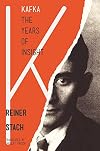
This and Reiner Stach's earlier volume, Kafka: The Decisive Years, were easily the two best books I read in 2014. I'm still processing them, but I cannot recommend them enough to any serious Kafka reader. Kafka's life and work were intricately woven together, and reading about his life at this level of depth only serves to enhance our reading of his original texts. While they are notoriously resistant to interpretation, and often even mystified their creator, there is still so much to glean from them and Stach's ongoing biographical project provides an essential tool to discovery.
Abandoned two-thirds of the way through because it was destroying me. It's hard for a book to do that, but the voice paired with the subject matter led to ill effects.

I hope to review this later, probably after I read the next volume. Suffice it to say, this is indispensable reading for any serious Kafka fan. I read a review (New York Observer, Dec. 2005) complaining about the level of detail Stach uses to describe what the critic saw as Kafka's boring life. That is an absurd point on which to attack the book. Even the casual Kafka reader knows he wasn't some swashbuckling world traveler. The inner life was his focus, and Stach manages to contextualize everything going on in Kafka's life in order to present this life to the reader. It is a work of astonishing scholarship. I cannot wait to get started on the next volume.
Mary Ruefle is one of my favorite writers so it was no surprise to me that I loved this 2010 selection of her poems (that is, those published before her most recent collection, Trances of the Blast). Prior to the surprise appearance in 2013 of Trances, Mary had claimed to have abandoned publishing poetry and was focusing more on her erasures. She said something to the effect that there were already too many published words in the world, and now she was occupied instead with erasing them. Luckily for her readers, she changed her mind about that.
Mary's poetry has a wistful playfulness to it that is wholly unique. She displays a curiosity in her writing that is not afraid of dark corners, but that noses into them only with a desire to understand. A reader encounters many surprises in her use of language and topic. It's often difficult to determine where she is coming from, but one nice feature of this collection is a bibliography of source material with the corresponding poem titles. Armed with this list, a dedicated reader could in theory dig around for clues as to where Mary's mind was wandering when she composed these poems.
Mary's poetry has a wistful playfulness to it that is wholly unique. She displays a curiosity in her writing that is not afraid of dark corners, but that noses into them only with a desire to understand. A reader encounters many surprises in her use of language and topic. It's often difficult to determine where she is coming from, but one nice feature of this collection is a bibliography of source material with the corresponding poem titles. Armed with this list, a dedicated reader could in theory dig around for clues as to where Mary's mind was wandering when she composed these poems.
I wanted more from this book, but perhaps that is the point. People are not how they are seen by others, just as they are also not merely how they see themselves. It's as if each person's image of another person represents one facet of that person. Some people might share similar images of another person, but others might have completely different ones. A person's life is also much more complex than merely blending all these perspectives together. JT's brother tried to produce a portrait of his brother by organizing a selection of recollections from people who knew him, and letters JT had written to people he knew, as well as to inanimate objects and other beings like Santa Claus and the Easter Bunny. In the end, though, I still did not feel like I knew who JT was. There are larger philosophical reasons for this, but I'm too tired to explore them at the moment.
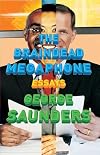
I found this to be hit or miss. I enjoyed Saunders' "investigative" pieces, including the ones on Dubai, the U.S.-Mexico border, and Nepal's Buddha Boy, but his satire largely failed to reach me. It's strange, because I appreciated a lot of his more random humor in the longer articles, but when satire was the sole purpose of a piece it didn't seem funny at all, and in some cases irritated me to the point of skipping over them. On the other hand, I did also enjoy his writing craft essays and literary criticism. I think I just have very narrow taste in satire.
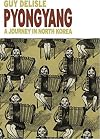
Either this book wasn't as good as some of Guy Delisle's other travel comix or they just all begin to feel the same after one has read several of them. Then again, part of Guy's difficulty in conveying his North Korean experience must have rested in the fact that (1) he couldn't do much other than visit regime-approved sights; and (2) for the most part, he couldn't talk to any North Koreans other than his guide and translator. As a result, the available subject matter is limited.

In each of his books that I've read, all of Gerhard Roth's main characters carry a certain aimlessness about them. This goes hand in hand with a general lack of plot in his books. Winterreise is closer to The Will to Sickness on Roth's spectrum of experimentalism, though more firmly rooted in realism than that earlier novel. Here, Nagl suddenly decides to leave his humdrum life as a schoolteacher and travel through southern Europe with an old lover named Anna. That one sentence handily sums up the plot. Nothing extraordinary happens. The text chiefly consists of Nagl ruminating on his existence, his relationship with Anna, and his grandfather's life. He and Anna drift through Italy, sightseeing by day and making love at night. This is all described in Roth's detailed, clinical prose, which is segmented into short passages, none any longer than a few pages. It makes for hypnotic reading, even as one realizes that there is no crescendo forthcoming.
Aged writer struggles to accept and cope with debilitating illness. Much of the focus is on loss of independence and shifting nature of interpersonal relationships relative to the infirmity. The practicalities of living disabled on one's own (with some help) are woven together with philosophical and social commentary on old age and disability. Metafictional meanderings take flight, as microscope zooms in and out from character to writer. Bursting with CB-R's beloved word play, including a bonanza of puns and neologisms, this is a short book, but rich in content and imagery.

Three people in a car hurtling through rural France. Only the driver speaks. Read it to find out what he says.
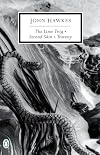
To a certain extent, this short novel resembles, both in theme and main character, the first part of Hawkes' novel Second Skin. Michael Banks, like Skipper, is a somewhat artless fellow who falls in with a band of amoral people who recognize in him the perfect prey for their scheme. Where Hawkes excels in both novels is in his crafting of a delicate dynamic whereby a simple man spends time with his tormentors, thinking he is enjoying himself, while his companions are playing along as they deftly use him to their own desired ends. As readers we are privy to the internal dialogue of these two men, Banks and Skipper, though Second Skin is told in first person through Skipper whereas this novel is in third person omniscient. In both novels, a woman close to the main character is part of what the predators want, or use to get what they want. As usual with Hawkes, there is violence and a pervasive air of menace to the prose. This one didn't resonate with me as much as Second Skin did. It felt like a simpler story, but it was a story that I wasn't particularly interested in. Having now read several of his books, I think that I may enjoy Hawkes more for his technical craft than for his thematic material. His is a bleak world, but it feels real and its haunting tones still move me.

This one will require a reread before I write anything lucid about it. Briefly, a woman named Maude Laures is translating a novel set in the Arizona desert. She becomes obsessed with the characters and the author, Laura Angstelle, who remains an enigmatic unknown. The postmodern/metafictional take on this is that we read part of the initial text, the translator's notes on the book's characters and themes (and her reflections on the author), biographical text about the translator (some or all of which she also wrote herself), and finally her translation of the part of the text included at the beginning. The copy I read was translated from French into English, and so both the initial text and the "translated" text are in English, though slightly different from each other to represent the effect of translation on a text. I'm not sure if both texts are in French in the original version, but I suspect they probably are or else it would have been mentioned with the other brief notes from Brossard and the translator. As for the content itself, it varies in ease of comprehension. The "book" text was easy enough to follow, but some of the translator's notes read like dense prose poetry and/or philosophical fiction, such as that of Clarice Lispector or Maurice Blanchot. These latter sections require close reading to tease out their meaning. Ultimately it was a challenging yet rewarding read for this reader.
The Calm Ocean (Studies in Austrian Literature, Culture, and Thought Translation Series) by Gerhard Roth
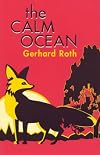
Ascher is a disgraced physician in Austria who, following a malpractice trial, temporarily retreats from the city to a rural area. His wife and child remain in the city, though he keeps in touch with them by phone and they even visit a few times. Ascher feels out of place and uncertain of his identity in this new place. His cautious attempts to assimilate are often thwarted, more by himself than by his new neighbors, who welcome him for the most part, though not without some initial wariness. The plot is minimal, chiefly consisting of Ascher wandering around the countryside and encountering rural folks engaged in various activities. Through this vehicle, we learn about how the local people live, and what struggles they encounter on a daily basis. The area is economically depressed, and most of the lower class people maintain small farms, at least in a subsistence capacity. There is an air of menace to the place, mostly generated by the band of hunters who regularly scour field and forest killing any small animals or birds they encounter. When a rabies scare ensues, their killing grows even bolder and more indiscriminate. Ascher joins them on a number of these outings. His response to the violence is largely nonjudgmental, as it is to most everything he encounters. On his part it is curiosity, if anything, driving his explorations. Ascher needs to make a decision on whether to stay or not, and his wife is pressuring him on this point. His initial reluctance to reveal his show more occupation to his new acquaintances begins to wear off, and perhaps they had begun to suspect, anyway. He could stay and take up his practice or he could return to the city. The tension of this decision hovers throughout the text, though the outcome is not at all the point of the book. The source material is rooted in Roth's own experience living for a time in rural Austria, during which he immersed himself in the culture, and as a result the book carries a feeling of authenticity. Recommended for those curious about the social and political milieu of post-WWII rural Austria. show less
Sanatorium Under the Sign of the Hourglass. Tr from the Polish by Celina Wieniewska. Orig Pub in Poland in 1937 Under Title: Sanatorium Pod Klepsydra by Bruno Schulz

As a whole, I did not find this to be quite as strong as Schulz's first collection, The Street of Crocodiles. The main issue holding back that half star in my rating was the longest story, "Spring," which did not resonate with me. Though it had its moments, overall the premise was too fanciful in a way that kept losing my interest (sorry I can't be more specific than that). However, the remainder of the collection was more in line with what I love about Schulz: dreamy prose highly tuned into nature and the passage of time, peppered with quirky humor and an exquisite pathos. Loosely arranged as a movement through the seasons, both literally and metaphorically, the collection pairs well with Street of Crocodiles, and in fact the two were combined with a few of his uncollected stories into a later Penguin edition, which also includes Schulz's original drawings, providing a wondrous enhancement of his fictional universe. Highly recommended.
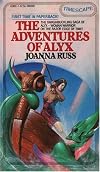
These are early stories by Joanna Russ following her departure from writing traditional patriarchal fiction. They all feature the character of Alyx, a renaissance woman often toeing the line of the law, alternating between roles of thief, mercenary, adventurer-for-hire, etc. The first few lean toward the swashbuckling space pirate type of tale, with various Russ flourishes. She is beginning to challenge gender roles here, but has not gone totally radical yet (though at the time these were published [late 60s] they probably would've been radical enough for some). The first story, at least, was written before Russ said she began identifying as a feminist. 'Picnic on Paradise' approaches novella length and concerns Alyx's time as a agent sent to lead a group of vacationers to safety through harsh conditions on a planet under war. The last story includes Alyx only as a relative of one of the characters and might fall under the genre of 'slipstream' these days. None of the stories are hard sci-fi, though, and the focus is always on the interaction between characters rather than the 'otherworldliness' of the surroundings. Definitely recommended for existing Russ fans, as well as to those newly curious about her legacy as a feminist science fiction writer.
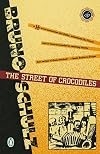
The library's copy is from 1963, the first U.S. edition (though printed in Poland), with thick pages that every time you turn one you think you've paged through at least two. Pages of a bygone era of publishing, these particular pages of which are drenched with dream-prose, yet so full of grey, so many allusions to nothingness. Pages containing the descriptions of an outsider-dreamer, someone on the outside of the circle looking in, with sparkling, incisive cat's eyes, missing nothing yet not so much participating, instead restlessly transforming the carefully observed into a secret world, an entire universe lived in mystery, in wintry nights 'saturated with dreams and complications', where light always struggles against the dark, in sleep and in dreams, life shrinking inside the house and expanding outside it.
Came the yellow days of winter, filled with boredom. The rust-coloured earth was covered with a threadbare, meagre tablecloth of snow full of holes. There was not enough of it for some of the roofs and so they stood there, black and brown, shingle and thatch, arks containing the sooty expanses of attics—coal-black cathedrals, bristling with ribs of rafters, beams and spars—the dark lungs of winter winds.
There are birds, so many birds, for Father loves birds, importing their eggs from the far reaches of the world and hatching himself an entire community, even arranging avian marriages. And outside the house winter brings the crows...
The chimney-sweeps could not show more get rid of the crows which in the evening covered the branches of the trees around the church with living black leaves, then took off, fluttering, and came back, each clinging to its own place on its own branch, only to fly away at dawn in large flocks, like gusts of soot, flakes of dirt, undulating and fantastic, blackening with their insistent crowing the musty-yellow streaks of light.
Schulz's imagery is bold and fantastic; his figurative language splendidly surprises on every page. Coats are 'soaked with wind', horse-drawn cabs drive unattended, trams are made of papier mâché. The jacket copy generously declares Schulz to be 'one of the most remarkably gifted writers to have been produced in Eastern Europe in this century'. (I always find it amusing when a writer is said to have been produced, as if the writer was either a commodity spit out of a machine or a phantom conjured out of thin air by some literary-minded magician.)
I was reminded of Garden, Ashes, with its own dream-prose and Mad Father figure, also set in a pocket of the sprawling former Austro-Hungarian Empire. Schulz's narrator is farther removed, though, more distant from the action, sometimes even stepping into the collective 'we' and inviting the reader to travel along. This can feel jarring, especially when you have already been following, drifting down the dark misty streets the entire time, so that when he slips into 'we' and beckons to you, it's like when someone turns around abruptly, catching you in the act of furtive surveillance.
The city is a character. It is labyrinthine, shifty and shifting, prone to growing and shedding extra streets, rearranging itself at will. The shops are alluring, especially during the Great Season, when the citizenry catches the shopping fever.
The time of the Great Season was approaching. The streets were getting busy. At six in the evening the city became feverish, the houses stood flushed, and people walked about made up in bright colours, illuminated by some interior fire, their eyes shining with a festive fever, beautiful yet evil.
There is humor, not too much of the laugh-out-loud quality, but enough. There is absurdity in spades. The reader enters the dream realm where all natural laws are suspended. We become concerned with the architecture of dreams, how the world inside is built, the framework of the interior, the details of the place. It's a world where certain years 'grow a thirteenth freak month […], a hunchback month, a half-wilted shoot, more tentative than real'. This rogue month usually occurs after August, and it's clearly the fault of 'the senile intemperance of summer, its lustful and belated spurt of vitality', spawning 'crab-days, weed-days, sterile and stupid, added as an afterthought; stunted, empty, useless days—white days, permanently astonished and quite unnecessary. They sprout, irregular and uneven, formless and joined like the fingers of a monster's hand, stumps folded like a fist'.
Father is the de facto leader-guide of this dream realm. Father, at war with the cockroaches, even as he becomes more cockroach-like himself. Father, amateur ornithologist, who with his motley multicolored flock is really just trying to liven things up, to counter winter's deadly boredom. Father, somewhat obsessed with Adela, the lively housekeeper, who is the only one to hold any semblance of power over him. Father, who lives an 'odd and dubious' existence, sometimes a shop owner, sometimes a philosopher, sometimes a scientist, sometimes manic, sometimes worn and despondent.
Meanwhile in the city, on Crocodile Street, 'nothing ever succeeds there, nothing can ever reach a definite conclusion. Gestures hang in the air, movements are prematurely exhausted and cannot overcome a certain point of inertia. […] Nowhere as much as there do we feel threatened by possibilities, shaken by the nearness of fulfilment, pale and faint with the delightful rigidity of realisation. And that is as far as it goes'. This locale is an affront to our narrator, 'a concession of our city to modernity and metropolitan corruption'.
And while down below everything disintegrated and changed into nothingness in that silent panic of quick dissolution, above there grew and endured the alarum of sunset, vibrating with the tinkling of a million tiny bells set in motion by the rise of a million unseen larks flying together into the enormous silvery infinite.
The temptation is to continue pasting huge swaths of the text into this box. I wanted to crawl inside the pages of the book, to pull the words over my head and sleep for hundreds of years, as 'the pages of days turned emptily' and I slipped farther and farther into the dream realm. But even in Schulz's dream realm there are moments of the blissful mundane, a subtle reminder that everyday life can also seem otherworldly, can also transport us to another realm, each moment a potential passageway, if only we can stay in the present and remain open to our surroundings.
In the kitchen, on the floor above, Adela, warm from sleep and with unkempt hair, was grinding coffee in a mill which she pressed to her white bosom, imparting her warmth to the broken beans. The cat was washing itself in the sunlight. show less

In this short novel, a monomaniacal 'scientist' more or less deliberately alienates himself from society in order to focus on his work. This summary should sound familiar to regular readers of Bernhard's fiction. In this case, the man known as Koller has lost a leg to a dog bite for which he received compensation enough to live on, thus allowing him to fully immerse himself in developing his theory of physiognomy. Central to this theory is his experience of regular dining at a low cost restaurant known as the Vienna Public Kitchen (VPK) with a group of men he refers to as 'the cheap-eaters', so-called for their cheap dining habits. As with other Bernhard novels, the 'anti-hero' of sorts, Koller, has an occasional companion (in this case, the narrator) who looks up to him for no clear reason. There is an element of the grotesque to their relationship, which wavers between one-sided admiration and mutual disdain, with a frequently occupied middle ground of mere tolerance from both sides. Koller does not appear to need other humans for personal purposes, but does in fact require their presence for his work. Some of Bernhard's favorite themes find their voice in Koller, as he rails against formal education, parents, and authority in general, as well as provincialism and anti-intellectualism (the latter being a central theme in most of Bernhard's work). This novel bears a strong resemblance to both Yes and The Lime Works, and from a personal standpoint I'd place it between show more those two books, with Yes being my favorite of the three. show less