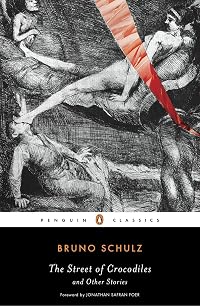
The Street of Crocodiles and Other Stories
by Bruno Schulz
On This Page
Description
"This volume brings together Schulz's complete fiction, including three short stories and his final surviving work, Sanatorium under the sign of the hourglass. Illustrated with Schulz's original drawings, this edition beautifully showcases the distinctive surrealist vision of one of the twentieth century's most gifted and influential writers"--Publisher's website.Tags
Recommendations

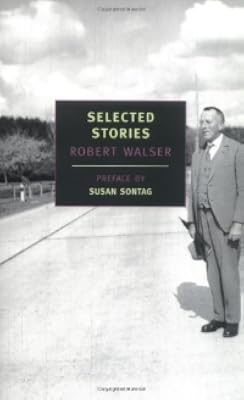
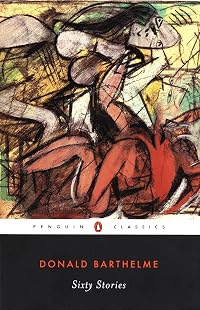
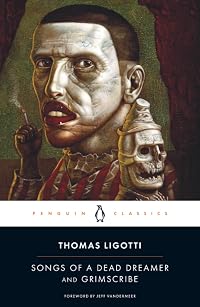
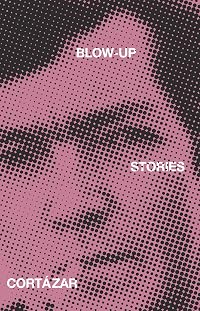
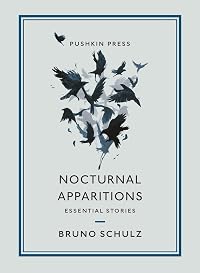
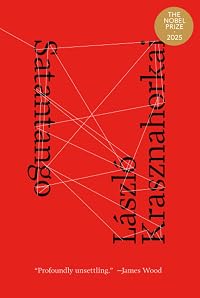
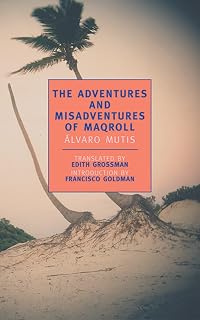
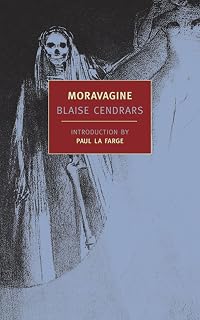
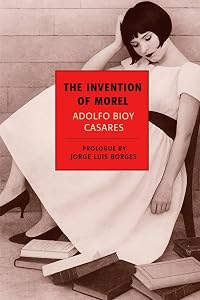
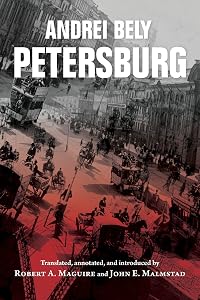
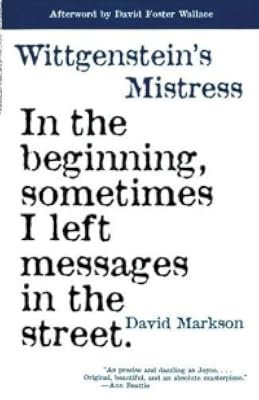

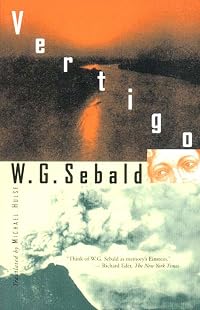




Member Recommendations
Member Reviews
Some passages in "The Street of Crocodiles" are as intensely and sharply described as anything in fiction. Here is a sentence introducing the idea that some years that go on too long, and sprout extra months:
"It sometimes happens that August has passed, and yet the old thick trunk of summer continues by force of habit to produce and from its moldered wood grows those crablike weed days, sterile and stupid, added as an afterthought; stunted, empty, useless days--white days, permanently astonished and quite unnecessary." (p. 83).
By comparison so much fiction is unfocused: even passages of Nabokov can seem slightly dulled by comparison: Nabokov's sense of what sharp writing can be can appear as a kind of dried-up, academic, precious show more version of Schulz. Writers like Banville or Handke (who owes a lot to Schulz) can seem positively soft. Rilke is a closer comparison, and so is Trakl. And there are also passages that Walter Benjamin would have envied, like this one describing a newly modernized society:
"Man was entering under false pretenses the sphere of incredible facilities, acquired too cheaply, below cost price, almost for nothing, and the disproportion between outlay and gain, the obvious fraud on nature, the excessive payment for a trick of genius, had to be offset by self-parody." (p. 99)
A good half of the books I've read this year aren't even _written_ in the sense I mean here: they're just sentences, with no use of language beyond the barely denotative and informational. Franzen's "Freedom" is like that, and most of Énard's "Zone." Schulz is the diametric opposite: no sentence is permitted in his fiction unless it squeezes language until it nearly chokes.
This is one of the things Jonathan Safran Foer likes about Schulz. In his introduction, he he says he thought "The Street of Crocodiles" was a great book, but that he still didn't like it:
"The language was too heightened, the images too magical and precarious, the yearnings too dire, the sense of loss too palpable--everything was comedy or tragedy." (p. ix)
Some of Schulz is surrealism, as when a man is reduced to the rubber tubes used for enemas (!), but most of it is rhapsodic, ecstatic, and visionary -- "magical" in Foer's term. And that is exactly the limitation of the work: it is deeply romantic in an old-fashioned sense, desperate ("dire" is Foer's word) for revelation and salvation, obsessed with ending, decay, corruption, "loss," and their fragile opposites: brilliant flashes of light, comets, strange meaningful patterns, hidden arcane knowledge. "The Street of Crocodiles" is not a novel or a collection of stories, but not for the usual formal reason (that is, not because the sections fail to cohere, as in a novel, or remain distinct from one another, as in a collection of short stories or prose poems), but because Schulz's obsessive scenes keep recurring. Form isn't the point: what matters is getting the transient revelation right. There are inadvertent repetitions, and repetitions he has recognized turned into elaborations. Both sorts are signs that what matters is not the story but the mould, the fever, the impending insanity or petrifaction, the pathos of the overlooked and ruined hallway smeared with grime and spotted with stains. It is a very nineteenth-century vision, made more intense by its twentieth-century setting. In that sense it is typical central European romantic fiction. What it lacks and "desperately" needs is the coldness of Kafka. show less
"It sometimes happens that August has passed, and yet the old thick trunk of summer continues by force of habit to produce and from its moldered wood grows those crablike weed days, sterile and stupid, added as an afterthought; stunted, empty, useless days--white days, permanently astonished and quite unnecessary." (p. 83).
By comparison so much fiction is unfocused: even passages of Nabokov can seem slightly dulled by comparison: Nabokov's sense of what sharp writing can be can appear as a kind of dried-up, academic, precious show more version of Schulz. Writers like Banville or Handke (who owes a lot to Schulz) can seem positively soft. Rilke is a closer comparison, and so is Trakl. And there are also passages that Walter Benjamin would have envied, like this one describing a newly modernized society:
"Man was entering under false pretenses the sphere of incredible facilities, acquired too cheaply, below cost price, almost for nothing, and the disproportion between outlay and gain, the obvious fraud on nature, the excessive payment for a trick of genius, had to be offset by self-parody." (p. 99)
A good half of the books I've read this year aren't even _written_ in the sense I mean here: they're just sentences, with no use of language beyond the barely denotative and informational. Franzen's "Freedom" is like that, and most of Énard's "Zone." Schulz is the diametric opposite: no sentence is permitted in his fiction unless it squeezes language until it nearly chokes.
This is one of the things Jonathan Safran Foer likes about Schulz. In his introduction, he he says he thought "The Street of Crocodiles" was a great book, but that he still didn't like it:
"The language was too heightened, the images too magical and precarious, the yearnings too dire, the sense of loss too palpable--everything was comedy or tragedy." (p. ix)
Some of Schulz is surrealism, as when a man is reduced to the rubber tubes used for enemas (!), but most of it is rhapsodic, ecstatic, and visionary -- "magical" in Foer's term. And that is exactly the limitation of the work: it is deeply romantic in an old-fashioned sense, desperate ("dire" is Foer's word) for revelation and salvation, obsessed with ending, decay, corruption, "loss," and their fragile opposites: brilliant flashes of light, comets, strange meaningful patterns, hidden arcane knowledge. "The Street of Crocodiles" is not a novel or a collection of stories, but not for the usual formal reason (that is, not because the sections fail to cohere, as in a novel, or remain distinct from one another, as in a collection of short stories or prose poems), but because Schulz's obsessive scenes keep recurring. Form isn't the point: what matters is getting the transient revelation right. There are inadvertent repetitions, and repetitions he has recognized turned into elaborations. Both sorts are signs that what matters is not the story but the mould, the fever, the impending insanity or petrifaction, the pathos of the overlooked and ruined hallway smeared with grime and spotted with stains. It is a very nineteenth-century vision, made more intense by its twentieth-century setting. In that sense it is typical central European romantic fiction. What it lacks and "desperately" needs is the coldness of Kafka. show less
Bruno Schulz spent most of his life as a school art teacher in the Galician town of Drohobycz (now Drohobych, Ukraine). He published two collections of Polish short stories in the 1930s, as well as a few uncollected stories, all included in this Penguin Classics collection, together with many of Schulz's own illustrations. His other unpublished manuscripts, said to have included a novel, were all lost during the war, but that small body of published work has been enough to make him an influential writer. Schulz was murdered by a Nazi officer in 1942.
I picked this up rather expecting quaint little stories of small-town life in Mitteleuropa, but it turns out to be something quite different. Schulz was clearly heavily influenced by (at show more least) Kafka, Thomas Mann, and the surrealists, and his stories, although they usually start out from the bourgeois domesticity of the Schulz family in Drohobycz ca. 1900, invariably branch away from realism into dream worlds in which the narrator's draper father becomes a heroic figure locked in a quixotic struggle against the constraints of sanity (on occasion turning into an arthropod or being sent to a Magic-Mountainish sanatorium), the maidservant Adela turns into every kind of female archetype, the narrator seems to switch constantly between adult, adolescent and small child (in one story he is an old-age pensioner who enrols in primary school), and the town itself shifts shape in all sorts of unpredictable ways.
This all comes with inventive (over-)rich visual descriptions, often seeming to borrow techniques from the cinema of the times, and all kinds of dreamlike category-changes, when seasons or places or trains develop personalities, waxwork figures and tailor's dummies come to life, and members of the Hapsburg family turn up uninvited.
Very strange and fascinating, definitely something I'm going to have to re-read soon.
But, once again, this makes me sad about what has happened to Penguin Classics. They still have the smart black cover designs I remember from forty years ago, but the insides have turned into a mush of smudgy ink crookedly printed on translucent paper that is creased before you even get the book home from the shop. What are they thinking? show less
I picked this up rather expecting quaint little stories of small-town life in Mitteleuropa, but it turns out to be something quite different. Schulz was clearly heavily influenced by (at show more least) Kafka, Thomas Mann, and the surrealists, and his stories, although they usually start out from the bourgeois domesticity of the Schulz family in Drohobycz ca. 1900, invariably branch away from realism into dream worlds in which the narrator's draper father becomes a heroic figure locked in a quixotic struggle against the constraints of sanity (on occasion turning into an arthropod or being sent to a Magic-Mountainish sanatorium), the maidservant Adela turns into every kind of female archetype, the narrator seems to switch constantly between adult, adolescent and small child (in one story he is an old-age pensioner who enrols in primary school), and the town itself shifts shape in all sorts of unpredictable ways.
This all comes with inventive (over-)rich visual descriptions, often seeming to borrow techniques from the cinema of the times, and all kinds of dreamlike category-changes, when seasons or places or trains develop personalities, waxwork figures and tailor's dummies come to life, and members of the Hapsburg family turn up uninvited.
Very strange and fascinating, definitely something I'm going to have to re-read soon.
But, once again, this makes me sad about what has happened to Penguin Classics. They still have the smart black cover designs I remember from forty years ago, but the insides have turned into a mush of smudgy ink crookedly printed on translucent paper that is creased before you even get the book home from the shop. What are they thinking? show less
Here are two remarkable collections of stories from the interwar period by the increasingly admired if politically appropriated Bruno Schulz, a Galician Jew murdered by a Nazi during the occupation.
The introduction is worth reading and it stops me having to deal here with the issue of cultural appropriation for political purposes - the sad fate of many dead East Europeans.
Poland between the wars had a rich literary and cultural life which always was part of the European mainstream.
Schulz himself periodically reminds us of the sclerotic Austro-Hungarian background to the Galician component of this culture.
But these stories are not interesting because of interwar literary ambition, the movements of the day and certainly not for the show more overlaying of subsequent history on his work.
They are interesting for his remarkable ability to evoke altered states of consciousness. This is not the fantasy world, however, of latter day visionaries, all Ayahuasca and chemicals.
Schulz offers deep introspective investigation of states of consciousness available to all but usually dismissed – the imaginative, the hypnagogic, imagined memory, dream states, fantasy …
Schulz is hard to pin down (as are dreams). His is a rich and evocative language but one grounded in the detritus of the world
We see his literary precursors in dialectic with an esoteric Jewish perspective on the world and an amazing ability to build narratives out of imaginative memory and dream states.
He is not flawless. Sometimes, his writing is too obviously crafted for the salons and literary magazines of Warsaw. Sometimes he is a little boring. Sometimes a little rhetorical.
But at his best, which is the bulk of the work, the man is a genius
Whether exploring the same phenomena as Sartre did in ‘Nausea’ or Kafka did in ‘Metamorphosis' or creating half-dreamed narratives in which you lose yourself as if you were present
... or exploring family dynamics elliptically and magically. Family dynamics are not unimportant.
He creates a small closed mythos from memory around the archetypal figure (to him) of an all-present absurd incomprehensible but clearly loved Father.
There is a cast of minor characters who recur in different forms in a comfortable but unstable bourgeois milieu.
In many ways, he might be called the fantastic poet of the middle classes in troubled times with nowhere to go but inwards as the world moves quickly around them.
He is not a gloomy but a thoughtful writer. I would not even say that he is tormented – this torment is imposed on him, I think, by historical accident.
He is just a man who sees the value of an imagined memory, and of fantasy and the imagination as separate but equal partners in existence.
The imagination is thus not a mechanism for denial but one related to survival and to psychological development.
There is a story of perfect happy wish fulfillment and one of mad, passionate adolescent love with every romantic trope thrown up to the point of heroic sacrifice.
The most remarkable and anthologized of all the stories is ‘Sanatorium Under The Sign of the Hour Glass’.
This particular masterpiece bears re-reading more than once because it is a dream state about death and the father that is filled with a quiet love.
It is about grieving too – and about the impositions of the world and fear on the process. It is complex and beautiful. A great book like this moves neurons around.
Schulz found a unique means not of expressing anxiety but of expressing a broader range of emotional undertones to ‘ordinary life’ that exist in most of us and which are always understood tangentially.
The writing process is a rational one of textual compilation so literature often works against true expression of a liminal zone between consciousness and loss of consciousness.
It is often presented in esoteric, magical, spiritual, neurotic, irrational or instinctual terms. Poetry, ritual, art and music have often been more effective vehicles than narrative literature.
Schulz found a narrative language for that liminal state and it has influenced weird and fantasy fiction for that reason ever since. I see Ligotti’s puppet humanity fully outlined in Schulz’s tailors’ dummies.
The murder of Schulz was a tragedy at many levels but the work he left behind, with his accompanying somewhat sinister and vital illustrations, show a final flowering of Middle European Symbolism.
This Penguin Edition is highly recommended. show less
The introduction is worth reading and it stops me having to deal here with the issue of cultural appropriation for political purposes - the sad fate of many dead East Europeans.
Poland between the wars had a rich literary and cultural life which always was part of the European mainstream.
Schulz himself periodically reminds us of the sclerotic Austro-Hungarian background to the Galician component of this culture.
But these stories are not interesting because of interwar literary ambition, the movements of the day and certainly not for the show more overlaying of subsequent history on his work.
They are interesting for his remarkable ability to evoke altered states of consciousness. This is not the fantasy world, however, of latter day visionaries, all Ayahuasca and chemicals.
Schulz offers deep introspective investigation of states of consciousness available to all but usually dismissed – the imaginative, the hypnagogic, imagined memory, dream states, fantasy …
Schulz is hard to pin down (as are dreams). His is a rich and evocative language but one grounded in the detritus of the world
We see his literary precursors in dialectic with an esoteric Jewish perspective on the world and an amazing ability to build narratives out of imaginative memory and dream states.
He is not flawless. Sometimes, his writing is too obviously crafted for the salons and literary magazines of Warsaw. Sometimes he is a little boring. Sometimes a little rhetorical.
But at his best, which is the bulk of the work, the man is a genius
Whether exploring the same phenomena as Sartre did in ‘Nausea’ or Kafka did in ‘Metamorphosis' or creating half-dreamed narratives in which you lose yourself as if you were present
... or exploring family dynamics elliptically and magically. Family dynamics are not unimportant.
He creates a small closed mythos from memory around the archetypal figure (to him) of an all-present absurd incomprehensible but clearly loved Father.
There is a cast of minor characters who recur in different forms in a comfortable but unstable bourgeois milieu.
In many ways, he might be called the fantastic poet of the middle classes in troubled times with nowhere to go but inwards as the world moves quickly around them.
He is not a gloomy but a thoughtful writer. I would not even say that he is tormented – this torment is imposed on him, I think, by historical accident.
He is just a man who sees the value of an imagined memory, and of fantasy and the imagination as separate but equal partners in existence.
The imagination is thus not a mechanism for denial but one related to survival and to psychological development.
There is a story of perfect happy wish fulfillment and one of mad, passionate adolescent love with every romantic trope thrown up to the point of heroic sacrifice.
The most remarkable and anthologized of all the stories is ‘Sanatorium Under The Sign of the Hour Glass’.
This particular masterpiece bears re-reading more than once because it is a dream state about death and the father that is filled with a quiet love.
It is about grieving too – and about the impositions of the world and fear on the process. It is complex and beautiful. A great book like this moves neurons around.
Schulz found a unique means not of expressing anxiety but of expressing a broader range of emotional undertones to ‘ordinary life’ that exist in most of us and which are always understood tangentially.
The writing process is a rational one of textual compilation so literature often works against true expression of a liminal zone between consciousness and loss of consciousness.
It is often presented in esoteric, magical, spiritual, neurotic, irrational or instinctual terms. Poetry, ritual, art and music have often been more effective vehicles than narrative literature.
Schulz found a narrative language for that liminal state and it has influenced weird and fantasy fiction for that reason ever since. I see Ligotti’s puppet humanity fully outlined in Schulz’s tailors’ dummies.
The murder of Schulz was a tragedy at many levels but the work he left behind, with his accompanying somewhat sinister and vital illustrations, show a final flowering of Middle European Symbolism.
This Penguin Edition is highly recommended. show less
This book has been waiting on my shelf for nearly a year, and in retrospect reading two thirds of it in a day was probably a bad idea, as it is dense, allusive and sometimes difficult to follow. For all that, it has moments of brilliance that made me understand why Schulz is revered in Poland, not least by Olga Tokarczuk, author of the wonderful [b:Flights|36885304|Flights|Olga Tokarczuk|https://images.gr-assets.com/books/1512417961s/36885304.jpg|2014747].
Schulz was a Polish Jew shot by the Nazis in 1941. His hometown Drohobycz has a complicated history and a mixed population - in Schulz's lifetime it moved from the Austro-Hungarian empire to independent Poland to Russian and then German occupation, since then it has become part of show more Western Ukraine via the USSR. This collection brings together his two published collections of fiction and three other stories.
Many of the stories concern his alter ego Joseph, who lives with his parents in a rambling apartment in the same building as his father's tailors' shop. The father is something of a dreamer, and in Schulz's surreal dreamworld undergoes Kafkaesque transformations into insects (so it didn't surprise me that Schulz translated Kafka into Polish) and several deaths. The servant girl Adela plays a part in many of the stories and seems to have more influence in the household than the mother.
The stories are full of symbolism, allusions and surreal dream logic, and I enjoyed the wildest flights of fancy most. I suspect that this is a book that would reveal more on rereading. show less
Schulz was a Polish Jew shot by the Nazis in 1941. His hometown Drohobycz has a complicated history and a mixed population - in Schulz's lifetime it moved from the Austro-Hungarian empire to independent Poland to Russian and then German occupation, since then it has become part of show more Western Ukraine via the USSR. This collection brings together his two published collections of fiction and three other stories.
Many of the stories concern his alter ego Joseph, who lives with his parents in a rambling apartment in the same building as his father's tailors' shop. The father is something of a dreamer, and in Schulz's surreal dreamworld undergoes Kafkaesque transformations into insects (so it didn't surprise me that Schulz translated Kafka into Polish) and several deaths. The servant girl Adela plays a part in many of the stories and seems to have more influence in the household than the mother.
The stories are full of symbolism, allusions and surreal dream logic, and I enjoyed the wildest flights of fancy most. I suspect that this is a book that would reveal more on rereading. show less
I stammer and hedge writing a review for this book in much the same way I did before other great artists of the short story, namely I. B. Singer’s “Gimpel the Fool and Other Stories” and Angela Carter’s “The Bloody Chamber and Other Stories.” I read this over a period of time which was much too long for any short story collection – several weeks. Because of this, I lost the sense of the stories as a whole, even though there are themes which run throughout an allow it to resemble something much closer to a novel.
The stories are weird, wonderful, dream-like, and fantastical. They center around a boy, his parents, especially his eccentric bird-loving father who sells textiles out of his house and who occasionally resembles show more a mystagogue crossed with an archimandrite crossed with a heresiarch, his sister Adela and various other family members that make periodic appearances throughout. If you follow the action of the stories in order, I think the father turns into a bird at least once, but apparently recovers his human form soon thereafter. Come to think of it, the stories themselves seem a little reminiscent of Singer and Carter themselves. There’s that fantastic element that isn’t quite magical realism.
Schulz is fascinated with seasons; five of the stories either have the word “season” in them or name a particular season, and he describes them with great enthusiasm. In fact, the only way to read them might be a couple at a time over a period of several days, not at long sittings. The language is too rich and there really is such a thing as too much of a good thing. The stories are littered with sentences like this, just to give you a rough idea: “You know that moment when summer, so recently buoyant and vigorous, universal summer hugging to itself all things imaginable – people, events, objects – one day sustains a barely perceptible injury. The sun still blazes dense and copious, the landscape still wields the classical magisterial flourish bequeathed to this season by the genius of Poussin, but, strange to report, we return from a morning stroll oddly weary and jejune…” (“Autumn,” p. 323). And another: “Everyone knows in a run of normal uneventful years that great eccentric, Time, begets sometimes other years, different, prodigal years which – like a sixth, smallest toe – grow a thirteenth freak month. We use the word ‘freak’ deliberately, because the thirteenth month only rarely reaches maturity, and like a child conceived late in its mother’s life, it lags behind in growth; it is a hunchback month, a half-witted shoot, more tentative than real.”
The language is obviously beautiful, full of a kind of Kabbalistic essence of the things hidden beyond the limits of perceptual reality, especially in the character of the Father. But it can strike you sometimes as too much of a good thing. show less
The stories are weird, wonderful, dream-like, and fantastical. They center around a boy, his parents, especially his eccentric bird-loving father who sells textiles out of his house and who occasionally resembles show more a mystagogue crossed with an archimandrite crossed with a heresiarch, his sister Adela and various other family members that make periodic appearances throughout. If you follow the action of the stories in order, I think the father turns into a bird at least once, but apparently recovers his human form soon thereafter. Come to think of it, the stories themselves seem a little reminiscent of Singer and Carter themselves. There’s that fantastic element that isn’t quite magical realism.
Schulz is fascinated with seasons; five of the stories either have the word “season” in them or name a particular season, and he describes them with great enthusiasm. In fact, the only way to read them might be a couple at a time over a period of several days, not at long sittings. The language is too rich and there really is such a thing as too much of a good thing. The stories are littered with sentences like this, just to give you a rough idea: “You know that moment when summer, so recently buoyant and vigorous, universal summer hugging to itself all things imaginable – people, events, objects – one day sustains a barely perceptible injury. The sun still blazes dense and copious, the landscape still wields the classical magisterial flourish bequeathed to this season by the genius of Poussin, but, strange to report, we return from a morning stroll oddly weary and jejune…” (“Autumn,” p. 323). And another: “Everyone knows in a run of normal uneventful years that great eccentric, Time, begets sometimes other years, different, prodigal years which – like a sixth, smallest toe – grow a thirteenth freak month. We use the word ‘freak’ deliberately, because the thirteenth month only rarely reaches maturity, and like a child conceived late in its mother’s life, it lags behind in growth; it is a hunchback month, a half-witted shoot, more tentative than real.”
The language is obviously beautiful, full of a kind of Kabbalistic essence of the things hidden beyond the limits of perceptual reality, especially in the character of the Father. But it can strike you sometimes as too much of a good thing. show less
If Bruno Schulz were a painter he would be an impressionist. His ability to create evocative imagery should take a back seat to no one. And in this sense, he is a writer's writer. Anyone who enjoys digging deep into the writer's style, the way he frames his sentences and paragraphs, how he structures his stories, will find a fertile field for exploration in his work.
Schulz is a one-of-a-kind writer, or at least he was when his work was first published in the 1930s. The writer he most resembles, according to Italo Calvino — and I would agree — is Felisberto Hernandez, the rather obscure Uruguayan author of Piano Stories and much more that is not available in English translation. I actually prefer Hernandez because his stories — show more although not devoid of flights of fancy — have more of a foundation in reality and certainly more variety. Francine Prose has characterized them best:
To read writers like Bruno Schulz and Felisberto Hernandez is less like hearing about a dream than like actually having one: familiar notions of causality no longer apply, yet the sequence of events seems correct, as it does in dreams even when people and objects behave in unlikely ways.
Schulz seems to revel in people "behaving in unlikely ways." Almost all of his stories begin by setting a scene and skillfully drawing the reader in. But at the same time almost all of these same stories in the end have characters acting so strangely, the writing becomes so ambiguous, that one is never quite sure what has happened. The ambiguity actually becomes burdensome after a while when story after story has the same pattern: evocative scene, quirky characters, bizarre denouements. It is not the ambiguity per se that becomes irritating, it is that it almost becomes a shtick — or even a tic!
The volume at hand contains all of Schulz's writings: The Street of Crocodiles, Sanatorium under the Sign of the Hourglass, and three other stories. The first two contain thirteen stories each, all related, but when all of the twenty-nine stories are read in succession they all relate to the same familiar milieu, and the reader comes away with impressions and nothing more. I can really tell you nothing meaningful about what transpires here other than repeated descents into madness.
Bottom line, I admire very much the poetic quality of Schulz's style, but the predictable sameness of these stories that start out promisingly enough but devolve into a fog at best or madness at worst is in the end rather disappointing. There isn't much of a takeaway here. show less
Schulz is a one-of-a-kind writer, or at least he was when his work was first published in the 1930s. The writer he most resembles, according to Italo Calvino — and I would agree — is Felisberto Hernandez, the rather obscure Uruguayan author of Piano Stories and much more that is not available in English translation. I actually prefer Hernandez because his stories — show more although not devoid of flights of fancy — have more of a foundation in reality and certainly more variety. Francine Prose has characterized them best:
To read writers like Bruno Schulz and Felisberto Hernandez is less like hearing about a dream than like actually having one: familiar notions of causality no longer apply, yet the sequence of events seems correct, as it does in dreams even when people and objects behave in unlikely ways.
Schulz seems to revel in people "behaving in unlikely ways." Almost all of his stories begin by setting a scene and skillfully drawing the reader in. But at the same time almost all of these same stories in the end have characters acting so strangely, the writing becomes so ambiguous, that one is never quite sure what has happened. The ambiguity actually becomes burdensome after a while when story after story has the same pattern: evocative scene, quirky characters, bizarre denouements. It is not the ambiguity per se that becomes irritating, it is that it almost becomes a shtick — or even a tic!
The volume at hand contains all of Schulz's writings: The Street of Crocodiles, Sanatorium under the Sign of the Hourglass, and three other stories. The first two contain thirteen stories each, all related, but when all of the twenty-nine stories are read in succession they all relate to the same familiar milieu, and the reader comes away with impressions and nothing more. I can really tell you nothing meaningful about what transpires here other than repeated descents into madness.
Bottom line, I admire very much the poetic quality of Schulz's style, but the predictable sameness of these stories that start out promisingly enough but devolve into a fog at best or madness at worst is in the end rather disappointing. There isn't much of a takeaway here. show less
This is a book I picked up at the description on the back. I knew nothing of the author, topics, etc. And I'm glad I did. I wasn't expecting much, but this is a book that sits on the edge of magical realism, surrealism, and life. The original language is Polish, and I can't compare the translation, but this English version, translated by Celina Wieniewska, is magical. Descriptions of light is incredible, and it manages to capture the magicalness of changes of seasons, weather, time. As always in a collection, some stories are better than others.
The introduction in this Penguin Classic edition adds to the story. Schulz led a fairly quiet life, that was cut short by a Nazi Officer.
I highly recommend this volume of stories.
The introduction in this Penguin Classic edition adds to the story. Schulz led a fairly quiet life, that was cut short by a Nazi Officer.
I highly recommend this volume of stories.
Members
- Recently Added By
Lists

Weird and Weirder Fiction
270 works; 35 members
Author Information

46+ Works 3,925 Members
Some Editions
Awards and Honors
Awards
Series
Belongs to Publisher Series
Work Relationships
Contains
Common Knowledge
- Canonical title
- The Street of Crocodiles and Other Stories
- Original publication date
- 1934 (The Street of Crocodiles) (The Street of Crocodiles); 1937 (Sanatorium Under the Sign of the Hourglass) (Sanatorium Under the Sign of the Hourglass)
- People/Characters
- Father (Jacob); Adela; Mother
- First words
- In July my father went to take the waters and left me, with my mother and elder brother, a prey to the blinding white heat of the summer days.
- Last words
- (Click to show. Warning: May contain spoilers.)Still dressed, sitting on the bed, I silently take Eliza's hand and hold it awhile in mine.
- Original language
- Polish
- Disambiguation notice
- The Street of Crocodiles (0140186255 etc.) is a collection of short stories but contains different stories that The Street of Crocodiles and Other Stories (0143105140 etc.), most notably the latter includes Sanatorium Under t... (show all)he Sign of the Hourglass. Please do not combine.
Classifications
Statistics
- Members
- 748
- Popularity
- 37,641
- Reviews
- 10
- Rating
- (4.32)
- Languages
- English, German
- Media
- Paper
- ISBNs
- 1
- ASINs
- 1