
Donald Barthelme (1931–1989)
Author of Sixty Stories
About the Author
Donald Barthelme was born on April 7, 1931, and was one of the major U.S. short story writers and novelists of the late twentieth century. Barthelme satirized American life. Born in Philadelphia, Barthelme spent part of his early life in Houston, Texas, and began to write fiction while working as a show more journalist, director of an art museum and university publicist. These occupations became fuel for his creative fire. His arsenal of techniques included parodies of television shows, radio plays and recipes, long and elaborate metaphors, complex dream sequences, and a break-neck narrative pace. After the publication of his first collection, Come Back Dr. Caligari (1964), Barthelme became a full-time writer of short stories and novels. The latter included Snow White (1967), The Dead Father (1975), and Paradise (1986). Barthelme also published three more short story collections, 60 Stories (1981), Overnight to Many Distant Cities (1983), and 40 Stories (1987). Barthelme died of cancer in 1989. (Bowker Author Biography) show less
Image credit: Photo Courtesy of Special Collections, University of Houston Libraries
Works by Donald Barthelme
The Teachings of Don B.: Satires, Parodies, Fables, Illustrated Stories, and Plays of Donald Barthelme (1992) 231 copies, 2 reviews
The Genius {short story} 2 copies
روی پله های کنسرواتوار 1 copy
Paraíso (Sleeples nights) 1 copy
The Balloon 1 copy
Views of My Father Weeping 1 copy
No title 1 copy
Barthelme Donald 1 copy
Tavatud kombed, koletud teod 1 copy
Glass Mountain {short story} 1 copy
VUELVE, Dr CALIGARI 1 copy
Associated Works
The Story and Its Writer: An Introduction to Short Fiction (1976) — Contributor — 1,218 copies, 3 reviews
Fierce Pajamas: An Anthology of Humor Writing from The New Yorker (2001) — Contributor — 790 copies, 5 reviews
The Scribner Anthology of Contemporary Short Fiction: Fifty North American American Stories Since 1970 (1999) — Contributor — 586 copies, 4 reviews
The World of the Short Story: A 20th Century Collection (1986) — Contributor — 513 copies, 4 reviews
You've Got to Read This: Contemporary American Writers Introduce Stories that Held Them in Awe (1994) — Contributor — 414 copies, 3 reviews
The Art of the Tale: An International Anthology of Short Stories (1986) — Contributor — 381 copies, 3 reviews
The 50 Funniest American Writers: An Anthology of Humor from Mark Twain to The Onion (2011) — Contributor — 287 copies, 3 reviews
Object Lessons: The Paris Review Presents the Art of the Short Story (2012) — Contributor — 255 copies, 9 reviews
The Vintage Book of Amnesia: An Anthology of Writing on the Subject of Memory Loss (2000) — Contributor — 228 copies, 2 reviews
The Graphic Canon, Vol. 3: From Heart of Darkness to Hemingway to Infinite Jest (2013) — Contributor — 162 copies, 1 review
Fakes: An Anthology of Pseudo-Interviews, Faux-Lectures, Quasi-Letters, "Found" Texts, and Other Fraudulent Artifacts (2012) — Contributor — 85 copies, 4 reviews
Selected Shorts: American Classics (Selected Shorts: A Celebration of the Short Story) (2010) — Contributor — 28 copies, 6 reviews
Selected Shorts: A Touch of Magic (Selected Shorts: A Celebration of the Short Story) (2009) — Contributor — 25 copies, 4 reviews
Fifty Years of the American Short Story from the O. Henry Awards 1919-1970 (1970) — Contributor — 17 copies, 1 review
Fifty Years of the American Short Story from the O. Henry Awards 1919-1970, Volume 1 (1970) — Contributor — 3 copies
Fiction, Volume 1, Number 1 — Contributor — 1 copy
Tagged
Common Knowledge
- Canonical name
- Barthelme, Donald
- Legal name
- Barthelme, Donald, Jr.
- Birthdate
- 1931-04-07
- Date of death
- 1989-07-23
- Gender
- male
- Education
- University of Houston
- Occupations
- curator
writer
author - Organizations
- PEN
Authors Guild
Houston Museum of Contemporary Art
Houston Post
United States Army - Awards and honors
- American Academy of Arts and Letters (Literature, 1978)
National Book Award (1972)
Morton Dauwen Zabel Award (1972)
Jesse H Jones Award (1976)
Rea Award for the Short Story (1988)
PEN/Faulkner Award (1982) (show all 8)
Los Angeles Times Book Prize (1982)
Scholastic Writing Award in Short Story (1949) - Relationships
- Barthelme, Frederick (brother)
Barthelme, Steven (brother) - Short biography
- Donald Barthelme was born in 1931 in Philadelphia. He was a longtime contributor to The New Yorker, winner of a National Book Award, a director of PEN and the Author's Guild, and a member of the American Academy of Arts and Letters. His sixteen books -- including Snow White, The Dead Father, and City Life -- substantially redefined American short fiction for our time. In 1972 he won the National Book Award for children's literature for The Slightly Irregular Fire Engine of the Hithering Thithering Djinn. He died in 1989.
- Cause of death
- throat cancer
- Nationality
- USA
- Birthplace
- Philadelphia, Pennsylvania, USA
- Places of residence
- New York, New York, USA
Houston, Texas, USA - Place of death
- Houston, Texas, USA
- Associated Place (for map)
- USA
Members
Reviews

Donald Barthelme was chiefly known as a writer of short stories, many of which appeared in the New Yorker. He was clearly very well suited for that role. The stories here show him using language with great precision and considerable originality. If you see anything resembling a cliché lying around, there’s a very strong chance that it’s doing something unexpected and very purposeful.
But we’re not in classic short story country here: when you zoom out beyond sentence level, it’s show more quickly apparent that this is full-on rule-breaking postmodernism, often with more than a hint of the surreal. Participants in dialogues swap roles in midstream or talk completely at cross-purposes, text is unexpectedly interrupted by vintage magazine illustrations or doctored architectural drawings, ordinary domestic or social situations are turned on their heads, and there is endless experimentation with structures and forms. At one point we get a parody of Goethe’s Table-talk, at another an epistolary story emerges from the Letters to the Editor of an Anglo-Italian art journal. And in the final story in the collection, “January”, a journalist interviews a theologian who expresses serious doubts about the utility of teaching or academic study, and we’re obviously meant to extend this to any kind of work in the arts.
But we’re not in classic short story country here: when you zoom out beyond sentence level, it’s show more quickly apparent that this is full-on rule-breaking postmodernism, often with more than a hint of the surreal. Participants in dialogues swap roles in midstream or talk completely at cross-purposes, text is unexpectedly interrupted by vintage magazine illustrations or doctored architectural drawings, ordinary domestic or social situations are turned on their heads, and there is endless experimentation with structures and forms. At one point we get a parody of Goethe’s Table-talk, at another an epistolary story emerges from the Letters to the Editor of an Anglo-Italian art journal. And in the final story in the collection, “January”, a journalist interviews a theologian who expresses serious doubts about the utility of teaching or academic study, and we’re obviously meant to extend this to any kind of work in the arts.
The point of my career is perhaps how little I achieved. We speak of someone as having had "a long career" and that's usually taken to be admiring, but what if it's thirty-five years of persistence in error? I don't know what value to place on what I've done, perhaps none at all is right. If I'd done something with soybeans, been able to increase the yield of an acre of soybeans, then I'd know I'd done something. I can't say that.show less

Donald Barthelme has been a mystery to me. Heard the name, but couldn't connect it to any specific book title. Had an impression he was difficult (like Pynchon or Joyce). But still I filed a mental note of a book titled [The King], which was enthusiastically endorsed on some list or other. I found a used copy and read it immediately.
I'm very glad I did. It is excellent.
The King of the title is Arthur, and in Barthelme's novel—his last; it was published after his death in 1989—he still show more reigns over England, despite it being 1939. Guinevere is still queen, Launcelot is still the knight in shining armor, still cuckolding his king (but he's no longer alone in that). Arthur's longevity is…hmmmm…a mystery.
Despite his exceptional life span, despite heading a government that travels on horseback, despite leading a fighting force of "knights" wearing armor and armed with swords and lances, Arthur is in command of the 20th century's conflicts and problems. When disgruntled railway workers weld a locomotive to the rails on the line between Ipswich and Stowmarket (so nothing can move on that line), Arthur personally accesses the situation with his advisors.
Arthur is capable of unequivocal stands, making them without doubt or indecision.
The discussion turns practical. How long will it take to build? How would it be used? "Perhaps a demonstration…Do Essen or Kiel or one of the smaller cities."
Read the book. It's short, it's fun. I have spoken. show less
I'm very glad I did. It is excellent.
The King of the title is Arthur, and in Barthelme's novel—his last; it was published after his death in 1989—he still show more reigns over England, despite it being 1939. Guinevere is still queen, Launcelot is still the knight in shining armor, still cuckolding his king (but he's no longer alone in that). Arthur's longevity is…hmmmm…a mystery.
"Tell me something," Arthur said. "Why have I lived so long!"
"God's grace, Merlin's magic, adroitness in battle, sturdy red and white corpuscles, a great heart—What can I say?"
"You don't think it's been a bit…protracted? My life?"
"It's run on a few centuries beyond the normal span, that's true. But there are exceptional individuals in all periods of history."
Despite his exceptional life span, despite heading a government that travels on horseback, despite leading a fighting force of "knights" wearing armor and armed with swords and lances, Arthur is in command of the 20th century's conflicts and problems. When disgruntled railway workers weld a locomotive to the rails on the line between Ipswich and Stowmarket (so nothing can move on that line), Arthur personally accesses the situation with his advisors.
"How does one unweld a weld?" Arthur asked. "Chip at it with a crowbar?"
"We could have them take up the track," said Sir Lamorak, "fore and aft of the engine. Then that section could be slid to one side and new rails laid. But you'd have to have a mighty powerful something to move it with."
"They could lay track perpendicular to the existing track and bring in another engine on that track," said Sir Kay, "but it would take donkey's years."
"If Merlin were still in business he could mag-ick it away," said the king. " 'Avaunt!' he'd say, and the thing would be done. I'm afraid I never adequately appreciated Merlin." He paused. "Big bastard, isn't it."
Further inspection of the quite large locomotive.
"I say we blast," said Sir Helin.
"We could have the sappers tunnel beneath it," said Sir Lamorak, "and when the hole is big enough, cut the rails and the engine would fall into the pit. Then we fill in around it and lay new track. What think you?"
"If we could melt it somehow," replied Sir Kay. "Build a sort of furnace sort of thing around it—"
"Jack it up," said Arthur. "Remove the wheels and attached track. Replace wheels. Replace track. Lower engine, and there you have it."
"What a good idea," said Sir Lamorak. "Why didn't I think of that?"
"A perfect solution," Sir Kay said. "One understands, at moments like this, why you are king, sire. Your idea is fifty times better than any of our ideas."
Arthur is capable of unequivocal stands, making them without doubt or indecision.
Launcelot, Arthur, Sir Kay, the Blue Knight, and Sir Roger de Ibadan in conference.
"These three equations, taken together, will enable us to build a bomb more powerful than any the world has ever known," said Sir Roger. "When Launcelot showed me all three, I recognized instantly that they were either alchemical transmutations of the most important kind or the culmination of some Scandinavian work in atomic fission I've been following."
"Or both," said the Blue Knight.
"Or both," Sir Roger agreed. "Either way, it's the Grail you chaps have been seeking. The big boom."
The discussion turns practical. How long will it take to build? How would it be used? "Perhaps a demonstration…Do Essen or Kiel or one of the smaller cities."
"You understand," said Sir Roger, "that once you let go of this, the city is gone. Totally…everything within ten miles or so of the point of impact goes…"
"Isn't that a bit bloodthirsty?"
"That's the business we're in, at the moment."
Arthur took the three slips of paper and tore them to bits.
"We won't do it," he said. "I cannot allow it. It's not the way we wage war…The essence of our calling is right behavior, and this false Grail is not a knightly weapon. I have spoken."
Read the book. It's short, it's fun. I have spoken. show less

The new frontier of postmodern Paraguay requires a fearless explorer to not only sport a safari hat, beard, custom-fit safari shirt and close-fitting khaki pants but also be well-versed in the latest postmodern writings of Jean-François Lyotard, Jacques Derrida, David Foster Wallace and, of course, Donald Barthelme. Those Spanish speaking natives damn well better be ready!
Paraguay is a Barthelme snapper told in fourteen specifically labeled brief chapters, a short-story I included as part show more of a previous review but I truly love it and think it deserves its own write-up. So, in keeping with the adventurous nature of the story, below are a batch of my own markers as we follow our bold, gusty pathfinder roaming among the uncharted vistas of postmodern, postcolonial New Paraguay.
Stranger in a Strange Land: “At the summit there is a cairn on which each man threw a stone, and here it is customary to give payment to the coolies. I paid each man his agreed-upon wage, and alone, began the descent.” Not on a map, not in South America, our narrator had better be alert as he embarks solo into a country never before glimpsed by such a lover of the fresh and the new. Although we are very much rooted in the world of the postmodern, he still refers to his workers as “coolies” – such a racist, colonial term. Some things die hard, if they ever die at all.
Anima: What is an adventure to an exotic land without the appearance of a beautiful exotic woman? Sure enough, the first person he meets is “a dark girl wrapped in a red shawl.” Along the lines of coolie, right out of those sexist colonial days, he refers to her not as a young lady or a woman but as a “girl.” And, turns out, not only is this woman, Jean Mueller by name, exotic in looks but she is also highly cultured. After leading him back to her large modern house and showing him his room complete with desk, bookcases and fireplace (he is the guest of both Jean Mueller and her husband, Herko Mueller) the narrator tells us she plays a sonata by the composer Bibblemann on the piano.
Sidebar: There is no such composer with the name Bibblemann. Probably the narrator misunderstood the name she gave him (Liebermann, maybe?), which is not surprising since this American appears a tad uncultured. This fact foreshadows a role reversal: in many respects, the civilization of the natives is much more culturally sophisticated and technically advanced than the explorer's.
Comedy at Room Temperature: We learn there are adjustments the inhabitants of Paraguay make in response to modest changes in weather and a few other oddities then something quite striking: Herko Mueller, who is, by the way, fond of zipper suits in brilliant colors: yellow, green, violet, is by profession an arbiter of comedy, something like an umpire, where members of the audience are given a set of rules and the rules constitute the comedy. What comes to mind for me is competitive team improv comedy.
Anyway, Herko goes on, “Our comedies seek to reach the imagination. When you are looking at something, you cannot imagine it.” So, perhaps there is a good bit of miming peppered in with the improvisation. Or, maybe the men and women of Paraguay are quite advanced philosophically, keenly aware of the nuances of phenomenology and the philosophy of perception. Judging from this scant bit of information, their comedy sounds quite intriguing, certainly more captivating than the usual TV game shows we have north of the border.
Collateral Damage: A government error causing the death of a number of men and women sounds like it could have been from a Chernobyl-like radioactive fallout. The narrator’s and also Herko Mueller’s words to explain the event are unsettling, as if they are using language to cover-up an avoidable tragedy, similar to when the military refers to the death of innocent civilians as “collateral damage.” When you hear someone say, “An error has been made” watch out, someone or some institution doesn’t want to accept responsibility. Although Paraguay strikes me as very postmodern, there is that lingering noisome bureaucracy.
Art of the Comrade: Unsettling also is our explorer’s description of postmodern Paraguay art, with words like “rationalization process”, “quality control”, “central and regional art dumps” smacking of a kind of Marxist or government control. And the art process includes things like translation into symbolic logic (whatever the hell that means!), minimization and being run through heavy rollers. The final result? Two are mentioned: Sheet Art and Bulk Art. And what you may ask will such art look like? For me, at least in terms of the feeling tone of what is described, two artists come to mind: David Judd and Richard Serra.
David Judd Sculpture
Richard Serra Sculpture
Hot Spots: Our bold gallant continues on, reporting on a number of other postmodern Paraguay innovations, things that would remind us of tanning salons, white wall space, softening of language with blocks of silences, health patches, and a form of justice (or injustice) as in “There are crimes but people chosen at random are punished for them. Everyone is liable for everything.” This last point underscores how Barthelme's Paraguay might be a great place to visit briefly, but I wouldn't want to life there. Not to mention not wanting my art run through those heavy rollers.
There are enough creative ideas and themes of futuristic civilizations in this Barthelme eight-page short story to keep dozens of science fiction writers going for several years. I will conclude with what I imagine a New Paraguay apartment building and a New Paraguay garden might look like. Here they are:
Moshe Safdie's Habitat in Montreal
Garden of Perfect Geometry
Paraguay is part of Donald Barthelme's Sixty Stories and City Life. It can also be accessed via a simple Google search. show less
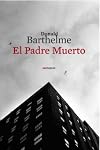
Hasta hace poco, nunca hubiese pensado que me iba a convertir en un aficionado a la literatura posmoderna. Hasta hace poco, huía de autores como Thomas Pynchon, Don DeLillo, David Foster Wallace o Donald Barthelme. Requerían de una atención desmedida a la hora de leerlos, y esto no era precisamente lo que buscaba, me interesaban textos más asequibles y de fácil lectura, libros con argumentos e historias, si no lineales o con el clásico planteamiento-nudo-desenlace, sí con una show more estructura objetiva y clara. Pero llegó un momento en que necesitaba de historias más potentes, de esas que desarman el cerebro y le dan un revolcón a tu manera de pensar y ver la vida. Y son escritores como los anteriores los que han logrado alumbrarme.
Con ‘El Padre Muerto’, Barthelme crea todo un galimatías que le sirve como plataforma para experimentar con el lenguaje (aquí hago un inciso para alabar la labor de la traductora a la hora de hacer frente a esta novela, ya que seguro que no lo ha debido tener fácil). La historia es totalmente surrealista. Haciendo un sucinto resumen, la historia trata sobre el arduo viaje que realizan Thomas y su mujer Julie, junto con una serie de hombres, para acarrear el cuerpo del Padre Muerto, de tamaño gigantesco, en la búsqueda del Vellocino de Oro y la consecución de la vida eterna, o eso piensa el Padre Muerto. Durante este absurdo viaje se tropezarán con los Wend, que son padres de sí mismos, y darán con el libro Manual para hijos, un libro que trata de explicar cómo enfrentarse a esos seres llamados padres.
La lectura de esta novela no es fácil. Hay momentos en que hay una voz narradora clara, pero que en ciertas partes se pierde, mezclándose los diálogos, algo intencionado por parte de Barthelme, y que te obliga a leer con atención para hacerte una idea de lo que están hablando. También hay algunas historias dentro de historias, y algún discurso del Padre Muerto sin pies ni cabeza, algo intencionado. La novela está escrita en los años 70 del pasado siglo, y Barthelme no se corta a la hora de dar voz a sus personajes con un lenguaje sacado de esta década; su prosa es actual, con frases cortas, a ratos pasando por la escatología, y utilizando todos aquellos elementos característicos de su época.
Dentro de la incongruencia de todo esto, puede parecer que la historia carezca de sentido absolutamente. Pero no es así. Barthelme se aprovecha del simbolismo del Padre Muerto para hablarnos de una sociedad lideraba por varones, donde el Padre Muerto representa a todos ellos, al gran varón. Mención aparte para Manual para hijos, un libro dentro del libro, una parte muy inteligente e irónica por parte del autor.
‘El Padre Muerto’ es una novela difícil, delirante, desenfrenada, brillante, recomendada únicamente para aquellos que deseen probar experiencias literarias nuevas. show less
Con ‘El Padre Muerto’, Barthelme crea todo un galimatías que le sirve como plataforma para experimentar con el lenguaje (aquí hago un inciso para alabar la labor de la traductora a la hora de hacer frente a esta novela, ya que seguro que no lo ha debido tener fácil). La historia es totalmente surrealista. Haciendo un sucinto resumen, la historia trata sobre el arduo viaje que realizan Thomas y su mujer Julie, junto con una serie de hombres, para acarrear el cuerpo del Padre Muerto, de tamaño gigantesco, en la búsqueda del Vellocino de Oro y la consecución de la vida eterna, o eso piensa el Padre Muerto. Durante este absurdo viaje se tropezarán con los Wend, que son padres de sí mismos, y darán con el libro Manual para hijos, un libro que trata de explicar cómo enfrentarse a esos seres llamados padres.
La lectura de esta novela no es fácil. Hay momentos en que hay una voz narradora clara, pero que en ciertas partes se pierde, mezclándose los diálogos, algo intencionado por parte de Barthelme, y que te obliga a leer con atención para hacerte una idea de lo que están hablando. También hay algunas historias dentro de historias, y algún discurso del Padre Muerto sin pies ni cabeza, algo intencionado. La novela está escrita en los años 70 del pasado siglo, y Barthelme no se corta a la hora de dar voz a sus personajes con un lenguaje sacado de esta década; su prosa es actual, con frases cortas, a ratos pasando por la escatología, y utilizando todos aquellos elementos característicos de su época.
Dentro de la incongruencia de todo esto, puede parecer que la historia carezca de sentido absolutamente. Pero no es así. Barthelme se aprovecha del simbolismo del Padre Muerto para hablarnos de una sociedad lideraba por varones, donde el Padre Muerto representa a todos ellos, al gran varón. Mención aparte para Manual para hijos, un libro dentro del libro, una parte muy inteligente e irónica por parte del autor.
‘El Padre Muerto’ es una novela difícil, delirante, desenfrenada, brillante, recomendada únicamente para aquellos que deseen probar experiencias literarias nuevas. show less
Lists
Awards


You May Also Like


Associated Authors
Statistics
- Works
- 68
- Also by
- 62
- Members
- 7,803
- Popularity
- #3,122
- Rating
- 3.8
- Reviews
- 112
- ISBNs
- 157
- Languages
- 12
- Favorited
- 62
