
John C. Gardner (1933–1982)
Author of Grendel
About the Author
John Gardner is the best-selling author of more than twenty-five books and taught creative writing at many universities, among them Chico State, Bennington College, and SUNY-Binghamton. His novels Grendel, The Sunlight Dialogues, and October Light are regarded as modern classics. He was killed in a show more motorcycle accident in 1982 at the age of 49. show less
Works by John C. Gardner
The Alliterative Morte Arthure: The Owl and the Nightingale and Five Other Middle English Poems in a Modernized Version, with Comments on the Poems (Arcturus Books, Ab116) (1971) 67 copies, 1 review
John Gardner on Writing: On Becoming a Novelist, On Writers and Writing, On Moral Fiction (2013) 25 copies
Becoming a Writer • On Becoming a Novelist • One Writer's Beginnings (1993) — Contributor — 17 copies
Nicholas Vergette 1923 - 1974 3 copies
John Gardner: An Interview 3 copies
MSS, Spring 1981 1 copy
Flamboyant Drama 1 copy
The Red Napoleon 1 copy
The Yeti 1 copy
The Barracuda 1 copy
The Flying Squirrel 1 copy
The Lizard 1 copy
On Books 1 copy
Music From Home 1 copy
Associated Works
The Outspoken Princess and the Gentle Knight: A Treasury of Modern Fairy Tales (1994) — Contributor — 208 copies, 3 reviews
Adventures into science — Illustrator — 1 copy
Tagged
Common Knowledge
- Canonical name
- Gardner, John C.
- Legal name
- Gardner, John Champlin, Jr.
- Birthdate
- 1933-07-21
- Date of death
- 1982-09-14
- Gender
- male
- Education
- DePauw University
Washington University (BA | 1955)
University of Iowa (M.A. | 1956 | Ph.D | 1958) - Occupations
- professor
novelist
poet
essayist
literary critic - Organizations
- Binghamton University
Bread Loaf Writers' Conference
Southern Illinois University at Carbondale
San Francisco State University
Oberlin College
Chico State University - Awards and honors
- American Academy of Arts and Letters Academy Award (Literature ∙ 1975)
National Book Critics Circle Award (1976) - Cause of death
- motorcycle accident
- Nationality
- USA
- Birthplace
- Batavia, New York, USA
- Places of residence
- Batavia, New York, USA (birth)
Oakland Township, Susquehanna County, Pennsylvania, USA - Place of death
- Susquehanna County, Pennsylvania, USA
- Burial location
- Grandview Cemetery, Batavia, New York, USA
- Associated Place (for map)
- USA
Members
Discussions
1970’s American Literature in Name that Book (July 2016)
Reviews
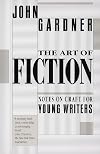
A demanding and challenging book on writing that makes no apologies for assuming the reader is aiming at a high level and pulls no punches in its assertions about what is required. In that way it's refreshingly no-nonsense and unashamedly intellectual in its approach to literary aesthetics. You don't have to agree or even like his ideas of fiction, but it's a powerful model to work around or against, and it demands and rewards attention and thought. If writing manuals seem to you to be show more either too cuddly or too prosaic, this is certainly what you're looking for. show less

At the outset of John Gardner’s Nickel Mountain, Henry Soames owns and runs a diner by the side of a Catskills highway. He does a better job of that than of controlling his own giving heart; because of his charitable nature, he ends up not only married to a young woman who is pregnant with someone else’s baby, but also opens his home to a Jehovah’s Witness no one likes or trusts, and who may be an arsonist. The novel’s events swirl around Henry, its enigmatically passive-active agent show more at the center, and through it all the locals for better or for ill, prove that in Gardner’s hands, human nature is endlessly fascinating.
Also as fascinating are the apparent machinations of the gods, or impersonal forces with which humans must contend. A young would-be car designer and racer throws his dreams away and attends Cornell Ag school, as coerced by his businessman father. Henry’s bride finds him impossible to live with part of the time, but also unalterably admires his good acts. Other regulars come to Henry’s roadside diner and complain or shake their heads about nature, or the follies of their fellow characters, and nothing apparently changes over time. The town’s doctor, who doubles as its justice of the peace, carries around and expresses the anger and confusion for everyone’s benefit.
The tides of fortune and folly pursue all; no one is immune. Some suffer more than others, as usual, but through all the health challenges and commercial difficulties Henry wrestles with, his surprising wife and child turn out t be improbable blessings, even to the point of a comprehensive upgrade of his business. Gardner prepares us for certain confrontations which end up occurring outside the narrative, and it’s hard to find the purpose in some of the conflict on offer.
But the direct, persuasive, effective passage is always within the author’s repertoire: early on (at p. 66 of 454), as Henry emphatically blubbers on on some subject or other:
“But was he saying anything at all? he wondered. All so hopelessly confused. And yet he knew. He couldn’t do it and maybe never could have, but he knew. He was a fat, blubbering Holy Jesus, or anyway one half of him was, loving hell out of truckers and drunks and Willards and Callies—ready to be nailed for them. Eager. More heart than he knew how to spend.”
A constitutional inarticulateness afflicts the hero Henry: his compelling ideas, in the midst of his trying to express them, become amorphous as he loses his way. In spite of the mental and emotional challenges, he blunders ahead anyway, and comes out somehow ahead of the game. This, and the plain, direct, and vivid descriptions the author gives the other characters and their misadventures, drive the narrative, and attract and reward the reader. It’s all a mystery, and the Henry Soameses of the world, for all their difficulty in expressing it, know it better than the rest of us.
https://bassoprofundo1.blogspot.com/2023/09/nickel-mountain-by-john-gardner.html show less
Also as fascinating are the apparent machinations of the gods, or impersonal forces with which humans must contend. A young would-be car designer and racer throws his dreams away and attends Cornell Ag school, as coerced by his businessman father. Henry’s bride finds him impossible to live with part of the time, but also unalterably admires his good acts. Other regulars come to Henry’s roadside diner and complain or shake their heads about nature, or the follies of their fellow characters, and nothing apparently changes over time. The town’s doctor, who doubles as its justice of the peace, carries around and expresses the anger and confusion for everyone’s benefit.
The tides of fortune and folly pursue all; no one is immune. Some suffer more than others, as usual, but through all the health challenges and commercial difficulties Henry wrestles with, his surprising wife and child turn out t be improbable blessings, even to the point of a comprehensive upgrade of his business. Gardner prepares us for certain confrontations which end up occurring outside the narrative, and it’s hard to find the purpose in some of the conflict on offer.
But the direct, persuasive, effective passage is always within the author’s repertoire: early on (at p. 66 of 454), as Henry emphatically blubbers on on some subject or other:
“But was he saying anything at all? he wondered. All so hopelessly confused. And yet he knew. He couldn’t do it and maybe never could have, but he knew. He was a fat, blubbering Holy Jesus, or anyway one half of him was, loving hell out of truckers and drunks and Willards and Callies—ready to be nailed for them. Eager. More heart than he knew how to spend.”
A constitutional inarticulateness afflicts the hero Henry: his compelling ideas, in the midst of his trying to express them, become amorphous as he loses his way. In spite of the mental and emotional challenges, he blunders ahead anyway, and comes out somehow ahead of the game. This, and the plain, direct, and vivid descriptions the author gives the other characters and their misadventures, drive the narrative, and attract and reward the reader. It’s all a mystery, and the Henry Soameses of the world, for all their difficulty in expressing it, know it better than the rest of us.
https://bassoprofundo1.blogspot.com/2023/09/nickel-mountain-by-john-gardner.html show less
The Alliterative Morte Arthure: The Owl and the Nightingale and Five Other Middle English Poems in a Modernized Version, with Comments on the Poems (Arcturus Books, Ab116) by John Gardner
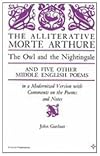
The portrayal of an acquisitive King Arthur whose pride fuels his conquest of most of Europe is quite different from most other versions of the legend. His once noble deeds become those of a tyrant who forgets that fortunes wheel is always turning and in the medieval view of the world; those that are at the top of the turn of the wheel and enjoy the greatest fortune must always be prepared for the downturn. Arthur's pride leads him to forget this fact and his final battle with his son show more Mordred leaves his kingdom in ruins and him in need of a confessor.
John Gardner’s modern translation of the alliterative Morte Arthure (aMA) works wonderfully well. He explains in a short preface his concern was to keep in tact the alliteration and metre of the poem and so some liberties have been taken with meaning and a few out of date words have been included because they fit so well. The poem reads so beautifully that I was prepared to go along with Gardner’s modus operandi. Here is an example as the Knights of the Round Table chase the fleeing Romans:
“There might men see chieftains on chalk-white steeds
Chop down on that chase the noblest of the chivalry;
The richest and most royal kings of Rome
Fell broken by hard steel, their ribs asunder,
Brains smashed in within their burnished helmets,
Overthrown by swords that flashed all the breadth of that land.
They hewed down heathen men with their hilted swords
By whole hundreds in a heap by the hem of the holtwood.
No silver could save their lives or succor them
Not sultan, Saracen, or senator of Rome.”
This poem of 4345 lines is thought to have been composed in about 1400 and was used by Sir Thomas Mallory as a source for sections of his epic Morte D’Arthure. The aMA contains only excerpts from what has become the Arthurian legends. It starts with Arthur at the height of his powers; he rules most of Europe and is celebrating New Year with the knights of the round table when emissaries of Lucius (Roman Emperor) appear before them to challenge Arthur. He sends them back to Rome with a flea in their ear and immediately sets in motion an expedition to overthrow Lucius. Over half the poem is taken up by this story and with Arthur's forces in Europe there are side tales of Sir Gawain's siege of Metz and Sir Cador’s expedition to Paris. Following the death of Lucius and with Arthur becoming increasingly more tyrannical there is a moment of pathos following the death of the “Good” Gawain before Arthur swears revenge and sets sail back to England where Mordred has married Guinevere and crowned himself king. The final section describes the battle with Mordred’s forces and the demise of the round table. This has been a very Christian telling of the legend and there is no pagan funeral to finish off the tale, instead we hear Arthurs’ last words:
“And afterward make your way to Mordred’s children,
And see them duly slain and slung to the waters,
And let no wicked weed wax mighty on earth;
I warn you for your honor do as I bid you!
And for God’s love in heaven, I give up my wrath
If Guinevere is well may peace be with her
He said on the land where he lay, ‘In manus tuas’,
And thus his spirit passed and he spoke no more.”
There is very little magic and mystery; no Merlin, no fantastic images and no Sir Lancelot, but Arthur has two dream visions that provide important reference points. The first is a battle between a dragon and a bear that is interpreted as Arthur (the dragon) defeating the tyrants in Europe. The second dream vision is Arthur’s dream about the wheel of fortune where he sees himself crushed to death beneath it. There is little need for interpretation of this, but the point is made that it is Arthur’s pride that is his undoing and he is reminded of the great men of history who have over reached themselves and have been done down in the end. The aMA has a richness that Malory’s version lacks: it’s descriptions of battles are more realistic, the story has a logical forward momentum and does not get bogged down in extraneous detail, Arthur himself moves from a heroic to a tragic figure in a way that is very convincing.
The alliterative Morte Arthur is not the only poem in Gardner’s book; he has brought to life a whole range of poems from the middle ages many of them in the alliterative tradition. None are as long or as impressive as aMA, but there is still much to delight the reader. Winner and Waster is a fine allegorical poem with some excellent lines and a fresh look into the psyche of the period. There is the gloomy “The debate of Body and Soul” and the wit and humour of “The owl and the Nightingale”. The short “Summer Sunday” with its wealth of alliteration also has its moments.
There is no doubt that the alliterative Morte Arthure is a fine poem in it’s own right and Gardner has produced a modern translation that make the lines sing. The inclusion of the other shorter poems from the late middle ages has given the book an added dimension as the reader is able to sense more of the variety of the literature that was being created at that time. Gardner has included 40 pages of commentary on the poems as well as notes on individual lines and so I think this book would also serve as a fine introduction to medieval literature and so 4.5 stars. show less
John Gardner’s modern translation of the alliterative Morte Arthure (aMA) works wonderfully well. He explains in a short preface his concern was to keep in tact the alliteration and metre of the poem and so some liberties have been taken with meaning and a few out of date words have been included because they fit so well. The poem reads so beautifully that I was prepared to go along with Gardner’s modus operandi. Here is an example as the Knights of the Round Table chase the fleeing Romans:
“There might men see chieftains on chalk-white steeds
Chop down on that chase the noblest of the chivalry;
The richest and most royal kings of Rome
Fell broken by hard steel, their ribs asunder,
Brains smashed in within their burnished helmets,
Overthrown by swords that flashed all the breadth of that land.
They hewed down heathen men with their hilted swords
By whole hundreds in a heap by the hem of the holtwood.
No silver could save their lives or succor them
Not sultan, Saracen, or senator of Rome.”
This poem of 4345 lines is thought to have been composed in about 1400 and was used by Sir Thomas Mallory as a source for sections of his epic Morte D’Arthure. The aMA contains only excerpts from what has become the Arthurian legends. It starts with Arthur at the height of his powers; he rules most of Europe and is celebrating New Year with the knights of the round table when emissaries of Lucius (Roman Emperor) appear before them to challenge Arthur. He sends them back to Rome with a flea in their ear and immediately sets in motion an expedition to overthrow Lucius. Over half the poem is taken up by this story and with Arthur's forces in Europe there are side tales of Sir Gawain's siege of Metz and Sir Cador’s expedition to Paris. Following the death of Lucius and with Arthur becoming increasingly more tyrannical there is a moment of pathos following the death of the “Good” Gawain before Arthur swears revenge and sets sail back to England where Mordred has married Guinevere and crowned himself king. The final section describes the battle with Mordred’s forces and the demise of the round table. This has been a very Christian telling of the legend and there is no pagan funeral to finish off the tale, instead we hear Arthurs’ last words:
“And afterward make your way to Mordred’s children,
And see them duly slain and slung to the waters,
And let no wicked weed wax mighty on earth;
I warn you for your honor do as I bid you!
And for God’s love in heaven, I give up my wrath
If Guinevere is well may peace be with her
He said on the land where he lay, ‘In manus tuas’,
And thus his spirit passed and he spoke no more.”
There is very little magic and mystery; no Merlin, no fantastic images and no Sir Lancelot, but Arthur has two dream visions that provide important reference points. The first is a battle between a dragon and a bear that is interpreted as Arthur (the dragon) defeating the tyrants in Europe. The second dream vision is Arthur’s dream about the wheel of fortune where he sees himself crushed to death beneath it. There is little need for interpretation of this, but the point is made that it is Arthur’s pride that is his undoing and he is reminded of the great men of history who have over reached themselves and have been done down in the end. The aMA has a richness that Malory’s version lacks: it’s descriptions of battles are more realistic, the story has a logical forward momentum and does not get bogged down in extraneous detail, Arthur himself moves from a heroic to a tragic figure in a way that is very convincing.
The alliterative Morte Arthur is not the only poem in Gardner’s book; he has brought to life a whole range of poems from the middle ages many of them in the alliterative tradition. None are as long or as impressive as aMA, but there is still much to delight the reader. Winner and Waster is a fine allegorical poem with some excellent lines and a fresh look into the psyche of the period. There is the gloomy “The debate of Body and Soul” and the wit and humour of “The owl and the Nightingale”. The short “Summer Sunday” with its wealth of alliteration also has its moments.
There is no doubt that the alliterative Morte Arthure is a fine poem in it’s own right and Gardner has produced a modern translation that make the lines sing. The inclusion of the other shorter poems from the late middle ages has given the book an added dimension as the reader is able to sense more of the variety of the literature that was being created at that time. Gardner has included 40 pages of commentary on the poems as well as notes on individual lines and so I think this book would also serve as a fine introduction to medieval literature and so 4.5 stars. show less

I’m pretty sure the answer to life, the universe, and everything is somewhere in this book. A more philosophical monster than the nihilistic Grendel you would have trouble finding, even including Frankenstein’s creature. Good vs. evil, politics, religion, art, the power of language to construct reality, you name it, this book’s got it. I’m also motivated to finally get around to Beowulf, since it will be all the more interesting with Grendel’s view to contrast it with.
“The dragonshow more
tipped up his great tusked head, stretched his neck, sighed fire. ‘Ah, Grendel!’ he said. He seemed that instant almost to rise to pity. ‘You improve them, my boy! Can’t you see that yourself? You stimulate them! You make them think and scheme. You drive them to poetry, science, religion, all that makes them what they are for as long as they last. You are, so to speak, the brute existent by which they learn to define themselves.’”show less
Lists
1970s (4)
Metafiction (1)
Existentialism (1)
Must-Read Maine (1)
Parallel Novels (1)
METAfiction (1)
Overdue Podcast (1)
Read in 2003 (1)
Classics (1)
Favourite Books (2)
Craft Books (2)
Unread books (1)
AP Lit (1)
Awards


You May Also Like


Associated Authors
Statistics
- Works
- 54
- Also by
- 13
- Members
- 16,517
- Popularity
- #1,373
- Rating
- 3.8
- Reviews
- 249
- ISBNs
- 251
- Languages
- 14
- Favorited
- 3