
Geoffrey Chaucer (1343–1400)
Author of The Canterbury Tales
About the Author
Geoffrey Chaucer, one of England's greatest poets, was born in London about 1340, the son of a wine merchant and deputy to the king's butler and his wife Agnes. Not much is known of Chaucer's early life and education, other than he learned to read French, Latin, and Italian. His experiences as a show more civil servant and diplomat are said to have developed his fascination with people and his knowledge of English life. In 1359-1360 Chaucer traveled with King Edward III's army to France during the Hundred Years' War and was captured in Ardennes. He returned to England after the Treaty of Bretigny when the King paid his ransom. In 1366 he married Philippa Roet, one of Queen Philippa's ladies, who gave him two sons and two daughters. Chaucer remained in royal service traveling to Flanders, Italy, and Spain. These travels would all have a great influence on his work. His early writing was influenced by the French tradition of courtly love poetry, and his later work by the Italians, especially Dante, Boccaccio, and Petrarch. Chaucer wrote in Middle English, the form of English used from 1100 to about 1485. He is given the designation of the first English poet to use rhymed couplets in iambic pentameter and to compose successfully in the vernacular. Chaucer's Canterbury Tales is a collection of humorous, bawdy, and poignant stories told by a group of fictional pilgrims traveling to the shrine of St. Thomas a Becket. It is considered to be among the masterpieces of literature. His works also include The Book of the Duchess, inspired by the death of John Gaunt's first wife; House of Fame, The Parliament of Fowls, and The Legend of Good Women. Troilus and Criseyde, adapted from a love story by Boccaccio, is one of his greatest poems apart from The Canterbury Tales. Chaucer died in London on October 25, 1400. He was buried in Westminster Abbey, in what is now called Poet's Corner. (Bowker Author Biography) show less
Image credit: Illustration from Cassell's History of England - Century Edition - published circa 1902.
Via Wikipedia.
Via Wikipedia.
Series
Works by Geoffrey Chaucer
Chaucer's Canterbury Tales (Selected): An Interlinear Translation (1948) — Author; Author — 425 copies, 7 reviews
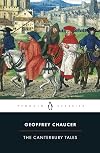
The Canterbury Tales (The Penguin Classics) 178 copies
Chaucer : the prologue, the knightes tale the nonne preestes tale from the Canterbury tales (2005) 91 copies, 1 review
The Canterbury Tales: Seventeen Tales and the General Prologue (Norton Critical Editions) (2018) 70 copies, 1 review
Reading Chaucer: An Interlinear Translation of Selections in The Norton Antology of English Literature, 8th Edition (2006) 28 copies
The Reeve's Prologue and Tale with the Cook's Prologue and the Fragment of his Tale (1979) 19 copies
Five Canterbury Tales: Level 1: 400-Word Vocabulary Five Canterbury Tales (Dominoes, Level One) (2010) 15 copies
The Canterbury tales; the Prologue and four tales, with the Book of the duchess and six lyrics, (1930) 14 copies
The Poetical Works of Geoffrey Chaucer. Volume 3: The Canterbury Tales. From the text of Professor Skeat. (1960) 14 copies
The complete works of Geoffrey Chaucer : Vol. 1 [...] Romaunt of the rose, Minor poems (2003) 12 copies
Complete Works of Geoffrey Chaucer, Vol. VII: Chaucerian and Other Pieces, Being A Supplement to the Complete Works of Geoffrey Chaucer (in seven volumes) (2009) 11 copies, 1 review
Chaucer 11 copies
Reading & Training : Geoffrey Chaucer : The Canterbury Tales [book + sound recording] (2007) — Writer — 10 copies
The Canterbury Tales and Faerie Queene with Other Poems of Chaucer and Spenser (1874) — Author — 10 copies
The General Prologue & The Physician's Tale: In Middle English & In Modern Verse Translation (2006) 10 copies
The Prioresses tale,: Sir Thopas, the Monkes tale, the Clerkes tale, the Squieres tale, from the Canterbury tales; (Clar (2007) 9 copies
The Reeve's Tale 9 copies
The Poems of Chaucer 8 copies
The Tale of the Man of lawe;: The Pardoneres tale; the Second nonnes tale; the Chanouns yemannes tale, from the Canterbu (1879) 7 copies
Chaucer (The Laurel Poetry Series) 7 copies
An ABC 5 copies
The Programmed Classics (13 Volume Set (Canterbury Tales, Crime & Punishment, Complete works of William Shakespeare Vol. 2, War & Peace, Travels of Marco Polo the Venetian,… (1968) — Contributor — 4 copies
Canterburysägner : II 4 copies
Canterburysägner I 4 copies
Chaucer's Canterbury Tales: Annotated and Accented, with Illustrations of English life in Chaucer's Time; New and Revised Edition (1845) 4 copies
The Canterbury tales : the general prologue and twelve major tales in modern spelling (1991) 4 copies
The Wild Duck By Ibsen, the Manual By Epictetus, the Canterbury Tales By Chaucer (Great Books Foundation, Set Five, Volume One) (1966) 4 copies
The Canterbury Tales With Side-By-Side Modern English Translation (Classic Retold With Side-By-Side Translation Book 1) (2015) 3 copies
POETICAL WORKS OF GEOFFREY CHAUCER The Complete Works with an Introduction by Thomas R. Lounsbury (1900) 3 copies
Geoffrey Chaucer Canterbury Tales 3 copies
Canterbury Tales: Selection 3 copies
Två Canterbury sägner 3 copies
The works, 1532; with supplementary material from the editions of 1542, 1561, 1598 and 1602 (1969) 3 copies
The Clerkes Tale and the Squieres Tale. Edited by Lilian Winstanley (Pitt Press Series.) (1931) 3 copies
The riches of Chaucer 3 copies
Canterbury Tales - Volume II 2 copies
The Shipman's Tale 2 copies
Canterbury Tales, Dent, London '89 2 copies
Chaucer's Troylus and Cryseyde (from the Harl. ms. 3943) compared with Boccaccio's Filostrato (1976) 2 copies
The Friar's, Summoner's, and Pardoner's tales from the Canterbury tales (The London medieval and Renaissance series) (1975) 2 copies
The Canterbury Tales (Penguin Popular Classics) by Geoffrey Chaucer (24-Feb-2011) Paperback (1600) 2 copies
Complaint to His Purse (from The Norton Anthology of English Literature Volume 1) 2 copies, 1 review
The Canterbury tales. Ediz. ridotta. Con File audio per il download, Lingua : Inglese (2015) 2 copies
Selections From Chaucer: Including His Earlier and His Later Verse and an Example of His Prose 2 copies
The Canterbury tales : the general prologue and twelve major tales in modern spelling (1991) 2 copies
The Canterbury Tales 2 copies
The Canterbury Tales of Geoffrey Chaucer, selected and edited by Edwin Johnston Howard [and] Gordon Donley Wilson. (1947) 2 copies
Poems By Geoffrey Chaucer 2 copies
Cuentos del molinero y el carpintero 2 copies
The Pierpont Morgan Library Manuscript M.817: A Facsimile (The Facsimile Series of the Works of Geoffrey Chaucer ; V. 4) (1986) 2 copies
The Canterbury Tales [with] The Golden Cockerel Press, The Canterbury Tales and Eric Gill, An Essay By Peter Holliday (2010) 2 copies
The Canterbury Tales II 1 copy
The Canterbury Tales - Translated into Modern English: The Complete Collection - All Volumes in One 1 copy
Chaucer's Works 1 copy
“General Prologue” 1 copy
“The Knight’s Tale” 1 copy
“The Miller’s Tale” 1 copy
カンタベリ物語〈上〉 (ちくま文庫) — Author — 1 copy
The Canterbury Tales 1 copy
Troilus & Criseyde: A Love Poem in Five Books - Geofrey Chaucer - Literary Guild - Eric Gill Wood Engravings (1932) 1 copy
Persuasion 1 copy
Кентерберские рассксзы 1 copy
The Canturbury Tales 1 copy
The College Chaucer 1 copy
The Ellesmere Chaucer 1 copy
Poesía Menor 1 copy
The Indispensable Chaucer 1 copy
The Count of Monte Cristo; The Canterbury Tales(3); Vanity Fair (The 100 Greatest Books Ever Written) (1990) 1 copy
Burlesque Plays and Poems 1 copy
Historias de Chaucer 1 copy
The Man of Law’s Epilogue 1 copy
The Kelmscott Chaucer 1 copy
The Workes 1 copy
Troilus and Cressida 1 copy
A selection of his works 1 copy
Poetical works Vol. 1 [...] 1 copy
Canterbury Tales 1 copy
Troilus and Cressida 1 copy
Canterbury Tales Vol. I & II 1 copy
December 1 copy
Canterbury Tales (Selected) 1 copy
Canterbury Tales, The 1 copy
The Prologue, the Knightes Tale, the Nonne Prestes Tale, from the Canterbury Tales - A Revised Text 1 copy
A Chaucer selection 1 copy
The Cook's Tale 1 copy
Chaucer : contes de Cantorbéry : contes choisis, avec introduction grammaticale, notes et glossaire / par Joseph Delcourt = Canterbury tales 1 copy, 1 review
Sir Thopas 1 copy
The Clerk Of Oxford's Tale 1 copy
The Monk's Tale 1 copy
Canterburyn kertomuksia 1 copy
A first Chaucer 1 copy
A comprehensive list of textual comparison between Blake's and Robinson's editions of The Canterbury tales (1995) 1 copy
The Man of Law"s Tale, the Nun"s Priest"s Tale, the Squire"s Tale. [The King"s Classics] (1904) 1 copy
The Canterbury Tales of Geoffrey Chaucer: A New Text with Illustrative Notes, Volume 1 (2010) 1 copy
The Flower and the Leaf 1 copy
Miller's Tale -- Prologue 1 copy
Clásicos bruguera 1 copy
The Canterbury Tales (2 cassettes) (The Prologue and the Pardoner's Prologue and Tale (Read in Middle English) (1978) 1 copy
The Canterbury Tales (Book on Tape) (The Nun's Priest's Tale/ The Knight's Tale, 2 Cassettes) (1983) 1 copy
Chaucer. The prologue & ... the Prioress's tale. - The nun's priest's tale. - The pardoner's tale 1 copy
The Canterbury Tales - Complete in 2 volumes : Translated into modern English by Nevill Coghill (1956) 1 copy
Cuentos de Canterbury 1 copy
Poetical Works of Geoffrey Chaucer, Vol. 2 of 3: To Which Are Appended Poems Attributed to Chaucer (Classic Reprint) (2016) 1 copy
Chaucer's Canterbury tales : The nun's priest's tale, and, The pardoner's tale [Sound Recording] 1 copy
The Poetry of Chaucer 1 copy
Opowieści kanterberyjskie 1 copy
ক্যান্টারবেরী টেলস 1 copy
Associated Works
The Making of a Poem: A Norton Anthology of Poetic Forms (2000) — Contributor — 1,474 copies, 9 reviews
The Best Poems of the English Language: From Chaucer Through Robert Frost (2004) — Contributor — 1,253 copies, 3 reviews
Literature: An Introduction to Fiction, Poetry, and Drama (1995) — Contributor, some editions — 1,025 copies, 7 reviews
World Poetry: An Anthology of Verse from Antiquity to Our Time (1998) — Contributor — 499 copies, 2 reviews
The Graphic Canon, Vol. 1: From the Epic of Gilgamesh to Shakespeare to Dangerous Liaisons (2012) — Contributor — 307 copies, 7 reviews
The Oxford Anthology of English Literature, Volume I: The Middle Ages through the Eighteenth Century (1973) — Contributor — 212 copies
Trilogy of Life (The Decameron / The Canterbury Tales / Arabian Nights) (1971) — Original book — 64 copies, 1 review
Out of the Best Books: An Anthology of Literature, Vol. 1: The Individual and Human Values (1964) — Contributor — 40 copies
Floure and the Leafe, the Assembly of Ladies, the Isle of Ladies (1990) — mis-attribution, some editions — 35 copies
Lapham's Quarterly - Lines of Work: Volume IV, Number 2, Spring 2011 (2011) — Contributor — 32 copies, 2 reviews
The Ribald Reader: 2000 Years of Lusty Love and Laughter (1906) — Contributor — 19 copies, 2 reviews
The Graphic Canon of Crime & Mystery, Vol. 2: From Salome to Edgar Allan Poe to The Silence of the Lambs (2021) — Contributor — 14 copies
Oogst Der Tijden. keur uit de werken van schrijvers en dichters aller volken en eeuwen (1940) — Contributor — 12 copies
The tale of Gamelyn : from the Harleian ms. no. 7334, collated with six other mss (1884) — Attribution, some editions — 8 copies
Great Poems from Chaucer to Whitman — Contributor — 3 copies
Tagged
Common Knowledge
- Legal name
- Chaucer, Geoffrey
- Birthdate
- 1343 (circa)
- Date of death
- 1400-10-25
- Gender
- male
- Occupations
- poet
philosopher
bureaucrat
diplomat
civil servant
soldier (show all 10)
esquire (King Edward III's household)
comptroller (Customs and Subsidy of Wools, Skins, and Tanned Hides)
translator
clerk (of the King's Works) - Awards and honors
- Knight of the Shire (Kent)
- Relationships
- Gower, John (amic)
- Nationality
- England
- Birthplace
- London, Middlesex, England, UK
- Places of residence
- Gatehouse, Aldgate, London, Middlesex, England, UK
- Place of death
- London, Middlesex, England, UK
- Burial location
- Westminster Abbey, London, England, UK (Poet's Corner)
- Map Location
- England, UK
Members
Discussions
Kelmscott Chaucer - Easton Press vs. Bradford Exchange side by side comparison in Easton Press Collectors (October 2025)
Folio Archives 323: The Canterbury Tales by Geoffrey Chaucer 1990 in Folio Society Devotees (April 2025)
The Works of Geoffrey Chaucer - Shakespeare Head Press (1928) in Fine Press Forum (June 2024)
Geoffrey Chaucer in The Green Dragon (November 2023)
OT: Chaucer collection goes online in Fine Press Forum (October 2023)
Folio Archives 341: Troilus and Criseyde by Geoffrey Chaucer – LIMITED EDITION 2011 in Folio Society Devotees (September 2023)
LE Canterbury Tales in Folio Society Devotees (June 2023)
Kelmscott Chaucer in Fine Press Forum (November 2022)
Reviews
As I was going to Canterbury
I passed two men, called Tom and Jerry.
Each of these men had seven cats,
Each of the cats wore seven hats.
Upon each hat were two bow ties,
On each bow tie there were no flies.
Flies, ties, hats, cats, Tom, and Jerry,
How many were going to Canterbury?
That's right, the answer is thirty-one (thirty-two once we pass Boughton-under-Blean). The prologue to The Canterbury Tales is ostensibly a dramatis personæ, introducing twenty-nine pilgrims plus their host and a show more satirical version of Chaucer himself. Together they are the tellers of the eponymous tales. Sitting here six hundred years later, though, the prologue is less of a cast list and more of a fascinating cross section of fourteenth century England. From the noble Knight down to the lowly cook, we get to see English history not through its Kings or its wars or its treaties, but through its people and through the stories they choose to tell. And the result is truly enlightening.
The tales themselves are of course the meat and two veg of this salacious sandwich, but Chaucer doesn't let us forget the framework that these tales sit within: that of a bunch of people of different classes and personalities swapping stories to pass the time on a long journey. Several of the tales are interrupted by the other travellers because they aren't appreciating them, and some of the characters tell stories that are clearly intended to mock one of their co-travellers. Such as the Reeve, an erstwhile carpenter, who deliberately pillories a miller in his tale as revenge for the Miller's story of a carpenter who is roundly abased and cuckolded by a student. The Friar and the Summoner also attack one another's professions in their respective stories, the quarrel here beginning when the Friar interrupts the Wife of Bath's prologue that the Summoner had been enthralled by.
Alas, then, that I was not overly fond of many of the stories. The recurring theme of fidelity and the roles of husbands and wives in matrimony gets repetitive rather quickly, and some of the more sermonic stories were excruciatingly preachy. There are the famously bawdy ones, like the Miller's and the Reeve's, that amused my inner teenage-boy, but I'm nevertheless glad that these ones were few and far between. And then there are tales like the Nun's Priest's which is packed with cunning rhetorical devices that would've vastly amused Chaucer's learned contemporaries but that go straight over modern reader's heads, leaving just an amusing multi-moralled parable. My edition's translator, Nevill Coghill, compares it to the different delights garnered from Alexander Pope's The Rape of the Lock by a reader familiar with the Aeneid and a reader unfamiliar with it. He then adds, tongue delightfully in cheek, that "The penalties of barbarism are heavy."
That is not to say that all the tales failed to amuse me. The Franklin's tale certainly touched me in my happy places. It's a classical comedy but the happy ending comes not through divine intervention or some other deus ex machina but because all the characters therein are, for once, simply good people. The Canon's Yeoman, the thirty second pilgrim and a late arrival to the mix, also has a natty tale to relate on the shortcomings of alchemy. His exposé on the trade is fun and surprisingly timeless: replace his crooked alchemist with a modern homeopath or psychic medium and you realise with horror that we've really not come so far in six hundred years.
So as a collection of short stories The Canterbury Tales is a mixed bag. But as an insight into the past the work is wonderful. And if the past is indeed a foreign country as L.P. Hartley claimed, then where Chaucer's work really excels is in giving us an insight into the inhabitants of this other land. And wouldn't you know it, like all foreigners, it turns out they're not so different from us. show less
I passed two men, called Tom and Jerry.
Each of these men had seven cats,
Each of the cats wore seven hats.
Upon each hat were two bow ties,
On each bow tie there were no flies.
Flies, ties, hats, cats, Tom, and Jerry,
How many were going to Canterbury?
That's right, the answer is thirty-one (thirty-two once we pass Boughton-under-Blean). The prologue to The Canterbury Tales is ostensibly a dramatis personæ, introducing twenty-nine pilgrims plus their host and a show more satirical version of Chaucer himself. Together they are the tellers of the eponymous tales. Sitting here six hundred years later, though, the prologue is less of a cast list and more of a fascinating cross section of fourteenth century England. From the noble Knight down to the lowly cook, we get to see English history not through its Kings or its wars or its treaties, but through its people and through the stories they choose to tell. And the result is truly enlightening.
The tales themselves are of course the meat and two veg of this salacious sandwich, but Chaucer doesn't let us forget the framework that these tales sit within: that of a bunch of people of different classes and personalities swapping stories to pass the time on a long journey. Several of the tales are interrupted by the other travellers because they aren't appreciating them, and some of the characters tell stories that are clearly intended to mock one of their co-travellers. Such as the Reeve, an erstwhile carpenter, who deliberately pillories a miller in his tale as revenge for the Miller's story of a carpenter who is roundly abased and cuckolded by a student. The Friar and the Summoner also attack one another's professions in their respective stories, the quarrel here beginning when the Friar interrupts the Wife of Bath's prologue that the Summoner had been enthralled by.
Alas, then, that I was not overly fond of many of the stories. The recurring theme of fidelity and the roles of husbands and wives in matrimony gets repetitive rather quickly, and some of the more sermonic stories were excruciatingly preachy. There are the famously bawdy ones, like the Miller's and the Reeve's, that amused my inner teenage-boy, but I'm nevertheless glad that these ones were few and far between. And then there are tales like the Nun's Priest's which is packed with cunning rhetorical devices that would've vastly amused Chaucer's learned contemporaries but that go straight over modern reader's heads, leaving just an amusing multi-moralled parable. My edition's translator, Nevill Coghill, compares it to the different delights garnered from Alexander Pope's The Rape of the Lock by a reader familiar with the Aeneid and a reader unfamiliar with it. He then adds, tongue delightfully in cheek, that "The penalties of barbarism are heavy."
That is not to say that all the tales failed to amuse me. The Franklin's tale certainly touched me in my happy places. It's a classical comedy but the happy ending comes not through divine intervention or some other deus ex machina but because all the characters therein are, for once, simply good people. The Canon's Yeoman, the thirty second pilgrim and a late arrival to the mix, also has a natty tale to relate on the shortcomings of alchemy. His exposé on the trade is fun and surprisingly timeless: replace his crooked alchemist with a modern homeopath or psychic medium and you realise with horror that we've really not come so far in six hundred years.
So as a collection of short stories The Canterbury Tales is a mixed bag. But as an insight into the past the work is wonderful. And if the past is indeed a foreign country as L.P. Hartley claimed, then where Chaucer's work really excels is in giving us an insight into the inhabitants of this other land. And wouldn't you know it, like all foreigners, it turns out they're not so different from us. show less

[Review of Ann McMillan's translation:]
Geoffrey Chaucer abandoned writing the Legend of Good Women halfway through. When you read this modernization, you may be tempted to do the same.
I am inherently biased toward liking anything that makes the Legend more accessible to modern readers; there is a lot of argument over whether Chaucer was "really" a feminist, but there is no doubt that he had more sympathy for women than most writers of his situation and era. The best guess as to the history show more of this work -- probably his last major writing before the Canterbury Tales -- is that he was trying to create a catalogue of women's virtues and men's vices, but found it so confining (since the culture of the era allowed only a limited set of women's positive traits) that he gave up. And headed off to Canterbury, and gave us Dorigen, and the Wife of Bath, instead.
Chaucer probably knew what he was doing when he gave up. I wish there were a Chaucer alive today who could try to do a real Legend, featuring all the virtues that women actually possess. There might be less need for the women's rights movement, and the #MeToo movement, if there were. But, in 1386, he was stuck.
And trying to bring him into the twentieth century doesn't help much. Ann McMillan gave it a try, but several weaknesses mar the result.
First, she isn't a poet. Dull as Chaucer's Legend gets to be after you have read three or four or nine tales that all feature pretty much the same cardboard lead character, it is at least beautifully written. It's Chaucer! But McMillan appears to have tried to preserve the meaning rather than the words (she admits to making a literal rendering), while still sticking with Chaucer's pentameter couplets. And it just doesn't work. It took me just three lines to start wondering if McMillan was counting syllables correctly. I checked, and yes, she is; the lines are pentameter. But the stresses are so wrong that it's a tongue-twister to just try to read the lyrics.
A second defect was just bad timing, but it is a defect: This book came out in 1987, the very year the Riverside Chaucer -- now the standard edition -- came out. But McMillan, who had no doubt begun her work much earlier, instead translated the text of the F. N. Robinson's edition. Robinson would have been the best edition to use -- in 1986. In 1987, it was pretty definitely not the best choice.
The third problem is the notes. There are only about six and a half pages. That's just not enough to explain Chaucer's sources, what he did with them, how his social context affected the story, and what others had done with the same tale. Take someone like Medea. Today, knowing the Greek legends, we think of her as jealous and wild and, frankly, wicked. It takes more than a few sentences of notes to explain why Chaucer included this "crazy ex-girlfriend" among his "good women"!
There is, at least, a good introduction -- e.g. it opens by reminding us that, in this context, "Legend" does not mean "fiction" but "old story with a deep truth even though the details are hazy." There is also a discussion of the philosophical sources and viewpoint -- although some of it seemed strangely irrelevant to me. And there are (black-and-white) images of some famous paintings of the various Good Women. All this sets the mood -- and then you get to the poem itself, and it dumps you right out.
Bottom line: If you want to read the Legend... get a real Chaucer (e.g. the Riverside), and read it for the poetry. It isn't that hard! And the Riverside Chaucer has a glossary. If you need a crib, this will do. But it's only a crib. It isn't a true rendering. It just isn't Chaucer. show less
Geoffrey Chaucer abandoned writing the Legend of Good Women halfway through. When you read this modernization, you may be tempted to do the same.
I am inherently biased toward liking anything that makes the Legend more accessible to modern readers; there is a lot of argument over whether Chaucer was "really" a feminist, but there is no doubt that he had more sympathy for women than most writers of his situation and era. The best guess as to the history show more of this work -- probably his last major writing before the Canterbury Tales -- is that he was trying to create a catalogue of women's virtues and men's vices, but found it so confining (since the culture of the era allowed only a limited set of women's positive traits) that he gave up. And headed off to Canterbury, and gave us Dorigen, and the Wife of Bath, instead.
Chaucer probably knew what he was doing when he gave up. I wish there were a Chaucer alive today who could try to do a real Legend, featuring all the virtues that women actually possess. There might be less need for the women's rights movement, and the #MeToo movement, if there were. But, in 1386, he was stuck.
And trying to bring him into the twentieth century doesn't help much. Ann McMillan gave it a try, but several weaknesses mar the result.
First, she isn't a poet. Dull as Chaucer's Legend gets to be after you have read three or four or nine tales that all feature pretty much the same cardboard lead character, it is at least beautifully written. It's Chaucer! But McMillan appears to have tried to preserve the meaning rather than the words (she admits to making a literal rendering), while still sticking with Chaucer's pentameter couplets. And it just doesn't work. It took me just three lines to start wondering if McMillan was counting syllables correctly. I checked, and yes, she is; the lines are pentameter. But the stresses are so wrong that it's a tongue-twister to just try to read the lyrics.
A second defect was just bad timing, but it is a defect: This book came out in 1987, the very year the Riverside Chaucer -- now the standard edition -- came out. But McMillan, who had no doubt begun her work much earlier, instead translated the text of the F. N. Robinson's edition. Robinson would have been the best edition to use -- in 1986. In 1987, it was pretty definitely not the best choice.
The third problem is the notes. There are only about six and a half pages. That's just not enough to explain Chaucer's sources, what he did with them, how his social context affected the story, and what others had done with the same tale. Take someone like Medea. Today, knowing the Greek legends, we think of her as jealous and wild and, frankly, wicked. It takes more than a few sentences of notes to explain why Chaucer included this "crazy ex-girlfriend" among his "good women"!
There is, at least, a good introduction -- e.g. it opens by reminding us that, in this context, "Legend" does not mean "fiction" but "old story with a deep truth even though the details are hazy." There is also a discussion of the philosophical sources and viewpoint -- although some of it seemed strangely irrelevant to me. And there are (black-and-white) images of some famous paintings of the various Good Women. All this sets the mood -- and then you get to the poem itself, and it dumps you right out.
Bottom line: If you want to read the Legend... get a real Chaucer (e.g. the Riverside), and read it for the poetry. It isn't that hard! And the Riverside Chaucer has a glossary. If you need a crib, this will do. But it's only a crib. It isn't a true rendering. It just isn't Chaucer. show less
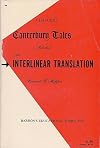
Note that this is a review of Vincent F. Hopper's Chaucer's Canterbury Tales (Selected): An Interlinear Translation. Most of the other reviews on this page are of The Canterbury Tales in general, in editions which should have been linked to that work, not to this interlinear Chaucer. As far as I'm concerned, the Canterbury Tales is a five star work, but the Hoppner version is about two stars.
This is an idea that works a lot better in theory than in practice. I have quite a few interlinear show more editions of various works -- the Greek Bible, Beowulf, others. For a language that is not English, the benefits of an interlinear are obvious and the detriments relatively few (unless you're trying to force yourself to become truly fluent in the source language, anyway). I had hoped that that would be true of Chaucer, too.
It isn't. Period. End of story.
Part of that is the way this interlinear is done. A good interlinear presents the main text continuously, usually with the translated text in smaller type below the main one. There is a clear main text and a clear subordinate text. This isn't done that way. Chaucer's text and Hopper's are placed one above the other, with Chaucer's text in roman type and Hopper's in italic, then a blank line. Thus the first three lines are:
Whan that Aprille with his shoures sote
When April with his showers sweet
The droghte of Marche hath perced to the rote,
The drought of March has pierced to the root,
And bathed every veyne in swich licour,
And bathed every vein in such liquor,
This format makes it much too easy to read both lines by accident, when one really wants to read only Chaucer and refer to the interlinear only when necessary. Particularly since the modern English text is pedestrian. What's more, the modern English text sometimes is literal and sometimes is pretty free, which doesn't really help with understanding the Middle English. Hopper's is really a text that belongs as a parallel, not an interlinear. That would save paper, too, and let Hopper include more tales.
And therein lies the other problem: This isn't really the Canterbury Tales. This thing has truly pressed most of the life out of the Tales. As well as misrepresenting them.
Oh, it's no great loss to drop a few tales. The Physician's Tale is no loss, and the Squire's Tale is enough to make your head spin. And the greatest of the Tales -- the Knight's, the Franklin's, the Wife of Bath's, the Pardoner's, the Nun's Priest's -- are here.
But so is the Prioress's Tale, and if any tale should be suppressed, it's that horrid racist one! And the Miller's Tale is gone, and so is "Sir Thopas"! You can't do Chaucer without Sir Thopas! I'd really like to have the Canon's Yeoman's Tale, too.
Now I understand why the Miller's Tale is gone -- it was too dirty for 1948. But if you don't have the Miller's Tale, then you don't have the link between the Knight's Tale and the Miller's Tale, and you miss much of the point of the Canterbury Tales, which often is not the tales themselves but the links. Yes, the greatest of the tales -- the five I listed above, in particular -- can stand on their own, but the fun of the rest lies in the links. Hopper turned a continuous work, even if one that was never completed and lacks many connections -- into a mere anthology.
Another strange effect of the interlinear translation is that it prevents Hopper from providing an adequate set of notes. There are only about six pages. So the note on "at the Tabard as I lay" says only that the Tabard is "The name of the inn." Which is true, but not particularly useful. It's important to know that the Tabard was a real inn, in a real Southwark, managed by a real Harry Bailly, from which actual pilgrims set out to the shrine of Saint Thomas Becket. (By the way, there is no gloss at all on "The holy blisful martir for to seek" -- no explanation of the cult of Becket!)
A few other comments: The introduction is pretty weak, though that's not all Hopper's fault; Chaucer Studies have come a long way since his time. But it's still not adequate, and there really isn't enough information about what Middle English edition Hopper used as his base.
All in all, a dreadful disappointment. Admittedly I read Middle English a lot better than most -- I can often go many lines of Chaucer without needing a gloss. But I genuinely think that anyone who wants to read Chaucer (which should be every native speaker of English -- we're talking about the man who made English a great literary language!) would do better with the Riverside Chaucer or its equivalent: You get all the Chaucer, all the notes, and all the meaning. show less
This is an idea that works a lot better in theory than in practice. I have quite a few interlinear show more editions of various works -- the Greek Bible, Beowulf, others. For a language that is not English, the benefits of an interlinear are obvious and the detriments relatively few (unless you're trying to force yourself to become truly fluent in the source language, anyway). I had hoped that that would be true of Chaucer, too.
It isn't. Period. End of story.
Part of that is the way this interlinear is done. A good interlinear presents the main text continuously, usually with the translated text in smaller type below the main one. There is a clear main text and a clear subordinate text. This isn't done that way. Chaucer's text and Hopper's are placed one above the other, with Chaucer's text in roman type and Hopper's in italic, then a blank line. Thus the first three lines are:
Whan that Aprille with his shoures sote
When April with his showers sweet
The droghte of Marche hath perced to the rote,
The drought of March has pierced to the root,
And bathed every veyne in swich licour,
And bathed every vein in such liquor,
This format makes it much too easy to read both lines by accident, when one really wants to read only Chaucer and refer to the interlinear only when necessary. Particularly since the modern English text is pedestrian. What's more, the modern English text sometimes is literal and sometimes is pretty free, which doesn't really help with understanding the Middle English. Hopper's is really a text that belongs as a parallel, not an interlinear. That would save paper, too, and let Hopper include more tales.
And therein lies the other problem: This isn't really the Canterbury Tales. This thing has truly pressed most of the life out of the Tales. As well as misrepresenting them.
Oh, it's no great loss to drop a few tales. The Physician's Tale is no loss, and the Squire's Tale is enough to make your head spin. And the greatest of the Tales -- the Knight's, the Franklin's, the Wife of Bath's, the Pardoner's, the Nun's Priest's -- are here.
But so is the Prioress's Tale, and if any tale should be suppressed, it's that horrid racist one! And the Miller's Tale is gone, and so is "Sir Thopas"! You can't do Chaucer without Sir Thopas! I'd really like to have the Canon's Yeoman's Tale, too.
Now I understand why the Miller's Tale is gone -- it was too dirty for 1948. But if you don't have the Miller's Tale, then you don't have the link between the Knight's Tale and the Miller's Tale, and you miss much of the point of the Canterbury Tales, which often is not the tales themselves but the links. Yes, the greatest of the tales -- the five I listed above, in particular -- can stand on their own, but the fun of the rest lies in the links. Hopper turned a continuous work, even if one that was never completed and lacks many connections -- into a mere anthology.
Another strange effect of the interlinear translation is that it prevents Hopper from providing an adequate set of notes. There are only about six pages. So the note on "at the Tabard as I lay" says only that the Tabard is "The name of the inn." Which is true, but not particularly useful. It's important to know that the Tabard was a real inn, in a real Southwark, managed by a real Harry Bailly, from which actual pilgrims set out to the shrine of Saint Thomas Becket. (By the way, there is no gloss at all on "The holy blisful martir for to seek" -- no explanation of the cult of Becket!)
A few other comments: The introduction is pretty weak, though that's not all Hopper's fault; Chaucer Studies have come a long way since his time. But it's still not adequate, and there really isn't enough information about what Middle English edition Hopper used as his base.
All in all, a dreadful disappointment. Admittedly I read Middle English a lot better than most -- I can often go many lines of Chaucer without needing a gloss. But I genuinely think that anyone who wants to read Chaucer (which should be every native speaker of English -- we're talking about the man who made English a great literary language!) would do better with the Riverside Chaucer or its equivalent: You get all the Chaucer, all the notes, and all the meaning. show less
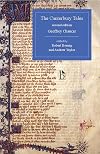
24. The Canterbury Tales by Geoffrey Chaucer
edition: Broadview Editions, Second Edition, edited by Robert Boenig & Andrew Taylor (2012)
OPD: 1400
format: 503-page large paperback
acquired: April read: Dec 30, 2023 – Apr 27, 2024, time reading: 62:07, 7.4 mpp
rating: 5
genre/style: Middle English Poetry theme: Chaucer
locations: on the road from London to Canterbury
about the author: Chaucer (~1342 – October 25, 1400) was an English poet and civil servant.
Chaucer is tricky because he’s hard show more to read and his tales vary so much, they are hard to summarize or classify. There is a Boccaccio element to them, but it’s a very different experience. Like Boccaccio, one thing that stands out is Chaucer’s naughty stories – sex and farts and trickery, money and wealth often playing a central role. The plague also has a role. One of Chaucer's tales is about three youths who hunt for Death because he has killed so many, and tragically find what they’re looking for. But what makes Chaucer most stand out from Boccaccio are the tellers of the tales. In Boccaccio, the ten youths are all of a class and many of them blend together, hard to differentiate. Chaucer’s tale is a social mixture – good and bad, wealthy and common. They are each distinct, wonderfully distinct, so much so that they, the tellers, stand out way more in memory than the tales themselves. These characters come out in the story prologues and there is simply more creativity, more social commentary, more insight into this medieval world than anything the stories themselves can accomplish, no matter how good the stories are. The Merchant’s Tale, my favorite, includes many references and wonderful debate between Hades and Persephone, a battle of the sexes. But it doesn’t touch on the Wife of Bath’s 1000-line prologue on being a wife to five men and all the experiences and judgments and justifications within, it’s not even close. She’s the best, but the Miller comes in early, drunkenly inserting this tale of sex and fart jokes, and bringing the whole level of content down. The Miller says, "I wol now quite the Knightes tale!" The knight has just told a more proper Boccaccio-inspired tale. By "quiting", the Miller means he his giving him some payback, getting back at him. (His tale has thematic consistency, but with common characters, farts and sex.) And the Cook’s tale is so awfully improper that it hasn’t been preserved, or maybe Chaucer only wrote 50 lines. Later, the Cook will throw up and fall off his horse. The Canon’s Yeoman exposes his own canon’s alchemy and trickery, getting fired on the spot before he tells his tale. This is all quite terrific stuff in and of itself, a rowdy uncontrolled mixture of societal levels, and mostly humorous confrontations (notably in a post-plague era of social mobility).
The other thing Chaucer does that Boccaccio doesn’t do in the Decameron, is write in verse. This is special all by itself. If you have read excerpts of Chaucer, there's a fair chance that like me you have been bewildered by it. It’s a weird language, oddly drawn out, then oddly compressed, obscuring the meaning, jamming in a weird accent. It doesn't make for great quotes or easy visits. But if you get deep into it, focus hard on it, something happens. It becomes magical, inimical, and lush in sound and freedom, the random inconsistent spelling as beautiful as the random inconsistent and sometimes heavily obscured phrasing. It also becomes recognizable. The more you read it, the more sense it makes. Although I was never able to scan it. Show me a page of Chaucer, and I’m immediately lost in indecipherable letters. I have to begin to read it and find the flow before it comes to life.
I find it interesting, but not inappropriate, that when Chaucer is discussed, it’s almost always his opening lines that are quoted - Whan that Aprill with hise shoures soote/The droghte of March had perced to the roote/And bathed every veyne in swich liquor/Of which vertu engendered is the flour What’s interesting is that Chaucer really doesn’t write that beautifully anywhere else. His language is generally much tamer and less trying, the rhythm more casual.
Last year I read [Troilus and Criseyde] and was enraptured in the language. There is no question the language there is better than here. And is drawn out, as he stays with long monologues that go pages and pages, the reader lost in the rhythms. This here is just not quite like that. Yes, he gets carried away a lot. But it’s always a little jerky and bumpy. There are monologues, but these are story telling monologues, with quick-ish plots. While I liked staying in the Merchant’s Tale, the writing clearly elevated and interesting, it was not the same. But T&C is both made and limited by its singular story. The Canterbury Tales expands on its cacophony of voices. The stories for me actually fade. But the prologues leave such lush impressions, they are somehow so real, and charming and Discworld-ish, and uncontained. It’s a much more powerful thing in my head.
As many know, I read this every morning beginning with April’s shoures soote on January 1. And, with the exception of the prose tales, the Tale of Melibee and The Pardoner’s Tale, it was always the best part of my day. The same could be said for T&C last year. I’ll miss being lost in this. A really special experience, and special gift to English speakers and the language's history.
2024
https://www.librarything.com/topic/360386#8521275 show less
edition: Broadview Editions, Second Edition, edited by Robert Boenig & Andrew Taylor (2012)
OPD: 1400
format: 503-page large paperback
acquired: April read: Dec 30, 2023 – Apr 27, 2024, time reading: 62:07, 7.4 mpp
rating: 5
genre/style: Middle English Poetry theme: Chaucer
locations: on the road from London to Canterbury
about the author: Chaucer (~1342 – October 25, 1400) was an English poet and civil servant.
Chaucer is tricky because he’s hard show more to read and his tales vary so much, they are hard to summarize or classify. There is a Boccaccio element to them, but it’s a very different experience. Like Boccaccio, one thing that stands out is Chaucer’s naughty stories – sex and farts and trickery, money and wealth often playing a central role. The plague also has a role. One of Chaucer's tales is about three youths who hunt for Death because he has killed so many, and tragically find what they’re looking for. But what makes Chaucer most stand out from Boccaccio are the tellers of the tales. In Boccaccio, the ten youths are all of a class and many of them blend together, hard to differentiate. Chaucer’s tale is a social mixture – good and bad, wealthy and common. They are each distinct, wonderfully distinct, so much so that they, the tellers, stand out way more in memory than the tales themselves. These characters come out in the story prologues and there is simply more creativity, more social commentary, more insight into this medieval world than anything the stories themselves can accomplish, no matter how good the stories are. The Merchant’s Tale, my favorite, includes many references and wonderful debate between Hades and Persephone, a battle of the sexes. But it doesn’t touch on the Wife of Bath’s 1000-line prologue on being a wife to five men and all the experiences and judgments and justifications within, it’s not even close. She’s the best, but the Miller comes in early, drunkenly inserting this tale of sex and fart jokes, and bringing the whole level of content down. The Miller says, "I wol now quite the Knightes tale!" The knight has just told a more proper Boccaccio-inspired tale. By "quiting", the Miller means he his giving him some payback, getting back at him. (His tale has thematic consistency, but with common characters, farts and sex.) And the Cook’s tale is so awfully improper that it hasn’t been preserved, or maybe Chaucer only wrote 50 lines. Later, the Cook will throw up and fall off his horse. The Canon’s Yeoman exposes his own canon’s alchemy and trickery, getting fired on the spot before he tells his tale. This is all quite terrific stuff in and of itself, a rowdy uncontrolled mixture of societal levels, and mostly humorous confrontations (notably in a post-plague era of social mobility).
The other thing Chaucer does that Boccaccio doesn’t do in the Decameron, is write in verse. This is special all by itself. If you have read excerpts of Chaucer, there's a fair chance that like me you have been bewildered by it. It’s a weird language, oddly drawn out, then oddly compressed, obscuring the meaning, jamming in a weird accent. It doesn't make for great quotes or easy visits. But if you get deep into it, focus hard on it, something happens. It becomes magical, inimical, and lush in sound and freedom, the random inconsistent spelling as beautiful as the random inconsistent and sometimes heavily obscured phrasing. It also becomes recognizable. The more you read it, the more sense it makes. Although I was never able to scan it. Show me a page of Chaucer, and I’m immediately lost in indecipherable letters. I have to begin to read it and find the flow before it comes to life.
I find it interesting, but not inappropriate, that when Chaucer is discussed, it’s almost always his opening lines that are quoted - Whan that Aprill with hise shoures soote/The droghte of March had perced to the roote/And bathed every veyne in swich liquor/Of which vertu engendered is the flour What’s interesting is that Chaucer really doesn’t write that beautifully anywhere else. His language is generally much tamer and less trying, the rhythm more casual.
Last year I read [Troilus and Criseyde] and was enraptured in the language. There is no question the language there is better than here. And is drawn out, as he stays with long monologues that go pages and pages, the reader lost in the rhythms. This here is just not quite like that. Yes, he gets carried away a lot. But it’s always a little jerky and bumpy. There are monologues, but these are story telling monologues, with quick-ish plots. While I liked staying in the Merchant’s Tale, the writing clearly elevated and interesting, it was not the same. But T&C is both made and limited by its singular story. The Canterbury Tales expands on its cacophony of voices. The stories for me actually fade. But the prologues leave such lush impressions, they are somehow so real, and charming and Discworld-ish, and uncontained. It’s a much more powerful thing in my head.
As many know, I read this every morning beginning with April’s shoures soote on January 1. And, with the exception of the prose tales, the Tale of Melibee and The Pardoner’s Tale, it was always the best part of my day. The same could be said for T&C last year. I’ll miss being lost in this. A really special experience, and special gift to English speakers and the language's history.
2024
https://www.librarything.com/topic/360386#8521275 show less
Lists
The Trojan War (1)
Edad Media (1)
AP Lit (1)
United Kingdom (1)
Best Satire (1)
current (1)
BitLife (1)
Unread books (1)
bound (1)
Best First Lines (1)
Poetry Corner (1)
Lectuurlijst (1)
poetry (1)
Shaking a Leg (1)
important (1)
Yet another list (1)
Five star books (1)
Sonlight Books (2)
Folio Society (3)
. (1)
Metafiction (1)
. (1)
Elegant Prose (1)
A Reading List (1)
Ambleside Books (1)
Western Canon (1)
Western Canon (1)
el (1)
Awards


You May Also Like


Associated Authors
Statistics
- Works
- 466
- Also by
- 55
- Members
- 45,831
- Popularity
- #351
- Rating
- 3.8
- Reviews
- 363
- ISBNs
- 1,091
- Languages
- 22
- Favorited
- 107


