
John Milton (1) (1608–1674)
Author of Paradise Lost
For other authors named John Milton, see the disambiguation page.
About the Author
John Milton, English scholar and classical poet, is one of the major figures of Western literature. He was born in 1608 into a prosperous London family. By the age of 17, he was proficient in Latin, Greek, and Hebrew. Milton attended Cambridge University, earning a B.A. and an M.A. before secluding show more himself for five years to read, write and study on his own. It is believed that Milton read evertything that had been published in Latin, Greek, and English. He was considered one of the most educated men of his time. Milton also had a reputation as a radical. After his own wife left him early in their marriage, Milton published an unpopular treatise supporting divorce in the case of incompatibility. Milton was also a vocal supporter of Oliver Cromwell and worked for him. Milton's first work, Lycidas, an elegy on the death of a classmate, was published in 1632, and he had numerous works published in the ensuing years, including Pastoral and Areopagitica. His Christian epic poem, Paradise Lost, which traced humanity's fall from divine grace, appeared in 1667, assuring his place as one of the finest non-dramatic poet of the Renaissance Age. Milton went blind at the age of 43 from the incredible strain he placed on his eyes. Amazingly, Paradise Lost and his other major works, Paradise Regained and Samson Agonistes, were composed after the lost of his sight. These major works were painstakingly and slowly dictated to secretaries. John Milton died in 1674. (Bowker Author Biography) show less
Series
Works by John Milton
The English Poems of Milton (Wordsworth Poetry) (Wordsworth Collection) (1990) 528 copies, 4 reviews
The Complete Poetry and Essential Prose of John Milton (Modern Library) (2007) — Author; Author — 242 copies, 1 review
Areopagitica: And, of Education : With Autobiographical Passages from Other Prose Works (Crofts Classics) (1951) 145 copies, 1 review
Paradise Regained, Samson Agonistes, and the Complete Shorter Poems (Modern Library Classics) (1600) 50 copies
L'Allegro and Other Poems, Paradise Lost Books I–III, with Notes for Careful Study [The Riverside Literature Series] (1911) 12 copies
The Poetical Works of John Milton With Introductions by David Masson and Biographical Sketch by Nathan Haskell Dole (1892) — Author — 12 copies, 1 review
Milton 11 copies
Selected Essays: of Education, Areopagitica, the Commonwealth; With Early Biographies of Milton, Introd., and Notes. Edited by Laura E. Lockwood (2012) 11 copies
Eikonoklastēs : in answer to a book intitul'd Eikōn basilikē, the portracture of his Sacred Majesty King ... (2008) 7 copies
A Treatise Of Civil Power In Ecclesiastical Causes: That It Is Not Lawful For Any Power On Earth To Compel In Matters Of Religion (2004) 7 copies, 1 review
The Doctrine and Discipline of Divorce: In Two Books : Also the Judgement of Martin Bucer : Tetrachordon : and an Abridgement of Colasterion (1643) 7 copies
Writings and Areopagitica 7 copies
A Defence of the People of England 7 copies
The Poetical Works: Volume II: Paradise Regain'd, Samson Agonistes, Poems Upon Several Occasions, both English and Latin (2000) 6 copies
The works of Mr. John Milton 6 copies
John Milton: Complete Works 6 copies
Milton's Ode On The Morning Of Christ's Nativity: L'Allegro, Il Penseroso And Lycidas (2007) 5 copies
Works of John Milton. Including Paradise Lost, Paradise Regained, Samson Agonistes, Areopagitica & more (Mobi Collected Works) (2008) 5 copies
Samson Agonistes and Other Poems: A Broadview Anthology of British Literature Edition (2013) 5 copies
Paradise Lost and Paradise Regained In Plain and Simple English (A Modern Translation and the Original Version) (2012) 5 copies
An apology for Smectymnuus with the reason of church-government by John Milton ... (1654) (2011) 5 copies
The Poetical Works of John Milton, with Memoir, Explanatory and Glossarial Notes, Etc. (Lansdowne Poets) (1848) 5 copies
The works of John Milton, in verse and prose, printed from the original editions, with a life of the author by the Rev. John Mitford (1851) 4 copies
The Prose Works of John Milton: With a Biographical Introduction by Rufus Wilmot Griswold. Vol II. (1875) 4 copies, 1 review
Complete Prose Works of John Milton, , Volume Seven, 1659-1660 (Complete Prose Works of John Milton) (1980) 4 copies
Paradise Lost: "A Poem Written in Ten Books": An Authoritative Text of the 1667 First Edition (Medieval and Renaissance Literary Studies) (2007) 4 copies
Britain Under Trojan, Roman, Saxon Rule; England Under Richard III; The Reign Of Henry VII (1870) (2008) 4 copies
The Prose Works of John Milton. Volume I: Eikonoklastes / The Tenure of Kings and Magistrates. (2011) 4 copies
Paradise regained: And other works 3 copies
Milton : selected poetry and prose 3 copies
The Poetical Works of John Milton, with biographical notice by John Bradshaw. Paradise Lost (Canterbury Poets) (1887) 3 copies
Complete Works 3 copies
Milton's earlier poems, including translations by William Cowper of those written in Latin and Italian (2007) 3 copies
A treatise on Christian doctrine, compiled from the holy Scriptures alone, tr. by C.R. Sumner (2010) 3 copies
On Shakespeare 3 copies
Paradise Regained, Samson Agonistes, Comus, and Arcades. [With an additional engraved titlepage and engraved plates.] (2009) 3 copies
Comus, Lycidas and Other Poems 3 copies
The Complete Poetry 3 copies
The Riverside Literature Series of Education Areopagitica the Commonwealth Selected Essays by John Milton (1911) 3 copies
Paradise Lost, Paradise Regained, and other poems. The Poetical Works Of John Milton (2012) 2 copies
Complete prose works of John Milton 2 copies
English poems by John Milton 2 copies
The Poetical Works of John Milton. [Includes Paradise Lost, Paradise Regained, other poems] (1882) 2 copies
Poetical Works, Cambridge Edition 2 copies
Prose Works, ed. by Robert Fletcher 2 copies
A shorter Milton 2 copies
Il Penseroso 2 copies
Milton [Poetic Works] Selected 2 copies
The Poetical Works of John Milton. Reprinted from the Best Editions with Biographical Notice, etc. (1870) 2 copies
The Passion 2 copies
Poems; the 1645 ed 2 copies
Milton on the Son of God and the Holy Spirit, from his Treatise on Christian doctrine (1973) 2 copies
A Paraphrase on Psalm 114 2 copies
Paradise Lost and other works 2 copies
Paradise lost; a concordance — Contributor — 2 copies
John Milton's Last Thoughts On the Trinity, Extr. From 'a Treatise On Christian Doctrine' [Tr. by C.R. Sumner] (2017) 2 copies
Milton's Political Works. A completer Collection of the Historical, Political & Miscellaneous Works 2 copies
The poetical works of John Milton. Reprinted from the Chandos poets. With memoir, explanatory notes, etc (1868) 2 copies
Paradise Lost: Book II 2 copies
Sonnet XV 2 copies
Sonnet XVI 2 copies
The Poetical Works of John Milton: Vol. III - Paradise Regained and Samson Agonistes (1882) 2 copies
Select Minor Poems of John Milton (Hymn on the Nativity; L'Allegro; Il Penseroso; Comus; Lycidas; Sonnets) (1907) 2 copies
THE POETICAL WORKS OF JOHN MILTON 2 copies
Le Paradis Perdu, Poeme, Traduit de l'Anglois de Milton en vers François: Tome Second (2012) 2 copies
Psalm LXXXVIII 1 copy
The Poems of John Milton 1 copy
To the Lord General Cromwell 1 copy
Paraiso Perdido — Director — 1 copy
Fix Here 1 copy
On the Lord General Fairfax 1 copy
Paradise Lost: Books IX–X 1 copy
Three poems of John Milton 1 copy
Paradise Lost [annotated] 1 copy
John milton t. 2 1 copy
Little Masterpieces - Milton 1 copy
The Ready and Easy way to Establish a Free Commonwealth. Edited With Introd., Notes, and Glossary (2022) 1 copy
Paradise Lost Simplified!: Includes Modern Translation, Study Guide, Historical Context, Biography, and Character Index (2013) 1 copy
Psalm LXXXII 1 copy
Psalm LXXXVII 1 copy
Upon the Circumcision 1 copy
Sonnet IV 1 copy
Sonnet III 1 copy
Sonnet II 1 copy
Sonnet I 1 copy
Canzone 1 copy
Arcades 1 copy
Another on the Same 1 copy
On the University Carrier 1 copy
Song on May Morning 1 copy
At a Solemn Musick 1 copy
Psalm CXXXVI 1 copy
Sonnet VI 1 copy
Justo Edovardo King 1 copy
Sonnet V 1 copy
Sonnet VII 1 copy
Psalm LXXXVI 1 copy
Psalm II 1 copy
Psalm LXXXV 1 copy
Psalm LXXXIV 1 copy
Psalm LXXXIII 1 copy
Psalm LXXXI 1 copy
Psalm LXXX 1 copy
Psalm VIII 1 copy
Psalm VII 1 copy
Psalm VI 1 copy
Psalm V 1 copy
Psalm IV 1 copy
Psalm III 1 copy
Psalm I 1 copy
Sonnet VIII 1 copy
Sonnet XIX 1 copy
Sonnet XVIII 1 copy
Sonnet XVII 1 copy
Sonnet XIV 1 copy
Sonnet XIII 1 copy
Sonnet XII 1 copy
Sonnet XI 1 copy
The Fifth Ode of Horace 1 copy
At a Vacation Exercise 1 copy
Sonnet X 1 copy
Sonnet IX 1 copy
Paradisus amissus. Poema Joannis Miltoni. Latine redditum a Guilielmo Dobson, ... Volume 1 of 2 (Latin Edition) (2010) 1 copy
The Eve of St. Agnes, Pastora Poems, L'Allegro - All in One Volume — Contributor — 1 copy
MacBeth, Areopagitica 1 copy
AREOPAGJIKA 1 copy
Milton's Poems Vol 1 1 copy
Milton's Poems Vol 2 1 copy
Mask of Comus 1 copy
POETICAL WORK 1 copy
Some newly discovered stanzas written by John Milton on engraved scenes illustrating Ovid's Metamorphoses; (1973) 1 copy
The works John Milton 1 copy
Epistolarum Familiarum 1 copy
Complete Poems 1 copy
Milton's Paradise Regained 1 copy
Paradisus amissus. Poema Joannis Miltoni. Latine redditum a Guilielmo Dobson, ... Volume 2 of 2 (Latin Edition) (2010) 1 copy
Asclepiads 1 copy
Carmina Elegiaca 1 copy
Ad Ioannem Rousium 1 copy
In Effigiei eius Sculptorem 1 copy
Apologus de Rustico et Hero 1 copy
The poems 1 copy
Silvarum Liber 1 copy
Elegiarum Liber 1 copy
Elegia II 1 copy
Milton. Le Paradis perdu, traduction de Chateaubriand, précédé de Réflexions sur la vie et les écrits de Milton par Lamartine (1855) 1 copy
The poetical works of John Milton Reprinted from the best editions, with biographical notice, etc 1 copy
Raj odzyskany 1 copy
Elegia I 1 copy
Elegia III 1 copy
Naturam non pati senium 1 copy
Epitaphium Damonis 1 copy
Mansus 1 copy
Ad Salsillum 1 copy
Ad Patrem 1 copy
In Obitum Praesulis Eliensis 1 copy
Elegia IV 1 copy
In Quintum Novembris 1 copy
Philosophus ad Regem 1 copy
Psalm CXIV 1 copy
Ad eandem 1 copy
Ad Leonoram Romae canentem 1 copy
In Inventorem Bombardae 1 copy
In eandem 1 copy
In Proditionem Bombardicam 1 copy
Haec ego mente 1 copy
Elegia VII 1 copy
Elegia VI 1 copy
Elegia V 1 copy
The poetical works of John Milton reprinted from best editions with biographical notice etc., 1 copy, 1 review
The complete poetical works of Milton and Young (Blackwood's universal library of standard authors) 1 copy
MILTON`S LYCIDAS AND OTHER POEMS — Author — 1 copy
Verloren paradijs 1 copy
The Poetical Works of John Milton: With Explanatory Notes, Etc.: In Two Volumes -- Vol. I (1885) 1 copy
Samson walczący 1 copy
Milton's Select Minor Poems 1 copy
The Poetical Works of John Milton ~ With Memoir, Explanatory Notes etc. (The "Grosvenor" Poets) (1896) 1 copy
Milton's Poems 1892 1 copy
Works, in Verse and Prose. Printed from the Original Editions with a Life of the Author by John Mitford; Volume 5 (2016) 1 copy
The Poetical Works of John Milton. Edited after the Original Texts by Rev H C Beeching (1930) 1 copy
The Poetical Works ...: Edited After the Original Texts by the Rev. H.C. Beeching .... [ 1900 ] (2009) 1 copy
Four poems 1 copy
The Complete Poetical Works of John Milton: With Explanatory Notes, and a Life of the Author (2015) — Author — 1 copy
L'ALLEGRO IL PENSEROSO AND OTHER POEMS with Preparatory and Explanatory Notes (Maynard's English Classic Series, 2) (1898) 1 copy
Doctrina Christiana 1 copy
Selected Essays 1 copy
Paradise Lost: Book I 1 copy
Arcades and sonnets 1 copy
Imagens de um mundo trêmulo 1 copy
The Poetical Works of John Milton: The Aldine Edition of the British Poets [3 Volumes] (1851) 1 copy
Various 1 copy
The Cambridge literature series : number 7 ; Milton : l'allegro, il penseroso, comus, lycidas 1 copy
Poetry & the Drama 1 copy
Literae Pseudo-Senatus Anglicani, Cromwellii, reliquorumque perduellium nomine ac jussu conscriptae a Joanne Miltono 1 copy, 1 review
Milton's poetical works Volume 2: With life, critical dissertation, and explanatory notes (1853) 1 copy
Milton's Works 1 copy
Paradise Lost: Books I & IX 1 copy
Selections from the Poetical Works of John Milton; with introduction, suggestions for study, notes, and glossary (2010) 1 copy
Milton"s Paradise Lost illustrated by Gustave Dorï¿Â½ edited with notes and a life of Milton by Robert Vaughan Part 15 (1890) 1 copy
Sansão Agonista 1 copy
The early poems 1 copy
Milton's Poems. Textual editing, glossary, and introduction by B. A. Wright (Everyman's Library 384) 1 copy
The Poetical Works of John Milton Edited after the Original Texts by the Rev. H.C. Beeching, M.A. 1 copy
Jana Miltona Ztracený ráj 1 copy
Lycidas, Lines Composed a Few Miles above Tintern Abbey & Ode on the Intimations of Immortality 1 copy
Paradiso perduto, Il 1 copy
Le Paradis perdu de Milton, suivi de Essai sur la littérature angloise, par Chateaubriand. Nouvelle édition (1873) 1 copy
The Poetical Works of John Milton. A New Edition, Carefully Revised, from the Texts of Thomas Newton, D.D. [Leatherbound] (1860) 1 copy
The Poetical Works of John Milton. To which is prefixed a biography of the author by his nephew, Edward Phillips (1859) 1 copy
Prose works 1641-1650 1 copy
Paradise Lost: Books I–III 1 copy
Poemata -ED. Biligue 1 copy
Areopagitica, etc 1 copy
Milton's poetical works Volume 1: With life, critical dissertation, and explanatory notes (1853) 1 copy
Associated Works
William Shakespeare: The Complete Works (1623) — Contributor, some editions — 35,715 copies, 177 reviews
The Making of a Poem: A Norton Anthology of Poetic Forms (2000) — Contributor — 1,474 copies, 9 reviews
The Best Poems of the English Language: From Chaucer Through Robert Frost (2004) — Contributor — 1,249 copies, 3 reviews
Literature: An Introduction to Fiction, Poetry, and Drama (1995) — Contributor, some editions — 1,017 copies, 7 reviews
Essays, Civil and Moral, and The New Atlantis; Areopagitica and Tractate on Education; Religio Medici (1909) — Contributor — 642 copies
World Poetry: An Anthology of Verse from Antiquity to Our Time (1998) — Contributor — 499 copies, 2 reviews
The Graphic Canon, Vol. 1: From the Epic of Gilgamesh to Shakespeare to Dangerous Liaisons (2012) — Contributor — 304 copies, 7 reviews
Teaching with Fire: Poetry That Sustains the Courage to Teach (2003) — Contributor — 225 copies, 1 review
The Broadview Anthology of Seventeenth Century Verse & Prose (2000) — Contributor, some editions — 76 copies
The Roads from Bethlehem: Christmas Literature from Writers Ancient and Modern (1993) — Contributor — 34 copies, 1 review
Out of the Best Books: An Anthology of Literature, Vol. 3: Intelligent Family Living (1967) — Contributor — 34 copies
Grolier Classics: Crime and Punishment, Diary of Samuel Pepys, Confessions of Saint Augustine, Paradise Lost (1955) 29 copies
Oogst Der Tijden. keur uit de werken van schrijvers en dichters aller volken en eeuwen (1940) — Contributor — 12 copies
Edexcel Poetry Anthology for Advanced subsidiary and advanced GCE examinations in English Literature (2000) — Contributor, some editions — 6 copies
The Great Books First Year Volume Five 9 Shakespeare Macbeth 10 Milton Areopagitica (The Great Books Foundation) (1955) 6 copies
A Book of 'Characters' from Theophrastus, Joseph Hall, Sir Thomas Overbury, Nicolas Breton, John Earle, Thomas Fuller, (1924) — Contributor — 4 copies
Elgar : Dream of Gerontius + Parry : Blest Pair of Sirens + I Was Glad {sound recording} {Hickox/LSO} (1988) — Text [Sirens] — 2 copies
Tagged
Common Knowledge
- Birthdate
- 1608-12-09
- Date of death
- 1674-11-08
- Gender
- male
- Education
- Christ's College, Cambridge (BA|1629|MA|1632)
St Paul's School, London, England - Occupations
- poet
man of letters
civil servant - Organizations
- Commonwealth of England
- Relationships
- Milton, John (father)
- Short biography
- John Milton was an English poet, polemicist, man of letters, and a civil servant for the Commonwealth of England under Oliver Cromwell. He wrote at a time of religious flux and political upheaval, and is best known for his epic poem Paradise Lost (1667), written in blank verse.John Milton (9 December 1608 – 8 November 1674) was an English poet and intellectual who served as a civil servant for the Commonwealth of England under its Council of State and later under Oliver Cromwell. He wrote at a time of religious flux and political upheaval, and is best known for his epic poem Paradise Lost (1667), written in blank verse, and widely considered to be one of the greatest works of literature ever written.
Writing in English, Latin, Greek, and Italian, he achieved international renown within his lifetime; his celebrated Areopagitica (1644), written in condemnation of pre-publication censorship, is among history's most influential and impassioned defences of freedom of speech and freedom of the press. His desire for freedom extended into his style: he introduced new words (coined from Latin and Ancient Greek) to the English language, and was the first modern writer to employ unrhymed verse outside of the theatre or translations.
William Hayley's 1796 biography called him the "greatest English author", and he remains generally regarded "as one of the preeminent writers in the English language", though critical reception has oscillated in the centuries since his death (often on account of his republicanism). Samuel Johnson praised Paradise Lost as "a poem which...with respect to design may claim the first place, and with respect to performance, the second, among the productions of the human mind", though he (a Tory and recipient of royal patronage) described Milton's politics as those of an "acrimonious and surly republican". Poets such as William Blake, William Wordsworth and Thomas Hardy revered him. - Cause of death
- consumption
- Nationality
- England
- Birthplace
- Bread Street, Cheapside, London, Middlesex, England, UK
- Places of residence
- London, Middlesex, England, UK
Cambridge, Cambridgeshire, England, UK - Place of death
- Bunhill, London, Middlesex, England, UK
- Burial location
- St. Giles' Church without Cripplegate, London, Middlesex, England, UK
- Map Location
- England, UK
Members
Discussions
Arion Press Don Quixote or Paradise Lost? Opinions please. in Fine Press Forum (July 2025)
How did you manage to read Paradise Lost? in Poetry Fool (August 2021)
John Milton in Philosophy and Theory (May 2016)
Milton? in Book talk (December 2015)
Photos of Paradise Lost A Poem in Twelve Books illustrated by Ian Pollock in Folio Society Devotees (October 2013)
GROUP DISCUSSION: Milton's Paradise Lost in 75 Books Challenge for 2012 (November 2012)
John Milton in Philosophy and Theory (May 2007)
Reviews
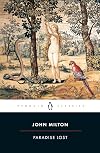
One of those rare books that feels absolutely complete, that feels like supreme art. Paradise Lost manages to be in harmony with its Biblical roots, its Classical forebears (blank verse epics like those of Homer and Virgil) and also with those of a more modern disposition. His reading of the character of Satan is particularly fascinating; the Adversary is charismatic and (whisper it) speaks a lot of sense regarding faith, reason and deference to power.
This reading is particularly bold when show more you consider when the book was written. People were being imprisoned and killed for heresy and for blasphemy (Milton went over to Florence at one point and met with Galileo), and lines regarding the righteous overthrow of rulers were particularly dangerous at a time when Charles II had ascended to the restored throne of England after a period of civil war. The story behind the book shows the importance of physical and moral courage for a writer who wants to write honestly, who is principled in his art, and you cannot but respect Milton for that.
But for all the subversive energy which Milton's lines contain, particularly in the early Books of Paradise Lost, the book also works just as well – if not better – with a straight reading. Milton's conceptualization of Hell as a place where you end up if you are bitter and resentful and unwilling to accept (and then transcend) your limitations – a conceptualization expanded on through Satan's soliloquizing – is one that shows why the Christian mythos remains one of enduring utility. Milton's Satan is attractive and modern, but Milton also shows you why it is dangerous to follow him down, turning your back on God.
In addition to getting its philosophy harmonious, Paradise Lost also works exceptionally well as story. There are some arresting dramatic scenes, from the imperial fury of the battle for Heaven between Satan's rebels and the loyal angels, to Satan's lonely moment of lust for Eve, and Adam's wide-eyed exploration of Paradise. Adam's decision to knowingly follow Eve down into Sin – a decision made out of love – aches with poignancy, as does the perfect ending in which the angel Michael takes Adam and Eve by their hands and gently leads them out of Eden into their exile. Milton's conceptualization of the cosmos is also fascinating to explore, and extraordinarily prescient. He brings to us concepts such as the void of space, infinity, alien worlds ("Space may produce new worlds" (pg. 19)), and perhaps even – this is my own personal reading – an early conceptualization of dark matter ("Things not revealed, which th' invisible King, Only omniscient, hath suppressed in night, To none communicable in earth or Heaven." (pg. 153)).
Admittedly, the blank verse poetry can be difficult, and you can tire easily when reading the book, but it is also incredibly rich, with lines that have become iconic ("Better to reign in Hell, than serve in Heav'n," for example (pg. 9)), a wealth of allusion (the endnotes to my Penguin Classics edition are almost as long as the book itself) and a cultural imprint shared by precious few books. The use of the word 'space' to describe the cosmos comes from Milton, and much of what we think we know as the Biblical story of Adam and Eve, and of the rebellion of the angels under Satan, comes not from Genesis but from here. You're reading a book of phenomenal influence when you read Paradise Lost, a fundamental exploration of the Western cultural conceptualization of life. Like the new Adam addressing the sun, you marvel that there can be such sublime magnificence brought into the world. show less
This reading is particularly bold when show more you consider when the book was written. People were being imprisoned and killed for heresy and for blasphemy (Milton went over to Florence at one point and met with Galileo), and lines regarding the righteous overthrow of rulers were particularly dangerous at a time when Charles II had ascended to the restored throne of England after a period of civil war. The story behind the book shows the importance of physical and moral courage for a writer who wants to write honestly, who is principled in his art, and you cannot but respect Milton for that.
But for all the subversive energy which Milton's lines contain, particularly in the early Books of Paradise Lost, the book also works just as well – if not better – with a straight reading. Milton's conceptualization of Hell as a place where you end up if you are bitter and resentful and unwilling to accept (and then transcend) your limitations – a conceptualization expanded on through Satan's soliloquizing – is one that shows why the Christian mythos remains one of enduring utility. Milton's Satan is attractive and modern, but Milton also shows you why it is dangerous to follow him down, turning your back on God.
In addition to getting its philosophy harmonious, Paradise Lost also works exceptionally well as story. There are some arresting dramatic scenes, from the imperial fury of the battle for Heaven between Satan's rebels and the loyal angels, to Satan's lonely moment of lust for Eve, and Adam's wide-eyed exploration of Paradise. Adam's decision to knowingly follow Eve down into Sin – a decision made out of love – aches with poignancy, as does the perfect ending in which the angel Michael takes Adam and Eve by their hands and gently leads them out of Eden into their exile. Milton's conceptualization of the cosmos is also fascinating to explore, and extraordinarily prescient. He brings to us concepts such as the void of space, infinity, alien worlds ("Space may produce new worlds" (pg. 19)), and perhaps even – this is my own personal reading – an early conceptualization of dark matter ("Things not revealed, which th' invisible King, Only omniscient, hath suppressed in night, To none communicable in earth or Heaven." (pg. 153)).
Admittedly, the blank verse poetry can be difficult, and you can tire easily when reading the book, but it is also incredibly rich, with lines that have become iconic ("Better to reign in Hell, than serve in Heav'n," for example (pg. 9)), a wealth of allusion (the endnotes to my Penguin Classics edition are almost as long as the book itself) and a cultural imprint shared by precious few books. The use of the word 'space' to describe the cosmos comes from Milton, and much of what we think we know as the Biblical story of Adam and Eve, and of the rebellion of the angels under Satan, comes not from Genesis but from here. You're reading a book of phenomenal influence when you read Paradise Lost, a fundamental exploration of the Western cultural conceptualization of life. Like the new Adam addressing the sun, you marvel that there can be such sublime magnificence brought into the world. show less
I've just finished reading Book X of *Paradise Lost*, and I need to start putting down my thoughts about what the book appears to selling as its lesson. First off, I want to note that I was sold on *Paradise Lost* by it being described as the origin of the suave, charismatic bastard version of Satan that is usually adopted in the modern day, in contrast
However, at this point I can no longer look past the paternalistic themes ingrained in the nature of God creating Man to worship him, then birthing Eve from Adam's rib as a submissive and subservient mate. Eve here is always, always depicted as either: a) wrong and incapable of grasping current situations, or b) actively playing into Satan's tricks and treated as some sort of tool to be used by Sin. Book X is by far the worst offender, in this chapter Satan gloats over his success in perverting Eve and through her wheedling, Adam, we also see God reaffirm Jesus' role in taking blame for humanity's sins, and lastly how Adam and Eve try to amend their failure to ignore Satan's perversions. But the details of this tame description reveal a shocking moral framework which the book appears to hold.
Naturally we're meant to view Adam, and certainly God, as the "good guys" of this story, and yet we're treated to a thoughtless Creator who places a mousetrap in front of a child and is surprised when the get hurt, and to an emotionally abusive husband who asks why God didn't keep all femininity out of mankind like he did in his angels. Maybe that's what people meant when they called *Paradise Lost* the inspiration for the romantic Lucifer, that he's by comparison no worse than God and Man themselves.
I want to single out the view that God holds on Adam and Eve's failure because it's a truly nihilistic take on human existence. In his conversation with his angels and with Jesus, God declares that the punishment of death that he'd emphasized to Adam and Eve was not fit, and instead that their seed be "like lead". This idea is parroted by Lucifer, Sin, and Death in their conversation and with Adam and Eve in theirs. The three takes vary slightly:
- God implies that the mere existence of free will led to an inevitable downfall met with the temptation of Satan.
- Sin and Death rejoice at the idea that the lineage of humanity following Adam and Eve will be weakened to Satan's temptations, which plays up to his ego.
- Eve suggests willful abstinence to defeat the will of Lucifer, and is shot down by Adam because it goes against God's gifts.
Ultimately though all of these come from God's (ironically) lack of faith in his creation. So I have to ask: are we meant to agree with God here? Are we meant to think that the point of *Paradise Lost* is that when faced with temptation humans will always falter, and are therefore beyond hope? He serves the role of a jailor, someone who condemns all humanity to death and continued subjection to sin for one Original Sin. It reminds me of that part of the episode "Mac Day" of *It's Always Sunny In Philadelphia*, where Mac describes God as someone people live in constant fear of, like he's breathing down their back every second, whereas Country Mac describes the beauty of our world and the miracle of our lives. For a book like this, failing its moral framework and the ethical implications that it holds up feels antithetical to its purpose. If the point isn't to investigate and reaffirm the moral victory of God and Jesus over Satan and his rebellion, then what is the point? Is it really just John Milton playing with action figures?
Un sonetto sulla luce, inserito in questo libro di composizioni poetiche di John Milton, stamattina mi ha fatto comprendere come si possa camminare anche al buio, nella luce. Non vi sembri strano quanto dico. Appena uscito dal portone di casa, mi sono inoltrato lungo i portici di via Saffi a Bologna, deciso a fare quattro passi, anche se il freddo del mattino era abbastanza pungente.
Davanti e dietro di me, passanti frettolosi ed infreddoliti, avvolti nei loro pensieri si incrociavano con show more altri provenienti in senso inverso. I loro passi risuonavano sul selciato mentre a sinistra dei portici, in strada, scorreva veloce il traffico di sempre. Faceva davvero freddo. Un tagliente vento di tramontana sferzava i volti facendoli rinchiudere nelle sciarpe e nei colli alti dei cappotti. Tutti sembravano avere una destinazione da raggiungere, una meta da conquistare. All'improvviso, da un portoncino laterale alla mia destra, esce un uomo. La sua figura preceduta da un bastone si allunga davanti a sé. Chiude lentamente il portoncino d'ingresso, svolta verso destra e comincia a camminare. Mi rendo conto che è un cieco e mi accorgo di cominciare a pedinarlo.
Non ho mai fatto una esperienza del genere, seguire il cammino di una persona che si definisce "non vedente". Un essere umano che, nel buio più assoluto, accompagnato soltanto da un bastone bianco, si inoltra di prima mattina, nel traffico della città. Lo seguo a breve distanza e mi rendo conto che è un giovane. Non avrà più di una trentina di anni. Cammina al centro della lunga fila di portici di questa strada che porta diritto al centro della città. Mi sembra che conosca bene il suo percorso, sembra seguire una linea invisibile lungo i portici facendosi guidare dal suo bianco bastone. Schiva abilmente chi gli viene incontro, evitando chi, avendolo di fronte, non si rende conto di stare per scontrarsi con qualcuno che non ha il dono della luce.
Il barbone che di solito staziona all'ingresso del supermercato lo saluta. Lui risponde agitando il suo bastone. Sono sempre più attento a vedere come cammina, mi incuriosisce la sua destinazione. Decido di seguire i suoi passi. Supera una prima fermata dell'autobus, passa anche la seconda. Alla terza si ferma. Non so come abbia fatto. Lo affianco e finalmente riesco a guardarlo in faccia. Un cappuccio gli copre la testa, un naso lungo ed affinato alla Dante Alighieri, un paio di occhiali scuri difendono i suoi occhi. Sta lì impalato alla fermata. Osservo il pugno della sua mano al braccio destro. Le dita si aprono e si chiudono nervosamente. Forse per il freddo, forse come per ricaricarsi di una energia nascosta che gli viene da dentro. Ogni tanto abbozza una sorta di sorriso che a me sembra un ghigno. Come se parlasse con qualcuno dentro. Ma non appare triste.
Passa un primo autobus, non accenna a salire. Ne passa un altro. Un uomo gli si affianca. I due si scambiano alcune frasi che non riesco a comprendere. Arriva un terzo autobus, il numero 38. Si ferma giusto all'altezza dell'uomo. Si apre la porta anteriore. Lui monta guidato dal suo bastone. Dopo d'avere detto qualcosa in direzione del conducente, sale, percorre il corridoio centrale, aggancia una presa. L'autobus si allontana. Ed io resto a terra a riflettere sulla fortuna della luce che mi circonda. Mi guardo intorno. Mi accorgo che nessuno ha fatto caso a lui. Ma so che gli altri non hanno visto quello che non ho veduto nemmeno io. Elogio della luce.
When I consider how my light is spent
Ere half my days in this dark world and wide,
And that one talent which is death to hide
Lodg'd with me useless, though my soul more bent
To serve therewith my Maker, and present
My true account, lest he returning chide,
"Doth God exact day-labour, light denied?"
I fondly ask. But Patience, to prevent
That murmur, soon replies: "God doth not need
Either man's work or his own gifts: who best
Bear his mild yoke, they serve him best. His state
Is kingly; thousands at his bidding speed
And post o'er land and ocean without rest:
They also serve who only stand and wait."
John Milton
---
Quando rifletto su come ho usato la mia luce,
finora, in questo mondo buio e ampio,
e che quel talento, che non è bene nascondere,
ha vissuto in me senza uno scopo, benché la mia anima fosse ben disposta
a servire il mio Creatore e a presentare
il mio vero legame, per paura che lui, rispondendomi, mi potesse rimproverare
"L'esatta fatica giornaliera di Dio, ti ha negato la luce?"
Ingenuamente chiedo, ma la pazienza, per prevenire
quelle lamentele, subito replica: "Dio non ha bisogno
né del lavoro dell'uomo né dei suoi doni, chi meglio
sopporta il suo giogo leggero, lo serve al meglio, il suo stato
è regale. Migliaia ai suoi ordini corrono
e si affrettano su terra e oceano senza riposo:
lo servono anche quelli che solo restano fermi e aspettano".
Il grande poeta inglese John Milton in questo famoso sonetto medita sulla sua cecità. La sua condizione non gli permette di servire Dio come vorrebbe. La Pazienza gli risponde che a Dio molti ricorrono, ma Lui non ha poi tanto bisogno dell'impegno umano. Ciò che conta, lei aggiunge, è da parte dell'uomo la sua capacità a sopportare il giogo divino, per restare a lui fedele senza nulla rimproverarsi. Anche chi è impotente e sta solo ad aspettare avrà una speranza. Chi si ritrova prigioniero del buio e senza luce sarà aiutato a far parte del mistero di Dio. Come quel giovane cieco che stamani ho visto in via Saffi. show less
Davanti e dietro di me, passanti frettolosi ed infreddoliti, avvolti nei loro pensieri si incrociavano con show more altri provenienti in senso inverso. I loro passi risuonavano sul selciato mentre a sinistra dei portici, in strada, scorreva veloce il traffico di sempre. Faceva davvero freddo. Un tagliente vento di tramontana sferzava i volti facendoli rinchiudere nelle sciarpe e nei colli alti dei cappotti. Tutti sembravano avere una destinazione da raggiungere, una meta da conquistare. All'improvviso, da un portoncino laterale alla mia destra, esce un uomo. La sua figura preceduta da un bastone si allunga davanti a sé. Chiude lentamente il portoncino d'ingresso, svolta verso destra e comincia a camminare. Mi rendo conto che è un cieco e mi accorgo di cominciare a pedinarlo.
Non ho mai fatto una esperienza del genere, seguire il cammino di una persona che si definisce "non vedente". Un essere umano che, nel buio più assoluto, accompagnato soltanto da un bastone bianco, si inoltra di prima mattina, nel traffico della città. Lo seguo a breve distanza e mi rendo conto che è un giovane. Non avrà più di una trentina di anni. Cammina al centro della lunga fila di portici di questa strada che porta diritto al centro della città. Mi sembra che conosca bene il suo percorso, sembra seguire una linea invisibile lungo i portici facendosi guidare dal suo bianco bastone. Schiva abilmente chi gli viene incontro, evitando chi, avendolo di fronte, non si rende conto di stare per scontrarsi con qualcuno che non ha il dono della luce.
Il barbone che di solito staziona all'ingresso del supermercato lo saluta. Lui risponde agitando il suo bastone. Sono sempre più attento a vedere come cammina, mi incuriosisce la sua destinazione. Decido di seguire i suoi passi. Supera una prima fermata dell'autobus, passa anche la seconda. Alla terza si ferma. Non so come abbia fatto. Lo affianco e finalmente riesco a guardarlo in faccia. Un cappuccio gli copre la testa, un naso lungo ed affinato alla Dante Alighieri, un paio di occhiali scuri difendono i suoi occhi. Sta lì impalato alla fermata. Osservo il pugno della sua mano al braccio destro. Le dita si aprono e si chiudono nervosamente. Forse per il freddo, forse come per ricaricarsi di una energia nascosta che gli viene da dentro. Ogni tanto abbozza una sorta di sorriso che a me sembra un ghigno. Come se parlasse con qualcuno dentro. Ma non appare triste.
Passa un primo autobus, non accenna a salire. Ne passa un altro. Un uomo gli si affianca. I due si scambiano alcune frasi che non riesco a comprendere. Arriva un terzo autobus, il numero 38. Si ferma giusto all'altezza dell'uomo. Si apre la porta anteriore. Lui monta guidato dal suo bastone. Dopo d'avere detto qualcosa in direzione del conducente, sale, percorre il corridoio centrale, aggancia una presa. L'autobus si allontana. Ed io resto a terra a riflettere sulla fortuna della luce che mi circonda. Mi guardo intorno. Mi accorgo che nessuno ha fatto caso a lui. Ma so che gli altri non hanno visto quello che non ho veduto nemmeno io. Elogio della luce.
When I consider how my light is spent
Ere half my days in this dark world and wide,
And that one talent which is death to hide
Lodg'd with me useless, though my soul more bent
To serve therewith my Maker, and present
My true account, lest he returning chide,
"Doth God exact day-labour, light denied?"
I fondly ask. But Patience, to prevent
That murmur, soon replies: "God doth not need
Either man's work or his own gifts: who best
Bear his mild yoke, they serve him best. His state
Is kingly; thousands at his bidding speed
And post o'er land and ocean without rest:
They also serve who only stand and wait."
John Milton
---
Quando rifletto su come ho usato la mia luce,
finora, in questo mondo buio e ampio,
e che quel talento, che non è bene nascondere,
ha vissuto in me senza uno scopo, benché la mia anima fosse ben disposta
a servire il mio Creatore e a presentare
il mio vero legame, per paura che lui, rispondendomi, mi potesse rimproverare
"L'esatta fatica giornaliera di Dio, ti ha negato la luce?"
Ingenuamente chiedo, ma la pazienza, per prevenire
quelle lamentele, subito replica: "Dio non ha bisogno
né del lavoro dell'uomo né dei suoi doni, chi meglio
sopporta il suo giogo leggero, lo serve al meglio, il suo stato
è regale. Migliaia ai suoi ordini corrono
e si affrettano su terra e oceano senza riposo:
lo servono anche quelli che solo restano fermi e aspettano".
Il grande poeta inglese John Milton in questo famoso sonetto medita sulla sua cecità. La sua condizione non gli permette di servire Dio come vorrebbe. La Pazienza gli risponde che a Dio molti ricorrono, ma Lui non ha poi tanto bisogno dell'impegno umano. Ciò che conta, lei aggiunge, è da parte dell'uomo la sua capacità a sopportare il giogo divino, per restare a lui fedele senza nulla rimproverarsi. Anche chi è impotente e sta solo ad aspettare avrà una speranza. Chi si ritrova prigioniero del buio e senza luce sarà aiutato a far parte del mistero di Dio. Come quel giovane cieco che stamani ho visto in via Saffi. show less
Paradise Lost, Paradise Regained, and Samson Agonistes (International Collectors Library) by John Milton

John Milton's Paradise Lost tells the story of Satan's fall from grace, war with Heaven, and temptation of Mankind. If the reader could describe any character as the "hero," surely it is Satan, as he is the only character that Milton fully develops and the most interesting, as the angels and god simply parrot lines from the Bible. The god of Paradise Lost, much like the god of the Bible, is an abusive, controlling, bully. When Adam asks his messenger about the working of the universe, he is show more told, "Think only what concerns thee and thy being; Dream not of other Worlds, what Creatures there Live, in what state, condition, or degree" (p. 180). God simply wants to control humanity's access to information. Later, after Adam and Eve eat the fruit of the tree of knowledge, god tells the angels not to panic, saying, "Assembl'd Angels, and ye Powers return'd from unsuccessful charge, be not dismay'd, nor troubl'd at these tidings from the Earth, which your sincerest care could not prevent, foretold so lately what would come to pass, when first this Tempter cross'd the Gulf from Hell" (p. 224). Milton's god, based on Yahweh, knew that humanity would fail the test he put to them, and punished them for failing anyway. This creature is nothing more than a petty tyrant, deserving of neither love nor adoration.
As to Milton's style, he writes in heroic verse, much like Homer or Virgil. It seems that he anticipated this concept not appealing to a wide audience as he begins his account with a note to the reader, writing, "Rime being no necessary adjunct or true Ornament of Poem or good Verse, in longer Works especially, but the Invention of a barbarous Age, to set off wretched matter and lame Metre" (p. 17). Though heroic verse works well for the story, Milton's defensiveness implies that he doubted his own work. The work includes references not only to other stories in Christian mythology, but to Greek, Roman, and Egyptian mythology as well as astrology, thereby implying a polytheistic worldview in which Yahweh is but one of many gods.
This edition, released by the International Collector's Library, is a nice hardcover copy for the collector. It includes Paradise Regained and Samson Agonistes. My only complaint is about the author of the introduction, Richard Eberhart, a Milton fanboy and Christian apologist, who suggests that a reading of this text will serve as a return to traditional values in the face of vices including "the incursion of homosexuality" (p. 2). Best skip the introduction and simply read the poem as a work of literature. show less
As to Milton's style, he writes in heroic verse, much like Homer or Virgil. It seems that he anticipated this concept not appealing to a wide audience as he begins his account with a note to the reader, writing, "Rime being no necessary adjunct or true Ornament of Poem or good Verse, in longer Works especially, but the Invention of a barbarous Age, to set off wretched matter and lame Metre" (p. 17). Though heroic verse works well for the story, Milton's defensiveness implies that he doubted his own work. The work includes references not only to other stories in Christian mythology, but to Greek, Roman, and Egyptian mythology as well as astrology, thereby implying a polytheistic worldview in which Yahweh is but one of many gods.
This edition, released by the International Collector's Library, is a nice hardcover copy for the collector. It includes Paradise Regained and Samson Agonistes. My only complaint is about the author of the introduction, Richard Eberhart, a Milton fanboy and Christian apologist, who suggests that a reading of this text will serve as a return to traditional values in the face of vices including "the incursion of homosexuality" (p. 2). Best skip the introduction and simply read the poem as a work of literature. show less
Lists
Folio Society (1)
AP Lit (1)
. (1)
17th Century (1)
Mitski! (1)
bound (1)
Unread books (1)
Poetry Corner (1)
. (1)
Sonlight Books (2)
Ambleside Year 8 (2)
My List (2)
Epic Fiction (3)
Five star books (1)
A Reading List (1)
Favourite Books (1)
readingList (1)
Ambleside Books (1)
Book ideas (1)
BBC Top Books (1)
Awards


You May Also Like


Associated Authors
Statistics
- Works
- 763
- Also by
- 61
- Members
- 35,790
- Popularity
- #524
- Rating
- 4.3
- Reviews
- 251
- ISBNs
- 1,210
- Languages
- 26
- Favorited
- 45


