
Gawain Poet
Author of Sir Gawain and the Green Knight
About the Author
Disambiguation Notice:
The "Gawain Poet", or less commonly the "Pearl Poet", (fl. late 14th century), is the name given to the author of Sir Gawain and the Green Knight. Its author appears also to have written the poems Pearl, Patience, and Cleanness; some scholars suggest the author may also have composed Saint Erkenwald. [Wikipedia]
Works by Gawain Poet
Sir Gawain and the Green Knight; Patience; and Pearl: Verse Translations (1967) 379 copies, 1 review
The Works of the Gawain Poet: Sir Gawain and the Green Knight, Pearl, Cleanness, Patience (1977) 85 copies
Associated Works
Tagged
Common Knowledge
- Canonical name
- Gawain Poet
- Other names
- Gawain Poet
Gawain-Poet
Pearl Poet - Birthdate
- 14th century
- Date of death
- 14th century
- Gender
- unknown
- Occupations
- poet
- Nationality
- England
- Map Location
- England, UK
- Disambiguation notice
- The "Gawain Poet", or less commonly the "Pearl Poet", (fl. late 14th century), is the name given to the author of Sir Gawain and the Green Knight. Its author appears also to have written the poems Pearl, Patience, and Cleanness; some scholars suggest the author may also have composed Saint Erkenwald.
[Wikipedia]
Members
Discussions
Folio Archives 386: Sir Gawain and the Green Knight 2008 in Folio Society Devotees (September 2024)
Gawain and the Green Knight, from Taller Martin Pescador in Fine Press Forum (August 2022)
Reviews
Poems Of The Pearl Manuscript: Pearl, Cleanness, Patience, Sir Gawain and the Green Knight: Fully Revised Fifth Edition with New Introduction: Fully ... and Incorporating Prose Translation on CD-ROM by Gawain Poet
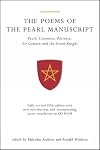
Pearl
Previously familiar to me from Tolkien's translation.
It's tough going for the uninitiated, using original spelling (i.e. thorn, yogh, "u" for "v" etc.) and the dialect makes it even more difficult. I found it harder going even than Piers Plowman which itself is more demanding than Chaucer's dialect.
The poem is a dream-vision, as is Piers Plowman. Such visions also occur in Middle English Romances, e.g. the Sege of Melayne but they are of starkly contrasting nature. Piers and Pearl are show more both pious works, tackling serious theological questions and inhabiting a Christian space of serious reflection on Jesus' moral message, where-as the Romances tend towards psychopathic mass murder of Saracens/Muslims as the way to go if you want to get to heaven...
Here the author describes a man finding comfort in a dream of his recently deceased young daughter having come to Heaven and everlasting joy. It seems more tender and personal than Piers, leading many to assume that the dreamer and the dead girl are in fact the author and his daughter. It's also more accessible than Piers in that the theological discussions are at least conducted in (Middle) English as opposed to the continual Latin Biblical quotes of Piers - it's also a lot shorter!
Whilst I feel that the author is essentially telling himself a fairy tale in order to assuage his own grief, I can appreciate his feelings of love and loss and unfairness and they are set down in a way that sounds delightful if you can get your ear well enough attuned.
Cleanness
I enjoyed this a lot more than Pearl. It's more or less a sermon on the necessity for "cleneness" of spirit if one wants to enter the Kingdom of Heaven, illustrated by three Old Testament tales; Noah and the Flood, Sodom and Gomorrah and finally The Writing on the Wall. Not being Christian, the framing sermon is of little interest to me, but the Bible stories were great, because of the way they were re-told. The poet feels no need to restrict himself to the limits of the source and adds details and imagery from both common folklore and his own imagination. These add a great deal and show off the author's impressive descriptive powers - powers that did not really shine through in Pearl because of its very limited and oft repeated palette of metaphor. Here, however, diverse and vivid imagery abounds, along with little details that delight, e.g. the idea of Lot's wife being used as a salt lick by cattle after she foolishly turns to look at the destruction of the cities behind her.
Patience
The shortest of the four poems in the manuscript has more in common with Cleanness than the other two, since it follows the same format of a sermon followed by an "examplum" Biblical story. Here we have the tale of Jonah retold in the same style as the stories appearing in Cleanness, with embellishments, delightful imagery (sailors holding Jonah's feet while the whale has his head in its mouth stands out) and a verve that lacks in the original source. I would strongly recommend starting here rather than with Pearl if you want to find out how good the Gawain Poet can be.
Sir Gawain and the Green Knight
This is, of course, the main event; what brought me to be reading this book in the first place. Twice as long as the next longest poem in the manuscript, in four parts and comprised of 101 stanzas. It's fundamentally different in approach to the other three poems. It's neither a dream-vision nor a sermon with exempla. Instead it is a Romance. No, not one of those preposterous billionaire alpha-hole marries shy and retiring introvert romances, a knights and ladies and preposterous adventures Romance. It is, however, still deeply informed by Christianity. Going by the extant Middle English poetry, there were really two major strands of Christian philosophy in the Mediaeval period. One was a gung-ho "we're better than everyone else and we'll slaughter you if you disagree in order to prove it," approach as exemplified by Romances such as The Sege of Melayne, in which the clergy form their own army to fight Saracen invaders. Another was a philosophical and introspective approach involving serious Bible study with a focus on the moral teachings of Jesus in particular, as exemplified by the lengthy Piers Plowman. Now, Gawain and the Green Knight has all the trappings of a Romance, what with a giant green knight with a green horse who can survive being beheaded turning up at King Arthur's Court, cavemen living in the wilds, a mysterious castle in the back of beyond and a witch who lives there, but it also clearly takes Christianity more seriously than just a tribal label to fight for, "My God is better than your God!"
This is first advertised fairly early on by the symbolism of the pentagram on Gawain's shield and the portrait of the Virgin Mary on its inside, then made clear when Gawain, despairing of ever finding the Green Chapel, mired in the wilds, suffering from being away from civilisation for months and running out of time, prays to Mary and finds an unfamiliar castle soon after. But the whole adventure is a series of tests. The over-arching requirement to attend an appointment with what one can reasonably only expect to be one's own death is a test of honour and bravery and the quest to find the Green Chapel is a test of commitment in the face of physical suffering and danger, with no guarantee of success, that is only passed through an act of Christian faith. (The prayer to Mary.) After arriving at Bertilak's castle and being assured that the Green Chapel is nearby and he can rest and relax, Gawain is in fact even more thoroughly morally examined. He's wooed continuously by Bertilak's wife and tempted to cheat on a silly game he's agreed to play with Bertilak. The temptation is enormous because it could turn out to be the only way Gawain can survive beyond the next day - and he succumbs to speaking a lie in order to try to preserve his own life. Gawain passes every test he's put through except this one. All of this is about faith, Christian and chivalric virtue and courtly manners, not about conquering the infidel in the name of the Lord. This, in the context of three other poems that treat themes of faith and personal virtue as the keys to the Kingdom of Heaven leads me to the strong conviction that what we have here is a deliberate and conscious subversion of the populist, xenophobic, intolerant and mostly plain silly Romance form to the ends of serious Christian moral instruction, written by a devout believer. Which leads to the question of what lesson we are supposed to learn.
In the introduction, Andrews and Waldron point out that there are three views expressed about Gawain's lie/cheat in the swapping game:
Gawain's own view is that it is a disaster that has ruined his honour forever. Whilst he ruefully complains about how women through history have tempted men to ruin, with examples such as Adam and Eve and Sampson and Delilah (note - Biblical cases) he also says he is going to openly wear the girdle that cost him his honour as an antidote to future pride and a spur to greater humility. He doesn't seem to be seriously saying the moral fault lies with anybody but himself. And it's a major fault.
Bertilak, instigator of this whole series of events, who openly admits that they were deliberately intended as a test of Arthur's court and it's reputation, is more forgiving. He says that Gawain's lie/cheat was trivial in the circumstances and fully repaid by the cut to the neck Gawain received (which it's later hinted leaves a permanent scar). That was punishment enough, given the threat to Gawain's life and his passing of all the more serious tests. Gawain should forget about it - he and Arthur's court are vindicated.
Finally, the knights back home take the view that the whole adventure redounds greatly and solely to the benefit of the reputation of Arthur's court and don't take the girdle incident at all seriously.
Who was right? What did the Pearl Poet think? Tolkien, in the intro to his translation, infers that the point is that courtly manners are entirely secondary to genuine Christian morals and that the fact that Gawain is not seduced by Bertilak's wife is what really counts. This might well be true. The Poet certainly never overtly states an opinion to the contrary. I can't help thinking, though, that the fact that Gawain wears the girdle as a reminder of past failure is actually the key lesson, because it fits so well with what is going on in the other poems. What Gawain learns is greater humility and not to pride himself on his honour but to try to do better in the future. Striving for self-improvement and forgiveness of past failure are major moral tenets of non-fundamentalist interpretations of Jesus' message and that's what happens: Bertilak forgives and Gawain goes forward trying to do better in future.
Overview of the whole book
Wow! I knew this was going to be a challenge but didn't think it could be tougher than Piers Plowman. In fact the only ways in which Piers was harder were in over-all length and the heavy use of Latin that I simply don't know at all. Reading all four poems was a really worth-while exercise not solely because each has its merits but because taking them together informs each one individually. This was especially true of Gawain and I strongly recommend reading it last, rather than skipping the others or reading them after. This also has the incidental benefit of the reader having developed some familiarity with the obscure and difficult dialect and spelling that make Chaucer look like a book for kindergardeners. Pearl is the dullest, though most personal and heart-felt, of all the poems and lacks the story-telling verve and exciting and varied imagery of the others, so maybe don't start there, either. The re-tellings of Bible stories are the highlights of the other two poems and some of the scenes and images in those will stay with me just as long as any of the crazy events in Gawain.
So - hard work but amply repaid and a long standing ambition achieved! show less
Previously familiar to me from Tolkien's translation.
It's tough going for the uninitiated, using original spelling (i.e. thorn, yogh, "u" for "v" etc.) and the dialect makes it even more difficult. I found it harder going even than Piers Plowman which itself is more demanding than Chaucer's dialect.
The poem is a dream-vision, as is Piers Plowman. Such visions also occur in Middle English Romances, e.g. the Sege of Melayne but they are of starkly contrasting nature. Piers and Pearl are show more both pious works, tackling serious theological questions and inhabiting a Christian space of serious reflection on Jesus' moral message, where-as the Romances tend towards psychopathic mass murder of Saracens/Muslims as the way to go if you want to get to heaven...
Here the author describes a man finding comfort in a dream of his recently deceased young daughter having come to Heaven and everlasting joy. It seems more tender and personal than Piers, leading many to assume that the dreamer and the dead girl are in fact the author and his daughter. It's also more accessible than Piers in that the theological discussions are at least conducted in (Middle) English as opposed to the continual Latin Biblical quotes of Piers - it's also a lot shorter!
Whilst I feel that the author is essentially telling himself a fairy tale in order to assuage his own grief, I can appreciate his feelings of love and loss and unfairness and they are set down in a way that sounds delightful if you can get your ear well enough attuned.
Cleanness
I enjoyed this a lot more than Pearl. It's more or less a sermon on the necessity for "cleneness" of spirit if one wants to enter the Kingdom of Heaven, illustrated by three Old Testament tales; Noah and the Flood, Sodom and Gomorrah and finally The Writing on the Wall. Not being Christian, the framing sermon is of little interest to me, but the Bible stories were great, because of the way they were re-told. The poet feels no need to restrict himself to the limits of the source and adds details and imagery from both common folklore and his own imagination. These add a great deal and show off the author's impressive descriptive powers - powers that did not really shine through in Pearl because of its very limited and oft repeated palette of metaphor. Here, however, diverse and vivid imagery abounds, along with little details that delight, e.g. the idea of Lot's wife being used as a salt lick by cattle after she foolishly turns to look at the destruction of the cities behind her.
Patience
The shortest of the four poems in the manuscript has more in common with Cleanness than the other two, since it follows the same format of a sermon followed by an "examplum" Biblical story. Here we have the tale of Jonah retold in the same style as the stories appearing in Cleanness, with embellishments, delightful imagery (sailors holding Jonah's feet while the whale has his head in its mouth stands out) and a verve that lacks in the original source. I would strongly recommend starting here rather than with Pearl if you want to find out how good the Gawain Poet can be.
Sir Gawain and the Green Knight
This is, of course, the main event; what brought me to be reading this book in the first place. Twice as long as the next longest poem in the manuscript, in four parts and comprised of 101 stanzas. It's fundamentally different in approach to the other three poems. It's neither a dream-vision nor a sermon with exempla. Instead it is a Romance. No, not one of those preposterous billionaire alpha-hole marries shy and retiring introvert romances, a knights and ladies and preposterous adventures Romance. It is, however, still deeply informed by Christianity. Going by the extant Middle English poetry, there were really two major strands of Christian philosophy in the Mediaeval period. One was a gung-ho "we're better than everyone else and we'll slaughter you if you disagree in order to prove it," approach as exemplified by Romances such as The Sege of Melayne, in which the clergy form their own army to fight Saracen invaders. Another was a philosophical and introspective approach involving serious Bible study with a focus on the moral teachings of Jesus in particular, as exemplified by the lengthy Piers Plowman. Now, Gawain and the Green Knight has all the trappings of a Romance, what with a giant green knight with a green horse who can survive being beheaded turning up at King Arthur's Court, cavemen living in the wilds, a mysterious castle in the back of beyond and a witch who lives there, but it also clearly takes Christianity more seriously than just a tribal label to fight for, "My God is better than your God!"
This is first advertised fairly early on by the symbolism of the pentagram on Gawain's shield and the portrait of the Virgin Mary on its inside, then made clear when Gawain, despairing of ever finding the Green Chapel, mired in the wilds, suffering from being away from civilisation for months and running out of time, prays to Mary and finds an unfamiliar castle soon after. But the whole adventure is a series of tests. The over-arching requirement to attend an appointment with what one can reasonably only expect to be one's own death is a test of honour and bravery and the quest to find the Green Chapel is a test of commitment in the face of physical suffering and danger, with no guarantee of success, that is only passed through an act of Christian faith. (The prayer to Mary.) After arriving at Bertilak's castle and being assured that the Green Chapel is nearby and he can rest and relax, Gawain is in fact even more thoroughly morally examined. He's wooed continuously by Bertilak's wife and tempted to cheat on a silly game he's agreed to play with Bertilak. The temptation is enormous because it could turn out to be the only way Gawain can survive beyond the next day - and he succumbs to speaking a lie in order to try to preserve his own life. Gawain passes every test he's put through except this one. All of this is about faith, Christian and chivalric virtue and courtly manners, not about conquering the infidel in the name of the Lord. This, in the context of three other poems that treat themes of faith and personal virtue as the keys to the Kingdom of Heaven leads me to the strong conviction that what we have here is a deliberate and conscious subversion of the populist, xenophobic, intolerant and mostly plain silly Romance form to the ends of serious Christian moral instruction, written by a devout believer. Which leads to the question of what lesson we are supposed to learn.
In the introduction, Andrews and Waldron point out that there are three views expressed about Gawain's lie/cheat in the swapping game:
Gawain's own view is that it is a disaster that has ruined his honour forever. Whilst he ruefully complains about how women through history have tempted men to ruin, with examples such as Adam and Eve and Sampson and Delilah (note - Biblical cases) he also says he is going to openly wear the girdle that cost him his honour as an antidote to future pride and a spur to greater humility. He doesn't seem to be seriously saying the moral fault lies with anybody but himself. And it's a major fault.
Bertilak, instigator of this whole series of events, who openly admits that they were deliberately intended as a test of Arthur's court and it's reputation, is more forgiving. He says that Gawain's lie/cheat was trivial in the circumstances and fully repaid by the cut to the neck Gawain received (which it's later hinted leaves a permanent scar). That was punishment enough, given the threat to Gawain's life and his passing of all the more serious tests. Gawain should forget about it - he and Arthur's court are vindicated.
Finally, the knights back home take the view that the whole adventure redounds greatly and solely to the benefit of the reputation of Arthur's court and don't take the girdle incident at all seriously.
Who was right? What did the Pearl Poet think? Tolkien, in the intro to his translation, infers that the point is that courtly manners are entirely secondary to genuine Christian morals and that the fact that Gawain is not seduced by Bertilak's wife is what really counts. This might well be true. The Poet certainly never overtly states an opinion to the contrary. I can't help thinking, though, that the fact that Gawain wears the girdle as a reminder of past failure is actually the key lesson, because it fits so well with what is going on in the other poems. What Gawain learns is greater humility and not to pride himself on his honour but to try to do better in the future. Striving for self-improvement and forgiveness of past failure are major moral tenets of non-fundamentalist interpretations of Jesus' message and that's what happens: Bertilak forgives and Gawain goes forward trying to do better in future.
Overview of the whole book
Wow! I knew this was going to be a challenge but didn't think it could be tougher than Piers Plowman. In fact the only ways in which Piers was harder were in over-all length and the heavy use of Latin that I simply don't know at all. Reading all four poems was a really worth-while exercise not solely because each has its merits but because taking them together informs each one individually. This was especially true of Gawain and I strongly recommend reading it last, rather than skipping the others or reading them after. This also has the incidental benefit of the reader having developed some familiarity with the obscure and difficult dialect and spelling that make Chaucer look like a book for kindergardeners. Pearl is the dullest, though most personal and heart-felt, of all the poems and lacks the story-telling verve and exciting and varied imagery of the others, so maybe don't start there, either. The re-tellings of Bible stories are the highlights of the other two poems and some of the scenes and images in those will stay with me just as long as any of the crazy events in Gawain.
So - hard work but amply repaid and a long standing ambition achieved! show less

The last time that I tried to read a proper collection of stories about King Arthur and the Knights of the Round Table it did not go exactly as planned; the stories themselves were full of adventure and information about the Middle Ages, but I could not for the life of me tolerate Mallory’s dry style of storytelling, so I quit reading to focus on the lovely accompanying illustrations by Aubrey Beardsley. Sir Gawain and the Green Knight was a considerably shorter tome (coming in at less show more than 150 pages), and it’s J.R.R. Tolkien translating from the original Middle English text, so I figured that I was in safer hands this time around. I’ve previously read the story of Sir Gawain and his travails with the Green Knight previously during a medieval studies course in university, but it’s been so long that besides the basic plot points I had largely forgotten the story. Tolkien chose to keep the poem in a narrative structure that imitated the original middle English as much as possible, while making the poem far more readable to modern audiences through a basic linguistic update, so I had no trouble getting into the story. The form of the poem is fully narrative in structure, so it reads like a rollicking adventure throughout, even though Tolkien retains the alliteration and rhythms that would have made the poem auditorily interesting to medieval audiences and does little to smooth out some of the stranger story elements. If I had to recommend a translation of Sir Gawain, this one would definitely it, since Tolkien has struck a good balance between the original form of the piece while making it palatable to modern readers.
Editor Christopher Tolkien also includes two other poems in this collection, neither of which quite live up to Sir Gawain, but which are interesting none the less. I fully admit to having skipped over “Pearl” because I have very little tolerance for stories which spend the majority of their time whining about their woes, but “Sir Orfeo” was a great little fairytale to discover! I’m surprised that this story isn’t more widely known, because its plotline is equally as entertaining as Sir Gawain, even if it doesn’t have the moral messages that seem to have kept writings of this era “in print.” The poem is short, but contains some wonderful examples of the mixing of Greek and English folklore elements and almost begins to explore deeper characterizations before its conclusion - all features which would lend wonderfully to a modern retelling! show less
Editor Christopher Tolkien also includes two other poems in this collection, neither of which quite live up to Sir Gawain, but which are interesting none the less. I fully admit to having skipped over “Pearl” because I have very little tolerance for stories which spend the majority of their time whining about their woes, but “Sir Orfeo” was a great little fairytale to discover! I’m surprised that this story isn’t more widely known, because its plotline is equally as entertaining as Sir Gawain, even if it doesn’t have the moral messages that seem to have kept writings of this era “in print.” The poem is short, but contains some wonderful examples of the mixing of Greek and English folklore elements and almost begins to explore deeper characterizations before its conclusion - all features which would lend wonderfully to a modern retelling! show less
Sir Gawain and the Green Knight (A New Verse Translation) by Simon Armitage (2008-11-17) by Gawain Poet
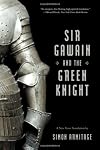
This is the book to get your poetry-resistant friend this #Booksgiving 2017. I read it on a dare. I don't like poetry very much, it's so snooty and at the same time so pit-sniffingly self-absorbed that I'd far rather stab my hands with a fork repeatedly than be condescended to in rhyming couplets.
This tale is fabulous in every sense of the word, which is no surprise since it's survived for so many centuries. But poet and translator Simon Armitage has made the old world new again. He sucked show more me right in and never let me come up for air with his gorgeous words and his carefully chosen words and his alliterative rhythmical phrases.
If the idea of a Norton Critical Edition is keeping you far away from this delightful read, rest assured it's not stodgy or dry or just plain boring. It's vibrant, alive, shimmering with an inner power, waiting for you to open its covers and fall utterly under its spell. Become happily ensorcelled, gentle reader, relax into the sure and strong embrace of a centuries-old knight and his spectacular tale. show less
This tale is fabulous in every sense of the word, which is no surprise since it's survived for so many centuries. But poet and translator Simon Armitage has made the old world new again. He sucked show more me right in and never let me come up for air with his gorgeous words and his carefully chosen words and his alliterative rhythmical phrases.
If the idea of a Norton Critical Edition is keeping you far away from this delightful read, rest assured it's not stodgy or dry or just plain boring. It's vibrant, alive, shimmering with an inner power, waiting for you to open its covers and fall utterly under its spell. Become happily ensorcelled, gentle reader, relax into the sure and strong embrace of a centuries-old knight and his spectacular tale. show less
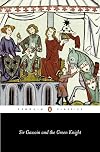
During "Christmastide" at King Arthur's court, a "giant" green-skinned man with red eyes in emerald armor, astride a green horse, arrives to challenge any member of the court to strike him a blow with his "Danish" axe if he may return the gesture. Just as King Arthur is about to accept the challenge, Sir Gawain humbly offers himself in his liege's stead. Gawain successfully cuts off the Green Knight's head but is astonished to see him still alive. In a year's time, before the New Year, show more Gawain must seek out the Green Knight at the Green Chapel to accept the returning blow.
I read this one in high school, and while it is a short 115 pages, and brimming with chivalrous affectations, it is still a delightful read. The introduction to the Penguin edition provides an outline of events and explains the contrasts throughout, esp. the warm "life" of Arthur's court vs Gawain's journey through a cold, mysterious land towards "death."
Even though it was written in the late 14th c., you can spot several pagan influences. The Green Man - in this case a knight - appearing since the 12th c., was a symbol of rebirth and he holds a sprig of holly, further implying rebirth and that he "proceeds in peace." On the face of Gawain's shield is a pentacle - an endless knot of protection. The Green Knight's arrival at "Yuletide" is also no coincidence, as it is traditionally a time of "cleverness" or rather, when the supernatural veil between the living and the dead is thinnest.
It follows the traditional lay tropes of the hero's journey, three tests and an equal exchange. However, it flips the script on the "magical object" motif. It upends the readers expectations, especially if they're used to sly deeds of Greek mythology. It's a story that surprisingly stands the test of time and I recommend it! show less
I read this one in high school, and while it is a short 115 pages, and brimming with chivalrous affectations, it is still a delightful read. The introduction to the Penguin edition provides an outline of events and explains the contrasts throughout, esp. the warm "life" of Arthur's court vs Gawain's journey through a cold, mysterious land towards "death."
Even though it was written in the late 14th c., you can spot several pagan influences. The Green Man - in this case a knight - appearing since the 12th c., was a symbol of rebirth and he holds a sprig of holly, further implying rebirth and that he "proceeds in peace." On the face of Gawain's shield is a pentacle - an endless knot of protection. The Green Knight's arrival at "Yuletide" is also no coincidence, as it is traditionally a time of "cleverness" or rather, when the supernatural veil between the living and the dead is thinnest.
It follows the traditional lay tropes of the hero's journey, three tests and an equal exchange. However, it flips the script on the "magical object" motif. It upends the readers expectations, especially if they're used to sly deeds of Greek mythology. It's a story that surprisingly stands the test of time and I recommend it! show less
Lists
Ambleside Books (2)
Sonlight Books (1)
A Novel Cure (1)
Winter Books (1)
Lectuurlijst (1)
Five star books (1)
Epic Fiction (1)
Out of Copyright (1)
storage (1)
bound (1)
Carole's List (1)
Poetry Corner (1)
Christmas Books (1)
el (2)
Edad Media (1)
Unread books (1)
Folio Society (1)
Book club books (1)
United Kingdom (1)
Awards


You May Also Like


Associated Authors
Statistics
- Works
- 15
- Also by
- 4
- Members
- 15,322
- Popularity
- #1,485
- Rating
- 3.8
- Reviews
- 147
- ISBNs
- 247
- Languages
- 12
- Favorited
- 9