
Chrétien de Troyes
Author of Arthurian Romances: Erec and Enide, Cligès, Lancelot, Yvain, and Perceval
About the Author
Author of early Arthurian romances, Chrétien de Troyes was born in France around 1150. Little is known about this medieval writer. His poems cannot be dated, except to say that they were written sometime in the second half of the twelfth century. His most famous works include Erec; Cligès; show more Lancelot, ou Le Chevalier à la Charrette; Yvain, ou Le Chevalier au Lion; Perceval, ou Le Conte du Graal, and Guillaume d'Angleterre. He also composed a version of Tristan and Isolde. During his life, he enjoyed the patronage of Marie de Champagne, the daughter of Philip of Flanders and Eleanor of Aquitaine. Although it is not confirmed, it is believed that he died in Paris in 1190. (Bowker Author Biography) show less
Series
Works by Chrétien de Troyes
Arthurian Romances: Erec and Enide, Cligès, Lancelot, Yvain, and Perceval (1170) 2,449 copies, 18 reviews
The Complete Story of the Grail: Chrétien de Troyes' Perceval and its continuations (1995) 56 copies, 1 review
Lire et s'entraîner : Chretien de Troyes : Lancelot [book + sound recording] (1999) — Writer — 11 copies
Yvain ou le Chevalier au Lion et Lancelot ou le Chevalier de la Charrette illustrés par les peintres (DIANE de Selliers luxe) (French Edition) (2010) 7 copies
Perceval ou le Conte du Graal: avec un groupement thématique « Héroïnes et héros, de l'Antiquité à nos jours » (2023) 4 copies
The Continuations of the Old French "Perceval" of Chretien de Troyes: The Second Continuation (1990) 4 copies
Erex Saga and Ivens Saga: The Old Norse Versions of Chretien De Troyes's Erec and Yvain (1977) 3 copies
Lancelot ou Le chevalier à la charrette [Edition Folio Junior Textes classiques, Adapté de l'ancien français par Pierre-Marie Beaude, illustré par Julie Ricossé avec un… (1176) — Author — 2 copies
Cligès, en ancien français: édité d'après la copie de Guiot (BnF 794) par Alexandre Micha (non coupé) (1990) 1 copy
Fantasy Classics (8 books) 1 copy
Perceval the Grail King: End of the second and third (Manessier) continuation of Chrétien de Troyes' "Perceval" (1983) 1 copy
Oeuvres choisies 1 copy
El caballero del león 1 copy
Ldderen 1 copy
Associated Works
Tagged
Common Knowledge
- Canonical name
- de Troyes, Chrétien
- Other names
- Chrestien de Troyes
- Birthdate
- c. 1130 [1130]
- Date of death
- c. 1185 [1185]
- Gender
- male
- Occupations
- court poet
trouvère - Nationality
- France
- Places of residence
- Troyes, France
- Associated Place (for map)
- Troyes, France
Members
Reviews
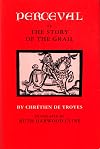
Perceval is an Aurthurian legend about, you guessed it, Perceval (and also a bunch of other knights, namely Gawain). It's the origin of the Holy Grail legend, which is pretty dope. It was also fun trying to spot parts that inspired later authors.
Old J.R.R. of Tolkien fame took some ideas from this, such as the idea of a broken sword that must be reforged, which is also on the dope side of things. There’s a scene where Perceval (or Gawain, I can’t remember which) sees fires and people show more partying at night in the distance, but when he gets to them they vanish like the elves in Mirkwood Forest from The Hobbit.
Old C.S. of Lewis fame also directly used ideas from Perceval in That Hideous Strength. But I think he also got the idea for a scene in The Voyage of the Dawn Treader when dishes float around of their own accord and serve people at a table. In Perceval, at one point, the Holy Grail floats around and serves everyone at a table.
It was also interesting to realize that Perceval is doing a very similar thing as modern fantasy books. It was written in the late 12th century, but it is set in a much older time. It has plenty of fantastical elements such as supernatural objects, monsters, demons, and all that fun stuff.
Perceval also does the thing that modern books sometimes do of pretending they are telling a true, historical story even though everyone knows it is just made up. The author (or rather multiple authors who kept having to pick up where the last one left off) will say things like “my source book tells me” or “I’m not lying, I promise you, this really happened yo!”
Aside from that, there are a lot of cool scenarios both supernatural and otherwise in the book. There’s lots of fun jousts and swordfights and surprisingly graphic violence all around. There’s people carrying bleeding lances. There’s a bed that, if you lay in it, triggers a bunch of arrows to shoot at you. My favorite chapter had this castle that was besieged by 40 knights who could be killed for a day, but they would resurrect overnight to attack the next day.
So plenty of good stuff, but there were also plenty of bad things as well. It’s very long and extremely meandering.
But the worst thing was the depiction and treatment of women in the book. There is a good deal of sexual assault, and not always perpetrated by the bad guys. There’s even a knight (who is mostly a bad guy) who says that women pretend to not like SA but that it is what they actually want. It’s horrifying that such a vile idea has been around forever, apparently. Considering all the negative parts of Perceval, I can’t recommend it. show less
Old J.R.R. of Tolkien fame took some ideas from this, such as the idea of a broken sword that must be reforged, which is also on the dope side of things. There’s a scene where Perceval (or Gawain, I can’t remember which) sees fires and people show more partying at night in the distance, but when he gets to them they vanish like the elves in Mirkwood Forest from The Hobbit.
Old C.S. of Lewis fame also directly used ideas from Perceval in That Hideous Strength. But I think he also got the idea for a scene in The Voyage of the Dawn Treader when dishes float around of their own accord and serve people at a table. In Perceval, at one point, the Holy Grail floats around and serves everyone at a table.
It was also interesting to realize that Perceval is doing a very similar thing as modern fantasy books. It was written in the late 12th century, but it is set in a much older time. It has plenty of fantastical elements such as supernatural objects, monsters, demons, and all that fun stuff.
Perceval also does the thing that modern books sometimes do of pretending they are telling a true, historical story even though everyone knows it is just made up. The author (or rather multiple authors who kept having to pick up where the last one left off) will say things like “my source book tells me” or “I’m not lying, I promise you, this really happened yo!”
Aside from that, there are a lot of cool scenarios both supernatural and otherwise in the book. There’s lots of fun jousts and swordfights and surprisingly graphic violence all around. There’s people carrying bleeding lances. There’s a bed that, if you lay in it, triggers a bunch of arrows to shoot at you. My favorite chapter had this castle that was besieged by 40 knights who could be killed for a day, but they would resurrect overnight to attack the next day.
So plenty of good stuff, but there were also plenty of bad things as well. It’s very long and extremely meandering.
But the worst thing was the depiction and treatment of women in the book. There is a good deal of sexual assault, and not always perpetrated by the bad guys. There’s even a knight (who is mostly a bad guy) who says that women pretend to not like SA but that it is what they actually want. It’s horrifying that such a vile idea has been around forever, apparently. Considering all the negative parts of Perceval, I can’t recommend it. show less
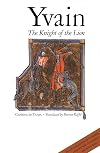
The great thing about classics like this one is that we’ve gained this great reverence for them, maybe just by virtue of how old and enduring they are, but so often if you actually take the time to read them you find they’re quite entertaining. To people in Chrétien de Troyes’ time, the idea of studying “low entertainment” like this would’ve been absurd—and yet I’m writing an essay on this very book for my Western Classics in Translation class.
When you get past the pretence show more that capital-C Classics are complicated books for big-brained lit majors, there’s a lot of fun to be had. Like Yvain, in which our titular knight really just manufactures his own problems and then laments them. He kills a giant, adopts a lion, and fights a bunch of people but for seemingly no other reason than that it’s something to do. And there’s this side plot about Love and the pain of losing it and whatever but the only reason Yvain’s lover broke up with him is because he couldn’t bring himself to stop jousting all the goddamn time. It’s fun and it’s dumb and I love that I was so apprehensive about reading a twelfth century French chivalric romance only for it to turn out to be little more than a rollicking bedtime story. show less
When you get past the pretence show more that capital-C Classics are complicated books for big-brained lit majors, there’s a lot of fun to be had. Like Yvain, in which our titular knight really just manufactures his own problems and then laments them. He kills a giant, adopts a lion, and fights a bunch of people but for seemingly no other reason than that it’s something to do. And there’s this side plot about Love and the pain of losing it and whatever but the only reason Yvain’s lover broke up with him is because he couldn’t bring himself to stop jousting all the goddamn time. It’s fun and it’s dumb and I love that I was so apprehensive about reading a twelfth century French chivalric romance only for it to turn out to be little more than a rollicking bedtime story. show less
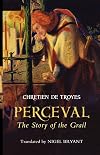
This new edition of Nigel Bryant's eminently readable 1982 translation of the first tale to feature the grail was timed to coincide with the release of the film of The Da Vinci Code, but is as far removed from that work's fantasies as the Mona Lisa is from a Barbie doll.
Chrétien's unfinished poem, beginning as a literary folk tale of a simpleton who makes good, was already within a few years of his death being embroidered and invested with more significance than was originally intended. show more Bryant's version includes the whole of Chrétien's text (as found in a key manuscript in the Bibliothèque Nationale in Paris) and extracts from its four Continuations linked by synopses. He has revised his translation of nearly a quarter-century ago with occasional substitutions or recastings, generally for stylistic reasons, it seems, and overall this appears to be for the better. Compare these two versions from a passage in which Perceval sees knights for the first time (1982 version first):
– Stay back! A boy who's seen us has fallen to the ground in fear. If we all advanced towards him at once he would be so frightened that he would die, I think, and could not reply to anything I asked him.
– Stay back! A boy who's seen us has fallen to the ground in fear. If we all advanced towards him at once he'd be frightened to death, I think, and couldn't answer any of my questions.
The end of the second extract certainly flows a lot more smoothly, and over the course of this edition makes the revision more readable.
In 1982 Perceval cost £19.50 for the hardback; allowing for factors such as inflation, the transition to robust paperback and its limited popular appeal, this edition still represents good value. Even if the D D R Owen Everyman Classic translation of 1987 is substantially cheaper, it doesn't include the Continuations which allow us to witness the rapid evolution of a legend. All serious students should have a copy. show less
Chrétien's unfinished poem, beginning as a literary folk tale of a simpleton who makes good, was already within a few years of his death being embroidered and invested with more significance than was originally intended. show more Bryant's version includes the whole of Chrétien's text (as found in a key manuscript in the Bibliothèque Nationale in Paris) and extracts from its four Continuations linked by synopses. He has revised his translation of nearly a quarter-century ago with occasional substitutions or recastings, generally for stylistic reasons, it seems, and overall this appears to be for the better. Compare these two versions from a passage in which Perceval sees knights for the first time (1982 version first):
– Stay back! A boy who's seen us has fallen to the ground in fear. If we all advanced towards him at once he would be so frightened that he would die, I think, and could not reply to anything I asked him.
– Stay back! A boy who's seen us has fallen to the ground in fear. If we all advanced towards him at once he'd be frightened to death, I think, and couldn't answer any of my questions.
The end of the second extract certainly flows a lot more smoothly, and over the course of this edition makes the revision more readable.
In 1982 Perceval cost £19.50 for the hardback; allowing for factors such as inflation, the transition to robust paperback and its limited popular appeal, this edition still represents good value. Even if the D D R Owen Everyman Classic translation of 1987 is substantially cheaper, it doesn't include the Continuations which allow us to witness the rapid evolution of a legend. All serious students should have a copy. show less

A magnificent poem, full of courtly graces and a couple's travails in the court of King Arthur. It is the first romance to show Arthur's court not as the warrior king of Welsh legend in "Culhwch and Olwen," but rather as a landed sovereign and giver of great gifts.
The story opens with a pleasure ride with Erec, Guinevere, and one of Guinevere's maids meet with a knight, his lady, and the knight's dwarf. Because the dwarf strikes the maid across the face, Erec challenges the dwarf to combat show more and then rides after the knight, with a promise to Guinevere that he shall return in 3 days.
He does, after finding a Count's castle where an older lord has fallen onto hard times, and who has the loveliest of daughters, Enide. In true romance fashion, the young people fall in love, Erec promises lands and castles to her father, and he bests the earlier knight at his quest to obtain a hunting hawk.
The two young people return to Arthur's court, feasting and a wedding ensue, and then they pretty much take to their marriage bed for a couple of years. Because Enide has overheard some of the knights at court whisper that Erec has lost his questing prowess, she weeps at this unfortunate stain to his reputation. Erec becomes enraged at Enide and forces her to journey with him in search of a quest.
And quests ensue. And multiple single combats with worthy opponents, swords that cleave shields and heads in twain, and on in French romance fashion until the final combat. It is called Joie de la Cort (explained in the Afterword as a play on several words) and has resulted in the deaths of nearly 80 worthy knights. But Erec wins, spares the other knight's life, and a return to court with his reputation restored ends this tale.
It is presented and translated as a poem, rather than as prose, and the translator has taken pains to retain the metre and the feel of the original rather than the rhyme. All of which made reading the short phrases easier, though certainly less poetic, and still evocative of the medieval romantic world. show less
The story opens with a pleasure ride with Erec, Guinevere, and one of Guinevere's maids meet with a knight, his lady, and the knight's dwarf. Because the dwarf strikes the maid across the face, Erec challenges the dwarf to combat show more and then rides after the knight, with a promise to Guinevere that he shall return in 3 days.
He does, after finding a Count's castle where an older lord has fallen onto hard times, and who has the loveliest of daughters, Enide. In true romance fashion, the young people fall in love, Erec promises lands and castles to her father, and he bests the earlier knight at his quest to obtain a hunting hawk.
The two young people return to Arthur's court, feasting and a wedding ensue, and then they pretty much take to their marriage bed for a couple of years. Because Enide has overheard some of the knights at court whisper that Erec has lost his questing prowess, she weeps at this unfortunate stain to his reputation. Erec becomes enraged at Enide and forces her to journey with him in search of a quest.
And quests ensue. And multiple single combats with worthy opponents, swords that cleave shields and heads in twain, and on in French romance fashion until the final combat. It is called Joie de la Cort (explained in the Afterword as a play on several words) and has resulted in the deaths of nearly 80 worthy knights. But Erec wins, spares the other knight's life, and a return to court with his reputation restored ends this tale.
It is presented and translated as a poem, rather than as prose, and the translator has taken pains to retain the metre and the feel of the original rather than the rhyme. All of which made reading the short phrases easier, though certainly less poetic, and still evocative of the medieval romantic world. show less
Lists
Awards


You May Also Like


Associated Authors
Statistics
- Works
- 61
- Also by
- 3
- Members
- 7,106
- Popularity
- #3,453
- Rating
- 3.8
- Reviews
- 78
- ISBNs
- 440
- Languages
- 18
- Favorited
- 14