
Norris J. Lacy
Author of The Arthurian Encyclopedia
About the Author
Series
Works by Norris J. Lacy
Lancelot-Grail: The Old French Arthurian Vulgate and Post-Vulgate in Translation, Volume 1 of 5 (1992) — Editor — 20 copies
Lancelot-Grail: The Old French Arthurian Vulgate and Post-Vulgate in Translation, Volume 2 of 5 (1993) 16 copies
Lancelot-Grail: The Old French Arthurian Vulgate and Post-Vulgate in Translation, Volume 4 of 5 (1995) 14 copies
Lancelot-Grail: The Old French Arthurian Vulgate and Post-Vulgate in Translation, Volume 3 of 5 (1995) 13 copies
Medieval Arthurian Literature: A Guide to Recent Research (Garland Reference Library of the Humanities) (1995) 8 copies
Lancelot-Grail [10 Volume Set]: The Old French Arthurian Vulgate and Post-Vulgate in Translation (2010) 5 copies
Lancelot-Grail: 5 Volumes (Routledge Revivals): The Old French Vulgate & Post-Vulgate Cycles in Translation (2010) 4 copies
Lancelot-Grail: Volume 1 (Routledge Revivals): The Old French Arthurian Vulgate and Post-Vulgate in Translation (2010) 2 copies
The Craft of Chretien De Troyes: An Essay on Narrative Art (Davis Medieval Texts and Studies) (1980) 2 copies
Associated Works
From Camelot to Joyous Guard: The Old French LA Mort Le Roi Artu (1974) — Introduction; Editor — 13 copies
Arthuriana, Vol 10 No 4, Winter 2000 — Contributor — 1 copy
Tagged
Common Knowledge
- Birthdate
- 1940-03-08
- Gender
- male
- Education
- Indiana University
- Occupations
- historian
- Organizations
- International Arthurian Society
- Awards and honors
- Ordre des Palmes Académiques
- Short biography
- Professor of French at the Pennsylvania State University
- Nationality
- USA
- Birthplace
- Hopkinsville, Kentucky, USA
- Associated Place (for map)
- Kentucky, USA
Members
Reviews
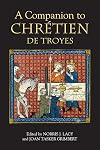
If there’s anything you want to know about Chrétien that is not in this book then there is something seriously wrong with you. Personally, I could have done with a bigger bibliography. The target audience seems to be English speaking students studying Chrétien in Old French. That’s not me, but all French quotations are followed by English translations so it really is accessible to humans.
The opening section is background. Lots of interesting stuff. I could have done with reading this show more before the romances as I think it would have helped.
Then there are essays on each work. Each has a plot summary for those students who DIDN’T read the book. Some interesting analysis, and picking out those correspondences between episodes that you might miss on a first reading, or in translation. The essay of Perceval is particularly well done.
Finally a section on Chrétien’s influence. I think this’ll have to be my blueprint for my next couple of year’s reading.
Overall, a well done book and well worth looking into if you like this author. show less
The opening section is background. Lots of interesting stuff. I could have done with reading this show more before the romances as I think it would have helped.
Then there are essays on each work. Each has a plot summary for those students who DIDN’T read the book. Some interesting analysis, and picking out those correspondences between episodes that you might miss on a first reading, or in translation. The essay of Perceval is particularly well done.
Finally a section on Chrétien’s influence. I think this’ll have to be my blueprint for my next couple of year’s reading.
Overall, a well done book and well worth looking into if you like this author. show less
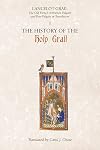
‘...lacks focus, rambles, gives you a headache, and puts you to sleep.’
Well I enjoyed it. Far better than any remake prequel deserves to be. It’s got magic underwear, amazing special effects, and a well-used sex doll. Good score. Too. You can hear the ‘dum dum daar’ when they discover the sex doll.
It’s basically a remake of Robert de Boron’s Joseph of Arimathea, but if you got the impression that Robert was running short on vellum, these guys have enough, more on the hoof, and show more ink to spare. It must be 10 times the length.
It’s obviously the work of multiple authors. This leads to some problems. The conception of how Christianity works changes across different sections. At the start God subjects himself to a human sacrifice to redeem humanity from Hell. All well and good, you might think. But then it appears not to have worked properly and apparently you have to have heard about what he did for it to take effect. Instead of just telling everyone, God hatches a sinister plan to tell just some people, which results in a war in which thousands of innocent lives are lost. These inconsistencies are a bit of a problem when your main character is literally God, and if I were to make the outrageous claim that this is literature I would expect some side-eye.
However, in the introduction she suggests that there was one controlling author who oversaw the compilation. I could well believe it. There are nice parallels between Joseph and the Grailites and the Moses and the Israelites that run across individual sections. There’s also the recurrent thing with the magic boats. I would question how good an artistic choice the latter was, but it was a choice.
All faults aside, it’s interesting, entertaining and highly imaginative. Well worth a go if you like King Arthur. show less
Well I enjoyed it. Far better than any remake prequel deserves to be. It’s got magic underwear, amazing special effects, and a well-used sex doll. Good score. Too. You can hear the ‘dum dum daar’ when they discover the sex doll.
It’s basically a remake of Robert de Boron’s Joseph of Arimathea, but if you got the impression that Robert was running short on vellum, these guys have enough, more on the hoof, and show more ink to spare. It must be 10 times the length.
It’s obviously the work of multiple authors. This leads to some problems. The conception of how Christianity works changes across different sections. At the start God subjects himself to a human sacrifice to redeem humanity from Hell. All well and good, you might think. But then it appears not to have worked properly and apparently you have to have heard about what he did for it to take effect. Instead of just telling everyone, God hatches a sinister plan to tell just some people, which results in a war in which thousands of innocent lives are lost. These inconsistencies are a bit of a problem when your main character is literally God, and if I were to make the outrageous claim that this is literature I would expect some side-eye.
However, in the introduction she suggests that there was one controlling author who oversaw the compilation. I could well believe it. There are nice parallels between Joseph and the Grailites and the Moses and the Israelites that run across individual sections. There’s also the recurrent thing with the magic boats. I would question how good an artistic choice the latter was, but it was a choice.
All faults aside, it’s interesting, entertaining and highly imaginative. Well worth a go if you like King Arthur. show less
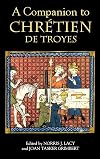
We have a lot to be thankful to Chrétien de Troyes for: without him there would be no Lancelot, no Camelot, no Holy Grail; he virtually kickstarted the romance tradition through his use of a vernacular language, French; and of the six surviving texts ascribed to him five have, to a greater or lesser extent, an Arthurian background. So, one of the great literary what-ifs must hinge on whether Arthurian literature, both medieval and modern, would have have been what it is if not for show more Chrétien.
This Companion, one of D S Brewer’s invaluable Arthurian Studies series, was first published in 2005 in hardback, joining similar studies of the Lancelot-Grail cycle, the Gawain-poet and Malory. Seventeen especially-commissioned and authoritative essays examine the historical and literary and contexts to Chrétien’s works, the six key texts (including Philomena, ascribed to Chrétien) and then the far-reaching responses to his innovation in creating what is termed here “the Breton romance”.
Philomena, a dark tale based on a story in Ovid’s Metamorphoses, introduced a leitmotif that runs through all his known romances, that of love and desire. In a later romance, Cligés, Chrétien lists his previous works in French: Erec et Enide, The Commandments of Ovid, Ovid’s The Art of Love and The Shoulder Bite, King Marc and Ysalt the Blonde, and The Metamorphosis of the Hoopoe, the Swallow and the Nightingale (the latter almost certainly the original of the extant Philomena, attributed to a Cretiens li Gois). These split into two groups, those based on Ovid and those deriving from Breton tales, and it is the latter group that largely survives to this day, though sadly without the Mark and Iseult narrative.
The essays discuss the poet’s significance as an innovator, from Erec et Enide “the first Arthurian romance” which introduces Arthur’s court as a frame for the narrative and demonstrates sophistication in its portrayal of individual psychology, through Cligés, the introduction of Lancelot in Le Chevalier de la Charette, Yvain’s exploits in Le Chevalier au Lion and Perceval and Gawain’s quests in Chrétien’s unfinished Le Conte du Graal. As enlightening as the academic studies of individual texts are – with their examinations of subject matter, meaning, interlace and language, with translations – the assessments of Chrétien’s legacy in succeeding centuries are equally insightful, though it would be invidious to single out particular essays for praise: all provide informed interpretations plus delightful background gems (such as Lady Guest providing the first modern transcription of Yvain, in her 1838 Mabinogion translation).
If these essays encourage you to read (or re-read) Chrétien’s Arthurian works they will have done their work well. For specialists and non-specialists alike this must be the ultimate Chrétien vademecum; I certainly appreciated Chrétien’s innovations as a story-teller much more as a result of reading these studies.
http://calmgrove.wordpress.com/2012/07/24/chretien/ show less
This Companion, one of D S Brewer’s invaluable Arthurian Studies series, was first published in 2005 in hardback, joining similar studies of the Lancelot-Grail cycle, the Gawain-poet and Malory. Seventeen especially-commissioned and authoritative essays examine the historical and literary and contexts to Chrétien’s works, the six key texts (including Philomena, ascribed to Chrétien) and then the far-reaching responses to his innovation in creating what is termed here “the Breton romance”.
Philomena, a dark tale based on a story in Ovid’s Metamorphoses, introduced a leitmotif that runs through all his known romances, that of love and desire. In a later romance, Cligés, Chrétien lists his previous works in French: Erec et Enide, The Commandments of Ovid, Ovid’s The Art of Love and The Shoulder Bite, King Marc and Ysalt the Blonde, and The Metamorphosis of the Hoopoe, the Swallow and the Nightingale (the latter almost certainly the original of the extant Philomena, attributed to a Cretiens li Gois). These split into two groups, those based on Ovid and those deriving from Breton tales, and it is the latter group that largely survives to this day, though sadly without the Mark and Iseult narrative.
The essays discuss the poet’s significance as an innovator, from Erec et Enide “the first Arthurian romance” which introduces Arthur’s court as a frame for the narrative and demonstrates sophistication in its portrayal of individual psychology, through Cligés, the introduction of Lancelot in Le Chevalier de la Charette, Yvain’s exploits in Le Chevalier au Lion and Perceval and Gawain’s quests in Chrétien’s unfinished Le Conte du Graal. As enlightening as the academic studies of individual texts are – with their examinations of subject matter, meaning, interlace and language, with translations – the assessments of Chrétien’s legacy in succeeding centuries are equally insightful, though it would be invidious to single out particular essays for praise: all provide informed interpretations plus delightful background gems (such as Lady Guest providing the first modern transcription of Yvain, in her 1838 Mabinogion translation).
If these essays encourage you to read (or re-read) Chrétien’s Arthurian works they will have done their work well. For specialists and non-specialists alike this must be the ultimate Chrétien vademecum; I certainly appreciated Chrétien’s innovations as a story-teller much more as a result of reading these studies.
http://calmgrove.wordpress.com/2012/07/24/chretien/ show less
Usefullest book ever for the modern novelist who wants to write something Arthurian. Here is what everyone has already done! Here is the broad outline of the historical consensus!
The historical stuff is most interesting — both the sections trying to answer the question was Arthur real (which break it down into "well, what do you mean by Arthur" and "what do you mean by real"), and the chapters of tracking the legend/myth through the medieval period. Now I desperately want to track down the show more Icelandic Arthurian works.
The modern chapters, especially the decorative arts chapter, gets to be a drag; it basically turns into a catalog, as the authors don't make qualitative assessments of the works, and don't seem to have a background in schools of thought which talk back to the sources. (i.e., feminist, postcolonial, pomo in general, etc., etc.)
(Come to think of it, I wonder if anyone's tried to write a postcolonial Arthurian novel? I mean, there seems to be general agreement that the "original" setting of the story is in C.5 Britain, and I imagine there was a healthy amount of resentment among the native Britons as the Romans fucked off to the east; you could probably so something really interesting with that. Oh hell. NOT IT, guys, NOT IT.) show less
The historical stuff is most interesting — both the sections trying to answer the question was Arthur real (which break it down into "well, what do you mean by Arthur" and "what do you mean by real"), and the chapters of tracking the legend/myth through the medieval period. Now I desperately want to track down the show more Icelandic Arthurian works.
The modern chapters, especially the decorative arts chapter, gets to be a drag; it basically turns into a catalog, as the authors don't make qualitative assessments of the works, and don't seem to have a background in schools of thought which talk back to the sources. (i.e., feminist, postcolonial, pomo in general, etc., etc.)
(Come to think of it, I wonder if anyone's tried to write a postcolonial Arthurian novel? I mean, there seems to be general agreement that the "original" setting of the story is in C.5 Britain, and I imagine there was a healthy amount of resentment among the native Britons as the Romans fucked off to the east; you could probably so something really interesting with that. Oh hell. NOT IT, guys, NOT IT.) show less
You May Also Like


Associated Authors
Statistics
- Works
- 39
- Also by
- 4
- Members
- 1,076
- Popularity
- #23,895
- Rating
- 4.1
- Reviews
- 9
- ISBNs
- 68
- Languages
- 1