

Bobbie Ann Mason
Author of In Country
About the Author
Bobbie Ann Mason is the author of the novels "In Country" "Spence+Lila', & "Feather Crowns", which was nominated for the National Book Critics Circle Award & won the Southern Book Award. Her short-story collection "Shiloh & Other Stories" won the PEN/Hemingway Award for First Fiction & was show more nominated for other major prizes. Her memoir, "Clear Springs", was one of three finalists for the Pulitzer Prize. Her fiction has appeared in "The New Yorker", "The Atlantic Monthly", & elsewhere. She lives in Kentucky. (Bowker Author Biography) show less
Image credit: Eye on Books
Works by Bobbie Ann Mason
The Girl Sleuth: On the Trail of Nancy Drew, Judy Bolton, and Cherry Ames (1975) 107 copies, 2 reviews
Missing Mountains: We went to the mountaintop but it wasn't there (2005) — Editor & Contributor — 27 copies
Associated Works
Literature: An Introduction to Fiction, Poetry, and Drama (1995) — Contributor, some editions — 1,013 copies, 7 reviews
You've Got to Read This: Contemporary American Writers Introduce Stories that Held Them in Awe (1994) — Introduction — 413 copies, 3 reviews
The Art of the Story: An International Anthology of Contemporary Short Stories (1999) — Contributor — 394 copies, 5 reviews
Growing Up in the South: An Anthology of Modern Southern Literature (1991) — Contributor — 165 copies, 1 review
More Stories We Tell: The Best Contemporary Short Stories by North American Women (2004) — Contributor — 66 copies
The Other Side of Heaven: Post-War Fiction by Vietnamese and American Writers (1995) — Contributor — 43 copies
Amerika, Amerika bloemlezing — Contributor — 8 copies
Tagged
Common Knowledge
- Birthdate
- 1940-05-01
- Gender
- female
- Education
- University of Kentucky (B.A. ∙ Journalism ∙ 1962)
University of Connecticut (Ph.D. ∙ English ∙ 1972)
State University of New York, Binghamton (MA ∙ 1966) - Occupations
- critic
novelist
short story writer - Organizations
- Fellowship of Southern Writers
- Awards and honors
- Literature Fellowship, National Endowment for the Arts (1983)
Guggenheim Fellowship (1983)
Hillsdale Award for Fiction (1999)
American Academy of Arts and Letters Academy Award (Literature, 1984) - Nationality
- USA
- Birthplace
- Mayfield, Kentucky, USA
- Places of residence
- New York, New York, USA
- Associated Place (for map)
- USA
Members
Reviews
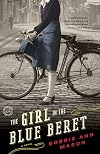
I loved this one. Marshall Stone was a cocky American pilot whose B-17 was shot down over Nazi-occupied Belgium in WWII. Marshall survives and escapes to Spain with the help of ordinary French and Belgian citizens who risked everything and shared their meagre food and clothing to help downed aviateurs to safety. After the war, Marshall marries his sweetheart and becomes a commercial airline pilot during the golden, glamorous age of aviation. The book begins as Marshall is fairly recently show more widowed and facing retirement. As a pilot, the only thing he ever wanted to do is fly, so he is adrift, and decides to learn more about the individuals who helped him in 1944. In particular, he is looking for a girl in a blue beret who guided him through occupied Paris.
The book doesn't have overwhelmingly positive reviews here, and many readers complain that Marshall is not a sympathetic character. He really resonated with me, though, and I think Ms. Mason, who was inspired by her father-in-law's story of escape via the Resistance did a marvelous job of portraying a man coming to terms with the past, examining his life and his place in it, and becoming humbled by the bigger picture. This often occurs in a coming-of-age novel, however, Marshall is 60, and that bittersweet journey of realization, reflection, and regret is so much richer at that age than at 18 or 25 or 30. He returned home a hero, but is profoundly disappointed and ashamed -- he only flew 10 missions, he was shot down, he slunk out of France while others were winning the war. He married his sweetheart and loved his job, but was a distant father -- in a moving scene he reflects on his marriage, and how he left the children AND the marriage for his wife to run while he went off and flew. His focus while in France and ever since was on himself, and this new journey of learning and discovery leaves him reeling and profoundly moved by the the stories of generosity, harrowing danger, extreme deprivation, and horrific suffering by those who risked everything to help him and others like him.
Maybe one reason why the book captivated me so much is because I know Marshall. He is my dad (Navy pilot in Vietnam turned commercial airline pilot) and my uncle and my godfather (same) and grandfather (Army pilot stationed at Pearl Harbor in WWII) and all of their friends and colleagues -- many of the adults I knew growing up. Deeply flawed, as we all are, somewhat distant fathers (from an era that largely left child-rearing to mothers), and pilots through and through. None of them is Atticus Finch. To have drawn Marshall any other way might have made him a more appealing protagonist, but far less authentic. I can say that Ms. Mason got him exactly right, and his journey -- and what he learns through the stories of the individuals he meets -- are very compelling. And like real life, the book does not end with neat resolutions. Still, it was a very satisfying read that illuminated more of WWII history for me. show less
The book doesn't have overwhelmingly positive reviews here, and many readers complain that Marshall is not a sympathetic character. He really resonated with me, though, and I think Ms. Mason, who was inspired by her father-in-law's story of escape via the Resistance did a marvelous job of portraying a man coming to terms with the past, examining his life and his place in it, and becoming humbled by the bigger picture. This often occurs in a coming-of-age novel, however, Marshall is 60, and that bittersweet journey of realization, reflection, and regret is so much richer at that age than at 18 or 25 or 30. He returned home a hero, but is profoundly disappointed and ashamed -- he only flew 10 missions, he was shot down, he slunk out of France while others were winning the war. He married his sweetheart and loved his job, but was a distant father -- in a moving scene he reflects on his marriage, and how he left the children AND the marriage for his wife to run while he went off and flew. His focus while in France and ever since was on himself, and this new journey of learning and discovery leaves him reeling and profoundly moved by the the stories of generosity, harrowing danger, extreme deprivation, and horrific suffering by those who risked everything to help him and others like him.
Maybe one reason why the book captivated me so much is because I know Marshall. He is my dad (Navy pilot in Vietnam turned commercial airline pilot) and my uncle and my godfather (same) and grandfather (Army pilot stationed at Pearl Harbor in WWII) and all of their friends and colleagues -- many of the adults I knew growing up. Deeply flawed, as we all are, somewhat distant fathers (from an era that largely left child-rearing to mothers), and pilots through and through. None of them is Atticus Finch. To have drawn Marshall any other way might have made him a more appealing protagonist, but far less authentic. I can say that Ms. Mason got him exactly right, and his journey -- and what he learns through the stories of the individuals he meets -- are very compelling. And like real life, the book does not end with neat resolutions. Still, it was a very satisfying read that illuminated more of WWII history for me. show less

I found this 2003 bio of ELVIS PRESLEY at a good Will store a few days ago. Started reading it yesterday morning and finished it last night. It's that good. I've read a few other books about Elvis (and there are many) back in the 80s when they were popping up everywhere, written, it seemed, by just about everyone who knew him - old girlfriends, his bodyguards, cousins, Priscilla (of course) and some other better, more objective writers. Peter Guralnick's two-volume bio is probably the best show more of the lot, but this little Penguin Lives book by southerner Bobbie Ann Mason is also simply excellent. In fact, her name on the spine was what prompted me to buy the book, as I had much enjoyed her novel, IN COUNTRY, many years back, and, more recently, her latest, DEAR ANN. Like Mason, I had my own memories of when Elvis first burst upon the music world. I was just twelve when my older brother (who was a student at Michigan State and worked part-time in the record department of an East Lansing Sears store) brought home that first 45 rpm record, "Hound Dog" b/w "Don't Be Cruel." I played that record to death, and the very first LP I ever bought was Elvis's Christmas album.
Mason's book is less than 200 pages, but she is quite thorough, and manages to make Elvis's story both objective and intimate at the same time, from his dirt poor Mississippi childhood and awkward years as an outsider at a Memphis high school to his first recordings with Sun Records, and sudden stardom, with the unprincipled Colonel Parker controlling every aspect of his career.
Sadly, Elvis never quite recovered from the "too much too soon" rocket ship of success, and, despite his gifts as a singer and performer, remained uncultured and ignorant, and always under the greedy thumb of Colonel Parker. Always closely attached to his mother he never quite recovered from her early death while he was in the Army. And his last years, drug-addled and overworked, were just sad, I thought, as was his death, at 42.
My hat is off to Mason for making this such a compelling, personal read. I'm so glad I found it. Very highly recommended. Especially, of course, for Elvis fans.
- Tim Bazzett, author of the memoir, BOOKLOVER show less
Mason's book is less than 200 pages, but she is quite thorough, and manages to make Elvis's story both objective and intimate at the same time, from his dirt poor Mississippi childhood and awkward years as an outsider at a Memphis high school to his first recordings with Sun Records, and sudden stardom, with the unprincipled Colonel Parker controlling every aspect of his career.
Sadly, Elvis never quite recovered from the "too much too soon" rocket ship of success, and, despite his gifts as a singer and performer, remained uncultured and ignorant, and always under the greedy thumb of Colonel Parker. Always closely attached to his mother he never quite recovered from her early death while he was in the Army. And his last years, drug-addled and overworked, were just sad, I thought, as was his death, at 42.
My hat is off to Mason for making this such a compelling, personal read. I'm so glad I found it. Very highly recommended. Especially, of course, for Elvis fans.
- Tim Bazzett, author of the memoir, BOOKLOVER show less
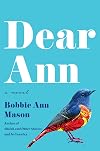
I've not read any Bobbie Ann Mason for twenty years or more, not since IN COUNTRY and her SHILOH stories. Then I saw DEAR ANN mentioned on social media recently and knew I had to read this one. Because, like Mason, I too grew up in the fifties and was part of the sixties 'summer of love' and Sgt Pepper era, and remember the anti-war protest marches and the constant news coverage of the battles and body counts. And I have to tell ya, I absolutely LOVED this book. And for a number of reasons. show more First of all, it was so enlightening to get a young woman's viewpoint on those years, even if the narrator's remembrances are of an 'imagined' Stanford University and Palo Alto in 1967-68.
I've looked at a few other readers' reviews and reactions to DEAR ANN, and I get it that they were confused or put off by the the way Mason framed Ann's story, changing the setting from her real graduate school years in cold upstate New York to a warmer Palo Alto and Stanford, and throwing in her musings from fifty years later. Yeah, okay. I get it. So maybe it was a bit confusing. So what? Because what I loved most about DEAR ANN was the sweetness of the love story of Ann and Jimmy. Because there is never anything quite so magical as that first REAL love, which is what Ann wanted, what she was searching for. And Mason's descriptions of the way they "plunged into each other without any thought to consequences," and how "Holding each other, the intensity of the pleasure, was beyond anything described in her books, wasn't in any poem in the world." And then there is the silliness and fun of the "naming of the parts." Ah yes - bubble, pogo stick, the bandersnatch and dog toys.
"They were teenagers, shameless and silly. They were the first explorers. They sat cross-legged, two lotus blossoms, facing each other. Four naked knees nudging. She had never been this close with a boy, eyes open, staring at each other's nakedness."
With this kind of joy, discovery and wonder, there is bound to be some disappointments and heartbreak too, but I'm not gonna go into that here. I prefer the joy. In fact I was even reminded of another favorite book about that same kind of first love, Betty Smith's minor classic, JOY IN THE MORNING.
And I remembered too. What I was doing in those same years. In fact, fresh out of the Cold War Army, I was in my second year of college and had just met my wife-to-be, and by the end of 1967 we were married. And in that next year, when the anti-war protests were at their peak, we were living in college married housing and I was scrambling to get through college and into grad school, working part-time every night and weekends, only vaguely aware of the student protests and candlelight marches and sit-ins going on all around me. So DEAR ANN was a reminder and a revelation to me, of so much of what I missed. But I do remember the music, the songs, the anthems of the era, which are very much an essential part of Mason's novel. And I recall too the intensity of that first real love which she describes so poignantly, but also with humor and with such utter tenderness that she made me laugh and nearly weep with remembering. THOSE things I know about, and DEAR ANN brought it all back so vividly.
So no. I'm not gonna criticize the method or the framework of this book. Because I believe that it's the love story between this naive Kentucky farm girl and a boy from the Chicago suburbs that is the very heart of this book. DEAR ANN is all about love. And I loved it. Thank you, Bobbie, for bringing it all back. My very highest recommendation.
- Tim Bazzett, author of the memoir, BOOKLOVER show less
I've looked at a few other readers' reviews and reactions to DEAR ANN, and I get it that they were confused or put off by the the way Mason framed Ann's story, changing the setting from her real graduate school years in cold upstate New York to a warmer Palo Alto and Stanford, and throwing in her musings from fifty years later. Yeah, okay. I get it. So maybe it was a bit confusing. So what? Because what I loved most about DEAR ANN was the sweetness of the love story of Ann and Jimmy. Because there is never anything quite so magical as that first REAL love, which is what Ann wanted, what she was searching for. And Mason's descriptions of the way they "plunged into each other without any thought to consequences," and how "Holding each other, the intensity of the pleasure, was beyond anything described in her books, wasn't in any poem in the world." And then there is the silliness and fun of the "naming of the parts." Ah yes - bubble, pogo stick, the bandersnatch and dog toys.
"They were teenagers, shameless and silly. They were the first explorers. They sat cross-legged, two lotus blossoms, facing each other. Four naked knees nudging. She had never been this close with a boy, eyes open, staring at each other's nakedness."
With this kind of joy, discovery and wonder, there is bound to be some disappointments and heartbreak too, but I'm not gonna go into that here. I prefer the joy. In fact I was even reminded of another favorite book about that same kind of first love, Betty Smith's minor classic, JOY IN THE MORNING.
And I remembered too. What I was doing in those same years. In fact, fresh out of the Cold War Army, I was in my second year of college and had just met my wife-to-be, and by the end of 1967 we were married. And in that next year, when the anti-war protests were at their peak, we were living in college married housing and I was scrambling to get through college and into grad school, working part-time every night and weekends, only vaguely aware of the student protests and candlelight marches and sit-ins going on all around me. So DEAR ANN was a reminder and a revelation to me, of so much of what I missed. But I do remember the music, the songs, the anthems of the era, which are very much an essential part of Mason's novel. And I recall too the intensity of that first real love which she describes so poignantly, but also with humor and with such utter tenderness that she made me laugh and nearly weep with remembering. THOSE things I know about, and DEAR ANN brought it all back so vividly.
So no. I'm not gonna criticize the method or the framework of this book. Because I believe that it's the love story between this naive Kentucky farm girl and a boy from the Chicago suburbs that is the very heart of this book. DEAR ANN is all about love. And I loved it. Thank you, Bobbie, for bringing it all back. My very highest recommendation.
- Tim Bazzett, author of the memoir, BOOKLOVER show less
He did however admit that many of the airmen shot down over France/ Belgium who were helped by the "Resistance" were not as grateful as they could have been. They seemed unaware of the sacrifices local people made. Certainly atrocities occurred but many downed aviators survived
Another interesting point which came up in the novel, is the unreliability of our memory.
Lists
Awards


You May Also Like


Associated Authors
Statistics
- Works
- 28
- Also by
- 37
- Members
- 3,657
- Popularity
- #6,918
- Rating
- 3.7
- Reviews
- 80
- ISBNs
- 138
- Languages
- 8
- Favorited
- 6