
Ferrol Sams (1922–2013)
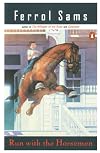
Author of Run with the Horsemen
About the Author
Series
Works by Ferrol Sams
Tagged
Common Knowledge
- Legal name
- Sams, Ferrol Aubrey, Jr.
- Other names
- Sambo
- Birthdate
- 1922-09-26
- Date of death
- 2013-01-29
- Gender
- male
- Education
- Mercer University
Emory University (School of Medicine) - Occupations
- physician
writer - Organizations
- United States Army Medical Corps
- Awards and honors
- Kappa Alpha Order, Distinguished Achievement Award (2001)
Georgia Writers Hall of Fame (2007) - Short biography
- Sams was born to Mildred Matthews and Ferrol Aubrey Sams, Sr. The younger Sams lived in a house built by his great-grandfather. He married Helen Fletcher on July 18, 1948, who was also a physician. Sams' medical career started at Mercer University in Macon, Georgia, which he graduated from in 1942. He then attended Emory University School of Medicine for only one semester, and then joined the United States Army Medical Corps. After serving from 1943 to 1947 and seeing action in France, Sams returned to Emory to continue his medical studies. He received his M.D. in 1949. Both Sams and his wife, Helen, practiced medicine in Fayette County until they retired in 2006. Sams is affectionately known by his family and a few close friends as "Sambo". Sams has four children—Ferrol Aubrey Sams, III, James (Jim) Sams, Ellen (Sams) Nichol, and Fletcher Sams. Ferrol, III and Jim are both medical doctors and practice in Fayette County. Ellen is a hospital administrator where her brothers practice and Fletcher is a Fayette County Judge. While at Mercer, he was initiated into Kappa Alpha Order by the Kappa Chapter. In 2001, he became the nineteenth recipient of Kappa Alpha Order's highest honor, the Distinguished Achievement Award.
Sams wrote eight books, including a trilogy of works featuring Porter Osborne, Jr., a character who appears to be largely based on Sams himself. Sams's writing drew heavily on southern storytelling tradition. Run with the Horsemen was Sams' first book which he published in 1982 when he was 60. In 1991, Sams was awarded the Townsend Prize for Fiction for his publication of When All the World was Young.
Sams's works of fiction developed from the act of writing his own memoirs of growing up in rural Fayette County, Georgia, for his posterity. His works are generally set during the Depression and feature several eccentric characters.
Sams has been the subject of several community reading programs: Run with the Horsemen was chosen as the 2006 Atlanta Reads selection, and Down Town was selected for the 2007 Gwinnett Reads by the Gwinnett County Public Library.
Sams died January 29, 2013, according to Mercer University.
http://en.wikipedia.org/wiki/Ferrol_Sams, 2013-01-29 - Nationality
- USA
- Birthplace
- Fayette County, Georgia, USA
- Places of residence
- Fayette County, Georgia, USA
- Map Location
- USA
Members
Reviews

Young Porter Osborne is the scion of his prosperous farming family in Georgia (presumably as they go to Atlanta now and then). At the start he is pre-adolescent and this novel takes him through high school. He is very small, always, for his age, behind his peers puberty-wise, but not in intellect or, frankly, guile, which he uses to his advantage as he deems necessary. Sams manages to tread the treacherous border between what he, as a white lad, and his home friends, as black lads, can show more expect. The book, taking place as it does during that time period of a person's life where the lightbulb comes on about injustice, has to convince us that Porter is awakening with a true and unblinking conscience. I'm convinced that Porter is smart as a whip, too smart to be fooled by convention, and one of the lucky few with a vocation. At the same time, for all that, he is a privileged white boy and thus cannot, any more than any other person in that time and place (30's) avoid having certain things both dinned into or expected of him. He can be cruel, albeit rarely and usually with great regret, and he can make mistakes. Sams tells this story with humor and grace. Anything less than that and I'd have had to throw the book in the dumpster. As a matter of interest, I am reading this at the same time as I am reading [The Warmth of Other Suns] and the stories align. Sams is unflinching when necessary. A last word -- there are some truly funny scenes and situations -- the book is very balanced that way -- and the portrait of life in those times has the ring of deadly accuracy -- say, hog-killing day, cotton picking time, the progression of the agricultural and social events of the year. Reminiscent of William Maxwell's [So Long, See You Tomorrow], William McPherson, [Testing the Current] and many others--one is reading of a moment in time and place. ****1/2 show less
This collection of tales from rural Depression-era Georgia is a thinly veiled autobiography and part of a series. The author's writing style is a little odd, but somehow well suited to its purpose.
I read Run With the Horses because my mother loves Ferrol Sams books above nearly all others. She always said the south he describes is like the one she remembers. I was puzzled by that, since she grew up just outside Birmingham, and "the boy," lives in farm country - - and even more so because she show more does not express fondness for the south she remembers.
As I read farther it became clear my mom's affinity was more specifically for the skinny little boy with an outsize gift for oration. She herself was a self-described "ugly duckling," with an exceptional voice.
Even more significantly, the boy's childhood inner-dialogue sounds a lot like my own mother's memories of being bewildered by prevailing social custom, particularly with regard to relations between blacks and whites, rich and poor, male and female.
I don't think my mom was quite as precocious as "the boy," and I rather doubt Sams himself was, either. But exactly when they each arrived at their shared rejection of "just the way things are," is irrelevant.
It's clear that in subsequent books the boy," will grow into an adult rejects casual acceptance of social and economic unfairness and adopts a world view counter to his upbringing.
My mother never became a civil rights "activist," but as she matured, she became an increasingly confident and outspoken rule-breaker and progressive role model for her students and for me.
They both predate the organized activism of the 60s but they and others like them helped lay fertile ground for it.
I don't plan to continue the series, but having read this one, it is no surprise that my mom came to think of Ferrol Sams as a friend. I am thankful she had him. show less
I read Run With the Horses because my mother loves Ferrol Sams books above nearly all others. She always said the south he describes is like the one she remembers. I was puzzled by that, since she grew up just outside Birmingham, and "the boy," lives in farm country - - and even more so because she show more does not express fondness for the south she remembers.
As I read farther it became clear my mom's affinity was more specifically for the skinny little boy with an outsize gift for oration. She herself was a self-described "ugly duckling," with an exceptional voice.
Even more significantly, the boy's childhood inner-dialogue sounds a lot like my own mother's memories of being bewildered by prevailing social custom, particularly with regard to relations between blacks and whites, rich and poor, male and female.
I don't think my mom was quite as precocious as "the boy," and I rather doubt Sams himself was, either. But exactly when they each arrived at their shared rejection of "just the way things are," is irrelevant.
It's clear that in subsequent books the boy," will grow into an adult rejects casual acceptance of social and economic unfairness and adopts a world view counter to his upbringing.
My mother never became a civil rights "activist," but as she matured, she became an increasingly confident and outspoken rule-breaker and progressive role model for her students and for me.
They both predate the organized activism of the 60s but they and others like them helped lay fertile ground for it.
I don't plan to continue the series, but having read this one, it is no surprise that my mom came to think of Ferrol Sams as a friend. I am thankful she had him. show less
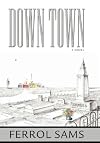
a short history of a small place in georgia: Sams' novel is reminiscent of T.R. Pearson's masterpiece "A Short History of a Small Place". Both novels feature narrators who describe events in their towns: Pearson's narrator is a young boy, Sams' is an elderly lawyer. Neely, North Carolina, Pearson's town in A Short History, remains a backwater, Sams' town (I cannot remember seeing the name mentioned) is not far from Atlanta, and grows into a commuter suburb. So part of the pleasure in Sams' show more novel is seeing the growing pains, the Wal-Marts, the influx of outsiders. For a long time the town's roads were dirt--and one of the reasons for this was to make it more inconvenient for any strangers who might come by.
You need to be patient with this book (you need to be VERY patient with Pearson's novel). If you've ever lived in small towns you'll quickly see why. Both novels ramble--a subject gets mentioned, and this leads to another subject, and a third and fourth subject, eventually getting back to the first. Imagine sitting on a bench in a small-town general store and listening to the locals talk. It'll start with Bob's cousin Ella Mae, the one who married the UPS driver Joe Allen, from over on the Wartburg Road, one of the east side Allens. This will lead to discussion about the Allen clan and how Old Man Allen caught Billy Smith stealing eggs last week.After some opinions about the Smith family morals, especially the eldest girl Mary Jo, maybe we get back to the original Ella Mae story again, before diverting once more. As I said, you have to be patient. You do not interrupt the local who is describing Mary Jo's less wholesome habits and say "Enough. Please get back to the Ella Mae story!". So the book does a very nice job capturing small-town mannerisms.
In both novels, much of the enjoyment centers of the eccentricities of the locals. You need a good writer (and an interesting narrator) to make this work successfully. For Sams, the writing style is something of a change from his great trilogy, but the change works well. A most enjoyable book, and if you are not familiar with T.R. Pearson's trilogy- especially Short History--you should read that also! show less
You need to be patient with this book (you need to be VERY patient with Pearson's novel). If you've ever lived in small towns you'll quickly see why. Both novels ramble--a subject gets mentioned, and this leads to another subject, and a third and fourth subject, eventually getting back to the first. Imagine sitting on a bench in a small-town general store and listening to the locals talk. It'll start with Bob's cousin Ella Mae, the one who married the UPS driver Joe Allen, from over on the Wartburg Road, one of the east side Allens. This will lead to discussion about the Allen clan and how Old Man Allen caught Billy Smith stealing eggs last week.After some opinions about the Smith family morals, especially the eldest girl Mary Jo, maybe we get back to the original Ella Mae story again, before diverting once more. As I said, you have to be patient. You do not interrupt the local who is describing Mary Jo's less wholesome habits and say "Enough. Please get back to the Ella Mae story!". So the book does a very nice job capturing small-town mannerisms.
In both novels, much of the enjoyment centers of the eccentricities of the locals. You need a good writer (and an interesting narrator) to make this work successfully. For Sams, the writing style is something of a change from his great trilogy, but the change works well. A most enjoyable book, and if you are not familiar with T.R. Pearson's trilogy- especially Short History--you should read that also! show less
2.5 stars, rounded up.
It is difficult not to feel some affinity with a book that is set in a place you know. I was born and raised in the Piedmont of Georgia, born in Crawford W. Long hospital, strolled many a time on Peachtree Street, and have set on the porch at the Fayetteville Courthouse. So, this was like a stroll through my childhood in some ways, but it was a departure from it, as well, and in ways that I was very grateful for. Perhaps that much changed between the 1930’s, when this show more book is set, and the 1950’s, when I grew up there; perhaps there was a great deal of poetic license taken.
White children did not say, “Yes, sir” or “Yes, ma’am” to a colored person. Well, maybe in Dr. Sams family they were taught that way, but if you wanted a switch taken to your bottom by my Mama, fail to address any person, of any color, in less than respectful terms and you would get it. The colored women we knew well were called “Miz”, just like the white women we knew well. Sir and Ma’am not optional for anyone else.
I wanted to love it, but I couldn’t. I was never able to connect with Porter Osbourne, the boy who is coming of age here. The constant referral to his as “the boy” bothered me. I wondered at his preoccupation with all things sexual and scatalogical. Perhaps that is the difference between a Southern girl and a Southern boy, but neither of those things would have gotten any overt attention from me or my friends at age eight or nine.
I did appreciate what Dr. Sams was portraying in the relationship between this boy and his father, I just felt that got too little of the 422 pages, while one anecdote after another seemed strained and sometimes disconnected.
There is a liberal use of Southern axioms and speech that often rings very true. I could close my eyes and hear the words spilling from the mouths of my own grandparents or parents. It made me sad to think that those times are gone and those phrases are probably uttered by few in today’s world.
When one is convinced that one is to the manor born, the actual physical condition of the manor itself is of negligible importance. Oh my, how true...the name was the thing.
The snuff dipping grandmother made me laugh aloud, because I knew “ladies” who dipped and pretended no one knew. Ah, but we saw so little of her; she was a flash on the page and gone.
This is one of those books that I will not regret reading, but will not treasure the memory of, either. I don’t think I will be tempted to read the next book in the series. show less
It is difficult not to feel some affinity with a book that is set in a place you know. I was born and raised in the Piedmont of Georgia, born in Crawford W. Long hospital, strolled many a time on Peachtree Street, and have set on the porch at the Fayetteville Courthouse. So, this was like a stroll through my childhood in some ways, but it was a departure from it, as well, and in ways that I was very grateful for. Perhaps that much changed between the 1930’s, when this show more book is set, and the 1950’s, when I grew up there; perhaps there was a great deal of poetic license taken.
White children did not say, “Yes, sir” or “Yes, ma’am” to a colored person. Well, maybe in Dr. Sams family they were taught that way, but if you wanted a switch taken to your bottom by my Mama, fail to address any person, of any color, in less than respectful terms and you would get it. The colored women we knew well were called “Miz”, just like the white women we knew well. Sir and Ma’am not optional for anyone else.
I wanted to love it, but I couldn’t. I was never able to connect with Porter Osbourne, the boy who is coming of age here. The constant referral to his as “the boy” bothered me. I wondered at his preoccupation with all things sexual and scatalogical. Perhaps that is the difference between a Southern girl and a Southern boy, but neither of those things would have gotten any overt attention from me or my friends at age eight or nine.
I did appreciate what Dr. Sams was portraying in the relationship between this boy and his father, I just felt that got too little of the 422 pages, while one anecdote after another seemed strained and sometimes disconnected.
There is a liberal use of Southern axioms and speech that often rings very true. I could close my eyes and hear the words spilling from the mouths of my own grandparents or parents. It made me sad to think that those times are gone and those phrases are probably uttered by few in today’s world.
When one is convinced that one is to the manor born, the actual physical condition of the manor itself is of negligible importance. Oh my, how true...the name was the thing.
The snuff dipping grandmother made me laugh aloud, because I knew “ladies” who dipped and pretended no one knew. Ah, but we saw so little of her; she was a flash on the page and gone.
This is one of those books that I will not regret reading, but will not treasure the memory of, either. I don’t think I will be tempted to read the next book in the series. show less
Lists
Awards


You May Also Like


Associated Authors
Statistics
- Works
- 13
- Members
- 2,071
- Popularity
- #12,408
- Rating
- 4.2
- Reviews
- 29
- ISBNs
- 30
- Favorited
- 10