
Olive Ann Burns (1924–1990)
Author of Cold Sassy Tree
About the Author
Olive Ann Burns was born July 17, 1924, on a farm in Banks County, Georgia, and attended school in Commerce, Georgia. She received a degree in journalism from the University of North Carolina at Chapel Hill in 1946. Between 1947 and 1957, Burns wrote for the Sunday magazine of the Atlanta Journal show more and Constitution. In 1956 she married the magazine's editor, Andrew H. Sparks. From 1960 to 1967 Burns wrote under the pseudonym Amy Larkin for the advice column "Ask Amy." In 1975, after being diagnosed with cancer, Burns began her best-known work, Cold Sassy Tree (1984). An entertaining story about a family living in rural Georgia around the turn of the century, it is loosely based on stories told to Burns by her own family members. Burns explained that her previous experience as a journalist was helpful to her in writing the novel, but that she never intended for it to be published. Three years into her writing Burns had recovered from the cancer but was determined to finish the novel. It would take several more years to complete. Cold Sassy Tree was so successful that Burns began a sequel when her cancer returned. In the final days of her life, she left instructions for the completion of the book. Leaving Cold Sassy was published according to her wishes. Burns died in July 1990. (Bowker Author Biography) show less
Series
Works by Olive Ann Burns
Tagged
Common Knowledge
- Canonical name
- Burns, Olive Ann
- Legal name
- Sparks, Olive Ann Burns
- Birthdate
- 1924-07-17
- Date of death
- 1990-07-04
- Gender
- female
- Education
- University of North Carolina, Chapel Hill
Mercer University - Occupations
- journalist
novelist - Organizations
- Atlanta Journal
- Relationships
- Burns, William (brother)
Sparks, John A. (son)
Sparks, Becky (daughter)
Turn, Margaret (sister)
LeGrand, Jean (sister) - Short biography
- Olive Ann Burns was a professional writer, journalist, and columnist for most of her life. For many years, she was a staff writer for Atlanta newspapers and the Atlanta Journal Magazine. She
was motivated to write her first novel, ''Cold Sassy Tree'' (1984), when she became ill with lymphoma. The book was an instant success and in 1985 it was added to the list of books recommended for teenagers by the American Library Association and the New York Public Library. - Cause of death
- heart failure
- Nationality
- USA
- Birthplace
- Banks County, Georgia, USA
- Places of residence
- Banks County, Georgia, USA
Commerce, Georgia, USA
Atlanta, Georgia, USA - Place of death
- Atlanta, Georgia, USA
- Burial location
- Grey Hill Cemetery, Commerce, Jackson County, Georgia, USA
- Associated Place (for map)
- Georgia, USA
Members
Reviews
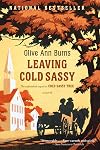
Yes, this is the *unfinished* sequel to Cold Sassy Tree, and no, it's not as good as the first book, but how could it be? It's unfinished. Olive Ann Burns, the author, died before it was finished. Her neighbor, friend, and transcriptionist, Norma Duncan, along with the book's editor, cobbled together the finished chapters and the author's extensive notes to create what they could of the sequel. It's followed by notes and reminiscences of the editor that detail Burns's efforts and struggles show more to finish the book, as well as many glimpses into the author's personal life. Really, the book is part sequel, part biography.
Had Leaving Cold Sassy been finished, I'm not sure I would have liked it as much as Cold Sassy Tree. Adult Will Tweedy annoyed me, and I don't think I got to know Sanna Klein well enough to warm up to her and who knows if that would have happened with a completed book. Burns's writing is just as wonderful as always, however, and I was definitely still interested in the lives of the characters I'd gotten to know in the first book.
What deterred me from fully embracing the overall book was the way it was structured, which has nothing to do with Burns's writing, but detracts from the overall product nonetheless. Because this is an unfinished sequel, naturally it ends abruptly. That could have been ameliorated, I believe, by creating a transition between the ending and the editor's section. That's not to say I didn't enjoy the editor's piece; I found it very interesting and heartwarming. Still, the two parts are stuck together in a confusing manner.
All that said, Olive Ann Burns, by all accounts, was an amazing woman, and her warmth and goodness certainly come through in both parts of this book. I very much enjoyed reading about her writing process, and it was heartwarming to read about her brave struggle and positive outlook on life. show less
Had Leaving Cold Sassy been finished, I'm not sure I would have liked it as much as Cold Sassy Tree. Adult Will Tweedy annoyed me, and I don't think I got to know Sanna Klein well enough to warm up to her and who knows if that would have happened with a completed book. Burns's writing is just as wonderful as always, however, and I was definitely still interested in the lives of the characters I'd gotten to know in the first book.
What deterred me from fully embracing the overall book was the way it was structured, which has nothing to do with Burns's writing, but detracts from the overall product nonetheless. Because this is an unfinished sequel, naturally it ends abruptly. That could have been ameliorated, I believe, by creating a transition between the ending and the editor's section. That's not to say I didn't enjoy the editor's piece; I found it very interesting and heartwarming. Still, the two parts are stuck together in a confusing manner.
All that said, Olive Ann Burns, by all accounts, was an amazing woman, and her warmth and goodness certainly come through in both parts of this book. I very much enjoyed reading about her writing process, and it was heartwarming to read about her brave struggle and positive outlook on life. show less
Summer reading at its finest and one wonderful portrayal of small town Southern life, circa 1906 that I have read to date. The characters are full of life and Will Tweedy is the perfect voice of a 14-year-old boy trying to make sense of all the craziness happening around him. The story presents a number of small-town biases that would make for wonderful discussions in a book group setting: the differences between town and mill-town folk (mill-town folks being the ones who did grueling manual show more labour in the cotton mills); North versus South points of view on everything from celebrating Independence Day to a woman's place in society. Through all the family bickering, moral posturing and other social machinations of the Cold Sassy folk, Will Tweedy's coming-of-age story is a story filled with heart, and had me laughing and shacking my head at some of his "boys will be boys" pranks, all the while exploring topics of love, death and religion.
A perfect summer read, even if it may come across as being a bit dated for some readers. show less
A perfect summer read, even if it may come across as being a bit dated for some readers. show less
It’s 1906 and Will Tweedy, a 14-year-old boy in a small Georgia town, tells us stories about his family. His tales mainly focus on this stubborn grandfather Rucker Blakeslee, who decides to remarry a very young woman only three weeks after his wife dies.
His adult daughters are scandalized and the town of Cold Sassy is shocked. Rucker’s new wife, Miss Love Simpson, is a strong woman, but she still wants to be accepted by the traditional town. Rucker runs the local grocery store, so show more everyone in town knows his business. The novel captures the core of small town life. Everything you do is under a microscope and people are so concerned about what their nosy neighbors will think of their every decision.
The book focuses on Will’s whole family, from his bossy Aunt Loma to his quiet, devoted father Hoyt. It’s written almost like a collection of short stories, weaving from one adventure to the next. The chapter that takes place on a train trestle was so intense it had a heart racing! I also loved the scenes with the Rucker and his wife Mattie Lou before she died. He’s a tough old bird, but when it comes to love he’s a complete softie.
The point-of-view did remind me of To Kill a Mockingbird, not just because it’s a child of a similar age, but also because it's set during a similar time period in the south. There's an observational honesty that comes from choosing a narrator like that. The story never reaches the same depth as To Kill a Mockingbird, but it has a similar tone.
BOTTOM LINE: I really loved reading about Will’s adventures and I was surprised and touched by the serious tone the book took on towards the end. I’d highly recommend this one for anyone who enjoys coming-of-age stories, turn-of-the-century fiction or Southern novels.
“To me they were like a book, a book with the last chapter missing. And I couldn’t wait to know how it ended.”
“To mourn is not the same as to be in mourning, which means wearing a black armband and sitting in the parlor talking to people who call on the bereaved. At first you feel important, the armband makes you special like having on a badge, but after a day or two it stops meaning anything. But to mourn, that’s different. To mourn is to be eaten alive with homesickness for the person.”
“My mother always said, ‘Never expect church members to be perfect, Christians are still people.’” show less
His adult daughters are scandalized and the town of Cold Sassy is shocked. Rucker’s new wife, Miss Love Simpson, is a strong woman, but she still wants to be accepted by the traditional town. Rucker runs the local grocery store, so show more everyone in town knows his business. The novel captures the core of small town life. Everything you do is under a microscope and people are so concerned about what their nosy neighbors will think of their every decision.
The book focuses on Will’s whole family, from his bossy Aunt Loma to his quiet, devoted father Hoyt. It’s written almost like a collection of short stories, weaving from one adventure to the next. The chapter that takes place on a train trestle was so intense it had a heart racing! I also loved the scenes with the Rucker and his wife Mattie Lou before she died. He’s a tough old bird, but when it comes to love he’s a complete softie.
The point-of-view did remind me of To Kill a Mockingbird, not just because it’s a child of a similar age, but also because it's set during a similar time period in the south. There's an observational honesty that comes from choosing a narrator like that. The story never reaches the same depth as To Kill a Mockingbird, but it has a similar tone.
BOTTOM LINE: I really loved reading about Will’s adventures and I was surprised and touched by the serious tone the book took on towards the end. I’d highly recommend this one for anyone who enjoys coming-of-age stories, turn-of-the-century fiction or Southern novels.
“To me they were like a book, a book with the last chapter missing. And I couldn’t wait to know how it ended.”
“To mourn is not the same as to be in mourning, which means wearing a black armband and sitting in the parlor talking to people who call on the bereaved. At first you feel important, the armband makes you special like having on a badge, but after a day or two it stops meaning anything. But to mourn, that’s different. To mourn is to be eaten alive with homesickness for the person.”
“My mother always said, ‘Never expect church members to be perfect, Christians are still people.’” show less
My friend has a special relationship with this book. By a "relationship" I mean that she had a couple copies find her and so now we give her every copy we come across, sometimes 35 at a time. Despite having dozens of copies of this book pass through my hands, I had never actually stopped to read it. So when I spotted it on audio at the library, I decided to give it a shot.
This felt like a YA book before YA even became a genre. It's the story of young Will Tweedy in the town of Cold Sassy in show more 1906 and his family. After his grandmother died, his grandfather almost immediately married a much younger (Yankee) woman. The scandal of it spreads through the town. It's a story of Will's experiences from camping with his friends to getting run over by a train to finding out about his grandfather and Miss Love's relationship to the first new car in town (his father's!). Everyone feels like a real person I enjoyed getting to know. In fact, I cried at the ending; I really didn't see that coming. It was a wonderful look at a unique set of characters in a time and place I wouldn't have gotten to know otherwise. I definitely enjoyed it more than I thought I would. show less
This felt like a YA book before YA even became a genre. It's the story of young Will Tweedy in the town of Cold Sassy in show more 1906 and his family. After his grandmother died, his grandfather almost immediately married a much younger (Yankee) woman. The scandal of it spreads through the town. It's a story of Will's experiences from camping with his friends to getting run over by a train to finding out about his grandfather and Miss Love's relationship to the first new car in town (his father's!). Everyone feels like a real person I enjoyed getting to know. In fact, I cried at the ending; I really didn't see that coming. It was a wonderful look at a unique set of characters in a time and place I wouldn't have gotten to know otherwise. I definitely enjoyed it more than I thought I would. show less
Lists
Carole's List (2)
Southern Fiction (1)
Great Audiobooks (1)
Five star books (1)
First Novels (1)
Family Drama (1)
Female Author (1)
Awards


You May Also Like


Associated Authors
Statistics
- Works
- 4
- Members
- 5,321
- Popularity
- #4,677
- Rating
- 3.8
- Reviews
- 100
- ISBNs
- 53
- Languages
- 2
- Favorited
- 10