
Adriana Trigiani
Author of Big Stone Gap
About the Author
Adriana Trigiani grew up in Big Stone Gap, Virginia and graduated from Saint Mary's College in South Bend, Indiana. After graduation, she moved to New York City and founded the all-female comedy troupe The Outcasts, which performed on the cabaret circuit for seven years. She was a writer/producer show more on The Cosby Show and A Different World and executive producer/head writer for City Kids for Jim Henson Productions. In 1996, she wrote and directed the documentary film Queens of the Big Time, which won the Audience Award at the Hamptons Film Festival. Her debut novel, Big Stone Gap, was published in 2001. Her young adult and adult novels include Big Cherry Holler, Milk Glass Moon, Home to Big Stone Gap, The Queen of the Big Time, Rococo, Encore Valentine, Viola in Reel Life, The Supreme Macaroni Company, The Shoemaker's Wife, and All the Stars in the Heavens. She wrote the film adaptation for her novels Big Stone Gap, Very Valentine, and Lucia, Lucia. She also wrote a cookbook entitled Cooking with My Sisters and a non-fiction book entitled Don't Sing at the Table: Life Lessons from My Grandmothers. (Bowker Author Biography) show less
Image credit: Photo by Timothy Stephenson
Series
Works by Adriana Trigiani
Then Came You [2020 film] — Director — 6 copies
Do You Want Me to Go?: A Short Story 4 copies
Associated Works
Jane Austen Made Me Do It: Original Stories Inspired by Literature's Most Astute Observer of the Human Heart (2011) — Contributor — 287 copies, 31 reviews
Reunion Beach: Stories Inspired by Dorothea Benton Frank (2021) — Contributor — 166 copies, 5 reviews
Me, My Hair, and I: Twenty-seven Women Untangle an Obsession (2015) — Contributor — 152 copies, 35 reviews
The Book Lovers' Appreciation Society: Breast Cancer Care Short Story Collection (2009) — Contributor — 97 copies, 1 review
Reader's Digest Select Editions 2009 v04 #304: Silk / Very Valentine / Chasing Darkness / Water, Stone, Heart (2009) 17 copies
Thank You, Sisters: Stories of Women Religious and How They Enrich Our Lives (2013) — Contributor — 14 copies
Tagged
Common Knowledge
- Birthdate
- 1963-02-03
- Gender
- female
- Education
- Saint Mary's College
- Occupations
- novelist
television writer
playwright
documentary filmmaker - Relationships
- Stephenson, Tim (spouse)
- Nationality
- USA
- Birthplace
- Big Stone Gap, Virginia, USA
- Places of residence
- Big Stone Gap, Virginia, USA
Greenwich Village, Manhattan, New York, New York, USA - Associated Place (for map)
- USA
Members
Discussions
An Author Interview with Adriana Trigiani in Talk about LibraryThing (June 2025)
(M61'12) Big Stone Gap, Adriana Trigiani in World Reading Circle (September 2012)
Reviews
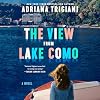
Loved this novel! It takes us from Lake Como, New Jersey, to Carrera and as would be expected, the original Lake Como in Italy. Trigiani delights us once again with warm and interesting characters and settings we would want to visit. Her writing style is so descriptive you could wake up thinking you’d actually been there.
Family bonds, lore, and secrets take center stage. Here we have our newly divorced heroine Jess living in her parents’ basement and working side by side with her Uncle show more Louie in the family’s marble business. Capodimonte Marble has been in operation for generations in the Lake Como. Jess is at a point in her life where she is questioning her life choices and her ability to carve out her own destiny.
When fate intervenes Jess finally has the opportunity to travel to Italy. In a very uncharacteristic move Jess buys a one way ticket. This becomes more than a business trip, more than a trip to rediscover her Italian roots. This ultimately becomes a trip of self discovery and self determination for Jess. Will she find love, will she uncover her true passion and destiny? show less
Family bonds, lore, and secrets take center stage. Here we have our newly divorced heroine Jess living in her parents’ basement and working side by side with her Uncle show more Louie in the family’s marble business. Capodimonte Marble has been in operation for generations in the Lake Como. Jess is at a point in her life where she is questioning her life choices and her ability to carve out her own destiny.
When fate intervenes Jess finally has the opportunity to travel to Italy. In a very uncharacteristic move Jess buys a one way ticket. This becomes more than a business trip, more than a trip to rediscover her Italian roots. This ultimately becomes a trip of self discovery and self determination for Jess. Will she find love, will she uncover her true passion and destiny? show less
 This review was written for LibraryThing Early Reviewers.
One of the most obnoxious books I’ve ever read. Super disappointing since I’d considered the first book in this trilogy something of a cozy comfort at a time when I’d needed that, unfortunately, I mostly found this second book sickening.
There were minor annoyances here, like the absurdity that someone could conduct an emotional affair in front of a kid old enough to have her own crushes yet that kid remained oblivious to what her parent was up to, there was also the unlikelihood of show more affording/spending savings on a trip to Italy when your spouse has lost their job and is starting up a new business, and most unbelievable of all, a dinner near the end with a certain guest felt like some bizarro idea of humans rather than anything recognizably close to how people behave or react.
Then there’s the major annoyance, that this novel is populated with characters who believe that if a guy cheats, it’s the woman’s fault, she’s the one who needs to apologize and promise to do better, while he owes her nothing and gets a free pass.
Over and over this book and its characters tell women to leave your family’s financial security to your guy, never ever make decisions without him but let him make any decision he wants, make sure your man knows he’s wanted, make sure he feels “chosen” and catered to in every way, tiptoe around his fragile ego and flatter it every chance you get or you’re asking to be cheated on, you deserve it. Oh and be sure to get over your dead child on your man’s timetable because hubby can’t tolerate waiting for you to put your broken pieces back together nor will he make even the slightest effort to help you do so, he’s allowed to go silent and distant on you but it’s inexcusable for you to do the same.
If this novel were set in an era when women were boxed in by societal rules and/or a lack of rights, or if it were in a place like Gilead then I could understand every single character abiding by this misogynistic ethos, I’d be like okay, that’s true to the time period or the situation, or whatever, I’d understand why sexism is the accepted and pervasive theme throughout the book but this story takes place in the 1980’s and mostly in the U.S.A..
Yes, it’s a small town, yes, it’s the south, so maybe there would be a high percentage of conservative thinking, maybe there would be some characters who genuinely believe a woman should be a second class citizen in her relationship, but again, this is supposed to be the 1980’s not the 1800’s, so shouldn’t there at least have been some other characters with dissenting opinions? Surely even a small southern town, would, in the 80’s, have had at least one or two independent-minded women and enlightened men who don’t prescribe to the theory that women should be subservient. I persisted through this book, with the hope that maybe Ave would evolve into that character, the one who’d stand her ground against this novel’s voices from the dark ages, and she’d be like, hey, you know what, my husband is just as responsible for the problems in our marriage as I am, he needs to own up to his share of the blame, too, or there is no going forward for us, but what I got from Ave instead was one of the most disheartening displays of female disempowerment that I’ve ever read from a female author.
Clearly I’m not reading the third book. show less
There were minor annoyances here, like the absurdity that someone could conduct an emotional affair in front of a kid old enough to have her own crushes yet that kid remained oblivious to what her parent was up to, there was also the unlikelihood of show more affording/spending savings on a trip to Italy when your spouse has lost their job and is starting up a new business, and most unbelievable of all, a dinner near the end with a certain guest felt like some bizarro idea of humans rather than anything recognizably close to how people behave or react.
Then there’s the major annoyance, that this novel is populated with characters who believe that if a guy cheats, it’s the woman’s fault, she’s the one who needs to apologize and promise to do better, while he owes her nothing and gets a free pass.
Over and over this book and its characters tell women to leave your family’s financial security to your guy, never ever make decisions without him but let him make any decision he wants, make sure your man knows he’s wanted, make sure he feels “chosen” and catered to in every way, tiptoe around his fragile ego and flatter it every chance you get or you’re asking to be cheated on, you deserve it. Oh and be sure to get over your dead child on your man’s timetable because hubby can’t tolerate waiting for you to put your broken pieces back together nor will he make even the slightest effort to help you do so, he’s allowed to go silent and distant on you but it’s inexcusable for you to do the same.
If this novel were set in an era when women were boxed in by societal rules and/or a lack of rights, or if it were in a place like Gilead then I could understand every single character abiding by this misogynistic ethos, I’d be like okay, that’s true to the time period or the situation, or whatever, I’d understand why sexism is the accepted and pervasive theme throughout the book but this story takes place in the 1980’s and mostly in the U.S.A..
Yes, it’s a small town, yes, it’s the south, so maybe there would be a high percentage of conservative thinking, maybe there would be some characters who genuinely believe a woman should be a second class citizen in her relationship, but again, this is supposed to be the 1980’s not the 1800’s, so shouldn’t there at least have been some other characters with dissenting opinions? Surely even a small southern town, would, in the 80’s, have had at least one or two independent-minded women and enlightened men who don’t prescribe to the theory that women should be subservient. I persisted through this book, with the hope that maybe Ave would evolve into that character, the one who’d stand her ground against this novel’s voices from the dark ages, and she’d be like, hey, you know what, my husband is just as responsible for the problems in our marriage as I am, he needs to own up to his share of the blame, too, or there is no going forward for us, but what I got from Ave instead was one of the most disheartening displays of female disempowerment that I’ve ever read from a female author.
Clearly I’m not reading the third book. show less
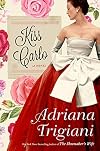
I would have loved to have been in Valfortore, Italy, New York or even South Philly when I read Kiss Carlo. But since I couldn't be there, experiencing the trials of this wonderful Italian-American family, especially the charming but troubled Nicky, was a treat in itself.
The best part about Trigiani's writing, imho, is her ability to create a vast array of characters with such deep emotions and quirky characteristics that you are completely drawn into their lives. From a mayor to a jilted show more girlfriend to a conflicted middle-aged man, Trigiani provides them all with pitch perfect personalities. They aren't stereotypes and they aren't so extreme that you can't reach them. They are just like you and me and they'll stick with you long after the end of the book. I, for one, didn't want them to go on with their story without me when then book ended.
Kiss Carlo is another absorbing story from Trigiani about life, love and family...Italian style. show less
The best part about Trigiani's writing, imho, is her ability to create a vast array of characters with such deep emotions and quirky characteristics that you are completely drawn into their lives. From a mayor to a jilted show more girlfriend to a conflicted middle-aged man, Trigiani provides them all with pitch perfect personalities. They aren't stereotypes and they aren't so extreme that you can't reach them. They are just like you and me and they'll stick with you long after the end of the book. I, for one, didn't want them to go on with their story without me when then book ended.
Kiss Carlo is another absorbing story from Trigiani about life, love and family...Italian style. show less
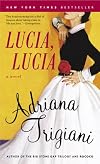
Lucia Sartori is a first generation Italian living in Greenwich Village with her parents and four older brothers. A career girl, working in the customs department of B Altman, she is the Village beauty and engaged to be married to a respectable young man until she realizes that the life of a housewife, completely under the thumb of her mother in law, is not a life she wants. Over the next year she makes some decisions that stun everyone and change the course of her life forever.
If you look show more on my bookshelves at home you'll find them mostly populated by great literature and epic fantasy. This book is neither, but it stole my heart. Trigiani masterfully understands how to use the English language to express great ranges in emotion. One minute I'd be laughing out loud only to find big fat tears rolling down my face just five pages later. And while Lucia was by far the most well-developed character in the book, even those who filled in the rest of her story managed to tug at my heartstrings. They were each wonderfully written, even when they weren't fully realized, particularly Rosemary and Lucia's parents. Throw in an engaging storyline, yummy recipes, and a real sense of 1950s New York City and you definitely have a winner. So while it might not be great literature, it was still a great novel and one of the best books I've read all year. I'm sure that I will find myself reaching for Adriana Trigiani's books repeatedly in the future. show less
If you look show more on my bookshelves at home you'll find them mostly populated by great literature and epic fantasy. This book is neither, but it stole my heart. Trigiani masterfully understands how to use the English language to express great ranges in emotion. One minute I'd be laughing out loud only to find big fat tears rolling down my face just five pages later. And while Lucia was by far the most well-developed character in the book, even those who filled in the rest of her story managed to tug at my heartstrings. They were each wonderfully written, even when they weren't fully realized, particularly Rosemary and Lucia's parents. Throw in an engaging storyline, yummy recipes, and a real sense of 1950s New York City and you definitely have a winner. So while it might not be great literature, it was still a great novel and one of the best books I've read all year. I'm sure that I will find myself reaching for Adriana Trigiani's books repeatedly in the future. show less
Lists
Awards


You May Also Like


Associated Authors
Statistics
- Works
- 31
- Also by
- 14
- Members
- 18,098
- Popularity
- #1,217
- Rating
- 3.7
- Reviews
- 718
- ISBNs
- 470
- Languages
- 15
- Favorited
- 66

