
Maeve Binchy (1940–2012)
Author of Tara Road
About the Author
Maeve Binchy was born in Dublin, Ireland on May 28, 1940. She received a B.A. from University College in Dublin in 1960. After teaching at a school for girls, she became a journalist, columnist and editor at the Irish Times. By 1979, she was writing plays, a successful television script, and show more several short story collections. Her first novel, Light a Penny Candle, was published in 1982. During her lifetime, she wrote more than 20 books including Silver Wedding, Scarlet Feather, Heart and Soul, Minding Frankie, and A Week in Winter. The Lilac Bus and Echoes were made into TV movies, while Circle of Friends, Tara Road and How About You were made into feature films. Her title Chestnut Street is a New York Times Best Seller. She died after a brief illness on July 30, 2012 at the age of 72. (Bowker Author Biography) show less
Image credit: Courtesy of Allen and Unwin
Works by Maeve Binchy
LE SECRET 2 copies
Echoes…Light a Penny Candle 1 copy
Het hart van Dublin 1 copy
Het huis op Tara Roads 1 copy
Vluchtige ontmoetingen 1 copy
Change of Circumstances 1 copy
Echa 1 copy
M.I.L.K. 1 copy
How About You 1 copy
the return wedding 1 copy
Walk in the Woods, A * 1 copy
Silver Wedding [and] Echoes 1 copy
Night School 1 copy
Homecoming and other stories 1 copy
Associated Works
The Book Lovers' Appreciation Society: Breast Cancer Care Short Story Collection (2009) — Contributor — 97 copies, 1 review
Thicker Than Water: Coming-of-Age Stories by Irish & Irish American Writers (2001) — Contributor — 56 copies, 1 review
New Beginnings: New Writing from Bestselling Authors Sold in Aid of the Indian Ocean Tsunami Earthquake Charities (2005) — Contributor — 48 copies
New Dubliners: Original Stories Celebrating 100 Years of Joyce's Dubliners (2005) — Contributor — 27 copies, 2 reviews
Reader's Digest Condensed Books: Riptide • The Copper Beech • The Himmler Equation • The Hills are Lonely (1993) — Author — 7 copies
Reader's Digest Select Editions: Crossfire | Minding Frankie | Never Look Away | The Genesis Plague (2011) 6 copies
Readers Digest Condensed Book: The Copper Bench / The Ice / Mrs. Washington and Horowitz, Too / All Around the Town (1998) — Author — 5 copies
Reader's Digest Select Editions: Never Look Away / Minding Frankie / The Genesis Plague / The Summer of the Bear (2011) 2 copies
Reader's Digest: De deal; Regen en sterren; Je bent nooit alleen; Jacht op de jager 1 copy, 1 review
Reader's Digest Select Editions: The Thunder and Rain / The Calling of the Grave / Ice Fire / A Week in Winter — Author — 1 copy
Tagged
Common Knowledge
- Canonical name
- Binchy, Maeve
- Legal name
- Binchy Snell, Anne Maeve
- Birthdate
- 1940-05-28
- Date of death
- 2012-07-30
- Gender
- female
- Education
- Holy Child Convent, Killiney, Ireland
University College Dublin (BA|1960) - Occupations
- journalist
novelist
teacher
playwright - Organizations
- Irish Times
- Awards and honors
- British Book Award (Lifetime Achievement Award ∙ 1999)
Irish Book Award Lifetime Achievement Award (2010)
Jacob's Award (1978)
W H Smith Book Award for Fiction (2001)
Irish PEN Award (2007)
Irish Book Award (2012) - Relationships
- Snell, Gordon (husband)
Binchy, Dan (Cousin)
Binchy, William (brother)
Binchy, D. A. (uncle) - Short biography
- Maeve Binchy was born on 28 May 1940 in Dalkey, County Dublin, Ireland, the eldest child of four. She studied at University College Dublin, then taught, and later became a journalist. She was married to Gordon Snell, also a writer.
- Cause of death
- heart attack
- Nationality
- Ireland
- Birthplace
- Dalkey, County Dublin, Ireland
- Places of residence
- Dalkey, Ireland
London, England, UK
Dublin, Ireland - Place of death
- Dublin, Ireland
- Map Location
- Ireland
Members
Discussions
Novel: Wales bed-and-breakfast in Name that Book (September 2016)
Reviews
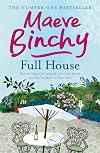
What can I say. It's a Maeve Binchy short story and I devour these things like chocolate. Anytime I am feeling under the weather I will bust out one of her books or short story collections and read for a bit. Since her death, I have found that I don't have every one of her books in my possession. So I decided this year I was going to make sure I got around to reading all of her works this year.
For long time fans of Maeve Binchy this is a great short story. We get some glimpses of prior show more characters we met in older Binchy works (Scarlet Feather, Heart and Soul, Minding Frankie) and we get some insight into a family that we have never heard of before.
Dee Nolan loves her three adult children, but is getting a bit tired of being expected to cook and clean up after them. Returning home one day to find out her husband Liam is about to be laid off, she finally decides to do something about the fact that she and her husband have managed to raise three oblivious and at times thoughtless children.
I don't know how Maeve Binchy is able to instill such life into the characters we meet in this short story. Right off the bat I felt for Dee and Liam. I can't imagine how happy I would be if I was always running around after my adult kids who seem to expect it. I mean we get one scene where Dee is telling the children about their father being laid off and they all just want to know about supper. I would have been smacking some heads with a frying pan, that's just me though.
We hear more about Rosie, Helen, and Anthony through a series of texts they send to each other and some more scenes we get when they start to realize that their mother is not going to clean/cook for them anymore and also decides to let their rooms in order to bring in extra income.
The writing is typical Binchy which to me is it's excellent. There is one scene that stood out in my mind. Dee the mother is getting extra work in order to provide for the household. The job is at the same place that her daughter Rosie works in, and Rosie tells her mother to not speak to her while she's there. I mean, can you imagine?
The flow works really well, and man oh man I wish that this had been longer. I was enjoying the story a lot.
The ending made me shake my head, because in typical Binchy fashion you get the sense the children still don't get what the big deal was and that they still feel outrage towards their mother who decided she wasn't going to be their unpaid servant anymore. show less
For long time fans of Maeve Binchy this is a great short story. We get some glimpses of prior show more characters we met in older Binchy works (Scarlet Feather, Heart and Soul, Minding Frankie) and we get some insight into a family that we have never heard of before.
Dee Nolan loves her three adult children, but is getting a bit tired of being expected to cook and clean up after them. Returning home one day to find out her husband Liam is about to be laid off, she finally decides to do something about the fact that she and her husband have managed to raise three oblivious and at times thoughtless children.
I don't know how Maeve Binchy is able to instill such life into the characters we meet in this short story. Right off the bat I felt for Dee and Liam. I can't imagine how happy I would be if I was always running around after my adult kids who seem to expect it. I mean we get one scene where Dee is telling the children about their father being laid off and they all just want to know about supper. I would have been smacking some heads with a frying pan, that's just me though.
We hear more about Rosie, Helen, and Anthony through a series of texts they send to each other and some more scenes we get when they start to realize that their mother is not going to clean/cook for them anymore and also decides to let their rooms in order to bring in extra income.
The writing is typical Binchy which to me is it's excellent. There is one scene that stood out in my mind. Dee the mother is getting extra work in order to provide for the household. The job is at the same place that her daughter Rosie works in, and Rosie tells her mother to not speak to her while she's there. I mean, can you imagine?
The flow works really well, and man oh man I wish that this had been longer. I was enjoying the story a lot.
The ending made me shake my head, because in typical Binchy fashion you get the sense the children still don't get what the big deal was and that they still feel outrage towards their mother who decided she wasn't going to be their unpaid servant anymore. show less
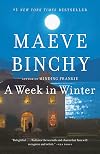
When I've read too many gruesome mysteries, or too many books that have left me really questioning the goodness of human nature, I turn to a Maeve Binchy to renew my love of sitting down with a good book. Think of it like a bowl of chocolate ice cream after an unusually difficult day. Her simple Irish novels are always character driven and the characters are people you can imagine meeting in your own life, not to mention, there is never a sociopath in the group. A Week in Winter is more a show more collection of related short stories, all based around a small bed and breakfast overlooking the ocean in a small Irish town. People are coming to the resort to relax, have an adventure, or get away from their lives. Not all the stories have that happily-ever-after resolution, but they are well told and make me pause and think about people I know and aspects of my own life. I'm sad that Maeve Binchy died in 2012 and that this is one of her last books. show less
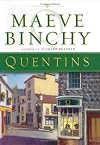
3.5***
From the book jacket: Is it possible to tell the story of a generation and a city through the history of a restaurant? Ella Brady thinks so. She wants to film a documentary about Quentins that will capture the spirit of Dublin from the 1970s to the present day. After all, the restaurant … has a thousand stories to tell: tales of love, and betrayal, of revenge; of times when it looked ready for success and of times when it seemed as if it must close in failure.
My reactions
I came show more late to the Binchy fan club, but better late than never. I really like her style of every-day drama – the kinds of ups and downs we all experience in life. Reading a Binchy novel is a bit like visiting with old friends. Many of her books feature the same ensemble cast of characters, but they don’t have to be read in any particular order.
In this story Ella Brady takes the central role, supported by Brenda and Patrick who run Quentins, her best friend Deirdre, her parents Tom and Barbara, and filmmakers Nick and Sandy. I loved Maude and Simon, who’s grandparents hire Ella to tutor them in math; every scene they are in made me chuckle.
The main plot focuses on Ella and her lover, Don Richardson – a snake if ever there was one. I confess that I was very frustrated with Ella and wanted to slap her silly more than once. Deirdre was the epitome of a supportive friend, never judging or chastising, but simply being there for Ella through all her bad choices and delusional thinking re this “great love.” Made me doubly glad for the many other stories being highlighted for inclusion in the documentary, which gave me a break from this relationship.
I definitely got the feeling of being in Dublin during this period: the economic struggles which led many Irish to seek employment elsewhere, or had them working multiple small jobs to make ends meet. show less
From the book jacket: Is it possible to tell the story of a generation and a city through the history of a restaurant? Ella Brady thinks so. She wants to film a documentary about Quentins that will capture the spirit of Dublin from the 1970s to the present day. After all, the restaurant … has a thousand stories to tell: tales of love, and betrayal, of revenge; of times when it looked ready for success and of times when it seemed as if it must close in failure.
My reactions
I came show more late to the Binchy fan club, but better late than never. I really like her style of every-day drama – the kinds of ups and downs we all experience in life. Reading a Binchy novel is a bit like visiting with old friends. Many of her books feature the same ensemble cast of characters, but they don’t have to be read in any particular order.
In this story Ella Brady takes the central role, supported by Brenda and Patrick who run Quentins, her best friend Deirdre, her parents Tom and Barbara, and filmmakers Nick and Sandy. I loved Maude and Simon, who’s grandparents hire Ella to tutor them in math; every scene they are in made me chuckle.
The main plot focuses on Ella and her lover, Don Richardson – a snake if ever there was one. I confess that I was very frustrated with Ella and wanted to slap her silly more than once. Deirdre was the epitome of a supportive friend, never judging or chastising, but simply being there for Ella through all her bad choices and delusional thinking re this “great love.” Made me doubly glad for the many other stories being highlighted for inclusion in the documentary, which gave me a break from this relationship.
I definitely got the feeling of being in Dublin during this period: the economic struggles which led many Irish to seek employment elsewhere, or had them working multiple small jobs to make ends meet. show less
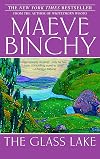
"The Glass Lake" by Maeve Binchy is the first novel that I have read by this author, and what a novel it was! At first, I was a bit taken aback by the 757 pages. My thought, will a novel that has this many pages hold my interest? Ms. Binchy has a magical touch with her writing style. The plot, characters, and settings of "The Glass Lake" held my attention from the first page to the last. The plot kept moving along, not once did I skim pages due to boring dialogue and/or a stand still plot. show more Even though this is a fictional novel, I loved that the characters were believable. If you are looking for an entertaining, well written novel, I would definitely recommend adding this amazing story to your tbr list. I'm looking forward to reading additional novels by this wonderful author! show less
Lists
Comfort Reads (1)
Allie's Wishlist (1)
Christmas Books (1)
Guilty Pleasures (1)
Irish writers (1)
Awards


You May Also Like


Associated Authors
Statistics
- Works
- 121
- Also by
- 32
- Members
- 49,819
- Popularity
- #305
- Rating
- 3.7
- Reviews
- 1,028
- ISBNs
- 1,708
- Languages
- 24
- Favorited
- 146


