
Jeanne Ray
Author of Julie and Romeo
About the Author
Series
Works by Jeanne Ray
Case Histories 1 copy
Supreme justice 1 copy
Associated Works
Reader's Digest Select Editions 2005 v05 #281: The Closers / The Ladies of Garrison Gardens / Heartbreak Hotel / Julie and Romeo Get Lucky (2005) — Author — 48 copies
Reader's Digest Select Editions 2000 v06 #252: Before I Say Good-Bye / Winter Solstice / Demolition Angel / Julie and Romeo (2001) 37 copies
Reader's Digest Select Editions: The King of Torts • A Week in Winter • The Last Detective • Eat Cake (2004) — Contributor — 9 copies
Reader's Digest Select Editions: The Bombmaker • Julie and Romeo • Gravity • The Colour of Hope (2001) — Author — 8 copies
Livros Condensados: Sorriso Assassino | Comam Bolos! | O Códice | A Morte e a Vida de Charlie St. Cloud (2005) 6 copies
Livros Condensados: O Macaco de Pedra | Um Passo de Dança | Eu Não tenho Medo | Melodia do Coração (2004) — Author — 5 copies
Livros Condensados: Fogo Negro | Júlia e Romeu e a Sorte Grande | A Águia Dupla | O Anjo da Prisão — Author — 3 copies
Het Beste Boek 207: Dag van de afrekening / Julie en Romeo / Schuldbrief / Hoog risico (2001) 2 copies, 1 review
Reader's Digest Select Editions: The Watchman / Best Foot Forward / Open Season / Envy (2002) — Author — 2 copies
Code to Zero (K. Follett) / Envy (S. Brown) / Julie and Romeo (J. Ray) / The Other Side of Everest: Climbing the North Face Through the Killer Storm (M. Dickinson) — Author — 2 copies
Det Bästas Bokval (2004) vol 234: Stenapan; Par och piruetter; Hinder i vägen; Jag är inte rädd — Author — 2 copies
Livros Condensados: O voo das águias | A Estrada do mar | Noite longa | Julie e Romeo (2001) — Author — 1 copy
Tagged
Common Knowledge
- Birthdate
- 1940
- Gender
- female
- Occupations
- registered nurse
novelist - Relationships
- Patchett, Ann (daughter)
- Short biography
- Jeanne Ray is the author of Julie and Romeo and 4 other novels. A registered nurse for forty years, Ms Ray wrote her first novel at sixty years of age. She is married and has two daughters, one of whom, Ann Patchett, is also a novelist.
- Nationality
- USA
- Birthplace
- San Diego, California, USA
- Places of residence
- Nashville, Tennessee, USA
- Associated Place (for map)
- USA
Members
Reviews
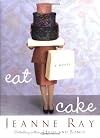
Audiobook read by the author
Ruth Hopson likes to bake cakes. She finds comfort in comforting others, and lately everyone – including Ruth – needs some comfort. Her mother has moved in after a day-time burglary at her home, her teenage daughter has all the sullenness and angst of most 16-year-olds, her son’s away at college, and her hospital administrator husband has just lost his job. Then her father, a traveling piano player whom she hasn’t seen in 35 years, breaks both wrists in a show more fall and has nowhere else to go. Can she bake enough cakes to soothe everyone – and herself?
I have loved every book I’ve read by Jeanne Ray, and this one is no exception. Her writing reminds me of Anne Tyler and Elizabeth Berg. Her characters experience everyday life, with all its joys, crises, heartaches and triumphs.
I loved Ruth. I liked how she came to grips with her anxieties, how she reached out for help when she needed it, how she listened to advice but still made her own decisions. I loved the interactions between Ruth and her mother, or Ruth and her daughter. This is a woman I want to be friends with … and not just because of her cakes, though I would love to try them!
And I really liked the addition of Florence, the occupational therapist who makes house calls as a favor to the family to help Ruth’s father recover the use of his hands. This is a no-nonsense yet compassionate woman that everyone needs as a best friend. She’s a wonderful addition to the mix of this household.
The audiobook is performed by the author, and I cannot imagine anyone else doing a better job. She really brought these characters to life. One little quibble with the audio version, however, is that it is difficult to tell when Ruth is saying something out loud or just thinking it. But that didn’t really lessen my enjoyment of the book.
The text includes detailed recipes at the end. show less
Ruth Hopson likes to bake cakes. She finds comfort in comforting others, and lately everyone – including Ruth – needs some comfort. Her mother has moved in after a day-time burglary at her home, her teenage daughter has all the sullenness and angst of most 16-year-olds, her son’s away at college, and her hospital administrator husband has just lost his job. Then her father, a traveling piano player whom she hasn’t seen in 35 years, breaks both wrists in a show more fall and has nowhere else to go. Can she bake enough cakes to soothe everyone – and herself?
I have loved every book I’ve read by Jeanne Ray, and this one is no exception. Her writing reminds me of Anne Tyler and Elizabeth Berg. Her characters experience everyday life, with all its joys, crises, heartaches and triumphs.
I loved Ruth. I liked how she came to grips with her anxieties, how she reached out for help when she needed it, how she listened to advice but still made her own decisions. I loved the interactions between Ruth and her mother, or Ruth and her daughter. This is a woman I want to be friends with … and not just because of her cakes, though I would love to try them!
And I really liked the addition of Florence, the occupational therapist who makes house calls as a favor to the family to help Ruth’s father recover the use of his hands. This is a no-nonsense yet compassionate woman that everyone needs as a best friend. She’s a wonderful addition to the mix of this household.
The audiobook is performed by the author, and I cannot imagine anyone else doing a better job. She really brought these characters to life. One little quibble with the audio version, however, is that it is difficult to tell when Ruth is saying something out loud or just thinking it. But that didn’t really lessen my enjoyment of the book.
The text includes detailed recipes at the end. show less
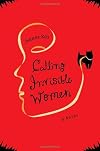
Clever and crafty, but definitely needs a dose of indulgence when it comes to believability. Still, the basic premise - that women, especially over the age of 50 are invisible - is worth exploring. The heroine, Clover Hobart, 54 (same!) literally becomes invisible due to a circumstance she deduces after encountering other invisible women. Turns out there is quite a league of them in her Ohio environs, and even more beyond those borders. Sadly, her family (20-something son, Nick, pediatrician show more husband Arthur, college-age daughter Evie) don't even notice, so pre-occupied are they with their own lives and so used to the role she fills for them. To be fair, she can be felt by them and her clothes suggest a person within, but how much do we truly pay attention to those in our daily lives? Her best friend/neighbor Glinda, and her m-i-l, Irene do notice and they give Clover the support she needs to figure out her altered life. The fellowship of the other women and the commonality that caused their invisibility becomes a crusade to do right by women everywhere in all circumstances. Here, here! They also learn how to use their invisibility to their advantage, acting as consciences and deterrents to much of the small scale bad behavior in their spheres of influence: bullying at schools, a bank robbery, bad teenage choices, etc. - all to humorous effect. "I'm starting to think we need invisible women everywhere, not just for protection but to give people a nudge to be their better selves." (95) Clover also gains insight into her family's lives that dinner conversation just doesn't provide. "It's possible that hat's the lesson in all of this is, not who sees you but who you can learn to see." (107) Capers and hijinks result and energy is channeled to make a difference and lessons are learned. Clover uses her dormant skills as a journalist to break the story and create awareness. Women are empowered and appreciated. "We've got to starting thinking about what makes us light. Simply put, invisible women need to work a lot harder to be seen....So we've got to figure out who we are. We've got to stop standing around in the corner wondering if anybody is missing us. We have to find our light so people still know that we're here." (128) All this is, of course, a stretch. But it is entertaining and thought-provoking and while it resolves quickly at the end, it leaves a 'what if?' sentiment behind. "The truth, we realize as we get older, is a very complicated pastiche of feelings and facts, of what can and cannot be said. It is different for everyone." (156) Our challenge is to find our truth and live by it, and this may only be do-able when we reach a certain age and maturity. show less
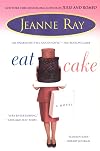
"You never really know what's going on with your ceiling until you just give up and lie down on your floor."
That is just one of the quotable phrases from this wonderful book. In fact, it's the first book I've read this year that I really loved. I knew I would enjoy it, because I read Julie & Romeo by the same author last year, and it was great, too. But I wasn't prepared to find a character that I actually had quite a bit in common with. Ruth, the lovely main character, has a husband who show more just got laid off and is trying to find himself, she plays the piano, and she loves to bake cakes. (I don't bake cakes very often, however, for the sheer reason that I would eat it all, and that's not good.) The other characters in the book are just that - characters! I hardly went more than a couple of pages without chuckling at something Ruth's mother or father said or did. They are priceless.
As a big plus, at the end of the novel there are 12 recipes to the mind-numbingly drool-producing cakes that the author mentions throughout the book. Almond Apricot Pound Cake with Amaretto... Sweet Potato Bundt Cake with Rum-Plumped Raisins and a Spiked Sugar Glaze... Somebody call the Weight Watcher police! show less
That is just one of the quotable phrases from this wonderful book. In fact, it's the first book I've read this year that I really loved. I knew I would enjoy it, because I read Julie & Romeo by the same author last year, and it was great, too. But I wasn't prepared to find a character that I actually had quite a bit in common with. Ruth, the lovely main character, has a husband who show more just got laid off and is trying to find himself, she plays the piano, and she loves to bake cakes. (I don't bake cakes very often, however, for the sheer reason that I would eat it all, and that's not good.) The other characters in the book are just that - characters! I hardly went more than a couple of pages without chuckling at something Ruth's mother or father said or did. They are priceless.
As a big plus, at the end of the novel there are 12 recipes to the mind-numbingly drool-producing cakes that the author mentions throughout the book. Almond Apricot Pound Cake with Amaretto... Sweet Potato Bundt Cake with Rum-Plumped Raisins and a Spiked Sugar Glaze... Somebody call the Weight Watcher police! show less
What a novel! It brought forward so many points to ponder in such an open way. It was such a quick easy read that I finished it in one day! I will be thinking about it for many more.
You must go into this novel being able to give a little suspension of disbelief. Some things, no matter how you look at them just don't fit, are hard to picture. However, for me, this took nothing major away from the rest of the story. What is the definition of invisible? Is it not being seen, not being able to show more be seen? What can cause one to be invisible? What does one do when one is invisible? Where does a person's worth stand? In them or in the fact of their visibility? All questions brought to light in the fairly unassuming character of Clover, who could actually be many of us. This is story for any woman.
Ray even manages to bring in the subject of big pharmaceutical companies and their ethics without being overbearing. Does the end justify the means? Are there such things as acceptable casualties? Can "Invisible" people make a difference?
This is an incredibly engrossing and thought provoking read! I highly recommend that you pick it up, read it, and take a look in the mirror! Enjoy! show less
You must go into this novel being able to give a little suspension of disbelief. Some things, no matter how you look at them just don't fit, are hard to picture. However, for me, this took nothing major away from the rest of the story. What is the definition of invisible? Is it not being seen, not being able to show more be seen? What can cause one to be invisible? What does one do when one is invisible? Where does a person's worth stand? In them or in the fact of their visibility? All questions brought to light in the fairly unassuming character of Clover, who could actually be many of us. This is story for any woman.
Ray even manages to bring in the subject of big pharmaceutical companies and their ethics without being overbearing. Does the end justify the means? Are there such things as acceptable casualties? Can "Invisible" people make a difference?
This is an incredibly engrossing and thought provoking read! I highly recommend that you pick it up, read it, and take a look in the mirror! Enjoy! show less
You May Also Like


Associated Authors
Statistics
- Works
- 12
- Also by
- 23
- Members
- 2,555
- Popularity
- #10,048
- Rating
- 3.7
- Reviews
- 129
- ISBNs
- 76
- Languages
- 7
- Favorited
- 4