
Fannie Flagg
Author of Fried Green Tomatoes at the Whistle Stop Cafe
About the Author
Born on September 21, 1941, in Birmingham, Alabama, and named Patricia Neal, Fannie Flagg attended the University of Alabama, the Pittsburgh Playhouse, and the Town and Gown Theatre. Although she is best known as a novelist and screenwriter, she began her career in Birmingham, in 1964. She was an show more actress, comedienne, producer, and writer, first in Birmingham in 1964, when she was the producer of The Morning Show (WBRC-TV) and later when she was associated with such shows as Candid Camera and Harper Valley. Other works include Coming Attractions: A Wonderful Novel (1981) and the recording My Husband Doesn't Know I'm Making This Phone Call (1971). However, Flagg's greatest claim to fame came when the screenplay for the film Fried Green Tomatoes, which she, together with Jon Avnet, adapted from her novel, Fried Green Tomatoes at the Whistle Stop Cafe, won an Academy Award nomination for Best Screenplay in 1991. She is the author several other works of fiction, including; Standing in the Rainbow, A Redbird Christmas, Can't Wait to Get to Heaven, I Still Dream about You, The All-Girl Filling Station's Last Reunion, and The Whole Town's Talking. (Bowker Author Biography) show less
Series
Works by Fannie Flagg
Fannie Flagg's Original Whistle Stop Cafe Cookbook: Featuring : Fried Green Tomatoes, Southern Barbecue, Banana Split Cake, and Many Other Great Recipes (1993) 260 copies, 4 reviews
Fried Green Tomatoes at the Whistle Stop Cafe / Welcome to the World, Baby Girl! (2005) 65 copies, 1 review
Fried Green Tomatoes, Can't Wait to Get to Heaven, and I Still Dream About You: Three Bestselling Novels (2013) 4 copies
Livros Condensados: Perigo Biológico | O Verão da Minha Ousadia | O Pianista | Que Natal! (2005) — Author — 2 copies
Stamding in the rainbow 1 copy
[unidentified works] 1 copy
I still see you in my dreams 1 copy
Associated Works
My Bookstore: Writers Celebrate Their Favorite Places to Browse, Read, and Shop (2012) — Contributor — 621 copies, 16 reviews
Reader's Digest Select Editions 1999 v03 #243: The Hammer of Eden / Welcome to the World, Baby Girl! / Stonewall's Gold / River's End (1999) — Contributor — 48 copies, 1 review
Reader's Digest Select Editions 2011 v04 #316: Never Look Away / Promise Me / Lipstick in Afghanistan / I Still Dream About You (2011) 6 copies
Het Beste Boek 235: Sneeuwjacht / Wulffers en de zaak van de bloedverwanten / In de ochtend / Een gloedvolle Kerst 3 copies, 1 review
Tagged
Common Knowledge
- Other names
- Neal, Patricia (birth name)
- Birthdate
- 1944-09-21
- Gender
- female
- Occupations
- actor
novelist
comedian - Awards and honors
- Harper Lee Award (2012)
- Agent
- Jennifer Rudolph Walsh (WME)
- Short biography
- See Flagg's biography in the online Encyclopedia of Alabama.
- Nationality
- USA
- Birthplace
- Birmingham, Alabama, USA
- Places of residence
- Birmingham, Alabama, USA
Montecito, California, USA - Associated Place (for map)
- USA
Members
Discussions
August 2015: Fannie Flagg in Monthly Author Reads (October 2018)
Fried Green Tomatoes in Magic City LT Group (February 2011)
Reviews
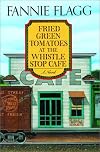
Yeah . . . maybe this book just isn't for me. With such a good overall rating and with actual lesbians in historical fiction, it feels like I should like this more, but . . . I guess I just couldn't connect.
Book content warnings:
rape
racism
fatphobia
racial slurs
Evelyn visits her mother-in-law in a nursing home, basically feeling depressed and numb in middle age, and somehow becomes friends with another lady there, Mrs. Ninny Threadgoode. Soon, Evelyn eagerly anticipates her visits. Mrs. show more Threadgoode talks about her memories in Whistle Stop, Alabama, and Evelyn listens.
This is definitely one of those "atmospheric" books. You're here for the painting of Whistle Stop and its plethora of characters, not for any plot. Especially because the book doesn't stick to one coherent timeline (besides Evelyn and Mrs. Threadgoode's, that is). The retelling of the goings on in Whistle Stop can jump anywhere from back in the 30s to the 60s.
I'm not sure when the book started making me uncomfortable, but it crept up on me and gradually gained momentum, until by the end I just wanted to finish it to finish it.
I first rented this for the wlw rep and diverse characters, but I am really disappointed with how those characters are represented here. Ruth and Idgie, the lesbian/bi women, aren't well developed outside of their youth, and have a relationship borderline unhealthy (plus, it's not even "defined" whether or not they're actually in a relationship--goodread's official description for them is "friends" . . . incredible). I understand it's Ruth and "Aunt Idgie" to avoid the lesbophobia that was a lot more prevalent during that time, but nobody--not even from Idgie's family--found Idgie being a lesbian the slightest bit strange? When the book didn't shirk from the any of the racism of the 1930s-60s, I didn't like how it softened the homophobia. That may seem strange, especially coming from a wlw, but you can't "get rid" of one form of oppression magically and say you're being progressive when you're still depicting the lack of rights in another form. I don't know . . .
Moving on, Idgie is pretty damn manipulative. It's apparent she cheats on Ruth (telling Stump "don't tell your mother"--therefore she knows it's wrong, too), but her view on it is never challenged. Ruth and Idgie never even have a conversation about it; Ruth just seems a bit passive aggressive. Plus, she's stalked Ruth when Ruth was married to a man. It's not romantic . . . it's creepy.
There's also some things that made me uncomfortable in regards to race . . . now, I'm a white reviewer so take what I say with a grain of salt. There are two twins, Jasper and Artis. One is light-skinned (Jasper), and one is dark-skinned (Artis). So who is the "good" twin, and who is the "evil" twin? Yeah, just guess. Artis ends up in jail often, and he stabs Jasper one time and ends up "liking it" and etc., etc., etc. There was a chapter or two that talked about this difference in skin color among black people, but it kind of feels beside the point when she made Artis violent and Jasper do no wrong.
There's also a point where Evelyn (the main PoV character) wishes she were black--and has some pretty fetishist views of black people. She and Mrs. Threadgoode talk about how black people are just "so different", especially when it comes to feeling things. (However, she's also afraid of black men, a view which doesn't shift. Because eeeeeeveryone knows black men are scary, violent people. /sarcasm) There's also an inner monologue where Evelyn is angry and thinks how all these marginalized groups have already had their protests and protections granted (HA! as if), but when will that time come for women?! (basically affirming the White Feminist thought of even today that Woman = White Woman [only])
. . . This is the moment I knew without a doubt the book was written by a white woman. I verified it on the back of the book and shook my head.
At least I'll stop wondering about what this was about when I see it on all the lgbt/lesbian goodreads lists. show less
Book content warnings:
rape
racism
fatphobia
racial slurs
Evelyn visits her mother-in-law in a nursing home, basically feeling depressed and numb in middle age, and somehow becomes friends with another lady there, Mrs. Ninny Threadgoode. Soon, Evelyn eagerly anticipates her visits. Mrs. show more Threadgoode talks about her memories in Whistle Stop, Alabama, and Evelyn listens.
This is definitely one of those "atmospheric" books. You're here for the painting of Whistle Stop and its plethora of characters, not for any plot. Especially because the book doesn't stick to one coherent timeline (besides Evelyn and Mrs. Threadgoode's, that is). The retelling of the goings on in Whistle Stop can jump anywhere from back in the 30s to the 60s.
I'm not sure when the book started making me uncomfortable, but it crept up on me and gradually gained momentum, until by the end I just wanted to finish it to finish it.
I first rented this for the wlw rep and diverse characters, but I am really disappointed with how those characters are represented here. Ruth and Idgie, the lesbian/bi women, aren't well developed outside of their youth, and have a relationship borderline unhealthy (plus, it's not even "defined" whether or not they're actually in a relationship--goodread's official description for them is "friends" . . . incredible). I understand it's Ruth and "Aunt Idgie" to avoid the lesbophobia that was a lot more prevalent during that time, but nobody--not even from Idgie's family--found Idgie being a lesbian the slightest bit strange? When the book didn't shirk from the any of the racism of the 1930s-60s, I didn't like how it softened the homophobia. That may seem strange, especially coming from a wlw, but you can't "get rid" of one form of oppression magically and say you're being progressive when you're still depicting the lack of rights in another form. I don't know . . .
Moving on, Idgie is pretty damn manipulative. It's apparent she cheats on Ruth (telling Stump "don't tell your mother"--therefore she knows it's wrong, too), but her view on it is never challenged. Ruth and Idgie never even have a conversation about it; Ruth just seems a bit passive aggressive. Plus, she's stalked Ruth when Ruth was married to a man. It's not romantic . . . it's creepy.
There's also some things that made me uncomfortable in regards to race . . . now, I'm a white reviewer so take what I say with a grain of salt. There are two twins, Jasper and Artis. One is light-skinned (Jasper), and one is dark-skinned (Artis). So who is the "good" twin, and who is the "evil" twin? Yeah, just guess. Artis ends up in jail often, and he stabs Jasper one time and ends up "liking it" and etc., etc., etc. There was a chapter or two that talked about this difference in skin color among black people, but it kind of feels beside the point when she made Artis violent and Jasper do no wrong.
There's also a point where Evelyn (the main PoV character) wishes she were black--and has some pretty fetishist views of black people. She and Mrs. Threadgoode talk about how black people are just "so different", especially when it comes to feeling things. (However, she's also afraid of black men, a view which doesn't shift. Because eeeeeeveryone knows black men are scary, violent people. /sarcasm) There's also an inner monologue where Evelyn is angry and thinks how all these marginalized groups have already had their protests and protections granted (HA! as if), but when will that time come for women?! (basically affirming the White Feminist thought of even today that Woman = White Woman [only])
. . . This is the moment I knew without a doubt the book was written by a white woman. I verified it on the back of the book and shook my head.
At least I'll stop wondering about what this was about when I see it on all the lgbt/lesbian goodreads lists. show less
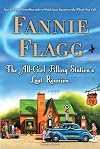
At age 59 and with nearly all of her children married, Sookie is ready to settle down and rest a while when a shocking revelation knocks her socks off -- Sookie was adopted as an infant and her proud Southern mother (who has a bad habit of driving Sookie to the brink) is not her biological mother at all! As Sookie begins to learn about her genetic family, a wonderful story emerges about four sisters who man their father's gas station and later join the semi-militarized Women Air Service show more Pilots (WASPs) program during World War II.
Of the two books I've read by Flagg in the past, one was fantastic and one was just so-so; I was thus wary going into this one. The beginning was a bit rocky with tons of names being thrown at the reader (many of whom are not super important characters as it turns out). But the book quickly gets into the crux of the story and then shines spectacularly. Sookie's coming to terms with her identity is an interesting part of the book and provides plenty of fodder for thought/discussion regarding nature vs. nurture, family relationships, etc.
However, the truly remarkable part about this book was the historically based sections, particularly the WASPs storyline. Despite having read quite a bit about World War II history, I was unfamiliar with the WASPs. This book provided a lot of well-researched information about them as well as inspiring me to find out more about these brave women.
The big "reveal" was something I saw coming, but the book does still manage to have a lot of surprising twists. While there are a few flaws here and there, I overall enjoyed this book very much. Despite potentially dark and depressing topics, the book remains largely light-hearted. It is an entertaining read that will have you thinking about heavy topics long after you put the book down. show less
Of the two books I've read by Flagg in the past, one was fantastic and one was just so-so; I was thus wary going into this one. The beginning was a bit rocky with tons of names being thrown at the reader (many of whom are not super important characters as it turns out). But the book quickly gets into the crux of the story and then shines spectacularly. Sookie's coming to terms with her identity is an interesting part of the book and provides plenty of fodder for thought/discussion regarding nature vs. nurture, family relationships, etc.
However, the truly remarkable part about this book was the historically based sections, particularly the WASPs storyline. Despite having read quite a bit about World War II history, I was unfamiliar with the WASPs. This book provided a lot of well-researched information about them as well as inspiring me to find out more about these brave women.
The big "reveal" was something I saw coming, but the book does still manage to have a lot of surprising twists. While there are a few flaws here and there, I overall enjoyed this book very much. Despite potentially dark and depressing topics, the book remains largely light-hearted. It is an entertaining read that will have you thinking about heavy topics long after you put the book down. show less
 This review was written for LibraryThing Early Reviewers.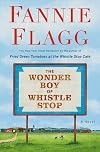
I received an ARC from the publisher in exchange for an honest review.
I am writing this review as I wipe tears after finishing The Wonder Boy of Whistle Stop. This book feels like finding a box in the attic full of family photos and letters, or reminiscing over bourbon with childhood friends when coming back to your hometown after being away, or a sweet hug from grandma or grandpa. I loved Fannie Flagg when I read Fried Green Tomatoes at the Whistle Stop Cafe, but after this sequel, I wish show more I could grab the car keys and pay a visit to Whistle Stop. show less
I am writing this review as I wipe tears after finishing The Wonder Boy of Whistle Stop. This book feels like finding a box in the attic full of family photos and letters, or reminiscing over bourbon with childhood friends when coming back to your hometown after being away, or a sweet hug from grandma or grandpa. I loved Fannie Flagg when I read Fried Green Tomatoes at the Whistle Stop Cafe, but after this sequel, I wish show more I could grab the car keys and pay a visit to Whistle Stop. show less
I can not count how many times I watched this movie when I was younger. It was one of my mom's favorites and I was absolutely infatuated with Idgie. Still am, actually. When I got older my mom told me on many occasions how good this book was and how I needed to read it. Well, I finally read it Mom and I loved it! It usually goes without saying but- this book was 1,000,000X better than the movie. Idgie and Ruth's love story had me bawling, it was just so beautiful and pure. I also loved all show more the anecdotes about this small town, full of these crazy people who would do anything for each other. Especially the one about Naughty Bird and Ms. Fancy. Oh, my heart. I found myself temporarily transported to Whistle Stop, 1933...I caught myself wishing for times to be more simple, like they were then- that is until Mrs. Flagg reminds us of the truth of what it was like to be black in the South during that time. She swelled up my heart, broke it, and swelled it up again.I would highly recommend this to everyone and I thank my Momma for convincing me to finally read this. show less
Lists
Carole's List (8)
5 Best 5 Years (1)
Epistolary Books (1)
Female Author (1)
Read in 2014 (1)
Put a Bird On It (1)
Southern Fiction (4)
Food Fiction (1)
Five star books (2)
A Novel Cure (2)
1980s (1)
Unread books (1)
Christmas Books (1)
Overdue Podcast (1)
Summer Books (1)
Awards


You May Also Like


Associated Authors
Statistics
- Works
- 27
- Also by
- 21
- Members
- 26,783
- Popularity
- #776
- Rating
- 3.9
- Reviews
- 902
- ISBNs
- 367
- Languages
- 17
- Favorited
- 96

