
Decidedly pretty book, with an interesting premise. I was reading this with the assumption that it was speculative fiction, but I would probably have engaged with it better if I had been reading it purely as 'historical'. Comments on the stories (hopefully in anthology order), with some 'in the moment' reactions:
Queenside (Liz Barr) -- It's a nice little piece, a reasonable opener for the collection, about the realities of politics as a woman in Henry VIII's England, but. (3/5)
The Company of Women (Garth Nix) -- love the opening - grabs thoroughly. As does the whole story. It holds up well to rereading. (5/5)
Mary Mary (Kirsten McDermott) -- I really like the language, but I struggle with it even so. And while it is probably mostly historically accurate, the weird addition of the Grey Lady, while bringing it more to the speculative genre, does not endear the story to me. (3/5)
A song еКfor Sacagawea (Jane Yolen) -- Not memorable - pleasant, interesting in a historical perspective sense, boring. And the 'as much as the white men did and then some' is understandable, but still a trope. (3/5)
Look how cold my hands are (Deborah Biancotti) -- Nasty. It is at this point that I wonder that we have such a collection of nasty stories. Nix's was about nasty people, nasty situation, but didn't leave me feeling nauseated. Unlike now. And basically - how did we get from angry women to evil? How is this the right way to go? to take the idea of women's anger and make it dark and show more untouchable? еК(4/5)
Bright Moon (Foz Meadows) -- *This* is a story of a woman using anger as strength. I still find it hard to read, but it is a much stronger story. (5/5)
Charmed Life (Joyce Chng) -- another one that fits the title well, a woman finding her anger, and changing her world with it. A smaller change than the previous. But still, decidedly historical. (4/5)
A Beautiful Stream (Nisi Shawl) -- Very subtle, the twists and turns of the mind of the protagonist and her race for survival of herself and her daughter. (5/5)
... and for some reason, my note are missing on the remaining stories. show less
Queenside (Liz Barr) -- It's a nice little piece, a reasonable opener for the collection, about the realities of politics as a woman in Henry VIII's England, but. (3/5)
The Company of Women (Garth Nix) -- love the opening - grabs thoroughly. As does the whole story. It holds up well to rereading. (5/5)
Mary Mary (Kirsten McDermott) -- I really like the language, but I struggle with it even so. And while it is probably mostly historically accurate, the weird addition of the Grey Lady, while bringing it more to the speculative genre, does not endear the story to me. (3/5)
A song еКfor Sacagawea (Jane Yolen) -- Not memorable - pleasant, interesting in a historical perspective sense, boring. And the 'as much as the white men did and then some' is understandable, but still a trope. (3/5)
Look how cold my hands are (Deborah Biancotti) -- Nasty. It is at this point that I wonder that we have such a collection of nasty stories. Nix's was about nasty people, nasty situation, but didn't leave me feeling nauseated. Unlike now. And basically - how did we get from angry women to evil? How is this the right way to go? to take the idea of women's anger and make it dark and show more untouchable? еК(4/5)
Bright Moon (Foz Meadows) -- *This* is a story of a woman using anger as strength. I still find it hard to read, but it is a much stronger story. (5/5)
Charmed Life (Joyce Chng) -- another one that fits the title well, a woman finding her anger, and changing her world with it. A smaller change than the previous. But still, decidedly historical. (4/5)
A Beautiful Stream (Nisi Shawl) -- Very subtle, the twists and turns of the mind of the protagonist and her race for survival of herself and her daughter. (5/5)
... and for some reason, my note are missing on the remaining stories. show less

A loving portrait of what was possibly unusual life even at the time of writing. Some very weird social/class politics appear, but the escapades of the three children are entertaining, and while they are the kind of unpleasant that is common in children, there is no obvious maliciousness in their interactions.
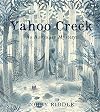
read as a judge for Aurealis awards for 2019
From the very beginning, I was fascinated. I loved the use of a simple, muted palette, the interspersing of the historical (white) and the current (Indigenous) voices, the slow building of the idea. There are so many details that one could go back and look at
From the very beginning, I was fascinated. I loved the use of a simple, muted palette, the interspersing of the historical (white) and the current (Indigenous) voices, the slow building of the idea. There are so many details that one could go back and look at
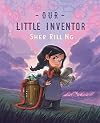
read as a judge for Aurealis awards for 2019
beautiful, and I like the idea of there being a simple solution, but I find it disingenuous to have a story about a single person succeeding in the face of the climate deniers in power.
beautiful, and I like the idea of there being a simple solution, but I find it disingenuous to have a story about a single person succeeding in the face of the climate deniers in power.
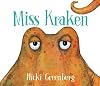
read as a judge for Aurealis awards for 2019
cute. quirky. I can see that it will probably appeal to the target demographic, but I'm just a bit meh about the story. Not one I would have enjoyed rereading to pre-reading kids
cute. quirky. I can see that it will probably appeal to the target demographic, but I'm just a bit meh about the story. Not one I would have enjoyed rereading to pre-reading kids

Complicated and rich exploration of supernatural and/or mythic ideas, woven into something that is both a romp and a thriller. Took me a while to warm up to the viewpoint character, and I made a couple of attempts at reading this (and putting it down) before I got invested in the characters and story. McGuire's characteristic layers of details are an important part of how the story works and how it resolves. Plus, I greatly appreciate the off hand explanations for things that would otherwise annoy me on a 'how did that even work' level.
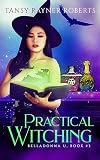
I am Tansy's target demographic. I love everything they write, and I've come out of reading all of the Belladonna U with a smile on my face. It is therefore entirely not a surprise that I adored this book.
But I also recognise that it isn't going to be a book for everyone. This is not the place to start this series. It relies heavily on events in the previous books, allowing the characters to heal from some pretty difficult events. It is also very reliant on the Australian sense of humour, so while I was highly amused (and loved a line enough that I actually wrote a fan letter to the author) I'd hate to try and explain bits to people not enmeshed in the same pop culture. Although, maybe they would just slide past, and there would be enough funny without?
That said, if you like quirky, timeless stories about growing up and working out what to do after you get through schooling / university (and sometimes that is more schooling, and sometimes it is running away to France / work in retail / disappointing your parents by continuing to be in a rock band), I thoroughly recommend getting the earlier works in this series, and experiencing it for yourself.
The book is in four discrete sections.
"Untitled cryptid album" focuses on Holly Hallow, losing and then finding focus in the months immediately post uni. Several very short chapters make a short story.
"The year of critical rolls" skips between many of the extended friends group, leveraging a mix of diary entries and real time show more scenes to develop a complex layered story. So much was hinted at in the spaces, so many gossamer threads tying the whole thing together. This is the main story of the book, and there is so much heartbreak, but also so much hope shuffled in together. I'm sure someone much better at literary analysis could talk in depth about the subtle pun of the title, and the critical roles each character takes in both the story and society.
"Like Witches for Coffee" is another collection of short chapters each of which are snippets of a bigger story. In this case, they include interview transcripts, crowdfunding, discussion of lyrics, and the band on tour.
"Bonus Playlists and extras" is literally a collection of song lyrics. Interesting reading through, although I suspect some would work much better shouted at an audience. (and one that I swear is written in 5/4, or at least that is the way the lines scan). show less
But I also recognise that it isn't going to be a book for everyone. This is not the place to start this series. It relies heavily on events in the previous books, allowing the characters to heal from some pretty difficult events. It is also very reliant on the Australian sense of humour, so while I was highly amused (and loved a line enough that I actually wrote a fan letter to the author) I'd hate to try and explain bits to people not enmeshed in the same pop culture. Although, maybe they would just slide past, and there would be enough funny without?
That said, if you like quirky, timeless stories about growing up and working out what to do after you get through schooling / university (and sometimes that is more schooling, and sometimes it is running away to France / work in retail / disappointing your parents by continuing to be in a rock band), I thoroughly recommend getting the earlier works in this series, and experiencing it for yourself.
The book is in four discrete sections.
"Untitled cryptid album" focuses on Holly Hallow, losing and then finding focus in the months immediately post uni. Several very short chapters make a short story.
"The year of critical rolls" skips between many of the extended friends group, leveraging a mix of diary entries and real time show more scenes to develop a complex layered story. So much was hinted at in the spaces, so many gossamer threads tying the whole thing together. This is the main story of the book, and there is so much heartbreak, but also so much hope shuffled in together. I'm sure someone much better at literary analysis could talk in depth about the subtle pun of the title, and the critical roles each character takes in both the story and society.
"Like Witches for Coffee" is another collection of short chapters each of which are snippets of a bigger story. In this case, they include interview transcripts, crowdfunding, discussion of lyrics, and the band on tour.
"Bonus Playlists and extras" is literally a collection of song lyrics. Interesting reading through, although I suspect some would work much better shouted at an audience. (and one that I swear is written in 5/4, or at least that is the way the lines scan). show less

Gritty and gruesome and gory. And plain nasty, in the way that so much Cthulu mythos is. I get that the racism was so necessary to the story, and that it was probably understated in many ways, but it was heart breaking to read. Towards the middle, I struggled a bit to keep going--I was a bit on the bored side, but in the end it was worth it.

As advertised, this is a fabulous collection of kinky queer erotica. Well worth reading.
I think my favourite is "Whipmaster", but it is very difficult to pick. There are a couple I found less readable, but still very good. There is a nice sprinkling of SF, supernatural, and fantasy elements, but none of those are critical to the stories.
There is one set during the early days of the Covid pandemic I found difficult to read, but the story mostly glances over them, providing context but not suffering.
I think my favourite is "Whipmaster", but it is very difficult to pick. There are a couple I found less readable, but still very good. There is a nice sprinkling of SF, supernatural, and fantasy elements, but none of those are critical to the stories.
There is one set during the early days of the Covid pandemic I found difficult to read, but the story mostly glances over them, providing context but not suffering.

Interesting window into a place and time long gone. Lots of naturalist detail woven in around cutesy family anecdotes and stories of a dog with attitude. Was lots of fun to read to the kids - they found much of it worth laughing along with.

I usually love Henry's work, and yet this one just never quite gelled for me. The viewpoint character -- a single mother, down on their luck, dealing with a shitty job and a teenage kid -- was fabulously well written, and I very much appreciated that no punches were pulled in the characterisation. And yet I never warmed to them, nor any of the rest of the characters.
It is set during covid quarantining, although there were a lot of things happening that didn't seem very much about keeping distances -- this might be just because different places handled things so very differently. Although important as a setting detail, it wasn't narratively all that important, because all the things going wrong were much more eternal.
The plot? Eh, I'm not sure about it. The first 3/4 dragged, and then the solution to what was going on rushed past. Possibly for other people that will be slow build horror, but for me it was just bland.
It is set during covid quarantining, although there were a lot of things happening that didn't seem very much about keeping distances -- this might be just because different places handled things so very differently. Although important as a setting detail, it wasn't narratively all that important, because all the things going wrong were much more eternal.
The plot? Eh, I'm not sure about it. The first 3/4 dragged, and then the solution to what was going on rushed past. Possibly for other people that will be slow build horror, but for me it was just bland.

I'm often suspicious of books that claim to be international, as many are heavily weighted towards the USA. This one, refreshingly, is not. It does still tend towards English speaking countries--there are three from the USA, and two each from Canada, Australia, and the UK (one English, one Welsh)--totalling nine of the 14. The other five countries represented are Iran, Mexico, India, Germany, and Malaysia.
I hadn't realised when I acquired this book that it is an anthology. Which yes, does mean some quite varied writing styles, some of which didn't gel for me. But it has the strong advantage here that many of the stories are written with a much greater understanding of the culture and setting in which the events happened. Including one who writes about events in their small home town. I found it interesting which details the various authors felt needed explaining to an international audience, and which were left to context clues.
I didn't actively track the years covered, but my guess is that the most represented decade is the 1990s; there were definitely historical (~1910; ~1930, WWII) ones that I noticed, and some much more recent (I think the most recent was 2019). I was intrigued that at least two of these were cases that changed the way that some aspect of justice is enacted in the region it occurred in.
For people with an existing interest in true crime, this is a good read, light on the gory details and heavy on the judicial. For people who don't know if they are show more interested in true crime? I wouldn't recommend this as a starting point. It absolutely makes assumptions about the knowledge of the audience, and skips over explanatory information. show less
I hadn't realised when I acquired this book that it is an anthology. Which yes, does mean some quite varied writing styles, some of which didn't gel for me. But it has the strong advantage here that many of the stories are written with a much greater understanding of the culture and setting in which the events happened. Including one who writes about events in their small home town. I found it interesting which details the various authors felt needed explaining to an international audience, and which were left to context clues.
I didn't actively track the years covered, but my guess is that the most represented decade is the 1990s; there were definitely historical (~1910; ~1930, WWII) ones that I noticed, and some much more recent (I think the most recent was 2019). I was intrigued that at least two of these were cases that changed the way that some aspect of justice is enacted in the region it occurred in.
For people with an existing interest in true crime, this is a good read, light on the gory details and heavy on the judicial. For people who don't know if they are show more interested in true crime? I wouldn't recommend this as a starting point. It absolutely makes assumptions about the knowledge of the audience, and skips over explanatory information. show less

I have complicated feelings about this book. Although presented as a biography--and a very rambling one--it is more accurately a story of an obsession, with the biographical details that come to light mere highlights. And as such, because Symons' seeking for knowledge of "Corvo" (a.k.a. Fr Rolfe, and a number of other names) covers a significant period but has been skilfully condensed, at times the obsession shines brighter than the object of the obsession. Also a side-effect of the tidying together of many years of happenstance is that the story has a shine of impossibility, of artifice, of tales beyond truth and into fiction. To the point that more than once I have had to go and check that Rolfe/Corvo truly existed and that the books discussed are not confabulated. And I'm still not sure of this, even though it is possible to find Hadrian the Seventh (the inciting object of the obsession) on Project Gutenberg (https://www.gutenberg.org/ebooks/67369) and Rolfe on wikipedia.
I come to the end of it, having taken something like 18 months to read, glad that I have read it, and unable to truly articulate what it is that this book might represent. It is subtitled 'an experiment in biograpy', and that it has done brilliantly. I suspect that that would have been the case even more so at the time of publication, as it has the feel of a much more modern work compared to my experience with non-fiction English works of the 1930s.
It is a detailed, meticulous, and unflinching show more portrayal of a man whose worst enemy was himself. Who possibly had two great talents, but the one for survival in the face of extremity was the one that was tested and developed far better than the one for writing and language.
I have the hope that I will come back this in the future, having read at least one of Rolfe's books (there are currently two on Project Gutenberg). Because I think there will be value in rereading, and that having read this first will deepen my appreciation of whatever works of Rolfe's that I read. show less
I come to the end of it, having taken something like 18 months to read, glad that I have read it, and unable to truly articulate what it is that this book might represent. It is subtitled 'an experiment in biograpy', and that it has done brilliantly. I suspect that that would have been the case even more so at the time of publication, as it has the feel of a much more modern work compared to my experience with non-fiction English works of the 1930s.
It is a detailed, meticulous, and unflinching show more portrayal of a man whose worst enemy was himself. Who possibly had two great talents, but the one for survival in the face of extremity was the one that was tested and developed far better than the one for writing and language.
I have the hope that I will come back this in the future, having read at least one of Rolfe's books (there are currently two on Project Gutenberg). Because I think there will be value in rereading, and that having read this first will deepen my appreciation of whatever works of Rolfe's that I read. show less

I adored this. The setting, the world building, the characters, the interwoven story lines. I'm a little over dystopic police states, but that was mostly back drop to the story. I loved the scientific complexity hinted at regarding the ships, I loved the social and political details of living in a small community for years on end, and I loved how the various story threads combined together into a dazzling picture.

A historian's account of an event that happened in my home town a century (nearly) ago, which I had not previously been aware of. Interesting progression through the book, as the reader learns things at the rate that the people involved (or at least, the wider public) learned things.
While most of the book focuses on Audrey Jacob, who was charged with the eponymous murder, there are many many digressions about other people involved -- Jacob's family and friends, the police, friends of the deceased.
While most of the book focuses on Audrey Jacob, who was charged with the eponymous murder, there are many many digressions about other people involved -- Jacob's family and friends, the police, friends of the deceased.

Overall, I like this book, and had I been reading it over a long period of time, dipping in and reading a single section, I would probably rate it higher. The sections are short, self-contained, and with a few notable exceptions coherent and readable (there is one where I swear it is two separate stories munged together, to the point that I couldn't actually work out the connection between one paragraph and the next, and the original story was unresolved).
Tone of the writing is generally dry, and it became a bit same-old same-old the further I got through. I didn't really get much of a sense of the people, for all that there were some who were mentioned frequently. And there was no sense of time. The sections waffled between Darkshire starting as an apprentice, at some unknown time, and random later time points, with no sense of when anything happened, or the time period over which it happened. I found this latter point much more of an issue than the former, because it is about real people, and maintaining their privacy is important. I did wonder about how many of the dark secrets were mentioned in the text were actually dark secrets, and how long it was between when they came to light and when the book was published.
Tone of the writing is generally dry, and it became a bit same-old same-old the further I got through. I didn't really get much of a sense of the people, for all that there were some who were mentioned frequently. And there was no sense of time. The sections waffled between Darkshire starting as an apprentice, at some unknown time, and random later time points, with no sense of when anything happened, or the time period over which it happened. I found this latter point much more of an issue than the former, because it is about real people, and maintaining their privacy is important. I did wonder about how many of the dark secrets were mentioned in the text were actually dark secrets, and how long it was between when they came to light and when the book was published.

Complex subtle horror, some of which comes from how steeped the viewpoint character is in a toxic and psychologically abusive culture. Interrogates a number of tropes about the cultures that live alongside humans -- it is strongly implied that this is the fae, but it is so much more complex than that.
It is obvious early on that Leah is an unreliable narrator -- they tell the reader that, that there are things they can't bring themself to speak or think about. And those silences are critical to the story (some of them are implied so heavily that I was concerned that the truth would be so much nastier than it was)
I'd say that more than being a reworking of fairy tales, this is a reworking of Labyrinth, starting from the same point, of the teenaged sibling wishing to not deal with babysitting. But it is so much darker.
It is obvious early on that Leah is an unreliable narrator -- they tell the reader that, that there are things they can't bring themself to speak or think about. And those silences are critical to the story (some of them are implied so heavily that I was concerned that the truth would be so much nastier than it was)
I'd say that more than being a reworking of fairy tales, this is a reworking of Labyrinth, starting from the same point, of the teenaged sibling wishing to not deal with babysitting. But it is so much darker.

I abandoned this at about 1/4 of the way through:
Viewpoint character -- the plagiarist -- is such a difficult person to be so immersed in. And as a reader I was, because Kuang's writing is great, but their character is highly unreliable, self-serving, and ultimately ignorant of the bigotry that they are throwing everywhere.
And while I'm reasonably sure there is a strong plot here -- certainly, there are lots of strong foundations of story being set, so many things set in motion -- I ultimately don't care to know. Will it end in murder, as the blurb on the back teases? I don't actually care to find out. I truly believe that this character would do that, with little to no compunction. And the teaser on the back really says it all "..What happens next is entirely everyone else's fault'.
Overall, I wish this had drawn me in, rather than pushing me away. But it is a very literary book, and I am very much not a reader of literary fiction.
Viewpoint character -- the plagiarist -- is such a difficult person to be so immersed in. And as a reader I was, because Kuang's writing is great, but their character is highly unreliable, self-serving, and ultimately ignorant of the bigotry that they are throwing everywhere.
And while I'm reasonably sure there is a strong plot here -- certainly, there are lots of strong foundations of story being set, so many things set in motion -- I ultimately don't care to know. Will it end in murder, as the blurb on the back teases? I don't actually care to find out. I truly believe that this character would do that, with little to no compunction. And the teaser on the back really says it all "..What happens next is entirely everyone else's fault'.
Overall, I wish this had drawn me in, rather than pushing me away. But it is a very literary book, and I am very much not a reader of literary fiction.

It's been a couple of weeks since I finished this book, and I'm still having issues with articulating how I feel about it. The simple answer is 'I loved it, it's wonderful / fabulous / fantastic (both meanings)'. But this is not a simple book, even though it is short, and that answer misses so much.
I don't remember what it was that caused me to buy this book, and so when I pulled it off the shelf to read, I had the summary on the back cover as my available info. And from that, I took that this was a Fantasy book, and to expect Fantasy shenanigans. Checking back, I realise that the quote is
"Inspired by the pulps, film noir, and screwball comedy"
so I can see where I got the shenanigans from, but not the fantasy (there is a reference later to Klages having won a World Fantasy Award, but not for this book). There is a singular reference to magic in the summary, so maybe it is that.
This really isn't a fantasy book. There are some interesting fantasy details, and the plot hinges on them, but they aren't the story that is being told, merely the mechanism by which the disbelief is suspended. What it is, is a warm portrait of a group of queer women in an antagonistic setting, having a wonderful time--as much as is possible. There are some pretty grim elements to the story, but they slide past quickly enough that I imagine some readers miss at least some of them. Including, but not limited to, racism, police brutality, homophobia, toxic masculinity, and domestic violence.
I was show more fascinated by all the characters, and the ways in which they navigated the complexities of their lives. The compromises that they made for safety, for survival in a culture that didn't want them for their strengths.
And I did love the story that was woven through, of the picture that was used both as escape and as revenge. show less
I don't remember what it was that caused me to buy this book, and so when I pulled it off the shelf to read, I had the summary on the back cover as my available info. And from that, I took that this was a Fantasy book, and to expect Fantasy shenanigans. Checking back, I realise that the quote is
"Inspired by the pulps, film noir, and screwball comedy"
so I can see where I got the shenanigans from, but not the fantasy (there is a reference later to Klages having won a World Fantasy Award, but not for this book). There is a singular reference to magic in the summary, so maybe it is that.
This really isn't a fantasy book. There are some interesting fantasy details, and the plot hinges on them, but they aren't the story that is being told, merely the mechanism by which the disbelief is suspended. What it is, is a warm portrait of a group of queer women in an antagonistic setting, having a wonderful time--as much as is possible. There are some pretty grim elements to the story, but they slide past quickly enough that I imagine some readers miss at least some of them. Including, but not limited to, racism, police brutality, homophobia, toxic masculinity, and domestic violence.
I was show more fascinated by all the characters, and the ways in which they navigated the complexities of their lives. The compromises that they made for safety, for survival in a culture that didn't want them for their strengths.
And I did love the story that was woven through, of the picture that was used both as escape and as revenge. show less

I really love this series, and this was a great addition / end point (the author's notes say that this is the end for now). I love the way in which different ideas about afterlives are woven through. It does stay in contexts that are mostly comfortable and understandable for me, which is both a strength and a weakness. I'd love there to be that challenge of learning about more mythologies -- although it occurs to me as I write this that it is entirely possible that they are there, and I've missed them.
The heavy investment in Greek mythology is a given based on the previous books and the stories in them. I was fascinated by the ways in which Rose grows and matures in their understanding of the world, and their interactions. Despite Rose regularly stating that they had died a teen, and that ghosts don't mature, I think the story and their behaviour contradicts that. But not understanding one's own place is space is a very human kind of thing.
Vengeance gets a good going over as a theme of this book, and I was fascinated in the ways in which it both does and doesn't play out. Retribution as resolution has its place, and I felt that the approach here added nicely to the ongoing dialogue in fiction as to what a good resolution looks like. Especially as multiple characters reach a turning / growth point and pivot to new ways of being.
While I don't usually make explict commentary on characters, there was one that I adored: the ghost of dinosaurs, who is summoned out of the show more gasoline. The descriptions both visual and behavioural are so vivid. And poignant.
Overall: very satisfying set of conclusions; well worth reading if you liked the previous ones. Possibly slightly darker horror than the last one. show less
The heavy investment in Greek mythology is a given based on the previous books and the stories in them. I was fascinated by the ways in which Rose grows and matures in their understanding of the world, and their interactions. Despite Rose regularly stating that they had died a teen, and that ghosts don't mature, I think the story and their behaviour contradicts that. But not understanding one's own place is space is a very human kind of thing.
Vengeance gets a good going over as a theme of this book, and I was fascinated in the ways in which it both does and doesn't play out. Retribution as resolution has its place, and I felt that the approach here added nicely to the ongoing dialogue in fiction as to what a good resolution looks like. Especially as multiple characters reach a turning / growth point and pivot to new ways of being.
While I don't usually make explict commentary on characters, there was one that I adored: the ghost of dinosaurs, who is summoned out of the show more gasoline. The descriptions both visual and behavioural are so vivid. And poignant.
Overall: very satisfying set of conclusions; well worth reading if you liked the previous ones. Possibly slightly darker horror than the last one. show less

This is a solidly written fantasy / horror / regency romance with a heavy emphasis on body horror and loss of control, and I don't recommend it to people who have trauma over dangerous and controlling parents. Other than that, it careers from event to event, with wilful abandon. I did have to stop and check whether my favourite character made it to the end of the book (they did) while I steeled myself to keep going through some of the quite icky bits.
I don't tend to find Kingfisher's horror all that horrifying; this managed to come closer than most.
I don't tend to find Kingfisher's horror all that horrifying; this managed to come closer than most.

I understand why this book has the reputation that it has, and can see what others love about it. But I was mostly not engaged, and by halfway through only reading for stubbornness. And it required reading in small chunks, because I could not maintain the momentum.
The ending does, in some ways, redeem other parts of the narrative, and I understand at a remove why many of those narrative choices were made, but it is not a book I would choose to revisit; I may look out the author’s other works.
The ending does, in some ways, redeem other parts of the narrative, and I understand at a remove why many of those narrative choices were made, but it is not a book I would choose to revisit; I may look out the author’s other works.

The visual language used in this story took a little time for me to work out, so I think I started it three times (there are three colour palettes, and they each indicate a different part of the story). Once I got going though, i flew through it.
It is a lovely story about family, and stories, and the commonalities of both across cultures. Also about the difficulty of being away from family, and the liminality of being an immigrant.
It is a lovely story about family, and stories, and the commonalities of both across cultures. Also about the difficulty of being away from family, and the liminality of being an immigrant.

This is an incredibly well written book, but it has dated badly. It is possible one could fill a bingo card on the instances of racism alone (across multiple different groups), with added misogyny, classism, and ableism. I found it more so than Agatha Christie, but to some extent this is because Allingham has done a much better job of including a wide range of well formed characters in the story, giving them more scope to include derogatory details.
For example, there are a group of Romani who feature heavily in the story, who are important characters, and mostly not represented in stereotypes. But that mostly is doing a lot of heavy lifting, and every reference to the group uses the common slur. Similarly, there is a singular Jewish character, who isn't presented negatively, but whose Jewishness is used as a shorthand to imply things about them.
In terms of the story, I found it somewhat over the top and implausible, especially the early sections. There were details later that appeared to contradict earlier events, particularly with respect to what had gone on with Gyrth the younger. Some truly bizarre bits of world building, which might just be a result of nearly 100 years of change and my very limited understanding of the English aristocracy.
It was fascinating to work out part way through that the character I was most suspicious of was in fact the one the series is named for, and thus the author was letting the assumed familiarity of the audience with that character show more do some of the work in making them important to the story, and trustworthy to the reader. I hadn't, prior to looking the book up online, been aware that it was part of a series.
I'm glad I've read it, I think that it was a very good example of its genre and era, and--like most of Christie's work (and, possibly, most other mystery writers of the era, although I struggle to think of others)--I don't really feel that I can recommend it to a modern audience. show less
For example, there are a group of Romani who feature heavily in the story, who are important characters, and mostly not represented in stereotypes. But that mostly is doing a lot of heavy lifting, and every reference to the group uses the common slur. Similarly, there is a singular Jewish character, who isn't presented negatively, but whose Jewishness is used as a shorthand to imply things about them.
In terms of the story, I found it somewhat over the top and implausible, especially the early sections. There were details later that appeared to contradict earlier events, particularly with respect to what had gone on with Gyrth the younger. Some truly bizarre bits of world building, which might just be a result of nearly 100 years of change and my very limited understanding of the English aristocracy.
It was fascinating to work out part way through that the character I was most suspicious of was in fact the one the series is named for, and thus the author was letting the assumed familiarity of the audience with that character show more do some of the work in making them important to the story, and trustworthy to the reader. I hadn't, prior to looking the book up online, been aware that it was part of a series.
I'm glad I've read it, I think that it was a very good example of its genre and era, and--like most of Christie's work (and, possibly, most other mystery writers of the era, although I struggle to think of others)--I don't really feel that I can recommend it to a modern audience. show less
Absolutely loved this - the writing, the characters, the carefully released world-building. The plot beats were great, although 'highly patriarchal non-humans' is a trope I've seen just a bit too much of. What it made me think of, repeatedly, was the first of Sheri Tepper's Mavin Manyshaped books.
There are so many clever details, most of which aren't spelled out for the reader but hinted at in the reactions of the characters, in the sideways references to assumed knowledge. And, for rather a lot of 'what am I missing', the 'excerpts' at the beginning of each chapter, which were snippets of info-dumping while also skipping large amounts of explanation.
There are so many clever details, most of which aren't spelled out for the reader but hinted at in the reactions of the characters, in the sideways references to assumed knowledge. And, for rather a lot of 'what am I missing', the 'excerpts' at the beginning of each chapter, which were snippets of info-dumping while also skipping large amounts of explanation.

It's been a week since I finished reading this, and I still don't know what I want to say about it. It is very clever, and I'm glad I read it, but I did rather spend a lot of time wondering why I was reading it. The writing holds the attention, but I really did not appreciate the viewpoint character, the world building, or much of the plot. Which is not to say that I think this could have been done better, just that I put the book down and grumbled away from it a lot. Not least because I was never convinced by the setting -- either pre- or post-apocalypse -- because it was all too weirdly glossy. I get that some of that was the fact that the viewpoint character came from a place of privilege that they hadn't really questioned, and thus their assumptions about the way that other people lived were dodgy. But I also felt like that about the characters, that they were caricatures or archetypes rather than people.
So, worth it as reading for the language, and interesting in a way of seeing what the literary end of science fiction is doing with the end of the world doom saying, but I don't think I actually recommend it more generally.
So, worth it as reading for the language, and interesting in a way of seeing what the literary end of science fiction is doing with the end of the world doom saying, but I don't think I actually recommend it more generally.

This is a very clever bit of horror for kids. Surreal and dreamlike in places, it maintains an inner consistency that doesn't quite match with the real world in so many ways. Battersby has a fine touch with prose, and it shows well here.

Very clever, beautifully written. I love the dramatically different ways the sections with the different viewpoints are written, although when I came to the first change I was a bit taken aback, because it is so very different. I suspect that it would be very interesting to hear someone with an understanding of the relevant storytelling traditions talk in depth about the ways that this story has been crafted, because I can tell that there are things happening, but I don't have the context to appreciate the nuances.
There are some pretty dark goings on sitting just under the surface of the story, which are sadly not a surprise when one is at all familiar with the (historical and ongoing) treatment of Indigenous children and teens. And although the perspective is very much from the policing side of the story, it isn't particularly kind to the police.
There are some pretty dark goings on sitting just under the surface of the story, which are sadly not a surprise when one is at all familiar with the (historical and ongoing) treatment of Indigenous children and teens. And although the perspective is very much from the policing side of the story, it isn't particularly kind to the police.

I get that Jackson is lauded, and that this has been described as their last and best book. And it is incredibly well written, with a whole lot of fabulous detail and wonderfully written people, and should be my kind of thing. And it wasn't. I kept getting distracted, and going off to do other things. If I hadn't had a deadline I might never have finished it.
Overall, I feel about it the way I did *The Haunting of Hill House* - lightly bored. The characters are well written but I didn't care about them. There might have been supposed to be creepiness (less so in this one than the other) but it has bypassed me entirely.
I do wonder if this is a cultural uncanny valley thing. That I'm too distant in either time or place (not being from the USA) and thus am missing significant nuance that would bring this story sharply in to focus.
Overall, I feel about it the way I did *The Haunting of Hill House* - lightly bored. The characters are well written but I didn't care about them. There might have been supposed to be creepiness (less so in this one than the other) but it has bypassed me entirely.
I do wonder if this is a cultural uncanny valley thing. That I'm too distant in either time or place (not being from the USA) and thus am missing significant nuance that would bring this story sharply in to focus.

I really really loved this book, and I have no idea who I would ever recommend it to. I described it to a friend as the mid-life equivalent to those Rainbow Rowell books that are so filled with fanfiction and college age US pop culture.
Having read the blurb, I knew going in that Sol is a vampire, and the world building around this is wonderful. That vampirism is used as a treatment for otherwise fatal diseases, that there is a network of services, that it is the cause of issues with HR were all wonderful details that interrogated the vampire tropes from a disability perspective.
There were other things that I didn't know, which I did really love. Sol's relationship with gender, and then their relationship with Elise, and how gender was both fundamental and a tiny part of their relationship were beautifully done. And, as mentioned, fan culture and fanfiction played an important role.
Having read the blurb, I knew going in that Sol is a vampire, and the world building around this is wonderful. That vampirism is used as a treatment for otherwise fatal diseases, that there is a network of services, that it is the cause of issues with HR were all wonderful details that interrogated the vampire tropes from a disability perspective.
There were other things that I didn't know, which I did really love. Sol's relationship with gender, and then their relationship with Elise, and how gender was both fundamental and a tiny part of their relationship were beautifully done. And, as mentioned, fan culture and fanfiction played an important role.