
Harold S. Kushner (1935–2023)
Author of When Bad Things Happen to Good People
About the Author
Harold Kushner has been a rabbi for more than thirty years. His bestselling books have helped millions of people find in faith a source of help for coping with life's problems
Image credit: Eye on Books
Works by Harold S. Kushner
Living a Life That Matters: Resolving the Conflict Between Conscience and Success (2001) 761 copies, 7 reviews
When Children Ask About God: A Guide for Parents Who Don't Always Have All the Answers (1971) 352 copies, 4 reviews
The Book of Job: When Bad Things Happened to a Good Person (Jewish Encounters Series) (2012) 109 copies
Numerical Methods for Controlled Stochastic Delay Systems (Systems & Control: Foundations & Applications) (2008) 3 copies
Personally 1 copy
Healing Wisdom: In Conversation With Rabbi Harold Kushner And Karen Armstrong (Tapestry) (2004) 1 copy
¿Quién necesita a Dios? 1 copy
The language of the cross 1 copy
Associated Works
The Life of Meaning: Reflections on Faith, Doubt, and Repairing the World (2007) — Contributor — 132 copies, 5 reviews
Practice Random Acts of Kindness: Bring More Peace, Love, And Compassion into the World (2007) — Foreword, some editions — 30 copies
The Future of God: Personal Adventures in Spirituality With Thirteen of Today's Eminent Thinkers (1996) — Contributor — 27 copies
Dialogue: A Journal of Mormon Thought - Volume 46, Number 4 (Winter 2013) (2013) — Contributor — 1 copy
Tagged
Common Knowledge
- Canonical name
- Kushner, Harold S.
- Legal name
- Kushner, Harold Samuel
- Other names
- Kushner, Harold S.
Kushner, Harold - Birthdate
- 1935
- Date of death
- 2023-04-27
- Gender
- male
- Education
- Columbia University (Literature)
Jewish Theological Seminary
Erasmus Hall High School - Occupations
- rabbi
sports broadcaster - Organizations
- Rabbinical Assembly of Conservative Judaism
- Nationality
- USA (birth)
- Birthplace
- Brooklyn, New York, USA
- Places of residence
- Brooklyn, New York, New York, USA (birth)
Crown Heights, Brooklyn, New York, New York, USA
Canton, Massachusetts, USA - Place of death
- Canton, Massachusetts, USA
- Associated Place (for map)
- USA
Members
Reviews
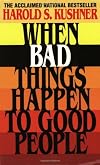
Harold Kushner comes across in this book as a really humane man. He was a young rabbi when his son was born with the aging disease: progeria. He had to reconcile his beliefs about God with what was happening to his son, who died of the disease at age 14. I sympathize with him greatly. Nevertheless, this book left me more convinced that if there is a god, he is uncaring and cruel. Not what the author's goal was, I'm sure.
Kushner does an excellent job of shooting down the usual show more justifications given for tragedies such as: it's all part of God's plan, God loved him/her so much he wanted him nearer to him, etc. His defense of God is that tragedies are not judgements, not part of "bigger" plan, but rather God made us human in a world ruled by laws of physics -- which means he can't bend those rules for individual people, that what God brings to us during tragedies is comfort, a gathering of people around us. Frankly, I found this completely uncomforting myself. I want a God who can do miracles -- but then why should we need miracles to begin with--if God is loving and all-powerful? All we can do, according to Kushner, is accept that tragedies happen and there is no why or wherefore, it is all random. Just as I thought. show less
Kushner does an excellent job of shooting down the usual show more justifications given for tragedies such as: it's all part of God's plan, God loved him/her so much he wanted him nearer to him, etc. His defense of God is that tragedies are not judgements, not part of "bigger" plan, but rather God made us human in a world ruled by laws of physics -- which means he can't bend those rules for individual people, that what God brings to us during tragedies is comfort, a gathering of people around us. Frankly, I found this completely uncomforting myself. I want a God who can do miracles -- but then why should we need miracles to begin with--if God is loving and all-powerful? All we can do, according to Kushner, is accept that tragedies happen and there is no why or wherefore, it is all random. Just as I thought. show less
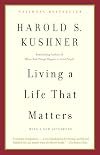
I am usually not a fan of inspirational books. However I wanted to read a book that would do two things for me. I wanted to figure out how to deal with the increasingly belligerent landscape of my country and how to draw myself closer to religious inspiration. I didn't have high hopes for either, but I was definitely inspired by the words of Rabbi Kushner in this small book. I finished reading it within two days.
I found myself writing down quotes that had special meaning for me. I liked how show more the author not only talked about reasonable rules to live by but also how he gave examples both from biblical writings as well as from contemporary films and books. Inspirational for me were things he said about how to deal with the need for success versus the need for a good conscience. Additionally, I found some of the most moving parts of this book toward the end where he discussed friendship and death. I found many things of which he wrote applicable to my own life. I'll try to keep in mind what he said when I deal with matters with which I disagree from day to day. show less
I found myself writing down quotes that had special meaning for me. I liked how show more the author not only talked about reasonable rules to live by but also how he gave examples both from biblical writings as well as from contemporary films and books. Inspirational for me were things he said about how to deal with the need for success versus the need for a good conscience. Additionally, I found some of the most moving parts of this book toward the end where he discussed friendship and death. I found many things of which he wrote applicable to my own life. I'll try to keep in mind what he said when I deal with matters with which I disagree from day to day. show less
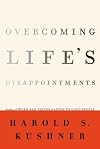
I liked his commentary on the life of Moses. Most particularly I was struck by his ability to sit in discomfort. It's a natural desire, when we hit a doubt, an issue, an illness, a disaster, a job loss, etc, to want to mitigate, explain away, or escape the uncomfortable feelings that accompany the event as quickly as possible. We've made good progress in the way we talk about processing grief and healing from trauma. We need, I think, to be willing to do the same for other disappointments in show more life. He makes good arguments to that effect. Perhaps uncomfortable, incongruous events, personalities, and facts will always exist and sometimes what needs to change is our expectations.
I disagree with some of his opinions in regards to divorce(especially when helping explain it to kids---you can say it's not their fault a million times but many won't believe it). But I think his tips on ways to respond to it are healthy. And it needs an index. show less
I disagree with some of his opinions in regards to divorce(especially when helping explain it to kids---you can say it's not their fault a million times but many won't believe it). But I think his tips on ways to respond to it are healthy. And it needs an index. show less
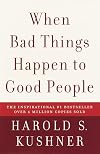
It took me a while to get to this book; I was so immersed in grief that reading about grief seemed pointless. Now that I've gotten to it, I realize that I came to Kushner's conclusion on my own, and his wisdom wouldn't have been misplaced during any of the terrifically rotten last few years.
I'm not a theist, but I have grown up in a predominantly Judeo-Christian culture, and people tend to reach out to that when attempting to comfort the bereaved, and often come up with the same extremely show more un-comforting platitude that "things happen for a reason." Ugh. Kushner lays out a very intelligent argument about three things that everyone would like to believe:
1. God is all-powerful and causes everything that happens in the world. Nothing happens without his willing it.
2. God is just and fair, and stands for people getting what they deserve, so that the good prosper and the wicked are punished.
3. I am a good person.
When the subject of (3) suffers loss, people often throw him under the bus so that they can preserve the other two beliefs. But perhaps the more comforting (and maybe the more theologically sound) conclusion to draw is that 2 and 3 are true, but not 1.
Kushner talks about the power of a religious community to comfort, not by preventing grief and loss, but by affirming life and community in spite of it. This book is rightly part of the canon of western wisdom on how to live. show less
I'm not a theist, but I have grown up in a predominantly Judeo-Christian culture, and people tend to reach out to that when attempting to comfort the bereaved, and often come up with the same extremely show more un-comforting platitude that "things happen for a reason." Ugh. Kushner lays out a very intelligent argument about three things that everyone would like to believe:
1. God is all-powerful and causes everything that happens in the world. Nothing happens without his willing it.
2. God is just and fair, and stands for people getting what they deserve, so that the good prosper and the wicked are punished.
3. I am a good person.
When the subject of (3) suffers loss, people often throw him under the bus so that they can preserve the other two beliefs. But perhaps the more comforting (and maybe the more theologically sound) conclusion to draw is that 2 and 3 are true, but not 1.
Kushner talks about the power of a religious community to comfort, not by preventing grief and loss, but by affirming life and community in spite of it. This book is rightly part of the canon of western wisdom on how to live. show less
Lists
Awards


You May Also Like


Associated Authors
Statistics
- Works
- 33
- Also by
- 6
- Members
- 9,766
- Popularity
- #2,444
- Rating
- 4.2
- Reviews
- 94
- ISBNs
- 193
- Languages
- 11
- Favorited
- 8