
David J. Wolpe
Author of Why Faith Matters
About the Author
David J. Wolpe has appeared numerous times on national radio and television and is featured in the popular AandE series Mysteries of the Bible. The rabbi of Sinai Temple in Los Angeles, he was ordained at the Jewish Theological Seminary of America and has taught there and at the University of show more Judaism in Los Angeles. Wolpe is the author of four previous books. show less
Image credit: Wolpe officiating at a wedding in Los Angeles
Works by David J. Wolpe
Associated Works
Tagged
Common Knowledge
- Canonical name
- Wolpe, David J.
- Birthdate
- 1958
- Gender
- male
- Occupations
- Rabbi, Sinai Temple, Los Angeles, Caliornia
Members
Reviews
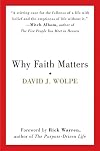
Atheism is hot. Should you have any doubt of that, next time you’re at Borders check out the collection of books pressed up hard against the Judaica collection. Aggressive rationalists like Christopher Hitchens, Richard Dawkins and Sam Harris make their passionate case that there is no God and that those who believe in a supernatural being are in the grip of an illusion, or worse. And they’re all spoiling for a fight.
Against these formidable combatants we now can pit the calm, patient show more voice of Rabbi David Wolpe. At first blush, it doesn’t seem like a fair fight. Rabbi Wolpe seems almost too reasonable, too understanding of the arguments marshaled against religion --- it’s a crutch for the fearful and weak-minded; it’s the source of endless, often bloody conflict; its tenets are incompatible with the teachings of science --- to enter the fray against these formidable foes. But in the end it’s the gentle reasonableness of his tone, the breadth of his learning, and the deeply personal experience on which he draws that’s the perfect antidote to the atheist manifestos.
Rabbi Wolpe’s goal in Why Faith Matters is to make the case for the richness of a life infused with faith, not to advocate for a particular set of beliefs (indeed, the controversial Pastor Rick Warren contributes the book’s foreword). Faith, for him, “is not an idea but a way to live, not a logical proposition but an outcome of encountering a noble soul.” Although he’s obviously steeped in Jewish learning, he’s as likely to quote T.S. Eliot, Dostoevsky or Nietzsche as he is the Bible, Maimonides or Reb Nachman of Bratzlav, and particularly in the chapter that asks the question, “Does religion cause violence?” he demonstrates a firm command of history and uses it to great effect to answer that question in the negative.
One of the elements that makes this book so pleasurable, and its teachings so memorable, is the grace of Rabbi Wolpe’s aphoristic style. Two examples of the many threaded through its pages will have to suffice: Describing the critique of religion’s barbarism, he observes, “While faith has been filled with fighting, fighting, however, is not ultimately caused by faith.” Or this insight, attained after reciting the confessional prayer at the bedside of a dying congregant: “As electricity requires a conduit, so spirit moves through human beings to touch others in crucial moments.”
Why Faith Matters is not a collection of glib nostrums designed to comfort us like a hot cup of tea on a cold night. His learning is often hard won, gained in his own trials and those of family and friends with illness, death and loss, and his personal struggle with a period of intense doubt as a young man. He acknowledges that the journey of faith is an unceasing one. “I have not reached a final understanding of anything discussed in this book and never expect to,” he concludes. “Still, the darkness does not only obscure, it also clears a path for the receptive soul.”
It’s unlikely any single work can convince the committed unbeliever to surrender his objections to religion. “Faith is not a proposition, but an orientation to the universe,” Rabbi Wolpe writes. Yet that faith can, as it did for him, grow from the soil of doubt. In his latest book, he offers a warmhearted, generous invitation to the open-minded reader to continue or embark on the path of faith. show less
Against these formidable combatants we now can pit the calm, patient show more voice of Rabbi David Wolpe. At first blush, it doesn’t seem like a fair fight. Rabbi Wolpe seems almost too reasonable, too understanding of the arguments marshaled against religion --- it’s a crutch for the fearful and weak-minded; it’s the source of endless, often bloody conflict; its tenets are incompatible with the teachings of science --- to enter the fray against these formidable foes. But in the end it’s the gentle reasonableness of his tone, the breadth of his learning, and the deeply personal experience on which he draws that’s the perfect antidote to the atheist manifestos.
Rabbi Wolpe’s goal in Why Faith Matters is to make the case for the richness of a life infused with faith, not to advocate for a particular set of beliefs (indeed, the controversial Pastor Rick Warren contributes the book’s foreword). Faith, for him, “is not an idea but a way to live, not a logical proposition but an outcome of encountering a noble soul.” Although he’s obviously steeped in Jewish learning, he’s as likely to quote T.S. Eliot, Dostoevsky or Nietzsche as he is the Bible, Maimonides or Reb Nachman of Bratzlav, and particularly in the chapter that asks the question, “Does religion cause violence?” he demonstrates a firm command of history and uses it to great effect to answer that question in the negative.
One of the elements that makes this book so pleasurable, and its teachings so memorable, is the grace of Rabbi Wolpe’s aphoristic style. Two examples of the many threaded through its pages will have to suffice: Describing the critique of religion’s barbarism, he observes, “While faith has been filled with fighting, fighting, however, is not ultimately caused by faith.” Or this insight, attained after reciting the confessional prayer at the bedside of a dying congregant: “As electricity requires a conduit, so spirit moves through human beings to touch others in crucial moments.”
Why Faith Matters is not a collection of glib nostrums designed to comfort us like a hot cup of tea on a cold night. His learning is often hard won, gained in his own trials and those of family and friends with illness, death and loss, and his personal struggle with a period of intense doubt as a young man. He acknowledges that the journey of faith is an unceasing one. “I have not reached a final understanding of anything discussed in this book and never expect to,” he concludes. “Still, the darkness does not only obscure, it also clears a path for the receptive soul.”
It’s unlikely any single work can convince the committed unbeliever to surrender his objections to religion. “Faith is not a proposition, but an orientation to the universe,” Rabbi Wolpe writes. Yet that faith can, as it did for him, grow from the soil of doubt. In his latest book, he offers a warmhearted, generous invitation to the open-minded reader to continue or embark on the path of faith. show less
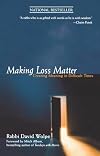
Does a good job of explaining the various types of loss (from home to identity to life), and sensitively describes the dilemma faced by anyone caught between fear of loss and fear of not living a full life. What I missed were concrete strategies on how to create meaning after a loss. It's one thing to tell us (repeatedly) that we must somehow make meaning after a loss; it's another to suggest ways how to do so, and I wish Rabbi Wolpe had taken that step.
David Wolpe who was an atheist and is now a Rabbi responds to what he terms the “new atheists” by illustrating ways religion has been a force for good in the world. With a refreshing honesty the author discusses science and scripture and cites evidence that faith benefits individuals and society. Rabbi Wolpe shares with us his understanding that religious questions are not answered completely and seeking those answers is a lifelong quest. Of course the same can be said for science; after show more all how did the laws of physics come to be. Not everything in the Universe is thereby "explained" by science and this too is a life long quest that is not mutually exclusive of faith. This book is a good read for believers and non-believers alike. show less
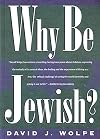
Wonderfully inspirational. If you are already Jewish, this book will remind you what's wonderful about it. If you've been raised Christian, you'll find much you identify with in here. If you're the slightest bit curious about why anyone would want to be Jewish, this book is really beautifully written.
Lists
Awards

You May Also Like


Associated Authors
Statistics
- Works
- 16
- Also by
- 1
- Members
- 1,015
- Popularity
- #25,389
- Rating
- 4.4
- Reviews
- 7
- ISBNs
- 22
- Languages
- 2
- Favorited
- 3