
Abraham Joshua Heschel (1907–1972)
Author of The Sabbath
About the Author
Heschel received his doctorate at the Hochschule fur die Wissenschaft des Judentums in Berlin but was deported to Poland by the Nazis in 1938. He went to London in 1940 and after the war accepted a professorship in ethics and mysticism at the Jewish Theological Seminary in New York. Heschel show more articulated a depth theology, arguing that the divine-human encounter takes place at a deeper level than is attainable by the rational mind. Reaching out to skeptical Jews and seeking to make Judaism accessible and meaningful in the modern world, Heschel stressed the interdependence of God and humanity, and maintained that God recognizes and supports ethical human action and that humans express their faith through their actions. Heschel lived according to his word and played an active role in social change, including the civil rights movement. (Bowker Author Biography) show less
Works by Abraham Joshua Heschel
Between God and Man: An Interpretation of Judaism from the Writings of Abraham J. Heschel (1965) 260 copies, 2 reviews
The Earth Is the Lord's: The Inner World of the Jew in Eastern Europe (A Jewish Lights Classic Reprint) (1968) 205 copies, 1 review
The Ineffable Name of God: Man: Poems in Yiddish and English (English and Yiddish Edition) (2004) 54 copies, 1 review
La democracia y otros ensayos 2 copies
Sefer Ohev Yiśrael 2 copies
Il messaggio dei profeti 1 copy
You Are My Witness 1 copy
“The Meaning of This Hour” 1 copy
Associated Works
Life Is with People: The Culture of the Shtetl (1952) — Foreword, some editions — 339 copies, 3 reviews
War No More: Three Centuries of American Antiwar and Peace Writing (2016) — Contributor — 110 copies, 2 reviews
The Ten Commandments: The Reciprocity of Faithfulness (Library of Theological Ethics) (2004) — Contributor — 56 copies
Tagged
Common Knowledge
- Legal name
- Heschel, Abraham Joshua
- Other names
- Heschel, Abraham J.
Heshel, Abraham Joshua
赫舍爾 - Birthdate
- 1907-01-11
- Date of death
- 1972-12-23
- Gender
- male
- Education
- University of Berlin (PhD)
Hochschule für die Wissenschaft des Judentums, Berlin, Germany - Occupations
- professor (Jewish Philosophy and Rabbinics)
professor (Jewish Ethics and Mysticism)
rabbi
philosopher
theologian
social activist (show all 9)
poet
author
ethicist - Organizations
- American Philosophical Association
Metaphysical Society
American Academy for Jewish Research
Hebrew Union College
Jewish Seminary of America - Relationships
- Heschel, Susannah (daughter)
- Short biography
- Abraham Joshua Heschel was the youngest of six children born to an esteemed Hasidic Jewish family. After a traditional yeshiva education and studying for Orthodox rabbinical ordination, he pursued a doctorate at the University of Berlin and a liberal rabbinic ordination at the Hochschule für die Wissenschaft des Judentums, where he later taught. He joined a Yiddish poetry group and in 1933, published a volume of Yiddish poems. In 1938, he was arrested by the Gestapo and deported to Poland. He spent 10 months lecturing at Warsaw's Institute for Jewish Studies. Six weeks before the German invasion of Poland, Dr. Heschel was able to leave Warsaw for London. In 1940, Dr. Heschel emigrated to the USA and obtained a faculty position at Hebrew Union College in Cincinnati. In 1946, he married Sylvia Straus, a concert pianist, and also took up a post at the Jewish Theological Seminary of America in New York City, the main seminary of Conservative Judaism. Here he served as professor of Jewish ethics and mysticism for the rest of his life. It was his leadership in the civil rights movement that first made Dr. Heschel widely known.
- Nationality
- Poland
- Birthplace
- Warsaw, Poland
- Places of residence
- New York, New York, USA
Frankfurt, Germany - Place of death
- New York, New York, USA
Members
Reviews
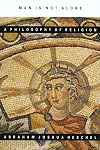
I saw this recommended as one of the finest books of Reform Jewish theology around. And it is definitely inspiring and poetic. It is also not particularly Jewish, though someone with a wider theological background may disagree. Certainly, I think most members of Abrahamic faiths would find it generally applicable. But as a work of theology, I find it question begging, and not persuasive enough to oust me out of my secular materialism.
Heschel begins with the ineffable, the idea that there is show more something sublime out there that we can all feel at moments. This ineffable is the touch of God, that which created the universe, which penetrates everywhere. Man is not alone, because God created us out of love, desires us to be righteous, feels us passionately, and we can find piety in every moment of our life.
On the one hand, it is preposterous to say that the universe was created by chance, that chance lead to this moment of sentience on a tiny ball of rock hurling through space. But is it less preposterous to say that there exists an ineffable, insubstantial, omniscient and omnipotent being who created the universe and our souls, who we can commune with but only on a spiritual level and not in any pragmatic suffering-alleviating sense. I've felt a sense of divine communion a handful of times before, at the birth of my son and previously with hefty chemical enhancement. And while I don't need that same high constantly, Heschel has a point that it'd be nice to feel it more often.
Yet the path is also ineffable. Either you get it, or you don't. Heschel is a modern theologian, and by that I mean he wrote in the shadow of Auschwitz and the mushroom cloud. But while he advocates for communion, in practical terms I think he also advocates for retreat. show less
Heschel begins with the ineffable, the idea that there is show more something sublime out there that we can all feel at moments. This ineffable is the touch of God, that which created the universe, which penetrates everywhere. Man is not alone, because God created us out of love, desires us to be righteous, feels us passionately, and we can find piety in every moment of our life.
On the one hand, it is preposterous to say that the universe was created by chance, that chance lead to this moment of sentience on a tiny ball of rock hurling through space. But is it less preposterous to say that there exists an ineffable, insubstantial, omniscient and omnipotent being who created the universe and our souls, who we can commune with but only on a spiritual level and not in any pragmatic suffering-alleviating sense. I've felt a sense of divine communion a handful of times before, at the birth of my son and previously with hefty chemical enhancement. And while I don't need that same high constantly, Heschel has a point that it'd be nice to feel it more often.
Yet the path is also ineffable. Either you get it, or you don't. Heschel is a modern theologian, and by that I mean he wrote in the shadow of Auschwitz and the mushroom cloud. But while he advocates for communion, in practical terms I think he also advocates for retreat. show less
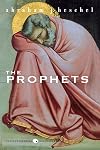
A classic, brilliant study that I regret taking so long to read, especially since I have a PhD in Biblical Studies and even wrote my doctoral thesis on the prophet Jeremiah. Heschel is one of those once-every-so-often type of thinkers that not only go deep on the subject matter but also make the arcane come alive in a trenchant contribution to 20th century ethical behavior informed by a deep religious commitment. As a religious person and a Christian clergy, it pains me to see how my faith show more has been bastardized and domesticated into a culture war space. As a result Christianity (and other faiths, too, but I live in on American Christianity Street) has been turned into a mockery of itself. That Christian institution which once preserved the learning of the ancients after the fall of the Roman Empire now gets offended when retail workers have been ordered to say Happy Holidays.
But Heschel stood with and marched with Dr. Martin Luther King, Jr. That I finished this book a day after MLK's birthday thus marks a special confluence for me. I am especially thrilled by Heschel's hints about a domestication of the Bible (and, by extension, of God) which I combat against in my own teaching and writing. The Bible really is rich and varied, and that it stands polyphonic interpretation is a testimony to its greatness. Heschel is not a reader-centered interpreter necessarily, but his words from the 1960s came along at the same time as these new, creative reading strategies were being developed, so the ideas were in the air already.
I loved this book and will return to it often. show less
But Heschel stood with and marched with Dr. Martin Luther King, Jr. That I finished this book a day after MLK's birthday thus marks a special confluence for me. I am especially thrilled by Heschel's hints about a domestication of the Bible (and, by extension, of God) which I combat against in my own teaching and writing. The Bible really is rich and varied, and that it stands polyphonic interpretation is a testimony to its greatness. Heschel is not a reader-centered interpreter necessarily, but his words from the 1960s came along at the same time as these new, creative reading strategies were being developed, so the ideas were in the air already.
I loved this book and will return to it often. show less
Thunder in the Soul: To Be Known By God (Plough Spiritual Guides: Backpack Classics) by Abraham Joshua Heschel
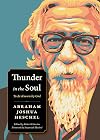
Summary: A collection of the writings of Rabbi Abraham Joshua Heschel concerning the life of knowing and being known by God.
The Plough Spiritual Guides are a great little series collecting the thoughts of some of the great spiritual thinkers of the last century. This latest is no exception. Rabbi Abraham Joshua Heschel was truly one of the great spiritual figures of the twentieth century. He escaped to London from Poland trying to get family members visas before the coming Holocaust. Before show more he could succeed, they died. He went on as a Conservative Jewish leader whose life and works transcended his own faith community. I was in a seminar just the other day where his book The Sabbath was extensively referenced. He wrote towering works bringing spiritual insight to Jew and Christian, believer and skeptic alike: Man is Not Alone, Man’s Quest for God, God in Search of Man, and The Prophets. After the assault on Blacks at Selma in March 1965, he joined Dr. King in the march to Montgomery, earning himself a place on an FBI watchlist. He was close friends with Reinhold Niebuhr and delivered the eulogy at his funeral in 1971, following him in death a year later.
This little book collects excerpts of his writing that read as a seamless whole, a tribute to Robert Erlwine’s editing. These come under twelve headings:
Every Moment Touches Eternity
The Only Life Worth Living
In the Presence of Mystery
The Prophets Show us God Cares
God Demands Justice
Modernity Has Forfeited the Spirit
Prayer is Being Known by God
A Pattern for Living
The Deed is Wiser than the Heart
Something is Asked of Us
Faith is an Act of the Spirit
Not Our Vision of God but God’s Vision of Us
Reading the headings alone offers material for extended reflection. Often I like to select a quote or two from a book. This was a book where nearly every sentence could be a quote pull, and occasion to stop and think before one moves on. One of the big ideas that run through this selection is that we search for God only to discover that God seeks us. Heschel writes:
“When self-assertion is no more; when realizing that wonder is not our own achievement; that it is not by our own power alone that we are shuddered with radical amazement, it is not with our power anymore to assume the role of an examiner of a subject in search of an object, such as we are in search of a cause when perceiving thunder. Ultimate wonder is not the same as curiosity. Curiosity is the state of a mind in search of knowledge, while ultimate wonder is the state of knowledge in search of a mind; it is the thought of God in search of a soul.“
This search of God for us is the source of our worth. Heschel observes:
“We must continue to ask: What is man that God should care for him? And we must continue to remember that it is precisely God’s care for man that constitutes the greatness of man.”
Another key idea is that of faith as faithfulness, a response in every moment in how we live our life to the reality of God. Faith is not centered around the doctrine or dogmas of prior generations, which he considers “spiritual plagiarism.” Faith moves beyond our own reason and wisdom. “In faith, we do not seek to decipher, to articulate in our own terms, but to rise above our own wisdom, to think of the world in terms of God, to live in accord with what is relevant to God.” The life of faith is shaped by the law and the prophets. “The good is not an abstract idea but a commandment, and the ultimate meaning of its fulfillment is in its being an answer to God.”
Finally, Heschel talks about the paradigm shift of knowing God. We do not so much think about God as think within God. He explains:
“His is the call, ours the paraphrase; His is the creation, ours a reflection. He is not an object to be comprehended, a thesis to be endorsed, neither the sum of all that is (facts) nor a digest of all that ought to be (ideals). He is the ultimate subject.”
Some speak of God as Ultimate Reality. Often this sounds like an abstraction, but what I think Heschel would say is that God is the most Real, the really Real, by whom all else is understood.
This is a taste of what you will find here. Strong stuff. J. B. Phillips wrote a book titled Your God is too Small. I think Heschel would agree and this little book is a gateway to his thought. What is troubling to me is how rarely I encounter writing like this coming out of Christian publishing houses or in Christian media. This deceptively little book is, as the Wardrobe in C.S. Lewis, much bigger on the inside than the outside. Read slowly and be filled.
________________________________
Disclosure of Material Connection: I received a complimentary review copy of this book from the publisher via LibraryThing's Early Reviewers Program. The opinions I have expressed are my own. show less
The Plough Spiritual Guides are a great little series collecting the thoughts of some of the great spiritual thinkers of the last century. This latest is no exception. Rabbi Abraham Joshua Heschel was truly one of the great spiritual figures of the twentieth century. He escaped to London from Poland trying to get family members visas before the coming Holocaust. Before show more he could succeed, they died. He went on as a Conservative Jewish leader whose life and works transcended his own faith community. I was in a seminar just the other day where his book The Sabbath was extensively referenced. He wrote towering works bringing spiritual insight to Jew and Christian, believer and skeptic alike: Man is Not Alone, Man’s Quest for God, God in Search of Man, and The Prophets. After the assault on Blacks at Selma in March 1965, he joined Dr. King in the march to Montgomery, earning himself a place on an FBI watchlist. He was close friends with Reinhold Niebuhr and delivered the eulogy at his funeral in 1971, following him in death a year later.
This little book collects excerpts of his writing that read as a seamless whole, a tribute to Robert Erlwine’s editing. These come under twelve headings:
Every Moment Touches Eternity
The Only Life Worth Living
In the Presence of Mystery
The Prophets Show us God Cares
God Demands Justice
Modernity Has Forfeited the Spirit
Prayer is Being Known by God
A Pattern for Living
The Deed is Wiser than the Heart
Something is Asked of Us
Faith is an Act of the Spirit
Not Our Vision of God but God’s Vision of Us
Reading the headings alone offers material for extended reflection. Often I like to select a quote or two from a book. This was a book where nearly every sentence could be a quote pull, and occasion to stop and think before one moves on. One of the big ideas that run through this selection is that we search for God only to discover that God seeks us. Heschel writes:
“When self-assertion is no more; when realizing that wonder is not our own achievement; that it is not by our own power alone that we are shuddered with radical amazement, it is not with our power anymore to assume the role of an examiner of a subject in search of an object, such as we are in search of a cause when perceiving thunder. Ultimate wonder is not the same as curiosity. Curiosity is the state of a mind in search of knowledge, while ultimate wonder is the state of knowledge in search of a mind; it is the thought of God in search of a soul.“
This search of God for us is the source of our worth. Heschel observes:
“We must continue to ask: What is man that God should care for him? And we must continue to remember that it is precisely God’s care for man that constitutes the greatness of man.”
Another key idea is that of faith as faithfulness, a response in every moment in how we live our life to the reality of God. Faith is not centered around the doctrine or dogmas of prior generations, which he considers “spiritual plagiarism.” Faith moves beyond our own reason and wisdom. “In faith, we do not seek to decipher, to articulate in our own terms, but to rise above our own wisdom, to think of the world in terms of God, to live in accord with what is relevant to God.” The life of faith is shaped by the law and the prophets. “The good is not an abstract idea but a commandment, and the ultimate meaning of its fulfillment is in its being an answer to God.”
Finally, Heschel talks about the paradigm shift of knowing God. We do not so much think about God as think within God. He explains:
“His is the call, ours the paraphrase; His is the creation, ours a reflection. He is not an object to be comprehended, a thesis to be endorsed, neither the sum of all that is (facts) nor a digest of all that ought to be (ideals). He is the ultimate subject.”
Some speak of God as Ultimate Reality. Often this sounds like an abstraction, but what I think Heschel would say is that God is the most Real, the really Real, by whom all else is understood.
This is a taste of what you will find here. Strong stuff. J. B. Phillips wrote a book titled Your God is too Small. I think Heschel would agree and this little book is a gateway to his thought. What is troubling to me is how rarely I encounter writing like this coming out of Christian publishing houses or in Christian media. This deceptively little book is, as the Wardrobe in C.S. Lewis, much bigger on the inside than the outside. Read slowly and be filled.
________________________________
Disclosure of Material Connection: I received a complimentary review copy of this book from the publisher via LibraryThing's Early Reviewers Program. The opinions I have expressed are my own. show less
 This review was written for LibraryThing Early Reviewers.
Lists
Awards


You May Also Like


Associated Authors
Statistics
- Works
- 55
- Also by
- 8
- Members
- 9,187
- Popularity
- #2,612
- Rating
- 4.3
- Reviews
- 88
- ISBNs
- 138
- Languages
- 11
- Favorited
- 21
