
Adin Steinsaltz (1937–2020)
Author of The Essential Talmud
About the Author
Rabbi Adin Steinsaltz is the editor and translator of Random House's twenty-two-volume edition of the Talmud. He is also the author of many volumes on Jewish thought and practice and has been a resident scholar at both Yale University and the Institute for Advanced Study. In 1988 he was invited to show more open a Judaic studies center in Moscow, the first such institution in the former Soviet Union in sixty years. Rabbi Steinsaltz lives in Israel. (Bowker Author Biography) show less
Image credit: WIkipedia
Series
Works by Adin Steinsaltz
The Thirteen Petalled Rose: A Discourse On The Essence Of Jewish Existence And Belief (1980) 467 copies, 6 reviews
The Talmud, The Steinsaltz Edition, Vol. 1: Tractate Bava Metzia, Part 1 (1989) 196 copies, 1 review
The Talmud, Vol. 2: Tractate Bava Metzia, Part 2, Steinsaltz Editon (English and Hebrew Edition) (1990) 114 copies
The Talmud, Vol. 3: Tractate Bava Metzia, Part 3, the Steinsaltz Editon (English and Hebrew Edition) (1990) 106 copies
Beggars and Prayers: Adin Steinsaltz Retells the Tales of Rabbi Nachman of Bratslav (1979) 101 copies, 1 review
The Talmud, Vol. 4: Tractate Bava Metzia, Part 4, Steinsaltz Editon (English and Hebrew Edition) (1991) 73 copies
The Talmud, Vol. 8: Tractate Ketubot, Part 2, Steinsaltz Editon (English and Hebrew Edition) (1992) 72 copies
The Talmud, The Steinsaltz Edition, Vol. 5: Tractate Bava Metzia, Part 5 (English and Hebrew Edition) (1992) 68 copies
The Talmud, Vol. 7: Tractate Ketubot, Part 1, Steinsaltz Editon (English and Hebrew Edition) (1991) 63 copies
The Talmud, Vol. 6: Tractate Bava Metzia, Part 6, Steinsaltz Editon (English and Hebrew Edition) (1993) 62 copies
The Talmud, Vol. 9: Tractate Ketubot, Part 3, Steinsaltz Editon (English and Hebrew Edition) (1993) 57 copies
Koren Talmud Bavli, Noé Edition, Vol 12: Ta'anit, Megilla, Hebrew/English, Large, Color (English and Hebrew Edition) (2014) 51 copies
Koren Talmud Bavli, Noé Edition, Vol 9: Yoma, English, Hebrew/English, Large, Color (Tractate Yoma) (Hebrew and English Edition) (2012) 51 copies
Koren Talmud Bavli, Noé Edition, Vol 6: Pesahim Part 1, Hebrew/English, Large, Color (Hebrew and English Edition) (2012) 50 copies, 1 review
Koren Talmud Bavli, Noé Edition, Vol 4: Eiruvin Part 1, Hebrew/English, Large, Color (English and Hebrew Edition) (2012) 47 copies
The Talmud, Vol. 10: Tractate Ketubot, Part 4, Steinsaltz Editon (English and Hebrew Edition) (1994) 45 copies
Koren Talmud Bavli, Noé Edition, Vol 5: Eiruvin Part 2, Hebrew/English, Large, Color (Hebrew and English Edition) (2012) 43 copies
Koren Talmud Bavli, Noé Edition, Vol 7: Pesahim Part 2, Hebrew/English, Large, Color (Hebrew and English Edition) (2012) 43 copies
Koren Talmud Bavli, Noé Edition, Vol 14: Yevamot Part 1, Hebrew/English, Large, Color (Hebrew and English Edition) (2012) 40 copies
Koren Talmud Bavli Noé, Vol.13: Mo'ed Katan / Hagiga, Hebrew/English (Hebrew and English Edition) (2012) 39 copies
Koren Talmud Bavli, Noé Edition, Vol 16: Ketubbot Part 1, Hebrew/English, Large, Color (Hebrew and English Edition) (2012) 38 copies
Koren Talmud Bavli, Noé Edition, Vol 15: Yevamot Part 2, Hebrew/English, Large, Color (Hebrew and English Edition) (2012) 37 copies
Koren Talmud Bavli, Noé Edition, Vol 20: Sota, Hebrew/English, Large, Color (Hebrew and English Edition) (2012) 37 copies
Learning From the Tanya: Volume Two in the Definitive Commentary on the Moral and Mystical Teachings of a Classic Work of Kabbalah (Arthur Kurzweil Book) (2005) 37 copies
Change & Renewal: The Essence of the Jewish Holidays, Festivals & Days of Remembrance (2011) 36 copies
Koren Talmud Bavli, Noé Edition, Vol 11: Beitza, Rosh Hashana, Hebrew/English, Large, Color (Hebrew and English Edition) (2012) 36 copies
Koren Talmud Bavli, Noé Edition, Vol 21: Gittin, Hebrew/English, Large, Color (Koren Talmud Bavli the Noé Edition) (English and Hebrew Edition) (2012) 36 copies
Koren Talmud Bavli, Noé Edition, Vol 32: Avoda Zara Horayot, Hebrew/English, Large, Color (English and Hebrew Edition) (2012) 35 copies
Koren Talmud Bavli, Noé Edition, Vol 31: Makkot Shevuot, Hebrew/English, Daf Yomi B&W (Hebrew and English Edition) (2012) 35 copies
Koren Talmud Bavli, Noé Edition, Vol 17: Ketubbot Part 2, Hebrew/English, Large, Color (Hebrew and English Edition) (2012) 34 copies
Koren Talmud Bavli, Noé Edition, Vol 18: Nedarim, Hebrew/English, Large, Color (Hebrew and English Edition) (2012) 34 copies
Koren Talmud Bavli, Noé Edition, Vol 27: Bava Batra Part 1, Hebrew/English, Large, Color (Hebrew and English Edition) (2012) 34 copies
Koren Talmud Bavli, Noé Edition, Vol 29: Sanhedrin Part 1, Hebrew/English, Large, Color (Hebrew and English Edition) (2012) 34 copies
The Miracle of the Seventh Day: A Guide to the Spiritual Meaning, Significance, and Weekly Practice of the Jewish Sabbath (2003) 33 copies
Koren Talmud Bavli, Noé Edition, Vol 38: Hullin Part 2 Hebrew/English, Large, Color (Hebrew and English Edition) (2019) 33 copies
Koren Talmud Bavli, Noé Edition, Vol 8: Shekalim, Hebrew/English, Large, Color (Hebrew and English Edition) (2012) 33 copies
Koren Talmud Bavli, Noé Edition, Vol 37: Hullin Part 1, Hebrew/English, Large, Color (Hebrew and English Edition) (2012) 32 copies
Koren Talmud Bavli, Noé Edition, Vol 42: Nidda, Hebrew/English, Large, Color (Hebrew and English Edition) (2019) 31 copies
Koren Talmud Bavli Noe Edition, Vol 40: Arakhin, Temura, Hebrew/English, Large, Color (Hebrew and English Edition) (2019) 31 copies
Koren Talmud Bavli, Noé Edition, Vol 22: Kiddushin, Hebrew/English, Large, Color (Koren Talmud Bavli the Noé Edition) (Hebrew and English Edition) (2012) 28 copies
Koren Talmud Bavli, Noe Edition, Vol 36: Menahot Part 2, Hebrew/English, Large, Color (Hebrew and English Edition) (2018) 24 copies
Koren Talmud Bavli, Noé Edition, Vol 39: Bekhorot, Hebrew/English, Large, Color (Hebrew and English Edition) (2019) 24 copies
Koren Talmud Bavli, Noé Edition, Vol 34: Zevahim Part 2, Hebrew/English, Large, Color (Hebrew and English Edition) (2012) — Author — 23 copies
Koren Talmud Bavli, Noé Edition, Vol 28: Bava Batra Part 2, Hebrew/English, Large, Color (Hebrew and English Edition) (2012) 23 copies
Koren Talmud Bavli, Noé Edition, Vol 33: Zevahim Part 1, Hebrew/English, Large, Color (Hebrew and English Edition) (2012) 23 copies
Koren Talmud Bavli, Noé Edition, Vol 30: Sanhedrin Part 2, Hebrew/English, Large, Color (Hebrew and English Edition) (2012) 22 copies
Understanding the Tanya: Volume Three in the Definitive Commentary on a Classic Work of Kabbalah by the World's Foremost Authority (v. 3) (2007) 21 copies
Koren Talmud Bavli: v. 41: Keritot, Me'ila Ttamid, English (Hebrew and English Edition) (2019) 21 copies
Koren Talmud Bavli Standard (Color) Volume 35 Menachos Part 1 (Hebrew and English Edition) (2012) 21 copies
Koren Talmud Bavli, Noé Edition, Vol 1: Berakhot, Hebrew/English, Daf Yomi B&W (English and Hebrew Edition) (2012) 19 copies
Pebbles of Wisdom From Rabbi Adin Steinsaltz: Collected and with Notes by Arthur Kurzweil (2009) 15 copies
Koren Talmud Bavli, Noé Edition, Vol 3: Shabbat Part 2, Hebrew/English, Daf Yomi B&W (Hebrew and English Edition) (2012) 13 copies
Koren Talmud Bavli, Noe Edition, Vol 35: Menahot Part 1, Hebrew/English, Daf Yomi B&w (Hebrew and English Edition) (2018) 12 copies
Koren Talmud Bavli, Noé Edition, Vol 2: Shabbat Part 1, Hebrew/English, Daf Yomi B&W (Hebrew and English Edition) (2012) 12 copies
Koren Talmud Bavli, Noé Edition, Vol 24: Bava Kamma Part 1, Hebrew/English, Daf Yomi B&W (English and Hebrew Edition) (2016) 12 copies
Koren Talmud Bavli, Noé Edition, Vol 23: Bava Kamma Part 1, Hebrew/English, Daf Yomi B&W (English and Hebrew Edition) (2016) 11 copies
Koren Talmud Bavli, Noé Edition, Vol 22: Kiddushin, Hebrew/English, Daf Yomi B&W (Hebrew and English Edition) (2016) 11 copies
Koren Talmud Bavli Noé Vol.11: Beitza/Rosh Hashana,Hebrew/English, Daf Yomi Size (B&W) (English and Hebrew Edition) (2014) 10 copies
Koren Talmud Bavli, Vol.8: Shekalim, Hebrew/English, Daf Yomi Size (B&W) (Hebrew and English Edition) (2013) 10 copies
Koren Talmud Bavli, Noe Edition, Vol 39: Bekhorot, Hebrew/English, Daf Yomi B&W (Hebrew and English Edition) (2019) 9 copies
Koren Talmud Bavli, Noé Edition, Vol 36: Menahot Part 2, Hebrew/English, Daf Yomi B&W (Hebrew and English Edition) (2018) 9 copies
Koren Talmud Bavli, Noé Edition, Vol 34: Zevahim Part 2, Hebrew/English, Daf Yomi B&W (Hebrew and English Edition) (2018) 9 copies
Koren Talmud Bavli, Noé Edition, Vol 30: Sanhedrin Part 2, Hebrew/English, Daf Yomi B&W (Hebrew and English Edition) (2017) 9 copies
Koren Talmud Bavli, Noé Edition, Vol 28: Bava Batra Part 2, Hebrew/English, Daf Yomi B&W (Hebrew and English Edition) (2017) 9 copies
Koren Talmud Bavli, Noé Edition, Vol 7: Pesahim Part 2 Hebrew/English, Daf Yomi B&W (Hebrew and English Edition) (2013) 9 copies
Koren Talmud Bavli, Noé Edition, Vol 33: Zevahim Part 1, Hebrew/English, Daf Yomi B&W (Hebrew and English Edition) (2018) 9 copies
Koren Talmud Bavli No Edition, Vol 41: Karetot, Mei'la, Tamid, Hebrew/English, Daf Yomi B&w (Hebrew and English Edition) (2019) 8 copies
Koren Talmud Bavli Noe: Vol 26: Bava Metzia Part 2, Hebrew/English, Color Edition (Hebrew Edition) (2016) 8 copies
Introduction a la Priere Juive (Collections Spiritualites) (French Edition) (2011) 4 copies, 1 review
תלמוד ירושלמי : מסכת פאה 3 copies
Talmud Bavli M'vuar, M'turgam, U'mnukad, Tractate Berakhot, Volume 1 (Hebrew and Aramaic only) (1976) 2 copies
Masekhet Bava metsiʻa 2 copies
Masekhet Berakhot 2 copies
דמויות מן המקרא 2 copies
הסידור והתפילה, כרך ב 2 copies
הסידור והתפילה, כרך א 2 copies
Koren Talmud Bavli Volume 1a: Berakhot 2a-17b, Noe Color (Hebrew and English Edition) (2019) 2 copies
Koren Talmud Bavli, Noe, Complete Set (William Davidson Digital Edition) (Hebrew and English Edition) (2019) 2 copies
תלמוד בבלי, מסכת בבא קמא, חלק ראשון, מבואר מתורגם ומנוקד ע"י הרב עדין אבן- ישראל (שטיינזלץ), מהדורת… 1 copy
תלמוד בבלי 1 copy
Koren Hatanakh Hamevoar with Commentary by Adin Steinsaltz: Daniel, Ezra, Nehemiah (Hebrew Edition) (2018) 1 copy
Steinsaltz Rambam Mishne Torah, Volume 1: Sefer Hamadda and Sefer Ahava (Multilingual Edition) (2026) 1 copy
תלמוד בבלי ב' - מסכת שבת א' 1 copy
The Candle of God 1 copy
תלמוד בבלי, מסכת זבחים, מנוקד ומבואר ומתורגם ע"י הרב עדין אבן- ישראל (שטיינזלץ), מהדורת מרקין 1 copy
תלמוד בבלי. [יט] מסכת נזיר 1 copy
Talmudic Images 1 copy
תלמוד בבלי, מסכתות מכות, הוריות ושבועות, מנוקד ומבואר ומתורגם ע"י הרב עדין אבן- ישראל (שטיינזלץ),… 1 copy
The Steinsaltz Talmud Bavli: Tractate Keritot, Meila, Kinnim, Tamid & Middot, Large (Hebrew Edition) (2010) 1 copy
The Talmud and the Scholar 1 copy
Koren Talmud Bavli, Noe Daf Yomi, Complete Set (42 volumes, 4 cases) (Hebrew and English Edition) (2019) 1 copy
Koren Talmud Bavli, Berkahot Volume 1B, Daf 17b-34b, Noé Color PB, H/E (Hebrew and English Edition) (2020) 1 copy
Koren Talmud Bavli V2b: Shabbat, Daf 20b-47b, Noe Color Pb, H/E (Hebrew and English Edition) (2020) 1 copy
Reaching for the Heavens: Excerpts from the Writings of Rabbi Adin Even-Israel Steinsaltz (2022) 1 copy
Die dreizehnblättrige Rose: Von den Geheimnissen der Kabbala und ihrer Bedeutung für unser Leben (2011) 1 copy
Masekhet Pesaḥim 1 copy
Masekhet Peʾah 1 copy
Talmud für Jedermann 1 copy
Masekhet ʻEruvin 1 copy
Masekhet Shabat 1 copy
Megillat Esther Steinsaltz 1 copy
La sagesse juive expliquée à tous : 3 volumes : Introduction au Talmud ; La rose aux treize pétales ; Introduction à l'esprit des fêtes juives 1 copy, 1 review
תלמוד בבלי, מסכת בבא מציעא, מנוקד ומבואר ומתורגם ע"י הרב עדין אבן- ישראל (שטיינזלץ), מהדורת מרקין 1 copy
The Long Shorter Way 1 copy
ביאור תניא, אגרת הקדש א- יד 1 copy
ביאור תניא, אגרת התשובה 1 copy
תלמוד בבלי, מסכת בבא בתרא, מנוקד ומבואר ומתורגם ע"י הרב עדין אבן- ישראל (שטיינזלץ), מהדורת מרקין 1 copy
תלמוד בבלי, מסכת בכורות, מנוקד ומבואר ומתורגם ע"י הרב עדין אבן- ישראל (שטיינזלץ), מהדורת מרקין 1 copy
תלמוד בבלי, מסכת יבמות, מנוקד ומבואר ומתורגם ע"י הרב עדין אבן- ישראל (שטיינזלץ), מהדורת מרקין 1 copy
תלמוד בבלי, מסכת כתובות, מנוקד ומבואר ומתורגם ע"י הרב עדין אבן- ישראל (שטיינזלץ), מהדורת מרקין 1 copy
תלמוד בבלי, מסכת נדרים, מנוקד ומבואר ומתורגם ע"י הרב עדין אבן- ישראל (שטיינזלץ), מהדורת מרקין 1 copy
תלמוד בבלי, מסכת עבודה זרה, מנוקד ומבואר ומתורגם ע"י הרב עדין אבן- ישראל (שטיינזלץ), מהדורת מרקין 1 copy
תלמוד בבלי, מסכת עירובין, מנוקד ומבואר ומתורגם ע"י הרב עדין אבן- ישראל (שטיינזלץ), מהדורת מרקין 1 copy
תלמוד בבלי, מסכת פסחים, מנוקד ומבואר ומתורגם ע"י הרב עדין אבן- ישראל (שטיינזלץ), מהדורת מרקין 1 copy
The Steinsaltz Tanya V6: Iggeret Hakodesh 27-36 Kuntres Aharon (English and Hebrew Edition) (2024) 1 copy
Masekhet Peʼah 1 copy
Haggadah shel Pesah 1 copy
Tagged
Common Knowledge
- Canonical name
- Steinsaltz, Adin
- Legal name
- Steinsaltz, Adin Even Yisrael
- Other names
- עדין שטיינזלץ
- Birthdate
- 1937-07-11
- Date of death
- 2020-08-07
- Gender
- male
- Education
- Hebrew University of Jerusalem (physics and chemistry)
- Occupations
- rabbi
writer
principal - Organizations
- The Aleph Society
Israel Institute for Talmudic Publications
Woodrow Wilson Center for International Studies, Washington D.C.
Institute for Advanced Studies, Princeton University - Awards and honors
- Israel prize (Jewish studies ∙ 1988)
Yeshiva University (honorary doctorate)
Ben-Gurion University of the Negev (honorary doctorate)
Brandeis University (honorary doctorate)
Florida International University (honorary doctorate) - Relationships
- Menachem Even-Israel (son)
- Cause of death
- pneumonia
- Nationality
- Israel
- Birthplace
- Jerusalem, Israel
- Place of death
- Jerusalem
- Associated Place (for map)
- Jerusalem, Israel
Members
Reviews
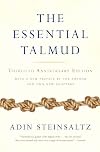
Detailed explanation of what the Talmud is and a summary of its teachings. Reading this, one can see why there are so many Jewish scholars, scientists, virtuoso musicians, and so on. All of those things take a lot of intense study, and the study of the Talmud is perhaps the exemplar of such study. After all, it is not just a commentary itself, but there are commentaries on the commentaries (and probably commentaries on the commentaries on the commentaries!) Now, you can also say that arguing show more for centuries over things that seem so inconsequential is also a great waste of time. And of course, given that the underlying text--the Torah, i.e., the first 5 books of the Jewish Bible--are full of stories about less than honorable people--and I don't just mean NON-Jews--I can also ask, "What's the point? How can anyone believe in any of this?" But, if I were Jewish, the opportunity to spend my life, supported by the state, endlessly re-reading and trying to find new interpretations of the Talmud, would not be an unattractive prospect. But, this book is well organized, clearly written, and though a bit dense at times, actually enjoyable. Well done job of making a bit of a mystery--for a non-Jew in any case--a bit clearer. show less
Koren Talmud Bavli, Noé Edition, Vol 1: Berakhot, Hebrew/English, Large, Color (English and Hebrew Edition) by Adin Even Israel Steinsaltz, Rabbi
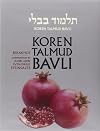
I'm not going to give stars to the talmud, because that would be weird. What I will say is that I switched to the Koren Noe edition for Daf Yomi about a dozen dapim in and I'm glad I did -- the commentary provides a lot of necessary context. R'Steinsaltz' (z''l) translations are thoughtful and extremely helpful. I did read this primarily in the aramaic, and although my language skills mostly held up the original text is elliptic and full of unclear allusions, and I was very grateful for the show more side-by-side translation. show less
Koren Talmud Bavli: Tractate Berakhot, Hebrew/English, Standard (Color) by Adin Even Israel Steinsaltz, Rabbi
[I posted this at http://530nm330hz.livejournal.com/437268.html a few weeks ago]
I got a sneak peek at the new Koren/Steinsaltz English Talmud Bavli this week. Regular readers of my blog know that I admire both Rabbi Steinsaltz and Koren Publications greatly. I am very pleased to report that this project blew me away, exceeding my expectations. Although I'm sure acquiring the entire set won't come inexpensively, I will find some way to afford to buy these as they come out. They're that show more amazing. [Disclaimer: Although Koren has been sending me review copies of some of their books, this review is based on a copy that I borrowed for a few days from my rabbi.]
Some background, for those who have not tried learning Talmud in English before.
Until now, the student of Talmud who needed English help had, realistically, two sources. First was the Soncino translation, done nearly a century ago. It's dry, academic, and literal. It doesn't give you any extra help understanding the text. Second, over the last two decades, Artscroll/Mesorah has published the Schottenstein edition, which goes too far in the other direction. Overwhelming the reader with help, it's extremely useful for beginners but its extensive mix of discursions can get in the way and bog the reader down.
Meanwhile, Rabbi Steinsaltz has spent the past forty years creating a rendition of the Talmud into modern Hebrew. Part translation, part explication, he interpolates just enough background and explanatory material to fill in the gaps, without handholding the reader all the way. His marginalia are masterful: some summarize the practical halacha, some explain the archaeological or biological realia, some provide capsule biographies of personalities mentioned in the Talmud. His vowelization of the main Gemara text imposes grammatical rigor on what, for most readers, is usually an incoherent hodge-podge of Hebrew, Aramaic, Yiddish, and Yeshivish. I think it's fair to say that for the Hebrew reader, Rabbi Steinsaltz has truly revolutionized what it means to learn Gemara; he has done for our generation what Rashi did for his.
The English reader was teased when Random House tried to publish an English version of Rabbi Steinsaltz's work. What they produced was not very usable, though: they were great coffee-table books, but too confusing to use as a study tool, and each tractate required so many English volumes in their edition that it was too expensive. They never finished.
So now Koren has started publishing a new English translation of Rabbi Steinsaltz's rendition. (Yes, it's entirely new; this is not related to the Random House edition at all.) And they have scored on all counts.
The basic format of the book is as follows: If you open it from the Hebrew side, you get a recreation of the Vilna pages, only the main text and Rashi are provided with vowels and punctuation. If you start from the English side, you get a running translation.
The English pages have been designed brilliantly by Raphaël Freeman. As a software developer, I am tempted to use the phrase "information architecture" to describe what has been accomplished here. The main body of the page is a two-column layout, with paragraphs of Hebrew/Aramaic text (from the Gemara, without any interpolations) set next to their English renditions, which are translations of Rabbi Steinsaltz's modern Hebrew rendition. As has become conventional, bold type indicates the translation, while regular-weight type indicates the interpolations. The translation is top-notch, eminently readable, it is not at all stilted or unnatural. (And for those of us who believe that women should not be excluded from their equal inheritance in Torah study, the presence of women on the translation team should be noted.)
Surrounding the main text block are translations of Rabbi Steinsaltz's notes, with headings, as in the original, indicating what each one is. Now here's one of the brilliant touches: in the main text block, superscript sans-serif letters look like footnote indicators, but simply refer you to which section of marginalia to examine. Each note starts with the text it references in bold, in Hebrew and in English, so it's very easy to find the note you're looking for --- and to go back to the main text when you're done. Had they used numbered footnotes, it would have been far more confusing; one thing that has always annoyed me about Artscroll's footnotes, for example, is that you never know whether it's worth interrupting your reading to follow the number. Are they just going to give you a cross-reference, or are they going to explain some concept in depth? Well, with this system, your eyes can easily gloss over notes that you don't want to follow right now, while easily navigating the page when you do.
The mechanics of this cross-referencing system are never explained. They don't need to be. The design is so clear that its use is intuitively obvious, making the complexity of the interrelated texts easily navigable.
The hand-drawn diagrams and fuzzy reproductions of photographs from the original Hebrew have been beautifully updated with full-color versions. I'll let these photos speak for themselves:
[On my blog, I included photos of the old Hebrew and new English editions side-by-side]
It's tempting to compare these with the DK children's books, and I mean that as a compliment. The photos are clear, eye-catching, relevant, and enhance both the aesthetic experience and the learning. (Just last week, in a class at our synagogue, we were trying to understand the size relationship between unripe grapes, ripe grapes, and white beans. Photos such as these would have made that conversation easier and more rewarding.)
I do wish for one impractical change. As wonderful as Rabbi Steinsaltz's explication is, I have sometimes found myself in the Hebrew looking at the Rashi on a difficult section. In the Koren English edition, I'll need to use the cross-references at the bottoms of the pages to flip to the Hebrew section to do that. I realize this was necessary to keep the page count manageable, but I anticipate that being an occasional frustration.
My understanding is that Koren Publishers plans to release the entire set over the course of the next four years, faster than the Daf Yomi schedule. I wish them the financial success they deserve; this edition merits to become the new standard for English-language Talmud study. show less
I got a sneak peek at the new Koren/Steinsaltz English Talmud Bavli this week. Regular readers of my blog know that I admire both Rabbi Steinsaltz and Koren Publications greatly. I am very pleased to report that this project blew me away, exceeding my expectations. Although I'm sure acquiring the entire set won't come inexpensively, I will find some way to afford to buy these as they come out. They're that show more amazing. [Disclaimer: Although Koren has been sending me review copies of some of their books, this review is based on a copy that I borrowed for a few days from my rabbi.]
Some background, for those who have not tried learning Talmud in English before.
Until now, the student of Talmud who needed English help had, realistically, two sources. First was the Soncino translation, done nearly a century ago. It's dry, academic, and literal. It doesn't give you any extra help understanding the text. Second, over the last two decades, Artscroll/Mesorah has published the Schottenstein edition, which goes too far in the other direction. Overwhelming the reader with help, it's extremely useful for beginners but its extensive mix of discursions can get in the way and bog the reader down.
Meanwhile, Rabbi Steinsaltz has spent the past forty years creating a rendition of the Talmud into modern Hebrew. Part translation, part explication, he interpolates just enough background and explanatory material to fill in the gaps, without handholding the reader all the way. His marginalia are masterful: some summarize the practical halacha, some explain the archaeological or biological realia, some provide capsule biographies of personalities mentioned in the Talmud. His vowelization of the main Gemara text imposes grammatical rigor on what, for most readers, is usually an incoherent hodge-podge of Hebrew, Aramaic, Yiddish, and Yeshivish. I think it's fair to say that for the Hebrew reader, Rabbi Steinsaltz has truly revolutionized what it means to learn Gemara; he has done for our generation what Rashi did for his.
The English reader was teased when Random House tried to publish an English version of Rabbi Steinsaltz's work. What they produced was not very usable, though: they were great coffee-table books, but too confusing to use as a study tool, and each tractate required so many English volumes in their edition that it was too expensive. They never finished.
So now Koren has started publishing a new English translation of Rabbi Steinsaltz's rendition. (Yes, it's entirely new; this is not related to the Random House edition at all.) And they have scored on all counts.
The basic format of the book is as follows: If you open it from the Hebrew side, you get a recreation of the Vilna pages, only the main text and Rashi are provided with vowels and punctuation. If you start from the English side, you get a running translation.
The English pages have been designed brilliantly by Raphaël Freeman. As a software developer, I am tempted to use the phrase "information architecture" to describe what has been accomplished here. The main body of the page is a two-column layout, with paragraphs of Hebrew/Aramaic text (from the Gemara, without any interpolations) set next to their English renditions, which are translations of Rabbi Steinsaltz's modern Hebrew rendition. As has become conventional, bold type indicates the translation, while regular-weight type indicates the interpolations. The translation is top-notch, eminently readable, it is not at all stilted or unnatural. (And for those of us who believe that women should not be excluded from their equal inheritance in Torah study, the presence of women on the translation team should be noted.)
Surrounding the main text block are translations of Rabbi Steinsaltz's notes, with headings, as in the original, indicating what each one is. Now here's one of the brilliant touches: in the main text block, superscript sans-serif letters look like footnote indicators, but simply refer you to which section of marginalia to examine. Each note starts with the text it references in bold, in Hebrew and in English, so it's very easy to find the note you're looking for --- and to go back to the main text when you're done. Had they used numbered footnotes, it would have been far more confusing; one thing that has always annoyed me about Artscroll's footnotes, for example, is that you never know whether it's worth interrupting your reading to follow the number. Are they just going to give you a cross-reference, or are they going to explain some concept in depth? Well, with this system, your eyes can easily gloss over notes that you don't want to follow right now, while easily navigating the page when you do.
The mechanics of this cross-referencing system are never explained. They don't need to be. The design is so clear that its use is intuitively obvious, making the complexity of the interrelated texts easily navigable.
The hand-drawn diagrams and fuzzy reproductions of photographs from the original Hebrew have been beautifully updated with full-color versions. I'll let these photos speak for themselves:
[On my blog, I included photos of the old Hebrew and new English editions side-by-side]
It's tempting to compare these with the DK children's books, and I mean that as a compliment. The photos are clear, eye-catching, relevant, and enhance both the aesthetic experience and the learning. (Just last week, in a class at our synagogue, we were trying to understand the size relationship between unripe grapes, ripe grapes, and white beans. Photos such as these would have made that conversation easier and more rewarding.)
I do wish for one impractical change. As wonderful as Rabbi Steinsaltz's explication is, I have sometimes found myself in the Hebrew looking at the Rashi on a difficult section. In the Koren English edition, I'll need to use the cross-references at the bottoms of the pages to flip to the Hebrew section to do that. I realize this was necessary to keep the page count manageable, but I anticipate that being an occasional frustration.
My understanding is that Koren Publishers plans to release the entire set over the course of the next four years, faster than the Daf Yomi schedule. I wish them the financial success they deserve; this edition merits to become the new standard for English-language Talmud study. show less
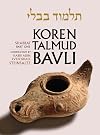
As the pandemic picked up, I switched over to almost entirely English reading for daf yomi, and the Noe edition held up to this as well. Rarely did I feel like I was missing something crucial (for wordplay and mnemonic devices the shoreshim are including in the English translation as well.) I wish this volume had more information about the personalities -- the superscript P's don't continue on very much for Rabbis discussed in Berakhot and I would have found it helpful to continue to have show more annotations about who they were. (Aslo, Shabbat is a profoundly dense tractate, often very foreign to the modern reader...or perhaps it's just me who no longer treats jaundice by shaving donkeys, bloodletting them from their head and then anointing patients with the resulting blood. Good thing -- you have to really be careful doing that because if the blood gets in the patient’s eyes it blinds them. And also it's controversial whether you can do that on Shabbat) show less
Lists
Awards


You May Also Like


Associated Authors
Statistics
- Works
- 354
- Members
- 6,972
- Popularity
- #3,508
- Rating
- 4.3
- Reviews
- 41
- ISBNs
- 357
- Languages
- 11
- Favorited
- 4