
Gershom Scholem (1897–1982)
Author of Major Trends in Jewish Mysticism
About the Author
Gershom Scholem's contribution to the understanding of Jewish mysticism is so dramatic that it warrants a separate introduction. As a young student of mathematics, he became a Zionist and his interest shifted to Jewish history. Scholem moved from Germany to become the librarian of the new show more University and National Library in Jerusalem in 1923 and served as a professor at Hebrew University from 1935 to 1965. Before him, Jewish historians during the nineteenth and early twentieth centuries scorned the ignored mystical dimension of Judaism as a relic of premodern superstition and ignorance. Scholem's erudition and deep insight gave Cabala a scholarly audience. His writings are often difficult to read, but they are indispensable for any thorough knowledge of the subject of Jewish mysticism. (Bowker Author Biography) show less
Series
Works by Gershom Scholem
Zohar : The Book of Splendor : Basic Readings from the Kabbalah (1987) — Editor — 557 copies, 2 reviews
On the Mystical Shape of the Godhead: Basic Concepts in the Kabbalah (Mysticism & Kabbalah) (1991) 270 copies, 4 reviews
Fidélité et utopie: Essais sur le judaïsme contemporain (Diaspora) (French Edition) (1978) 8 copies
דברים בגו : פרקי מורשה ותחיה 4 copies
Almanach 1992 2 copies
Catalogus Codicum Cabbalisticorum Hebraicorum : Manuscripts in Kabbalah found in the library of the Hebrew Univ. (IN HEB (2003) 2 copies
CABALA 9 1 copy
La cabale du Livre de l'Image et d'Abraham Aboulafia: Chapitres de l'Histoire de la Cabale en Espagne (2019) 1 copy
Alchemy and Kabbala 1 copy
Associated Works
Tagged
Common Knowledge
- Canonical name
- Scholem, Gershom
- Legal name
- Scholem, Gershom Gerhard
- Other names
- SCHOLEM, Gerhard
גרשם שלום
SCHOLEM, Gershom Gerhard
SCHOLEM, Gershom - Birthdate
- 1897-09-15
- Date of death
- 1982-02-21
- Gender
- male
- Education
- University of Munich (Ph.D|1922)
Humboldt University of Berlin
University of Jena - Occupations
- Professor of Jewish Mysticism, Hebrew University of Jerusalem
philosopher
historian of mathematics
biographer
essayist
linguist (show all 7)
librarian - Organizations
- Hebrew University of Jerusalem
Israel Academy of Sciences and Humanities (president 1968) - Awards and honors
- Israel Prize (1958)
Yakir Yerushalayim Award (1969)
Bialik Prize (1977)
American Academy of Arts & Sciences (International Honorary Member, 1970) - Relationships
- Buber, Martin (mentor)
Benjamin, Walter (friend)
Strauss, Leo (friend) - Short biography
- Gershom Scholem was born Gerhard Scholem to an assimilated German Jewish family in Berlin. In 1915, he enrolled at the Humboldt University of Berlin, where he studied mathematics, philosophy, and Hebrew. He met Martin Buber, Shmuel Yosef (S.Y.) Agnon, and other Jewish philosophers. He studied mathematical logic at the University of Jena and received a degree in Semitic languages at the University of Munich. Having become a Zionist as a young man, Scholem left Germany to live in Palestine (changing his first name) in 1923, along with S.D. Goitein. He got a job as librarian at the newly-established Hebrew University of Jerusalem and spent the rest of his life at that institution. He is widely regarded as the founder and pre-eminent scholar of modern Jewish mysticism, becoming the first Professor of Jewish Mysticism at the Hebrew University. Martin Buber said, "All of us have students, schools, but only Gershom Scholem has created a whole academic discipline!" His close friends included Walter Benjamin and Leo Strauss, and selected letters from their correspondence have been published. Prof. Scholem published more than 40 books and close to 700 articles and trained three generations of scholars of Kabbalah. He's best known for his collection of lectures called Major Trends in Jewish Mysticism (1941) and for his biography Sabbatai Zevi, the Mystical Messiah (1973). His book On Kabbalah and Its Symbolism (1965) another collection of speeches and essays, has helped to spread knowledge of Jewish mysticism among non-Jews.
- Nationality
- Germany (birth)
Israel - Birthplace
- Berlin, German Empire
- Places of residence
- Berlin, Germany
Munich, Bavaria, Germany
British Mandate of Palestine (1923)
Jerusalem, Israel - Place of death
- Jerusalem, Israel
- Burial location
- Sanhedria Cemetery, Jerusalem, Israel
- Map Location
- Israel
Members
Reviews

It may surprise you to learn that the pop Kabbalah of celebrities like Madonna was made possible by a German Jewish scholar born more than a century ago. Through his writings, Gershom Scholem turned Jewish mysticism from a topic that embarrassed most Western Jews to a serious research subject and source of popular interest. This memoir details his coming of age, personal and intellectual, in Berlin between the 1910s and 1920s, which prepared him for his lifelong research mission. Filling show more these pages are a motley crew of Zionists, anti-Zionists, pious Talmudists, charlatans, atheists, baptized Jews, aesthetes, Marxists, and cult leaders. Scholem's great scholarly insight was that the variety and weirdness of Jewish mysticism exploded the idea of a unitary Jewish tradition. This book explodes any sense of a unitary Jewishness in Germany. It is a fascinating portrait of a world on the brink of destruction. show less
Walter Benjamin: The Story of a Friendship (New York Review Books Classics) by Gershom Gerhard Scholem
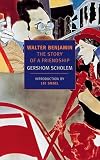
A solid enough look at Benjamin's life, obviously slanted by Scholem's wish to write a slightly different kind of hagiography than Benjamin's other hagiographers. Despite the fact that Scholem only saw Benjamin once in the very productive, final seven years of his life, he would have us believe that Walter never stopped being a theologian, and that Benjamin's Marxist language was just an attempt to make his thought palatable to other Marxist intellectuals. This isn't convincing as a show more statement of fact, but it is convincing as a reading of the thought: Benjamin's 'materialism' is silly, optimistic nonsense, whereas his more gnomic thought is at least interesting. Scholem's criticism of the later work is, then, valuable in itself.
As for the man, it's impressive that even with the absolute best of intentions--Scholem clearly loved Benjamin--the man himself comes off as insufferable: conceited, selfish, oblivious, and deceptive, as well as incredibly insecure, so that he constantly needed a guru to whom he could attach himself (e.g., Brecht). Intelligent, sure, and probably great company, but not the guy I'd like to have to rely on. show less
As for the man, it's impressive that even with the absolute best of intentions--Scholem clearly loved Benjamin--the man himself comes off as insufferable: conceited, selfish, oblivious, and deceptive, as well as incredibly insecure, so that he constantly needed a guru to whom he could attach himself (e.g., Brecht). Intelligent, sure, and probably great company, but not the guy I'd like to have to rely on. show less
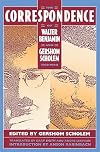
This is one of the saddest things I've ever read. All they wanted to do was talk about cool books and theory and their favorite artists and poetry and earnestly help each other through life. And then some moron idiot fascist who doesn't understand anything about anything comes along and takes it all away for nothing.
This also made me think a lot about how much written communication has changed with the internet and text messages. They wrote each other long, beautiful, deeply thoughtful show more letters weekly. A collection of my correspondences would consist mostly of misspelled, incomplete sentences, links, emojis and one word replies. Sad!
Only reason it's not 5 stars is cause so many of their letters rely on a deep familiarity with the writers and works they are referencing and discussing, so about a quarter of the book was just incomprehensible to me. show less
This also made me think a lot about how much written communication has changed with the internet and text messages. They wrote each other long, beautiful, deeply thoughtful show more letters weekly. A collection of my correspondences would consist mostly of misspelled, incomplete sentences, links, emojis and one word replies. Sad!
Only reason it's not 5 stars is cause so many of their letters rely on a deep familiarity with the writers and works they are referencing and discussing, so about a quarter of the book was just incomprehensible to me. show less
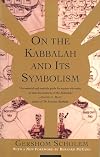
A good clear introduction to a very complex topic lately abused by casual practioners. I offered to lend this book to one modern "Kabbalist" who told me her group had more fun making it up. At least she was honest about it. I understand Idel's book is considered
an important revision of Scholem.
an important revision of Scholem.
Lists
Awards


You May Also Like


Associated Authors
Statistics
- Works
- 98
- Also by
- 1
- Members
- 5,370
- Popularity
- #4,640
- Rating
- 4.0
- Reviews
- 49
- ISBNs
- 259
- Languages
- 17
- Favorited
- 13