
Lawrence Kushner
Author of God Was in This Place & I, i Did Not Know: Finding Self, Spirituality and Ultimate Meaning (Kushner)
About the Author
Lawrence Kushner is a visiting professor of Jewish spirituality at the Graduate Theological Union in Berkeley.
Image credit: Unattributed photo at author's website, www.rabbikushner.org
Works by Lawrence Kushner
God Was in This Place & I, i Did Not Know: Finding Self, Spirituality and Ultimate Meaning (Kushner) (1991) — Author — 350 copies, 2 reviews
The Book of Miracles: A Young Person's Guide to Jewish Spiritual Awareness (1987) 198 copies, 1 review
The River of Light: Spirituality, Judaism, Consciousness (Jewish Lights Classic Reprint) (1981) 182 copies, 2 reviews
The Book of Words: Talking Spiritual Life, Living Spiritual Talk (Sefer Shel Devarim) (1993) 138 copies, 1 review
Five Cities of Refuge: Weekly Reflections on Genesis, Exodus, Leviticus, Numbers, and Deuteronomy (2003) — Author — 69 copies
I'm God; You're Not: Observations on Organized Religion & Other Disguises of the Ego (2010) 49 copies
My Lunch with Jesus 1 copy
Le 10 porte della felicità 1 copy
Jewish Spirituality 1 copy
Associated Works
The Beliefnet Guide to Kabbalah (Beliefnet Guides) (2005) — Introduction, some editions — 37 copies, 2 reviews
Tagged
Common Knowledge
- Canonical name
- Kushner, Lawrence
- Other names
- Kushner, Jacob ben Abraham
- Birthdate
- 1943
- Gender
- male
- Education
- University of Cincinnati
Hebrew Union College - Occupations
- rabbi
author - Organizations
- Phi Beta Kappa
- Short biography
- A native of Detroit, Michigan, Lawrence Kushner is the Emanu-El Scholar, in-residence at the Congregation Emanu-El of San Francisco, where he devotes his full energies to teaching and writing. Prior to this, he was Rabbi-in-Residence at Hebrew Union College-Jewish Institute of Religion in New York City. Before that, he served for 28 years as the rabbi of Congregation Beth El in Sudbury, Massachusetts.
- Nationality
- USA
- Birthplace
- Detroit, Michigan, USA
- Associated Place (for map)
- Michigan, USA
Members
Reviews
The Book of Words (Sefer Shel Devarim): Talking Spiritual Life, Living Spiritual Talk (The Kushner series) by Lawrence Kushner
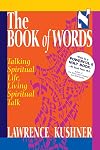
A rather idiosyncratic collection of definitions for some of the most common terms in Judaism. Some of the ideas I agree with, others I am more dubious about (and unfortunately, he is dead wrong in one place -- there are people out there who do evil deeds on purpose), but Kushner writes in a very clear, engaging style and all his short essays are good food for thought.
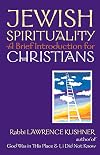
Rabbi Kushner has written a brief treatise (105 pages) to present some of the most generalized perspectives of a good Jew in a way that someone outside that world can understand. He speaks directly to Christians. He puts forth some very clear distinctions between Judaism and Christianity. He does not need to see the Scriptures (Torah) particularly as a record of history to be interpreted literally. From the beginning of Genesis, he argues that what is important is to study the teachings in show more order to strive to conform one's behavior to that which is described in the Scriptures. Judaism is not strictly a collection of specific beliefs to which one must adhere intellectually. Rather than try to analyze and understand what they mean, we are to do and live according to its teaching. It is in that context that we can understand more and more as we dig into the deeper meaning of what is taught. He teaches that God is not about reward and punishment; instead God looks at how closely we live our lives toward the conformity of the Scriptures. Knowing we have done either well or not toward that end is the only reward we receive. His explains that nothing is more beloved before God than to do a holy deed. We are to give ourselves over to that deed completely. In that process we are to lose our self.
Quoting from page sixty-eight we read, your self "must be willing to allow it to dissolve like a drop of water fallen in the ocean, so that it is no longer recognizable as a separate or discrete thing. Such a spiritual loss of self and fusion with the divine is called Devekut... The borders of your self are erased. You realize that you are (and indeed have always been) present within the divine! It's all God!"
Kushner states, "For classical Judaism, the coming of the Messiah would not 'complete' Judaism;l it would bring an end to history and resolve every problem for every religion and every person.
As a Christian, I find these ideas to stand in sharp contrast to my understanding of Scripture. I gave it a five star rating for two reasons. First the author speaks very clearly and directly to these issues. Second, his clarity helped me to expand my understanding of Judaism in a much more broad context than the most basic distinction embraced by many Christians, being the belief that Jesus is both God and Messiah. This is not an apologetic for Judaism; it is a clear basic explanation of some of the most fundamental Jewish perspectives. show less
Quoting from page sixty-eight we read, your self "must be willing to allow it to dissolve like a drop of water fallen in the ocean, so that it is no longer recognizable as a separate or discrete thing. Such a spiritual loss of self and fusion with the divine is called Devekut... The borders of your self are erased. You realize that you are (and indeed have always been) present within the divine! It's all God!"
Kushner states, "For classical Judaism, the coming of the Messiah would not 'complete' Judaism;l it would bring an end to history and resolve every problem for every religion and every person.
As a Christian, I find these ideas to stand in sharp contrast to my understanding of Scripture. I gave it a five star rating for two reasons. First the author speaks very clearly and directly to these issues. Second, his clarity helped me to expand my understanding of Judaism in a much more broad context than the most basic distinction embraced by many Christians, being the belief that Jesus is both God and Messiah. This is not an apologetic for Judaism; it is a clear basic explanation of some of the most fundamental Jewish perspectives. show less

I read this book while sick with the flu, so there is nothing mixing Jewish mysticism and fever dreams. This short book combines the tale of a 14th century manuscript's effect on it's new owner, and an explanation of kabbalah (pronounced ka-ba-lah). This Jewish studies is based the concept that are different levels of reality, and man's goal to reach a higher level. Kabbalah is usually the domain the Hassidim, but aspects of it included the Kabbalah Shabbat service in Reform and Conservative show more Judaism. It seems esoteric until you have experienced a traumatic event which changes your doors of perception, like Alice in Wonderland. show less
God Was in This Place & I, i Did Not Know: Finding Self, Spirituality and Ultimate Meaning by Lawrence Kushner
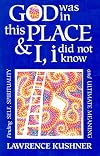
This book was amazing. So much to think about. Seven ways to interpret one verse of the Torah. Each requiring time and thought. I found this to be a wonderful meditation. I am sure that I will return to it frequently to wake again to a new way to see my relationship with God. I think each rereading will bring new insights. Really well done. Very readable. Lots of breaks to make it possible to stop, ponder and find one's place when returning.
Awards


You May Also Like


Associated Authors
Statistics
- Works
- 30
- Also by
- 5
- Members
- 3,202
- Popularity
- #7,989
- Rating
- 3.9
- Reviews
- 32
- ISBNs
- 83
- Languages
- 7
- Favorited
- 1