
Aryeh Kaplan (1934–1983)
Author of Sefer Yetzirah: The Book of Creation
About the Author
Image credit: from a family photo
Works by Aryeh Kaplan
The Living Torah : The Five Books of Moses and the Haftarot - A New Translation Based on Traditional Jewish Sources, with notes, introduction, maps, ... & index (English and… (1981) 214 copies, 1 review
The Aryeh Kaplan Reader: The Gift He Left Behind : Collected Essays on Jewish Themes from the Noted Writer and Thinker (Artscroll Mesorah Series) (1983) 38 copies
The Aryeh Kaplan Anthology: Illuminating Expositions on Jewish Thought and Practice by a Revered Teacher (1991) 16 copies
THE TORAH ANTHOLOGY-DEUTERONOMY 1 10 copies
The Anthology of Social Studies: Volume 1, Issues and Strategies for Elementary Teachers (2013) 6 copies
THE TORAH ANTHOLOGY-NUMBERS 1 4 copies
THE TORAH ANTHOLOGY-LEVITICUS 1 4 copies
Handbook of Jewish Thought 3 copies
The book of Esther 2 copies
THE TORAH ANTHOLOGY-GENESIS 1 2 copies
Gems of Rabbi Nachman 1 copy
Shabbos-Day of Eternity 1 copy
THE LAWS OF CHANUKAH 1 copy
Associated Works
Lost Princess: And Other Kabbalistic Tales of Rebbe Nachman of Breslov (1981) — Translator, some editions — 56 copies
Tagged
Common Knowledge
- Canonical name
- Kaplan, Aryeh
- Legal name
- Kaplan, Aryeh Moshe Eliyahu
- Birthdate
- 1934-10-23
- Date of death
- 1983-01-28
- Gender
- male
- Education
- Torah Voda'as Yeshiva
Mir Yeshiva
University of Louisville (BA|1961)
University of Maryland (MS|1963) - Occupations
- rabbi
translator
physicist - Cause of death
- heart attack
- Nationality
- USA
- Birthplace
- The Bronx, New York, USA
- Places of residence
- Bronx, New York, USA
Jerusalem, Israel - Place of death
- Brooklyn, New York, USA
- Burial location
- Mount of Olives Cemetery, Jerusalem, Israel
- Associated Place (for map)
- New York, USA
Members
Reviews
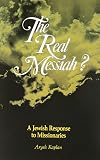
Having read three of Rabbi Aryeh Kaplan's book in the past I was happy to discover in our library a volume I was not familiar with. It was as titled "The Real Messiah? A Jewish response to missionaries." (A side note: I had a discussion about the book's title in a LT forum http://www.librarything.com/talktopic.php?topic=41691 . The site had two entries for the same book and I asked them to combine them. When they did the "?" was missing from the joined title. I insisted that they add that show more back, because it really makes a difference in the meaning of the title.) As I read on the book's inner cover the publication was sponsored by an organization called "Jews for Judaism." Their declared goals are to create "preventive counter-missionary education program that instill a greater appreciation and commitment to Jewish values and beliefs" and "winning back those Jews who have been influenced by Christian missionaries."
As I learned from the pages of the book itself that their undeclared aim is to counteract the activities of Jews for Jesus. The book attempts to support these objectives through ten chapters, three of which were not written by Aryeh Kaplan. Before I would share my own opinion about the book let me summarize these chapters.
The introduction consists of 10 advices for Jews what to do with/how to react to the missionary problem caused by Christians who proselytize Jews. These include, learn Torah, d not argue with missionaries, do not debate, do not be taken by the "Jewish Christian" ploy, do not lose your cool, get the facts, plan strategy, focus on the teenagers and create opportunities for youth participation.
The second chapter, titled "Why aren't we Christians?" takes four basic teachings of Christianity and explains why they Jews cannot accept them. These tenets are Jesus was the Messiah predicted by the prophets; man is evil and sinful; the Jews are no longer G-d's chosen people, those who accept Jesus are; there is only one law: love.
The third chapter answers the question "What can a Jew lose by embracing Christianity? The answer is: Everything." In detailing the answer Kaplan takes the differences to the concept of trinity, incarnation and meditation. In addition he also has suggestions how to find spirituality within Judaism in case that is missing for the Jewish person.
The fourth chapter compares the Jewish concept of Messiah to that of the Christian. The Jewish Messiah will "bring the world back to G-d, and make it a place of peace justice and harmony". Christians on the other hand when Jesus did not accomplish these had to radically alter the concept and introduce the notion of a second coming. Kaplan rejects it as it extraneous to the original idea.
The fifth chapter, written by Berel Wein, looks at the history of ecumenicism. Taking one particular incident, a dialogue in 1263 CE, under the rule of James I of Aragon of Spain between Ramban (Rabbi Moshe ben Nachman) and Dominican monks Wein recounts the arguments of both sides and posist that there were and are no long term advantages of such "dialog."
Pinchas Stolper, in chapter six, compares the historical Jesus' activities with the Biblical prophecies regarding the Messiah. He takes 24 specific examples and shows how Jesus did not fulfill them, therefore he could not have been the Messiah.
Kaplan examines the missionaries' most common, Tanakh based arguments in chapter seven and dissects them one by one. Through careful analysis he proves how the very quotes proselytizers attempt to use from Jewish resources for their agenda are misguided, misunderstood or deliberately misinterpreted.
Chapter eight is an unfavorable comparison of Jesus words and acts, based on New Testament quotes. For example it gives examples how he did not "turn the other cheek" when attacked, how he was vindictive, and vengeful, did not practice love all the time.
The penultimate and longest chapter of the book specifies the characteristics of Messianic age as known through Jewish sacred writings. The fact that the state of Israel has been reestablished is considered a foretold sign that the Messianic age is getting closer. The accelerated pace of technological and social changes in the last few hundred years are also interpreted in similar manner. The human free will, the process of divine creation is synthesized in the Messianic age with the statement that "the ultimate goal of the historic process is the perfection of society. Since everything was created by G-d, all must eventually be perfected." (page 84) The significance and nature of miracles is considered in relation to our worthiness for them. The return of all Jews to the land of Israel, the rebuilding of the Temple, and worldwide peace are all covered in this context. The consequence of the coming of the Messiah, both as a human person and as an embodiment of the Messianic age is separated from the Jesus figure's second coming.
The last chapter presents yet another approach to help Jews to fight the urge to listen to Jews for Jesus group's message. It is a retelling of a story of a Jewish girl (yes, not young woman), who joined Jews for Jesus group for a while, but under the influence of articulate rabbis, communal feeling of a Shabbaton and learning she rediscovered and returned to Judaism.
As you can see form the above summary there is plenty of mental ammunition for Jews to counter proselytizers' arguments. That is the best point of the book in my opinion. However I found it repetitive, because some arguments appear over and over in almost every chapter. To be fair, there are plenty points, which are covered only once.
As a Jew I understand and emphasize with the goals of the Jews for Judaism group. I think a different version of this book, however, would have been an even better tool to promote them. I think the focus of their agenda has clouded their otherwise rational thinking. There is quite a bit of unnecessary hostility venom in the writing. I believe in order to provoke your points and discredit your opponents it is not necessary to depict your adversary as evil. Uncovering their agenda and operational mechanics is more than enough. I understand and share the emotional reaction bursting out when meeting with Jews for Jesus. However in a book intended for everyday usage and for academic purposes I would have preferred a more neutral tone, that still respects the other side's faith and humanity even if vehemently disagree with them.
I also found it ironic that on one hand the authors of the book admonish Christians for using Hebrew Scriptures in their efforts to convert Jews, but on the other hand they are using New Testament quotes to disprove Jesus' qualities that are important for Christians. I believe similarly as the authors accuse proselytizers to using and misinterpreting Hebrew sentences out of context, they would be accused by Christians of doing the very same from the Gospels. I do not think it is the best tactic, while I recognize that for a Jew being familiar with the New Testament itself is already a sign of respect.
Having raised these observations about the book I am still happy that I read it. I learned a lot from it about the Messiah/Messianic age and ho to defend Jewish belief. I would like to close this essay with the sentence from page 85 that keeps reverberating in my mind needing more work to get fully expound.
"Witnessing a miracle can destroy one's freedom to believe." show less
As I learned from the pages of the book itself that their undeclared aim is to counteract the activities of Jews for Jesus. The book attempts to support these objectives through ten chapters, three of which were not written by Aryeh Kaplan. Before I would share my own opinion about the book let me summarize these chapters.
The introduction consists of 10 advices for Jews what to do with/how to react to the missionary problem caused by Christians who proselytize Jews. These include, learn Torah, d not argue with missionaries, do not debate, do not be taken by the "Jewish Christian" ploy, do not lose your cool, get the facts, plan strategy, focus on the teenagers and create opportunities for youth participation.
The second chapter, titled "Why aren't we Christians?" takes four basic teachings of Christianity and explains why they Jews cannot accept them. These tenets are Jesus was the Messiah predicted by the prophets; man is evil and sinful; the Jews are no longer G-d's chosen people, those who accept Jesus are; there is only one law: love.
The third chapter answers the question "What can a Jew lose by embracing Christianity? The answer is: Everything." In detailing the answer Kaplan takes the differences to the concept of trinity, incarnation and meditation. In addition he also has suggestions how to find spirituality within Judaism in case that is missing for the Jewish person.
The fourth chapter compares the Jewish concept of Messiah to that of the Christian. The Jewish Messiah will "bring the world back to G-d, and make it a place of peace justice and harmony". Christians on the other hand when Jesus did not accomplish these had to radically alter the concept and introduce the notion of a second coming. Kaplan rejects it as it extraneous to the original idea.
The fifth chapter, written by Berel Wein, looks at the history of ecumenicism. Taking one particular incident, a dialogue in 1263 CE, under the rule of James I of Aragon of Spain between Ramban (Rabbi Moshe ben Nachman) and Dominican monks Wein recounts the arguments of both sides and posist that there were and are no long term advantages of such "dialog."
Pinchas Stolper, in chapter six, compares the historical Jesus' activities with the Biblical prophecies regarding the Messiah. He takes 24 specific examples and shows how Jesus did not fulfill them, therefore he could not have been the Messiah.
Kaplan examines the missionaries' most common, Tanakh based arguments in chapter seven and dissects them one by one. Through careful analysis he proves how the very quotes proselytizers attempt to use from Jewish resources for their agenda are misguided, misunderstood or deliberately misinterpreted.
Chapter eight is an unfavorable comparison of Jesus words and acts, based on New Testament quotes. For example it gives examples how he did not "turn the other cheek" when attacked, how he was vindictive, and vengeful, did not practice love all the time.
The penultimate and longest chapter of the book specifies the characteristics of Messianic age as known through Jewish sacred writings. The fact that the state of Israel has been reestablished is considered a foretold sign that the Messianic age is getting closer. The accelerated pace of technological and social changes in the last few hundred years are also interpreted in similar manner. The human free will, the process of divine creation is synthesized in the Messianic age with the statement that "the ultimate goal of the historic process is the perfection of society. Since everything was created by G-d, all must eventually be perfected." (page 84) The significance and nature of miracles is considered in relation to our worthiness for them. The return of all Jews to the land of Israel, the rebuilding of the Temple, and worldwide peace are all covered in this context. The consequence of the coming of the Messiah, both as a human person and as an embodiment of the Messianic age is separated from the Jesus figure's second coming.
The last chapter presents yet another approach to help Jews to fight the urge to listen to Jews for Jesus group's message. It is a retelling of a story of a Jewish girl (yes, not young woman), who joined Jews for Jesus group for a while, but under the influence of articulate rabbis, communal feeling of a Shabbaton and learning she rediscovered and returned to Judaism.
As you can see form the above summary there is plenty of mental ammunition for Jews to counter proselytizers' arguments. That is the best point of the book in my opinion. However I found it repetitive, because some arguments appear over and over in almost every chapter. To be fair, there are plenty points, which are covered only once.
As a Jew I understand and emphasize with the goals of the Jews for Judaism group. I think a different version of this book, however, would have been an even better tool to promote them. I think the focus of their agenda has clouded their otherwise rational thinking. There is quite a bit of unnecessary hostility venom in the writing. I believe in order to provoke your points and discredit your opponents it is not necessary to depict your adversary as evil. Uncovering their agenda and operational mechanics is more than enough. I understand and share the emotional reaction bursting out when meeting with Jews for Jesus. However in a book intended for everyday usage and for academic purposes I would have preferred a more neutral tone, that still respects the other side's faith and humanity even if vehemently disagree with them.
I also found it ironic that on one hand the authors of the book admonish Christians for using Hebrew Scriptures in their efforts to convert Jews, but on the other hand they are using New Testament quotes to disprove Jesus' qualities that are important for Christians. I believe similarly as the authors accuse proselytizers to using and misinterpreting Hebrew sentences out of context, they would be accused by Christians of doing the very same from the Gospels. I do not think it is the best tactic, while I recognize that for a Jew being familiar with the New Testament itself is already a sign of respect.
Having raised these observations about the book I am still happy that I read it. I learned a lot from it about the Messiah/Messianic age and ho to defend Jewish belief. I would like to close this essay with the sentence from page 85 that keeps reverberating in my mind needing more work to get fully expound.
"Witnessing a miracle can destroy one's freedom to believe." show less
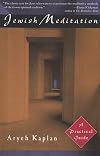
I'm not Jewish (my spouse is) but I think meditation is a great practice. So I read this. The first half is actually very relevant to anyone who wants to consider meditation as a spiritual practice, but as it goes along, it gets deeper into Jewish doctrine and schools of thoughts and methods that I think are (not surprisingly, given the book is about Jewish meditation) going to be of more interest to a Jewish person. So I'm not doing a star ranking because I am totally unqualified to do it, show more but interesting read. show less
If You Were God: Three Works by Aryeh Kaplan (If You Were God, Immortality and the Soul, A World of Love) by Aryeh Kaplan

[This review also appears on FingerFlow.com, a site for review and discussion of creative works.]
If You Were God is a short book containing three works by the late Aryeh Kaplan.
The first, "If You Were God," is a short thought experiment where Kaplan asks the reader to imagine an island with several tribes of violent natives. The reader's assignment is figure out a way to improve life on the island without revealing him/herself. Armed with the latest surveillance, weather-controlling and show more telepathic technology, the reader must find a way to influence the natives of the island without revealing his/her presence. The reason why the "higher power" must be kept secret is because it would significantly disrupt the culture of the natives, either causing them to become completely dependent on the higher power for survival or to openly rebel against the higher power and erase any good that was accomplished.
Kaplan uses the scenario described above in order to explain God's dilemma with the real world. Specifically, he addresses the questions concerning the absence of miracles in the modern age and the reasons why God allows bad things to happen. In the course of his discussion, Kaplan reasons that God's presence must remain hidden in order to allow mankind to proceed with true free will; a verifiable and concrete revelation of God's presence would effectively eradicate any choice man would have in his actions.
In the second part of the book, Kaplan discusses "Immortality and the Soul." Citing the modern advances of organ transplants and digital data storage, Kaplan attempts to trace consciousness and the actual location of a person's personality, memories, etc. Later on, he posits that an additional function of the brain (besides the obvious ones) is to actually limit the information that we are bombarded with through our senses. He uses this supposition to begin a discussion concerning the soul's experience after death and it's interaction with the material world, the spiritual world and God.
The final and longest work in the book, "A World of Love," discusses God's purpose in creating the universe. Kaplan's main point in this section is that God created the world in order to bestow the greatest possible good upon it (this "greatest good" being God himself). In essence, God created the world as a place where humans can perform certain deeds and act in a certain way that allows him/her to resemble God (because resembling God brings spiritual closeness to God, which is in effect, receiving God's good).
If this review seems a bit heavy-handed and preachy, it's because the book is pretty much the same. It is packed full of Talmudic and Midrashic sources that can be pretty intimidating for someone who isn't at least somewhat familiar with ancient Jewish literature. Additionally, many of Kaplan's claims rely on the presupposition that everything that appears in Talmudic and Midrashic sources are given to be true and accurate. Despite this, If You Were God is still a compelling read, especially for those interested in contemplating God, the soul and the universe from a philosophical Jewish perspective. Of particular interest are the ideas of free will in this world, God's purpose in creating the world and the experience of the soul in all stages of its existence. show less
If You Were God is a short book containing three works by the late Aryeh Kaplan.
The first, "If You Were God," is a short thought experiment where Kaplan asks the reader to imagine an island with several tribes of violent natives. The reader's assignment is figure out a way to improve life on the island without revealing him/herself. Armed with the latest surveillance, weather-controlling and show more telepathic technology, the reader must find a way to influence the natives of the island without revealing his/her presence. The reason why the "higher power" must be kept secret is because it would significantly disrupt the culture of the natives, either causing them to become completely dependent on the higher power for survival or to openly rebel against the higher power and erase any good that was accomplished.
Kaplan uses the scenario described above in order to explain God's dilemma with the real world. Specifically, he addresses the questions concerning the absence of miracles in the modern age and the reasons why God allows bad things to happen. In the course of his discussion, Kaplan reasons that God's presence must remain hidden in order to allow mankind to proceed with true free will; a verifiable and concrete revelation of God's presence would effectively eradicate any choice man would have in his actions.
In the second part of the book, Kaplan discusses "Immortality and the Soul." Citing the modern advances of organ transplants and digital data storage, Kaplan attempts to trace consciousness and the actual location of a person's personality, memories, etc. Later on, he posits that an additional function of the brain (besides the obvious ones) is to actually limit the information that we are bombarded with through our senses. He uses this supposition to begin a discussion concerning the soul's experience after death and it's interaction with the material world, the spiritual world and God.
The final and longest work in the book, "A World of Love," discusses God's purpose in creating the universe. Kaplan's main point in this section is that God created the world in order to bestow the greatest possible good upon it (this "greatest good" being God himself). In essence, God created the world as a place where humans can perform certain deeds and act in a certain way that allows him/her to resemble God (because resembling God brings spiritual closeness to God, which is in effect, receiving God's good).
If this review seems a bit heavy-handed and preachy, it's because the book is pretty much the same. It is packed full of Talmudic and Midrashic sources that can be pretty intimidating for someone who isn't at least somewhat familiar with ancient Jewish literature. Additionally, many of Kaplan's claims rely on the presupposition that everything that appears in Talmudic and Midrashic sources are given to be true and accurate. Despite this, If You Were God is still a compelling read, especially for those interested in contemplating God, the soul and the universe from a philosophical Jewish perspective. Of particular interest are the ideas of free will in this world, God's purpose in creating the world and the experience of the soul in all stages of its existence. show less
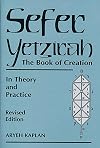
To most people, the very word Kabbalah implies the mystical experience par excellence, but most modern books about this subject shed very little light into its ancient mystical and magical aspects. Rabbi Aryeh Kaplan has therefore translated the Sefer Yetzirah, the oldest and most mysterious of all kabbalistic texts, and now brings its theoretical, meditative and magical implications to light. He expounds on the dynamics of the spiritual domain, the worlds of the Sefirot, souls and angels. show more When properly understood, the Sefer Yetzirah becomes the instruction manual for a very special type of meditation meant to strengthen concentration, and to aid the development of telekinetic and telepathic powers. These powers were meant to help intiates perform feats that outwardly appeared magical. The magical kabbalah is closely related to the meditative kabbalah, and uses various signs, incantations, and divine names by which initiates could influence or alter natural events. This translation includes the meditation in five dimensions, the transtition from Binah to Chakhmah consciousness, the point of infinity, kabbalistic astrology, Ezekiel's vision according to the Sefer Yetzirah, and the mystery of the 231 gates.
Also included is a digest of all major commentaries on teh text of Sefer Yetzirah and a bibliograph of many of teh major kabbalistic works that discuss it, as well as extensive notes regarding various aspects f te translatin. Rabbi Kaplan's translation is based on the Gra version, which has been thought to be the most authentic. Aslo included is the short verions, the long version, and the Saadia version, making this volume the most complete work on the Sefer Yetzirah in English.
Contents
Introduction
The text
Authorship
The Talmudic Period
Texts and commentaries
Sefer Yetzirah
Chapter One, Two, Three, Four, Five, and Six
Appendixes
Appendix I: Other versions of Sefer Yetzirah
Short version
Long version
Saadia version
Appendix II: The 32 paths of wisdom
Appendix III: The gates
Appendix IV: Editions and commentaries
Printed editions
Other books containng Sefer Yetzirah
Manuscripts
Commentaries
Translations
Notes
Index
(Bibliography) show less
Also included is a digest of all major commentaries on teh text of Sefer Yetzirah and a bibliograph of many of teh major kabbalistic works that discuss it, as well as extensive notes regarding various aspects f te translatin. Rabbi Kaplan's translation is based on the Gra version, which has been thought to be the most authentic. Aslo included is the short verions, the long version, and the Saadia version, making this volume the most complete work on the Sefer Yetzirah in English.
Contents
Introduction
The text
Authorship
The Talmudic Period
Texts and commentaries
Sefer Yetzirah
Chapter One, Two, Three, Four, Five, and Six
Appendixes
Appendix I: Other versions of Sefer Yetzirah
Short version
Long version
Saadia version
Appendix II: The 32 paths of wisdom
Appendix III: The gates
Appendix IV: Editions and commentaries
Printed editions
Other books containng Sefer Yetzirah
Manuscripts
Commentaries
Translations
Notes
Index
(Bibliography) show less
You May Also Like


Associated Authors
Statistics
- Works
- 62
- Also by
- 3
- Members
- 2,996
- Popularity
- #8,515
- Rating
- 4.2
- Reviews
- 20
- ISBNs
- 79
- Languages
- 10
- Favorited
- 13