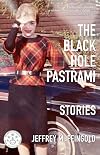
Feingold’s writing fulfilled my thirst for fascinating characters, complex relationships and gripping actions too. By the time I finished the book, I realized that they were puzzle pieces. Yes, each story stands on its own, but taken all together, they form more than a collection as their interlocking pieces create a coherent larger picture. From this, I could learn the outline of an enchanting Jewish/Ukrainian/American family. Their intergenerational interconnectedness is a traditional pattern that also plays out nicely in the modern, new world. The father-son (and then son-father), grandmother-grandson, husband-wife, and dog-owner-child relations are just some of the things we get a worthy peek inside. The tender love each is exposed to is the main feature to look out for as you progress reading this heartwarming book.
The book makes me appreciate people, family, and dogs, too. The characters are in the book and in my own life as well. A hint there, a gesture here, a smile over there, and a deep, oft-fulfilled longing for giving and receiving love are the feelings that will linger after you finish the book. And it is all good in the most positive sense of the word. This book left me deeply satisfied and content. It made my day, so give yourself the gift of elevating your day by reading this funny book.
https://jewishbookworld.org/2024/03/you-will-never-guess-the-juiciest-part-of-th...
The book makes me appreciate people, family, and dogs, too. The characters are in the book and in my own life as well. A hint there, a gesture here, a smile over there, and a deep, oft-fulfilled longing for giving and receiving love are the feelings that will linger after you finish the book. And it is all good in the most positive sense of the word. This book left me deeply satisfied and content. It made my day, so give yourself the gift of elevating your day by reading this funny book.
https://jewishbookworld.org/2024/03/you-will-never-guess-the-juiciest-part-of-th...
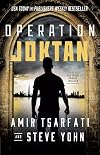
There are a few detailed descriptions of dishes from around the world as our heroes follow an international path of action. These show that the author did his research but still felt lifeless for me. He either didn’t actually try these foods or didn’t have the writing skill to describe them in a way that didn’t let me feel dry.
Full review at https://jewishbookworld.org/2022/01/a-page-turner-with-caveats-thoughts-on-opera...
Full review at https://jewishbookworld.org/2022/01/a-page-turner-with-caveats-thoughts-on-opera...
Princess Posey and the First Grade Parade: Book 1 (Princess Posey, First Grader) by Stephanie Greene
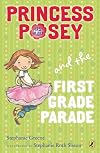
My child has been going to preschool/kindergarten for several years, on the same campus where her first grade would have been, so I realized she didn’t necessarily share Princess Posey’s fears of being left alone by her parents or having to enter a room full of strangers alone for the first time. The book not just entertained us on part of the long drive, but also prompted us to talk about her feelings about school.
My full review
My full review
The Columbine Effect: How five teen pastimes got caught in the crossfire and why teens are taking them back by Beth Winegarner
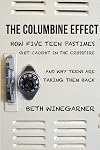
Are you worried about your teenage child's odd choices of clothing, culture and activities? Are you afraid s/he would do harm in her/himself or others? Then you need to read Beth Winegarner's The Columbine Effect. It will help you understand some of the subcultures that can look terrifying from the outside, particularly because of how the mass media depicted them. This book will give you a deeper understanding of them and the nuances, origins, real and perceived effects on one's behavior. You will still need to talk to your children to understand them, as the book emphasizes several times, but at least you will view these subcultures as manifestations of your child's psyche and not as the causes of worry.
This book combines primary and secondary research and resources seamlessly. The author's interviews and observations are supported by relevant quotes from the extensive list of studies, articles and books. If you have an academic background you will appreciate not just the bibliography at the end, but also how they are referred to throughout the book.
I also command the author for her authenticity of not shying away from sources that do not fully support her position. She wrote intelligent, analytical critique of both the studies quoted that advance her view and those that might hinder it. I enjoyed how she pointed out methodological issues in the studies that involved human subjects.
I recommend the book wholeheartedly to teens, parents and social scientists. The author show more writes towards the end: “This book was written because so many parents, faced with the unthinkable loss of their child to suicide or violence, began looking for a cause. Something to explain--or even to blame... It's crucial to find the true cause—not the one that make life easiest for everyone else but the teen.” Her goal of providing a guidebook in this process was supremely achieved. The blaming can stop now and the learning that leads to understanding can start with reading this book. show less
This book combines primary and secondary research and resources seamlessly. The author's interviews and observations are supported by relevant quotes from the extensive list of studies, articles and books. If you have an academic background you will appreciate not just the bibliography at the end, but also how they are referred to throughout the book.
I also command the author for her authenticity of not shying away from sources that do not fully support her position. She wrote intelligent, analytical critique of both the studies quoted that advance her view and those that might hinder it. I enjoyed how she pointed out methodological issues in the studies that involved human subjects.
I recommend the book wholeheartedly to teens, parents and social scientists. The author show more writes towards the end: “This book was written because so many parents, faced with the unthinkable loss of their child to suicide or violence, began looking for a cause. Something to explain--or even to blame... It's crucial to find the true cause—not the one that make life easiest for everyone else but the teen.” Her goal of providing a guidebook in this process was supremely achieved. The blaming can stop now and the learning that leads to understanding can start with reading this book. show less
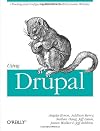
I never reviewed a technology book before that I studied from. All the books I wrote about have been either fiction or non-fiction that I read or studied for my school. But I didn't have any formal schooling related technology, at least not on the coding level. (We did some basic HTML and XML when I studied for my MLIS, but by the time I got there I knew all that.) So when I sat down to write a "review" about Using Drupal* I realized that I have to use different criteria than usual for my reflections.
When judging a tech textbook first and foremost I should assess what I have managed to learn from it. The answer in this case is a tremendous amount. Right now though, I don't know how lasting my learning will be. That will depend on how much work I will be doing in Drupal and how much I retained in the first round of studying. As it was a library book, i.e. I have to give it back tomorrow, I tried to take as much note as I could. Nowadays I try to put every informational on the web, except confidential pieces, so you can find my notes on my blog here: chapter 2, 3, 4, 5, 6, 7, 8, 9, 10, and 11.
I think that studying the book was very useful for me. I wasn't a total novice in using Drupal 6, so I can't say I learned everything I know from it. But I can say that my knowledge feels much more grounded now. And there was plenty of new information, tips, trick, modules for me in there. I enjoyed the clear style of the writing, the detailed explanations, the description of the show more processes and the screenshot that helped me along the way. My only regret was that halfway through the book the site accompanying the book went down and I still cannot reach it. I hope usingdrupal.com will come back, so I could reuse the code snippets from the book, without having to type them in.
The book had a lot of authors, most of them are members of the team at Lullabot. Let me spell out all of their names, that I couldn't do in the title of this post (hence the ellipsis there): Angela Byron, Addison Berry, Nathan Haug, Jeff Eaton, James Walker, Jeff Robbins. Thanks to all them making for putting together an excellent resource. Too bad that by the time I was done with the book, that covers Drupal 6 , Drupal 7 came out and now I can start the process (almost) all over again.
* Here is the official descrption of what Drupal is: "a free software package that allows anyone to easily publish, manage and organize a wide variety of content on a website." show less
When judging a tech textbook first and foremost I should assess what I have managed to learn from it. The answer in this case is a tremendous amount. Right now though, I don't know how lasting my learning will be. That will depend on how much work I will be doing in Drupal and how much I retained in the first round of studying. As it was a library book, i.e. I have to give it back tomorrow, I tried to take as much note as I could. Nowadays I try to put every informational on the web, except confidential pieces, so you can find my notes on my blog here: chapter 2, 3, 4, 5, 6, 7, 8, 9, 10, and 11.
I think that studying the book was very useful for me. I wasn't a total novice in using Drupal 6, so I can't say I learned everything I know from it. But I can say that my knowledge feels much more grounded now. And there was plenty of new information, tips, trick, modules for me in there. I enjoyed the clear style of the writing, the detailed explanations, the description of the show more processes and the screenshot that helped me along the way. My only regret was that halfway through the book the site accompanying the book went down and I still cannot reach it. I hope usingdrupal.com will come back, so I could reuse the code snippets from the book, without having to type them in.
The book had a lot of authors, most of them are members of the team at Lullabot. Let me spell out all of their names, that I couldn't do in the title of this post (hence the ellipsis there): Angela Byron, Addison Berry, Nathan Haug, Jeff Eaton, James Walker, Jeff Robbins. Thanks to all them making for putting together an excellent resource. Too bad that by the time I was done with the book, that covers Drupal 6 , Drupal 7 came out and now I can start the process (almost) all over again.
* Here is the official descrption of what Drupal is: "a free software package that allows anyone to easily publish, manage and organize a wide variety of content on a website." show less
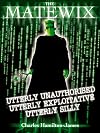
I picked up a small book at a garage sale yesterday, because it looked fun and the price was right, 50 cents. I was wrong, it was a waste of money and time trying to read it. I struggled to finish the first two chapters (page 52 out of 282) then gave up. The subtitle of Charles Hamilton-James' The Matewix promised it would be an "Utterly unauthorized, utterly exploitative, utterly silly" spoof of The Matrix trilogy. Instead of some original fun all I got was a scene by scene reenactment of the Matrix movie with three differences:
Regarding this last point: earlier this week I was reading a debate online about whether, how, and to what extent should authors of novels include in their works references to contemporary culture. The classicist argument was that it would prevent ever making them timeless, so books that connect to current TV shows could never be great literature, because they would not be fully understood at different places or in the future. The counterargument was running around the line that authors' responsibility is to reflect on the world they live in.
The whole debate was show more originating from the observation that the use of internet has rarely been featured in mainstream novels, despites millions of people spend hours a day with it. So why didn't it show up n novels yet? I think because it would be a boring narrative: writing about sitting in front a screen doesn't suggest engaging action.
On the other hand this book was chokeful of names of singers, actors, joints, brands... It did more harm than dating the book out of existence in 10 years. It made it irrelevant now. Don't waste time on this one. show less
- Newo (Neo in the original) has several speech impediments
- No occasion was missed to make a lewd reference or "enhance" simple objects and actions with sexual overtones. E.g. renaming Trinity to Titty was a softer one of these.
- The text was pumped full with pop culture references as if name dropping would improve the quality. Whether I recognized them or not, they were just annoying.
Regarding this last point: earlier this week I was reading a debate online about whether, how, and to what extent should authors of novels include in their works references to contemporary culture. The classicist argument was that it would prevent ever making them timeless, so books that connect to current TV shows could never be great literature, because they would not be fully understood at different places or in the future. The counterargument was running around the line that authors' responsibility is to reflect on the world they live in.
The whole debate was show more originating from the observation that the use of internet has rarely been featured in mainstream novels, despites millions of people spend hours a day with it. So why didn't it show up n novels yet? I think because it would be a boring narrative: writing about sitting in front a screen doesn't suggest engaging action.
On the other hand this book was chokeful of names of singers, actors, joints, brands... It did more harm than dating the book out of existence in 10 years. It made it irrelevant now. Don't waste time on this one. show less
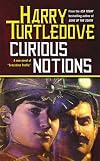
I really should be more selective in what I read or at least do more preparation. I read a few years ago Harry Turtledove's alternative sci-fi book Gladiator and liked it. I learned then that it was part of his "Crosstime Traffic" series, where people in one reality have the technology to move between alternative versions of Earth. Earlier this week I had a few minutes at the library, remembered this and picked up another volume from him, "Curious Notions." As it turned out, this was the second volume of his series, while the Gladiator was the fourth. Next time I really should get the first one, "Gunpowder Empire." Each volume stands on its own, with different characters and places, but still it would be good to know, whether there is any explanation or pre-history in the first one.
Curious Notions is a shop in the late 21st century, where people from our world are selling electronic gadgets in an alternative reality, where the Great War was one by the Germans and with the use of atomic bombs they concurred the USA as well. The proprietors of the shop have two mission: buy produce they can ship back to the home timeline and ensure that this reality doesn't develop its own transposition chambers, the device that carries people and objects between realities. Things go well, until the authorities start taking too much notice of the curious things they sell, that is not known anywhere else in that world....
I haven't been paying much attention in the past of the label "Young show more adult" literature. Looking at the long list of books that Turtledove wrote made me wonder why some is in that category and others are not. Reading this book made two requirement clear: the protagonists have to be teenagers themselves, so the reader can relate to them. Then the books should not have explicit scenes in it and apparently not even mild swearing. I noticed that every time Turtledove expressed somebody's anger, he went around using expletives, made it clear that they were used by the characters. The lack of four letter words from the appropriate situations didn't bother me, as I rarely use them myself. It was kind of part of establishing my identity as a teen, that unlike some people around me I consciously tried to eliminate using them. But it was funny in this book, how the author went at great length, to avoid them. Would have been simpler to include a few here and there.
The book's plot is simple to follow and even predict, but that doesn't take away the joy from the narrative. Turtledove made sure that the reader gets a horrifying picture of a totalitarian regime and a country under its rule. Let me give you an example: a German official telling to a really innocent Americna woman on page 47,
I will tell you how it seems to me. It seems like this. We have found no evidence,--ja, this is true. But does this mean you are not guilty? That I find very unlikely. So it must mean you are very clever. You think you have outwitted us. For the time being, you may even be right. We shall see, though, what further questioning of Herr Charles Woo will bring.
I enjoyed the simple fantasy of being transferred to a world, where Adolf Hitler never rose to power, despite the US and most of the world being under a German rule was still no fairy tale. Being safely separated from that world, by virtue of reading about it on a page, made me less anxious about whether our heroes in danger can get out. I don't think I will spoil much by telling you that they did. This probably means that the third requirement for a YA novel is to have a happy end. There, you have one here now. show less
Curious Notions is a shop in the late 21st century, where people from our world are selling electronic gadgets in an alternative reality, where the Great War was one by the Germans and with the use of atomic bombs they concurred the USA as well. The proprietors of the shop have two mission: buy produce they can ship back to the home timeline and ensure that this reality doesn't develop its own transposition chambers, the device that carries people and objects between realities. Things go well, until the authorities start taking too much notice of the curious things they sell, that is not known anywhere else in that world....
I haven't been paying much attention in the past of the label "Young show more adult" literature. Looking at the long list of books that Turtledove wrote made me wonder why some is in that category and others are not. Reading this book made two requirement clear: the protagonists have to be teenagers themselves, so the reader can relate to them. Then the books should not have explicit scenes in it and apparently not even mild swearing. I noticed that every time Turtledove expressed somebody's anger, he went around using expletives, made it clear that they were used by the characters. The lack of four letter words from the appropriate situations didn't bother me, as I rarely use them myself. It was kind of part of establishing my identity as a teen, that unlike some people around me I consciously tried to eliminate using them. But it was funny in this book, how the author went at great length, to avoid them. Would have been simpler to include a few here and there.
The book's plot is simple to follow and even predict, but that doesn't take away the joy from the narrative. Turtledove made sure that the reader gets a horrifying picture of a totalitarian regime and a country under its rule. Let me give you an example: a German official telling to a really innocent Americna woman on page 47,
I will tell you how it seems to me. It seems like this. We have found no evidence,--ja, this is true. But does this mean you are not guilty? That I find very unlikely. So it must mean you are very clever. You think you have outwitted us. For the time being, you may even be right. We shall see, though, what further questioning of Herr Charles Woo will bring.
I enjoyed the simple fantasy of being transferred to a world, where Adolf Hitler never rose to power, despite the US and most of the world being under a German rule was still no fairy tale. Being safely separated from that world, by virtue of reading about it on a page, made me less anxious about whether our heroes in danger can get out. I don't think I will spoil much by telling you that they did. This probably means that the third requirement for a YA novel is to have a happy end. There, you have one here now. show less
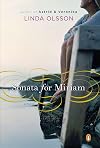
Being a librarian in a small synagogue library has its perks. One of them is that I can put no my hand first on the new books the library gets. We get boos in two ways: I order them or someone donates them to us. The former method has little surprises, considering that I am in charge of collection development. But you never know what you get when people donate books. Last week a congregation sopped by with a short novel,by an author I never heard of, Linda Olsson. She is of Swedish origin, but after living all over the world settled in New Zealand.
When I encounter a book by an author I never heard of, next I check the publisher to get a sense of possible quality and genre. Sonata for Miriam was published by Penguin, which is insurance enough for me to at least start reading the book. For me it was an emotionally difficult book to read through for several reasons. For once it was about a father, a composer/musician, who lost his daughter, Miriam. (Now you understand the title.) Being a father of a young lady and enjoying looking at and playing with her amazing developing self and soul every day, I dread to find myself ever in a similar situation. It took me four days to finish the book, and for this period of time my mood was worse than usual. But I marched on reading the book, because it was beautiful written and I was curious about the end of the book and the beginning of its protagonist.
Because besides mourning his daughter the other thing the father did was looking for show more his roots. Hew knew that before moving to Sweden as a child he came from somewhere else, but didn't know anything about it. His mother was non-talkative to the extreme, so it took two coincidences and some persistence to find his way back to Krakow, Poland, where his family was from. The first coincidence was stumbling onto a picture at a Holocaust exhibition with his own name on it and the second is a call from an old acquaintance in Sweden asking to write the music for his new film. The first took him down the path of finding the chain of people who could tell more about his origins and the second gave him the impetus to travel to Europe again after 20 years of living in New Zealand.
To finish of covering the plot, but without giving away too much of it, I have to mention the hero's disrupted relationship with the mother of his child that he is trying to understand and recover. It is a central element, and thankfully big chunks of the second half of the book was written from that woman's perspective. That helps to grasp what is happening between these people who have an antagonistic relationship with communication itself.
Judaism or any Jewish topic is not mentioned in the book or practiced in any way by any member of the family, but it was a Jewish family suffering (and most of them not surviving) the Holocaust. Nevertheless I will add this book to the library's collection
What I enjoyed the most in this book was the musings about human condition. They reminded me of Milan Kundera's observations which manage to be deep and succinct at the same time and exciting to read even for me, who values the quick pace of page-turner actions books. Olsson has the same quality to her inward directed prose: worthy to read slowly, so you could peel off its meaning layer by layer and discover the similarities, or lack of, to your own past feelings. I found her a great teacher on how to observe the storms of the soul. show less
When I encounter a book by an author I never heard of, next I check the publisher to get a sense of possible quality and genre. Sonata for Miriam was published by Penguin, which is insurance enough for me to at least start reading the book. For me it was an emotionally difficult book to read through for several reasons. For once it was about a father, a composer/musician, who lost his daughter, Miriam. (Now you understand the title.) Being a father of a young lady and enjoying looking at and playing with her amazing developing self and soul every day, I dread to find myself ever in a similar situation. It took me four days to finish the book, and for this period of time my mood was worse than usual. But I marched on reading the book, because it was beautiful written and I was curious about the end of the book and the beginning of its protagonist.
Because besides mourning his daughter the other thing the father did was looking for show more his roots. Hew knew that before moving to Sweden as a child he came from somewhere else, but didn't know anything about it. His mother was non-talkative to the extreme, so it took two coincidences and some persistence to find his way back to Krakow, Poland, where his family was from. The first coincidence was stumbling onto a picture at a Holocaust exhibition with his own name on it and the second is a call from an old acquaintance in Sweden asking to write the music for his new film. The first took him down the path of finding the chain of people who could tell more about his origins and the second gave him the impetus to travel to Europe again after 20 years of living in New Zealand.
To finish of covering the plot, but without giving away too much of it, I have to mention the hero's disrupted relationship with the mother of his child that he is trying to understand and recover. It is a central element, and thankfully big chunks of the second half of the book was written from that woman's perspective. That helps to grasp what is happening between these people who have an antagonistic relationship with communication itself.
Judaism or any Jewish topic is not mentioned in the book or practiced in any way by any member of the family, but it was a Jewish family suffering (and most of them not surviving) the Holocaust. Nevertheless I will add this book to the library's collection
What I enjoyed the most in this book was the musings about human condition. They reminded me of Milan Kundera's observations which manage to be deep and succinct at the same time and exciting to read even for me, who values the quick pace of page-turner actions books. Olsson has the same quality to her inward directed prose: worthy to read slowly, so you could peel off its meaning layer by layer and discover the similarities, or lack of, to your own past feelings. I found her a great teacher on how to observe the storms of the soul. show less
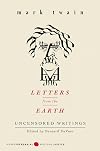
Before reading "Letters from the Earth" I didn't know much about Mark Twain. I read and enjoyed his Tom Sawyer and Huck Finn stories in grade school and that was it. This book, that I read for my book club, is so utterly different that I had to read up on his life and the background of this book. Now, at least, I am familiar with the major outline of his life.
Letters from the Earth is a series of fictional letters that Satan wrote back home to the other angels, upon visiting the freshly minted Earth. It is a tirade against biblical literacy, religious dogma and God. Twain pointed out numerous contradiction within the Bible and how Christian dogma was illogical. Using Satan's words he painted God as an evil, jealous, hypocrite ruler. The book is full of great lines and ideas, whether you agree with them or not. It was born in an age, when the literal meaning of the Bible was questioned and various non-divine-origin hypothesis were born about its origins. As it is evident from this book Twain was aware of them.
The book was thought-provoking, although some of it is clearly dated by now. Biblical scholarship advanced enough in the last 100 years that we do not have to use angry polemics against its most obvious fallacies. I am aware that I cannot give justice to the numerous ideas the book presented in the few minutes I have to write this little reflection, so let me quickly recap the ones that stayed with me longer:
Twain wrote this book in the last years of his life, but it wasn't published for a long time, because his daughter objected the idea. Decades later, and 25 years after an editor created and collected segments into a book, she changed her mind and it first seen the daylight in 1960's. It is a short book that I think I will re-read in a few years to see how the change in my own religious beliefs make me think about it then. show less
Letters from the Earth is a series of fictional letters that Satan wrote back home to the other angels, upon visiting the freshly minted Earth. It is a tirade against biblical literacy, religious dogma and God. Twain pointed out numerous contradiction within the Bible and how Christian dogma was illogical. Using Satan's words he painted God as an evil, jealous, hypocrite ruler. The book is full of great lines and ideas, whether you agree with them or not. It was born in an age, when the literal meaning of the Bible was questioned and various non-divine-origin hypothesis were born about its origins. As it is evident from this book Twain was aware of them.
The book was thought-provoking, although some of it is clearly dated by now. Biblical scholarship advanced enough in the last 100 years that we do not have to use angry polemics against its most obvious fallacies. I am aware that I cannot give justice to the numerous ideas the book presented in the few minutes I have to write this little reflection, so let me quickly recap the ones that stayed with me longer:
- If most people don't like to sing and cannot play a musical
- instrument, why is heaven imagined as a place where everyone sings all the time and plays the harp?
- If most people love to make love, why is that act not included in the Christian concept of heaven? (Twain doesn't mention the Muslim heaven, where the situation might be different.)
- Twain, as a trained ship captain, had a lot to say about Noah's ark. He found numerous logistical problems with its construction, size, cargo handling and operation.
- Twain was fascinated with why diseases in general exist and how the "hookworm" in particular works.
- Twain's sense of social justice popped up when he considered God extra-evil because "nine-tenths of his disease-inventions were intended for the poor."
- Twain's sensitivity of gender issues were evident when he covered the difference on how Biblical laws about adultery affect women and men.
- Twain's use of the genocide of Native Americans as a proof of God's evil nature showed him in tune with and care for America's history.
Twain wrote this book in the last years of his life, but it wasn't published for a long time, because his daughter objected the idea. Decades later, and 25 years after an editor created and collected segments into a book, she changed her mind and it first seen the daylight in 1960's. It is a short book that I think I will re-read in a few years to see how the change in my own religious beliefs make me think about it then. show less

Stella, Princess of the Sky, by Marie-Louise Gay was first published in English in 2004. (The book is also available in French as the author is Canadian) then in 2009 it was published in Hungarian, which is the version I read and keep reading. To be more accurate the Hungarian edition is bilingual and is used as a book to teach children between the age of 2 and 5 to learn English. We are going the other way around, I read in Hungarian to my 2+ year old daughter so her Hungarian would improve.
Right now she is much more interested in the drawings than the story. I can't blame her, they are mesmerizing. They were drawn and painted by the author. Here is a great write-up about her background, style and work method.
One might think that Gay's loose and distorted drawing style would be casual and random. However, Gay is very meticulous about her illustrations. She will work on one drawing, doing several drafts until she feels that what she has is perfect. ...Each drawing takes about five days to create. After the sketch is complete, she does the pencil roughs, which lead to the final pencil drawings, the lines are inked and then the picture is painted.
Having a redhead protagonist named Stella and gorgeously drawn illustrations already guaranteed the book's success in our home. But having a story line where the siblings teach each other, go for a safe adventure and are in amazing awe of the wonders of the world rounded up the experience to near perfection. I just wish that the show more book would be longer than 32/44 pages. The good news is that there five more Stella books and three Sam books in English listed at the author's site and two of them are available in the bilingual, Hungarian edition. The books are also being developed into an animated TV series, and will start airing (at least in Canada) next January. show less
Right now she is much more interested in the drawings than the story. I can't blame her, they are mesmerizing. They were drawn and painted by the author. Here is a great write-up about her background, style and work method.
One might think that Gay's loose and distorted drawing style would be casual and random. However, Gay is very meticulous about her illustrations. She will work on one drawing, doing several drafts until she feels that what she has is perfect. ...Each drawing takes about five days to create. After the sketch is complete, she does the pencil roughs, which lead to the final pencil drawings, the lines are inked and then the picture is painted.
Having a redhead protagonist named Stella and gorgeously drawn illustrations already guaranteed the book's success in our home. But having a story line where the siblings teach each other, go for a safe adventure and are in amazing awe of the wonders of the world rounded up the experience to near perfection. I just wish that the show more book would be longer than 32/44 pages. The good news is that there five more Stella books and three Sam books in English listed at the author's site and two of them are available in the bilingual, Hungarian edition. The books are also being developed into an animated TV series, and will start airing (at least in Canada) next January. show less

Four kids from Toronto help an Israeli agent and the local police to capture to capture criminals, members of an international smuggling ring. This is the short summary of Galila Ben-Uri's The Missing Crown. A slightly more verbose recap would include that the four boys are around the age of 8-12 and are orthodox Jews; that they are helped by their synagogue's shammas, who teaches them Judaism; that the Israeli agent is chasing a family heirloom, a Torah crown that was stolen from his family and belonged to a famous synagogue in Tzfat.
The "crown" is one of the words I knew in Hebrew first, so it took me a second to realize what they are talking about. "Rimonim", also meaning pomegranate, is the ornamental top that they put on the top of Torah scroll, made of precious metal. The one which is missing in this book is made of golden and has little bells on it, that are used to smuggle diamonds.
The fast paced story was mixing lots of actions(, including car chase, subway chase, fights), planning sessions, always accompanied with eating piles of dessert and family moments. The events described took place during a summer vacation, starting with the discovery of a suspicious house. This opening reminded me of a book I read several times as a kid "Vakáció a halott utcában" ("Vacation in the dead street") by István Csukás, but then the rest of the content of the two books diverged.
Unfortunately I found the writing boring and repetitive. The same phrases kept popping up making show more me feel like I was reading an episode of a 60's family sitcom. The kids in the book and the supposed readers were both treated as a little idiots and not as developing persons. The vocabulary of the book was mostly appropriate for th 8-10 year old crowd, but every once in a while a word appeared that surely would have required explanation for the age group. The author must have known this too, because the first few times he did weave into the conversation words that shed light on the meaning of the complicated words. Later he abandoned this useful habit.
I also had problems with some of the messages of the book. Using ice-cream as the only reward for good deeds is not something I want to follow, although I can see how that can motivate kids. The fact that there were no girls amongst the kids and the adult female characters were also just footnotes in the book reminded me why I could never embrace a non-egalitarian orthodox lifestyle. I kept hoping that the stories the shammas shared with the kids would be Biblical or from classical Rabbinic literature, instead he made up parables corresponding way too directly to the kids' current situation and they were not very captivating.
I found that the plot was enjoyable, but the author's style and message prevented me to be able to recommend the book wholeheartedly. show less
The "crown" is one of the words I knew in Hebrew first, so it took me a second to realize what they are talking about. "Rimonim", also meaning pomegranate, is the ornamental top that they put on the top of Torah scroll, made of precious metal. The one which is missing in this book is made of golden and has little bells on it, that are used to smuggle diamonds.
The fast paced story was mixing lots of actions(, including car chase, subway chase, fights), planning sessions, always accompanied with eating piles of dessert and family moments. The events described took place during a summer vacation, starting with the discovery of a suspicious house. This opening reminded me of a book I read several times as a kid "Vakáció a halott utcában" ("Vacation in the dead street") by István Csukás, but then the rest of the content of the two books diverged.
Unfortunately I found the writing boring and repetitive. The same phrases kept popping up making show more me feel like I was reading an episode of a 60's family sitcom. The kids in the book and the supposed readers were both treated as a little idiots and not as developing persons. The vocabulary of the book was mostly appropriate for th 8-10 year old crowd, but every once in a while a word appeared that surely would have required explanation for the age group. The author must have known this too, because the first few times he did weave into the conversation words that shed light on the meaning of the complicated words. Later he abandoned this useful habit.
I also had problems with some of the messages of the book. Using ice-cream as the only reward for good deeds is not something I want to follow, although I can see how that can motivate kids. The fact that there were no girls amongst the kids and the adult female characters were also just footnotes in the book reminded me why I could never embrace a non-egalitarian orthodox lifestyle. I kept hoping that the stories the shammas shared with the kids would be Biblical or from classical Rabbinic literature, instead he made up parables corresponding way too directly to the kids' current situation and they were not very captivating.
I found that the plot was enjoyable, but the author's style and message prevented me to be able to recommend the book wholeheartedly. show less
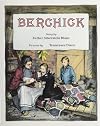
If you thought just because "Berchick" means little bear in Yiddish a book by this title would be about a cub you'd be mistaken. It is about a newborn colt, who had thick fur when he was found next to her dead mare. He was found by the mother of the narrator (a young child) who promised on the spot to take care of the young creature.
These and the rest of the events are all set in Wyoming. Both the author, Esther Silverstein Blanc, and the illustrator, Tennessee Dixon grew up there. The loving care and attention to the details of the descriptive text and water paintings clearly reflect their affinity to the Great Plains region. I loved the paintings, but I regretted that only the cover one was in color, the rest was black and white. It set an unnecessarily melancholic tone for the mostly positive book.
The first half of the book, covering the younger years of the horse, the narrator and his siblings are truly idyllic and happy. The homesteader family doesn't seem to have any problems; the horse is smart, friendly and splendid. Later, during the rough years, they have to move to town and sell the horse. As we learn at the end the horse eventually learns to live in the wild and that seems to support its manifest destiny.
I borrowed this book from a Jewish library, so I was expecting it to have some Jewish content. My expectation was met, but it wasn't a particularly Jewish book, besides the name of the horse, the mention of the Talmud once and the use of the word "chochim" show more once it could have been about any family. Well, maybe the fact that the father's fallback work was being a tailer was a hint. Otherwise thought it was just a book about a Midwest family, like many others.
The end of the backflap of the book says this about the publisher, "Volcano Press is a woman-owned company, publishing women-oriented books that seek to enlighten, liberate and delight." The company's home page has more detailed information about their admirable mission and history. Having read the above I realized that in the center of the book was the relationship between the matriarch of the family and the horse. It was a strong and defining bond in both directions. I recommend reading the book to observe that, the peaceful drawings, and the description of a simple life. show less
These and the rest of the events are all set in Wyoming. Both the author, Esther Silverstein Blanc, and the illustrator, Tennessee Dixon grew up there. The loving care and attention to the details of the descriptive text and water paintings clearly reflect their affinity to the Great Plains region. I loved the paintings, but I regretted that only the cover one was in color, the rest was black and white. It set an unnecessarily melancholic tone for the mostly positive book.
The first half of the book, covering the younger years of the horse, the narrator and his siblings are truly idyllic and happy. The homesteader family doesn't seem to have any problems; the horse is smart, friendly and splendid. Later, during the rough years, they have to move to town and sell the horse. As we learn at the end the horse eventually learns to live in the wild and that seems to support its manifest destiny.
I borrowed this book from a Jewish library, so I was expecting it to have some Jewish content. My expectation was met, but it wasn't a particularly Jewish book, besides the name of the horse, the mention of the Talmud once and the use of the word "chochim" show more once it could have been about any family. Well, maybe the fact that the father's fallback work was being a tailer was a hint. Otherwise thought it was just a book about a Midwest family, like many others.
The end of the backflap of the book says this about the publisher, "Volcano Press is a woman-owned company, publishing women-oriented books that seek to enlighten, liberate and delight." The company's home page has more detailed information about their admirable mission and history. Having read the above I realized that in the center of the book was the relationship between the matriarch of the family and the horse. It was a strong and defining bond in both directions. I recommend reading the book to observe that, the peaceful drawings, and the description of a simple life. show less
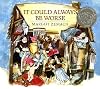
It's so much fun to read a book to kids that moves their imagination. Margot Zemach's It Could Always Be Worse: A Yiddish Folk Tale was ideal in this regard. It starts off with a problem: there are too many people living in small house, the lack of personal space causes friction between the family members. The kids I read the story to came up with all sorts of ideas of how to solve the issue. Then the story moved onto the advices the man of the house got from the rabbi: bring in the animals one by one into the house.
Any (good) story that has more than one kind of animal in it can be a hit with kids. They sure made all the animals sounds as the story moved on. Some of them even figured out the ending: when you take out the animals the limited space will feel spacious and the atmosphere will be relaxed again. The kids in my audience stayed excited though and the book encouraged them to take it a record number of books from the library where we had our story time.
A disadvantage of readings a book to a group of kids, that not all of them could see the illustrations. In this case the colored in sketches were mostly lost on them. However they enjoyed the humor and by making them talk and think about the ending I made sure that the wisdom of the story wasn't lost on them either. It was a good experience for all. It could have been much worse.
Any (good) story that has more than one kind of animal in it can be a hit with kids. They sure made all the animals sounds as the story moved on. Some of them even figured out the ending: when you take out the animals the limited space will feel spacious and the atmosphere will be relaxed again. The kids in my audience stayed excited though and the book encouraged them to take it a record number of books from the library where we had our story time.
A disadvantage of readings a book to a group of kids, that not all of them could see the illustrations. In this case the colored in sketches were mostly lost on them. However they enjoyed the humor and by making them talk and think about the ending I made sure that the wisdom of the story wasn't lost on them either. It was a good experience for all. It could have been much worse.
Pop culture saturates the lives of most people living in contemporary society. Unless you are a hermit (and was brought up in isolation) you will be familiar with at least the major figures of the art and entertainment scene of your geographic era. This may have some interesting effect on your life and personality. I wonder in what ways will the life of my daughter be influenced by the fact that we named her Stella. One way is that she is often greeted with a Marlon Brandon impersonations from the "Streetcar Named Desire" movie where he shouts the name on the street with an infamous intonation.
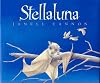
Another way is that we already received two children books where the protagonists bear the same name. Or at least partially, as in Janell Cannon's awardwinning books Stellaluna from 1993. Half of its 46 pages contain the text and the other half, alternating pages have beautiful simple illustrations of the little bat's story who grows up among birds. The adorable book has sweet and exciting parts and I loved how the lesson was summed up at the end:
I my daughter will have friends and will be able to internalize the truth in the above conversation. She may learn it only through interactions with her friends, but till then at least she can read about it from the book, that she loves to hold already.
Another way is that we already received two children books where the protagonists bear the same name. Or at least partially, as in Janell Cannon's awardwinning books Stellaluna from 1993. Half of its 46 pages contain the text and the other half, alternating pages have beautiful simple illustrations of the little bat's story who grows up among birds. The adorable book has sweet and exciting parts and I loved how the lesson was summed up at the end:
"How can we be so different and feel so much alike?"
"And how can we feel so different and be so much alike?" wondered Pip.
"Because we're friends," said Stellaluna, "and that's a fact."
I my daughter will have friends and will be able to internalize the truth in the above conversation. She may learn it only through interactions with her friends, but till then at least she can read about it from the book, that she loves to hold already.
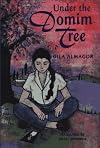
Gila Almagor, the author of Under the Domim Tree, placed bits of her personal life into several characters in her first book, but most of them for the narrator, who tells the story in first person. Here are some of the basic elements that are autobiographical and define the character:
The book is a coming of age story for a group of young, mostly orphan, teens living in a children's village in Israel. The story is set in 1953, just late enough after the war that some of the children remember segments of their life in Poland and some don't. During the course of the novel at least four of them have to revisit (and face the darker parts of) their personal history in various ways. This process helps them heal on the long turn, but is painful in the short. What helps them the most is the friendship and solidarity with the other girls and boys.
The book is probably most enjoyed by young teen girls, after all a lot of the book is dealing with hopes, dreams and aspirations of that group. I enjoyed the mix of humor, the interpersonal and group dynamics, the inspiring strength of the young people mixed with their concerns that are often prematurely adult in their nature. The Domim Tree itself stands strong as a real place and a symbol of a solid show more point in the universe where they can pour their heart out. With their previously transient life and recurring nightmares they sure need something like this.
Hillel Schenker's translation (from Hebrew to English) is adequate but I got the sense that the original Hebrew might have been more poetic. The content of the book certainly allows more colorful language, although I have to keep in mind the target audience's age. As far as I know the book's sequel (Summer of Aviya) hasn't been translated to English. Interesting to note that the film version of the second book (1988) came out seven years before the film version of the first book (1995). The author who is one of the most well-known actors in Israel is playing in both, although not herself.
This is a recommended book for 12-15 year olds as they can learn about problems and problem solving, the value and advantages of friendships and the importance of being honest to yourself. show less
- A mother who is collapsing mentally under the weight of what happened during the Shoah.
- A father who was dead before the daughter was born.
- A group home for orphans, that includes both sabras (people born in Israel) and refugees from Europe.
The book is a coming of age story for a group of young, mostly orphan, teens living in a children's village in Israel. The story is set in 1953, just late enough after the war that some of the children remember segments of their life in Poland and some don't. During the course of the novel at least four of them have to revisit (and face the darker parts of) their personal history in various ways. This process helps them heal on the long turn, but is painful in the short. What helps them the most is the friendship and solidarity with the other girls and boys.
The book is probably most enjoyed by young teen girls, after all a lot of the book is dealing with hopes, dreams and aspirations of that group. I enjoyed the mix of humor, the interpersonal and group dynamics, the inspiring strength of the young people mixed with their concerns that are often prematurely adult in their nature. The Domim Tree itself stands strong as a real place and a symbol of a solid show more point in the universe where they can pour their heart out. With their previously transient life and recurring nightmares they sure need something like this.
Hillel Schenker's translation (from Hebrew to English) is adequate but I got the sense that the original Hebrew might have been more poetic. The content of the book certainly allows more colorful language, although I have to keep in mind the target audience's age. As far as I know the book's sequel (Summer of Aviya) hasn't been translated to English. Interesting to note that the film version of the second book (1988) came out seven years before the film version of the first book (1995). The author who is one of the most well-known actors in Israel is playing in both, although not herself.
This is a recommended book for 12-15 year olds as they can learn about problems and problem solving, the value and advantages of friendships and the importance of being honest to yourself. show less

"Shabbos treats that grew" is a lovely little story about the unexpected outcomes of doing good deeds. Once you step on the road of paying attention to others and trying to help them the slippery slope of philanthropy may lead you increasing joy in the life of many other people. Particularly if the "pay it forward" principle gets involved, which is exactly what's hapenning here.
The story in a nutshell: two siblings first help a kid who they notice at the store couldn't get any treat for Shabbat, because her mother didn't have enough money for it. Then they and their friends keep helping them with grocery, and eventually warm up the poor family's morose landlord too. Who in turn opens up and will help the poor family even more. As you see, there are only positive characters in the book and the overall message is that helping others is a worthwhile mitzvah: it is the right thing to do, it brings you joy and it may even multiply itself in surprising directions.
The story was originally conceived by Mayer Bendet and was written for this book by Yaffa Leba Gottlieb. Miriam Lando's illustrations make the book lively and fun for kids who have been reading for a few years. As most pages have 5 to 15 lines of text it may not be the best for the youngest kids.
I didn't grow up or ever lived as an orthodox Jew. Thus I am not intimately familiar with the details of the everyday life as depicted here. It is clearly set in an orthodox family and neighborhood I only encountered via show more literature and movies. For me this, being set in an exotic lifestyle in an regular suburb, felt slightly artificial. I assume that you are an orthodox Jew, living similarly to the people described in this book, there is no lingering surreal feeling. To me the drawing's style enhanced this feeling. Tthe design reminded me of the visual styles I saw in other "orthodox" publications (of other faiths) such as the Watchtower or many varieties of Bible stories for kids. I cannot pinpoint it, but they have all have a simplified, cleancut, worldview with erect, clearly black or white figures.
I loved the message of the story, but because it is not set in a world I live in, I felt alienated from its heroes.
P.s. The entire text of the book can be found online here, along with small version of the accompanying images. show less
The story in a nutshell: two siblings first help a kid who they notice at the store couldn't get any treat for Shabbat, because her mother didn't have enough money for it. Then they and their friends keep helping them with grocery, and eventually warm up the poor family's morose landlord too. Who in turn opens up and will help the poor family even more. As you see, there are only positive characters in the book and the overall message is that helping others is a worthwhile mitzvah: it is the right thing to do, it brings you joy and it may even multiply itself in surprising directions.
The story was originally conceived by Mayer Bendet and was written for this book by Yaffa Leba Gottlieb. Miriam Lando's illustrations make the book lively and fun for kids who have been reading for a few years. As most pages have 5 to 15 lines of text it may not be the best for the youngest kids.
I didn't grow up or ever lived as an orthodox Jew. Thus I am not intimately familiar with the details of the everyday life as depicted here. It is clearly set in an orthodox family and neighborhood I only encountered via show more literature and movies. For me this, being set in an exotic lifestyle in an regular suburb, felt slightly artificial. I assume that you are an orthodox Jew, living similarly to the people described in this book, there is no lingering surreal feeling. To me the drawing's style enhanced this feeling. Tthe design reminded me of the visual styles I saw in other "orthodox" publications (of other faiths) such as the Watchtower or many varieties of Bible stories for kids. I cannot pinpoint it, but they have all have a simplified, cleancut, worldview with erect, clearly black or white figures.
I loved the message of the story, but because it is not set in a world I live in, I felt alienated from its heroes.
P.s. The entire text of the book can be found online here, along with small version of the accompanying images. show less
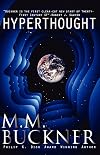
Sometimes I wonder why is that if something is that if I find out that fashionable my first reaction is turning away. Intellectually I know that popular items and ideas can also have plenty of value, but emotionally I am turned off for them. I am often more interested in the obscure as if scarcity in itself would be of value. I know that the answer to my reactions is buried somewhere in my personal background and the circumstances of how my taste in music, literature, fashion and even ideology developed. In communist Hungary underground culture was more alive and relevant than the public one. At least for me.
When I was reading M. M. Buckner's Hyperthought I had mixed reactions for the above reasons. On one hand I utterly enjoyed the fast paced science fiction and the ideas it explored. On the other hand I had a negative gut reaction to some of the themes it explored. Pollution, global warming corporations overtaking the roles and functions of nations... these are all valid and important concern but in recent years they became popular memes in science fiction novels. Extrapolating these trends is a common pastime nowadays for authors.
I am aware that it is essential to point out the dangers and consequences of where we might heading and sci-fi is a perfect medium for that. Furthermore Buckner did a good job of item, because he painted a believable scenario and filled it with action and characters who are beyond the black and white superhero/villain dichotomy. Nevertheless show more it took some effort for me to fully accept that it is OK to write about popular themes. If you're OK with it too, than read the novel, because it has originality beyond the commonalities with other books. show less
When I was reading M. M. Buckner's Hyperthought I had mixed reactions for the above reasons. On one hand I utterly enjoyed the fast paced science fiction and the ideas it explored. On the other hand I had a negative gut reaction to some of the themes it explored. Pollution, global warming corporations overtaking the roles and functions of nations... these are all valid and important concern but in recent years they became popular memes in science fiction novels. Extrapolating these trends is a common pastime nowadays for authors.
I am aware that it is essential to point out the dangers and consequences of where we might heading and sci-fi is a perfect medium for that. Furthermore Buckner did a good job of item, because he painted a believable scenario and filled it with action and characters who are beyond the black and white superhero/villain dichotomy. Nevertheless show more it took some effort for me to fully accept that it is OK to write about popular themes. If you're OK with it too, than read the novel, because it has originality beyond the commonalities with other books. show less

This book shares a folk tale about the how the first gefilte fish was ever made. According to this legend poor woman prepared it after prophet Elijah, in the guise of a fisherman, gave her a splendid fish and instructions: "Don't fry it, Matushka. And don't bake it. But as you prepare it, think about what has been happening to the Jewish people". The story teaches three simple lessons:
The book pages are not numbered, but the story and the images take up 42 pages themselves. Every page. Where you open the book you will find a drawing which fills almost a whole page and in some cases both pages. The text for each double page varies between 3 and 12 lines. Therefore the book is great for 3rd and 4th graders. They may also be more receptive to Shay Rieger's elegant, black and white charcoal drawings than smaller children who might require more colors to hold their attention.
The advantage of folktales is that they are ageless. So even thought this book was published in 1978 it doesn't feel outdated, because it is missing any cultural references to the age it was prepared.
- Even if you are poor there are always poorer people who you can help.
- The importance of being joyous and sharing joy on Sabbath.
- The history of the Jewish people included a lot of suffering, but they continued to exist.
The book pages are not numbered, but the story and the images take up 42 pages themselves. Every page. Where you open the book you will find a drawing which fills almost a whole page and in some cases both pages. The text for each double page varies between 3 and 12 lines. Therefore the book is great for 3rd and 4th graders. They may also be more receptive to Shay Rieger's elegant, black and white charcoal drawings than smaller children who might require more colors to hold their attention.
The advantage of folktales is that they are ageless. So even thought this book was published in 1978 it doesn't feel outdated, because it is missing any cultural references to the age it was prepared.

The concept of Zoltán Poós' latest book is simple and effective: take a hit song from each of the last 50 years in Hungary and write a few pages about its context, history, meaning, composer, performers, analyze the song itself and if available the album it appeared on. As easy it was to summarize "Táskarádió: 50 év, ötven sláger" as hard it will be to translate its title to English. "Táskarádió" is the Hungarian name for the boombox of the 1950's. It is also a symbol of western imperialist material culture, idolized by undisciplined youth in Hungary. The subtitle of the book is simpler: "50 years, 50 Hungarian hits." Except that "hit" songs are defined by their success, while the author here has a somewhat different definition. He included songs from many genre of "pop(ular)" music that never made it big, but he considers important in the history of Hungarian music.
The first thing I have to applaud is the style of the book. Each entry incorporates typical elements and idioms of the language of the era the song was born. This includes both the formal, as in the usage of the official, state-owned media, and the informal as in used in the slang of the vernacular. I loved how the author played and joined words and phrases that came from disparate section of the language. At the same time, with the same words, the book is filled with millions of references to trivia. Some of them are explained. But most of them would only be understood or even noticed by people who show more lived in the era or have extensive knowledge of its culture. These tidbits added great joy to my reading of the book, because when I got them I could feel that I am part of the "in-crowd". These also make the book untranslatable to any language. The meaning of references would be lost without their context and would even read as elaborate gibberish.
My main regret with the book was repetitive nature. When the author used up the available vocabulary he just started to reuse some of the same funny, reflective turn of phrases. Same applies to some of the tidbits. I read at least 4 times that there were a few years in the early 1980's when the leading bands of the 1970s no longer played. The exact same reference showed up in several consecutive entries. Every single of the entries on their own would have been unique and terrific as a newspaper column. But reading one after the other ended up occasionally tedious job. Maybe the book is intended to be used as an encyclopedia, where each entry has to contain all the relevant information to its topic. That it mostly did.
If I calculate correctly the author is about 2 years younger than I am. This means that he didn't live through the 1960's and started to get personally interested in music not earlier than the very late 1970's. Nevertheless I found his description of early music accurate. That is the information I was familiar was true and he added a lot of information about the bands' and singers' histories I wasn't aware of. So another reason I enjoyed reading this book was because it gave me information I value(d).
I could really relate to the chapters from 1982 to 1995. These were the years when I was actively following the Hungarian music scene. These were also the years when music was an important part of my life. Like many teenager I felt that musical taste is an important part not just of my own identity but as the basis of my opinion of others. Now I know better, but I also listen to much less music as it moved out from the center of my life. I still listen to music at home, but continuously, liked I used to. I also go to much less live events, which is not hard feat considering that I used to go concerts 2-4 times a week.
So the music of that almost 15 years I am intimately familiar with. This means that I can point out plenty of information that I would have considered important enough for inclusion. I can also pinpoint a few factual errors and typos. On the other hand I acknowledge that for others, this section is just a informative and fun to read as the others. Finally I have to thank Poós to cover the years since I left Hungary. Now I have a sense of the cultural significance of the bands that took stage since then. I heard many of the songs he referred to, but in the diaspora of music, without being part of the living culture they made little sense and I showed little interest in them. Now I know why I should pay more attention to the later musical artifacts and their creators.
I want to reiterate that, despite my criticism, I really enjoyed the book and here is why:
The first thing I have to applaud is the style of the book. Each entry incorporates typical elements and idioms of the language of the era the song was born. This includes both the formal, as in the usage of the official, state-owned media, and the informal as in used in the slang of the vernacular. I loved how the author played and joined words and phrases that came from disparate section of the language. At the same time, with the same words, the book is filled with millions of references to trivia. Some of them are explained. But most of them would only be understood or even noticed by people who show more lived in the era or have extensive knowledge of its culture. These tidbits added great joy to my reading of the book, because when I got them I could feel that I am part of the "in-crowd". These also make the book untranslatable to any language. The meaning of references would be lost without their context and would even read as elaborate gibberish.
My main regret with the book was repetitive nature. When the author used up the available vocabulary he just started to reuse some of the same funny, reflective turn of phrases. Same applies to some of the tidbits. I read at least 4 times that there were a few years in the early 1980's when the leading bands of the 1970s no longer played. The exact same reference showed up in several consecutive entries. Every single of the entries on their own would have been unique and terrific as a newspaper column. But reading one after the other ended up occasionally tedious job. Maybe the book is intended to be used as an encyclopedia, where each entry has to contain all the relevant information to its topic. That it mostly did.
If I calculate correctly the author is about 2 years younger than I am. This means that he didn't live through the 1960's and started to get personally interested in music not earlier than the very late 1970's. Nevertheless I found his description of early music accurate. That is the information I was familiar was true and he added a lot of information about the bands' and singers' histories I wasn't aware of. So another reason I enjoyed reading this book was because it gave me information I value(d).
I could really relate to the chapters from 1982 to 1995. These were the years when I was actively following the Hungarian music scene. These were also the years when music was an important part of my life. Like many teenager I felt that musical taste is an important part not just of my own identity but as the basis of my opinion of others. Now I know better, but I also listen to much less music as it moved out from the center of my life. I still listen to music at home, but continuously, liked I used to. I also go to much less live events, which is not hard feat considering that I used to go concerts 2-4 times a week.
So the music of that almost 15 years I am intimately familiar with. This means that I can point out plenty of information that I would have considered important enough for inclusion. I can also pinpoint a few factual errors and typos. On the other hand I acknowledge that for others, this section is just a informative and fun to read as the others. Finally I have to thank Poós to cover the years since I left Hungary. Now I have a sense of the cultural significance of the bands that took stage since then. I heard many of the songs he referred to, but in the diaspora of music, without being part of the living culture they made little sense and I showed little interest in them. Now I know why I should pay more attention to the later musical artifacts and their creators.
I want to reiterate that, despite my criticism, I really enjoyed the book and here is why:
- Style: combined the subjective and objective effectively
- Language: loaded with idioms that helped recollection
- Content: provided full of contextual and detailed information
- 1960-1982: captured the history in a meaningful and meaning giving way
- 1982-1995: included (my favorite) underground artists as "hit" writers
- 1995-2010: pointed to artist I should (re-)listen to

Between the age of 12 and 18 (or so) I read "Ludas Matyi," the only Hungarian "satirical" weekly at the time, almost every Sunday. I had to put satirical in quotation marks as scope of satire in the area of politics and social issues was severely limited, i.e. censored. Nevertheless the 32 pages of the magazine was filled with jokes, cartoons, puzzles and short pieces every week. I read the paper on my customary Sunday visits to my Grandparents. As I was growing into an older teenager I laughed less and less on the jokes and images found there. My grandparents noticed it and asked me why I stopped laughing. I didn't have a good answer then, but now I know that I outgrew the small circle of butts of jokes the paper was making fun of.
A few weeks ago I received "Vicckosar," (literally "basket of jokes") a whole book full of jokes from that era, published in 1987 (when I was 19). Based on the style and design of the book I suspect that the editor Gyorgy N. Varga used to work for the aforementioned paper. As I haven't read any joke collection for a while I jumped into it. Reading this book, however forced me to remember the semi-forgotten memories mentioned above. The first section contained dirty jokes only, including lots of blond jokes (about dumb women) and/or jokes that with innuendos suggesting that cheating on somebody and covering it up is the smart (and socially approved) thing to do. I probably could have dealt with reading a few of these, but dozens broke my meter show more of misogynist tolerance.
When I started the book I wasn't aware that it was divided into 10 sections as I didn't check the tale of contents, which is in the back of Hungarian books (unlike in English book, where it is up front.) So I was feeling a bit desperate that the whole book will be filled with boring dirty puns. But the monotony was broken and the other 9 sections, ranging between 10 and 30 pages were of different genre:
The list may seem to cover a wide variety of jokes, but altogether it still ended up a bit boring me. I used to know more than half of the jokes although by now I may have forgotten them. The other half reflected the morality of an era that I was socialized in, but I am happy that it ended. I respect mother-in-laws, students, health workers, animals, artists, work... so much more now that it was painful to read stories one after the other where this respect was undermined.
I know I sound like a sour person, who internalized the "political correctness" meme to such an extent that I cannot laugh at a good joke. I don't think that's true. I just think that jokes that can harm people's self-esteem and lower their moral values do exactly that. Reading a few of them would be OK if one can then talk about or process them in some way. But hundreds of them one after the other is demoralizing.
On the other hand the book is an excellent document capturing the Zeitgeist of the last years of the Communist era in Hungary. It was an immoral era in many respect. show less
A few weeks ago I received "Vicckosar," (literally "basket of jokes") a whole book full of jokes from that era, published in 1987 (when I was 19). Based on the style and design of the book I suspect that the editor Gyorgy N. Varga used to work for the aforementioned paper. As I haven't read any joke collection for a while I jumped into it. Reading this book, however forced me to remember the semi-forgotten memories mentioned above. The first section contained dirty jokes only, including lots of blond jokes (about dumb women) and/or jokes that with innuendos suggesting that cheating on somebody and covering it up is the smart (and socially approved) thing to do. I probably could have dealt with reading a few of these, but dozens broke my meter show more of misogynist tolerance.
When I started the book I wasn't aware that it was divided into 10 sections as I didn't check the tale of contents, which is in the back of Hungarian books (unlike in English book, where it is up front.) So I was feeling a bit desperate that the whole book will be filled with boring dirty puns. But the monotony was broken and the other 9 sections, ranging between 10 and 30 pages were of different genre:
- Mother-in-laws. They are evil or stupid or both.
- Smart-ass kids. Making fun of teachers.
- Health/doctors/patients/hospitals. Based on the title I think the next section was about them , but this section has fallen out from my copy, so didn't have a chance to read it.
- Army. Either showing the tricks young men used to avoid the draft or showing the stupidity of the drill sergeants.
- Pets and animals. Half of them are anthropomorphic (animals behaving like people) and the other half the other way around (people behaving, sounding, looking, smelling like animals.)
- Artist. Starving, drunk, crazy, untalented, extrovert artists, including musicians, actors, painters and dancers.
- Afterlife. People telling other people with puns that they will die soon.
- Work. All of them are praising the idea that working less than required (and cheating the company/boss/colleagues) is a virtuous act.
- On the road: mostly chance encounters of people traveling by various means.
The list may seem to cover a wide variety of jokes, but altogether it still ended up a bit boring me. I used to know more than half of the jokes although by now I may have forgotten them. The other half reflected the morality of an era that I was socialized in, but I am happy that it ended. I respect mother-in-laws, students, health workers, animals, artists, work... so much more now that it was painful to read stories one after the other where this respect was undermined.
I know I sound like a sour person, who internalized the "political correctness" meme to such an extent that I cannot laugh at a good joke. I don't think that's true. I just think that jokes that can harm people's self-esteem and lower their moral values do exactly that. Reading a few of them would be OK if one can then talk about or process them in some way. But hundreds of them one after the other is demoralizing.
On the other hand the book is an excellent document capturing the Zeitgeist of the last years of the Communist era in Hungary. It was an immoral era in many respect. show less
I received several great books from my father for my birthday this summer. He knew about my interest in religion online, so besides sending me books on the topic from my wish-list he pushed my envelopes and gave a few that were beyond my original scope. In several cases he managed to expand my horizon and include in my learning journey whole new areas. However there was one exception that didn't live up to this hidden goal.
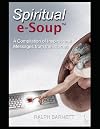
The subtitle for Ralph Barnett's "Spiritual e-Soup" was promising: "A Compilation of Inspirational Messages from the Internet." Reading the book I quickly discovered that it is not for me. The author originally wanted to cluster the quotes around their themes, but gave up. The lack of organization is a major drawback for me in accessing, reading the book. Hundreds of short entries are following each other without any connection between them.
I assume this kind of books with inspirational messages are best used if one just pops up the book when in need of spiritual stimulus. Even for this use it would be useful to have chapters. I realize that would reduce the chance for an unexpected thought. Still, if you are mourning you need different kind of help then when you are celebrating the birth of a child or experiencing midlife crisis. I consider it shear laziness from the author of not putting more effort in organizing.
Another part of the book I was missing was citations. It would have been much appreciated it the author did some homework and explore where show more his quotes came from. I recognized half of them, but in the case of some of the other half I would have enjoyed knowing more about the source. As a person used to academic books this bothered me. Again, I understand that citation is not needed for an inspirational quotes books. It's something though I am used by now and withouth I feel a sense of lacking.
As I mentioned I was familiar with about half of the quotes. Probably because I have been online for almost two decades (got my first email address in 1992) and these quotes have been making their circles on the internet at least since then. So my expectation of reading new messages was not met. For someone who doesn't know the quotes this would not be a problem; for me it was a source of slight disappointment.
Nothing in the the title or in the blurb about the book suggested that it was written from a conservative Christian perspective. Had I known that, before jumping into it it would have caused less shock. I could have easily accepted that the religious tenets this book might help to strengthen are not mine. I love reading about what people in other religion believe in. But the misogynist messages and conservative values in the social realm of the quotes were harder for me to digest.
To summarize it was an unorganized book, collected for conservative Christians, without attribution of sources, containing lots of content I read decades ago. Not my cup of tea (or bowl of soup), but some might find it inspirational. show less
The subtitle for Ralph Barnett's "Spiritual e-Soup" was promising: "A Compilation of Inspirational Messages from the Internet." Reading the book I quickly discovered that it is not for me. The author originally wanted to cluster the quotes around their themes, but gave up. The lack of organization is a major drawback for me in accessing, reading the book. Hundreds of short entries are following each other without any connection between them.
I assume this kind of books with inspirational messages are best used if one just pops up the book when in need of spiritual stimulus. Even for this use it would be useful to have chapters. I realize that would reduce the chance for an unexpected thought. Still, if you are mourning you need different kind of help then when you are celebrating the birth of a child or experiencing midlife crisis. I consider it shear laziness from the author of not putting more effort in organizing.
Another part of the book I was missing was citations. It would have been much appreciated it the author did some homework and explore where show more his quotes came from. I recognized half of them, but in the case of some of the other half I would have enjoyed knowing more about the source. As a person used to academic books this bothered me. Again, I understand that citation is not needed for an inspirational quotes books. It's something though I am used by now and withouth I feel a sense of lacking.
As I mentioned I was familiar with about half of the quotes. Probably because I have been online for almost two decades (got my first email address in 1992) and these quotes have been making their circles on the internet at least since then. So my expectation of reading new messages was not met. For someone who doesn't know the quotes this would not be a problem; for me it was a source of slight disappointment.
Nothing in the the title or in the blurb about the book suggested that it was written from a conservative Christian perspective. Had I known that, before jumping into it it would have caused less shock. I could have easily accepted that the religious tenets this book might help to strengthen are not mine. I love reading about what people in other religion believe in. But the misogynist messages and conservative values in the social realm of the quotes were harder for me to digest.
To summarize it was an unorganized book, collected for conservative Christians, without attribution of sources, containing lots of content I read decades ago. Not my cup of tea (or bowl of soup), but some might find it inspirational. show less
Acts of Faith: The Story of an American Muslim, in the Struggle for the Soul of a Generation by Eboo Patel
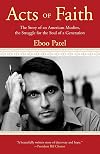
If authenticity would be a race Eboo Patel would probably win in his category. This was the main reason I loved his "Acts of Faith: The Story of an American Muslim, in the Struggle for the Soul of a Generation." He had a simple thesis that he deduced from his own life experiences and he lived up to the principle built around it. It also helps that I can wholeheartedly agree with his idea. It was, as stated on page XVI of the Introduction:
This is a book about how some young people become champion of religious pluralism while others become the foot soldiers of religious totalitarianism. Its thesis is simple: influences matter, programs count, mentors make a difference, institutions leave their mark.
The book is an autobiography of a "life examined", which is worth living and already made a difference. The introduction states the thesis and supports it with a few examples then the eight chapters follow Patel's story as he learned and acted the lessons of his life, one building onto another. In the first chapter he covers his high school years and activities with the YMCA Leaders School. The lesson he internalized then (page 16)
The YMCA's secret is simple; it stems from a genuine love of young people. The conventional wisdom is that young people are scrambling for their place in the world. The YMCA knows that, deep down, young people need more than just a place.[...] It's not a place young people need so much as a role, an opportunity to be powerful, a chance to shape the show more world.
In the second chapter he goes on discovering and building his identity, including his first relationship, with Lisa, a practicing Mormon girl. In the third chapter he encounters identity politics in college and how it segregates students based on ethnicity and/or race. He learns a lot from his college sweetheart, Sarah, a Jewish woman, not just about Judaism, but also what religion can mean for a person. Next, in the fourth chapter he starts doing some real world activism, inspired by friends, mentors and readings. (Side note: The latter included Wendy Kopp's (the founder of Teach for America) "One day all children...". I received a copy at an event where Ms. Kopp spoke several years ago. Now I am inspired to read it. If Patel recommend sit I am more interested in it than I was beforehand.)
The fifth chapter covers Patel's experienced in India, where he reconnected with the American part of his identity. It's also hear that she learns about the compassionate part of his Muslim and family heritage: his grandmother has been helping abused women for decades, of which he knew nothing of. Why does she do it: "That's what Muslims do." In the sixth chapter he discovers what Islam can mean for him. By the end he discovers his calling: starting an interfaith youth movement: the Interfaith Youth Core. In the last two chapters he builds them and finds the love of his life, with whom he can build a Muslim life as not just their values, but their religions are also aligned.
As I was reading the book, I felt that he is the kind of person I could be friends with.There are lots of similarities between his life learning life experience and mine. The relatively late discovery of religion, the learning through relationships with women of different faith, but ultimately ending with one of the same, the appreciation of multiculturalism and multi-religion, the inspiring effect of the change of scenery or country. There are significant differences between us, of course but they are easier to spot.
I recommend this book if you want to be inspired about youth, religion and understanding. It is written in an easy to follow style, while filled with deep self-reflection. I wish I would have the persistence to think and write the way Patel did. show less
This is a book about how some young people become champion of religious pluralism while others become the foot soldiers of religious totalitarianism. Its thesis is simple: influences matter, programs count, mentors make a difference, institutions leave their mark.
The book is an autobiography of a "life examined", which is worth living and already made a difference. The introduction states the thesis and supports it with a few examples then the eight chapters follow Patel's story as he learned and acted the lessons of his life, one building onto another. In the first chapter he covers his high school years and activities with the YMCA Leaders School. The lesson he internalized then (page 16)
The YMCA's secret is simple; it stems from a genuine love of young people. The conventional wisdom is that young people are scrambling for their place in the world. The YMCA knows that, deep down, young people need more than just a place.[...] It's not a place young people need so much as a role, an opportunity to be powerful, a chance to shape the show more world.
In the second chapter he goes on discovering and building his identity, including his first relationship, with Lisa, a practicing Mormon girl. In the third chapter he encounters identity politics in college and how it segregates students based on ethnicity and/or race. He learns a lot from his college sweetheart, Sarah, a Jewish woman, not just about Judaism, but also what religion can mean for a person. Next, in the fourth chapter he starts doing some real world activism, inspired by friends, mentors and readings. (Side note: The latter included Wendy Kopp's (the founder of Teach for America) "One day all children...". I received a copy at an event where Ms. Kopp spoke several years ago. Now I am inspired to read it. If Patel recommend sit I am more interested in it than I was beforehand.)
The fifth chapter covers Patel's experienced in India, where he reconnected with the American part of his identity. It's also hear that she learns about the compassionate part of his Muslim and family heritage: his grandmother has been helping abused women for decades, of which he knew nothing of. Why does she do it: "That's what Muslims do." In the sixth chapter he discovers what Islam can mean for him. By the end he discovers his calling: starting an interfaith youth movement: the Interfaith Youth Core. In the last two chapters he builds them and finds the love of his life, with whom he can build a Muslim life as not just their values, but their religions are also aligned.
As I was reading the book, I felt that he is the kind of person I could be friends with.There are lots of similarities between his life learning life experience and mine. The relatively late discovery of religion, the learning through relationships with women of different faith, but ultimately ending with one of the same, the appreciation of multiculturalism and multi-religion, the inspiring effect of the change of scenery or country. There are significant differences between us, of course but they are easier to spot.
I recommend this book if you want to be inspired about youth, religion and understanding. It is written in an easy to follow style, while filled with deep self-reflection. I wish I would have the persistence to think and write the way Patel did. show less
For somebody like me, who only read stories of and from Rabbi Nachman of Breslov (or Bratslav) the slim volume of "Outpouring of the Soul" is an excellent introduction to his theology and practice of religion. The subtitle of the book is "Rabbi Nahcman's Path in Meditation." The book was published (in English) in 1980 by the Breslov Research Institute, one year after the Institute was founded. The 72 numbered pages of the book includes,
The 52 lessons, the essence of the book range from 4 page length(#1) to 2 lines. (E.g. #21: "After true contrition comes joy. A sign of true contrition is when one is later truly happy.") Each entry is numbered, has a title and for most, the original source is cited. A few entries are made up from multiple sections from various sources (1, 2, 14, 17, 27, 28, 30, 39, 42, 48.
With the above I am done with the easy part of the review, where I describe the book's format and structure. The more interesting part is of course the content itself. That's where I have a bit if a difficulty. One obstacle is that it is all written in third person masculine: he must/should do this or that. I am male, so I can identify with that, but I also feel that this non-gender neutral language is excluding half of humanity. When I am reading such lovely and tempting thoughts the lack of harmony between the meaning and this exclusion bothers me.
My other challenge is that as I have never practiced meditation this is all reads as a theory to me. The ideas here presented as guidelines on how/why/when meditate, therefore reading it as literature is not its intended use. But that's they way I accessed it and as such it reads a bit of a closed indoctrination system. Closed, because looking at it from the outside it seems to have circular logic: If you meditate you will be happier, which will make you want to meditate more. Meditation is presented both as a mean and as an end. Nevertheless I found the language and the concepts tempting. I experienced inner calmness and relaxation just reading about the topic. It is clear that both the author and the translator had enormous charisma and skill with words.
But the book didn't convince me to change my lifestyle. What it did was to awaken my curiosity to ask for more. So I will periodically return to this book to read a page or two to "meditate" on. The book is an excellent resource for seekers because of its modular structure. I just need more time to internalize what I can from it. Reading from cover to cover, the way I did it is not recommended. show less
- Publisher's preface: written by Chaim Kramer, explaining why Rabbi Alter of Tepik "gathered all the writings of Rabbi Nachman and his disciple, Rabbi Nathan of Nemerov, that dealt with meditation (hithbodeduth) and published them in a single book... Hishtapchuth HaNefesh ("Outpouring of the Soul").
- Translator's introduction: written by Aryeh Kaplan, essentially a short history of the development of Jewish meditation and its connection to prayer. (Sidenote: In the edition I read the date of this introduction is printed as 5780 (2020) and not as the correct 5740 (1980).)
- Author's introduction: a 12 page long essay on the history and need for prayer/meditation. As is customary in Jewish rabbinic literature the current ideas were put in the context as promoted and practiced by earlier authoritative figures. In this case Rabbi Nachman describes how Adam, Noah, Abraham, Isaac, Jacob, Jacob's sons, Moses, Samson, Elisa, Daniel, Ezra and the Baal Shem Tov all meditated. Why bother?: "He will learn how to ask God for all that he needs, both
- materially and spiritually. This is the only way that one can receive divine help at all times."
- The bulk of the book (42 pages) contain 52 lessons, stories, practices or outpouring if you wish.
- The book concludes with a fairly comprehensive index for such a short book, a list of biblical quotations, and a list of the publisher's other books.
The 52 lessons, the essence of the book range from 4 page length(#1) to 2 lines. (E.g. #21: "After true contrition comes joy. A sign of true contrition is when one is later truly happy.") Each entry is numbered, has a title and for most, the original source is cited. A few entries are made up from multiple sections from various sources (1, 2, 14, 17, 27, 28, 30, 39, 42, 48.
With the above I am done with the easy part of the review, where I describe the book's format and structure. The more interesting part is of course the content itself. That's where I have a bit if a difficulty. One obstacle is that it is all written in third person masculine: he must/should do this or that. I am male, so I can identify with that, but I also feel that this non-gender neutral language is excluding half of humanity. When I am reading such lovely and tempting thoughts the lack of harmony between the meaning and this exclusion bothers me.
My other challenge is that as I have never practiced meditation this is all reads as a theory to me. The ideas here presented as guidelines on how/why/when meditate, therefore reading it as literature is not its intended use. But that's they way I accessed it and as such it reads a bit of a closed indoctrination system. Closed, because looking at it from the outside it seems to have circular logic: If you meditate you will be happier, which will make you want to meditate more. Meditation is presented both as a mean and as an end. Nevertheless I found the language and the concepts tempting. I experienced inner calmness and relaxation just reading about the topic. It is clear that both the author and the translator had enormous charisma and skill with words.
But the book didn't convince me to change my lifestyle. What it did was to awaken my curiosity to ask for more. So I will periodically return to this book to read a page or two to "meditate" on. The book is an excellent resource for seekers because of its modular structure. I just need more time to internalize what I can from it. Reading from cover to cover, the way I did it is not recommended. show less
I loved the concept: Interesting stories from Jewish history, each told on one or two pages, in the style of a grandfather telling stories to grandchildren. In some regards Jack Cooper's "Who Knew?! Unusual Stories in Jewish History" accomplished this goal, but in other regards it could have been much better. The structure of the book was great: combining chronological and geographical headings made sense as this way the book has a section on biblical times, Western Europe, Central Europe and the East (although I would have separated these into two sections), the Holocaust, America and Israel. I also found the selection and content of the stories wide-ranging enough from the obscure to the pivotal. Furthermore they measured high enough on the scale of being interesting.
Where the book felt short was in accuracy and style. I wish the book had a historian AND a scholar of Judaism editor. I recognize that the author has breadth of knowledge and taught Jewish history. But the depth of his expertise didn't always measure up and teaching at a day school does not require the highest level of scholarship. (FWIW: He taught English at higher levels, but not History.)
To end on a positive note: I really appreciated the footnotes. Pop-science or pop-history books often omit this crucial detail. But Cooper identified his sources, sometimes even 7 of them for a single entry. This makes it easier to learn more about any of his topics, for those who are inclined.
BTW: If you order the book show more from the publisher, Gefen, this week (and if your order is large enough) you can get it shipped free within the US and Israel. show less
Where the book felt short was in accuracy and style. I wish the book had a historian AND a scholar of Judaism editor. I recognize that the author has breadth of knowledge and taught Jewish history. But the depth of his expertise didn't always measure up and teaching at a day school does not require the highest level of scholarship. (FWIW: He taught English at higher levels, but not History.)
To end on a positive note: I really appreciated the footnotes. Pop-science or pop-history books often omit this crucial detail. But Cooper identified his sources, sometimes even 7 of them for a single entry. This makes it easier to learn more about any of his topics, for those who are inclined.
BTW: If you order the book show more from the publisher, Gefen, this week (and if your order is large enough) you can get it shipped free within the US and Israel. show less
 This review was written for LibraryThing Early Reviewers.
Too Much of Nothing by Michael S. Moore is a ghost story written from the perspective of the ghost. He died in a car accident several years before the time of the writing. We slowly learn about his life, likes and dislikes and eventually about the circumstances of his death.
I stumbled upon the book as I was browsing the science fiction section of the local public library. I never heard of the author, but I immediately decided to borrow it as I love books that mixes various interests of mine. The book was categorized as sci-fi one of my favorite genre. (I don't read too many ghost stories though as I don't consider them belonging to the core of sci-fi literature.) The protagonist would be more or less my age, which means he was a teenager during the mid 1980's. Therefore he was immersed in the temporary youth culture and as I noticed there were a lot of overlaps in our taste in music and films. Some of his experiences described in the book were similar to mine, although I grew up in a rather different part of the world: Eastern Europe vs. Los Angeles.
The above points would have been enough to convince me to read the book, but the fact that it also contains musing about the Zohar, the central text of Kabbalah (Jewish mysticism) made it an instant need. I was not disappointed in this last aspect. Most of the six major parts open with a discourse about how Kabbalah looks upon the soul of people. The ghost used to take classes in preparation for his bar-mitzvah with an show more esoterically inclined rabbi. He learned from the teacher about the Zohar and the three levels of the souls. Here is a short quote from page 6:
Having this in the back of the mind of a ghost as he tells his life story makes the whole book a twisted existential drama. As the story progresses so does his understanding of the above concepts gets more and more nuanced in particular how it relates to his own existence as a non-material entity. This was the most interesting part of the book for me. The plot itself wasn't too original, but the perspective and commentary around it made it worth reading. That and the description of the teenage life in Los Angeles, which made me feel that I grew up I an alternative reality of it.
Nevertheless I don't really know who to recommend the book. Kabbalah enthusiast may find too little in their area of interest in the book, ghost story aficionados may fin the story too similar to other books in the genre, teenagers of the 1980's may not find enough of their own youth in it. For me, as a combination of these it was a fun read.
P.s. As you can read on the author's site the title comes from a Bob Dylan song. show less
I stumbled upon the book as I was browsing the science fiction section of the local public library. I never heard of the author, but I immediately decided to borrow it as I love books that mixes various interests of mine. The book was categorized as sci-fi one of my favorite genre. (I don't read too many ghost stories though as I don't consider them belonging to the core of sci-fi literature.) The protagonist would be more or less my age, which means he was a teenager during the mid 1980's. Therefore he was immersed in the temporary youth culture and as I noticed there were a lot of overlaps in our taste in music and films. Some of his experiences described in the book were similar to mine, although I grew up in a rather different part of the world: Eastern Europe vs. Los Angeles.
The above points would have been enough to convince me to read the book, but the fact that it also contains musing about the Zohar, the central text of Kabbalah (Jewish mysticism) made it an instant need. I was not disappointed in this last aspect. Most of the six major parts open with a discourse about how Kabbalah looks upon the soul of people. The ghost used to take classes in preparation for his bar-mitzvah with an show more esoterically inclined rabbi. He learned from the teacher about the Zohar and the three levels of the souls. Here is a short quote from page 6:
He [the rabbi] was obsessed with the Zohar's three levels of the soul—nefesh, ruach, and neshamah—which he believed corresponded to measurable wavelengths, or levels of consciousness, in the brain. The Zohar says the neshamah belongs to God and goes to God when the body fails. The ruach is a kind of umbilical cord or conductor for the breath of life. And the nefesh is the human shape or spirit that wanders the world after death. Rabbi Gelanter thought these levels of the soul ruled certain functions of the mind. (Nefesh felt the pleasure and pain, ruach chose between good and evil, neshamah engaged in philosophy and Torah study, and so on.) The point of making these distinctions was to understand what the self consisted of, and nefesh was just the tip of an island that plunged for miles into the sea.
Having this in the back of the mind of a ghost as he tells his life story makes the whole book a twisted existential drama. As the story progresses so does his understanding of the above concepts gets more and more nuanced in particular how it relates to his own existence as a non-material entity. This was the most interesting part of the book for me. The plot itself wasn't too original, but the perspective and commentary around it made it worth reading. That and the description of the teenage life in Los Angeles, which made me feel that I grew up I an alternative reality of it.
Nevertheless I don't really know who to recommend the book. Kabbalah enthusiast may find too little in their area of interest in the book, ghost story aficionados may fin the story too similar to other books in the genre, teenagers of the 1980's may not find enough of their own youth in it. For me, as a combination of these it was a fun read.
P.s. As you can read on the author's site the title comes from a Bob Dylan song. show less
Imagine a book that lists and proposes a solution for most current and recent geopolitical conflicts; that covers a decade or so of global history; that provides insight for most regions of the world; that proves that the author is familiar with dozens of cultures and subcultures, that thinks outside the urban/rural terrain and marine divide; that paints an optimistic worldview for the future where all nations work together; that introduces dozens of interesting characters--world leaders and ordinary citizens--through their own words; that mixes current and future technologies with natural ease.
Sounds to good to be true? It almost is. All of the above are true for Max Brooks' “World War Z: An Oral History of the Zombie War”, but there is a caveat. This amazing literary accomplishments comes at the cost of zombies killing most of the human population. I read this book the same week I watched the first two seasons of the BBC show title “Survivors.” It was slightly confusing as both takes the premise of a virus coming from the remote regions of China exterminating majority of mankind. The similarities end there though. As the subtitle suggests the book is in the format of an oral history, meaning that each chapter is a mostly self-guided and barely edited interview. That's how it feels, but of course it is all fiction.
Brooks achieved the fun, but not easy goal of creating individual, authentic sounding voices in short vignettes. This variety is what I enjoyed most in show more his book. I also liked how consecutive chapters had references back and forth to each other. The weaving of the story was much more interesting this way than it would have been with a series of disjointed monologues. I had to use my mind to recognize these connections and piece together the gaps. I have to admit, although I am not a big fan of zombie stories in general, but this one blew my mind.
Finally I want to mention that I am in awe of the scope of the book. Everything I mentioned I the first paragraph is there and so much more. Even if you don't like gore you should check out this book for insights about the Middle East conflict, or the North Korean issue, or on Japanese hegemony or on Chinese military practice, or on European castles or on urban warfare. There are lots of other areas where Brooks showed unexpected expertise. Just for its scope it's worth reading it. show less
Sounds to good to be true? It almost is. All of the above are true for Max Brooks' “World War Z: An Oral History of the Zombie War”, but there is a caveat. This amazing literary accomplishments comes at the cost of zombies killing most of the human population. I read this book the same week I watched the first two seasons of the BBC show title “Survivors.” It was slightly confusing as both takes the premise of a virus coming from the remote regions of China exterminating majority of mankind. The similarities end there though. As the subtitle suggests the book is in the format of an oral history, meaning that each chapter is a mostly self-guided and barely edited interview. That's how it feels, but of course it is all fiction.
Brooks achieved the fun, but not easy goal of creating individual, authentic sounding voices in short vignettes. This variety is what I enjoyed most in show more his book. I also liked how consecutive chapters had references back and forth to each other. The weaving of the story was much more interesting this way than it would have been with a series of disjointed monologues. I had to use my mind to recognize these connections and piece together the gaps. I have to admit, although I am not a big fan of zombie stories in general, but this one blew my mind.
Finally I want to mention that I am in awe of the scope of the book. Everything I mentioned I the first paragraph is there and so much more. Even if you don't like gore you should check out this book for insights about the Middle East conflict, or the North Korean issue, or on Japanese hegemony or on Chinese military practice, or on European castles or on urban warfare. There are lots of other areas where Brooks showed unexpected expertise. Just for its scope it's worth reading it. show less

We, Hungarians love to BIRG (bask in reflected glory) and also have a slight superiority and inferiority complex at the same time. At least that's how I would explain that Hungarians keep track of famous Hungarians, people who are well-known outside the borders of our small country. We like to think that, considering the Hungarian population to that of the world's, Hungarians contributed a disproportionately more to the development, art and sports of the world than one would expect. This idea fills us with pride. I certainly felt that pride ever since I was a kid and was told that the name “Biro” is world famous and that's how everyone refers to the basic ball-point pen.
“Biro” is the family name of the Hungarian who invented this device. As a kid it was confusing for me though that the logo I saw on these pens said “BIC” and not “Biro.” Later I learned and understood that it meant “Biro Crayon”. Imagine my dismay when decades later my belief was shaken as in the US nobody I met was familiar with the name/brand “Biro” or the word “biro-pen” or “biron.” (A Hungarian encyclopedia claims that these are the names the pen is known in English and French speaking countries respectively.) I suspect that my grandfather's information, who worked in London 50 years ago for three years, was either outdated by now or the fame he informed me of was limited to the UK only. Either way the pens and the company are still around. You use(d) it too show more regularly.
László József Bíró wrote an autobiography by the title “Csendes forradalom: a golyóstoll regénye” (Quiet revolution: the novel of the ball-point pen). I read it in Hungarian, (translated by Tibor Kóródy and Lajos Pálfi), not in its original Spanish. Why, you may ask, did a Hungarian write an autobiography in Spanish? The answer points us to the irony of aforementioned BIRG. Most famous Hungarians we keep track of did the deeds they are known for in foreign lands. The often unacknowledged tragedy is that for any number of reasons they couldn't flourish in their original homeland. Reasons include the two world wars, but also envy and malice from other Hungarians. Mr. Biro was of Jewish origins and his life, like other Jews, was being made more and more difficult and insecure by stringent restrictions and anti-Jewish laws before World War II. In 1938 he converted to Protestantism and later that year he emigrated with his family to Paris. Two years later he moved to Argentina, where he lived for the rest of his life.
Ladislao José Biro as he was known for his last 45 years (he passed away in 1985) published the Spanish version of his book in 1969, while the Hungarian translation appeared in 1975. Thus it obviously doesn't cover his later years. But he saw plenty of action in his early years to write about. He worked as a painter, sculptor, accountant and journalist. These fields sound quite far from each other but as he told the story one thing led to another in a natural succession. You could also put a pessimistic spin on it saying that he did whatever he could to survive in hard times. He thought in more positive terms and let the readers believe that he was just drive to try new things and explore his skills and talents. He certainly had many, although I have never read any autobiographies where the protagonist wouldn't be a master of life in one way or another. Nevertheless his adventures as an artist (of life) provided a fun reading and made the prewar era look quite exciting.
It was his work as a journalist that triggered the idea to create a writing device that could be used anywhere, under many conditions without leaking ink. He devotes a considerable amount of time/space of the 200 page book to the engineering challenges of the job and how he and his friends overcame them. He also goes at length explaining his legal difficulties after he lost ownership of the patent and huge amount of money with it. Eventually he got vindicated, but this part of the book sounded much more bitter than the rest. As a whole though the book was written with good humor and full of funny anecdotes.
Biro also explained the title of his book. If you think about it you have to agree with him that having a device that allows you to write anywhere on a peace of paper changed our lives profoundly. In combination with notebooks and post-it notes our capacity to move from an oral culture to a written one expanded. You may argue that by now, with the help of smart phones, we stepped over to the next phase of this (r)evolution. Others would say that these devious devices rob us from our capacity to develop both our short and long term memory. I agree with both statement. I do not know where this shift from verbal to written may lead us on the long term, but I thank Mr. Biro for his invention as it made my life much easier. And now I know how it came about. show less
“Biro” is the family name of the Hungarian who invented this device. As a kid it was confusing for me though that the logo I saw on these pens said “BIC” and not “Biro.” Later I learned and understood that it meant “Biro Crayon”. Imagine my dismay when decades later my belief was shaken as in the US nobody I met was familiar with the name/brand “Biro” or the word “biro-pen” or “biron.” (A Hungarian encyclopedia claims that these are the names the pen is known in English and French speaking countries respectively.) I suspect that my grandfather's information, who worked in London 50 years ago for three years, was either outdated by now or the fame he informed me of was limited to the UK only. Either way the pens and the company are still around. You use(d) it too show more regularly.
László József Bíró wrote an autobiography by the title “Csendes forradalom: a golyóstoll regénye” (Quiet revolution: the novel of the ball-point pen). I read it in Hungarian, (translated by Tibor Kóródy and Lajos Pálfi), not in its original Spanish. Why, you may ask, did a Hungarian write an autobiography in Spanish? The answer points us to the irony of aforementioned BIRG. Most famous Hungarians we keep track of did the deeds they are known for in foreign lands. The often unacknowledged tragedy is that for any number of reasons they couldn't flourish in their original homeland. Reasons include the two world wars, but also envy and malice from other Hungarians. Mr. Biro was of Jewish origins and his life, like other Jews, was being made more and more difficult and insecure by stringent restrictions and anti-Jewish laws before World War II. In 1938 he converted to Protestantism and later that year he emigrated with his family to Paris. Two years later he moved to Argentina, where he lived for the rest of his life.
Ladislao José Biro as he was known for his last 45 years (he passed away in 1985) published the Spanish version of his book in 1969, while the Hungarian translation appeared in 1975. Thus it obviously doesn't cover his later years. But he saw plenty of action in his early years to write about. He worked as a painter, sculptor, accountant and journalist. These fields sound quite far from each other but as he told the story one thing led to another in a natural succession. You could also put a pessimistic spin on it saying that he did whatever he could to survive in hard times. He thought in more positive terms and let the readers believe that he was just drive to try new things and explore his skills and talents. He certainly had many, although I have never read any autobiographies where the protagonist wouldn't be a master of life in one way or another. Nevertheless his adventures as an artist (of life) provided a fun reading and made the prewar era look quite exciting.
It was his work as a journalist that triggered the idea to create a writing device that could be used anywhere, under many conditions without leaking ink. He devotes a considerable amount of time/space of the 200 page book to the engineering challenges of the job and how he and his friends overcame them. He also goes at length explaining his legal difficulties after he lost ownership of the patent and huge amount of money with it. Eventually he got vindicated, but this part of the book sounded much more bitter than the rest. As a whole though the book was written with good humor and full of funny anecdotes.
Biro also explained the title of his book. If you think about it you have to agree with him that having a device that allows you to write anywhere on a peace of paper changed our lives profoundly. In combination with notebooks and post-it notes our capacity to move from an oral culture to a written one expanded. You may argue that by now, with the help of smart phones, we stepped over to the next phase of this (r)evolution. Others would say that these devious devices rob us from our capacity to develop both our short and long term memory. I agree with both statement. I do not know where this shift from verbal to written may lead us on the long term, but I thank Mr. Biro for his invention as it made my life much easier. And now I know how it came about. show less
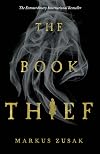
As of this writing there are 747 review/reflection of Markus Zusak's “The Book Thief” at LibraryThing.com and it is in the library of 11876 people. What else can I say that wasn't already said? Probably not much. So here are just a few basic bullet points of my impressions:
These are the main points I recall now, 6 weeks after I finished the book. It was a unique both in its style and in its subject matter. A version of the latter having been covered by thousands of books in the past it is quite a feat. I am glad I read it.
Enjoy an interview with the author. show less
- The idea of having a compassionate death as the narrator was surprising, felt gimmicky, but ultimately found useful.
- The typologically different (boldfaced and centered) lines representing Death's thoughts were also effective in the sense that they stopped the flow of the reading long enough to elicit a separate reaction.
- The page numbers weer printed in some barely legible distraught font. That bothered me.
- The protagonist girl, the book thief herself, had great character development; really enjoyed how she evolved from being abandoned, to being the subject of tough love, to being taught reading and becoming the protector of a man hiding in their basement.
- I loved the idea of painting over Hitler's book with white and creating a new and loving story on the pages. I didn't like that the palimpsest showed that the book used was an English version of Mein Kampf and not German. This minor detailed caused its credibility in my eyes.
- I liked how the accordion carried over multiple families and music literally meant life and livelihood.
- I was a bit confused about the story within the story of the man who stood over. But even my confusion was a good one, because it made me wonder what it might mean.
- I
- found it interesting that the publisher decided it should be a book for teenagers and marketed as such. I have no problems of them reading it. Indeed the juxtaposition of the life of an 11 year old during the war to that of teens in today's Western society will teach them important lessons about themselves. But the book is great for adults too.
- I wholeheartedly agree with the book's message that words have tremendous power. They can, were, are and will be used both for good and evil.
These are the main points I recall now, 6 weeks after I finished the book. It was a unique both in its style and in its subject matter. A version of the latter having been covered by thousands of books in the past it is quite a feat. I am glad I read it.
Enjoy an interview with the author. show less

There are various reasons an author can be considered a classic. If the author lived sufficiently long time ago and his works survived and still read that's one way. If the author writes about universal themes in a way that 's value and/or style is considered worthy by enough and the right people is another. I assumed that Mihály Babits (1883-1941) was a Hungarian classical writer because we studied him in high school. I vaguely remember some of his poems and this page that has citations from him in Hungarian certainly jumped my memory. But the only thing I read from him since I graduated high school was a novel (“A gólyakalifa”) that was published in English under the title “The nightmare.” (Here is a good summary and review in English about that intriguing book.)
My growing interest in the classics in general led me recently to seek out Hungarian classics. The only audiobook I found from him was a collection of short stories titled “Hatholdas rózsakert” (The six-acre rose garden) It contains 15 short stories, although the first one, bearing the title of the collection is more like novella considering its length. My overall impression and memory of the stories is that Babits managed to find and present unusual perspectives in all kinds of stories. Unusual in his case mean seeking out what makes a human tick, finding out what kind of thoughts and emotions drive people. Some of the stories are re imagination of older stories by other authors. As a result of show more this, his archaic, often biblical language, his focus on universal values (that do not depend on the circumstances) and care for all humans I think he can be categorized as neo-classical. Reading him made me realize that I like neo-classical literature. I certainly enjoyed both his form of prose and his insights. Here is a set of quick summaries:
These simple summaries of course overlook the nuances of the story by being short but will give you a sense of the book's themes. Before ending this post let me quote the end of Babits' most famous poem, “Before Easter”. (The translation is from here.) He wrote it in 1916, in the middle of the Great War and attest to his grand soul.
My growing interest in the classics in general led me recently to seek out Hungarian classics. The only audiobook I found from him was a collection of short stories titled “Hatholdas rózsakert” (The six-acre rose garden) It contains 15 short stories, although the first one, bearing the title of the collection is more like novella considering its length. My overall impression and memory of the stories is that Babits managed to find and present unusual perspectives in all kinds of stories. Unusual in his case mean seeking out what makes a human tick, finding out what kind of thoughts and emotions drive people. Some of the stories are re imagination of older stories by other authors. As a result of show more this, his archaic, often biblical language, his focus on universal values (that do not depend on the circumstances) and care for all humans I think he can be categorized as neo-classical. Reading him made me realize that I like neo-classical literature. I certainly enjoyed both his form of prose and his insights. Here is a set of quick summaries:
- Hatholdas rózsakert (The six-acre rose garden) – A young man in Gádoros, a small town almost gets married when a woman decides he will be her husband. He simply cannot say no and gets more and more entangled until it's almost too late.
- Harc az angyallal (Fighting the angel) – A doctor makes a visit to Angyal(Angel) a woman with a headache who is compared to an angel, an angel with a sword. She forces him to write a note in order to mislead and manipulate her husband.
- Kezdodik Éliás testvér hiteles története (The beginning of the authentic story of Brother Elijah) – a conversion story of a a monk, based on having a series of vision, told in the Hungarian equivalent language of the King James Bible.
- Az angyal (The angel) – Azaziel's, an angel's story soon after the creation, including his wanderings and struggles on Earth . He foresaw the future of his sons, also giants, born by his wife a human woman. It's also a musing about human nature, “they don't have big souls, but they live big lives.”
- Karácsonyi Madonna (Madonna at Christmas) – A member of a drunk company decides to check out the superstition whether Mary, Jesus' mother, really walks in the church on her own Christmas night in the church is true or ot, despite the belief that whoever sees her dies.
- Mese a Decameronból (Fairy tale from the Decameron) – Retelling of one of the naughty stories from Boccaccio's Decameron, where the originally simple and deceived woman is cast as a true believer who seeks and finds the miracle of salvation.
- Odysseus és a szirének (Odysseus and the sirens) - The encounter of Homer's Odysseus with the sirens makes Odysseus keep thinking about them and not his beloved but remote Penelope. The essay explores his self-inflicted pain and guilt that he asked himself to be tied down.
- Szerelem (Love) – A man's monologue to the object if his love with lots of going back and forth whether it would be better if he forces her to admit whether she loves him or not or whether it would be better not to force her in case she doesn't. Similarly should
- Dzsonni, a tengerész (Johnny, the sailor) – Johnny is a sailor whose job is to feed the ship's engine with coal is locked in the engine room during a battle and sinks and dies with the ships. The mermaid who are supposed to take care of people's bodies who die on the sea are bit confused as they cannot get to his.
- A Jézust kereso kisfiú (The boy looking for Jesus) – A boy was not allowed to go up to the mountain where Jesus gave his sermon. Jesus' disciples didn't want to have kids around as they disturbed their studying. By the end of the story he dies and goes straight to Jesus in Heaven. A modern exegesis on Mark 10:14: “Let the little children come to me, and do not hinder them, for the kingdom of God belongs to such as these.”
- A torony árnyéka (The tower's shadow) – A magical realist story about a tower with a shade that was at unnatural angle to protect a sick person. Told in a first person narrative by a skeptic.
- György, a favágó (George, the lumberjack) – A musing on beauty and ugliness, inside and outside. An ugly old lumberjack catches and hurts one of the young, beautiful (and cruel) women who kept teasing him
- János és Péter (John and Peter) – Fictional theological debate in the court of King Matthias (15th century, Hungary) about whether God can barf? It is also a reasoning why Peter was chosen as the Christ's governor and not John. (Peter learned from his mistakes.) The debate turns political and its real winner is a quiet observer, Beatrice, the King's Italian born wife.
- Tó a hegyek között (Lake in the mountains) – A man moves to the countryside from Budapest to seek solace after his fiancee died in a boating accident. There at a remote lake he encounters a maiden whose fiancee was also killed. He also realizes that the real reason he left the city was to avoid the guilt he felt when he encountered his fiancee's acquaintances. He felt guilty, because at the bottom of his heart he didn't want to marry the woman.
- Egy biztos nyár (A secure summer) – A middle class family places an ad for the radio looking for an au pair for their child for the summer during the Great Depression. The hundreds of responses from desperate young women overwhelm them. The story is about the unwanted and undeserved power we have over other people's lives.
These simple summaries of course overlook the nuances of the story by being short but will give you a sense of the book's themes. Before ending this post let me quote the end of Babits' most famous poem, “Before Easter”. (The translation is from here.) He wrote it in 1916, in the middle of the Great War and attest to his grand soul.
Oh peace! come peace!show less
we want peace again!
Let us breathe again!
The dead do not seek revenge,
the dead do not mind us.
Brothers, if we stay alive,
leave the past behind us.
Who was guilty? never ask,
plant the fields with flowers,
let us love and understand
this great world of ours:
some shall go their work to do,
some their dead to witness:
may God give us bread and wine,
drink up, to forgiveness!

In retrospect, besides the novel, I enjoyed two levels of bliss of ignorance while reading Ray Bradbury’s “A Graveyard for Lunatics”. First, I wasn’t aware that it was the middle book of a trilogy. Second, I didn’t recognize the people the book’s characters were based on, although I strongly suspected that “Fritz Wong” is about Fritz Lang. However not knowing the context of the book or the background of its people didn’t reduce the sheer fun it caused just reading it.
I found myself thinking that it was a simple guilty pleasure as I rarely read twisted mystery or detective novels. The characters and events were so over the top that I kept wondering whether it is a parody of a genre I am not familiar with. Couldn’t decide, but it didn’t matter, because by the time I dove into the question a whole new set of twists demanded my attention. If the measurements of a good detective stories include not being able to figure out whodunnit, not creating unrealistic coincidences to guide the storyline and getting caught up in the chase, then this novel is superb. If a good novel also supposed to have exciting turn of events, surprising yet theme appropriate locales then this book passes that test too.
It starts more or less on Halloween night of 1954. The unnamed narrator is a writer (and ex-autograph hunter) who just recently got his break in the film industry to write the script for horror B-movies. On that dark night he encounters the undead body of a film show more magnet next to studio in the cemetery. He and his friend (a special effect person specializing in gore) slowly solve the mystery of who that person was. In order to keep the mystery shrouded I will not share more of the storyline. Suffice to say it is a dark plot, similar to the kind the two friends were supposed to turn into movies. The noir feeling is so dark that the shadows of the book turned into hilarious for me. I couldn’t stop smiling or turning the pages as I read this fast paced thriller. show less
I found myself thinking that it was a simple guilty pleasure as I rarely read twisted mystery or detective novels. The characters and events were so over the top that I kept wondering whether it is a parody of a genre I am not familiar with. Couldn’t decide, but it didn’t matter, because by the time I dove into the question a whole new set of twists demanded my attention. If the measurements of a good detective stories include not being able to figure out whodunnit, not creating unrealistic coincidences to guide the storyline and getting caught up in the chase, then this novel is superb. If a good novel also supposed to have exciting turn of events, surprising yet theme appropriate locales then this book passes that test too.
It starts more or less on Halloween night of 1954. The unnamed narrator is a writer (and ex-autograph hunter) who just recently got his break in the film industry to write the script for horror B-movies. On that dark night he encounters the undead body of a film show more magnet next to studio in the cemetery. He and his friend (a special effect person specializing in gore) slowly solve the mystery of who that person was. In order to keep the mystery shrouded I will not share more of the storyline. Suffice to say it is a dark plot, similar to the kind the two friends were supposed to turn into movies. The noir feeling is so dark that the shadows of the book turned into hilarious for me. I couldn’t stop smiling or turning the pages as I read this fast paced thriller. show less