
Jacob Neusner (1932–2016)
Author of The Mishnah: A New Translation
About the Author
Jacob Neusner was born in Hartford, Connecticut on July 28, 1932. He received a bachelor's degree in history from Harvard University in 1953. He studied at the Jewish Theological Seminary in New York, where he was ordained a Conservative rabbi and received a master's degree in Hebrew letters in show more 1960. He also received a doctorate in religion from Columbia University. He taught at Dartmouth College, Brown University, and the University of South Florida before joining the religion department at Bard College in 1994. He retired from there in 2014. He was a religious historian and one of the world's foremost scholars of Jewish rabbinical texts. He published more than 900 books during his lifetime including A Life of Yohanan ben Zakkai; The Way of Torah: An Introduction to Judaism; Judaism: The Evidence of the Mishnah; Strangers at Home: The 'Holocaust,' Zionism, and American Judaism; Translating the Classics of Judaism: In Theory and in Practice; Why There Never Was a 'Talmud of Caesarea': Saul Lieberman's Mistakes; and Judaism: An Introduction. He wrote The Bible and Us: A Priest and a Rabbi Read Scripture Together with Andrew M. Greeley and A Rabbi Talks with Jesus with Cardinal Joseph Ratzinger, the future Pope Benedict XVI. He also edited and translated, with others, nearly the entirety of the Jewish rabbinical texts. He died on October 8, 2016 at the age of 84. (Bowker Author Biography) show less
Series
Works by Jacob Neusner
Messiah in Context: Israel's History and Destiny in Formative Judaism: The Foundations of Judaism: Method, Teleology, Doctrine (Part Two: Teleology) (1984) 70 copies
Midrash in Context: Exegesis in Formative Judaism: The Foundations of Judaism: Method, Teleology, Doctrine (Part One: Method) (1983) 59 copies
Invitation to Midrash: The Workings of Rabbinic Bible Interpretation : A Teaching Book (1989) 53 copies
The Life of Torah; Readings in the Jewish Religious Experience. (The Religious life of man series) (1974) 50 copies
Torah: From Scroll to Symbol in Formative Judaism (The Foundations of Judaism : method, teleology, doctrine) (1985) 44 copies
Scriptures of the Oral Torah: Sanctification and Salvation in the Sacred Books of Judaism (1987) 44 copies, 1 review
Judaism and Christianity in the Age of Constantine: History, Messiah, Israel, and the Initial Confrontation (Chicago Studies in the History of Judaism) (1987) 40 copies
Judaism And The Interpretation Of Scipture: Introduction To The Rabbinic Midrash (2004) 34 copies, 1 review
Writing With Scripture: The Authority and Uses of the Hebrew Bible in the Torah of Formative Judaism (1989) 31 copies
The Yerushalmi--The Talmud of the Land of Israel: An Introduction (Library of Classical Judaism) (1994) 31 copies
Sectors of American Judaism : Reform, Orthodoxy, Conservatism, and Reconstructionism (1975) 29 copies
The glory of God is intelligence: Four lectures on the role of intellect in Judaism (Religious studies monograph series) (1978) 27 copies
Rabbinic Literature & the New Testament: What We Cannot Show, We Do Not Know (1994) 25 copies, 1 review
Three Faiths, One God: The Formative Faith and Practice of Judaism, Christianity, and Islam (2002) 24 copies
Judaism's Theological Voice: The Melody of the Talmud (Chicago Studies in the History of Judaism) (1995) 23 copies
Revelation: The Torah and the Bible (Christianity & Judaism, the Formative Categories) (Christianity and Judaism, the Formative Categories) (1995) 22 copies
Judaism and Scripture: The Evidence of Leviticus Rabbah (Chicago Studies in the History of Judaism) (1986) 21 copies
Form-Analysis and Exegesis: A Fresh Approach to the Interpretation of Mishnah, With Special Reference to Mishnah-Tractate Makhshirin (1980) 21 copies
Transformations In Ancient Judaism: Textual Evidence For Creative Responses To Crisis (2004) 21 copies
Comparing Spiritualities: Formative Christianity and Judaism on Finding Life and Meeting Death (2000) — Author — 21 copies
The Social World of Formative Christianity and Judaism: Essays in Tribute to Howard Clarke Kee (1988) 20 copies
Understanding American Judaism: Toward the Description of a Modern Religion (Volume 1) (1982) 19 copies
Telling Tales: Making Sense of Christian and Judaic Nonsense : The Urgency and Basis for Judeo-Christian Dialogue (1993) 19 copies
Christianity, Judaism and Other Greco-Roman Cults: Studies for Morton Smith at Sixty (1975) 18 copies
The Theology of the Oral Torah: Revealing the Justice of God (Mcgill-Queen's Studies in the History of Religion) (1999) 18 copies
When Judaism and Christianity began : essays in memory of Anthony J. Saldarini (2004) — Editor — 18 copies
The Halakhah: Historical and Religious Perspectives (Brill Reference Library of Judaism.) (2002) 16 copies
The Mother of the Messiah in Judaism: The Book of Ruth (The Bible of Judaism Library) (1993) 15 copies, 1 review
Sifra: An Analytical Translation, Introduction, Vayyiqra Dibura Denedabah and Vayyiqra Dibura Dehobah (Neusner Titles In Brown Judaic Studies) (1985) 15 copies
Judaism in Late Antiquity, Part Two: Historical Syntheses (Handbook of Oriental Studies/Handbuch Der Orientalistik) (1995) 15 copies
Early Rabbinic Judaism: Historical studies in religion, literature and art (Studies in Judaism in late antiquity) (1975) 14 copies
The Rabbi and the synagogue 14 copies
Comparing Religious Traditions: Ethics of Family Life, Volume 1 (Comparing Religious Traditions) (2000) 13 copies
Judaism in society : the evidence of the Yerushalmi : toward the natural history of a religion (1983) 13 copies
The Talmud of the Land of Israel: A Complete Outline of the Second, Third, and Fourth Divisions, II. the Divisions Of Wo (1996) 13 copies
A History of the Mishnaic Law of Women, Part 5: The Mishnaic System of Women (Studies in Judaism in Late Antiquity) (1980) 13 copies
Uniting the Dual Torah: Sifra and the Problem of the Mishnah (Brown Judaic Studies) (1990) 12 copies
Judaism's Story of Creation: Scripture, Halakhah, Aggadah (Brill Reference Library of Judaism) (2000) 11 copies
Idea of Purity in Ancient Judaism: The Haskell Lectures 1972-73 (Studies in Judaism in late antiquity) (1973) 10 copies
The Rabbinic Traditions About the Pharisees Before 70, Part I: The Masters (Dove Studies in Bible, Language, and History) (1999) 10 copies
Understanding Seeking Faith: Essays on the Case of Judaism, Vol. I: Debates on Method, Reports of Results: Essays on the (1986) 9 copies
Religion, literature, and society in ancient Israel, formative Christianity and Judaism : Formative Judaism (1987) 9 copies
The Formation of the Babylonian Talmud: Studies in the Achievements of Late Nineteenth and Twentieth Century Historical Literary-Critical Research (2003) 9 copies, 1 review
Judaism and Story: The Evidence of The Fathers According to Rabbi Nathan (Chicago Studies in the History of Judaism) (1992) 8 copies
Genesis rabbah : the Judaic commentary to the book of Genesis : a new American translation (1985) 8 copies
The Body of Faith: Israel and the Church (Christianity and Judaism, the Formative Categories) (1996) 8 copies
The Midrash compilations of the sixth and seventh centuries : an introduction to the rhetorical, logical, and topical pr (1989) 8 copies
Forging a Common Future: Catholic, Judaic, and Protestant Relations for a New Millennium (1997) 8 copies
The Rabbinic Traditions about the Pharisees before 70: Part II. The Houses (Studies in the History of Judaism) (Pt. II) (1971) 7 copies
Jerusalem and Athens: The Congruity of Talmudic and Classical Philosophy (Supplements to the Journal for the Study of Judaism, V. 52) (1997) 7 copies
Classical Judaism: Torah, Learning, Virtue: An Anthology of the Mishnah, Talmud, and Midrash Volume Two: Learning (Realms of Judaism) (1993) 7 copies
Un rabino habla con Jesus/ A Rabbi Talks With Jesus (Ensayos/ Essays) (Spanish Edition) (2008) 7 copies
Judaism in Late Antiquity: Part One : The Literary and Archaeological Sources (Handbook of Oriental Studies/Handbuch Der Orientalistik) (1995) 7 copies
Christianity, Judaism and Other Greco-Roman Cults, Part 2: Early Christianity (Studies in Judaism in Late Antiquity) (1975) 6 copies
Scripture and Midrash in Judaism: Volume One (Judentum Und Umwelt: Realms of Judaism) (1994) 6 copies
The Talmud of the Land of Israel, Volume 27: Sotah (Chicago Studies in the History of Judaism) (1984) 6 copies
The Babylonian Talmud: A Translation And Commentary: Volume 21, Bekhorot, 'Arakhin, Temurah 6 copies
Judaism, Christianity, and Zoroastrianism in Talmudic Babylonia (Studies in Judaism) (1986) 6 copies
Religion and the political order : politics in classical and contemporary Christianity, Islam, and Judaism (2000) 6 copies
The Halakhah, An Encyclopaedia of the Law of Judaism: Vol 1 Between Israel and God Part A (Brill Reference Library of Ancient Judaism) (2000) 5 copies
Ancient Judaism and Modern Category Formation: "Judaism," "Midrash," "Messianism," and Canon in the Past Quarter-Century (1986) 5 copies
The Babylonian Talmud : a translation and commentary, Volume 18, Tractates Shebu'ot, Zebahim 5 copies
The Torah in the Talmud, A Taxonomy of the Uses of Scripture in the talmud (Studies in the History of Judaism) (1993) 5 copies
The Babylonian Talmud : a translation and commentary, Volume 11, Tratcates Sotah and Gittin 5 copies
Judaism in Late Antiquity: Where We Stand, Issues and Debates in Ancient Judaism (Handbook of Oriental Studies/Handbuch Der Orientalistik) (1999) 5 copies
Torah Revealed, Torah Fulfilled: Scriptural Laws In Formative Judaism and Earliest Christianity (2008) — Author — 5 copies
A history of the Mishnaic law of purities. Part 12, Tohorot, literary and historical problems (2007) 5 copies
A History of the Mishnaic Law of Purities, Part 16: Niddah: Literary and Historical Problems (Studies in Judaism in Late Antiquity) (2007) 4 copies
Encyclopedia of religious and philosophical writings in late antiquity : pagan, Judaic, Christian (2007) 4 copies
Halakhah: Inside the Walls of the Israelite Household : The Desacralization of the Household (Brill Reference Library of (2000) 4 copies
Formative Judaism: History, Hermeneutics, Law, and Religion--Ten Recent Essays (Academic Studies in the History of (2000) 4 copies
Sources of the transformation of Judaism : from philosophy to religion in the classics of Judaism : a reader (1993) 4 copies
JUD TRANS CAT: GOD, TORAH,ISRAEL 2 (Judaism Transcends Catastrophe : God, Torah, and Israel Beyond the Holocaust, Vol 2) (v. 2) (1995) 4 copies
The Talmud of the Land of Israel, Volume 12: Erubin (Chicago Studies in the History of Judaism) (1990) 4 copies
From Mishnah to Scripture : the problem of the unattributed saying with special reference to the division of purities (1984) 4 copies
The wonder-working lawyers of Talmudic Babylonia : the theory and practice of Judaism in its formative age (1987) 4 copies
The Talmud of Babylonia: An American Translation : Xxxii. Tractate Arakhin (Brown Judaic Studies) (1994) 4 copies
Judaism and Zoroastrianism at the dusk of late antiquity : how two ancient faiths wrote down their great traditions (1993) 3 copies
A History of the Mishnaic Law of Purities, Part 18: Zabim (Studies in Judaism in Late Antiquity) (2007) 3 copies
George W.E. Nickelsburg in perspective : an ongoing dialogue of learning [Vol 1] (2003) — Editor — 3 copies
Un rabino habla con Jesús : el libro con el que Benedicto XVI dialoga en Jesús de Nazaret (2008) 3 copies
Lamentations Rabbah: An Analytical Translation (Neusner Titles in Brown Judaic Studies) (1989) 3 copies
The Judaism behind the texts--the generative premises of rabbinic literature. I, The Mishnah (1994) 3 copies
The Judaism Behind the Texts: The Generative Premises of Rabbinic Literature, Vol. 2: Tosefta, Tractate Abot, and Earlier Midrash Compilations (1994) 3 copies
Studies in Judaism in Late Antiquity: A History of the Mishnaic Law of Purities: Volume 6, Part 13 (2007) 3 copies
How to Study the Bavli: The Language, Literatures, and Lessons of the Talmud of Babylonia (Studies in the History of Judaism) (1992) 3 copies
George W. E. Nickelsburg in Perspective: An Ongoing Dialogue of Learning (Supplements to the Journal for the Study of Judaism) (2 Volume Set) (2003) — Editor — 3 copies
Genesis Rabbah: The Judaic Commentary to the Book of Genesis, a New American Translation : Parashiyyot 68 Through... (Brown Judaic Studies) (1985) 3 copies
Academic Study of Judaism: Essays and Reflections, Third Series, Three Contexts of Jewish Learning (Third Series) (1980) 3 copies
George W.E. Nickelsburg in perspective : an ongoing dialogue of learning [Vol 2] (2003) — Editor — 3 copies
History of the Jews in the Second Through Seventh Century of the Common Era (Origins of Judaism) (1991) 3 copies
The Treasury of Judaism: A New Collection and Translation of Essential Texts (Studies in Judaism) (2008) 3 copies
A history of the Mishnaic law of Holy Things. P. 2, Menahot : translation and explanation (2024) 3 copies
The Talmud of the Land of Israel, Volume 1: Berakhot (Chicago Studies in the History of Judaism) (1990) 3 copies
The Talmud of the Land of Israel, Volume 11: Shabbat (Chicago Studies in the History of Judaism) (1991) 3 copies
Tradition as selectivity : scripture, Mishnah, Tosefta, and Midrash in the Talmud of Babylonia : the case of Tractate Ar (1990) 3 copies
The Talmud of the Land of Israel, Volume 34: Horayat and Niddah (Chicago Studies in the History of Judaism) (1982) 3 copies
The Talmud of the Land of Israel, Volume 33: Abodah Zarah (Chicago Studies in the History of Judaism) (1982) 3 copies
The Talmud of the Land of Israel, Volume 30: Baba Batra (Chicago Studies in the History of Judaism) (1984) 3 copies
Judaism Transcends Catastrophe: God, Torah, and Israel Beyond the Holocaust. Vol III: The Torah Teaches (1996) 3 copies
Judaism States Its Theology: The Talmudic Re-Presentation (Studies in the History of Judaism) (1993) 3 copies
Studies in Judaism in Late Antiquity: A History of the Mishnaic Law of Holy Things: Volume 30, Part 5 (1978) 3 copies
A history of the Mishnaic law of Holy Things. P. 4, Arakhin, Temurah : translation and explanation (1979) 3 copies
A History of the Mishnaic Law of Purities, Part 17: Makhshirin (Studies in Judaism in Late Antiquity) (2007) 3 copies
Collected Essays on Philosophy and on Judaism, Vol. 3 (Academic Studies in the History of Judaism) (2001) — Editor — 3 copies
The Talmud of the Land of Israel, Volume 16: Rosh Hashanah (Chicago Studies in the History of Judaism) (1988) 3 copies
The Golden Rule: Analytical Perspectives (Jacob Neusner Series: Religion/Social Order) (2008) 3 copies
Eternal Israel Endures (Judaism Transcends Catastrophe: God, Torah, and Israel Beyond the Holocaust) (v. 4) (1996) 3 copies
A history of the Mishnaic law of Holy Things. P. 1, Zebahim : translation and explanation (2007) 3 copies
A history of the Mishnaic law of Holy Things. P. 3, Hullin, Bekhorot : translation and explanation (1978) 3 copies
A History of the Mishnaic Law of Women, Part Two: Ketubot Translation and Explanation (Studies in Judaism in Late Antiqu (1980) 3 copies
Language as taxonomy : the rules for using Hebrew and Aramaic in the Babylonian Talmud (1991) 2 copies
The Talmud of the Land of Israel, Volume 13: Yerushalmi Pesahim (Chicago Studies in the History of Judaism) (1995) 2 copies
The Native Category - Formations of the Aggadah: The Earlier Midrash-Compilations (Studies in Judaism) (2000) 2 copies
Formative Judaism : religious, historical, and literary studies : third series : Torah, Pharisees, and rabbis (1983) 2 copies
A history of the Mishnaic law of women. translation and explanation / Part 3, Nedarim, Nazir (1980) 2 copies
The Talmud of the Land of Israel, Volume 29: Baba Mesia (Chicago Studies in the History of Judaism) (1984) 2 copies
Contemporary Views of Ancient Judaism: Disbutes and Debates (Global Academic Publishing) (2001) 2 copies
The Implicit Norms of Rabbinic Judaism: The Bedrock of a Classical Religion (Studies in Judaism) (2005) 2 copies
Songs of Songs Rabbah: An Analytical Translation, Vol. II (Neusner Titles in Brown Judaic Studies) (1989) 2 copies
Theological Dictionary of Rabbinic Judaism: Part One: Principal Theological Categories (Studies in Judaism) (Pt. 1) (2005) 2 copies
A History of the Mishnaic Law of Purities, Part 15: Niddah: Commentary (Studies in Judaism in Late Antiquity) (2007) 2 copies
A History of the Mishnaic Law of Purities, Part 14: Miqvaot: Literary and Historical Problems (Studies in Judaism in Late Antiquity) (2007) 2 copies
A History of the Mishnaic Law of Purities, Part 19: Tebul Yom and Yadayim (Studies in Judaism in Late Antiquity) (2007) 2 copies
Studies in Judaism in Late Antiquity: A History of the Mishnaic Law of Purities: Volume 6, Part 11 (2007) 2 copies
A History of the Mishnaic Law of Purities, Part 6: Negaim: Mishnah-Tosefta (Studies in Judaism in Late Antiquity) (2007) 2 copies
A History of the Mishnaic Law of Purities, Part 20: Uqsin (Studies in Judaism in Late Antiquity) (2007) 2 copies
Studies in Judaism in Late Antiquity: A History of the Mishnaic Law of Purities: Volume 6, Part 7 (2007) 2 copies
Studies in Judaism in Late Antiquity: A History of the Mishnaic Law of Purities: Volume 6, Part 5 (2007) 2 copies
Genesis Rabbah, Vol. III 2 copies
The Social Teaching of Rabbinic Judaism: Corporate Israel and the Individual Israelite (2001) 2 copies
The Talmud of the Land of Israel, Volume 20: Hagigah and Moed Qatan (Chicago Studies in the History of Judaism) (1986) 2 copies
Rabbinic Categories: Construction And Comparison (Supplements to the Journal for the Study of Judaism) (2005) 2 copies
Studies in Judaism in Late Antiquity: A History of the Mishnaic Law of Purities: Volume 6, Part 8 2 copies
The law of agriculture in the Mishnah and the Tosefta : translation, commentary, theology (2005) 2 copies
The Talmud of the Land of Israel, Volume 35: Introduction. Taxonomy (Chicago Studies in the History of Judaism) (1983) 2 copies
Studies in Judaism in Late Antiquity: A History of the Mishnaic Law of Purities: Volume 6, Part 3 2 copies
The Talmud of the Land of Israel, Volume 28: Baba Qamma (Chicago Studies in the History of Judaism) (1984) 2 copies
Judaism Transcends Catastrophe Vol. 5: Faith Seeking Understanding The Tasks of Theology in Twenty-First Century (1997) 2 copies
Studies in Judaism in Late Antiquity: A History of the Mishnaic Law of Purities: Volume 6, Part 2 2 copies
How Important Was the Destruction of the Second Temple in the Formation of Rabbinic Judaism? (Studies in Judaism) (2005) 2 copies
Talmud Torah: Ways to God's Presence through Learning: An Exercise in Practical Theology (Studies in Judaism) (2002) 2 copies
Studies in Judaism in Late Antiquity: A History of the Mishnaic Law of Purities: Volume 6, Part 4 2 copies
Judaism in Late Antiquity: Volume 3 2 copies
The Bavli that might have been : the Tosefta's theory of Mishnah commentary compared with the Bavli's (1991) 2 copies
The Literature of formative Judaism The Targumim and other Jewish writings in late antiquity (1991) 2 copies
The Halakhah: Between Israel and God : Transcendent Transactions: Where Heaven and Earth Intersect (Brill Reference Libr (2000) 2 copies
The Halakhah: Inside the Walls of the Israelite Household : At the Meeting of Time and Space (Brill Reference Library of (2000) 2 copies
Studies in Judaism in Late Antiquity: A History of the Mishnaic Law of Purities: Volume 6, Part 1 2 copies
The Talmud of the Land of Israel, Volume 18: Besah and Taanit (Chicago Studies in the History of Judaism) (1987) 2 copies
The Talmud of the Land of Israel, Volume 10: Orlah and Bikkurim (Chicago Studies in the History of Judaism) (1991) 2 copies
The Talmud of the Land of Israel, Volume 17: Sukkah (Chicago Studies in the History of Judaism) (1988) 2 copies
The Talmud of the Land of Israel, Volume 25: Gittin (Chicago Studies in the History of Judaism) (1985) 2 copies
The Rules of Composition of the Talmud of Babylonia (Studies in the History of Judaism) (1991) 2 copies
Form-analytical comparison in Rabbinic Judaism : structure and form in The fathers and The fathers according to Rabbi Nathan (1992) 2 copies
The Talmud of the Land of Israel, Volume 4: Kilayim (Chicago Studies in the History of Judaism) (1991) 2 copies
The Talmud of the Land of Israel, Volume 9: Hallah (Chicago Studies in the History of Judaism) (1991) 2 copies
The Talmud of the Land of Israel, Volume 5: Shebiit (Chicago Studies in the History of Judaism) (1991) 2 copies
The Talmud of the Land of Israel, Volume 6: Terumot (Chicago Studies in the History of Judaism) (1988) 2 copies
The Talmud of the Land of Israel, Volume 14: Yoma (Chicago Studies in the History of Judaism) (1991) 2 copies
The Talmud of the Land of Israel, Volume 15: Sheqalim (Chicago Studies in the History of Judaism) (1991) 2 copies
Comparative Hermeneutics of Rabbinic Judaism, The, Volume Eight: Why This, Not That? (Global Academic Publishing) (2000) 1 copy
MISHNAH NEW TRANSLATION 1 copy
Between time and eternity 1 copy
Judaism Transcends Catastrophe God, Torah, amd Israel Beyond the Holocaust. Volume 11- God Commands 1 copy
Lectures on Judaism in the Academy and in the Humanities (Studies in the History of Judaism) (1990) 1 copy
A History of the Mishnaic Law of Damages, Part 3: Baba Batra, Sanhedrin, Makkot (Studies in Judaism in Late Antiquity) (2007) 1 copy
Studying Classical Judaism 1 copy
From Ancient Israel to Modern Judaism: Intellect in Quest of Understanding Vol. 3: Essays in Honor of Marvin Fox (2017) 1 copy
Um Rabino Conversa com Jesus 1 copy
Religion and Law: How through Halakhah Judaism Sets Forth Its Theology and Philosophy (Studies in the History of Judaism) (1996) 1 copy
What Is Midrash? (Guides to Biblical Scholarship Old Testament Series) by Jacob Neusner (1987-11-02) 1 copy
Comparative Hermeneutics of Rabbinic Judaism, The, Volume Six: Tohorot through Uqsin (Global Academic Publishing) (2000) 1 copy
Pesiqta deRab Kahana - An Analytical Translation - Volume Two - Pisqaot fifteen Through Twenty-Eight 1 copy
Comparative Hermeneutics of Rabbinic Judaism, The, Volume Five: Seder Tohorot (Global Academic Publishing) (2000) 1 copy
Comparative Hermeneutics of Rabbinic Judaism, The, Volume Four: Seder Qodoshim (Global Academic Publishing) (2000) 1 copy
Comparative Hermeneutics of Rabbinic Judaism, The, Volume Three: Seder Niziqin (Global Academic Publishing) (2000) 1 copy
Comparative Hermeneutics of Rabbinic Judaism, The, Volume Two: Seder Mo'ed (Global Academic Publishing) (2000) 1 copy
The Comparative Hermeneutics of Rabbinic Judiasm Volume 1 (Global Academic Publishing Books) (2000) 1 copy
Extra-And Non-Documentary Writing in the Canon of Formative Judaism, Vol. 1: The Pointless Parallel (2001) 1 copy
The Mishnah Before 70 1 copy
Israel and Zion in American Judaism: The Zionist Fulfillment (Routledge Library Editions: Religion in America) (2023) 1 copy
Sifre to Numbers, Part I: An American Translation and Explanation (Brown Judaic Studies, No. 118, etc.) (1986) 1 copy
Sources and traditions: Types of Compositions in the Talmud of Babylonia (South Florida Studies in the History of Judaism) (1992) 1 copy
Rabbinic Narrative: A Documentary Perspective, Vol. Four: The Precedent and the Parable in Diachronic View (The Brill Re (2003) 1 copy
The Law Behind the Laws: The Bavli's Essencial Discourse (Studies in the History of Judaism) (1992) 1 copy
Studies in Judaism in Late Antiquity: A History of the Mishnaic Law of Appointed Times: Volume 34, Part 4 (1902) 1 copy
Studies in Judaism in Late Antiquity: A History of the Mishnaic Law of Damages: Volume 35, Part 3 (1984) 1 copy
The Talmud of the Land of Israel, Volume 23: Nedarim (Chicago Studies in the History of Judaism) (1985) 1 copy
The public side of learning : the political consequences of scholarship in the context of Judaism (1985) 1 copy
Neusner On Judaism: Literature (Ashgate Contemporary Thinkers on Religion: Collected Works) (Ashgate Contemporary Thinke (2004) 1 copy
Neusner On Judaism: Religion And Theology (Contemporary Thinkers on Religion) (Contemporary Thinkers on Religion) (Conte (2005) 1 copy
The Talmud of the Land of Israel, Volume 2: Yerushalmi Peah (Chicago Studies in the History of Judaism) (1990) 1 copy
The Talmud of the Land of Israel, Volume 3: Demai (Chicago Studies in the History of Judaism) (1993) 1 copy
The Talmud of the Land of Israel, Volume 7: Maaserot (Chicago Studies in the History of Judaism) (1987) 1 copy
The Talmud of the Land of Israel, Volume 8: Maaser Sheni (Chicago Studies in the History of Judaism) (1993) 1 copy
The Talmud of the Land of Israel, Volume 22: Ketubot (Chicago Studies in the History of Judaism) (1985) 1 copy
The Talmud of the Land of Israel, Volume 19: Megillah (Chicago Studies in the History of Judaism) (1987) 1 copy
The Talmud of the Land of Israel, Volume 21: Yebamot (Chicago Studies in the History of Judaism) (1986) 1 copy
The Talmud of the Land of Israel, Volume 24: Nazir (Chicago Studies in the History of Judaism) (1985) 1 copy
The Talmud of the Land of Israel, Volume 31: Sanhedrin and Makkot (Chicago Studies in the History of Judaism) (1984) 1 copy
The Talmud of the Land of Israel, vol 32: A Preliminary Translation and Explanation : Shebuot (Talmud of the Land of Isr (1983) 1 copy
The canonical history of ideas : the place of the so-called Tannaite Midrashim : Mekhilta attributed to R. Ishmael, Sifr (1990) 1 copy
Studies in Judaism in Late Antiquity: A History of the Mishnaic Law of Damages: Volume 35, Part 1 1 copy
The Mishnah : A new translation — Translator — 1 copy
The Mishnaic System of Appointed Times: History of the Mishnaic Law of Appointed Times (1903) 1 copy
The Unity of Rabbinic Discourse: Volume I: Aggadah in the Halakhah (Studies in Ancient Judaism) (2001) 1 copy
To the class of 1976 1 copy
A History of the Mishnaic Law of Purities, Part 9: Parah: Commentary (Studies in Judaism in Late Antiquity) (2007) 1 copy
The Talmud of the Land of Israel : a complete outline of the second, third, and fourth divisions. III, The Division of D (1996) 1 copy
History & Torah 1 copy
Common Ground 1 copy
The talmud as history 1 copy
Song of Songs Rabbah: An Analytical Translation, Vol. I (Neusner Titles in Brown Judaic Studies) (1990) 1 copy
Studies in Judaism in Late Antiquity: A History of the Mishnaic Law of Appointed Times: Volume 34, Part 1 (1981) 1 copy
The Talmudic Anthology in three Volumes: II. God: Issues of Theology (Judentum Und Umwelt: Realms of Judaism) (1995) 1 copy
'First Cleanse the Inside' 1 copy
A History of the Mishnaic Law of Women, Part 1: Yebamot: Translation and Explanation (Studies in Judaism in Late Antiquity) (2007) 1 copy
Studies in Judaism in Late Antiquity: A History of the Mishnaic Law of Appointed Times: Volume 34, Part 5 (1981) 1 copy
Associated Works
Everyman's Talmud: The Major Teachings of the Rabbinic Sages (1932) — Foreword, some editions — 1,038 copies, 10 reviews
By Study and Also by Faith: Essays in Honor of Hugh W. Nibley, Vol. 1 (1990) — Contributor — 49 copies
By Study and Also by Faith: Essays in Honor of Hugh W. Nibley, Vol. 2 (1990) — Contributor — 23 copies
The Missions Of James, Peter, And Paul: Tensions In Early Christianity (Supplements to Novum Testamentum) (2004) — Contributor — 21 copies
James the Just and Christian Origins (Supplements to Novum Testamentum) (1999) — Contributor — 17 copies
Exile: Old Testament, Jewish, and Christian Conceptions (Supplements to the Journal for the Study of Judaism, Vol 56) (1997) — Contributor — 15 copies
This World and the World to Come: Soteriology in Early Judaism (The Library of Second Temple Studies) (2011) — Contributor — 13 copies
Great Is Thy Faithfulness?: Reading Lamentations as Sacred Scripture (2011) — Contributor; Translator — 12 copies
A Wandering Galilean: Essays in Honour of Seán Freyne (Supplements to the Journal for the Study of Judaism) (2009) — Contributor — 6 copies
Tagged
Common Knowledge
- Birthdate
- 1932-07-28
- Date of death
- 2016-10-08
- Gender
- male
- Education
- Harvard University
Jewish Theological Seminary
Columbia University
University of Oxford - Occupations
- religious historian
professor of religious studies - Organizations
- National Humanities Institute
National Endowment for the Humanities
National Endowment for the Arts
Bard College
Humanitas
University of South Florida - Nationality
- USA
- Birthplace
- West Hartford, Connecticut, USA
- Places of residence
- Rhinebeck, New York, USA
- Place of death
- Rhinebeck, New York, USA
- Associated Place (for map)
- New York, USA
Members
Reviews
Despite Rabbi Neusner's claim that Judaism is androgynous, based on what he says in his book he actually shows how male-oriented Judaism really is.
While the author distinguishes between the masculinity of the Bible and the femininity of the aggadah (the folkloric aspect), what Rabbi Neusner considers feminine is submissiveness. Yet this trait is stereotypically feminine as opposed to the stereotypically masculine traits of controller, ruler, and judge.
Androgynous Judaism is an interesting show more book to read; I just don't buy the author's premise. show less
While the author distinguishes between the masculinity of the Bible and the femininity of the aggadah (the folkloric aspect), what Rabbi Neusner considers feminine is submissiveness. Yet this trait is stereotypically feminine as opposed to the stereotypically masculine traits of controller, ruler, and judge.
Androgynous Judaism is an interesting show more book to read; I just don't buy the author's premise. show less
A great work written to Jews and Christians alike stands alongside Cost of Discipleship in terms of its ability to convey the radical nature of Christ’s message (and person). As this book is written by a faithful and wise Jew who has clearly pondered the words of Christ much more carefully than many Christian pastors, Christians are cautioned when deciding whether or not to read this title. Neusner introduces us to Jesus in his Second Temple Jewish context and will not allow readers to show more walk away thinking that Jesus is a mere moral philosopher. Christians might find this inviting, but Neusner reveals the radical nature of Jesus, not only as a teacher but as a rabbi who claims to be THE AUTHORITY upon which everything rests and, I suspect, will leave most Christians feeling like the rich young ruler.
If read carefully, this book will challenge even the most mature Christian. The author is well-read and intelligent and blunt in his disapproval of Jesus’ claims. Whereas there is a whole market for books by Christian authors that seek to challenge the modern believer, this book stands out because it is not safe. There is no pastor at the end reminding the readers how much Jesus loves them. The Jesus portrayed in this book is not the domesticated safe Jesus that has been appropriated into Western thought for thousands of years. There is no sense that the Jesus you knew and loved before you were exposed to Neusner’s writing will hug it out with you at the end, because that is not Neusner’s goal—and as Neusner convincingly argues, nor is that Jesus’ goal in the Sermon of the Mount. To any reasonable observer of that sermon, what Jesus does isn’t logical or pious but instead it’s uniquely audacious. In the end, reflective readers will find nothing in the Sermon on the Mount that they like, for in it Jesus attacks our core beliefs—even family ties. All that is left is for us to cling to the bloody cross of Jesus—a step, although necessary, Neusner will not lead his readers to. Instead, Neusner wants his readers to embrace the Word of God, the institution of family, religion, and faithful exegetical tradition—all things I cherish deeply. show less
If read carefully, this book will challenge even the most mature Christian. The author is well-read and intelligent and blunt in his disapproval of Jesus’ claims. Whereas there is a whole market for books by Christian authors that seek to challenge the modern believer, this book stands out because it is not safe. There is no pastor at the end reminding the readers how much Jesus loves them. The Jesus portrayed in this book is not the domesticated safe Jesus that has been appropriated into Western thought for thousands of years. There is no sense that the Jesus you knew and loved before you were exposed to Neusner’s writing will hug it out with you at the end, because that is not Neusner’s goal—and as Neusner convincingly argues, nor is that Jesus’ goal in the Sermon of the Mount. To any reasonable observer of that sermon, what Jesus does isn’t logical or pious but instead it’s uniquely audacious. In the end, reflective readers will find nothing in the Sermon on the Mount that they like, for in it Jesus attacks our core beliefs—even family ties. All that is left is for us to cling to the bloody cross of Jesus—a step, although necessary, Neusner will not lead his readers to. Instead, Neusner wants his readers to embrace the Word of God, the institution of family, religion, and faithful exegetical tradition—all things I cherish deeply. show less

The prolific Neusner again presents forceful and potent arguments about the legitimate means to a historical reconstruction of 1st Century Judaism. In this polemical work, Neusner contends well that Rabbinic sources from the 2nd and 3rd centuries are limited in their ability to give us material for a 1st century context. His closing comments on the 'Historical Jesus' and the scholarship of reconstruction are unbiased, well made, and essential as a corrective to the 20th century projections show more of Jesus that serve only to reinforce the theological presuppositions of many a scholar. show less
I admit I did something I was not supposed to with Jacob Neusner's Learn Talmud: I read it instead of using it as intended for studying. It was fun and great experience, but did not benefit from it as much as if I had followed the author's instructions. This book is a "teach yourself how to learn Talmud" kind of book, with the great advantage of having an expert guide to do so. After two short introductory chapters about what is the Talmud and why/how it should be studied the following 21 show more chapters are divided into four parts.
Each chapter starts off with defining the subject of the lesson and points our attention to specific question to keep in mind while reading a particular Mishnah or Talmud section. Those are presented in their original Hebrew/Aramaic with vowels along with a line-by-line translation. As the objective of the book is to teach, each of these quotes have their vocabulary collected afterwards for easier reference.
Each of the four major parts takes one Talmud page and helps the student learn it form beginning to end. This is designed to make you understand how a Talmud page is built up. In the chapters titled "The Talmud all together" you will be presented the whole Talmud page put together without vowels. By the time you get to those you are supposed to be able to read an understand it.
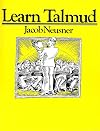
Based on the vocabulary of the author's text, the design of the book and the nature of the selected Talmud sections I believe this book is designed for older children or young adults. Anyone can learn from it of course, but it is important that even younger people can do so. By the design of the book I refer not just to the drawings on the front and back cover (clearly showing younger students, but the similarly designed initial letters of most English only sections.
The book can be studied on its own but it is even more beneficial if you studied first Neusner's "Learn Mishnah," because this book is using the very same passages that did. (Unfortunately I was not aware of this when I read this book. Now I will have to go back to Learn Mishnah.)
While I haven't studied the book as I should have but I did collect some favorite quotes from it. Let me share them with you, hoping that it would encourage you to find out the context I grabbed these quotes out of and read the whole book.
• The Talmud is (1) the Mishnah and (2) the Talmudic commentary to, explanation of, the Mishnah. (page 7)
• The Talmud does not merely tell stories. It makes points. (13)
• The Talmud has kept the attention of the Jewish people for hundreds of years and not only because it is a holy book. The Talmud has fascinated Jews because it is a fascinating book. (14)
• What makes the Talmud "Talmudic" is its power to see the complicated sides of a simple problem. (18)
• We must be able to take the rule and find its general principle, then apply that general principle to a wide variety of cases. Otherwise we are stuck with useless facts. (28)
• Aggadah and halakhah when properly brought together and made into neighbors, talk to one another. (67)
• The Talmud represents a series of careful and deliberate choices, among many possibilities of how someone wanted things to be. (82)
• Judaism is a religion about keeping your word because it speaks about ordinary, everyday circumstances, moments when you say something you later regret. (84)
• We are what we do. But we do what we believe. (86)
• We cannot enjoy anything of this world without saying a blessing. (93)
• Supposed contradictions [in scriptures] may be solved by reference to different times or different situations. (98)
• Saying a blessing is a way of expressing our thanks to G-d. (102)
• If you work for a living, when will you ever find time to study Torah? (105)
• The Talmud is concerned with a life of holiness, but we live in a world uninterested in what is holy. (118)
• A paradox exists. The world belongs to G-d, but we must work to gain the benefits that should come freely if we serve G-d. (119)
• When the Mishnah tells us what to do, the Talmud asks why we should do it. (121)
• The conception of the Mishnah and the Talmud is that we can discover rules that will apply everywhere and to all the Jewish people. (125)
• The Day of Atonement will do us no good if we do not do our share of the work of repentance. (128)
• You have to make yourself available to the party against whom you have a grievance. (138)
• The Talmud is put together with amazing care. We se there is close attention to form and formality. (140)
• We must always discover for ourselves those things that in the end, we shall affirm and believe. (151)
• Part of the right reason to study Torah s that it is a joy and fun! […] The other part is that G-d wants us to study. (164)
If you study this book it will help you learn to think, it will hone your mental capabilities. Or as Neusner wrote,
The Talmud is important for Judaism today not because it was important a long time ago, but because it teaches us to think about the world in which we live. (42) show less
Each chapter starts off with defining the subject of the lesson and points our attention to specific question to keep in mind while reading a particular Mishnah or Talmud section. Those are presented in their original Hebrew/Aramaic with vowels along with a line-by-line translation. As the objective of the book is to teach, each of these quotes have their vocabulary collected afterwards for easier reference.
Each of the four major parts takes one Talmud page and helps the student learn it form beginning to end. This is designed to make you understand how a Talmud page is built up. In the chapters titled "The Talmud all together" you will be presented the whole Talmud page put together without vowels. By the time you get to those you are supposed to be able to read an understand it.
Based on the vocabulary of the author's text, the design of the book and the nature of the selected Talmud sections I believe this book is designed for older children or young adults. Anyone can learn from it of course, but it is important that even younger people can do so. By the design of the book I refer not just to the drawings on the front and back cover (clearly showing younger students, but the similarly designed initial letters of most English only sections.
The book can be studied on its own but it is even more beneficial if you studied first Neusner's "Learn Mishnah," because this book is using the very same passages that did. (Unfortunately I was not aware of this when I read this book. Now I will have to go back to Learn Mishnah.)
While I haven't studied the book as I should have but I did collect some favorite quotes from it. Let me share them with you, hoping that it would encourage you to find out the context I grabbed these quotes out of and read the whole book.
• The Talmud is (1) the Mishnah and (2) the Talmudic commentary to, explanation of, the Mishnah. (page 7)
• The Talmud does not merely tell stories. It makes points. (13)
• The Talmud has kept the attention of the Jewish people for hundreds of years and not only because it is a holy book. The Talmud has fascinated Jews because it is a fascinating book. (14)
• What makes the Talmud "Talmudic" is its power to see the complicated sides of a simple problem. (18)
• We must be able to take the rule and find its general principle, then apply that general principle to a wide variety of cases. Otherwise we are stuck with useless facts. (28)
• Aggadah and halakhah when properly brought together and made into neighbors, talk to one another. (67)
• The Talmud represents a series of careful and deliberate choices, among many possibilities of how someone wanted things to be. (82)
• Judaism is a religion about keeping your word because it speaks about ordinary, everyday circumstances, moments when you say something you later regret. (84)
• We are what we do. But we do what we believe. (86)
• We cannot enjoy anything of this world without saying a blessing. (93)
• Supposed contradictions [in scriptures] may be solved by reference to different times or different situations. (98)
• Saying a blessing is a way of expressing our thanks to G-d. (102)
• If you work for a living, when will you ever find time to study Torah? (105)
• The Talmud is concerned with a life of holiness, but we live in a world uninterested in what is holy. (118)
• A paradox exists. The world belongs to G-d, but we must work to gain the benefits that should come freely if we serve G-d. (119)
• When the Mishnah tells us what to do, the Talmud asks why we should do it. (121)
• The conception of the Mishnah and the Talmud is that we can discover rules that will apply everywhere and to all the Jewish people. (125)
• The Day of Atonement will do us no good if we do not do our share of the work of repentance. (128)
• You have to make yourself available to the party against whom you have a grievance. (138)
• The Talmud is put together with amazing care. We se there is close attention to form and formality. (140)
• We must always discover for ourselves those things that in the end, we shall affirm and believe. (151)
• Part of the right reason to study Torah s that it is a joy and fun! […] The other part is that G-d wants us to study. (164)
If you study this book it will help you learn to think, it will hone your mental capabilities. Or as Neusner wrote,
The Talmud is important for Judaism today not because it was important a long time ago, but because it teaches us to think about the world in which we live. (42) show less
Lists
You May Also Like


Associated Authors
Statistics
- Works
- 674
- Also by
- 16
- Members
- 8,645
- Popularity
- #2,782
- Rating
- 3.9
- Reviews
- 35
- ISBNs
- 1,233
- Languages
- 11
- Favorited
- 4