

Bruce Feiler
Author of Walking the Bible: A Journey by Land Through the Five Books of Moses
About the Author
Bruce Feiler (born October 25, 1964) is a writer on social issues and, particularly more recently, on religion. Feiler is a native of Savannah, Georgia, and now lives in New York City with his wife and children. His wife sometimes appears as a traveling companion in his books. Feiler completed his show more undergraduate degree at Yale University. His latest book, The Council of Dads: My Daughters, My Illness, and the Men Who Could Be Me, describes how after recieving a diagnosis of cancer, he asked six men from all phases of his life to be present through the phases of his young daughters¿ lives. (Bowker Author Biography) show less
Works by Bruce Feiler
Walking the Bible: A Journey by Land Through the Five Books of Moses (2001) 2,411 copies, 27 reviews
The Council of Dads: My Daughters, My Illness, and the Men Who Could Be Me (2010) 304 copies, 44 reviews
The Secrets of Happy Families: Improve Your Mornings, Rethink Family Dinner, Fight Smarter, Go Out and Play, and Much More (2013) 294 copies, 12 reviews
Dreaming Out Loud: Garth Brooks, Wynonna Judd, Wade Hayes, and the Changing Face of Nashville (1998) — Author — 57 copies, 2 reviews
Generation Freedom: The Middle East Uprisings and the Remaking of the Modern World (2011) 27 copies, 1 review
The Time I Saw My Father Cry 1 copy
Associated Works
Encounters with the Middle East: True Stories of People and Culture that Help You Understand the Region (Travelers' Tales Guides) (2007) — Introduction, some editions — 21 copies
Tagged
Common Knowledge
- Birthdate
- 1964-10-25
- Gender
- male
- Education
- Yale University (BA, 1987)
University of Cambridge (MA) - Occupations
- journalist
writer - Organizations
- Parade
New York Times - Nationality
- USA
- Birthplace
- Savannah, Georgia, USA
- Places of residence
- Savannah, Georgia, USA
New York, New York, USA - Associated Place (for map)
- USA
Members
Reviews

The story of Adam and Eve extends from the end of the first chapter of Genesis to the beginning of the fifth. In “The First Love Story: Adam Eve, and Us” (2017), Bruce Feiler turns the story into eight chapters and 269 pages. But writers from John Milton to Mark Twain to Ernest Hemingway have been building on the Genesis account for centuries, always finding (or imagining) something new. Feiler uses these earlier studies and adds his own interpretations in this fine, thoughtful show more book.
Feiler's focus is not the first sin but rather the first love story, the initial model for all love stories to follow "They can't steal someone else's pickup lines or dance to anyone else's love songs," he writes. "They must write their own story. They must invent what it means to be in a relationship."
Getting ejected from the Garden of Eden was not all bad, according to Feiler. To him it was something akin to a couple leaving their parents and striking out on their own, facing an uncertain future alone but together. They chose love over obedience, he argues.
In addition to Milton, Twain and Hemingway, Feiler looks for insights into this story from the likes of Mae West, Elizabeth Cady Stanton, Lord Byron, Pope Francis and a host of others less well known.
"Their story is not just about sin, disobedience, ingratitude, squandering their inheritance, and ruining life for the rest of us," Feiler says of Adam and Eve. "Their story is also about originality, forgiveness, bouncing back from calamity and modeling resilience.
"Their story is above love in all its messy carnal, hopeful, resurgent glory."
Feiler, author of such books as “Walking the Bible” and “Abraham,” has made a career out of, in his words, "trying to relate biblical stories to the present." In “The First Love Story,” though some of its interpretations may strike readers as weird, he manages to do this well, making the oldest story of all fresh again. show less
Feiler's focus is not the first sin but rather the first love story, the initial model for all love stories to follow "They can't steal someone else's pickup lines or dance to anyone else's love songs," he writes. "They must write their own story. They must invent what it means to be in a relationship."
Getting ejected from the Garden of Eden was not all bad, according to Feiler. To him it was something akin to a couple leaving their parents and striking out on their own, facing an uncertain future alone but together. They chose love over obedience, he argues.
In addition to Milton, Twain and Hemingway, Feiler looks for insights into this story from the likes of Mae West, Elizabeth Cady Stanton, Lord Byron, Pope Francis and a host of others less well known.
"Their story is not just about sin, disobedience, ingratitude, squandering their inheritance, and ruining life for the rest of us," Feiler says of Adam and Eve. "Their story is also about originality, forgiveness, bouncing back from calamity and modeling resilience.
"Their story is above love in all its messy carnal, hopeful, resurgent glory."
Feiler, author of such books as “Walking the Bible” and “Abraham,” has made a career out of, in his words, "trying to relate biblical stories to the present." In “The First Love Story,” though some of its interpretations may strike readers as weird, he manages to do this well, making the oldest story of all fresh again. show less
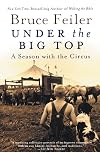
When I first read this, I congratulated myself on already knowing some stuff, but was surprised at just how much this book still taught me. The author gives a detailed, proud account of his time performing with a big circus as a clown. He intersperses his experiences with the history of circuses in America. The book opens with a circus elephant undergoing surgery. The narrative abruptly switches to the author's circus experience. Switching back and forth between the author's experiences and show more circus operations and history is constant throughout the book. At times on second read, it's a little annoying. I got why he did it, though. He lovingly describes the animals the circus performs with: their looks, temperaments, trainers. He genuinely believes they like performing.
I've never been to a circus. let alone performed in one, but I've worried about circus animals when they're mentioned, since I was a teen. I'm not a fan of having animals perform for entertainment unless it's a dog show or a youtube video or something. I've watched the documentary "Blackfish" twice. The first time, I had nightmares for a week. The second, I was so freakin' sad and unsettled. I don't blame Dawn Bradchau at all. I blame SeaWorld. Despite my views that training animals to perform for humans is generally bad, an old friend of mine's husband was a circus animal trainer for twenty-five years and enjoyed talking about it, and I enjoyed his stories. He happily showed photos he'd saved. Tigers, lions, and wolves were his specialty. Somewhat meekly, I always inquired about his training methods, and was he ever scared? I'm sure I was far from the only one asking. His face would light up as he spoke with such fondness of these animals. He laughed about how big cats are still cats. They rubbed their faces on him as a sign of affection and sat on things constantly because they could. He wasn't scared exactly, but knew to always be alert. Treat the animals with respect, he insisted. He talked about some of his training methods, and I was surprised at how--humane they were. He stopped training animals in the early 2000s. This book was written in the 90s, so I bet he and the author had similar experiences as far as time periods and the social messages they picked up.
When the author first describes the tigers, he notes that some are tabby type, and describes what that looks like: light brown with blond stripes. I did a google search and describe the color as "it's basically a washed out color with no stripes, and I wonder if the tiger is sick due to it looking so different." As I kept reading, I thought of different circus disasters over time. I couldn't help it. The author discusses them as others matter-of-factly and respectfully. It was interesting reading this again. show less
I've never been to a circus. let alone performed in one, but I've worried about circus animals when they're mentioned, since I was a teen. I'm not a fan of having animals perform for entertainment unless it's a dog show or a youtube video or something. I've watched the documentary "Blackfish" twice. The first time, I had nightmares for a week. The second, I was so freakin' sad and unsettled. I don't blame Dawn Bradchau at all. I blame SeaWorld. Despite my views that training animals to perform for humans is generally bad, an old friend of mine's husband was a circus animal trainer for twenty-five years and enjoyed talking about it, and I enjoyed his stories. He happily showed photos he'd saved. Tigers, lions, and wolves were his specialty. Somewhat meekly, I always inquired about his training methods, and was he ever scared? I'm sure I was far from the only one asking. His face would light up as he spoke with such fondness of these animals. He laughed about how big cats are still cats. They rubbed their faces on him as a sign of affection and sat on things constantly because they could. He wasn't scared exactly, but knew to always be alert. Treat the animals with respect, he insisted. He talked about some of his training methods, and I was surprised at how--humane they were. He stopped training animals in the early 2000s. This book was written in the 90s, so I bet he and the author had similar experiences as far as time periods and the social messages they picked up.
When the author first describes the tigers, he notes that some are tabby type, and describes what that looks like: light brown with blond stripes. I did a google search and describe the color as "it's basically a washed out color with no stripes, and I wonder if the tiger is sick due to it looking so different." As I kept reading, I thought of different circus disasters over time. I couldn't help it. The author discusses them as others matter-of-factly and respectfully. It was interesting reading this again. show less
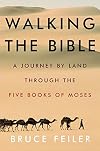
The author's true odyssey begins on 16,984 ft. high Mt. Ararat and ends on Mt. Nebo, perhaps standing where Moses had stood when he knew he would never cross to the Promised Land. This is an eloquent, informed, often funny travelogue.
"After high school I lost touch with the religious community of my childhood. But as I traveled I found certain feelings resurfacing, The idea of writing about the Bible sneaked up on me. In Jerusalem an old friend, Fred, was giving a tour. 'And over there," the show more said, pointing to the Dome of the Rock, " is the cliff where Abraham went to sacrifice Isaac.' Real or not, that piece of information hit me like a bolt of lightening. It had never occurred to me that that story -- so timeless, so abstract -- might have happened in a place so identifiable, that I could visit. It had never occurred to me that the story was so concrete, so connected to the ground. To here. To now."
"In subsequent weeks I had the same experience in a variety of places. I realized the Bible is not some abstraction, nor some book gathering dust. It's a living, breathing entity unencumbered by the sterilization of time." NOV 2004 show less
"After high school I lost touch with the religious community of my childhood. But as I traveled I found certain feelings resurfacing, The idea of writing about the Bible sneaked up on me. In Jerusalem an old friend, Fred, was giving a tour. 'And over there," the show more said, pointing to the Dome of the Rock, " is the cliff where Abraham went to sacrifice Isaac.' Real or not, that piece of information hit me like a bolt of lightening. It had never occurred to me that that story -- so timeless, so abstract -- might have happened in a place so identifiable, that I could visit. It had never occurred to me that the story was so concrete, so connected to the ground. To here. To now."
"In subsequent weeks I had the same experience in a variety of places. I realized the Bible is not some abstraction, nor some book gathering dust. It's a living, breathing entity unencumbered by the sterilization of time." NOV 2004 show less
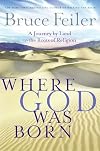
Feiler's book is a unique combination of travelogue, history, theology, and personal growth. Feiler documents his journeys to Israel, Iraq, and Iran to visit the sites of places mentioned in the Hebrew scriptures. There's a lot of interesting discussion of the Israelites and the connection to land, but how the religion was born only once they were taken from the land. There are also hints that the Babylonian captivity was not as bad as depicted in the bible. Feiler also has an interesting show more take on David, the flawed hero, who spent many years as a bandit and even collaborated with the enemies of Israel. Perhaps the most remarkable part of the book is when he worships with a Jewish community in Iran who have a surprising amount of religious freedom, something Feiler traces back to the Persian king Cyrus who liberated the Israelites from captivity. He also traces Zoroastrian influences to the Abrahamic religions to this period. In the end, Feiler finds in the Bible a blueprint for religious tolerance and understanding that could be followed today. show less
Lists
Awards


You May Also Like


Associated Authors
Statistics
- Works
- 20
- Also by
- 6
- Members
- 7,774
- Popularity
- #3,135
- Rating
- 3.8
- Reviews
- 164
- ISBNs
- 174
- Languages
- 8
- Favorited
- 9

