
Bill Moyers (1934–2025)
Author of The Power of Myth
About the Author
Bill Moyers was born in Hugo, Oklahoma, on June 5, 1934. He attended North Texas State College, the University of Texas at Austin, earning his Bachelor's Degree in Journalism in 1956, the University of Edinburgh in Scotland from 1956 to 1957 and the Southwestern Baptist Theological Seminary in Fort show more Worth, Texas in 1959. After college, Moyers joined the staff of Senator Lyndon B. Johnson as his personal assistant, from 1960 to 1961. From 1961 to 1962, Moyers was the associate director of public affairs for the Peace Corps, and deputy director of the Peace Corps in 1963. He later joined Johnson again, this time as special assistant to the President, from 1963 to 1967. He became the Press Secretary, in 1965 until 1967. That same year, he began as publisher of Newsday, holding the position until 1970. He then became producer and editor of the Bill Moyers' Journal for PBS from 1971-76, and an anchor for USA: People and Politics from 1978 till 1981. In 1976 he joined CBS as chief correspondent for CBS Reports for two years. He was the senior news analyst for CBS News from 1981 to 1986 and has been executive editor of Public Affairs Programming Inc. since 1986. Over the course of his many years in journalism, Bill Moyers has earned and received many awards and honors, among them, an Honorary doctorate, from the American Film Institute; numerous Emmy Awards; the Ralph Lowell medal for contribution to public television; George Peabody awards, 1976, 1980, 1985-86, 1988-90; DuPont/Columbia Silver Baton award, 1979, 1986, 1988; Gold Baton award, 1991; and the George Polk awards, 1981, 1986. (Bowker Author Biography) show less
Series
Works by Bill Moyers
A World of Ideas : Conversations With Thoughtful Men and Women About American Life Today and the Ideas Shaping Our Future (1989) 604 copies, 1 review
Joseph Campbell and the Power of Myth [1988 TV miniseries] (1988) — Director — 171 copies, 4 reviews
The Hero's Adventure [1988 Joseph Campbell and the Power of Myth TV episode] (1988) — Director — 67 copies, 3 reviews
The Secret Government: The Constitution in Crisis: With Excerpts from "An Essay on Watergate" (1988) 54 copies
Love and the Goddess [1988 Joseph Campbell and the Power of Myth TV episode] (1988) — Director — 21 copies
The Message of the Myth [1988 Joseph Campbell and the Power of Myth TV episode] (1991) — Director — 19 copies, 2 reviews
Masks of Eternity [1988 Joseph Campbell and the Power of Myth TV episode] (1992) — Director — 18 copies
The First Storytellers [1988 Joseph Campbell and the Power of Myth TV episode] (1992) — Director — 18 copies, 1 review
Sacrifice and Bliss [1988 Joseph Campbell and the Power of Myth TV episode] (1991) — Director — 17 copies
Bill Moyers : on our own terms (2000, television series, Set wBooklet) (2011) — Writer, Executive Producer, Host — 8 copies
Genesis and the Millennium: An Essay on Religious Pluralism in the Twenty-First Century (2000) 7 copies
The Language of Life: Welcome to the Mainland: Sekou Sundiata and Naomi Shihab Nye (1995, television episode 7) (2000) — Host — 3 copies
Healing and the Mind: Volumes 4-5 2 copies
Healing and the Mind: Volumes 1-2 2 copies
Nuns, Faith, and Politics 2 copies
Close to Home: Moyers on Addiction (pt. 1-2) (VHS) 1) Portrait of Addiction 2) The Hijacked Brain 1 copy
The Language of Life: Love's Confusing Joy: Coleman Barks on Poet Jelaluddin Rumi (1995, television episode 2) (1995) 1 copy
God & Politics with Bill Moyers: (3 VHS) The Kingdom Divided; The Battle for the Bible; On Earth as it is Heaven (2011) 1 copy
Spirit and nature 1 copy
Dying (VHS) 1 copy
Violence (VHS) 1 copy
Moyers : Report from Philadelphia : the Constitutional Convention of 1787 : a day-by-day account of the meetings and the men (1987) 1 copy
Joseph Campbell and the Power of Myth: Sacrifice and Bliss; Love and the Goddess; and Masks of Eternity (3 Video Tapes: Program 4, 5, and 6) (VHS) (1988) — Director — 1 copy
Bill Moyers Journal: religious scholar Karen Armstrong 3/13/2009 [video recording] (2009) — Host — 1 copy
Associated Works
Democracy in Print: The best of the Progressive Magazine, 1909-2009 (2009) — Contributor — 15 copies
Becoming American: The Chinese Experience [2002 TV series] — Narrator — 5 copies
Tagged
Common Knowledge
- Canonical name
- Moyers, Bill
- Legal name
- Moyers, Billy Don
- Birthdate
- 1934-06-05
- Date of death
- 2025-06-26
- Gender
- male
- Education
- University of Texas, Austin (BA|1956)
Southwestern Baptist Theological Seminary (M.Div|1959) - Occupations
- reporter
press secretary
publisher
broadcaster - Organizations
- Marshall News Messenger
Peace Corps
Newsday
PBS
CBS
NBC (show all 7)
Schumann Center for Media and Democracy - Awards and honors
- American Philosophical Society (2002)
American Academy of Arts and Letters (1999)
American Academy of Arts & Sciences (1991)
George Polk Award (1981, 1986)
Walter Cronkite Award for Excellence in Journalism (1995)
Television Hall of Fame (1995) (show all 15)
National Humanities Medal (1996)
Charles Frankel Prize (1996)
George Polk Career Award (2003)
Peabody Personal Award (2003)
Lifetime Emmy Award (2006)
Ridenhour Courage Prize (2008)
Eric Barnouw Award (1988)
Alfred I. duPont-Columbia University Award (1992)
Television Critics Association Career Achievement Award (2010) - Relationships
- Moyers, William Cope (son)
- Nationality
- USA
- Birthplace
- Hugo, Oklahoma, USA
- Places of residence
- Marshall, Texas, USA
Washington, D.C., USA
New York, New York, USA - Place of death
- New York, New York, USA
- Associated Place (for map)
- USA
Members
Reviews
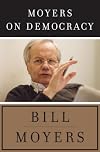
This is a collection of Moyer's speeches over many years that touch on the subject of democracy. If I could, I'd give a copy to everyone in the world to read. Forget Nicholas Cage movies, Bill Moyers is THE National Treasure.
Mr. Moyers probably doesn't believe in reincarnation - though he would respect my right to do so - but I think in one of his previous lives he must have been a bard, and in another one of those court jesters who was the only person to tell the king the truth. For he has show more both the journalistic integrity to be dedicated to finding the truth and to sharing it with the public. The speech he gave on Hubert Humphrey is one of the best pieces of writing, fiction or non-fiction, I've ever read in my life, and many of the other pieces are of similar quality.
It is hard to give a sense of the book, because it wanders many places in talking about democracy. There are obituaries here, to such people as Barbara Jordan, William Sloane Coffin, and Fred Friendly. There is a commencement address. Issues of media, politics, and religion are discussed. And always, Moyers gives us history, often history of the relatively unknown and their struggles to be free. It is an inspirational book, one that sets the mind alight to preserve and restore freedom and its handmaiden, responsibility. show less
Mr. Moyers probably doesn't believe in reincarnation - though he would respect my right to do so - but I think in one of his previous lives he must have been a bard, and in another one of those court jesters who was the only person to tell the king the truth. For he has show more both the journalistic integrity to be dedicated to finding the truth and to sharing it with the public. The speech he gave on Hubert Humphrey is one of the best pieces of writing, fiction or non-fiction, I've ever read in my life, and many of the other pieces are of similar quality.
It is hard to give a sense of the book, because it wanders many places in talking about democracy. There are obituaries here, to such people as Barbara Jordan, William Sloane Coffin, and Fred Friendly. There is a commencement address. Issues of media, politics, and religion are discussed. And always, Moyers gives us history, often history of the relatively unknown and their struggles to be free. It is an inspirational book, one that sets the mind alight to preserve and restore freedom and its handmaiden, responsibility. show less
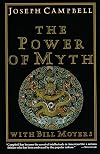
Série muito simpática de entrevistas para televisão, onde Campbell mostra-se a figura midiática do sábio que eu tomo por ser, e certamente faz lembrar-me de meu vô Azauri, que tentou instilar algum amor por mitologia em mim, na infância (ser ateu parece, em ambos os casos, algo que abre para a verdadeira fascinação pela mitologia). De resto, é um conteúdo fácil, mas prazenteiro - há nos mitos representações, mensagens, simbolismos que refletem nossa vida inconsciente, que show more preparam as sociedades para as belezas e sofrimentos da vida e lidam com os anseios do homem em sua universalidade (na sua estrutura corporal e mental profunda). Nisso, certamente é generalista e provavelmente pouco rigoroso. É o preço que se paga, entretanto, pra sorrir com o velhote. show less
TL;DR - If you want to pick up some convenient mental models for mythology and storytelling, you'll like this. If you're looking for a rigorous introduction to comparative mythology, you will be disappointed.
Campbell's work has footprints all across popular media and culture. It helped George Lucas shape the mythos of Star Wars, his book The Hero With a Thousand Faces was instrumental in crafting Disney's The Lion King, and his idea of The Monomyth has become Dan Harmon's modus operandi, show more allowing him to create Community and Rick & Morty. The interviews in this book, conducted by Bill Moyers, are a transcription of the television series by the same name. Two months after this series of interviews, Joseph Campbell passed away at the age of 83.
I enjoyed this book. I think what Moyers and Campbell achieved with The Power of Myth is similar to what Carl Sagan achieved with Cosmos, in terms of quality and impact. A lot has already been said about what's great about this book, so I'll concern my review with what wasn't so great.
While Joseph Campbell's erudition is obvious and his conversation engaging, in his discussions he seems more inclined towards philosophy and spirituality instead of empirical social science. This is in part due to Bill Moyers' line of questioning, who's interested in grand questions like "What is the nature of life?" and "Where does life come from?", and in part due to Joseph Campbell's own interest in philosophy (he was greatly influenced by Schopenhauer and Nietzsche). While this serves to ignite the imagination, it takes away from the pedagogical value it may have for those interested in mythological traditions.
A more serious flaw occurs when Campbell's personal beliefs as passed on as scientific ones, and no clear distinction is made between them. Moyers states that Campbell "didn't have an ideology or a theology". That's not entirely true. He was pan-theistic, extremely reductionist, and loved to paint in broad strokes ("the main teaching of Christianity is to love your enemies"). Hearing him talk is like hearing only one side of the story, with little "comparative" to the "mythology". He often employs his significant knowledge of mythology to buttress his spiritual beliefs ("follow your bliss" comes from the Sanskrit "sat-chit-ananda"), which is great. But by the end of the nine chapters I felt the only thing I knew in-depth was Campbell felt about such and such mythical tradition, and what it meant to him. To put it briefly, my issue is that instead of comparative mythology and facts of empirical interest, we're served a salad of Campbell's personal spiritual beliefs and philosophy which leads the viewer to assume that's the whole story, which it definitely isn't.
Furthermore, Campbell play too conveniently into the romantic oriental trope of the wise old guru who holds all the answers to the universe. Moyers prompts him and he obliges, never discouraging Moyers' vague line of questioning ("what is the source of life"), and instead generalizing facts at his own convenience. It gets a bit annoying.
PS: To add an interesting sidenote, the similarity between The Power of Myth and Carl Sagan's Cosmos isn't merely superficial. Both the programs were produced by PBS, televised in the 80s, concerned themselves with grand questions like the origin of life and our place in the universe, and answered these questions through the lens of their respective fields. Both Sagan and Campbell were charismatic, charming, had a flair for communication but often took liberties with scientific rigor, in favour of inspiring awe, speculation, and mystery. It was perhaps due to this they experienced a polarized reputation among their colleagues. Nonetheless, both of these series have left an indelible mark on our culture, and their influence has continued into the new millennium. show less
Campbell's work has footprints all across popular media and culture. It helped George Lucas shape the mythos of Star Wars, his book The Hero With a Thousand Faces was instrumental in crafting Disney's The Lion King, and his idea of The Monomyth has become Dan Harmon's modus operandi, show more allowing him to create Community and Rick & Morty. The interviews in this book, conducted by Bill Moyers, are a transcription of the television series by the same name. Two months after this series of interviews, Joseph Campbell passed away at the age of 83.
I enjoyed this book. I think what Moyers and Campbell achieved with The Power of Myth is similar to what Carl Sagan achieved with Cosmos, in terms of quality and impact. A lot has already been said about what's great about this book, so I'll concern my review with what wasn't so great.
While Joseph Campbell's erudition is obvious and his conversation engaging, in his discussions he seems more inclined towards philosophy and spirituality instead of empirical social science. This is in part due to Bill Moyers' line of questioning, who's interested in grand questions like "What is the nature of life?" and "Where does life come from?", and in part due to Joseph Campbell's own interest in philosophy (he was greatly influenced by Schopenhauer and Nietzsche). While this serves to ignite the imagination, it takes away from the pedagogical value it may have for those interested in mythological traditions.
A more serious flaw occurs when Campbell's personal beliefs as passed on as scientific ones, and no clear distinction is made between them. Moyers states that Campbell "didn't have an ideology or a theology". That's not entirely true. He was pan-theistic, extremely reductionist, and loved to paint in broad strokes ("the main teaching of Christianity is to love your enemies"). Hearing him talk is like hearing only one side of the story, with little "comparative" to the "mythology". He often employs his significant knowledge of mythology to buttress his spiritual beliefs ("follow your bliss" comes from the Sanskrit "sat-chit-ananda"), which is great. But by the end of the nine chapters I felt the only thing I knew in-depth was Campbell felt about such and such mythical tradition, and what it meant to him. To put it briefly, my issue is that instead of comparative mythology and facts of empirical interest, we're served a salad of Campbell's personal spiritual beliefs and philosophy which leads the viewer to assume that's the whole story, which it definitely isn't.
Furthermore, Campbell play too conveniently into the romantic oriental trope of the wise old guru who holds all the answers to the universe. Moyers prompts him and he obliges, never discouraging Moyers' vague line of questioning ("what is the source of life"), and instead generalizing facts at his own convenience. It gets a bit annoying.
PS: To add an interesting sidenote, the similarity between The Power of Myth and Carl Sagan's Cosmos isn't merely superficial. Both the programs were produced by PBS, televised in the 80s, concerned themselves with grand questions like the origin of life and our place in the universe, and answered these questions through the lens of their respective fields. Both Sagan and Campbell were charismatic, charming, had a flair for communication but often took liberties with scientific rigor, in favour of inspiring awe, speculation, and mystery. It was perhaps due to this they experienced a polarized reputation among their colleagues. Nonetheless, both of these series have left an indelible mark on our culture, and their influence has continued into the new millennium. show less
A collection of speeches given by Bill Moyers in the last twenty years, covering topics related to our society, including government, the press, religion, and history. As a journalist, he does not lose sight of Finley Peter Dunne’s injunction to “comfort the afflicted and afflict the comfortable”; he assails Democrats and Republicans alike when they fail to live up to their responsibilities, and in answering charges of liberal bias:
“All I can say is that if reporting what happens to show more ordinary people because of events beyond their control, and the indifference of government to their fate, is ‘liberal,’ I plead guilty.”
Moyers' speeches are filled with powerful words of caution and hope. He is a Baptist with a divinity degree and a faith strong enough that it is deepened, not weakened, as he learns from Buddhists, Sufis, Jews, Hindus, and Confucianists, and he is ever mindful of Christianity’s focus on the poorest of humanity. He is a true patriot, with love for the promise of the American dream and the ideals embodied in the Constitution, and stern words for the powerful who lose sight of it.
This one's worth getting in hardcover, folks. show less
“All I can say is that if reporting what happens to show more ordinary people because of events beyond their control, and the indifference of government to their fate, is ‘liberal,’ I plead guilty.”
Moyers' speeches are filled with powerful words of caution and hope. He is a Baptist with a divinity degree and a faith strong enough that it is deepened, not weakened, as he learns from Buddhists, Sufis, Jews, Hindus, and Confucianists, and he is ever mindful of Christianity’s focus on the poorest of humanity. He is a true patriot, with love for the promise of the American dream and the ideals embodied in the Constitution, and stern words for the powerful who lose sight of it.
This one's worth getting in hardcover, folks. show less
Lists
Awards


You May Also Like


Associated Authors
Statistics
- Works
- 143
- Also by
- 12
- Members
- 13,844
- Popularity
- #1,671
- Rating
- 4.2
- Reviews
- 113
- ISBNs
- 168
- Languages
- 12
- Favorited
- 11


