
Sheldon S. Wolin (1922–2015)
Author of Democracy Incorporated: Managed Democracy and the Specter of Inverted Totalitarianism
About the Author
Sheldon Sanford Wolin was born in Chicago, Illinois on August 4, 1922. During World War II, he served as a bombardier and navigator in the Pacific for the Army Air Forces. He received a bachelor's degree from Oberlin College in 1946 and a doctorate from Harvard University in 1950. He taught at the show more University of California, Berkeley and Princeton University before retiring in 1987. He wrote several books during his lifetime including Hobbes and the Epic Tradition of Political Theory, Tocqueville Between Two Worlds: The Making of a Political and Theoretical Life, and Democracy Incorporated: Managed Democracy and the Specter of Inverted Totalitarianism. Politics and Vision: Continuity and Innovation in Western Political Thought was published in 1960, received the Benjamin E. Lippincott Award in recognition of its lasting impact in 1985, and was reissued in expanded form in 2004. He also wrote frequently for The New York Review of Books on Watergate, Henry Kissinger, the presidency of Jimmy Carter, Ronald Reagan, and American conservatism. Some of his essays on the Free Speech Movement and campus unrest at Berkeley were included with those written by John H. Schaar in The Berkeley Rebellion and Beyond: Essays on Politics and Education in the Technological Society. He died on October 21, 2015 at the age of 93. (Bowker Author Biography) show less
Works by Sheldon S. Wolin
Democracy Incorporated: Managed Democracy and the Specter of Inverted Totalitarianism (2008) 408 copies, 8 reviews
Politics and Vision: Continuity and Innovation in Western Political Thought (1960) 336 copies, 2 reviews
The Berkeley rebellion and beyond; essays on politics and education in the technological society (1970) 13 copies
Associated Works
A World of Ideas : Conversations With Thoughtful Men and Women About American Life Today and the Ideas Shaping Our Future (1989) — Interviewee — 602 copies, 1 review
Athenian Political Thought and the Reconstitution of American Democracy (1994) — Contributor — 28 copies
Tagged
Common Knowledge
- Birthdate
- 1922-08-04
- Date of death
- 2015-10-21
- Gender
- male
- Education
- Oberlin College
Harvard University (Ph.D.|1950) - Occupations
- political scientist
professor (political science)
essayist - Organizations
- New York Review of Books
Princeton University
Democracy: A Journal of Political Renewal nad Radical Change
University of California, Berkeley - Nationality
- USA
- Birthplace
- Chicago, Illinois, USA
- Places of residence
- Buffalo, New York, USA
- Place of death
- Salem, Oregon, USA
- Associated Place (for map)
- USA
Members
Reviews
Democracy Incorporated: Managed Democracy and the Specter of Inverted Totalitarianism - New Edition by Sheldon S. Wolin
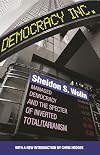
This is a staggeringly detailed look at the destruction of any real democracy in the United States. I came at this book after having come across Chris Hedges ( without doubt the most important contemporary author writing about America in 2019)writing about it. One can see that if one had read the book during the mid 2000s when it originally appeared, it would have seemed apocalyptic in it's warnings. Sadly, Wolin pretty much hits it right on the head: democracy in America is a shallow, money show more beholden to huge corporations and rich people reality. The only thing that seems quaintly antiquated is when he attempts to differentiate between the Republican and Democratic national political parties, as is now obvious, they are all one big 'pro business' party for the rich. show less
Democracy Incorporated: Managed Democracy and the Specter of Inverted Totalitarianism (New in Paper) by Sheldon S. Wolin
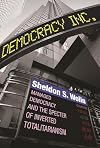
Sheldon Wolin begins his book by looking at the effects that September 11, 2001 had on the public, and especially how those effects were refracted though the media. He suggests that the reaction was practically singular and unanimous: popular opinion was consolidated through media apparatus, dissident voices were marginalized or silenced, and fear of a distant, unknown enemy (the ubiquitous “Islamic terrorist”) was encouraged. After 9/11, the miasma of terror created the perfect foil for show more the construction of a permanent state of fear, which the government used for a reason to use military tribunals, and indefinitely suspend prisoners. All the while the military and its surrogates became increasing privatized by corporate hegemons in the name of “protecting the free market.” Suddenly we had a “global foe, without contours or boundaries, shrouded in secrecy” (p. 40). How did this happen?
Wolin suggests that, at the heart of American governance, are two countervailing forces. The “constitutional imaginary” (embodied by popular elections, legal authorization, etc.) – so named because it is the predominant logic of the Constitution – “prescribes the means by which power is legitimated, accountable, and constrained. It emphasizes stability and limits” (p. 19). The power imaginary, however, “seeks constantly to expand present capabilities.” Wolin suggests that the power imaginary began with Roosevelt’s New Deal policies, but expanded disproportionately with the inception of the Cold War. The constitutional and power imaginaries may seem mutually exclusive, but they co-exist uneasily within our ersatz American democracy.
Wolin uses these concepts to build an idea that he looks throughout the entire book – that of “inverted totalitarianism,” which is what he claims America is. To understand what he is doing here, it is important to look at how classical totalitarianism (that of Stalin, Hitler, and Mussolini) functioned. These worked through
- the subversion and eventual destruction of legislative, governmental, and bureaucratic avenues
- single-party control of the state through the presence of a charismatic leader
- boasts of its totalitarian character and attempts to actively rally the people behind state propaganda
- excites the populace into a frisson over something (racial superiority, anti-Semitism)
If you turn these on their head, you get what Wolin calls inverted totalitarianism. He defines this as “a new type of political system, seemingly one riven by abstract totalizing powers, not by person rule, one that succeeds by encouraging political disengagement rather than mass mobilization that relies more on private media than on public agencies to disseminate propaganda reinforcing the official version of events.” (p. 44) It has, among others, the following properties:
- instead of subverting traditional democratic channels, it utilizes them to achieve its predetermined ends
- denies its totalitarian nature
- pacifies, stunts, and retards popular mobility
- operates via the impression of a multi-party state (Democratic/Republican) with the illusion of at least two different sets of political ideals with a conspicuous lack of the aforementioned charismatic leader
These are just the barest of bones of Wolin’s argument. He includes a through intellectual genealogy of how he thinks we have placed more and more of an emphasis on the power imaginary, with insightful examinations of Hobbes, Machiavelli, Leo Strauss, and Plato. He also spends a lot of time looking at how the deliberate consolidation of media and corporate power within the United States has made this coup much easier.
I found the idiom of inverted totalitarianism an interesting one for looking at contemporary American democracy, even though it has its weaknesses. It is one of the few books on the subject that I have read that is just as considerate of twenty-first century American history as it is of classical political theory, and it strikes a beautiful balance. This is the best kind of critical theory in that it puts into lucid language what many people have suspected. Sometimes it just takes someone from Princeton to articulate it this well. show less
Wolin suggests that, at the heart of American governance, are two countervailing forces. The “constitutional imaginary” (embodied by popular elections, legal authorization, etc.) – so named because it is the predominant logic of the Constitution – “prescribes the means by which power is legitimated, accountable, and constrained. It emphasizes stability and limits” (p. 19). The power imaginary, however, “seeks constantly to expand present capabilities.” Wolin suggests that the power imaginary began with Roosevelt’s New Deal policies, but expanded disproportionately with the inception of the Cold War. The constitutional and power imaginaries may seem mutually exclusive, but they co-exist uneasily within our ersatz American democracy.
Wolin uses these concepts to build an idea that he looks throughout the entire book – that of “inverted totalitarianism,” which is what he claims America is. To understand what he is doing here, it is important to look at how classical totalitarianism (that of Stalin, Hitler, and Mussolini) functioned. These worked through
- the subversion and eventual destruction of legislative, governmental, and bureaucratic avenues
- single-party control of the state through the presence of a charismatic leader
- boasts of its totalitarian character and attempts to actively rally the people behind state propaganda
- excites the populace into a frisson over something (racial superiority, anti-Semitism)
If you turn these on their head, you get what Wolin calls inverted totalitarianism. He defines this as “a new type of political system, seemingly one riven by abstract totalizing powers, not by person rule, one that succeeds by encouraging political disengagement rather than mass mobilization that relies more on private media than on public agencies to disseminate propaganda reinforcing the official version of events.” (p. 44) It has, among others, the following properties:
- instead of subverting traditional democratic channels, it utilizes them to achieve its predetermined ends
- denies its totalitarian nature
- pacifies, stunts, and retards popular mobility
- operates via the impression of a multi-party state (Democratic/Republican) with the illusion of at least two different sets of political ideals with a conspicuous lack of the aforementioned charismatic leader
These are just the barest of bones of Wolin’s argument. He includes a through intellectual genealogy of how he thinks we have placed more and more of an emphasis on the power imaginary, with insightful examinations of Hobbes, Machiavelli, Leo Strauss, and Plato. He also spends a lot of time looking at how the deliberate consolidation of media and corporate power within the United States has made this coup much easier.
I found the idiom of inverted totalitarianism an interesting one for looking at contemporary American democracy, even though it has its weaknesses. It is one of the few books on the subject that I have read that is just as considerate of twenty-first century American history as it is of classical political theory, and it strikes a beautiful balance. This is the best kind of critical theory in that it puts into lucid language what many people have suspected. Sometimes it just takes someone from Princeton to articulate it this well. show less
Democracy Incorporated: Managed Democracy and the Specter of Inverted Totalitarianism by Sheldon S. Wolin
The author provides an acerbic and critical analysis of modern American politics and the Republican party in particular. He discusses the interlocking of American government with big business. This includes campaign finance and fraud, personnel exchange between the public and private sectors, economic segregation at universities and the renunciation of social welfare in favor of military spending. It all amounts to a depressing portrait of a plutocracy run by greedy billionaires for the show more benefit of a small elite. The author draws at some length on the history of democracy and the history of political thought to build his case.
Although there are flashes of brilliance in this book, there are also bad ideas and a lot of unclear writing. A particularly bad idea is the comparison of American politics to Nazi and Soviet totalitarian regimes, a comparison which just doesn't make any sense. The author fortunately lets go of this forced parallel towards the end of the book. He also has an idiosyncratic writing style which is quite undisciplined. He exaggerates and overextends some parts of his argument so strongly that it's hard to know how seriously one should take the other parts. The discussion is often confusing and seems overly pessimistic.
I can therefore not recommend this book unreservedly. The underlying idea might be both valid and critically important for the fate of democracy in the 21st century, but the author doesn't possess enough intellectual ability to carry his ambitious critical project to a convincing completion. Fukuyama's recent book "Political Order and Political Decay" is a stronger work on a similar subject with a broad international scope. show less
Although there are flashes of brilliance in this book, there are also bad ideas and a lot of unclear writing. A particularly bad idea is the comparison of American politics to Nazi and Soviet totalitarian regimes, a comparison which just doesn't make any sense. The author fortunately lets go of this forced parallel towards the end of the book. He also has an idiosyncratic writing style which is quite undisciplined. He exaggerates and overextends some parts of his argument so strongly that it's hard to know how seriously one should take the other parts. The discussion is often confusing and seems overly pessimistic.
I can therefore not recommend this book unreservedly. The underlying idea might be both valid and critically important for the fate of democracy in the 21st century, but the author doesn't possess enough intellectual ability to carry his ambitious critical project to a convincing completion. Fukuyama's recent book "Political Order and Political Decay" is a stronger work on a similar subject with a broad international scope. show less
Professor Wolin shows the development of political philosophy from ancient times to post-modern. He is an excellent writer and clarifies concepts by showing what each philosopher in his proper context and by comparing with what others thought-both contemporaries and earlier writers. I did find the chapters on Nietzsche and Marx somewhat heavy reading, however.
Lists
Awards


You May Also Like


Associated Authors
Statistics
- Works
- 18
- Also by
- 6
- Members
- 957
- Popularity
- #26,916
- Rating
- 4.3
- Reviews
- 10
- ISBNs
- 34
- Languages
- 3
- Favorited
- 6