
Wendy Brown (1) (1955–)
Author of Undoing the Demos: Neoliberalism's Stealth Revolution
For other authors named Wendy Brown, see the disambiguation page.
About the Author
Wendy Brown is Class of 1936 First Chair at the University of California, Berkeley, where she teaches political theory. Her recent books include Undoing the Demos: Neoliberalism's Stealth Revolution (2015) and Walled States, Waning Sovereignty (2010).
Image credit: UC-Berkeley (faculty page)
Works by Wendy Brown
Surviving the Apocalypse in the Suburbs: The Thrivalist's Guide to Life Without Oil (2011) 34 copies, 1 review
Browsing Nature's Aisles: A Year of Foraging for Wild Food in the Suburbs (2013) 33 copies, 2 reviews
Associated Works
Politics and Vision: Continuity and Innovation in Western Political Thought (1960) — Foreword, some editions — 336 copies, 2 reviews
Tagged
Common Knowledge
- Canonical name
- Brown, Wendy
- Birthdate
- 1955-11-28
- Gender
- female
- Education
- Princeton University (M.A.|1980|Ph.D |1983)
University of California, Santa Cruz (B.A.|1977) - Occupations
- political theorist
political scientist
professor - Organizations
- Institute for Advanced Study, Princeton University
University of California, Berkeley
University of California, Santa Cruz
Williams College - Awards and honors
- David Eastman Award (2012)
Spitz Prize (2017) - Relationships
- Butler, Judith (partner)
- Nationality
- USA
- Places of residence
- Berkeley, California, USA
- Associated Place (for map)
- California, USA
Members
Reviews
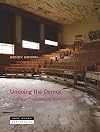
There is a specter haunting contemporary politics; a specter called 'neoliberalism.'
In Undoing the Demos, Brown goes full bore for the origins and nature of the current crisis of faith, an ideology which consumes labor, democracy, law, education, and life itself in the quest for every higher profits for a small group of elites. Brown offers a strong definition of neoliberalism, capable adapting to it's protean forms, as the "economizing of spheres and activities" in policy, practice, and show more rhetoric, and everything which casts life as a matter of competition rather than community or exchange, and takes as it's best model the building of a diverse and exponentially expanding investment portfolio. The ultimate form of neoliberalism is the transformation of human beings, political entities with defined rights who form self-governing communities and live and die, into human capitals, value-increasing portfolios of skills, assets, and social networks, who are combined into ever greater portfolios for the purposes of wealth expansion.
Brown tackles this neoliberalism mostly with a dissection of theory, looking at rights and democracy across time, and ably interlocating Foucault's lecture on biopolitics. Case studies include the rise of 'governance' as a mode of regulation and power, the Citizens United decision and speech as capital, and the erosion of the liberal arts in higher education. Academic readers will appreciate it for its (relative) clarity and definiteness on a variety of subjects. More causal readers may enjoy it for the truly epic amounts of shade that Brown throws on the present. Witness discussing Obama's 2013 State of the Union, which called for job creation as the North Star of American policy.
"Attracting investors and developing an adequately remunerated skilled workforce--these are the goals of the world's oldest democracy led by a justice-minded president in the twenty-first century... Striking in it's own right, this formulation means that democratic state commitments to equality, liberty, inclusion, and constitutionalism are now subordinate to the project of economic growth, capital positioning, and capital enhancement. These political commitments can no longer stand on their own legs, and the speech implies, would be jettisoned if found to abate, rather than abet, economic growth."
Damn, girl. Damn. show less
In Undoing the Demos, Brown goes full bore for the origins and nature of the current crisis of faith, an ideology which consumes labor, democracy, law, education, and life itself in the quest for every higher profits for a small group of elites. Brown offers a strong definition of neoliberalism, capable adapting to it's protean forms, as the "economizing of spheres and activities" in policy, practice, and show more rhetoric, and everything which casts life as a matter of competition rather than community or exchange, and takes as it's best model the building of a diverse and exponentially expanding investment portfolio. The ultimate form of neoliberalism is the transformation of human beings, political entities with defined rights who form self-governing communities and live and die, into human capitals, value-increasing portfolios of skills, assets, and social networks, who are combined into ever greater portfolios for the purposes of wealth expansion.
Brown tackles this neoliberalism mostly with a dissection of theory, looking at rights and democracy across time, and ably interlocating Foucault's lecture on biopolitics. Case studies include the rise of 'governance' as a mode of regulation and power, the Citizens United decision and speech as capital, and the erosion of the liberal arts in higher education. Academic readers will appreciate it for its (relative) clarity and definiteness on a variety of subjects. More causal readers may enjoy it for the truly epic amounts of shade that Brown throws on the present. Witness discussing Obama's 2013 State of the Union, which called for job creation as the North Star of American policy.
"Attracting investors and developing an adequately remunerated skilled workforce--these are the goals of the world's oldest democracy led by a justice-minded president in the twenty-first century... Striking in it's own right, this formulation means that democratic state commitments to equality, liberty, inclusion, and constitutionalism are now subordinate to the project of economic growth, capital positioning, and capital enhancement. These political commitments can no longer stand on their own legs, and the speech implies, would be jettisoned if found to abate, rather than abet, economic growth."
Damn, girl. Damn. show less
"Undoing the Demos" is a must-read for considering twenty-first century politics. I like to say that Wendy Brown is identifying that which we have always felt but could not yet understand.
Neoliberalism is one of those contentious words in the study of politics. On one hand, it is like "socialism" in that everybody has an opinion about it, and everyone's opinion is different. However, where "socialism" has divergent theories and the public leaves the subject open to wide interpretation, show more "neoliberalism" describes often divergent politics that are linked by a core of rationality. That is to say, opposite politics can be described as "neoliberal" due to a phenomenon in political rationality and government.
Brown expands on Michel Foucault's articulation of neoliberalism in his 1978-1979 lectures. These lectures, ironically entitled "The Birth of Biopolitics" (Biopolitics is only scantly discussed) articulate the core of neoliberalism used by critical, postmodern, and marxist theorists alike. This involves a large discussion and revision of Foucault, as well as strong demonstrations of how this theory of neoliberalism functions in the twenty-first century. Furthermore, Brown attempts to do what Foucault did not do, by taking a staunchly democratic view of neoliberalism: contextualizing neoliberalism in how it might effect democracy, the conclusion being very dire.
For political theory, the book is very readable, especially in contrast to Foucault. Brown's prose is also very exciting, and often draws the reader in very deeply. Most important is how Brown's theory appears after reading. Throughout the week over which I read the book, I noticed Brown's neoliberalism in practice, all around me. Very rarely does a book change how one looks at the world, and this one did that.
That isn't to say the book is without faults. Mainly because I am a college student, the last chapter on neoliberalism in education was uncontroversial, as I literally see the corporatization, dumbing-down and destruction of the liberal arts education every single day. However, this is the only substantive critique of the content. There is a sizable critique of the publishing. I am not convinced Zone Books had an editor look over the entire book. There are just unprofessional grammatical and syntax errors all over the book (especially in chapter II), and I am not convinced that this is Brown's fault. Furthermore, the pages have a nasty habit of sticking together near the binding. That quality error deserves a small demerit on the book. 4.5/5. show less
Neoliberalism is one of those contentious words in the study of politics. On one hand, it is like "socialism" in that everybody has an opinion about it, and everyone's opinion is different. However, where "socialism" has divergent theories and the public leaves the subject open to wide interpretation, show more "neoliberalism" describes often divergent politics that are linked by a core of rationality. That is to say, opposite politics can be described as "neoliberal" due to a phenomenon in political rationality and government.
Brown expands on Michel Foucault's articulation of neoliberalism in his 1978-1979 lectures. These lectures, ironically entitled "The Birth of Biopolitics" (Biopolitics is only scantly discussed) articulate the core of neoliberalism used by critical, postmodern, and marxist theorists alike. This involves a large discussion and revision of Foucault, as well as strong demonstrations of how this theory of neoliberalism functions in the twenty-first century. Furthermore, Brown attempts to do what Foucault did not do, by taking a staunchly democratic view of neoliberalism: contextualizing neoliberalism in how it might effect democracy, the conclusion being very dire.
For political theory, the book is very readable, especially in contrast to Foucault. Brown's prose is also very exciting, and often draws the reader in very deeply. Most important is how Brown's theory appears after reading. Throughout the week over which I read the book, I noticed Brown's neoliberalism in practice, all around me. Very rarely does a book change how one looks at the world, and this one did that.
That isn't to say the book is without faults. Mainly because I am a college student, the last chapter on neoliberalism in education was uncontroversial, as I literally see the corporatization, dumbing-down and destruction of the liberal arts education every single day. However, this is the only substantive critique of the content. There is a sizable critique of the publishing. I am not convinced Zone Books had an editor look over the entire book. There are just unprofessional grammatical and syntax errors all over the book (especially in chapter II), and I am not convinced that this is Brown's fault. Furthermore, the pages have a nasty habit of sticking together near the binding. That quality error deserves a small demerit on the book. 4.5/5. show less
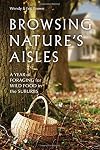
Interesting and with some good tips on foraging, but I found the shifting tenses annoying and didn't like that this book promotes the myth of natural food purity. I also didn't like the authors attitude about hunting and eating meat . The idea of "thanking the animal for its sacrifice" is so immature and self serving, as if the animal gave itself up to be killed. This book was all about connecting with the source of your food, and if you can't accept the reality of predation then maybe you show more shouldn't be eating meat. show less
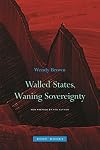
I've been reading and thinking about sovereignty for months without being able to get a grasp on contemporary sovereignty. With this short book, Brown has clarified a number of critical points for me. Finally, someone has put the pieces together in a way that retains rather than diluting the salience of the modernist definition of sovereignty while also recognizing its inevitable incompleteness and positing a vision of post-Westphalian sovereignty!
Lists
Awards


You May Also Like


Associated Authors
Statistics
- Works
- 23
- Also by
- 5
- Members
- 1,394
- Popularity
- #18,439
- Rating
- 3.9
- Reviews
- 7
- ISBNs
- 94
- Languages
- 8
- Favorited
- 4