
William E. Connolly
Author of The Blackwell Encyclopaedia of Political Thought
About the Author
William E. Connolly is Krieger-Eisenhower Professor at Johns Hopkins University, where he teaches political theory. His recent books include Facing the Planetary and The Fragility of Things, both also published by Duke University Press, and Aspirational Fascism.
Image credit: from Johns Hopkins University faculty page
Works by William E. Connolly
IdentityDifference: Democratic Negotiations of Political Paradox, Expanded Edition (1991) 64 copies, 1 review
The Fragility of Things: Self-Organizing Processes, Neoliberal Fantasies, and Democratic Activism (2013) 56 copies
Aspirational Fascism: The Struggle for Multifaceted Democracy under Trumpism (Forerunners: Ideas First) (2017) 34 copies, 1 review
Associated Works
Tagged
Common Knowledge
- Legal name
- Connolly, William Eugene
- Birthdate
- 1938
- Gender
- male
- Education
- University of Michigan, Flint (BA)
University of Michigan, Ann Arbor (PhD) - Occupations
- political science professor, Johns Hopkins University
- Nationality
- USA
- Birthplace
- Flint, Michigan, USA
- Map Location
- USA
Members
Reviews
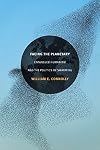
A surprising weave of a book. I better understand Deleuze and Whitehead from reading Connolly’s interpretation of these process philosophers as he strung them into current enviro/ecological thought. His concepts of entangled humanism, passive nihilism and scars of being are fresh without deepening into unnecessary jargon. Although I do not hold strong such political urgency as him, the book is highly recommended for those interested in alternative strands of thought.
Aspirational Fascism: The Struggle for Multifaceted Democracy under Trumpism (Forerunners: Ideas First) by William E. Connolly
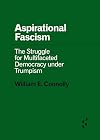
If this extended essay had been better written, it would have been more enjoyable and perhaps more influential. As it is, the language is stilted and the sentence structure tortured and complicated, often burying important points beneath layers of obtuse verbiage.
The author argues that while Trump is not a Nazi, he does employ the rhetorical and political techniques that underlay that philosophy.
The author argues that while Trump is not a Nazi, he does employ the rhetorical and political techniques that underlay that philosophy.
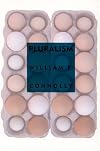
A look at the philosophical underpinnings of pluralism.
John Rawls has stated that pluralism is a fact of modern political life. Difference of beliefs and faiths is an inherent part of living in societies, and especially one with our liberal democracies.
Connolly attempts to handle the contradictions which this belief system engenders. On the one hand, there are unflinching dogmas which demand their unilateral imposition (he ties together St. Augustine and Sayyed Qutb), and on the other, show more relativism, which denies all objectivity and claims to truth. His goal is to find a proper balance between the two.
He advances a few interesting ideas. He notes that all of us are creatures of faith, a cliche which me strengthens and makes into a truism. He defines some new terms for phenomena within pluralism - 'agnostic respect', where you learn that there are faiths other than your own and respect that other people have them, and 'critical responsiveness', where one becomes more receptive not only to the faiths, but also the struggles and leaps of faith, which others have. These do not seem like discoveries, but like attempts at definitions. His pluralism is tolerant to everything except unilateral demands, and denounces secularism (?).
The rest of the book seems disjointed and awkward, trying to draw up artists and philosophers as examples of ideas, as well as political events, jumping from Proust to Deleuze to 9/11 with little tendon connection between them - but then offers little in the means of making these thoughts into something more concrete. This pluralism sounds excellent enough, but how do we cultivate it in others?
A confusing book, and one which wanders from its original task, but one which asks good questions. I'm told this is not his best book, and I may read another of his. show less
John Rawls has stated that pluralism is a fact of modern political life. Difference of beliefs and faiths is an inherent part of living in societies, and especially one with our liberal democracies.
Connolly attempts to handle the contradictions which this belief system engenders. On the one hand, there are unflinching dogmas which demand their unilateral imposition (he ties together St. Augustine and Sayyed Qutb), and on the other, show more relativism, which denies all objectivity and claims to truth. His goal is to find a proper balance between the two.
He advances a few interesting ideas. He notes that all of us are creatures of faith, a cliche which me strengthens and makes into a truism. He defines some new terms for phenomena within pluralism - 'agnostic respect', where you learn that there are faiths other than your own and respect that other people have them, and 'critical responsiveness', where one becomes more receptive not only to the faiths, but also the struggles and leaps of faith, which others have. These do not seem like discoveries, but like attempts at definitions. His pluralism is tolerant to everything except unilateral demands, and denounces secularism (?).
The rest of the book seems disjointed and awkward, trying to draw up artists and philosophers as examples of ideas, as well as political events, jumping from Proust to Deleuze to 9/11 with little tendon connection between them - but then offers little in the means of making these thoughts into something more concrete. This pluralism sounds excellent enough, but how do we cultivate it in others?
A confusing book, and one which wanders from its original task, but one which asks good questions. I'm told this is not his best book, and I may read another of his. show less

This collection of nine essays is dated but useful. It reviews the subject from several perspectives as seen about 1970. ‘Pluralism’ is seen politically as the interaction of multiple groups, each with their own views and priorities, and is presented as a necessity for a Democratic government. The primary author (William Connolly) would continue to pursue work in this field for 30 more years.
The essays themselves are creative, well-written, and cover both the ‘left’ and ‘right’ show more view of the subject. This book was prepared as a secondary text in an advanced academic setting of Political Science. That gives it a feature and drawback, in that opposing views are presented from academics of both sides, and no conclusions are reached. This is most certainly done to make it convenient to include as material in a number of courses. It also means that no consideration is made of the extent to which government should address these questions. As a result, I found it helpful in understanding the academic-political interface, but useless in reaching any conclusions about it. show less
The essays themselves are creative, well-written, and cover both the ‘left’ and ‘right’ show more view of the subject. This book was prepared as a secondary text in an advanced academic setting of Political Science. That gives it a feature and drawback, in that opposing views are presented from academics of both sides, and no conclusions are reached. This is most certainly done to make it convenient to include as material in a number of courses. It also means that no consideration is made of the extent to which government should address these questions. As a result, I found it helpful in understanding the academic-political interface, but useless in reaching any conclusions about it. show less
Awards

You May Also Like


Associated Authors
Statistics
- Works
- 25
- Also by
- 4
- Members
- 865
- Popularity
- #29,594
- Rating
- 3.8
- Reviews
- 6
- ISBNs
- 80
- Languages
- 4