
Leo Strauss (1899–1973)
Author of History of Political Philosophy
About the Author
Leo Strauss (1899-1973) was one of the preeminent political philosophers of the twentieth century. From 1949 to 1968 he was professor of political science at the University of Chicago. He is the author of many books, among them The Political Philosophy of Hobbes, Natural Right and History, and show more Spinoza's Critique of Religion, all published by the University of Chicago Press. Catherine H. Zuciert is the Nancy R. Dreux Professor of Political Science Emeritus at the University of Notre Dame. show less
Image credit: Photographie du Professeur Leo Strauss
Works by Leo Strauss
The Rebirth of Classical Political Rationalism: An Introduction to the Thought of Leo Strauss (1989) 159 copies
Philosophy and Law: Essays Toward the Understanding of Maimonides and His Predecessors/Bk No 662 (1987) 81 copies
Jewish Philosophy and the Crisis of Modernity: Essays and Lectures in Modern Jewish Thought (SUNY series in the Jewish Writings of Leo Strauss) (1997) 56 copies
Faith and Political Philosophy: The Correspondence Between Leo Strauss and Eric Voegelin, 1934-1964 (1993) 43 copies, 1 review
Leo Strauss: The Early Writings, 1921-1932 (Suny Series in the Jewish Writings of Strauss) (2002) 32 copies, 1 review
Leo Strauss on Nietzsche's Thus Spoke Zarathustra (The Leo Strauss Transcript Series) (2017) 28 copies
Leo Strauss on Political Philosophy: Responding to the Challenge of Positivism and Historicism (The Leo Strauss Transcript Series) (2018) 16 copies
La philosophie politique et l'histoire : De l'utilité et des inconvénients de l'histoire pour la philosophie (2008) 7 copies
Leo Strauss: Gesammelte Schriften: Hobbes' politische Wissenschaft und zugehörige Schriften - Briefe: Bd. 3 (2008) 5 copies
Jerusalem and Athens: Some preliminary reflections (The Frank Cohen public lectures in Judaic affairs) (1983) 4 copies
La critique de la religion chez Hobbes : Une contribution à la compréhension des Lumières (1933-1934) (2005) 3 copies
Le Discours socratique de Xénophon: Suivi de Le Socrate de Xénophon ; en appendice L'esprit de Sparte et le goût de Xénophon (1992) 3 copies
How to Study Medieval Philosophy 2 copies
Interpretation of Genesis 2 copies
Hobbes’ politische Wissenschaft und zugehörige Schriften – Briefe (= Gesammelte Schriften 3) [3. Aufl.] (2022) 1 copy
El problema de Sòcrates 1 copy
Reason and Revelation 1 copy
Prirodno pravo i istorija 1 copy
QYTETI DHE NJERIU 1 copy
Associated Works
Did You Ever See a Dream Walking? American Conservative Thought in the Twentieth Century (1970) — Contributor — 86 copies
Tagged
Common Knowledge
- Canonical name
- Strauss, Leo
- Birthdate
- 1899-09-20
- Date of death
- 1973-10-18
- Gender
- male
- Education
- University of Hamburg (Ph.D|1921)
University of Marburg - Occupations
- professor
political philosopher
classicist
historian of philosophy - Organizations
- University of Chicago
St. John's College
German Army (WWI) - Awards and honors
- Grosses Verdienstkreuz der Bundesrepublik Deutschland (1965)
- Relationships
- Klein, Jacob (friend)
Kojève, Alexandre (friend)
Benardete, Seth (student)
Bloom, Allan (student)
Rosen, Stanley (student)
Scholem, Gershom (friend) - Short biography
- Leo Strauss was born in a small rural town in Germany and raised in an orthodox Jewish home. He attended a gymnasium in nearby Marburg and then the University of Marburg. At age 17, he joined the German Zionist movement, in which he met many intellectuals and writers, including Hannah Arendt and Walter Benjamin. He received his doctorate from the University of Hamburg in 1921. In 1923, he began lecturing in Frankfurt under the auspices of a center for adult education. He published his first book, "Spinoza's Critique of Religion," in 1930, but found himself without a job a couple of years later. He won a fellowship from the Rockefeller Foundation to begin work in France on a study of the philosopher Hobbes. In Paris, he married Marie (Miriam) Bernsohn and later adopted his wife's son. The following year, he received an extension on his Rockefeller grant to work in London and Cambridge on his book on Hobbes. Unable to obtain permanent employment in England, Prof. Strauss emigrated to the USA in 1937. After a short stint as research fellow in the Department of History at Columbia University, Prof. Strauss held a faculty position at The New School from 1938 to 1948. He became a U.S. citizen in 1944, and in 1949 he became professor of political science at the University of Chicago, where he held the Maynard Hutchins Distinguished Service Professorship until 1969. There he taught several generations of students and published 15 books. After retiring from the University of Chicago in 1969, Prof. Strauss moved to Claremont McKenna College in California for a year, and then to St. John's College in Annapolis, where he served as Scott Buchanan Distinguished Scholar in Residence until his death. Prof. Strauss's body of work spanned ancient, medieval and modern political philosophy. He wrote mainly as a historian of philosophy and most of his writings take the form of commentaries on important thinkers and their writings.
- Nationality
- USA (naturalized 1944)
Prussia (birth) - Birthplace
- Kirchhain, Hesse-Nassau, Kingdom of Prussia, German Empire
- Places of residence
- Chicago, Illinois, USA
Marburg an der Lahn, Germany
New York, New York, USA
Annapolis, Maryland, USA - Place of death
- Annapolis, Maryland, USA
- Associated Place (for map)
- USA
Members
Reviews

This revised and expanded edition of On Tyranny is made up of a linked set of texts ranging over more than two millennia of authorship. First is the translation of Xenophon's Hiero or Tyrannicus, in which the poet Simonides debates and counsels the tyrant Hiero regarding the enjoyability of a tyrant's life. Then comes On Tyranny "proper," the study of Xenophon's dialogue by twentieth-century philosopher Leo Strauss. Strauss' contemporary Alexandre Kojève, the eminent interpreter of Hegel, show more wrote a reaction to On Tyranny which appears in this volume as "Tyranny and Wisdom" and Strauss replied with a "Restatement." These two texts are paired here as The Strauss-Kojève Debate. Finally, the volume concludes with a publication of all of the personal correspondence between Strauss and Kojève that the editors were able to obtain.
As a US American in 2025 reading the original Xenophon text and Strauss' immediate analysis, I could not help casting our current tyrant in the role of Hiero. It was interesting to see that the dictator played the victim even in antiquity. (It certainly gives the comedian too much credit, but recent events incited me to flesh out the dialogue in my imagination by giving Bill Maher the part of Simonides.) The commentaries' post-WW II perspective on "modern tyranny" was of compelling interest as a sort of veiled prophecy regarding how thinkers might in the future reflect on the dismal episode of the MAGA hegemony.
A simplistic view of Strauss and Kojève places the former on the political "right" and the latter on the "left," and on that account I might have expected to have some serious sympathy with Kojève, but I found Strauss to be the clearer and more penetrating writer throughout, and I confess that like Strauss I see no way around Nietzsche's dismal assessment of the Hegelian chiliasm. The friendly and long-sustained personal correspondence between Strauss and Kojève was surprisingly rewarding. On the basis of some of their early exchanges, I have realized that I might profitably defer my ambitions to read Hegel's Phenomenology of Spirit in favor of a prior reading of Thomas Hobbes (who has already been keyed to my interests by Ada Palmer's Terra Ignota).
As part of my larger reading project of Strauss' works, I was interested to note a condensed exposition of the thesis underlying Persecution and the Art of Writing. In his "Restatement," he writes that "in former ages, philosophy ... accommodated itself in its explicit or exoteric teaching to the unfounded commands of rulers who believed they knew things which they did not know. Yet its very exoteric teaching undermined the commands or dogmas of the rulers in such a way as to guide the potential philosophers toward the eternal and unsolved problems" (211). show less
As a US American in 2025 reading the original Xenophon text and Strauss' immediate analysis, I could not help casting our current tyrant in the role of Hiero. It was interesting to see that the dictator played the victim even in antiquity. (It certainly gives the comedian too much credit, but recent events incited me to flesh out the dialogue in my imagination by giving Bill Maher the part of Simonides.) The commentaries' post-WW II perspective on "modern tyranny" was of compelling interest as a sort of veiled prophecy regarding how thinkers might in the future reflect on the dismal episode of the MAGA hegemony.
A simplistic view of Strauss and Kojève places the former on the political "right" and the latter on the "left," and on that account I might have expected to have some serious sympathy with Kojève, but I found Strauss to be the clearer and more penetrating writer throughout, and I confess that like Strauss I see no way around Nietzsche's dismal assessment of the Hegelian chiliasm. The friendly and long-sustained personal correspondence between Strauss and Kojève was surprisingly rewarding. On the basis of some of their early exchanges, I have realized that I might profitably defer my ambitions to read Hegel's Phenomenology of Spirit in favor of a prior reading of Thomas Hobbes (who has already been keyed to my interests by Ada Palmer's Terra Ignota).
As part of my larger reading project of Strauss' works, I was interested to note a condensed exposition of the thesis underlying Persecution and the Art of Writing. In his "Restatement," he writes that "in former ages, philosophy ... accommodated itself in its explicit or exoteric teaching to the unfounded commands of rulers who believed they knew things which they did not know. Yet its very exoteric teaching undermined the commands or dogmas of the rulers in such a way as to guide the potential philosophers toward the eternal and unsolved problems" (211). show less

Natural Right was invented by the ancient Greeks. It is a philosophical concept, an abstraction, the evolution of which looks to Leo Strauss like a degeneration from higher to baser principles.
The idea of Natural Right developed once the Greeks came to doubt authority, as a consequence of their discovery and investigation of nature (as opposed to convention). The Greeks’ search for the Good led to a consideration of various political forms more or less in accordance with (what the Greeks show more understood as) human nature. The Greeks uncovered the fundamental political themes and questions that have been asked ever since:
How ought man to live?
What is the ultimate goal of wise action?
Which values are paramount?
The so-called historical school would point out that the answers to such questions vary across societies and cultures, and that no universal consensus is possible. Strauss responds that, because the fundamental problems have persisted across time, human thought is capable of grasping something trans-historical. Political life in all its forms pointed to Natural Right as an inevitable and recurring problem, writes Strauss, but a fundamental comprehension is in principle accessible to man as man.
The ancient understanding, that the good life is ‘the life in which the requirements of man’s natural inclinations are fulfilled in the proper order to the highest possible degree,’ has been muddied and very nearly lost sight of since the 17th century, says Strauss. Classic Natural Right recognized man’s natural sociality and insisted that, in order to reach his highest stature, man must live in the best kind of society, one conducive to human excellence, where the supreme virtue is self-restraint. Since the Enlightenment, the idea of Natural Right has been shaped by science (which privileges facts over values, which are reduced to ‘preferences’) and political economy (which privileges rights over virtue) and so modern political philosophy emphasizes man’s individuality over his sociality. The pursuit of freedom has replaced the pursuit of wisdom. Strauss leaves it to the reader to consider the ramifications of that development.
Strauss owed allegiance to no political tendency or faction, but his sympathies were usually apparent. He was one of the great expositors of political philosophy in the 20th c., and anyone aiming for competence in the field would have to engage with his commentary. Natural Right and History includes learned discussions of Plato, Aristotle, Hobbes, Locke, Rousseau, Burke and others. The power of Strauss’s work has little to do with whether or not one agrees with him; it is instead in his skeptical stance toward dogma and ideology and in the logic and rigor of his philosophical critique. show less
The idea of Natural Right developed once the Greeks came to doubt authority, as a consequence of their discovery and investigation of nature (as opposed to convention). The Greeks’ search for the Good led to a consideration of various political forms more or less in accordance with (what the Greeks show more understood as) human nature. The Greeks uncovered the fundamental political themes and questions that have been asked ever since:
How ought man to live?
What is the ultimate goal of wise action?
Which values are paramount?
The so-called historical school would point out that the answers to such questions vary across societies and cultures, and that no universal consensus is possible. Strauss responds that, because the fundamental problems have persisted across time, human thought is capable of grasping something trans-historical. Political life in all its forms pointed to Natural Right as an inevitable and recurring problem, writes Strauss, but a fundamental comprehension is in principle accessible to man as man.
The ancient understanding, that the good life is ‘the life in which the requirements of man’s natural inclinations are fulfilled in the proper order to the highest possible degree,’ has been muddied and very nearly lost sight of since the 17th century, says Strauss. Classic Natural Right recognized man’s natural sociality and insisted that, in order to reach his highest stature, man must live in the best kind of society, one conducive to human excellence, where the supreme virtue is self-restraint. Since the Enlightenment, the idea of Natural Right has been shaped by science (which privileges facts over values, which are reduced to ‘preferences’) and political economy (which privileges rights over virtue) and so modern political philosophy emphasizes man’s individuality over his sociality. The pursuit of freedom has replaced the pursuit of wisdom. Strauss leaves it to the reader to consider the ramifications of that development.
Strauss owed allegiance to no political tendency or faction, but his sympathies were usually apparent. He was one of the great expositors of political philosophy in the 20th c., and anyone aiming for competence in the field would have to engage with his commentary. Natural Right and History includes learned discussions of Plato, Aristotle, Hobbes, Locke, Rousseau, Burke and others. The power of Strauss’s work has little to do with whether or not one agrees with him; it is instead in his skeptical stance toward dogma and ideology and in the logic and rigor of his philosophical critique. show less
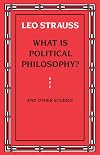
The Enticing Ambiguities of Leo Strauss, February 8, 2006
For an author who is most often despised, and occasionally revered, one is surprised on how little consensus there is on what Leo Strauss actually thought. In this brief review I would like to give the prospective reader a little taste of the great enigma that is Leo Strauss.
The difficulty is this, in reading Leo Strauss one always gets the feeling that one is either on the edge of a rather large insight or the target of an show more elaborate, but delightfully subtle, joke. In the essay on Maimonides ("Maimonides Statement on Political Science," p155-169) LS speaks a great deal about the (meaning of the) order of Maimonides' listing of the divisions and subdivisions of Theoretical and Practical Philosophy, all the while taking special note of the central topic. Centers of lists, books, chapters, and so forth are very important to LS - they represent the least exposed position, and thus (perhaps!) the place to look for the philosophers true meaning.
Maimonides' list:
***
1. Theoretical Philosophy:
***
A. Math:
***
i. Arithmetic
ii. Geometry
iii. Astronomy
iv. Music
***
B. Physics
***
C. Theology:
***
i. God, Angels
ii. Metaphysics
***
2. Practical Philosophy:
***
A. Man's Governance of himself.
B. Governance of the household.
C. Governance of the City.
D. Governance of the Nations.
***
Unfortunately, or so it seems, there is more than one center to our list. There are two "centers" to this list considered as a whole. If one only pays attention to the ABC divisions the center is 2A: Man's Governance of himself. However, if one pays attention to the i,ii,iii subdivisions the center of the whole list is 1C.i: God and Angels. Furthermore, the center of theoretical Philosophy itself is either (in the ABC division) 1B -Physics or (in the i, ii, iii subdivision) 1A.iv -Music. Interestingly, of the 3 major divisions within theoretical philosophy only Physics isn't further subdivided. And (perhaps somewhat more alarmingly) there is no center at all to Practical Philosophy considered on its own.
Practical Philosophy has no center but one of its elements (2A, in the ABC division) is a contender to be the center of the whole of philosophy. Of the centers considered (two for the whole of philosophy, Man's Governance of himself and God and Angels; and two for theoretical philosophy, Physics and Music) only one (God and Angels) could, I think, be considered orthodox or religious. Thus one could (perhaps) be forgiven for thinking that what LS is insinuating, by drawing our attention to this list of Maimonides, is that (with the possible exception of Physics, which has no subdivisions) theoretical philosophy & practical philosophy are based on nothing but Man; the different types and needs of men. Psychology, apparently, is indeed the Queen of the Sciences, as Nietzsche much later maintained.
In any case, when LS says that, "[w]e are tempted to say that the Logic [i.e. the book by Maimonides where the above list occurs] is the only philosophic book which Maimonides ever wrote" one is eerily reminded of how LS saw fit to end the previous essay (How Farabi Read Plato's Laws, p134 -154): "[w]e admire the ease with which Farabi invented Platonic speeches." Now, is LS actually denying that Maimonides later work is philosophical? Or, is the speech (or purpose) LS seemingly attributes to Maimonides' list an invention? Has LS here `invented' a Maimonidean speech?
Further, if one takes into consideration the beginning of the Farabi essay (observations by LS on Farabi's story about the mystic dissembling to escape a city) one is forced to wonder if (or to what degree) LS seriously meant what he indicates, or can be said to indicate, here. Or, another possibility, is LS `criticizing' Maimonides for daring to be so bold? Does a `genuine' philosopher ever dare say what he actually thinks? By not mentioning the youthfulness of Maimonides when he wrote this work (the `Logic' supposedly was written when he was 16!) is LS drawing our attention to it, seemingly to emphasize that no genuine philosopher would ever speak so frankly when mature? Thus, if this line of interpretation were correct, Maimonides, at the height of his powers (i.e. in the Guide), would never, or so LS maintains above, risk writing a philosophic work.
The central chapters, btw, of `What is Political Philosophy' are the essays on Farabi and Maimonides. ...Strauss was not young when he wrote them.
Additionally, I should point out that in the Farabi essay Strauss draws our attention not only to the similarity between philosophers and the pious (i.e. both face persecution) but also to the differences between them.
"We must understand this in the light of the story of the pious ascetic. Plato was not a pious ascetic. Whereas the pious ascetic almost always says explicitly and unambiguously what he thinks, Plato almost never says explicitly and unambiguously what he thinks. But Plato has something in common with the pious ascetic. Both are sometimes compelled to state truths which are dangerous to either themselves or others. Since they are both men of judgment, they act in such cases in the same way; they state the dangerous truth by surrounding it properly, with the result that they are not believed in what they say. It is in this manner that Plato has written about laws."
This last is directly attributed to Farabi by Strauss. Seemingly, LS would want us to choose between two alternatives: either Maimonides is a pious ascetic/mystic who "almost always says explicitly and unambiguously what he thinks" or he is a philosopher who "almost never says explicitly and unambiguously what he thinks". Eventually, one finds oneself wondering something similar about LS himself.
But why all this ambiguity?
"Farabi's Summary consists of allusions to those thoughts to which, as he thinks, Plato has alluded in the Laws. Farabi's allusions are meant to be helpful for men for whom Plato's allusions are not equally helpful: allusions which were intelligible to some of Plato's contemporaries are not equally intelligible to men of the same type among Farabi's contemporaries."
One can perhaps at this point be forgiven for adding that whereas Plato wrote allusively for ancient pagans and Farabi wrote allusively for medieval monotheists Strauss himself writes allusively for modern atheists. ...Is there then only one Philosophy?
Obviously I do not, btw, mean to claim that this is an exhaustive account of what LS says in these important essays. This is only a snapshot (i.e. a particular, if not peculiar, view) of what is going on in these essays; read and reread these, and the other essays, carefully to try to get a more comprehensive view. show less
For an author who is most often despised, and occasionally revered, one is surprised on how little consensus there is on what Leo Strauss actually thought. In this brief review I would like to give the prospective reader a little taste of the great enigma that is Leo Strauss.
The difficulty is this, in reading Leo Strauss one always gets the feeling that one is either on the edge of a rather large insight or the target of an show more elaborate, but delightfully subtle, joke. In the essay on Maimonides ("Maimonides Statement on Political Science," p155-169) LS speaks a great deal about the (meaning of the) order of Maimonides' listing of the divisions and subdivisions of Theoretical and Practical Philosophy, all the while taking special note of the central topic. Centers of lists, books, chapters, and so forth are very important to LS - they represent the least exposed position, and thus (perhaps!) the place to look for the philosophers true meaning.
Maimonides' list:
***
1. Theoretical Philosophy:
***
A. Math:
***
i. Arithmetic
ii. Geometry
iii. Astronomy
iv. Music
***
B. Physics
***
C. Theology:
***
i. God, Angels
ii. Metaphysics
***
2. Practical Philosophy:
***
A. Man's Governance of himself.
B. Governance of the household.
C. Governance of the City.
D. Governance of the Nations.
***
Unfortunately, or so it seems, there is more than one center to our list. There are two "centers" to this list considered as a whole. If one only pays attention to the ABC divisions the center is 2A: Man's Governance of himself. However, if one pays attention to the i,ii,iii subdivisions the center of the whole list is 1C.i: God and Angels. Furthermore, the center of theoretical Philosophy itself is either (in the ABC division) 1B -Physics or (in the i, ii, iii subdivision) 1A.iv -Music. Interestingly, of the 3 major divisions within theoretical philosophy only Physics isn't further subdivided. And (perhaps somewhat more alarmingly) there is no center at all to Practical Philosophy considered on its own.
Practical Philosophy has no center but one of its elements (2A, in the ABC division) is a contender to be the center of the whole of philosophy. Of the centers considered (two for the whole of philosophy, Man's Governance of himself and God and Angels; and two for theoretical philosophy, Physics and Music) only one (God and Angels) could, I think, be considered orthodox or religious. Thus one could (perhaps) be forgiven for thinking that what LS is insinuating, by drawing our attention to this list of Maimonides, is that (with the possible exception of Physics, which has no subdivisions) theoretical philosophy & practical philosophy are based on nothing but Man; the different types and needs of men. Psychology, apparently, is indeed the Queen of the Sciences, as Nietzsche much later maintained.
In any case, when LS says that, "[w]e are tempted to say that the Logic [i.e. the book by Maimonides where the above list occurs] is the only philosophic book which Maimonides ever wrote" one is eerily reminded of how LS saw fit to end the previous essay (How Farabi Read Plato's Laws, p134 -154): "[w]e admire the ease with which Farabi invented Platonic speeches." Now, is LS actually denying that Maimonides later work is philosophical? Or, is the speech (or purpose) LS seemingly attributes to Maimonides' list an invention? Has LS here `invented' a Maimonidean speech?
Further, if one takes into consideration the beginning of the Farabi essay (observations by LS on Farabi's story about the mystic dissembling to escape a city) one is forced to wonder if (or to what degree) LS seriously meant what he indicates, or can be said to indicate, here. Or, another possibility, is LS `criticizing' Maimonides for daring to be so bold? Does a `genuine' philosopher ever dare say what he actually thinks? By not mentioning the youthfulness of Maimonides when he wrote this work (the `Logic' supposedly was written when he was 16!) is LS drawing our attention to it, seemingly to emphasize that no genuine philosopher would ever speak so frankly when mature? Thus, if this line of interpretation were correct, Maimonides, at the height of his powers (i.e. in the Guide), would never, or so LS maintains above, risk writing a philosophic work.
The central chapters, btw, of `What is Political Philosophy' are the essays on Farabi and Maimonides. ...Strauss was not young when he wrote them.
Additionally, I should point out that in the Farabi essay Strauss draws our attention not only to the similarity between philosophers and the pious (i.e. both face persecution) but also to the differences between them.
"We must understand this in the light of the story of the pious ascetic. Plato was not a pious ascetic. Whereas the pious ascetic almost always says explicitly and unambiguously what he thinks, Plato almost never says explicitly and unambiguously what he thinks. But Plato has something in common with the pious ascetic. Both are sometimes compelled to state truths which are dangerous to either themselves or others. Since they are both men of judgment, they act in such cases in the same way; they state the dangerous truth by surrounding it properly, with the result that they are not believed in what they say. It is in this manner that Plato has written about laws."
This last is directly attributed to Farabi by Strauss. Seemingly, LS would want us to choose between two alternatives: either Maimonides is a pious ascetic/mystic who "almost always says explicitly and unambiguously what he thinks" or he is a philosopher who "almost never says explicitly and unambiguously what he thinks". Eventually, one finds oneself wondering something similar about LS himself.
But why all this ambiguity?
"Farabi's Summary consists of allusions to those thoughts to which, as he thinks, Plato has alluded in the Laws. Farabi's allusions are meant to be helpful for men for whom Plato's allusions are not equally helpful: allusions which were intelligible to some of Plato's contemporaries are not equally intelligible to men of the same type among Farabi's contemporaries."
One can perhaps at this point be forgiven for adding that whereas Plato wrote allusively for ancient pagans and Farabi wrote allusively for medieval monotheists Strauss himself writes allusively for modern atheists. ...Is there then only one Philosophy?
Obviously I do not, btw, mean to claim that this is an exhaustive account of what LS says in these important essays. This is only a snapshot (i.e. a particular, if not peculiar, view) of what is going on in these essays; read and reread these, and the other essays, carefully to try to get a more comprehensive view. show less

One can read reviews of Strauss the reactionary or Strauss the left-wing nationalist, suggesting that Strauss is usually viewed through an ideological lens (ref. his assertion in The City and Man [1964] that political philosophy has been replaced by ideology). Anyone who incites such divergent interpretations must be on to something.
Strauss did not write aphorisms, nor did he commit to any easily identifiable position on anyone else’s spectrum of conceivable political positions. Instead, show more he wrote incisive, analytical commentaries on key classical and Renaissance texts in political philosophy, which he presented as attempts to excavate complex substrata of logic and purpose. Strauss believed that the understanding of a philosophical text required a reader to comprehend the intentions of the writer, “to study political philosophies as they were understood by their originators in contradistinction to the way in which they were understood by their adversaries and even by detached or indifferent bystanders.”
At the same time, he argued that certain philosophical texts were comprehendible only as a kind of esoteric writing—the writer’s true intentions conveyed subtly, concealed as in code. Uncovering the true meaning requires approaching the text from different angles. Consequently, Strauss’ own views are difficult to discern in his explications of the work of others. I mean not to imply that Strauss was some fuzzy obscurantist, only that he was a polygonal peg in a world of round holes.
The City and Man comprises three long essays—on Plato’s Republic, the Politics of Aristotle, and The Peloponnesian War by Thucydides—which together illustrate what Strauss took to be the advantages of classical political philosophy over modern scientific thought. His critique of modern (post-Enlightenment) thought was in part a lamentation, for what had been lost, as Strauss saw it; not so much a rejection of modernity as it was an attempt at a revaluation of principles that had been obscured.
Strauss plays the three Greeks off of each other while all along insisting on a genuine consensus of the wise. He clearly admired the Greek philosophers, for their emphasis on the rewards of prudence, moderation, and justice, and for their philosophical techné. Aristotle had great faith in man, in his inclination toward happiness and in his endeavors toward seeing and knowing for their own sake. Modern thought, writes Strauss, has rejected Aristotle’s view of a harmony between the whole of nature and the human mind, thus setting up nature as an enemy to be subjugated and overcome. Strauss himself was admirably skeptical of claims to ‘progress’: the advance of science and the growth of knowledge had not produced virtue and happiness, and political society had abandoned the cultivation of virtue for the pursuit of ‘freedom,’ i.e. “the freedom to live either nobly or basely according to one’s liking.”
Strauss’ Aristotle "founded political science as an independent discipline and discovered moral virtue, which for Plato had been only a kind of halfway house between political virtue (that which was in the service of self-preservation or peace) and genuine virtue, which animated only the true philosophers." The possibility of a natural, reasoned virtue is one of the pursuits that modern scientific thought has abandoned, according to Strauss, along with an ability to validate any value-judgments as proper.
Plato’s teaching could not be understood apart from the form in which it was presented, writes Strauss, and a crucial component of the form was a radical irony. Socrates, as a character in a poetic form (the Platonic dialogue), asserted the value of philosophy over poetry. Socrates described justice as the supreme virtue of the city, but the dialogue form exposed justice as untenable—not because justice was impossible, but because it was an idea “beyond all becoming.” Strauss’ succinct exegesis of Plato’s doctrine of ideas illuminates that notoriously difficult set of concepts, and the whole chapter serves as a valuable reminder of the genius of Plato. The Republic was contrived so as to say different things to different people, and perhaps Socrates (or Plato? or Leo Strauss?) did not primarily intend to teach a doctrine but "to educate human beings—to make them better, more just or gentle, more aware of their limitations."
The most surprising chapter in The City and Man is the one on Thucydides, whose book was not just a narrative of war but a study of the nature of war. Strauss, of course, was not to be satisfied with the traditional conception of Thucydides’ as a “scientific” historian. The surface narrative of the events of war “hid” a deeper stratum of thought. Strauss’ Thucydides was a philosophic historian: he was in fundamental agreement with Plato on the good and the bad, the noble and the base, and he shared with Aristotle the quest for a ‘common sense’ understanding of political things.
But for all that philosophical affinity, writes Strauss, the lesson of Thucydides’ work as a whole rendered questionable a presupposition of classical philosophy. "Both Plato and Aristotle neglected ‘foreign affairs’ in visualizing their perfectly good cities, whereas Thucydides taught that the city was neither self-sufficient nor was it essentially a part of a good or just order comprising many or all cities." In what has come to be recognized as a fundamental tenet of international relations, the unequal power of different cities inevitably leads to the consequences that "the most powerful cities cannot help being hegemonic or even imperial." The ‘anarchical system’ which characterizes the ‘society of cities’ and the omnipresence of war “puts a much lower ceiling on the highest aspiration of any city toward justice and virtue than classical political philosophy might seem to have admitted.” It’s hard to be good in war, which is not the same as being good at war.
The excavation of Thucydides’ thought from the narrative of the Peloponnesian War is the clearest example here of Strauss’ approach to esoteric texts. I didn’t even know that The Peloponnesian War was an esoteric text. And it’s not that one has to agree with Strauss, but that any claim to understanding that disregards Strauss would ring false and incomplete. Too many writers and scholars assume and then take for granted that the ancient Greeks gloried in war, that their greatest accomplishments were the consequences of victory in battle. Their own greatest narratives were war stories—Trojan, Persian, Peloponnesian. But Strauss’ esoteric reading of Thucydides allows for a reconsideration. “Wisdom cannot be presented as a spectacle,” Strauss wrote, “in the way in which battles and the like can be presented. Wisdom cannot be ‘said.’ It can only be ‘done.’” He was thinking not of Greek soldiers, but of philosophers. show less
Strauss did not write aphorisms, nor did he commit to any easily identifiable position on anyone else’s spectrum of conceivable political positions. Instead, show more he wrote incisive, analytical commentaries on key classical and Renaissance texts in political philosophy, which he presented as attempts to excavate complex substrata of logic and purpose. Strauss believed that the understanding of a philosophical text required a reader to comprehend the intentions of the writer, “to study political philosophies as they were understood by their originators in contradistinction to the way in which they were understood by their adversaries and even by detached or indifferent bystanders.”
At the same time, he argued that certain philosophical texts were comprehendible only as a kind of esoteric writing—the writer’s true intentions conveyed subtly, concealed as in code. Uncovering the true meaning requires approaching the text from different angles. Consequently, Strauss’ own views are difficult to discern in his explications of the work of others. I mean not to imply that Strauss was some fuzzy obscurantist, only that he was a polygonal peg in a world of round holes.
The City and Man comprises three long essays—on Plato’s Republic, the Politics of Aristotle, and The Peloponnesian War by Thucydides—which together illustrate what Strauss took to be the advantages of classical political philosophy over modern scientific thought. His critique of modern (post-Enlightenment) thought was in part a lamentation, for what had been lost, as Strauss saw it; not so much a rejection of modernity as it was an attempt at a revaluation of principles that had been obscured.
Strauss plays the three Greeks off of each other while all along insisting on a genuine consensus of the wise. He clearly admired the Greek philosophers, for their emphasis on the rewards of prudence, moderation, and justice, and for their philosophical techné. Aristotle had great faith in man, in his inclination toward happiness and in his endeavors toward seeing and knowing for their own sake. Modern thought, writes Strauss, has rejected Aristotle’s view of a harmony between the whole of nature and the human mind, thus setting up nature as an enemy to be subjugated and overcome. Strauss himself was admirably skeptical of claims to ‘progress’: the advance of science and the growth of knowledge had not produced virtue and happiness, and political society had abandoned the cultivation of virtue for the pursuit of ‘freedom,’ i.e. “the freedom to live either nobly or basely according to one’s liking.”
Strauss’ Aristotle "founded political science as an independent discipline and discovered moral virtue, which for Plato had been only a kind of halfway house between political virtue (that which was in the service of self-preservation or peace) and genuine virtue, which animated only the true philosophers." The possibility of a natural, reasoned virtue is one of the pursuits that modern scientific thought has abandoned, according to Strauss, along with an ability to validate any value-judgments as proper.
Plato’s teaching could not be understood apart from the form in which it was presented, writes Strauss, and a crucial component of the form was a radical irony. Socrates, as a character in a poetic form (the Platonic dialogue), asserted the value of philosophy over poetry. Socrates described justice as the supreme virtue of the city, but the dialogue form exposed justice as untenable—not because justice was impossible, but because it was an idea “beyond all becoming.” Strauss’ succinct exegesis of Plato’s doctrine of ideas illuminates that notoriously difficult set of concepts, and the whole chapter serves as a valuable reminder of the genius of Plato. The Republic was contrived so as to say different things to different people, and perhaps Socrates (or Plato? or Leo Strauss?) did not primarily intend to teach a doctrine but "to educate human beings—to make them better, more just or gentle, more aware of their limitations."
The most surprising chapter in The City and Man is the one on Thucydides, whose book was not just a narrative of war but a study of the nature of war. Strauss, of course, was not to be satisfied with the traditional conception of Thucydides’ as a “scientific” historian. The surface narrative of the events of war “hid” a deeper stratum of thought. Strauss’ Thucydides was a philosophic historian: he was in fundamental agreement with Plato on the good and the bad, the noble and the base, and he shared with Aristotle the quest for a ‘common sense’ understanding of political things.
But for all that philosophical affinity, writes Strauss, the lesson of Thucydides’ work as a whole rendered questionable a presupposition of classical philosophy. "Both Plato and Aristotle neglected ‘foreign affairs’ in visualizing their perfectly good cities, whereas Thucydides taught that the city was neither self-sufficient nor was it essentially a part of a good or just order comprising many or all cities." In what has come to be recognized as a fundamental tenet of international relations, the unequal power of different cities inevitably leads to the consequences that "the most powerful cities cannot help being hegemonic or even imperial." The ‘anarchical system’ which characterizes the ‘society of cities’ and the omnipresence of war “puts a much lower ceiling on the highest aspiration of any city toward justice and virtue than classical political philosophy might seem to have admitted.” It’s hard to be good in war, which is not the same as being good at war.
The excavation of Thucydides’ thought from the narrative of the Peloponnesian War is the clearest example here of Strauss’ approach to esoteric texts. I didn’t even know that The Peloponnesian War was an esoteric text. And it’s not that one has to agree with Strauss, but that any claim to understanding that disregards Strauss would ring false and incomplete. Too many writers and scholars assume and then take for granted that the ancient Greeks gloried in war, that their greatest accomplishments were the consequences of victory in battle. Their own greatest narratives were war stories—Trojan, Persian, Peloponnesian. But Strauss’ esoteric reading of Thucydides allows for a reconsideration. “Wisdom cannot be presented as a spectacle,” Strauss wrote, “in the way in which battles and the like can be presented. Wisdom cannot be ‘said.’ It can only be ‘done.’” He was thinking not of Greek soldiers, but of philosophers. show less
Lists
Awards

You May Also Like


Associated Authors
Statistics
- Works
- 78
- Also by
- 4
- Members
- 4,790
- Popularity
- #5,241
- Rating
- 4.2
- Reviews
- 22
- ISBNs
- 226
- Languages
- 16
- Favorited
- 14