
Eric Voegelin (1901–1985)
Author of The New Science of Politics: An Introduction
About the Author
Eric Voegelin (1901-1985) was one of the most original and influential philosophers of our time. Born in Cologne, Germany, he studied at the University of Vienna, where he became a professor of political science in the Faculty of Law. In 1938, he and his wife, fleeing Hitler, immigrated to the show more United States. They became American citizens in 1944. Voegelin spent much of his career at Louisiana State University, the University of Munich, and the Hoover Institution at Stanford University. During his lifetime he published many books and more than one hundred articles show less
Image credit: Eric Voegelin Institute
Series
Works by Eric Voegelin
Modernity Without Restraint: The Political Religions; The New Science of Politics; and Science, Politics, and Gnosticism (1999) 66 copies
Faith and Political Philosophy: The Correspondence Between Leo Strauss and Eric Voegelin, 1934-1964 (1993) 43 copies, 1 review
Il mito del mondo nuovo: saggi sui movimenti rivoluzionari del nostro tempo (1990) 5 copies, 1 review
Ordnung und Geschichte, Bd.1, Die kosmologischen Reiche des alten Orients (Periagoge) (2001) 3 copies
História da Ideia de Raça 1 copy
Historiogenesis 1 copy
Hitler et les Allemands 1 copy
Das Drama des Menschseins: Die Walter Turner Candler Lectures (Passagen Religion und Politik) (2007) 1 copy
By Eric Voegelin - The Collected Works of Eric Voegelin, Volume 16, Order and History, Volume III, Plato and Aristotle (2000) 1 copy
'Die spielerische Grausamkeit der Humanisten'. Studien zu Niccolo Machiavelli und Thomas Morus. (1995) 1 copy
Ensaios Publicados 1966-1985 1 copy
Associated Works
Did You Ever See a Dream Walking? American Conservative Thought in the Twentieth Century (1970) — Contributor — 86 copies
Tagged
Common Knowledge
- Legal name
- Vögelin, Erich Hermann Wilhelm
- Birthdate
- 1901-01-03
- Date of death
- 1985-01-19
- Gender
- male
- Education
- University of Vienna, Austria (1928)
- Occupations
- philosopher
political scientist - Organizations
- Philadelphia Society
- Nationality
- Germany
- Birthplace
- Cologne, Germany
- Places of residence
- Cologne, Germany
Vienna, Austria
Baton Rouge, Louisiana, USA
Munich, Germany - Place of death
- Palo Alto, California, USA
- Associated Place (for map)
- Germany
Members
Reviews
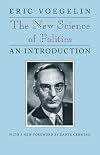
What does a book look like when it asks all the right questions, is concerned about all the right things, and is so completely and utterly conditioned by its historical moment and the author's intellectual and personal background that its answers to these questions and concerns is flat out bizarre? Like this book. Voegelin has a lot in common with Adorno: they both worry that the modern world tends to make people materialistic idiots; they both worry that high culture is being undermined; show more they both worry about the sort of materialistic idiots who thought Stalinism was a really great idea. They were both far too unwilling or unable to think outside the box of the post-war, Cold War world, and didn't seem to realize that a lot of their pessimism could be explained by the fact that they lived in one of the shittiest epochs of human history. They both something along the lines of "the truth isn't in history" (i.e., 'truth' can't necessarily be judged by what seems to be the case right now) and that "history is in the truth," that is, that 'truth' changes over time. They both have essentially dialectical views of culture, although they'd both deny that (e.g., Voegelin argues that the doubtfulness inherent in Christianity leads to the Gnostic search for certainty, which then undermines Christianity...)
The differences then: Adorno thinks that if you're going to do or think anything, you should probably do or think something that will make the world a better place, while admitting that you'll probably mess it up; Voegelin thinks that any effort to make the world a better place is doomed to failure, and it's better not to try. Voegelin thinks the major problem with the world is Gnosticism (that is, roughly, the tendency to treat history, subjects and God as if they were objects that we can know in the same way we know objects); Adorno thinks the major problem with the world is capitalism (that is, roughly, the tendency to treat everything as if it were a commodity and, therefore, an object). So that's a similarity and a difference.
From my perspective, both of those guys have a lot to tell us. This isn't the place to rag on Adorno, but there are some problems you should be aware of, if you plan on reading this book. First, Voegelin's argument is awfully incoherent in a number of spots, most importantly, his claims that Gnosticism ignores the 'structures of reality;' surely only a Gnostic would think there was such a thing as a knowable 'structure of reality'? Second, his insistence on the importance of political order, while perfectly understandable in the face of the second world war, can hardly be transhistorical: sometimes the breakdown of order is a good thing. Tied in to this, I'm pretty sure he's sometimes just trying to get a rise out of his reader, as, for instance, when he complains about the 'magical dream' foolishness of wanting world peace. Finally, and most obviously, his suggestion at the end of the book that the U.S., despite being founded by Gnostic Puritans, is a bastion of the 'Mediterranean' tradition, is either wishful thinking or a joke. Admit it man! Capitalism is a Gnosticism! More specifically: there is *no* force in the world which is neither 'Gnostic' nor revolutionary. Voegelin should have just bitten the bullet. If he's right, either it's all downhill from here, or there will have to be massive social change. Like Adorno, so for a consistent Voegelin: our choice is socialism or barbarism. show less
The differences then: Adorno thinks that if you're going to do or think anything, you should probably do or think something that will make the world a better place, while admitting that you'll probably mess it up; Voegelin thinks that any effort to make the world a better place is doomed to failure, and it's better not to try. Voegelin thinks the major problem with the world is Gnosticism (that is, roughly, the tendency to treat history, subjects and God as if they were objects that we can know in the same way we know objects); Adorno thinks the major problem with the world is capitalism (that is, roughly, the tendency to treat everything as if it were a commodity and, therefore, an object). So that's a similarity and a difference.
From my perspective, both of those guys have a lot to tell us. This isn't the place to rag on Adorno, but there are some problems you should be aware of, if you plan on reading this book. First, Voegelin's argument is awfully incoherent in a number of spots, most importantly, his claims that Gnosticism ignores the 'structures of reality;' surely only a Gnostic would think there was such a thing as a knowable 'structure of reality'? Second, his insistence on the importance of political order, while perfectly understandable in the face of the second world war, can hardly be transhistorical: sometimes the breakdown of order is a good thing. Tied in to this, I'm pretty sure he's sometimes just trying to get a rise out of his reader, as, for instance, when he complains about the 'magical dream' foolishness of wanting world peace. Finally, and most obviously, his suggestion at the end of the book that the U.S., despite being founded by Gnostic Puritans, is a bastion of the 'Mediterranean' tradition, is either wishful thinking or a joke. Admit it man! Capitalism is a Gnosticism! More specifically: there is *no* force in the world which is neither 'Gnostic' nor revolutionary. Voegelin should have just bitten the bullet. If he's right, either it's all downhill from here, or there will have to be massive social change. Like Adorno, so for a consistent Voegelin: our choice is socialism or barbarism. show less
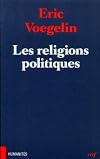
This is a curious book. It marks the transition from the young scholar Erich Voegelin to the more seasoned thinker who burst on the political science scene in the 1950s. The book is a bilingual text; but, and this is very unusual (in my experience, at any rate), the German text, in its entirety, follows the English translation, in its entirety. The only reason I can think of is that the publisher did it to cut down the number of pages. What! How? The German text is printed in a smaller show more typescript. And therefore takes less pages than the translation. I prefer seeing the original and the translation on facing pages. I assume most readers do too. Another annoyance is that there is no index, I do not understand how thoughtful nonfiction books, meant for a studious audience, get printed without indexes.
As said, this is an early work by Voegelin, the culmination of his work on the threat of authoritarian regimes throughout the thirties. This book was first published in 1939. It is probably best to read this book before one reads his "Science Politics Gnosticism" and "The New Science of Politics" because it will show the trajectory of his thought. (Well, to the mid-late 1950s, at any rate.) It is a quick read (I read it on a snowy afternoon), at 80 or so pages it is really an essay. I didn't see any mention of the term 'gnosticism', but he does mention Joachim and his tripartite division of history. I was also surprised that there is no mention of Varro and his 'civil theology' in this book. That too has to wait till the fifties.
Since this book is out of print, I include the table of contents:
Introduction, Barry Cooper
Translator's Preface, T.J. DiNapoli, E.S. Easterly III
Preface
1. The Problem
2. Akhenaton
3. Hierarchy
4. The Leviathan
5. The Temporal Community
6. Epilogue
Source Notes
Die Politischen Religionen
As I said, there is no index, and I should add that the source notes are barely adequate at a tad over two pages and 10 books. I told you, it is an essay. The introduction by Cooper is good, and a must for readers new to Voegelin. It was a bit too biographical for my tastes. But that is a quibble, I am sure many readers will find it interesting. But I did enjoy Cooper's brief remarks regarding the importance of symbolism. This "self-speaking phenomena" (A postmodern like Bataille would likely call this 'inner experience') is an important thread in Voegelin that must not be overlooked. This "self-interpretation" always needs to be taken into account. But how? Cooper says, "One does so by paying close attention to meanings as they are understood from the inside or imaginatively."
The most telling image (symbolism) in this book (in my estimation) is world-immanent (secular) apocalypse; that is, the oft-promised political transformation of human society into a 'heaven on earth'. Our author, of course, is opposed to this. Each chapter discusses this transformation of the transcendent into the immanent, in a given era. The story unfolds from ancient Egypt through the middle ages to Hobbes and then our secular (temporal) world. The Source (the One, God) withdraws but the glow of Its Glory remains in Human Institutions. The rise of modern science has a hand in this. "The methods of science become the generally applicable forms for study of the world's content." You and I are among this 'content'. Why is this a problem? Don't the modern political ideologies promise the amelioration of the human condition? Oh yes indeed. But in filling up the world with objects and forces meant to satisfy and satiate, something was lost:
"Men allow the world content to grow to such a proportion that the world and God disappear behind it, but they cannot eliminate the problematics of their own existence. It lives on in each human soul, and when God has become invisible behind the world, then the things of the world become new gods. (p. 59)"
Now the administration of things by our utopian bureaucracies is based on scientific judgments rather than any holy scripture. This too is new. The promise of eternal Life in a next-worldly heaven is replaced by the activity of secular progressivism to improve humanity in this world; that is, salvation has become a technical problem. Of course, everything comes at a price. Under the old dispensation, one attained (or so believers maintained) eternal life in heaven for oneself, albeit while pointing the way for others. Under the new dispensation, the secular utopia is always in the future. Sacrifices today earn the individual ...absolutely nothing. "The formula is radically collective, so radical in fact that Kant expressed astonishment, vis-à-vis his own formulation, that man does not profit from his activity for the collectivity..."
But Kant is an Enlightenment Liberal. Voegelin says that, "Kant's revelation is humane - other prophets of the [secular] apocalypse confine their symbolism to a particular community." (By 'humane' our author means that Kant is a universalist, not an advocate of some particular group.)
Non-Universal Secular Apocalypticism
Regarding this particularism, which had the temerity to be reborn after (or during) the frigid bourgeois dawn of secular universalism, we find that each of these earthly Utopias come with an Enemy to obliterate.
"Each of the apocalypses in European history has created its Devil symbolism too. We have already spoken about the Catholic Church as the Satan corresponding to the Leviathan (of Hobbes). Kant's Devil is human instinct. Fichte sketched Napoleon as the monstrous figure of Satan. Religion and metaphysics belong to the positivist apocalypse as Evil; the bourgeois to the proletariat; the minority, above all the Jews as the 'opposing race' to the select racist apocalypse. (p. 61)"
It would thus seem that there is no earthly heaven without a corresponding hell. Note that Kant's universalism shines forth in this last quote too. His 'devil' is universal, not particular; irrational instinct dwells in each of us.
The common feature is that each of these examples of modern apocalypse cum utopianism understands itself to be scientific. (At least in the sense of philosophy or social science.) At this point Voegelin notes a tendency in secular apocalypticism that I found particularly interesting ...and disturbing. He calls the above 'apocalypses' naive. Why? Because "they claim in good faith the character of scientific judgments for their theses." They could be wrong, but they are honestly trying to understand our common social world. But, according to our author,
"Beginning in the middle of the 19th century and emanating from Marxism, criticism of the Apocalypse under the title of the examination of ideologies became ever more radical. (p. 62)"
The examiners of Ideologies intended to show that these (other) positions were formed by interested parties, and thus not scientific or universal.
Myth
Shouldn't this scientific attitude recognize that these various apocalyptic symbolisms are themselves unscientific due to their politico-religious roots? Yes, but that does not happen. "Rather the symbol is retained in consideration of its value to unite the masses, even though it is scientifically inadequate. A conscious apocalypse takes the place of a naive one." (I found myself at this point thinking of what might best be termed political myths, and thus I wondered if our author had in mind the earlier work of Pareto, Mosca, and above all, Sorel.) Our author tells us that these myths are tolerated because they are useful. They unite the masses. All of this, arguably, can be still (at least vaguely) Marxist, or at least marxisant.
There is another step to take. The Nazis are the first to take it.
"...there develops in the second phase a new concept of truth - Rosenberg's concept of so-called organic truth. We already find the beginnings in Hobbes' thesis that a teaching which disturbs the unity and the peace of the Commonwealth cannot be true. The theory is then further developed into the interpretation, that that which promotes the existence of the organically closed temporal community of a people is true. Knowledge and art, myth and mores are true when they are in the service of the populace united by race. (p. 63)"
In this manner myth, politico-religious myth, is removed from scientific investigation. Indeed, it (i.e. politically useful propaganda) becomes the final arbiter of 'scientific' (god help us!) truth.
The mythic collectivity, of whatever stripe, replaces the old religiosity. There the religious person worked his way towards the rewards of the next life. In our secular world he works towards a utopian future he knows he will not see. In our author's estimation, this is an extraordinary development. Before one was promised eternal life; now one is merely promised continuing membership in the particular collectivity one was born in. (In the case of racially defined collectivities. There are also secular collectivities that one can join.) Sufferings and sacrifices of course remain, and for them one gains ...absolutely nothing, except the right to continue enduring them. That perfectly ordinary people have accepted this is amazing.
I found myself here wondering if the success of these modern (and late or post-modern) secular apocalyptic movements to be but a blip in the history of civilization, doomed to be swallowed up by some new religious wave.
In Closing
He who knows how to scientifically unmask ideologies also knows how to compellingly create them. He knows this because the knowledge used in unmasking can be also used for the exact opposite purpose. In this manner, secular social science itself has become complicit (I would argue it inevitably becomes complicit) in the 'mythification' of our modern(secularized) social world. (Propaganda, for instance, has made use of the investigations of social psychology for this purpose.)
Now, no one searches for Truth. One searches for the 'truth' that justifies ones cause.
Thoughts
On a personal note I believe that late modernity has seen the proliferation of theoretical positions in the academy because secular universalism -of whatever stripe- is withering away as an effective political force. Academics need to be read; they either identify existing positions to modify or they attempt to concoct a new one by by identifying individuals (readers) who do not yet know they have something (allegedly) crucial in common. ...But all these positions seem to continually come with enemies to overcome.
The most remarkable thing that has happened in my lifetime has been the growing diminution of secular universalism as an effective force in History. This process is nowhere near complete, but I cannot identify countervailing forces strong enough to curtail the rout.
I find myself wondering if the methodologies and techniques of our thoroughly secular social sciences, now well versed in ideological manipulation, will eventually be put to work servicing non-secular (i.e., 'otherworldly') movements. show less
As said, this is an early work by Voegelin, the culmination of his work on the threat of authoritarian regimes throughout the thirties. This book was first published in 1939. It is probably best to read this book before one reads his "Science Politics Gnosticism" and "The New Science of Politics" because it will show the trajectory of his thought. (Well, to the mid-late 1950s, at any rate.) It is a quick read (I read it on a snowy afternoon), at 80 or so pages it is really an essay. I didn't see any mention of the term 'gnosticism', but he does mention Joachim and his tripartite division of history. I was also surprised that there is no mention of Varro and his 'civil theology' in this book. That too has to wait till the fifties.
Since this book is out of print, I include the table of contents:
Introduction, Barry Cooper
Translator's Preface, T.J. DiNapoli, E.S. Easterly III
Preface
1. The Problem
2. Akhenaton
3. Hierarchy
4. The Leviathan
5. The Temporal Community
6. Epilogue
Source Notes
Die Politischen Religionen
As I said, there is no index, and I should add that the source notes are barely adequate at a tad over two pages and 10 books. I told you, it is an essay. The introduction by Cooper is good, and a must for readers new to Voegelin. It was a bit too biographical for my tastes. But that is a quibble, I am sure many readers will find it interesting. But I did enjoy Cooper's brief remarks regarding the importance of symbolism. This "self-speaking phenomena" (A postmodern like Bataille would likely call this 'inner experience') is an important thread in Voegelin that must not be overlooked. This "self-interpretation" always needs to be taken into account. But how? Cooper says, "One does so by paying close attention to meanings as they are understood from the inside or imaginatively."
The most telling image (symbolism) in this book (in my estimation) is world-immanent (secular) apocalypse; that is, the oft-promised political transformation of human society into a 'heaven on earth'. Our author, of course, is opposed to this. Each chapter discusses this transformation of the transcendent into the immanent, in a given era. The story unfolds from ancient Egypt through the middle ages to Hobbes and then our secular (temporal) world. The Source (the One, God) withdraws but the glow of Its Glory remains in Human Institutions. The rise of modern science has a hand in this. "The methods of science become the generally applicable forms for study of the world's content." You and I are among this 'content'. Why is this a problem? Don't the modern political ideologies promise the amelioration of the human condition? Oh yes indeed. But in filling up the world with objects and forces meant to satisfy and satiate, something was lost:
"Men allow the world content to grow to such a proportion that the world and God disappear behind it, but they cannot eliminate the problematics of their own existence. It lives on in each human soul, and when God has become invisible behind the world, then the things of the world become new gods. (p. 59)"
Now the administration of things by our utopian bureaucracies is based on scientific judgments rather than any holy scripture. This too is new. The promise of eternal Life in a next-worldly heaven is replaced by the activity of secular progressivism to improve humanity in this world; that is, salvation has become a technical problem. Of course, everything comes at a price. Under the old dispensation, one attained (or so believers maintained) eternal life in heaven for oneself, albeit while pointing the way for others. Under the new dispensation, the secular utopia is always in the future. Sacrifices today earn the individual ...absolutely nothing. "The formula is radically collective, so radical in fact that Kant expressed astonishment, vis-à-vis his own formulation, that man does not profit from his activity for the collectivity..."
But Kant is an Enlightenment Liberal. Voegelin says that, "Kant's revelation is humane - other prophets of the [secular] apocalypse confine their symbolism to a particular community." (By 'humane' our author means that Kant is a universalist, not an advocate of some particular group.)
Non-Universal Secular Apocalypticism
Regarding this particularism, which had the temerity to be reborn after (or during) the frigid bourgeois dawn of secular universalism, we find that each of these earthly Utopias come with an Enemy to obliterate.
"Each of the apocalypses in European history has created its Devil symbolism too. We have already spoken about the Catholic Church as the Satan corresponding to the Leviathan (of Hobbes). Kant's Devil is human instinct. Fichte sketched Napoleon as the monstrous figure of Satan. Religion and metaphysics belong to the positivist apocalypse as Evil; the bourgeois to the proletariat; the minority, above all the Jews as the 'opposing race' to the select racist apocalypse. (p. 61)"
It would thus seem that there is no earthly heaven without a corresponding hell. Note that Kant's universalism shines forth in this last quote too. His 'devil' is universal, not particular; irrational instinct dwells in each of us.
The common feature is that each of these examples of modern apocalypse cum utopianism understands itself to be scientific. (At least in the sense of philosophy or social science.) At this point Voegelin notes a tendency in secular apocalypticism that I found particularly interesting ...and disturbing. He calls the above 'apocalypses' naive. Why? Because "they claim in good faith the character of scientific judgments for their theses." They could be wrong, but they are honestly trying to understand our common social world. But, according to our author,
"Beginning in the middle of the 19th century and emanating from Marxism, criticism of the Apocalypse under the title of the examination of ideologies became ever more radical. (p. 62)"
The examiners of Ideologies intended to show that these (other) positions were formed by interested parties, and thus not scientific or universal.
Myth
Shouldn't this scientific attitude recognize that these various apocalyptic symbolisms are themselves unscientific due to their politico-religious roots? Yes, but that does not happen. "Rather the symbol is retained in consideration of its value to unite the masses, even though it is scientifically inadequate. A conscious apocalypse takes the place of a naive one." (I found myself at this point thinking of what might best be termed political myths, and thus I wondered if our author had in mind the earlier work of Pareto, Mosca, and above all, Sorel.) Our author tells us that these myths are tolerated because they are useful. They unite the masses. All of this, arguably, can be still (at least vaguely) Marxist, or at least marxisant.
There is another step to take. The Nazis are the first to take it.
"...there develops in the second phase a new concept of truth - Rosenberg's concept of so-called organic truth. We already find the beginnings in Hobbes' thesis that a teaching which disturbs the unity and the peace of the Commonwealth cannot be true. The theory is then further developed into the interpretation, that that which promotes the existence of the organically closed temporal community of a people is true. Knowledge and art, myth and mores are true when they are in the service of the populace united by race. (p. 63)"
In this manner myth, politico-religious myth, is removed from scientific investigation. Indeed, it (i.e. politically useful propaganda) becomes the final arbiter of 'scientific' (god help us!) truth.
The mythic collectivity, of whatever stripe, replaces the old religiosity. There the religious person worked his way towards the rewards of the next life. In our secular world he works towards a utopian future he knows he will not see. In our author's estimation, this is an extraordinary development. Before one was promised eternal life; now one is merely promised continuing membership in the particular collectivity one was born in. (In the case of racially defined collectivities. There are also secular collectivities that one can join.) Sufferings and sacrifices of course remain, and for them one gains ...absolutely nothing, except the right to continue enduring them. That perfectly ordinary people have accepted this is amazing.
I found myself here wondering if the success of these modern (and late or post-modern) secular apocalyptic movements to be but a blip in the history of civilization, doomed to be swallowed up by some new religious wave.
In Closing
He who knows how to scientifically unmask ideologies also knows how to compellingly create them. He knows this because the knowledge used in unmasking can be also used for the exact opposite purpose. In this manner, secular social science itself has become complicit (I would argue it inevitably becomes complicit) in the 'mythification' of our modern(secularized) social world. (Propaganda, for instance, has made use of the investigations of social psychology for this purpose.)
Now, no one searches for Truth. One searches for the 'truth' that justifies ones cause.
Thoughts
On a personal note I believe that late modernity has seen the proliferation of theoretical positions in the academy because secular universalism -of whatever stripe- is withering away as an effective political force. Academics need to be read; they either identify existing positions to modify or they attempt to concoct a new one by by identifying individuals (readers) who do not yet know they have something (allegedly) crucial in common. ...But all these positions seem to continually come with enemies to overcome.
The most remarkable thing that has happened in my lifetime has been the growing diminution of secular universalism as an effective force in History. This process is nowhere near complete, but I cannot identify countervailing forces strong enough to curtail the rout.
I find myself wondering if the methodologies and techniques of our thoroughly secular social sciences, now well versed in ideological manipulation, will eventually be put to work servicing non-secular (i.e., 'otherworldly') movements. show less

Eric Voegelin mostra o que é um filósofo de verdade: a honestidade brutal, o esforço aturado de penetrar na realidade, perceber o que se passa e expressar, da maneira mais precisa possível, o que foi percebido.
Ele nos ensina o que é uma investigação filosófica: esta não parte de princípios abstratos organizadinhos como num livro didático; na verdade, toda investigação científica, filosófica, que mereça esse nome, começa com aquilo que Aristóteles chamava de o "espanto" - o show more espanto diante da realidade. Por isso, a investigação, seja em ciência política, seja em outro campo do conhecimento humano, deve começar com as experiências imediatas do investigador e elevar-se até a problematização teorética.
E é justamente isso que Voegelin faz nesse brilhante "Hitler e os Alemães". show less
Ele nos ensina o que é uma investigação filosófica: esta não parte de princípios abstratos organizadinhos como num livro didático; na verdade, toda investigação científica, filosófica, que mereça esse nome, começa com aquilo que Aristóteles chamava de o "espanto" - o show more espanto diante da realidade. Por isso, a investigação, seja em ciência política, seja em outro campo do conhecimento humano, deve começar com as experiências imediatas do investigador e elevar-se até a problematização teorética.
E é justamente isso que Voegelin faz nesse brilhante "Hitler e os Alemães". show less
Fascinating look at the kind of a culture that could have allowed a Hitler to become so powerful. Possibly wider range of application than just Hitler's Germany....
Lists
Awards


You May Also Like


Associated Authors
Statistics
- Works
- 84
- Also by
- 4
- Members
- 1,826
- Popularity
- #14,087
- Rating
- 4.1
- Reviews
- 8
- ISBNs
- 165
- Languages
- 9
- Favorited
- 7