
Jill Ker Conway (1934–2018)
Author of The Road from Coorain
About the Author
Jill Ker Conway was born Jill Kathryn Ker in Hillston, New South Wales, Australia on October 9, 1934. She received a history degree from the University of Sydney in 1958 and a Ph.D. from Harvard University in 1969. She took a teaching post at the University of Toronto. She became a dean in 1971 and show more a vice president in 1973. In 1975, she became the first woman to be named president of Smith College. She left Smith in 1985 to become a writer. She wrote three memoirs entitled The Road from Coorain, True North, and A Woman's Education. In 2002, the PBS program Masterpiece Theater used The Road from Coorain as the basis for a film. She also wrote When Memory Speaks: Reflections on Autobiography. She edited several books including Written by Herself: Autobiographies of American Women and In Her Own Words: Women's Memoirs from Australia, New Zealand, Canada and the United States. In 2013, she was awarded the National Humanities Medal. She died on June 1, 2018 at the age of 83. (Bowker Author Biography) show less
Image credit: Cambridge Forum Speakers
Series
Works by Jill Ker Conway
Written by Herself, Volume I: Autobiographies of American Women (1992) — Editor — 453 copies, 6 reviews
Written by Herself, Volume II: Women's Memoirs from Britain, Africa, Asia, and the United States (1996) — Editor — 93 copies, 1 review
In Her Own Words: Women's Memoirs from Australia, New Zealand, Canada, and the United States (1999) — Editor — 28 copies
The Female Experience in Eighteenth and Nineteenth Century America: A Guide to the History of American Women (1982) 18 copies, 1 review
The Politics of Women's Education: Perspectives from Asia, Africa, and Latin America (1995) 6 copies
The Collections and Programs of the American Antiquarian Society: A 175th Anniversary Guide (1987) 3 copies
Where to look for common ground 2 copies
Memoirs and Meaning 1 copy
Associated Works
Shared Values for a Troubled World: Conversations with Men and Women of Conscience (1994) — Contributor — 28 copies
Tagged
Common Knowledge
- Legal name
- Conway, Jill Ker
- Other names
- Ker, Jill Kathryn (birth)
- Birthdate
- 1934-10-09
- Date of death
- 2018-06-01
- Gender
- female
- Education
- Harvard University (Ph.D|1969)
University of Sydney (BA|1958)
Abbotsleigh
at home - Occupations
- university professor
academic administrator
historian - Organizations
- University of Toronto
Smith College (President, 1975-85)
Massachusetts Institute of Technology - Awards and honors
- National Humanities Medal (2012)
Honorary Companion, Order of Australia (2013)
Time Woman of the Year (1975)
L.L. Winship/PEN New England Award (1989) - Relationships
- Conway, John (husband)
- Nationality
- USA (naturalized 1982)
Australia (birth) - Birthplace
- Hillston, New South Wales, Australia
- Places of residence
- Sydney, New South Wales, Australia
Toronto, Ontario, Canada
Northampton, Massachusetts, USA
Conway, Massachusetts, USA
Boston, Massachusetts, USA - Place of death
- Boston, Massachusetts, USA
- Associated Place (for map)
- Massachusetts, USA
Members
Reviews
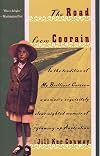
A beautifully written exploration of home, family, grief, and making one's way in the world. I especially appreciate Conway's reflection on how leaving home is sometimes necessary to get a sense for where we come from and for the elements that have built our perspective. Also interesting is how class influences accents, which reminds me of the US South. Excellent narration by Barbara Caruso.
Few things seem further from North America than Australia. Not only is it half-a-world away, but the culture varies dramatically. Conway grew up in the back-country of Australia where she often did not regularly see other families and neighbors were tens-of-miles away. That simple start, told as well as it is in this book, sparks the reader’s interest. The fact that she ended up at Harvard by the end of the book should pique even more interest.
Conway details her life in the outback, her show more transition to a private school in Sydney, and her undergraduate days at the University of Sydney. As such, this memoir is a real-life coming-of-age tale. She describes how she fell in love with the field of history and decided to dedicate her life to being a scholar of women’s history.
Her writing style is impressive and entertaining. Not only does she describe things accurately and with a healthy distance, but she also picks interesting details that bring her world alive to the reader. Obviously well-read, she shows the character that brought her from an oppressive environment towards eventually becoming a leader in women’s education.
I find personal inspiration from feminists like Conway. Often, men are not encouraged to find their own place in the world like many women (especially ambitious women) are forced to. As such, the narrative of male lives often does not involve the quest for being and existence. However, I find that I, too, have those questions. Conway’s tale gives me some more rungs to hang my experience on, and for that, I am grateful. show less
Conway details her life in the outback, her show more transition to a private school in Sydney, and her undergraduate days at the University of Sydney. As such, this memoir is a real-life coming-of-age tale. She describes how she fell in love with the field of history and decided to dedicate her life to being a scholar of women’s history.
Her writing style is impressive and entertaining. Not only does she describe things accurately and with a healthy distance, but she also picks interesting details that bring her world alive to the reader. Obviously well-read, she shows the character that brought her from an oppressive environment towards eventually becoming a leader in women’s education.
I find personal inspiration from feminists like Conway. Often, men are not encouraged to find their own place in the world like many women (especially ambitious women) are forced to. As such, the narrative of male lives often does not involve the quest for being and existence. However, I find that I, too, have those questions. Conway’s tale gives me some more rungs to hang my experience on, and for that, I am grateful. show less
As long as this memoir stayed in Coorain, I was captivated. Once it strayed down the road, my interest waned. The struggle of Jill Ker Conway's family to make a living on 18,000 acres of droughty Australian outback has an exotic and almost heroic appeal. Her subsequent teens and early twenties in Sydney, contending with a difficult mother while trying to find her path in academia, don't have nearly the lustre. The writing is careful and has a whiff of scholarly writing, especially in the way show more that Conway takes a reductionist approach where almost every event or person gets somehow explained away. Sometimes it feels more like dissection than memoir, and not much leeway is left for the reader to imaginatively connect with Conway's younger self.
My own dwindling interest post-Coorain, is mirrored in the reception of her three memoirs: the further her ambitions pulled her from Coorain, the less interest there was in her books - each appealing to a progressively narrower audience. Regardless though, of how appreciative one might be of Conway's achievements as a pioneering woman in modern day postsecondary education, the trajectory of her life is breathtaking by any standard. As a child she alone could comfort her young father through his horrifying nightmares of Ypres, Passchendaele, and France. Nowadays her interviews and speeches are featured on Youtube. Her cohort, those who came of age in the 1930s and 1940s, and who are now hitting their 80s, have lived through more profound social, cultural, technological, and political change than any other. In Conway's case this passage is amplified by how far she also came geographically and by how much she was able to achieve along the way. show less
My own dwindling interest post-Coorain, is mirrored in the reception of her three memoirs: the further her ambitions pulled her from Coorain, the less interest there was in her books - each appealing to a progressively narrower audience. Regardless though, of how appreciative one might be of Conway's achievements as a pioneering woman in modern day postsecondary education, the trajectory of her life is breathtaking by any standard. As a child she alone could comfort her young father through his horrifying nightmares of Ypres, Passchendaele, and France. Nowadays her interviews and speeches are featured on Youtube. Her cohort, those who came of age in the 1930s and 1940s, and who are now hitting their 80s, have lived through more profound social, cultural, technological, and political change than any other. In Conway's case this passage is amplified by how far she also came geographically and by how much she was able to achieve along the way. show less
This is probably the best memoir I have read to date. I find myself drawn to memoirs to gather insight into how people achieved their goals or philosophy or overall situation in life, but am frustrated by tales that whine, that pat themselves on the back, that blame others, that name drop and gossip, or that don't reflect on what they learned or how. This was not any of that.
The first third of the book covers her life on the plains of Australia on a sheep farm. The life was hard, but all show more she knew. The family was fairly isolated and very dependent on each other. She identifies her relationship with her parents and her brothers, admittedly adding in insights that she obtained upon reflection as an adult, but which did not take away from the immediacy of the account. Her dealings and descriptions of the few people that they had contact with and the rare trips that they took off the ranch gave a real feel for her life. The weather played an enormous role in the well-being of the ranch and that came across loud and clear.
When the death of her father and the extended years of drought send them to Sydney, we get a different perspective; how an intelligent, socially inept child attempts to adapt to city life and other children. Conway looks at what were her actions and what she was trying to do and reflects on what she did right and what was wrong. She is not sugar coating, blaming or dramatizing, but trying to understand what happened and how it got her to the next situation.
The last third of the book deals with her coming to terms with her intellect, her education, her search for a personal philosophy and an understanding of her country and her place in it. Her strained relationship with her mother, her ambition and ambivalence toward Australian society converge in an understanding that she does not fit into Australia and must leave despite her love for the land of the outback. I have never read a more thoughtful memoir and look forward to reading her follow-up, True North. show less
The first third of the book covers her life on the plains of Australia on a sheep farm. The life was hard, but all show more she knew. The family was fairly isolated and very dependent on each other. She identifies her relationship with her parents and her brothers, admittedly adding in insights that she obtained upon reflection as an adult, but which did not take away from the immediacy of the account. Her dealings and descriptions of the few people that they had contact with and the rare trips that they took off the ranch gave a real feel for her life. The weather played an enormous role in the well-being of the ranch and that came across loud and clear.
When the death of her father and the extended years of drought send them to Sydney, we get a different perspective; how an intelligent, socially inept child attempts to adapt to city life and other children. Conway looks at what were her actions and what she was trying to do and reflects on what she did right and what was wrong. She is not sugar coating, blaming or dramatizing, but trying to understand what happened and how it got her to the next situation.
The last third of the book deals with her coming to terms with her intellect, her education, her search for a personal philosophy and an understanding of her country and her place in it. Her strained relationship with her mother, her ambition and ambivalence toward Australian society converge in an understanding that she does not fit into Australia and must leave despite her love for the land of the outback. I have never read a more thoughtful memoir and look forward to reading her follow-up, True North. show less
Lists
My TBR list (1)
Awards


You May Also Like


Associated Authors
Statistics
- Works
- 14
- Also by
- 5
- Members
- 3,607
- Popularity
- #7,017
- Rating
- 3.9
- Reviews
- 55
- ISBNs
- 66
- Languages
- 1
- Favorited
- 9