
Betty Friedan (1921–2006)
Author of The Feminine Mystique
About the Author
Betty Friedan (1921-2006), a transformational leader of the women's movement, cofounded and was the first president of the National Organization for Women (NOW). She was the author of many important works, including The Second Stage, The Fountain of Age, and Life So Far, which brought to the show more forefront her stunning cultural critiques. show less
Image credit: Credit: Fred Palumbo, 1960
(World Telegram & Sun Collection,
LoC Prints and Photographs Division,
LC-USZ62-115884)
(World Telegram & Sun Collection,
LoC Prints and Photographs Division,
LC-USZ62-115884)
Works by Betty Friedan
Associated Works
Booknotes: America's Finest Authors on Reading, Writing, and the Power of Ideas (1997) — Contributor — 458 copies, 5 reviews
Gentlemen, Scholars and Scoundrels: A Treasury of the Best of Harper's Magazine from 1850 to the Present (1972) — Contributor — 62 copies
Audacious Democracy: Labor, Intellectuals, and the Social Reconstruction of America (1997) — Contributor — 33 copies
Tagged
Common Knowledge
- Canonical name
- Friedan, Betty
- Other names
- Goldstein, Bettye Naomi (birth name)
- Birthdate
- 1921-02-04
- Date of death
- 2006-02-04
- Gender
- female
- Education
- Smith College
Peoria High School
University of California, Berkeley - Occupations
- writer
activist
journalist - Organizations
- National Organization for Women
National Association for the Repeal of Abortion Laws (NARAL) - Nationality
- USA
- Birthplace
- Peoria, Illinois, USA
- Places of residence
- Peoria, Illinois, USA
California, USA
Washington, D.C., USA - Place of death
- Washington, D.C., USA
- Burial location
- Sag Harbor Jewish Cemetery, Sag Harbor, New York, USA
- Associated Place (for map)
- USA
Members
Reviews
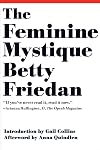
As far as I am personally concerned, when it comes to feminism there is a before Betty Friedan and an after Betty Friedan. 'The Feminine Mystique', of course, is a classic and has now become part of the modern feminist canon. What is it?
At the core, it exposes how the sexist view (embraced by women themselves!) consisting in reducing women to mothers and housewives had led to women being de-individualised, and so miserable for the most part when achieving anything else and/ or aspiring to show more achieve anything else. She famously denounced what she called 'the problem that has no name' that is, the void felt by countless women of post-WWII American suburbs, no matter how happy in their marriage and as mums otherwise.
Now, of course, the book has attracted its many criticisms... and rightly so!
For a start, it's pretty clear that by 'women' she focused in fact on the middle- and/ or upper-class, White women (most being also College educated), leaving thus countless more working class and/ non-White women still silenced as it was. Betty Friedan, then, was attacked for her classism as much as for her complete obliviousness to her own White privileges. Was it or is it fair? If things have radically changed when it comes to women's education and access to meaningful jobs, the hijacking of feminism by White bourgeoises nevertheless still remains an ongoing issue, with the impact that it has upon women not fitting its boxes. Critics, then, still have a point.
She was, also, quite harsh on women themselves (well, at least, on the White bourgeoises whose main issue was being bored out of their mind, in their pretty houses and with their pretty children...). Living a cosy, dependent life of consumerist luxury paid for by their husbands may have been boring to the point of being dehumanising indeed, but she had no qualm about finger-pointing those women themselves for their own contribution in their lot. After all, isn't it more comfortable to stay home under the excuse of taking care of the children than to actually go onto the world and take risks? Women complaining that they do more house chores than men while in fact doing so because they have nothing better to do with their days, for example (it's obviously easier to do more at home when one spend more time at home to start with!) is a point that we should take onboard even nowadays (e.g. I don't believe that men do less at home than women, but that men and women do house chores differently -but that's another debate...). What else?
Her views on parenting will shock many. As those women had nothing better to do apart from being busybodies when it comes to house chores and taking care of their children, she also denounced the impact that such attitudes supposedly had on their kids too. I insist on 'supposedly' because, of course, we now know far better! She thought, for instance, that the dysfunctional relationships of those mothers with their kids was the root cause of a growing concern at the time, namely, the rise of autism. It's utter nonsense (autism in children is not caused by parenting!) but one has to be fair here and put things back into their historical context. Betty Friedan was writing at a time when cutting-edge understanding of autism was the so-called 'refrigerator mothers' theory. She just took it onboard, as others had done too. But then so what?
I have outlined and agreed with her many criticisms and yet... And yet, I deeply admire Betty Friedan.
First, because she doesn't blame a supposed 'Patriarchy' for women's problems. To her indeed, the main problem is consumerism and a capitalistic society which, if it benefited from women being kept out of the rat race, was no less harmful to men, reduced to units of production and providers. Betty Friedan was no misandrist. She knew perfectly well that, no matter how exploitive the system, women were (none-the-less) complicit in it to some degree. The same cannot be said (sadly) of countless neo-feminists theoreticians that came after her, blaming on the contrary men and boys as the enemies while whitewashing women's own toxicity.
Then, because no matter how oblivious she was to White privileges she was not, either, a covet racist. Here too, the same cannot be said of some of her followers, whose racist views will be from utterly disgusting (e.g. if you haven't read Shulamith Firestone yet, you're not missing much...) to 'merely' internalised but with a no less damaging impact upon non-White women. Radfem ideology gone mainstream has changed nothing on that score.
In the end, then, said what you want about Friedan; but had feminism followed in her footsteps instead of shamelessly betraying her we would be in a far better position now. We would be discussing an exploitive system still fuelled by the male expendability paradigm (still benefiting women in many respects...) as it was by the feminine mystique, instead of blaming a supposed "patriarchal conspiracy" of sort for our gender issues. We would be discussing how sexist views caused as much a toxic 'feminine mystique' as a 'masculine mystique' too (also peddled by women themselves in many respects...) instead of babbling nonsense about a supposed 'toxic masculinity'. We would be, in other words, battling hand in hand, men and women, to make a better world for us all instead of being pitted against each others ("men and boys vs women and girls") by gendered demagogues. But, that too, is another debate... There is a before Betty Friedan and an after Betty Friedan. It's just a pity that the after is barely better than the before. show less
At the core, it exposes how the sexist view (embraced by women themselves!) consisting in reducing women to mothers and housewives had led to women being de-individualised, and so miserable for the most part when achieving anything else and/ or aspiring to show more achieve anything else. She famously denounced what she called 'the problem that has no name' that is, the void felt by countless women of post-WWII American suburbs, no matter how happy in their marriage and as mums otherwise.
Now, of course, the book has attracted its many criticisms... and rightly so!
For a start, it's pretty clear that by 'women' she focused in fact on the middle- and/ or upper-class, White women (most being also College educated), leaving thus countless more working class and/ non-White women still silenced as it was. Betty Friedan, then, was attacked for her classism as much as for her complete obliviousness to her own White privileges. Was it or is it fair? If things have radically changed when it comes to women's education and access to meaningful jobs, the hijacking of feminism by White bourgeoises nevertheless still remains an ongoing issue, with the impact that it has upon women not fitting its boxes. Critics, then, still have a point.
She was, also, quite harsh on women themselves (well, at least, on the White bourgeoises whose main issue was being bored out of their mind, in their pretty houses and with their pretty children...). Living a cosy, dependent life of consumerist luxury paid for by their husbands may have been boring to the point of being dehumanising indeed, but she had no qualm about finger-pointing those women themselves for their own contribution in their lot. After all, isn't it more comfortable to stay home under the excuse of taking care of the children than to actually go onto the world and take risks? Women complaining that they do more house chores than men while in fact doing so because they have nothing better to do with their days, for example (it's obviously easier to do more at home when one spend more time at home to start with!) is a point that we should take onboard even nowadays (e.g. I don't believe that men do less at home than women, but that men and women do house chores differently -but that's another debate...). What else?
Her views on parenting will shock many. As those women had nothing better to do apart from being busybodies when it comes to house chores and taking care of their children, she also denounced the impact that such attitudes supposedly had on their kids too. I insist on 'supposedly' because, of course, we now know far better! She thought, for instance, that the dysfunctional relationships of those mothers with their kids was the root cause of a growing concern at the time, namely, the rise of autism. It's utter nonsense (autism in children is not caused by parenting!) but one has to be fair here and put things back into their historical context. Betty Friedan was writing at a time when cutting-edge understanding of autism was the so-called 'refrigerator mothers' theory. She just took it onboard, as others had done too. But then so what?
I have outlined and agreed with her many criticisms and yet... And yet, I deeply admire Betty Friedan.
First, because she doesn't blame a supposed 'Patriarchy' for women's problems. To her indeed, the main problem is consumerism and a capitalistic society which, if it benefited from women being kept out of the rat race, was no less harmful to men, reduced to units of production and providers. Betty Friedan was no misandrist. She knew perfectly well that, no matter how exploitive the system, women were (none-the-less) complicit in it to some degree. The same cannot be said (sadly) of countless neo-feminists theoreticians that came after her, blaming on the contrary men and boys as the enemies while whitewashing women's own toxicity.
Then, because no matter how oblivious she was to White privileges she was not, either, a covet racist. Here too, the same cannot be said of some of her followers, whose racist views will be from utterly disgusting (e.g. if you haven't read Shulamith Firestone yet, you're not missing much...) to 'merely' internalised but with a no less damaging impact upon non-White women. Radfem ideology gone mainstream has changed nothing on that score.
In the end, then, said what you want about Friedan; but had feminism followed in her footsteps instead of shamelessly betraying her we would be in a far better position now. We would be discussing an exploitive system still fuelled by the male expendability paradigm (still benefiting women in many respects...) as it was by the feminine mystique, instead of blaming a supposed "patriarchal conspiracy" of sort for our gender issues. We would be discussing how sexist views caused as much a toxic 'feminine mystique' as a 'masculine mystique' too (also peddled by women themselves in many respects...) instead of babbling nonsense about a supposed 'toxic masculinity'. We would be, in other words, battling hand in hand, men and women, to make a better world for us all instead of being pitted against each others ("men and boys vs women and girls") by gendered demagogues. But, that too, is another debate... There is a before Betty Friedan and an after Betty Friedan. It's just a pity that the after is barely better than the before. show less
I wanted to love The Feminine Mystique by Betty Friedan. I picked it up with expectations of being inspired, of being enraged, of being enlightened... I was convinced this book would turn me into a militant feminist; okay not really, but I thought it would somehow change my relationship with feminism, answer questions I'd never thought to ask, radically change my life... In that, I think perhaps my expectations were too high. It is an important book. It is well written, and Friedan makes her show more points quite convincingly. As a way to understand the foundation of modern feminism, I highly recommend it. That said, I found myself reminding myself that some of the research she cites is outdated, has been proven incomplete and, at times, inaccurate while grimacing that we are facing some of the same battles yet again - or perhaps still. As I read The Feminine Mystique it became very clear to me that equality, at least for women, seems to wax and wane. Progress is made, then fear, misconceptions, deception, and even greed drive back the progress. Friedan delves into industry, marketing, psychology, family values, education, and expectations to explore the role of women in society and what fosters inequality. I, at times, felt The Feminine Mystique was incomplete because of its focus on the experiences of white middle class, perhaps even upper middle class, women. Reading The Feminine Mystique often felt like reading about people whose lives were so far removed from my upbringing in a small farming community as to be glimpsing into another world and yet much of it makes sense to my current life. Seeing my own life through both sets of eyes made the dichotomy in the fight for equality for all women that much more visible. There's much to learn from The Feminine Mystique as we study the history of feminism and the current fight for equality, but it is not the complete story of women, feminism, or the need for equality. show less
What can you say about this book that hasn't already been said? I first heard of the The Feminine Mystique from my high school American History class, and later of course from attending Smith College itself, where Friedan famously graduated as well. I've always been drawn to just reading the original text of something rather than the multitude of opinions about whatever it is, so with all the lovely mess that is Feminist thought today critiquing (or downright ignoring) it, I had to see it show more for myself!
So, Friedan and this book are not completely en vogue right now. I get it. The author is from a time, place, and socioeconomic status that naturally ignored some glaring aspects of the American female experience, and it's rightly been critiqued. Friedan's remedy to the feminist mystique can seem a bit simplistic at times (just get a job!), but the intention is never nefarious. The issues Fridan saw and experienced were real, and you can't argue that the beginning of the women's movement brought great, good change (if feminism is even in your persuasion). Friedan was also notoriously weird about lesbianism and anything less-than-respectable, but again, does this cancel out how pivotal the change brought on by her? I don't think so, but obviously others do.
Unfortunatley, I found so much more of this book relevant to today than I had hoped. I thought it would be more historical, and much of it is, but man, much of it isn't. It's not the people willingly picking this up today who see themselves in it anymore: 60 years on, it's not the young women in cities or college campuses—it's the army wives, the Utah moms, the tradwives—whose lives today mirror so supremely the issues at hand in this text. Women have come a long way, but I think anyone would be daft to believe women are fully free from this mystique. Again, it's not in the liberal spheres most of us feminists today surround ourselves in that are in trouble, it's places like those I've named above. Many, many women grow up without this consciousness. I've witnessed this when living in Omaha, Nebraska: they grow up and never leave their hometown, they get married and have a baby to two because everyone else is, they may have a part-time job (it never promises growth), they spend their time on Instagram and TikTok looking at parenting videos, they obsess over colour palettes of babies' toys, they may get roped into an MLM, they buy 20 Stanley Cups, on and on, ad nauseum.
Friedan writes about this! So much! Especially the consumerism, which is I think the most prescient and insidious of women's issues today. Even 60 years on, women are advertised to and expected to be lascivious consumers: still today women's gender identities seem to be predicated on buying and wearing the correct clothing, and jewelry, having the most expensive-looking and beautiful hair, owning the newest social-media approved gadget. Even hair length is caught up in it—do you know how rare it is to see a woman outside of large cities with short, short hair? "Men's" haircuts? The ones that are cheap and easy to care for? I've spoken to women about it, and so many are terrified of the loss of social standing, even if they desire to finally rid themselves of it. It's a wonder and supreme privilege to live the way I do now, untethered to the worst of biological determinism and allowed to be an entire human being away from my "sex role." I'm lucky. Many, many women are not. They live in hostile environments, are stuck scared of the social repercussions of doing what they truly wish, and their sense of personhood suffers because of it.
Now, this book is a bit long, and it does belabor some points. It suffers the most from the inclusion of some heavy use of Freudian theory, which very popular at the time, has dated itself badly. One should view the book as a collection of essays rather than a cohesively narrativized argument, and I would recommend to feel free to read around out of order.
Despite what others say, this text is still prescient. More advanced discussion should occur on the plane of feminist thought, but abandoning it can only ideologically hurt those most in need of it. Similarly, Friedan's respectability is not so fashionable with the radical sect, but again, who suffers when we pass over it? Friedan's concern for men's happiness as well as women's is awesome, and we shouldn't ignore it. When we become so sectarian, when we villainize men for doing nothing but being failed by society, can we really be surprised at the rise of people like Andrew Tate or Jordan Peterson telling young men that they are not evil by virtue of their biological beginnings? To those that willingly pass over this, why can't we carry the gambit of feminist thought, for different scenarios, and different life experiences? There is no one-size-fits-all feminism, and beyond its blindspots, I think this one still stands the test of time. show less
So, Friedan and this book are not completely en vogue right now. I get it. The author is from a time, place, and socioeconomic status that naturally ignored some glaring aspects of the American female experience, and it's rightly been critiqued. Friedan's remedy to the feminist mystique can seem a bit simplistic at times (just get a job!), but the intention is never nefarious. The issues Fridan saw and experienced were real, and you can't argue that the beginning of the women's movement brought great, good change (if feminism is even in your persuasion). Friedan was also notoriously weird about lesbianism and anything less-than-respectable, but again, does this cancel out how pivotal the change brought on by her? I don't think so, but obviously others do.
Unfortunatley, I found so much more of this book relevant to today than I had hoped. I thought it would be more historical, and much of it is, but man, much of it isn't. It's not the people willingly picking this up today who see themselves in it anymore: 60 years on, it's not the young women in cities or college campuses—it's the army wives, the Utah moms, the tradwives—whose lives today mirror so supremely the issues at hand in this text. Women have come a long way, but I think anyone would be daft to believe women are fully free from this mystique. Again, it's not in the liberal spheres most of us feminists today surround ourselves in that are in trouble, it's places like those I've named above. Many, many women grow up without this consciousness. I've witnessed this when living in Omaha, Nebraska: they grow up and never leave their hometown, they get married and have a baby to two because everyone else is, they may have a part-time job (it never promises growth), they spend their time on Instagram and TikTok looking at parenting videos, they obsess over colour palettes of babies' toys, they may get roped into an MLM, they buy 20 Stanley Cups, on and on, ad nauseum.
Friedan writes about this! So much! Especially the consumerism, which is I think the most prescient and insidious of women's issues today. Even 60 years on, women are advertised to and expected to be lascivious consumers: still today women's gender identities seem to be predicated on buying and wearing the correct clothing, and jewelry, having the most expensive-looking and beautiful hair, owning the newest social-media approved gadget. Even hair length is caught up in it—do you know how rare it is to see a woman outside of large cities with short, short hair? "Men's" haircuts? The ones that are cheap and easy to care for? I've spoken to women about it, and so many are terrified of the loss of social standing, even if they desire to finally rid themselves of it. It's a wonder and supreme privilege to live the way I do now, untethered to the worst of biological determinism and allowed to be an entire human being away from my "sex role." I'm lucky. Many, many women are not. They live in hostile environments, are stuck scared of the social repercussions of doing what they truly wish, and their sense of personhood suffers because of it.
Now, this book is a bit long, and it does belabor some points. It suffers the most from the inclusion of some heavy use of Freudian theory, which very popular at the time, has dated itself badly. One should view the book as a collection of essays rather than a cohesively narrativized argument, and I would recommend to feel free to read around out of order.
Despite what others say, this text is still prescient. More advanced discussion should occur on the plane of feminist thought, but abandoning it can only ideologically hurt those most in need of it. Similarly, Friedan's respectability is not so fashionable with the radical sect, but again, who suffers when we pass over it? Friedan's concern for men's happiness as well as women's is awesome, and we shouldn't ignore it. When we become so sectarian, when we villainize men for doing nothing but being failed by society, can we really be surprised at the rise of people like Andrew Tate or Jordan Peterson telling young men that they are not evil by virtue of their biological beginnings? To those that willingly pass over this, why can't we carry the gambit of feminist thought, for different scenarios, and different life experiences? There is no one-size-fits-all feminism, and beyond its blindspots, I think this one still stands the test of time. show less
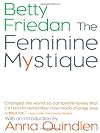
Landmark, groundbreaking, classic—these adjectives barely do justice to the pioneering vision and lasting impact of The Feminine Mystique. Published in 1963, it gave a pitch-perfect description of "the problem that has no name": the insidious beliefs and institutions that undermined women's confidence in their intellectual capabilities and kept them in the home. Writing in a time when the average woman first married in her teens and 60 percent of women students dropped out of college to show more marry, Betty Friedan captured the frustrations and thwarted ambitions of a generation and showed women how they could reclaim their lives. Part social chronicle, part manifesto, The Feminine Mystique is filled with fascinating anecdotes and interviews as well as insights that continue to inspire. show less
Lists
Awards


You May Also Like


Associated Authors
Statistics
- Works
- 17
- Also by
- 7
- Members
- 6,598
- Popularity
- #3,712
- Rating
- 3.8
- Reviews
- 63
- ISBNs
- 99
- Languages
- 15
- Favorited
- 7

