
Robin Morgan (1) (1941–)
Author of Sisterhood Is Powerful
For other authors named Robin Morgan, see the disambiguation page.
About the Author
Robin Morgan lives in New York. She is the author of, most recently, "A Hot January: Poems 1996-1999." (Bowker Author Biography)
Image credit: Blake Morgan
Works by Robin Morgan
The Invisible Woman 1 copy
Associated Works
Cries of the Spirit: A Celebration of Women's Spirituality (2000) — Contributor — 404 copies, 2 reviews
No More Masks: An Anthology of Twentieth-Century American Women Poets (1993) — Contributor, some editions — 226 copies, 3 reviews
Gay and Lesbian Poetry in Our Time (Stonewall Inn Editions) (1988) — Contributor — 191 copies, 1 review
She Rises Like the Sun: Invocations of the Goddess by Contemporary American Women Poets (1989) — Contributor — 71 copies
The Poets' Grimm: 20th Century Poems from Grimm Fairy Tales (2003) — Contributor — 70 copies, 1 review
In the Eye of the Storm: Women in Post-Revolutionary Iran (Contemporary Issues in the Middle East) (1994) — Foreword — 9 copies
Tagged
Common Knowledge
- Birthdate
- 1941-01-29
- Gender
- female
- Education
- Columbia University
- Occupations
- child actor
feminist
poet
author
journalist
lecturer (show all 7)
political theorist - Nationality
- USA
- Birthplace
- Lake Worth, Florida, USA
- Places of residence
- New York, New York, USA
- Associated Place (for map)
- USA
Members
Reviews
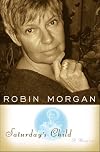
Robin Morgan has written a riveting, passionate, politically inspiring memoir. I was fascinated by the stories she told about her childhood as a radio and TV child actress and her emergence as one of the leaders of the second wave of feminism. This memoir is a perfect example of how the personal and political inform each other and I rooted for the author as she as she painstakingly began to listen to her own voice. She is honest about her flaws and of her sorrows and of her determination to show more create a useful life. This included a model of parenting that is based on supporting the integrity and personhood of her child which has caused a re-examination of my own parenting philosophy and style. One of my favorite parts of the book is when she states that she does not miss the "old days" of an earlier type of political organizing and firmly informs us that there is plenty (politically) to do without being stuck in false nostalgia. I agree. There is plenty to do and this memoir helps me keep on doing it.
Thank you to Netgalley for giving me an opportunity to read this review copy. show less
Thank you to Netgalley for giving me an opportunity to read this review copy. show less

Despite its overlay of rhetoric, Morgan's challenging feminist analysis brings a startling perspective to terrorism, which she sees as arising out of patriarchal societies' emphasis on power, control, domination and violence. In her definition, left-wing urban guerrillas, CIA dirty tricks, the Contras, white supremacist groups, nation a list resistance movements and the dropping of the bomb on Hiroshima are all terrorist acts. She traces the seeds of terrorism to the mythic herowarrior, show more god-king, liberatorwho glorifies vengeance. Moving into modern times, Morgan ( Sisterhood Is Global , etc.) detects a sexual component in man's penchant for violent means, and she draws on works by Henry James, Graham Greene, Doris Lessing and Marge Piercy for support. On a more personal note, she analyzes "token terrorist" women and considers herself to have been one in the late '60s. She also interviews women in Palestinian refugee camps and includes a 1978 prison talk with Patti Hearst. Morgan ends by calling for a politics of eros, of fierce tenderness, connectivity and caring.
The poet/political activist who produced the ground-breaking Sisterhood Is Global ( LJ 11/15/84), The Anatomy of Freedom ( LJ 11/15/82), etc., has written the first feminist treatise on terrorism. Here she raises questions other authors have avoided: Why are most terrorists men? Why do terrorist acts primarily victimize women and children? What is the relationship of terrorism to the patriarchal state, to the mythic hero, to messianic religion? show less
The poet/political activist who produced the ground-breaking Sisterhood Is Global ( LJ 11/15/84), The Anatomy of Freedom ( LJ 11/15/82), etc., has written the first feminist treatise on terrorism. Here she raises questions other authors have avoided: Why are most terrorists men? Why do terrorist acts primarily victimize women and children? What is the relationship of terrorism to the patriarchal state, to the mythic hero, to messianic religion? show less
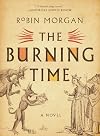
This novel focuses on a real woman - Lady Alyce Kyteler, who was accused of witchcraft in medieval Ireland - and builds a compelling story. Alyce is a confident woman who verbally duels with Church officials and is prepared to go further still to defend the people in her life. She's a refreshing character to have in a novel set during the Middle Ages and this helped make this book a quick read for me. While I've a few questions about some historical points, I really liked this novel overall show more and would highly recommend it. show less

I was probably the only person who read this for the sex. Well, I was ten. On second thoughts, I didn't read the sex, I devoured it and read it over and over and over. I can still recall key ideas, the writers denouncing all sorts of bits of pornographic literature, which I thought were just so sexy.
I don't know where it comes from, but in particular there is a line about a girl eagerly attached to the end of a penis being like a hooked fish and no amount of proseltysing in the analysis of show more how disgraceful this was made it the least bit less of a turn on for me...
The rest of it is all obvious. People equal, blah blah blah. I'm sorry, maybe you don't think this is obvious, but we were brought up with a scrupulous regard for the idea that there are no more or less than people in the world and all are equal. I never had an idea that any person wasn't equal, so it was hard to get really excited about women's lib.
Not least because they did so many stupid things that stuck, like the anti-bra thing. Maybe 6/7 years later I was asked to be involved in some women's event - would I do a chess simul. Oh, by the way, everybody was going to be topless. Like how fucked was that as an idea...let's get bunches of extra men to come and ogle. It struck me as one of the ideas that somehow made a lot of what they were doing sexist.
I agreed to play and had no intention of being topless...I went so far as to wear a see-through top. I won, if the idea was to get the most men. See what I mean? Sexist in big font. show less
I don't know where it comes from, but in particular there is a line about a girl eagerly attached to the end of a penis being like a hooked fish and no amount of proseltysing in the analysis of show more how disgraceful this was made it the least bit less of a turn on for me...
The rest of it is all obvious. People equal, blah blah blah. I'm sorry, maybe you don't think this is obvious, but we were brought up with a scrupulous regard for the idea that there are no more or less than people in the world and all are equal. I never had an idea that any person wasn't equal, so it was hard to get really excited about women's lib.
Not least because they did so many stupid things that stuck, like the anti-bra thing. Maybe 6/7 years later I was asked to be involved in some women's event - would I do a chess simul. Oh, by the way, everybody was going to be topless. Like how fucked was that as an idea...let's get bunches of extra men to come and ogle. It struck me as one of the ideas that somehow made a lot of what they were doing sexist.
I agreed to play and had no intention of being topless...I went so far as to wear a see-through top. I won, if the idea was to get the most men. See what I mean? Sexist in big font. show less
Lists
Awards


You May Also Like


Associated Authors
Statistics
- Works
- 23
- Also by
- 13
- Members
- 2,178
- Popularity
- #11,768
- Rating
- 3.9
- Reviews
- 13
- ISBNs
- 89
- Languages
- 3
- Favorited
- 1
