

Shulamith Firestone (1945–2012)
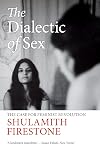
Author of The Dialectic of Sex: The Case for Feminist Revolution
About the Author
Image credit: Photo by Lori Hiris, found at The Guardian website
Works by Shulamith Firestone
Associated Works
Colleagues: An Inter-Media Anthology of Contemporary Artists — Contributor — 1 copy
Tagged
Common Knowledge
- Canonical name
- Firestone, Shulamith
- Legal name
- Firestone, Shulamith Bath Shmuel Ben Ari
- Other names
- Firestone, Shulie
Feuerstein, Shulamith Bath Shmuel Ben Ari (birth name) - Birthdate
- 1945-01-07
- Date of death
- 2012-08-28
- Gender
- female
- Education
- Telshe Yeshiva
Washington University (BA)
Art Institute of Chicago (BFA|1967 ∙ painting) - Occupations
- painter
author
women's rights activist - Organizations
- Westside Group
Chicago Women's Liberation Union
New York Radical Women
Redstockings
New York Radical Feminists - Cause of death
- natural causes
- Nationality
- Canada
- Birthplace
- Ottawa, Ontario, Canada
- Places of residence
- Kansas City, Missouri, USA
St. Louis, Missouri, USA
Chicago, Illinois, USA - Place of death
- New York, New York, USA
- Map Location
- Canada
Members
Reviews
Oh boy! I have read my fair share of nonsense, but this one tops the lot! Here's what second wave feminist haven't stopped praising as being a visionary work, a supposedly remarkable mix of Freudian psychoanalysis and dialectical materialism acting as a key manifesto in their canon. Believe it or not, they love it so much that it's actually mandatory reading in women's studies programs, where it's lauded as being a work of profound intellectual brilliance! Well, second wave feminism ought to show more check its moral compass: racist, misandrist, and, above all, condoning of child abuse as being supposedly 'liberating', here's nothing but pseudo-intellectual junk, as prejudicial as it is disgustingly criminal. Where do I start?
Firestone starts by telling us that sexism is a matter of far greater concern than... the racism endured by African Americans! Now if, already, such astounding premise smacks you as being a shocking ignorance of racial issues that's because, of course, it is. Sorry/not sorry, but to heighten the fate of women like her above that of a demographics having suffered from the uniqueness of the Atlantic slave trade up to the racial segregation of Jim Crow laws, and still battling it all at the time when she was writing (1969-1970), is but a false equivalence which is downright idiotic. Her racism, in fact, is absolutely shocking. She rehashes all the most poisonous, racist clichés one can possibly think of! The view that black men are lusting after white women? Checked! The view that white women's racism has always been 'inauthentic' because women can't be as toxic and abusive as men? Checked! (Black men having been victims of mob violence and lynching following false allegations of rape by white women will appreciate, no doubt, having their fate called the product of 'inauthentic racism'...). The view that if black women are stronger, more resilient than white women it's because they look up to white men and unconsciously despise black men too? Checked! At this point, of course, you could be excused to throw the book away in disgust, and I wouldn't blame you. Well, I personally didn't and so carried on. What's next?
We are then told that the root cause of women's oppression is their biology: they get pregnant, give birth, nurse infants, hence are rendered weak and dependent upon men when becoming mothers. Sexual reproduction and the dependence upon men that comes with it, then, must be discarded if women ought to ever be free. How? She advocates for technological means of reproduction to replace sexual reproduction (what she calls cybernetics technologies; looking forward to a future when being pregnant would have become, as she put it, a 'tongue-in-cheek archaism'). She, also, advocates for open relationships (what she calls 'households') where women will be free to have sex with different men (a household, to her, is anything ranging from 7 to 10 partners, under a license). This, here, is not about mere sexual liberation (she was writing in the wake of the swinging sixties, after all) but in order for men to don't know about their paternity when a woman gets pregnant, hence for men to don't be able to claim "patriarchal possession" of her and her child. If, this too, smacks you as being nothing but misandrist gibberish (e.g. her depicting of men as being unable to be any other than dreadful husbands and abusive fathers is no less idiotic than her internalised racism) that's because, of course too, it is. But... that's not it!
We are then told that children are no less oppressed by the patriarchy (read: the biological family, where kids -God forbid!- know who their fathers are...) and, so, that they therefore ought to be liberated from men too, especially their dads! The liberating, here, goes beyond (way beyond!) letting them be raised equally by the many adults forming her 'households' (for motherhood doesn't get it any better in this feminist Brave New World, as she advocates for mothers to don't have a special bond with their child as opposed to others -'the blood tie of the mother to the child would eventually be severed'). The liberating is, also, about letting them having a sex life as free as possible; including with adults; and including with their own parents! I will, here, quote at length because, quite frankly, as a liberal feminist considering second wave feminism to be nothing but victimhood jeremiads, misandrist trash, and divisive demagoguery, I have become fed up of the useful idiots out there celebrating this neo-feminist canon while, clearly, having never bothered to read some of its most applauded theoreticians:
‘the incest taboo is (…) necessary only to preserve the family’
‘if male/female-adult/child cultural distinctions are destroyed, we will no longer need the sexual repression that maintains these unequal classes, uncovering for the first time natural sexual freedom. Thus we arrive at: The sexual freedom of all women and children. Now they can do whatever they wish to do sexually. There will no longer able any reason not to.’
'With the disappearance of motherhood, and the obstructing incest taboo, sexuality would be re-integrated, allowing love to flow unimpeded’
About boys especially (whom, she claims, were being abused by their fathers in being expected to abide to the violent and controlling mindset underpinning patriarchal oppression) she write:
'if he should choose to relate sexuality to adults, even if he should happen to pick his own genetic mother, there would be no a priori reasons for her to reject his sexual advances, because the incest taboo would have lost its function.'
For those still not getting the point:
'Relations with children would include as much genital sex as the child was capable of’
I could go ad nauseam, but I think it's quite enough. The back cover of my copy says it all: Germaine Greer called this 'a nuggetty book... unanswerable'; Susan Faludi praised it as 'a landmark manifesto'; and Naomi Wolf (to name but only a tiny few) celebrated it as an 'inflammatory second-wave landmark'. There you go: if you're still not convinced that second wave feminism has never been about equality and equity in rights with men but, on the contrary, has always been but a full-on attack on men, the family, and, especially, paternity and the role of fathers (let alone the condoning of abuse perpetrated by women as being, from 'inauthentic' to liberating), then you need to read this. Again: this is nothing but victimhood peddled through false equivalencies; racism; misandry; and a sickening apologetics of paedophilia and incest. Yeeeuk! show less
Firestone starts by telling us that sexism is a matter of far greater concern than... the racism endured by African Americans! Now if, already, such astounding premise smacks you as being a shocking ignorance of racial issues that's because, of course, it is. Sorry/not sorry, but to heighten the fate of women like her above that of a demographics having suffered from the uniqueness of the Atlantic slave trade up to the racial segregation of Jim Crow laws, and still battling it all at the time when she was writing (1969-1970), is but a false equivalence which is downright idiotic. Her racism, in fact, is absolutely shocking. She rehashes all the most poisonous, racist clichés one can possibly think of! The view that black men are lusting after white women? Checked! The view that white women's racism has always been 'inauthentic' because women can't be as toxic and abusive as men? Checked! (Black men having been victims of mob violence and lynching following false allegations of rape by white women will appreciate, no doubt, having their fate called the product of 'inauthentic racism'...). The view that if black women are stronger, more resilient than white women it's because they look up to white men and unconsciously despise black men too? Checked! At this point, of course, you could be excused to throw the book away in disgust, and I wouldn't blame you. Well, I personally didn't and so carried on. What's next?
We are then told that the root cause of women's oppression is their biology: they get pregnant, give birth, nurse infants, hence are rendered weak and dependent upon men when becoming mothers. Sexual reproduction and the dependence upon men that comes with it, then, must be discarded if women ought to ever be free. How? She advocates for technological means of reproduction to replace sexual reproduction (what she calls cybernetics technologies; looking forward to a future when being pregnant would have become, as she put it, a 'tongue-in-cheek archaism'). She, also, advocates for open relationships (what she calls 'households') where women will be free to have sex with different men (a household, to her, is anything ranging from 7 to 10 partners, under a license). This, here, is not about mere sexual liberation (she was writing in the wake of the swinging sixties, after all) but in order for men to don't know about their paternity when a woman gets pregnant, hence for men to don't be able to claim "patriarchal possession" of her and her child. If, this too, smacks you as being nothing but misandrist gibberish (e.g. her depicting of men as being unable to be any other than dreadful husbands and abusive fathers is no less idiotic than her internalised racism) that's because, of course too, it is. But... that's not it!
We are then told that children are no less oppressed by the patriarchy (read: the biological family, where kids -God forbid!- know who their fathers are...) and, so, that they therefore ought to be liberated from men too, especially their dads! The liberating, here, goes beyond (way beyond!) letting them be raised equally by the many adults forming her 'households' (for motherhood doesn't get it any better in this feminist Brave New World, as she advocates for mothers to don't have a special bond with their child as opposed to others -'the blood tie of the mother to the child would eventually be severed'). The liberating is, also, about letting them having a sex life as free as possible; including with adults; and including with their own parents! I will, here, quote at length because, quite frankly, as a liberal feminist considering second wave feminism to be nothing but victimhood jeremiads, misandrist trash, and divisive demagoguery, I have become fed up of the useful idiots out there celebrating this neo-feminist canon while, clearly, having never bothered to read some of its most applauded theoreticians:
‘the incest taboo is (…) necessary only to preserve the family’
‘if male/female-adult/child cultural distinctions are destroyed, we will no longer need the sexual repression that maintains these unequal classes, uncovering for the first time natural sexual freedom. Thus we arrive at: The sexual freedom of all women and children. Now they can do whatever they wish to do sexually. There will no longer able any reason not to.’
'With the disappearance of motherhood, and the obstructing incest taboo, sexuality would be re-integrated, allowing love to flow unimpeded’
About boys especially (whom, she claims, were being abused by their fathers in being expected to abide to the violent and controlling mindset underpinning patriarchal oppression) she write:
'if he should choose to relate sexuality to adults, even if he should happen to pick his own genetic mother, there would be no a priori reasons for her to reject his sexual advances, because the incest taboo would have lost its function.'
For those still not getting the point:
'Relations with children would include as much genital sex as the child was capable of’
I could go ad nauseam, but I think it's quite enough. The back cover of my copy says it all: Germaine Greer called this 'a nuggetty book... unanswerable'; Susan Faludi praised it as 'a landmark manifesto'; and Naomi Wolf (to name but only a tiny few) celebrated it as an 'inflammatory second-wave landmark'. There you go: if you're still not convinced that second wave feminism has never been about equality and equity in rights with men but, on the contrary, has always been but a full-on attack on men, the family, and, especially, paternity and the role of fathers (let alone the condoning of abuse perpetrated by women as being, from 'inauthentic' to liberating), then you need to read this. Again: this is nothing but victimhood peddled through false equivalencies; racism; misandry; and a sickening apologetics of paedophilia and incest. Yeeeuk! show less

Originally published in 1970, when Shulamith Firestone was just twenty-five years old, and going on to become a bestseller, The Dialectic of Sex was the first book of the women's liberation movement to put forth a feminist theory of politics.
Beginning with a look at the radical and grassroots history of the first wave (with its foundation in the abolition movement of the time), Firestone documents its major victory, the granting of the vote to women in 1920, and the fifty years of ridicule show more that followed. She goes on to deftly synthesize the work of Freud, Marx, de Beauvoir, and Engels to create a cogent argument for feminist revolution. Identifying women as a caste, she declares that they must seize the means of reproduction—for as long as women (and only women) are required to bear and rear children, they will be singled out as inferior. Ultimately she presents feminism as the key radical ideology, the missing link between Marx and Freud, uniting their visions of the political and the personal. show less
Beginning with a look at the radical and grassroots history of the first wave (with its foundation in the abolition movement of the time), Firestone documents its major victory, the granting of the vote to women in 1920, and the fifty years of ridicule show more that followed. She goes on to deftly synthesize the work of Freud, Marx, de Beauvoir, and Engels to create a cogent argument for feminist revolution. Identifying women as a caste, she declares that they must seize the means of reproduction—for as long as women (and only women) are required to bear and rear children, they will be singled out as inferior. Ultimately she presents feminism as the key radical ideology, the missing link between Marx and Freud, uniting their visions of the political and the personal. show less

With her uncompromisingly anti-family stance, Firestone is in many ways the antifeminists’ feminist: she attacks every holy cow including the Great Holy Cow, the family that so many social conservatives see as the Bedrock of Society.
Firestone’s beginning in this work is to show how the likes of Marx and Engels and Freud were on the right track, but that they did not go far enough. Because they thought and wrote from the male perspective, they completely missed something fundamental, show more which ultimately led to the failure of their work.
Firstly, Marx/Engels - Firestone suggests that they forgot something important. They failed to see that the first “class” division, the first division of labour, is that between the sexes. The allocation of certain kinds of labour to women and other kinds to men applies at all levels of society, and results in universal oppression of women in all patriarchal societies. All men have an interest in perpetuating this female oppression, and numerous social customs and institutions serve to reinforce it: in particular the family.
The nuclear family is worst, but all forms of family serve to reinforce the oppression of women because all forms of family assign roles by sex, and oblige women to do the work of reproduction, which prevents them from advancing their own lives as far as they might otherwise be able to do. And the whole is bound up in the powerplay inevitably seen in families – with father having power over both mother and children, and mother having power over the children – a host of complicated alliances and oppressions springing up between mother and children and, again, among the children. Thus oppression and “power-over” is what children learn about the world. Because the communist thinkers failed to appreciate this key divison in society, and failed to understand the importance of the family in perpetuating power-over and its consequent oppression, their theories and utopias could never help women to be free. And if women could never be free, class oppression can never successfully be abolished.
Secondly, Freud - Firestone argues that Freud is right to trace emotional problems – particularly what Firestone describes as a psychosexual preoccupation with power relations – to the repression of sexual feelings that a child once experienced towards his or her parents. However, she argues that Freud was wrong to accept that this was an inevitable repression, such that we cannot address the cause but only try to treat the symptoms with psychoanalysis.
Firestone argues that in fact we can and must address the root cause, which she identifies as the incest taboos that universally arise where children grow up in biological families, and the use of power to dictate what (sexual) feeling is permissible and to repress whatever is not, resulting in a sexuality that is inextricably bound up in power. This psychosexuality of power is perpetuated and reinforced as each generation plays out the same game, over and over.
Once you’ve got your head around that, the rest of the book is plain sailing apart from one hard chapter about racism, some peculiar ideas about the “causes” of homosexuality, and a touching faith in the power of science to create a utopian world in which all people are released from any form of compulsory labour (both productive and reproductive) so as to enable society to be truly free and happy. Let's put those aside for now. Particular highlights in the rest of the book are: a brilliant chapter on the oppression of children; a scathing analysis of romantic love and the culture of romance; and a seriously interesting assessment of the state and direction of culture, one which is not entirely true today but which does certainly resonate.
But the key thesis, if you only take away one idea from the book, is this: the institution of the family must go. It is the source and cause of all oppression, including the primary oppression of women which assigns to them all reproductive labour. We must come up with other ways of living. show less
Firestone’s beginning in this work is to show how the likes of Marx and Engels and Freud were on the right track, but that they did not go far enough. Because they thought and wrote from the male perspective, they completely missed something fundamental, show more which ultimately led to the failure of their work.
Firstly, Marx/Engels - Firestone suggests that they forgot something important. They failed to see that the first “class” division, the first division of labour, is that between the sexes. The allocation of certain kinds of labour to women and other kinds to men applies at all levels of society, and results in universal oppression of women in all patriarchal societies. All men have an interest in perpetuating this female oppression, and numerous social customs and institutions serve to reinforce it: in particular the family.
The nuclear family is worst, but all forms of family serve to reinforce the oppression of women because all forms of family assign roles by sex, and oblige women to do the work of reproduction, which prevents them from advancing their own lives as far as they might otherwise be able to do. And the whole is bound up in the powerplay inevitably seen in families – with father having power over both mother and children, and mother having power over the children – a host of complicated alliances and oppressions springing up between mother and children and, again, among the children. Thus oppression and “power-over” is what children learn about the world. Because the communist thinkers failed to appreciate this key divison in society, and failed to understand the importance of the family in perpetuating power-over and its consequent oppression, their theories and utopias could never help women to be free. And if women could never be free, class oppression can never successfully be abolished.
Secondly, Freud - Firestone argues that Freud is right to trace emotional problems – particularly what Firestone describes as a psychosexual preoccupation with power relations – to the repression of sexual feelings that a child once experienced towards his or her parents. However, she argues that Freud was wrong to accept that this was an inevitable repression, such that we cannot address the cause but only try to treat the symptoms with psychoanalysis.
Firestone argues that in fact we can and must address the root cause, which she identifies as the incest taboos that universally arise where children grow up in biological families, and the use of power to dictate what (sexual) feeling is permissible and to repress whatever is not, resulting in a sexuality that is inextricably bound up in power. This psychosexuality of power is perpetuated and reinforced as each generation plays out the same game, over and over.
Once you’ve got your head around that, the rest of the book is plain sailing apart from one hard chapter about racism, some peculiar ideas about the “causes” of homosexuality, and a touching faith in the power of science to create a utopian world in which all people are released from any form of compulsory labour (both productive and reproductive) so as to enable society to be truly free and happy. Let's put those aside for now. Particular highlights in the rest of the book are: a brilliant chapter on the oppression of children; a scathing analysis of romantic love and the culture of romance; and a seriously interesting assessment of the state and direction of culture, one which is not entirely true today but which does certainly resonate.
But the key thesis, if you only take away one idea from the book, is this: the institution of the family must go. It is the source and cause of all oppression, including the primary oppression of women which assigns to them all reproductive labour. We must come up with other ways of living. show less

I have to admit, many different parts of Firestone's book gave me pause. For example, the concept that war (specifically World War II) was a welcomed opportunity for women to be treated as equals was really interesting. The idea that women hired as the only available workforce during that time allowed them to be and feel necessary and not just in the "female" sense of family and sex. The second concept that feminism and Freud "grew from the same soil" (p 43).
Firestone does not leave any show more aspect of the case for feminist revolution uncovered. She even delves into the stages of fashion for children in medieval times. For the male child dress was not to symbolize just age but to also announce sex, social rank and prosperity, whereas the female child did not have stages of fashion. She went from swaddling directly to adult garments. There was no need to differentiate social rank and prosperity because women had neither. show less
Firestone does not leave any show more aspect of the case for feminist revolution uncovered. She even delves into the stages of fashion for children in medieval times. For the male child dress was not to symbolize just age but to also announce sex, social rank and prosperity, whereas the female child did not have stages of fashion. She went from swaddling directly to adult garments. There was no need to differentiate social rank and prosperity because women had neither. show less
Lists
Awards


You May Also Like


Associated Authors
Statistics
- Works
- 3
- Also by
- 2
- Members
- 1,083
- Popularity
- #23,732
- Rating
- 3.7
- Reviews
- 11
- ISBNs
- 24
- Languages
- 6
- Favorited
- 1